
Reviewed · ACCADEMIA GALLERY TOURS
Accademia Gallery: Michelangelo’s David, A Symbol of Strength.
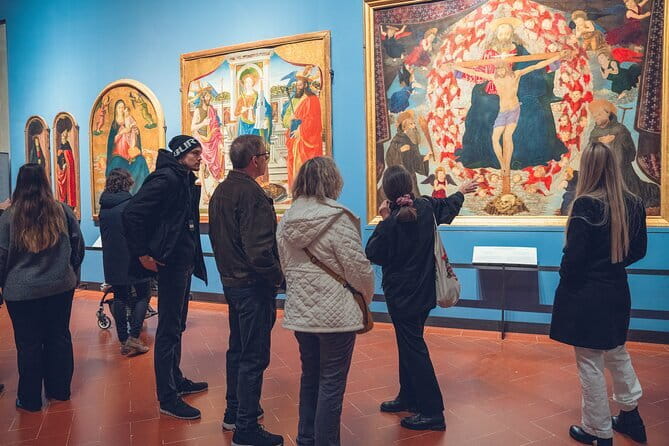
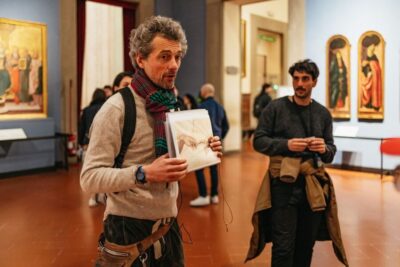
Michelangelo’s David, minus the misery of lines. This one-hour guided visit to Florence’s Accademia Gallery keeps the focus sharp: you get reserved skip-the-line tickets and headsets, so the art doesn’t blur into a loud crowd. I especially like how the guide turns David from a famous face into a sculpture with context, and I also like that you get a short route that covers the museum’s biggest hits. The one catch: it’s a fast-paced tour, so if you want to read every placard slowly, you’ll still need time to wander after.
In about an hour, you’ll move through several key spaces, with time at the statue itself and extra stops that connect Michelangelo to the broader Renaissance scene. You’ll also have a set meeting point on Via Ricasoli, and the tour ends back there—simple, clear, and easy to build into your Florence plan.
If you go in expecting a whirlwind overview plus a better-than-audio-guide explanation, you’re in the right place. It’s also a good fit if you’re traveling with kids or grandparents, since guides often pace the storytelling to keep attention moving.
In This Review
- Key highlights at a glance
- Reserved access at Galleria dell’Accademia: how it saves your Florence day
- The David, up close: what the guide helps you notice
- Hall of the Colossus to the Prisoners: the museum’s best sculpture logic
- Tribune time: connecting David’s statue with Allori’s Coronation
- Gipsoteca Bartolini casts: the practical detour that explains how artists studied
- How the hour works: pace, timing, and where you go after
- Value for $55.63: what you’re really buying
- Should you book this David-focused Accademia tour?
- FAQ
- What is the duration of the Accademia Gallery tour?
- Is a guide included?
- Are entrance tickets included?
- Will I be able to hear the guide?
- What language is the tour offered in?
- Where do I meet, and where does the tour end?
- What happens if I arrive after the tour start time?
- Does the tour have skip-the-line access?
- What if the tour is canceled due to not enough travelers?
Key highlights at a glance
- Skip-the-line access with reservation: you enter without the long exterior wait, even in busy periods
- Headsets included: you can hear your guide clearly as you walk and stop
- A tight, smart one-hour route: David plus major surrounding artworks, not a whole-day marathon
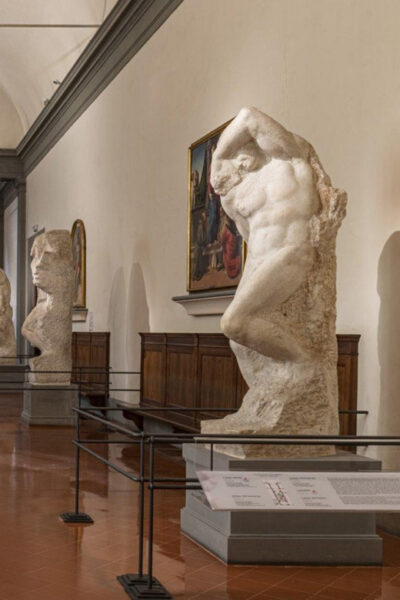
- Hall of the Prisoners + unfinished Slaves: see how Michelangelo’s process shapes the emotional impact
- Tribune time for David and Allori: you connect the statue to other key works in the same area
- Gipsoteca Bartolini casts: plaster studies add “how it was made” insight beyond the finished masterpieces
Other Accademia visits we have walked through in Florence
Reserved access at Galleria dell’Accademia: how it saves your Florence day
The value here starts before you even step inside. Accademia is one of those Florence places where the line can eat a big chunk of your day, and this tour is built around pre-reserved entry. The skip-the-line access is guaranteed, including during peak season, with only a couple of exceptions outside anyone’s control (museum delays or strikes).
You’re also getting a real guide, not just a recorded script, and that matters in a museum like this where the details can feel invisible at first. The tour time is about one hour, which is long enough to reach the statue and hit the museum’s main sculpture story—but short enough that you don’t end up exhausted by the end of it.
Practical tip: arrive early to the meeting spot on Via Ricasoli, 57 (50121 Firenze). If you show up late, you won’t be able to join and you won’t get a refund or reschedule. That sounds strict, but it’s also how the timing works when you’re relying on reserved entry.
Group size is capped at a maximum of 19 travelers, which is a nice middle ground. Big enough to feel social, small enough that the guide can usually keep the group moving and talking.
The David, up close: what the guide helps you notice
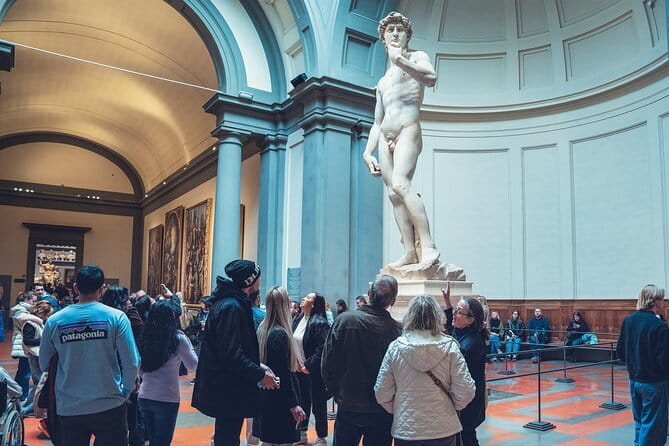
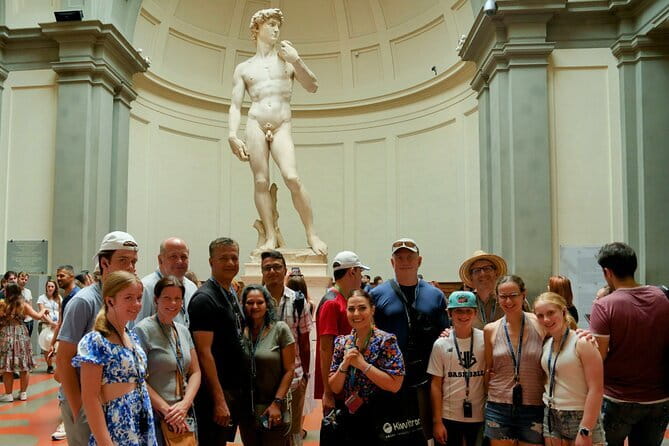
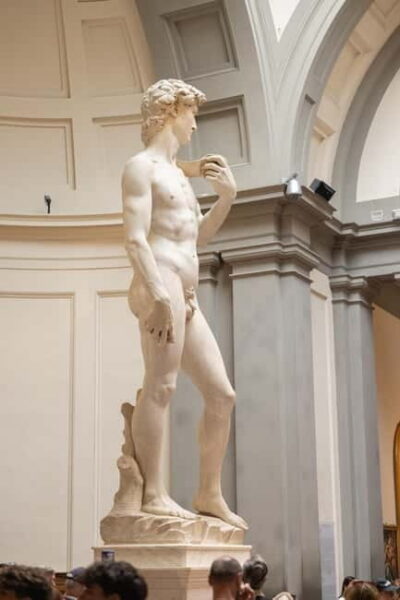
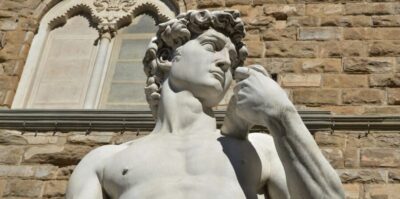
Yes, Michelangelo’s David is the headline. But the real win is how the tour frames what you’re looking at while you’re standing right in front of it.
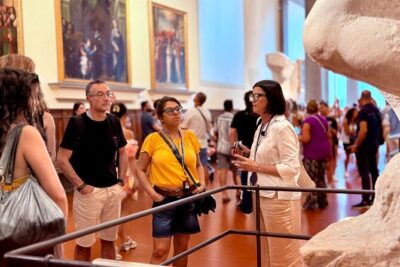
With headsets provided, you’re not stuck turning your head, asking your neighbor what the guide said, or guessing what part matters most. You can listen and look at the same time. That’s a huge upgrade over doing everything on your own with only placards.
This tour also tends to focus on the story behind the statue—the choices Michelangelo made and how the surrounding museum pieces connect to that work. In the experience, you’ll hear explanations that make the sculpture feel less like a poster you’ve seen before and more like a moment in time. If you care about process—how artists think, refine, and revise—this approach lands well.
I like that the route is designed so you get to see David more than once in your visit. Even after the guided portion ends, you can return to view it again at your own pace. That matters because David doesn’t fully click for many people in a single glance. It’s the kind of art you keep coming back to.
And from the guides you might encounter, you can get a sense of tone. People specifically mention guides like Matteo, Rosie, Pamela, Francesco, Gayla, Gabriella, Hilaria, and Hilary for keeping the experience engaging—often with an easy humor, plus solid context you can actually remember later.
Hall of the Colossus to the Prisoners: the museum’s best sculpture logic
Accademia can feel like a maze unless you know what to look for. This tour gives you the map, then fills it in with the why.
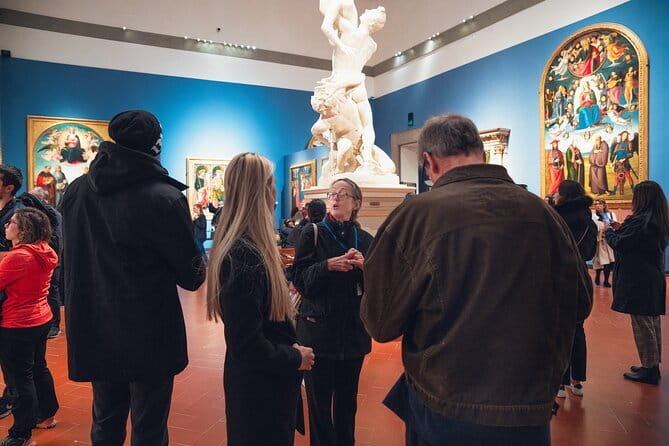
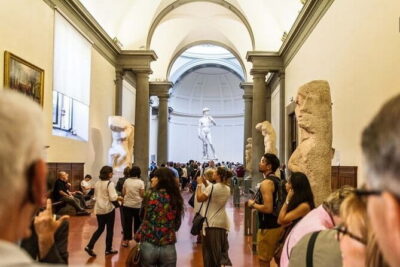
Your first major sweep is the Hall of the Colossus. Here, the guide doesn’t just toss names at you. You’ll get a guided thread through works by other major artists housed in the same space, including:
- Giambologna’s Rape of the Sabines
- Cassone Adimari
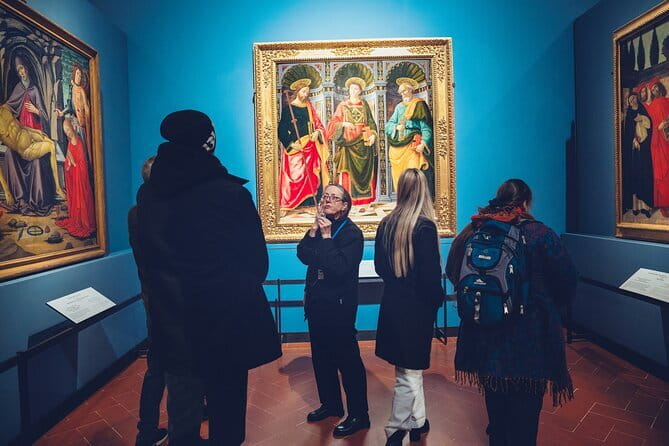
- Domenico Ghirlandaio’s St. Stephen between St. James and St. Peter
Why this grouping helps: it places Michelangelo’s era in a larger conversation. Even if your heart is set on David, you’ll start noticing how Renaissance sculpture and painting shared ideas—movement, sacred themes, and the drama of human form.
Then you move to the main Hall of the Prisoners, where Michelangelo’s unfinished statues called the Slaves are located. This stop is often the emotional turning point. Finished masterpieces grab you fast; unfinished work can grab you in a different way because you can sense the creative decisions mid-stream.
If you like “artist in the workshop” energy, this is where the museum makes sense. The guide also connects Michelangelo to other artists such as Fra’ Bartolomeo, Pontormo, and Granacci, highlighting friendship and mutual influence. That kind of context helps you stop treating each artwork like a separate museum exhibit and start seeing it as part of a network of ideas.
A realistic consideration: because the tour covers multiple halls in roughly an hour, it’s not the right format for slow, deep reading in every room. Instead, it’s ideal for getting your bearings fast, then doing a second pass on what you loved most after.
Tribune time: connecting David’s statue with Allori’s Coronation
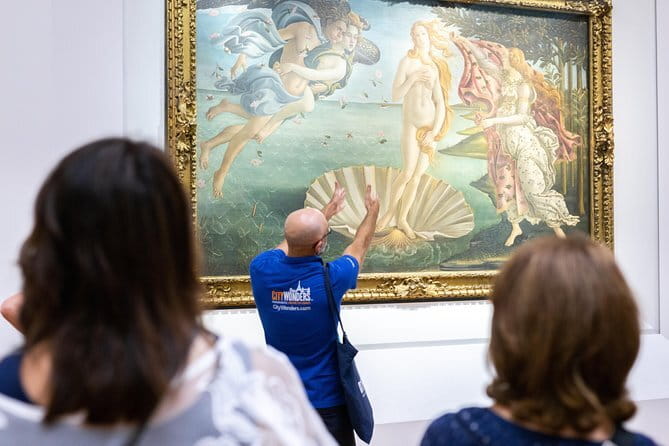
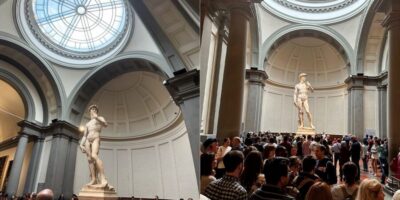
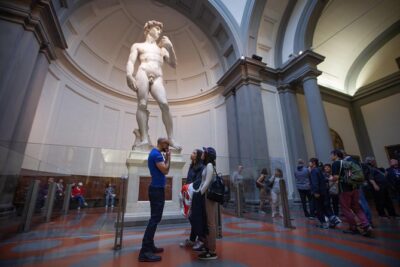
After the broader sculpture stops, the tour focuses on the Tribune, where the world-famous David is centered in the layout that visitors recognize instantly. The guide also covers the Tribune Left Wing, Allori’s Coronation of the Virgin Mary.
This is a smart pairing because it changes how you feel about David. When it’s just a famous statue behind glass or behind crowds, it can seem detached from the spiritual and civic world that made it matter. Adding the nearby religious artwork helps show how the space works as a whole—art not as isolated celebrity, but as part of a larger cultural setting.
This is also where the headsets really pay off. The guide’s explanations can focus on posture, intention, and the way the statue’s presence affects the viewer from different angles. You’ll have a better chance of following those points when you can hear clearly over the museum noise.
One more practical plus: the tour is time-managed. You aren’t wandering endlessly trying to find the “right” spots. The guide keeps the flow moving so you end with the statue experience you came for—and not just a partial view.
Gipsoteca Bartolini casts: the practical detour that explains how artists studied

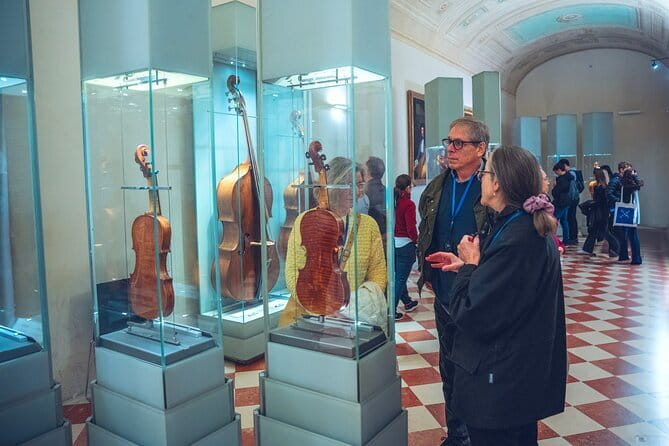
Not every museum stop feels like it matters. The Gipsoteca Bartolini plaster casts are different—they’re small studies, but they teach you how artists learned and worked.
This part of the tour includes plaster casts such as:
- the Reclining Venus
- Arnolfo
- Brunelleschi
- Lorenzo Monaco
It also points you to the documentation center on the first floor.
Why I think this stop is worth it: finished artworks can hide the training behind them. Casts show form, proportion, and the way artists copied, refined, and studied models. Even if you’re not the type who wants to read every research note, seeing these casts helps you connect the dots between artistic technique and final output.
Also, it breaks up the intensity of the main sculpture rooms. After David, stepping into a more study-focused area gives your brain a chance to process what you just saw.
Every route to the David, compared

How the hour works: pace, timing, and where you go after
This tour is built around a simple idea: see the core highlights without turning Accademia into a grind. It takes about one hour, which many people find just right for a first visit—enough time to hit the museum’s most important points, but not so long that you stop enjoying it.
There’s also a practical payoff. After the guided portion ends, you can return on your own to anything you want to see again, including David. That matters because museum attention often works in waves: your first pass gets you oriented, then your second pass is where you spot the details you were too overwhelmed to notice earlier.
If you’re pairing Accademia with other Florence sites, this tour fits well. People have mentioned the timing works especially nicely if you’re planning to head elsewhere right after, because you don’t lose a half day inside.
Who this suits best:
- First-time Florence visitors who want an organized route
- Families and mixed ages (guides often keep kids engaged while still covering serious art)
- Anyone who would rather hear an explanation in real time than rely only on audio or placards
- People who want to get value from a museum visit without spending hours guessing what matters most
Who might find it less ideal:
- If you’re the type who wants to read every label, photograph everything slowly, and linger in each room for 30+ minutes, you may feel rushed. In that case, use the tour as your compass, then do a longer self-guided return.
Value for $55.63: what you’re really buying
At $55.63 per person for about an hour, this tour is priced in the range where you should ask: what are you paying for besides entry?
Here, you’re paying for three things that matter in Accademia:
- an official certified guide
- reserved entry to the gallery
- a radio system (headsets) so you can hear every word
That combination is what turns the experience into more than a ticket. Without skip-the-line access and headsets, you risk losing time and losing the thread of what the guide is trying to show you. With them, you keep momentum and understanding at the same time.
The small-group cap (maximum 19) also supports the feeling that the guide can manage stops without the tour turning into a human traffic jam.
Booking-wise, this is also something that gets reserved well ahead of time. On average it’s booked about 42 days in advance, which is a clue that prime time slots fill up.
Should you book this David-focused Accademia tour?
I’d book it if you want a strong first visit with minimal waiting and a clear path to the museum’s most important artworks. The reserved entry plus headsets makes the time efficient, and the tour structure helps you understand what you’re looking at instead of just stacking impressions.
I’d think twice if your main goal is “slow museum time” and you’re happy standing in queues to save money. This tour is designed for the opposite: you want the art explained quickly, you want the statue experience, and you want a second chance to linger afterward.
If you want an easy decision tool, use this:
- If you’re coming to see David and you want context fast, book it.
- If you’re already comfortable with museum wandering and you love reading without a guide, you might prefer self-guided time.
Either way, if David is the priority in your Florence trip, this tour is one of the simplest ways to get there without losing hours.
FAQ
What is the duration of the Accademia Gallery tour?
The tour takes about 1 hour.
Is a guide included?
Yes. You get an officially certified guide.
Are entrance tickets included?
Yes. Your admission ticket with reservation to the Accademia Gallery is included.
Will I be able to hear the guide?
Yes. A radio system is provided so you can hear your guide clearly.
What language is the tour offered in?
The tour is offered in English.
Where do I meet, and where does the tour end?
You start at Via Ricasoli, 57, 50121 Firenze FI, Italy, and the activity ends back at the meeting point.
What happens if I arrive after the tour start time?
If you arrive after the tour start time, you will not be able to join, and you will not be refunded or rescheduled.
Does the tour have skip-the-line access?
Yes. Skip-the-line access is guaranteed, even during peak season, except in the event of delays or strikes by the museum management.
What if the tour is canceled due to not enough travelers?
The tour requires a minimum number of two guests to run. If it’s canceled because that minimum isn’t met, you’ll be offered an alternative or a full refund.
More Florence Tours We Have Reviewed
- Florence: Skip-The-Line Uffizi Gallery Timed Entry Ticket
★ 4.5 · 27,832 reviews - Tuscany Day Trip from Florence: Siena, San Gimignano, Pisa and Lunch at a Winery
★ 5.0 · 21,634 reviews - Florence: Timed Entry to Michelangelo’s David + Audio App
★ 4.6 · 19,496 reviews - Florence: Leonardo Interactive Museum Entry Ticket
★ 4.5 · 12,957 reviews - Florence: Michelangelo’s David Skip-the-Line Entry Ticket
★ 4.5 · 12,764 reviews
Standing Before David, Again
- Florence: Timed Entry to Michelangelo’s David + Audio App
★ 4.6 · 19,496 reviews - Florence: Michelangelo’s David Skip-the-Line Entry Ticket
★ 4.5 · 12,764 reviews - Florence: Timed Entry Ticket to Michelangelo’s David & eBook
★ 4.6 · 4,049 reviews - Florence: Art Tour, Accademia Gallery and David
★ 4.5 · 2,407 reviews - Michelangelo’s David, Accademia & Uffizi Small Group Tour
★ 4.5 · 1,986 reviews
More Time With the Accademia
- Florence Accademia Gallery Tour with Entrance Ticket Included
★ 4.5 · 6,148 reviews - Florence: Accademia Gallery Guided Tour
★ 4.6 · 4,156 reviews - Uffizi & Accademia Timed Entry: Small Group Duomo Walking Tour
★ 4.5 · 3,630 reviews - Florence: Accademia Gallery Skip-the-Line Guided Tour
★ 4.8 · 3,044 reviews - Florence: Art Tour, Accademia Gallery and David
★ 4.5 · 2,407 reviews
Fresh from our Florence review desk
- Small-Group Pasta Cooking Class and Market Tour in Florence★ 5.0 · 3 reviews
- Palatina Gallery and Pitti Guided Tour in Florence★ 5.0 · 3 reviews
- Tuscan Evening Tour: Fiat 500, 8:30 to 10 PM★ 5.0 · 3 reviews
- Journey into Art: Florence’s Accademia★ 4.5 · 3 reviews
- Paint and Drink Florentine Hills★ 5.0 · 3 reviews
- Truffle hunting and lunch experience, with Vinci and winery.★ 4.5 · 3 reviews
Accademia Gallery Tours, compared.
 ★ 4.5Florence Accademia Gallery Tour with Entrance Ticket IncludedFrom $456,148 reviews
 ★ 4.6Accademia Gallery Guided TourFrom $534,156 reviews
 ★ 4.5Uffizi & Accademia Timed Entry: Small Group Duomo Walking TourFrom $503,630 reviews
 ★ 4.8Accademia Gallery Skip-the-Line Guided TourFrom $413,044 reviews
 ★ 4.5Art Tour, Accademia Gallery and DavidFrom $582,407 reviews
 ★ 4.6Accademia Gallery Guided Tour with Entry TicketFrom $492,253 reviews
 ★ 4.8Uffizi Gallery and Accademia Gallery Guided TourFrom $1402,028 reviews
 ★ 4.5Michelangelo’s David, Accademia & Uffizi Small Group TourFrom $471,986 reviews
Browse the lists this tour appears in