
Reviewed · ACCADEMIA GALLERY TOURS
Florence: Accademia Gallery David Entry & Audio Guide App
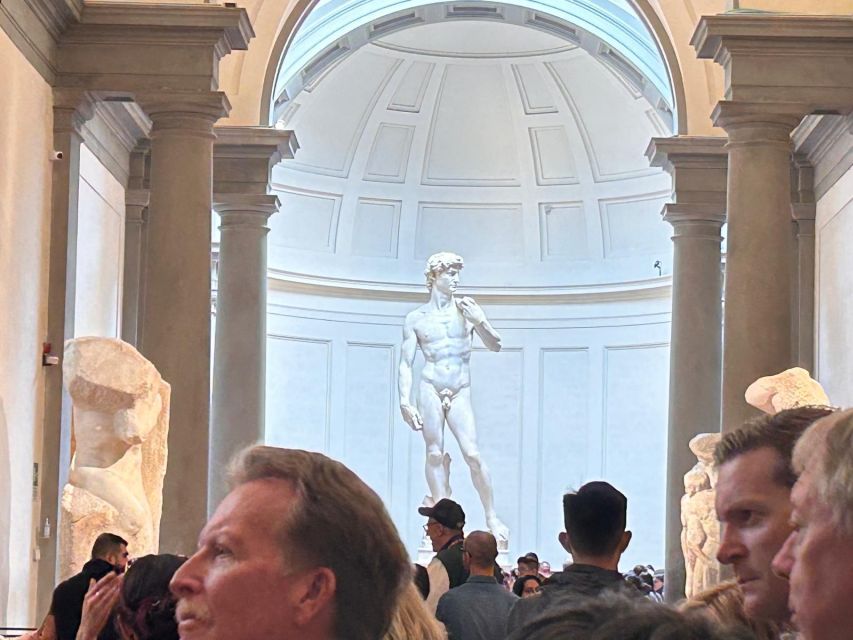
Michelangelo’s David hits the moment you walk in. With a timed ticket and a separate, faster entrance, this Accademia visit is all about seeing the big names without burning hours in the street crush. I also like the way the museum mixes masterpieces with the behind-the-scenes stuff, from Michelangelo’s unfinished works to the Gipsoteca plaster models. The main drawback: your experience depends on your phone and audio app setup, and if the app or signal acts up, you’ll feel it.
You get admission plus the POP Guide audio guide app, and a host helps you exchange your voucher for your physical ticket at the meeting point. That part matters because the Accademia entrance can be chaotic, and the staff presence makes it less stressful. Still, you should plan for strict entry timing and potential short postponements when the museum is controlling how many people get in.
One more heads-up: there can be extended waiting times at the start due to organizational issues, even with a pre-reserved ticket. So yes, this is a smart time-saver, but it is not magic. Come early, move with purpose, and you’ll be rewarded.
In This Review
- Key things to know before you go
- Accademia Gallery entry that actually saves time
- Main hall: David, unfinished Michelangelo works, and what to focus on
- Gipsoteca: original plaster models that explain the sculptor’s brain
- Medici musical instruments: the Stradivarius moment
- Painting galleries: Giotto and Botticelli, then altarpieces upstairs
- The POP Guide app: self-paced, but you must prepare
- Time management: timed entry, hot lines, and where delays happen
- Who should book this Accademia entry with audio guide?
- Should you book this Accademia Gallery ticket + POP Guide?
- FAQ
- What’s included with this Accademia Gallery experience?
- Do I need headphones?
- Where is the meeting point to exchange my voucher?
- Does this include a guided tour inside the museum?
- Is it really skip-the-line?
- What do I need to download before I arrive?
- What if I don’t have internet on my phone?
- Are there restrictions on bags or luggage?
- Is the museum wheelchair accessible?
- Are there discounts for children?
Key things to know before you go
- Timed entry + separate entrance that helps you avoid the ticket office line
- Michelangelo’s David plus unfinished works in the main hall
- Gipsoteca plaster models by 19th-century Florentine sculptors
- Medici musical instruments, including 3 by Stradivarius
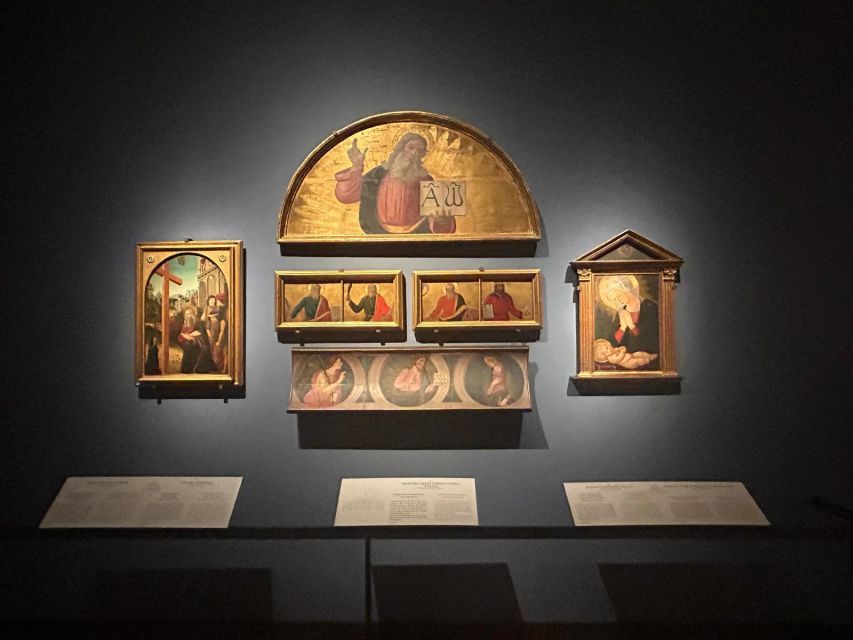
- Painting galleries that run from Medieval to Renaissance, including Giotto and Botticelli
- Self-paced audio app: bring charged smartphone, internet access, and your own headphones
Other Accademia visits we have walked through in Florence
Accademia Gallery entry that actually saves time
Let’s talk value, because this is where the ticket price starts to make sense. At about $38 per person, you’re paying for two practical wins: a reserved timed entry and a way in through a faster route instead of waiting at the ticket office with everyone else.
The entry process works like this: you meet your host outside near Via Ricasoli. Your voucher gets exchanged for a physical ticket, and then you move to the line for your entry window. The meeting point is in front of the Carrefour express supermarket, Via Ricasoli 115, with the red number—look for a staff member holding a white flag that says ENJOY ROME. That exact spot matters because it’s easy to lose time wandering around.
Now, the strict part: the Accademia controls access based on how many people are inside. When it’s crowded, your entry time can be slightly postponed. That’s not a flaw in your booking so much as the reality of a popular timed-entry museum. In practice, what helps is arriving early, and keeping your expectations flexible. A few reviews mention waits outside even when prebooked, so treat the street queue as a possible reality, then focus on the payoff once you’re through the doors.
Main hall: David, unfinished Michelangelo works, and what to focus on
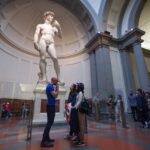
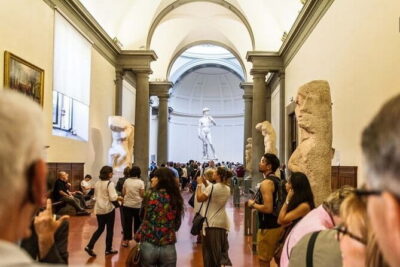
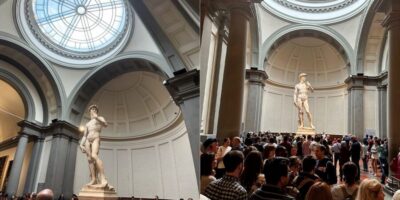
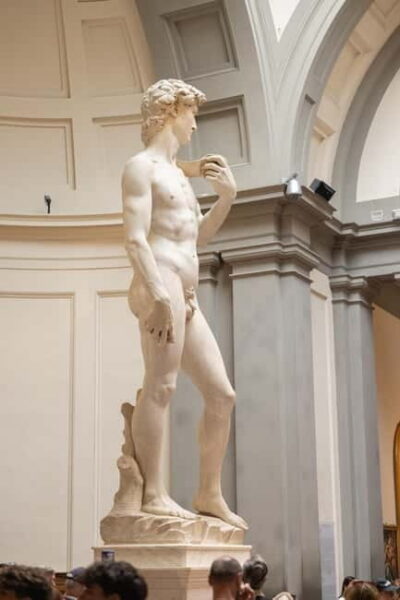
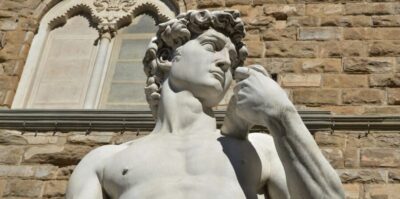
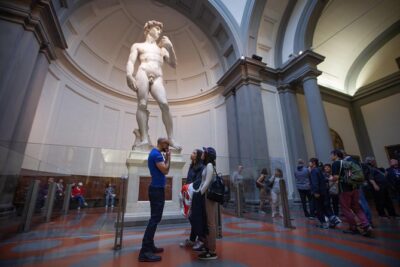
Once you’re inside, the museum’s pacing does you a favor. The main hall quickly gets you to the reason most people come: Michelangelo’s David. It’s iconic for a reason. Don’t rush past it like it’s a photo stop. I recommend taking a full minute just to look: the scale, the expression, and how the sculpture holds your attention from different angles as you reposition.
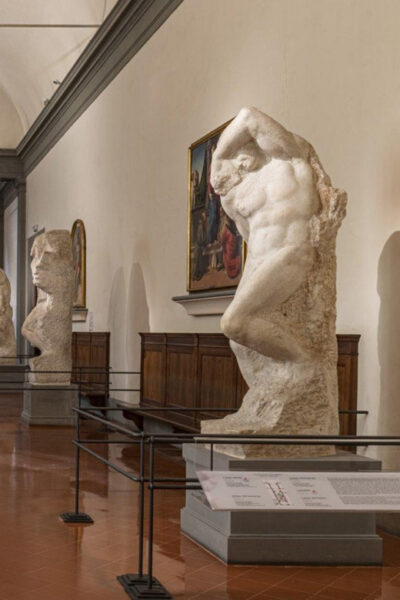
Right near that highlight, you’ll also see some of Michelangelo’s unfinished works. This is one of the best parts for people who like seeing art as a process, not just a finished product. You’re effectively getting a peek at how genius turns into technique, and what’s left mid-work when something stops or changes. Even if you’re not a sculpture nerd, it makes David feel more grounded and human.
The practical tip here is stamina. The Accademia involves walking between rooms and levels. Wear shoes that won’t punish you after 30 minutes, and keep an eye on signage so you don’t waste time backtracking.
Gipsoteca: original plaster models that explain the sculptor’s brain
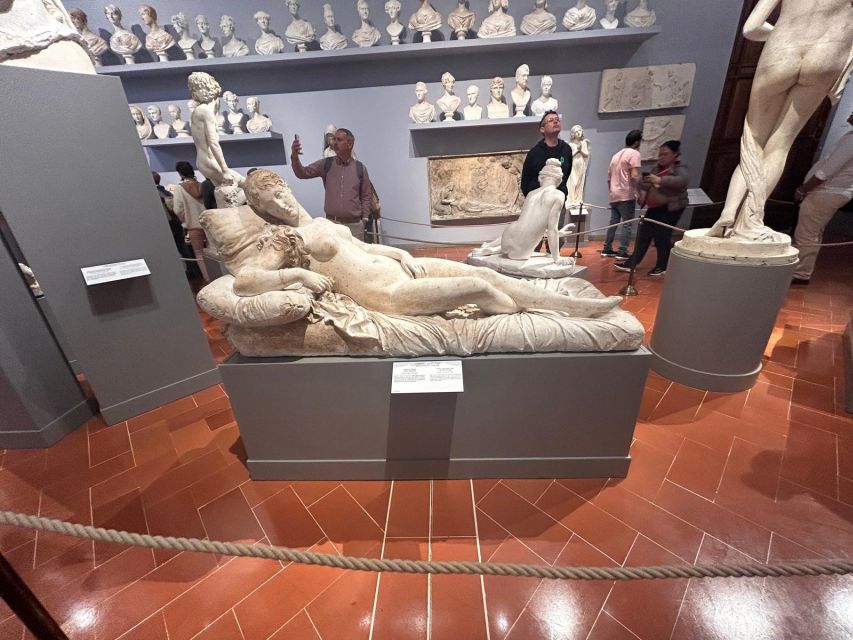
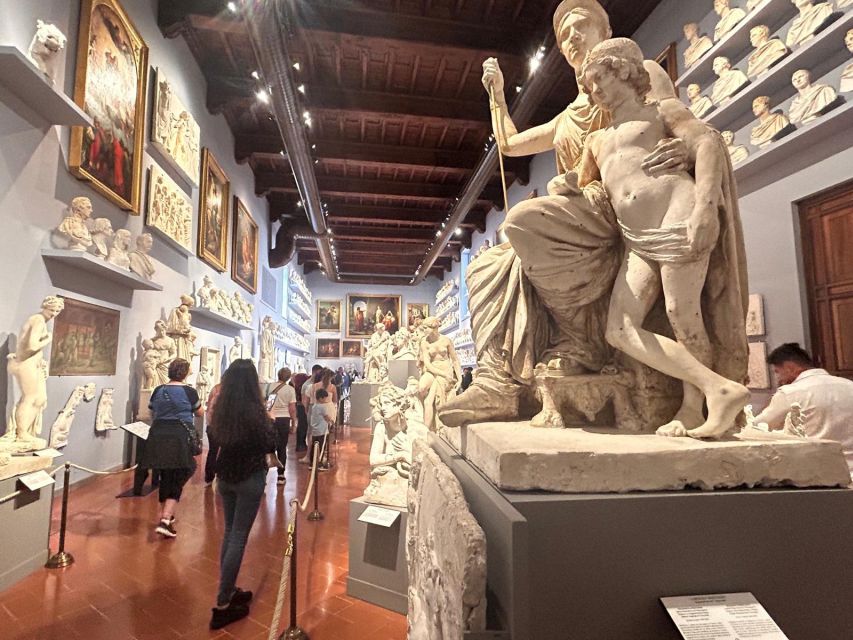
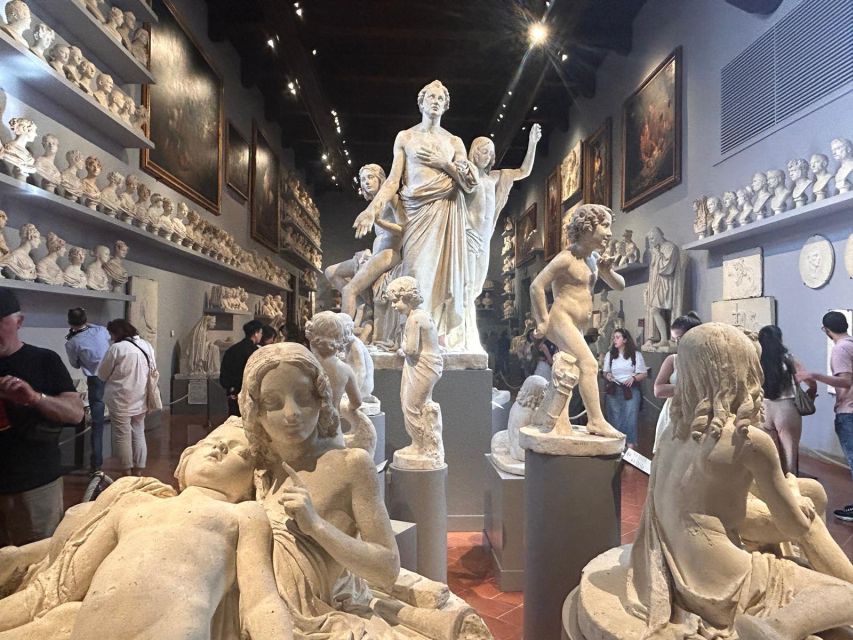
After the big statue moment, the experience shifts in a smart way. The Gipsoteca takes you from stone impact to the messy, thoughtful world underneath: original plaster models made by 19th-century Florentine sculptors.
Why you’ll care: these models show how artists study form in a more flexible medium. Plaster models can feel like backstage access. You get to see proportions and surfaces before the final material work takes over. It also changes the pace. Instead of only standing and staring, you can compare pieces and notice patterns in how shapes get built.
This section is also a nice reset if the main hall felt crowded. The museum still gets busy, but plaster rooms often feel calmer once your eyes adjust.
If you’re visiting on a hot day, plan for it. One review specifically points out it can be very hot, and bringing water helps. That’s not an optional extra in Florence summers—it can be the difference between enjoying the museum and feeling like every wall is melting.
Medici musical instruments: the Stradivarius moment
One of the surprises in the Accademia lineup is the focus on sound and craft. You’ll get to see original musical instruments from the Medici collection, including 3 by Stradivarius.
This part works because it’s not trying to compete with David. It’s adding another layer: Florentine power wasn’t only art on canvases and marble in halls. It was also the tools of culture—the instruments that would have been used in elite settings.
If you enjoy objects with a story, slow down here. Even if you don’t know a lot about instruments, you can still appreciate what makes them museum-worthy: the workmanship, the materials, and the idea that these were real-world instruments, not replicas meant for decoration.
Painting galleries: Giotto and Botticelli, then altarpieces upstairs
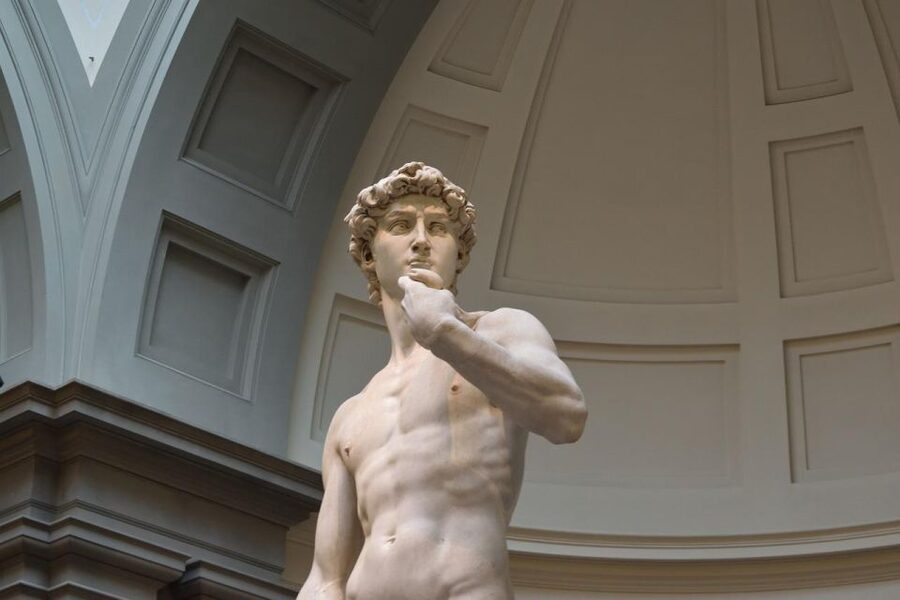
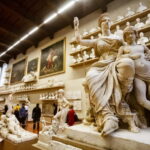
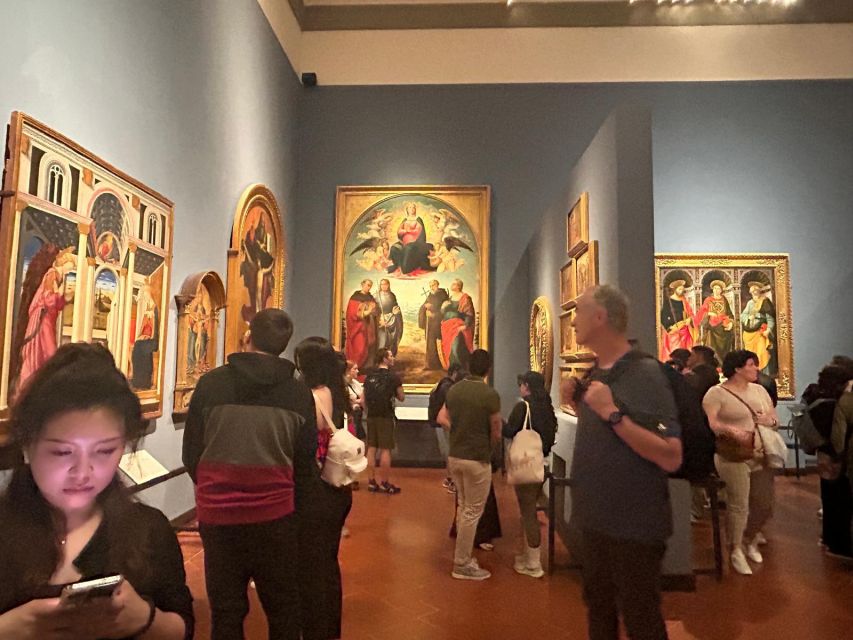
Once you move into the painting galleries, the Accademia becomes a timeline you can walk through. You’ll see works by Medieval and Renaissance artists, with painters like Giotto and Botticelli called out among the highlights.
What I like about the setup is that it helps you see evolution, not just isolated masterpieces. Medieval art and Renaissance art can feel like different languages. Here, you’re in the same building, so the change in style doesn’t feel abstract. It feels physical.
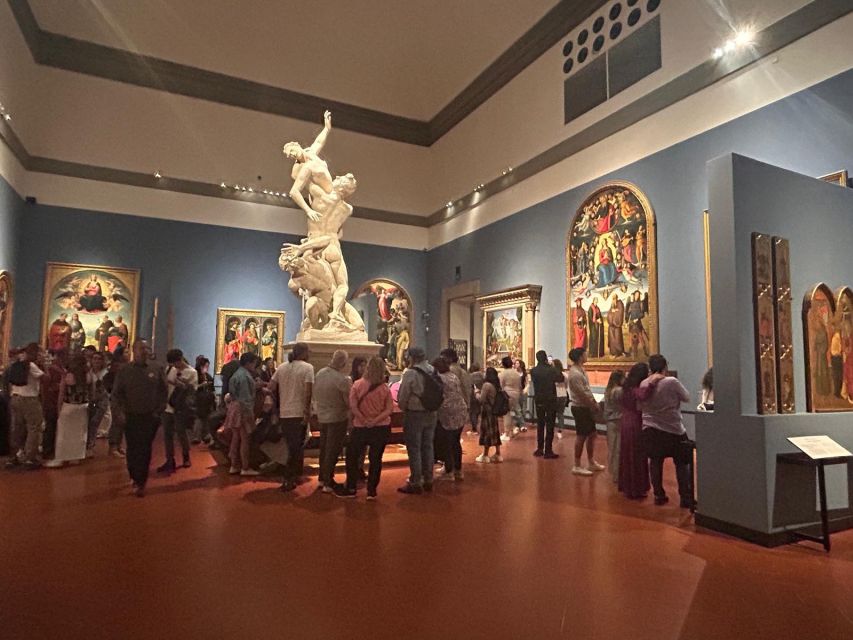
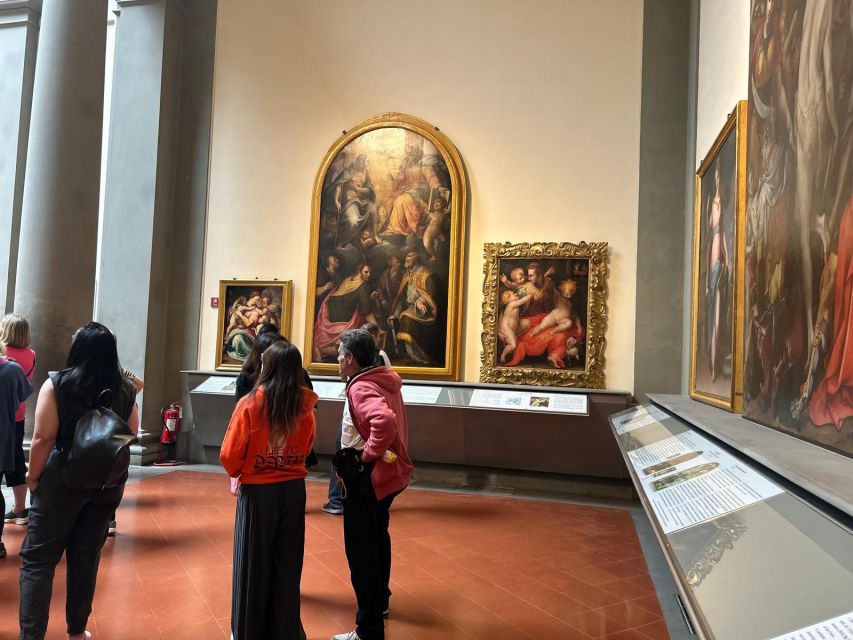
Then there’s the top floor, where you’ll see magnificent altarpieces. That’s a big deal, because altarpieces aren’t meant to be tiny and quiet. They’re meant to command attention and frame devotion. If you’re only used to looking at paintings in books, this is a good moment to adjust how you see scale and intention.
A helpful strategy: give the main sculpture moment your first energy, then let paintings and altarpieces take over the middle and end of your visit. Don’t plan to be super tired when you reach the upstairs sections; your eyes will work better if you pace yourself.
Every route to the David, compared


The POP Guide app: self-paced, but you must prepare
Here’s where this tour is very modern: the experience includes your POP Guide audio guide app, but you’ll be managing it yourself. There’s no separate spoken guide included with the ticket.
That doesn’t mean it’s useless. The app can help you move faster through the museum’s story, and it gives you a way to control the pace. But it also means you need a few basics, and you should take them seriously.
Bring:
- Your own headphones (not included)
- A charged smartphone
- Internet access
- Any needed ID (especially for discount tickets for ages 6–17)
Download advice: you’re told to download the POP GUIDE app before arriving at the meeting point. At the meeting point, staff provide login credentials. That’s a lot easier if you’ve already installed the app at home.
A couple of reviews flag real-world issues. One notes that if you don’t have data connection, you can’t download the audio guide. Another says the audio guide does not work offline, even though it may be implied. And one mentions the map in the app can be confusing and not match the museum layout.
My practical fix is simple: download everything possible before you leave, keep your phone charged, and don’t assume offline mode will save you. If you get stuck, a staff member may help with access at the start—one review mentions wifi access during entry—but don’t count on it as your plan.
Also, remember: the app is a tool, not a substitute for observation. I still recommend looking at the art first, then using the audio to attach context to what you’re seeing.
Time management: timed entry, hot lines, and where delays happen
This activity runs about 1 day, with a check for starting times. The museum’s busiest times can affect when you actually pass through the security/entry gate, even with a timed ticket.
What you should expect:
- You’ll exchange your voucher for a physical ticket at the exact meeting point.
- You may have a wait outside before entry.
- Once inside, you can move at your own pace with the audio app.
Think of it like this: the “skip the line” piece mostly reduces the worst waiting (ticket office chaos). It does not guarantee you never wait at all, because museums control capacity and security. You might get an extended wait due to organizational issues, so keep your schedule loose around your entry window.
For a smoother visit, show up early at the meeting point. One review says arriving early helped reduce time taken to enter. Another praises the skip-the-line aspect as a must because without it, waiting could be hours. Both points agree on the same theme: your timing plan matters.
And yes, walking adds up. Bring water and take small breaks. This is Florence, and the museum doesn’t pause because you need shade.
Who should book this Accademia entry with audio guide?
This is a strong fit if you:
- Want timed entry and a separate entrance to reduce the worst queues
- Love sculpture and want to see David and Michelangelo’s unfinished works in a single visit
- Like museum learning that’s self-paced, not tied to a group walking schedule
- Have a smartphone ready for an audio app and you’re comfortable using it
It may be less ideal if you:
- Don’t want to rely on phone audio at all
- Have trouble with app setup or spotty mobile internet
- Plan to bring large bags or luggage (bags are not allowed)
Families can do well too, especially with the discounted ticket rules in mind for ages 6–17, which require valid photo ID with a birth date.
Should you book this Accademia Gallery ticket + POP Guide?
I’d book it if your top priority is getting into the Accademia without spending half your trip in lines. The timed entry + separate entrance is the main reason this is worth considering, and the museum content delivers: David, Michelangelo’s process clues, the Gipsoteca plaster models, Medici instruments with Stradivarius examples, and then the painting galleries that lead into upstairs altarpieces.
But book smart. Make sure your phone is ready for audio (downloaded, charged, and usable), bring your own headphones, and accept that a short wait outside can still happen. If you handle the tech part, you’ll get an efficient, high-impact visit.
If you’re already comfortable with self-guided museum visits and you want to spend your time looking rather than figuring out logistics, this is a practical choice for Florence.
FAQ
What’s included with this Accademia Gallery experience?
You get an Accademia Gallery entrance ticket and access to the POP Guide audio guide app.
Do I need headphones?
Yes. Headphones are not included, and the information advises you to bring your own headset for the best experience.
Where is the meeting point to exchange my voucher?
Meet your host in front of the Carrefour express supermarket at Via Ricasoli 115 (look for the red number) and find a staff member holding a white flag that says ENJOY ROME.
Does this include a guided tour inside the museum?
No dedicated guide is listed as included. The experience provides an audio guide app, and you explore at your own pace.
Is it really skip-the-line?
The experience includes skip-the-line entry through a separate entrance, intended to avoid the ticket office line, though entry can still be affected by museum capacity control.
What do I need to download before I arrive?
Download the POP GUIDE Audio Guide App from the App Store or Google Play before you arrive at the meeting point.
What if I don’t have internet on my phone?
You may have trouble downloading the audio guide without internet access. The app also requires a charged smartphone, and staff provide login credentials at the meeting point.
Are there restrictions on bags or luggage?
Yes. Pets are not allowed, and luggage or large bags are not allowed.
Is the museum wheelchair accessible?
Yes, the activity is listed as wheelchair accessible.
Are there discounts for children?
To get the discounted ticket for ages 6–17, you need to present a valid photo ID with their birth date.
More Florence Tours We Have Reviewed
- Florence: Skip-The-Line Uffizi Gallery Timed Entry Ticket
★ 4.5 · 27,832 reviews - Tuscany Day Trip from Florence: Siena, San Gimignano, Pisa and Lunch at a Winery
★ 5.0 · 21,634 reviews - Florence: Timed Entry to Michelangelo’s David + Audio App
★ 4.6 · 19,496 reviews - Florence: Leonardo Interactive Museum Entry Ticket
★ 4.5 · 12,957 reviews - Florence: Michelangelo’s David Skip-the-Line Entry Ticket
★ 4.5 · 12,764 reviews
Standing Before David, Again
- Florence: Timed Entry to Michelangelo’s David + Audio App
★ 4.6 · 19,496 reviews - Florence: Michelangelo’s David Skip-the-Line Entry Ticket
★ 4.5 · 12,764 reviews - Florence: Timed Entry Ticket to Michelangelo’s David & eBook
★ 4.6 · 4,049 reviews - Florence: Art Tour, Accademia Gallery and David
★ 4.5 · 2,407 reviews - Michelangelo’s David, Accademia & Uffizi Small Group Tour
★ 4.5 · 1,986 reviews
More Time With the Accademia
- Florence Accademia Gallery Tour with Entrance Ticket Included
★ 4.5 · 6,148 reviews - Florence: Accademia Gallery Guided Tour
★ 4.6 · 4,156 reviews - Uffizi & Accademia Timed Entry: Small Group Duomo Walking Tour
★ 4.5 · 3,630 reviews - Florence: Accademia Gallery Skip-the-Line Guided Tour
★ 4.8 · 3,044 reviews - Florence: Art Tour, Accademia Gallery and David
★ 4.5 · 2,407 reviews
Fresh from our Florence review desk
- Small-Group Pasta Cooking Class and Market Tour in Florence★ 5.0 · 3 reviews
- Palatina Gallery and Pitti Guided Tour in Florence★ 5.0 · 3 reviews
- Tuscan Evening Tour: Fiat 500, 8:30 to 10 PM★ 5.0 · 3 reviews
- Journey into Art: Florence’s Accademia★ 4.5 · 3 reviews
- Paint and Drink Florentine Hills★ 5.0 · 3 reviews
- Truffle hunting and lunch experience, with Vinci and winery.★ 4.5 · 3 reviews
Accademia Gallery Tours, compared.
 ★ 4.5Florence Accademia Gallery Tour with Entrance Ticket IncludedFrom $456,148 reviews
 ★ 4.6Accademia Gallery Guided TourFrom $534,156 reviews
 ★ 4.5Uffizi & Accademia Timed Entry: Small Group Duomo Walking TourFrom $503,630 reviews
 ★ 4.8Accademia Gallery Skip-the-Line Guided TourFrom $413,044 reviews
 ★ 4.5Art Tour, Accademia Gallery and DavidFrom $582,407 reviews
 ★ 4.6Accademia Gallery Guided Tour with Entry TicketFrom $492,253 reviews
 ★ 4.8Uffizi Gallery and Accademia Gallery Guided TourFrom $1402,028 reviews
 ★ 4.5Michelangelo’s David, Accademia & Uffizi Small Group TourFrom $471,986 reviews
Browse the lists this tour appears in