
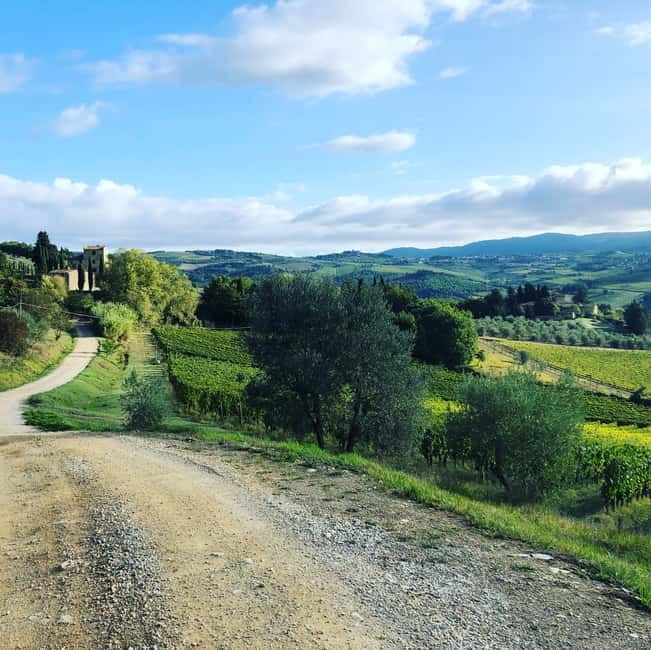
Reviewed · CHIANTI WINE TOURS
Florence: Hiking Tuscany & Chianti wine 3 wineries and lunch
Chianti tastes better when you earn it on foot. This small-group tour gets you moving through Tuscan vineyards and olive groves, then rewards you with tastings at three organic or biodynamic wineries plus lunch in the heart of the Chianti Classico area. You’re not just drinking and leaving; you’re learning how wine and olive oil are made while you hike short sections on easy paths.
I especially like the guide style I’ve seen described around this experience—Lorenzo and Stefano in particular bring the region to life with clear explanations and a friendly pace. I also love how the day mixes big outdoor time with real producer visits, including food tastings beyond wine (olive oil, cheese, salami, ham). The one drawback to weigh up is that you’ll still walk about 8 km on uneven ground, so it’s not a fit if you want flat, easy sightseeing.
In This Review
- Quick hits before you lace up
- Why this Chianti Classico wine hike feels different
- Panzano in Chianti start: minivan rides and a little mystery
- The morning walk through Conca d’oro: a natural amphitheater vibe
- Stop 1 in Panzano: a medieval cellar and family wine history
- The second walk and winery: olive groves, then 3 generations
- Lunch at a family organic winery: starter, pasta, and pairing wine
- The last stop: a modern winery with old-school knowledge
- Olive oil, cheese, salami, ham, and saffron: not just wine
- How hard is the walking really? 8 km of uneven Tuscan paths
- The guide makes the day: names you might hear, the way they teach
- Weather and plan shifts: rain or shine with a safety net
- Group size and timing: why 8 hours works
- Price and value: what $239 buys you in real terms
- Who should book this Tuscany hiking and wine tour?
- Should you book this tour? My call
- FAQ
- How much walking is involved?
- What’s included besides wine tastings?
- Is the tour mostly flat and easy?
- Does this tour run in bad weather?
- Where do I meet in Florence?
- Where will I be dropped back in Florence?
Quick hits before you lace up
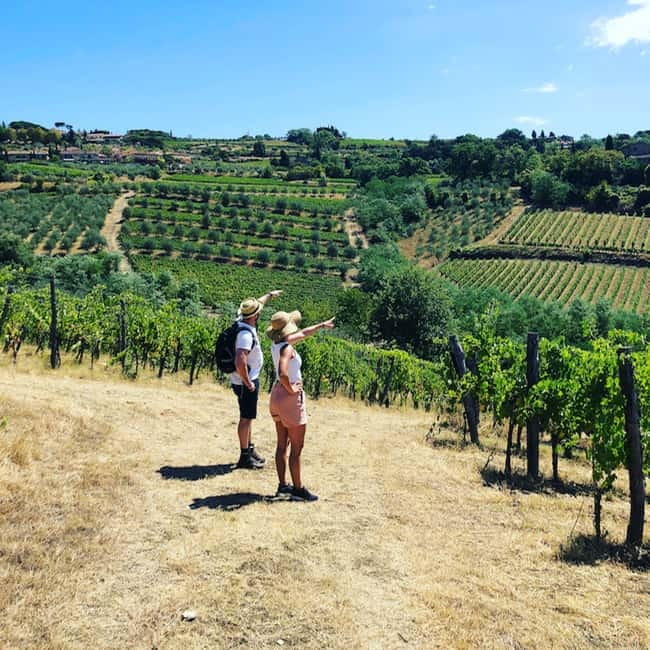
- Max 7 people means you actually get questions answered, not just a headset lecture
- 3 organic/biodynamic winery stops with tastings across 11 wines plus food pairings
- 8 km of walking on mostly easy paths, but expect ups/downs and uneven terrain
- Hike through Chianti Classico on foot starting from Panzano in Chianti
- Saffron producer stop + extra virgin olive oil tastings add variety to the day
Back to the Chianti hills for a few more pours
Why this Chianti Classico wine hike feels different
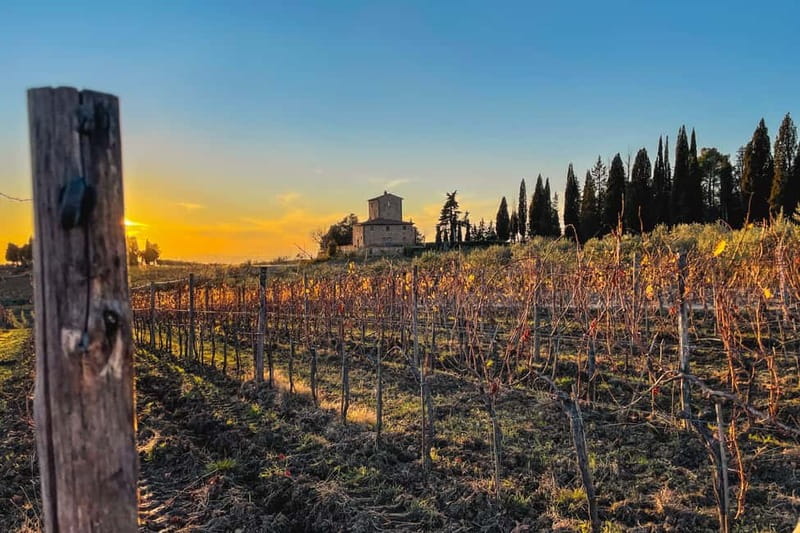
Most Tuscany wine days are bus-to-views-to-storefront. This one is built around moving first, then tasting where the work happens. You start in the Chianti Classico wine world and spend your time walking through vineyards and olive groves—so when you taste, you understand what you just walked past.
The key is the balance. You’re not doing a long, exhausting trek. Instead, it’s a sequence of short hikes that keeps the day fun and social. The guide also weaves in practical context—like how the landscape around the vines shapes the wine, and how wine and olive oil production connect to local routines.
And yes, you drink wine. But you also learn why these producers care about sustainability, and you get to meet people who’ve been making wine and olive oil for decades. If you like Tuscany where the details are human-sized rather than postcard-sized, this tour makes a lot of sense.
Panzano in Chianti start: minivan rides and a little mystery
The day begins in Panzano in Chianti, with a minivan that carries you along the smaller country roads of the region. Those drives matter more than you might think. They’re part of how you reach working vineyards and villages without wasting hours in transit.
Pickup is not a hotel pickup. You meet at Café lietta (look for the sign for Out of the box Florence or the guide with the van). The tour is structured so you arrive about 10 minutes early, which helps the group launch smoothly.
One fun detail: the end drop-off area is described as having multiple possibilities, and you’ll return to Florence at one of two points. The exact drop-off location is treated like a small surprise, with options at Piazza della Signoria 28 and Via S. Gallo 140/red.
The morning walk through Conca d’oro: a natural amphitheater vibe
Your hike day kicks off with a walk through Conca d’oro, described as a natural amphitheater where some of the best Chianti Classico wines are produced. This is the kind of spot where you feel the geometry of the vineyards—how the area is shaped to support grape growing.
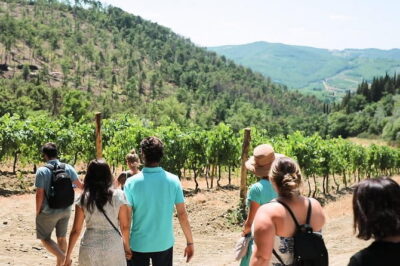
From there, the route links vineyards to short stretches of countryside walking. You’ll move at a pace designed to work for real humans, not just endurance athletes. The paths are described as easily accessible and suitable for any skill levels, but you should still expect uneven ground and some ups and downs.
What I’d plan for: bring water and wear shoes that handle small dips and rises. Even when the distance is “manageable,” your feet will feel it on the uneven Tuscan surfaces.
Stop 1 in Panzano: a medieval cellar and family wine history
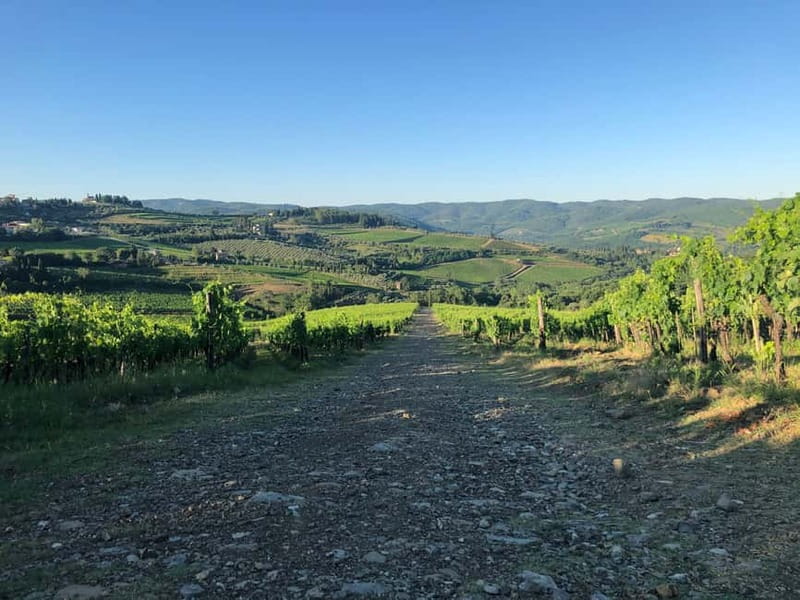
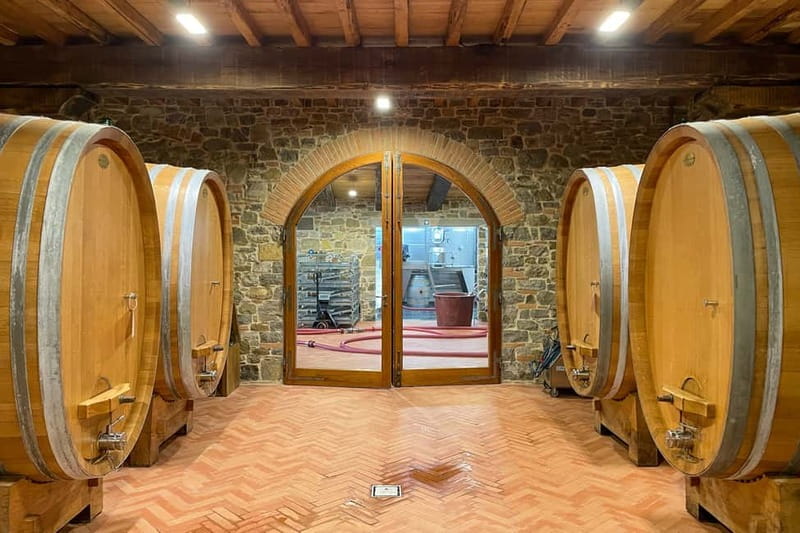
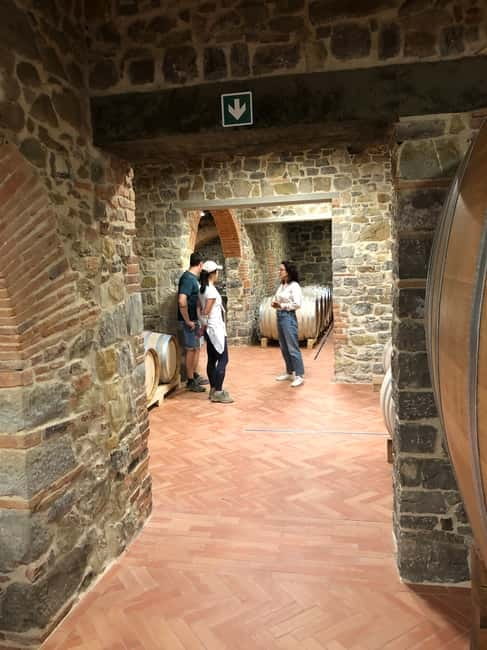
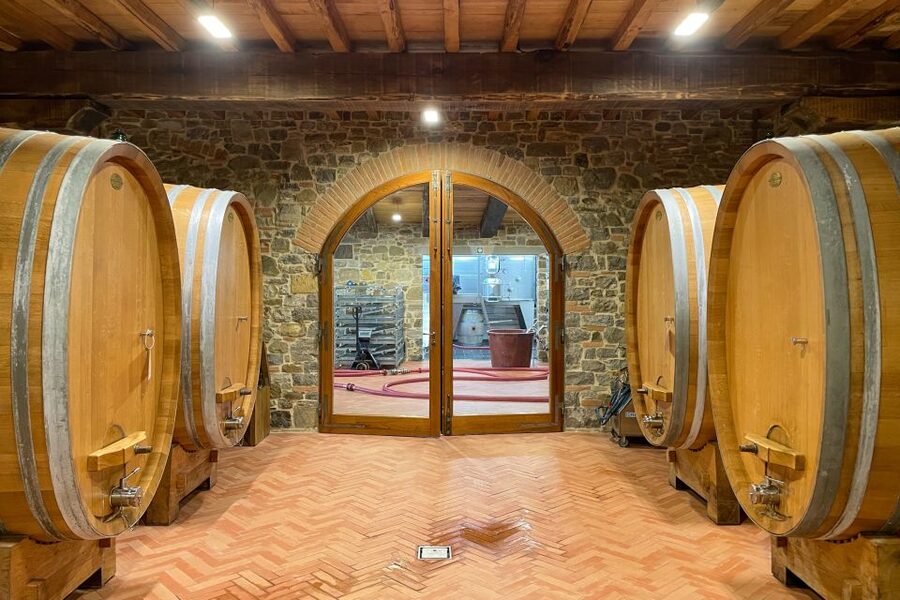
The first winery stop is set in a historical space connected to Panzano in Chianti. This is a family-run winery operating in a cellar area described as dating back to the 12th century. It’s also noted as the second oldest building in Panzano, and it was used as a medieval post.
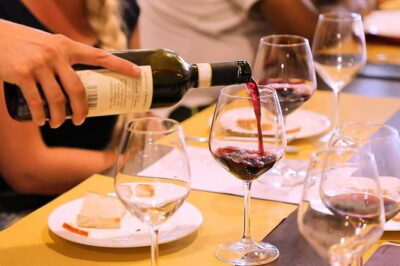
That matters because it changes the tone of the tasting. You’re not only hearing about the taste; you’re in a building that has watched centuries of local life. The tasting here typically includes wine and food pairings, all guided by the wine hiking guide.
If you’re the type who likes the story behind what’s in your glass, this first stop sets the hook. It also makes the later stops more interesting because you can compare styles and approaches as you move through different types of producers.
Practical note: even with a set plan, winery supplies can affect what’s available at the moment. The overall experience stays focused on wine education and tasting, but you may not get every product every time.
The second walk and winery: olive groves, then 3 generations
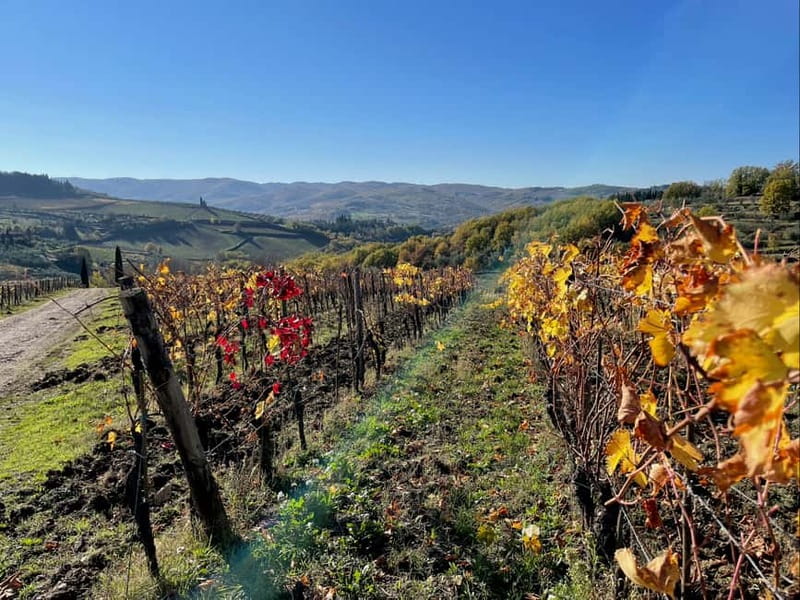
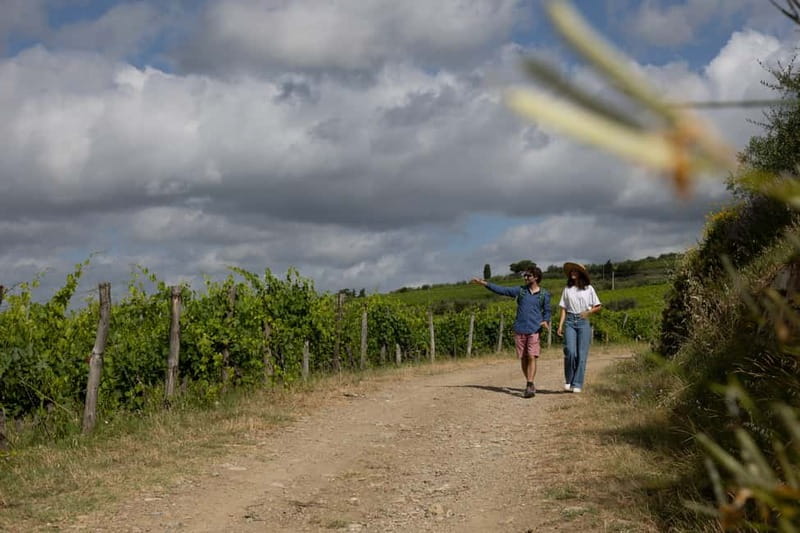
Between winery stops, you head out again on foot through olive groves and vineyards. This in-between time is underrated. It’s where the day shifts from “event” into “time in Tuscany.” You’ll get views and fresh air, and your guide often uses the walking breaks to point out local fruit and flowers.
The second winery stop is described as a producer shaped by three generations of local farmers. You’ll learn more about how the wine and olive oil traditions are passed down, and you’ll taste wines alongside regional items.
There’s also a timing wrinkle built into the day: lunch can be postponed to the next stop sometimes. That’s not a problem, but it does mean you might want to keep your energy steady for the afternoon rather than assuming lunch hits exactly when you first want it.
More Tuscan cellars worth the drive from Florence
- Tuscany Day Trip from Florence: Siena, San Gimignano, Pisa and Lunch at a Winery
★ 5.0 · 21,634 reviews

Lunch at a family organic winery: starter, pasta, and pairing wine
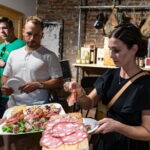
Lunch is provided at a family organic winery. What you get is described clearly: a starter and pasta, served with wines from the property. It’s the kind of meal that feels like it belongs in the region rather than a generic tour lunch.
This part of the day is also a good reset. You’ve already walked once, you’ll walk again after lunch, and you’re sampling multiple wines. A proper meal helps keep the pace comfortable and keeps the day from turning into constant small sips with no real food.
One more practical point: you may get lunch at the place where it fits best based on winery logistics and the day’s flow. When lunch is delayed, you’ll still have the same overall structure: hike, tasting, meal, then final winery stop.
The last stop: a modern winery with old-school knowledge
The final winery is described as modern, created by Italian artists, and located at a high hill position with views that include Montefioralle and a nearby castle setting. You’re finishing with a view, but also finishing with a contrast.
Here, modern techniques are combined with time-tested knowledge—the idea is that innovation and tradition can coexist when the producer understands the land. The last tasting is designed to cap the day on a high note, tying together what you learned about wine-making choices earlier.
This last stop also changes the mood. By then, you’ve walked through vines, tasted through history, and had lunch. Now the experience feels more like a finish line: you know what to pay attention to in the wine, and you’re tasting with context rather than just curiosity.
Olive oil, cheese, salami, ham, and saffron: not just wine
One reason I’d pick this tour over a typical wine-only day is the extra food and production angles. In addition to wine tastings at the three wineries, you’ll also have:
- Extra virgin olive oil tastings (included)
- Cheese, salami, ham tastings
- A stop connected to a saffron producer
That mix matters. Wine is only one part of Tuscan identity. Olive oil is the everyday sibling of wine, and saffron brings a different kind of local agriculture into the story.
Also, the guide’s role becomes more useful here. When you taste olive oil next to cheese and cured meats, you learn faster through comparisons than through a lecture alone.
And if you’re lucky with timing, you may even encounter olive harvest activity—some past experiences describe seeing harvest action in season. It’s not something you should count on every time, but it’s the kind of “only-in-Tuscany” moment this tour can capture.
How hard is the walking really? 8 km of uneven Tuscan paths
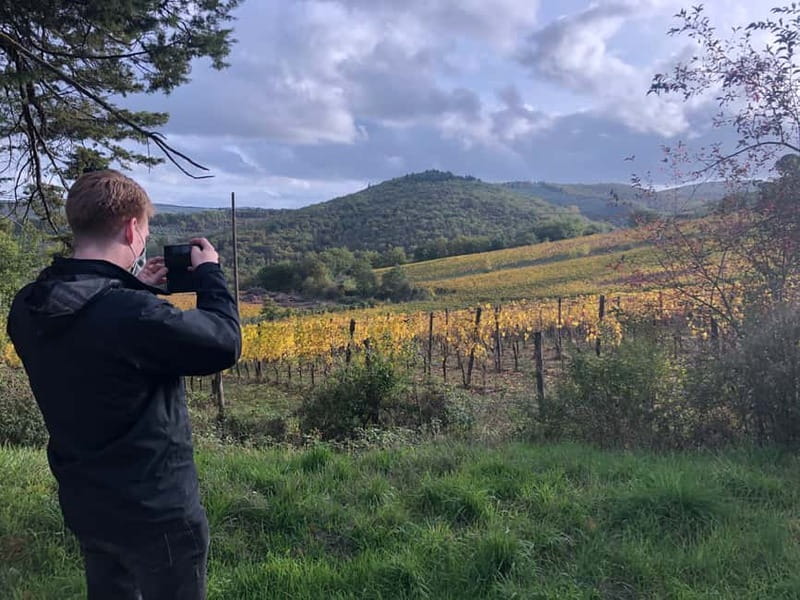
The day includes about 8 km of walking. Paths are described as easily accessible and suitable for any skill levels, but the terrain is still uneven with ups and downs—and it’s noted that there are more downs than ups.
So I’d treat this as moderate hiking, not a strolling tour. If you’re comfortable walking for a couple hours on uneven ground, you’ll be fine. If you need flat surfaces, this won’t feel relaxing.
A few items make a big difference:
- wear hiking shoes
- pack water
- bring biodegradable sunscreen
- use a sun hat and sunglasses
You’re also told not to bring luggage or large bags, which helps you move freely. A small day bag is the realistic approach.
The guide makes the day: names you might hear, the way they teach
This tour leans hard on the guide experience. In multiple accounts connected to this activity, the guides stand out for passion and for explaining how wine and olive oil production work in a way that feels connected to the places you walk through.
Lorenzo comes up often for flexibility when weather changes and for sharing local favorites like small towns during backup plans. Stefano is also cited for keeping the hiking engaging with local knowledge beyond wine—fruits, flowers, and the feel of Tuscany on foot.
One more thing I value: the day is designed for a small group (up to 7), so your guide can actually adjust pace, answer questions, and tailor moments when plans shift.
Weather and plan shifts: rain or shine with a safety net
This tour runs rain or shine, with cancellation only linked to severe weather alerts (orange or red). That means you should pack for clouds and possible downpours, not just sun.
In heavier rain, not every hike segment may work. When that happens, the guide is described as offering backup adventures—often still keeping the day interesting with alternative walking or small-town time. You might not see every exact hillside path, but the overall experience stays in the Chianti rhythm.
So: don’t assume you’ll always walk every listed stretch. Do assume you’ll still learn, taste, and spend the day in the working wine and olive world.
Group size and timing: why 8 hours works
The tour runs about 8 hours, and it’s capped at 7 participants. That’s a big part of the value for me. In a smaller group, you spend more time actually talking and tasting with guidance instead of waiting.
The timing also makes sense for Florence visitors. You get a full Tuscan day without needing to stay overnight in the countryside. You leave from Florence, spend the day in Chianti around Panzano, then return to central meeting points.
The minivan ride time (described as around 1 hour on one segment) helps you cover distance efficiently. You don’t lose the day to road time.
Price and value: what $239 buys you in real terms
At $239.03 per person, you’re paying for more than transport. This price covers:
- air-conditioned minivan transport
- a guided wine hiking day
- walking about 8 km
- tastings at three organic/biodynamic wineries
- 11 wines tasted (as described)
- extra virgin olive oil tastings
- cheese, salami, ham tastings
- lunch with starter and pasta in a family organic winery
- a stop tied to a saffron producer
- small-group experience capped at 7
So the real question isn’t whether the price is “low.” It’s whether it replaces what you’d otherwise do on your own. If you were to arrange a similar day—getting to Panzano, booking multiple winery visits, planning tastings, and coordinating lunch—you’d spend time and likely more money once you factor in transport and private guidance.
In other words, this is value if you want a guided day with several stops and built-in tasting education. It’s not value if you only want one winery and a quick photo run.
Who should book this Tuscany hiking and wine tour?
This tour fits best if you:
- want to explore Chianti Classico on foot, not just by car
- like small groups and an interactive guide
- want wine and olive oil learning in the same day
- enjoy meals that feel tied to local producers
It may not suit you if:
- you need completely flat walking (the terrain is uneven with downs)
- you have back or mobility concerns
- you need wheelchair access (not suitable)
- you’re traveling with kids under 18 (not suitable)
- you want a long museum-style day instead of outdoors
Also, there’s a no-luggage / no-large-bag rule, so plan to travel light with a small personal item.
Should you book this tour? My call
Book it if you want Tuscany that feels hands-on. You’ll walk 8 km, visit three organic/biodynamic wineries, and get a full tasting schedule plus lunch built in. The small group size makes it much more than a checklist day, and the producer focus (wine, olive oil, plus saffron) keeps the day from turning into just another wine circuit.
Skip it if you’re set on gentle, flat strolling or if uneven ground would be a problem for your comfort. Also skip it if you don’t like structured tastings and would rather explore wineries on your own schedule.
If you’re deciding between a simple wine tour and something more active, this is the sweet spot: active enough to feel real, paced enough to stay fun, and packed with tastings where you can actually ask questions.
FAQ
How much walking is involved?
You’ll walk about 8 km during the day. The paths are described as easily accessible, but the terrain is uneven with ups and downs, including more downs than ups.
What’s included besides wine tastings?
In addition to wine tastings at three organic/biodynamic wineries (with 11 wines tasted), you get extra virgin olive oil tastings, cheese and cured meats tastings, and lunch at a family organic winery (starter and pasta). There’s also a saffron producer stop.
Is the tour mostly flat and easy?
It’s designed to be manageable for any skill level, but it isn’t flat. Expect uneven ground with ups and downs, so comfortable hiking shoes matter.
Does this tour run in bad weather?
The tour happens rain or shine. It’s canceled only with orange or red weather alerts, and the plan may shift if conditions affect hike segments.
Where do I meet in Florence?
You meet at Café lietta. Look for the sign Out of the box Florence or the guide with the van. Hotel pickup and drop-off aren’t included.
Where will I be dropped back in Florence?
The tour ends back near the meeting point, but the final drop-off can be at either Piazza della Signoria 28 or Via S. Gallo 140/red. The exact drop-off point is described as a small surprise.
More Florence Tours We Have Reviewed
- Florence: Skip-The-Line Uffizi Gallery Timed Entry Ticket
★ 4.5 · 27,832 reviews - Tuscany Day Trip from Florence: Siena, San Gimignano, Pisa and Lunch at a Winery
★ 5.0 · 21,634 reviews - Florence: Timed Entry to Michelangelo’s David + Audio App
★ 4.6 · 19,496 reviews - Florence: Leonardo Interactive Museum Entry Ticket
★ 4.5 · 12,957 reviews - Florence: Michelangelo’s David Skip-the-Line Entry Ticket
★ 4.5 · 12,764 reviews
More Tuscan Wine to Taste
- Tuscany Day Trip from Florence: Siena, San Gimignano, Pisa and Lunch at a Winery
★ 5.0 · 21,634 reviews - Florence: Chianti Wineries Tour with Wine Tasting
★ 4.5 · 10,071 reviews - Small-Group Wine Tasting Experience in the Tuscan Countryside
★ 5.0 · 7,392 reviews - SMALL-GROUP Wine Safaris: Tuscan Wine Tasting Tours from Florence
★ 5.0 · 5,088 reviews - Winner 2025 Florence Sunset Food & Wine Tour by Eating Europe
★ 5.0 · 5,015 reviews
Chianti, Another Pour
- Florence: Chianti Wineries Tour with Wine Tasting
★ 4.5 · 10,071 reviews - Florence: Pisa, Siena, San Gimignano, and Chianti Experience
★ 4.5 · 8,393 reviews - San Gimignano, Siena, Monteriggioni, Chianti Day Trip with Lunch & Wine Tasting
★ 4.5 · 4,432 reviews - Florence: Pisa, Siena, S. Gimignano, Chianti Wine & Lunch
★ 4.6 · 4,354 reviews - Chianti Wine Tour from Florence
★ 4.5 · 3,979 reviews
Fresh from our Florence review desk
- Small-Group Pasta Cooking Class and Market Tour in Florence★ 5.0 · 3 reviews
- Palatina Gallery and Pitti Guided Tour in Florence★ 5.0 · 3 reviews
- Tuscan Evening Tour: Fiat 500, 8:30 to 10 PM★ 5.0 · 3 reviews
- Journey into Art: Florence’s Accademia★ 4.5 · 3 reviews
- Paint and Drink Florentine Hills★ 5.0 · 3 reviews
- Truffle hunting and lunch experience, with Vinci and winery.★ 4.5 · 3 reviews
Chianti Wine Tours, compared.
 ★ 4.5Chianti Wineries Tour with Wine TastingFrom $4110,071 reviews
 ★ 4.5Pisa, Siena, San Gimignano, and Chianti ExperienceFrom $528,393 reviews
 ★ 4.5San Gimignano, Siena, Monteriggioni, Chianti Day Trip with Lunch & Wine TastingFrom $834,432 reviews
 ★ 4.6Pisa, Siena, S. Gimignano, Chianti Wine & LunchFrom $774,354 reviews
 ★ 4.5Chianti Wine Tour from FlorenceFrom $593,979 reviews
 ★ 4.6S. Gimignano, Siena, Chianti Wine Tasting & LunchFrom $823,102 reviews
 ★ 4.5From Florence: Chianti Half-Day Wine Tour with TastingFrom $583,031 reviews
 ★ 4.5Siena, San Gimignano and Chianti Wines Day Tour from FlorenceFrom $782,542 reviews
Browse the lists this tour appears in