
Cooking class season is always a good idea. This one pairs hands-on fresh pasta and classic tiramisu with unlimited Italian wine, taught in central Florence by chefs like Joao and Matteo (names you’ll hear from the room). I especially like the step-by-step way you shape pasta (tagliatelle, ravioli, or fettuccine depending on the day) and the clear method for tiramisu’s layers. One drawback to consider: it’s not a fit if you have food allergies or need gluten-free cooking.
You’re not just watching. You mix, knead, shape, and then sit down to eat what you made with other people from around the world, which makes the whole experience feel more like an Italian dinner than a demo. The other practical win is the take-home digital recipe booklet plus a certificate of participation, so you can actually reproduce it later.
In This Review
- Key Things I’d Bet You’ll Notice
- Pasta and Tiramisu in Florence: The Real Point of This Class
- The Pasta Lesson: From Dough to Tagliatelle, Ravioli, or Fettuccine
- What to pay attention to while you’re working
- Why this matters for you back home
- Making Tiramisu: The Layering Skills Most People Skip
- The one skill that makes tiramisu taste like Italy
- Creative variations (but still grounded)
- Wine Tasting and Unlimited Wine: How It Fits Without Taking Over
- Your Sit-Down Meal: The Best Part Is Eating Your Own Work
- Group size can affect the vibe
- What You Take Home: Digital Recipes and a Certificate
- Price and Value in Florence: Why $46 Can Make Sense
- Who should treat this as a priority
- Logistics That Actually Matter (Without Turning This Into Paperwork)
- Who This Class Fits Best
- Should You Book This Pasta and Tiramisu Class in Florence?
- FAQ
- What dishes will I learn to make?
- How long is the class?
- Is this class beginner-friendly?
- Is wine included, and are there non-alcoholic options?
- Where is the meeting point?
- What languages is instruction in?
- What do I get to take home?
- Is it suitable for food allergies or gluten intolerance?
Key Things I’d Bet You’ll Notice
- Hands-on pasta shaping: You work dough, not just ingredients, and you’ll learn how the texture changes.
- Tiramisu method, not vibes: Layering, soaking, and balancing mascarpone are taught with real technique.
- Unlimited wine with food pairing: You taste Italian wines that match what you’re making.
- You eat your results: Then and there. No waiting for a restaurant bill or a separate dessert plan.
- Chef-led, English-taught class: Instruction is in English even when the staff speaks other languages too.
- Take-home digital recipes: Plus a certificate, which is small but satisfying.
Roll up your sleeves for another Florence cooking class
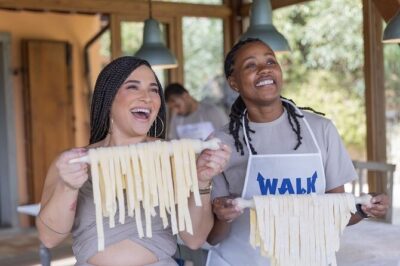
Pasta and Tiramisu in Florence: The Real Point of This Class
In Florence, the best food experiences have two traits. You learn a technique you can repeat, and you end up eating something you can’t fake later. This class checks both boxes.
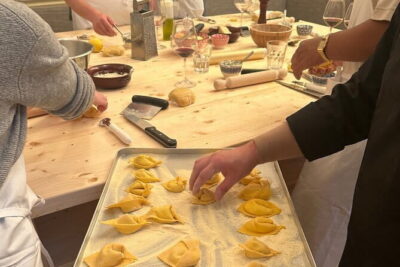
The menu is simple on paper: fresh handmade pasta and classic tiramisù. But the teaching is where it turns into a proper experience. You start with pasta basics—mixing, kneading, and then shaping—before moving to tiramisu, where the “secret” is getting layers and soaking right.
The location is also a practical plus. It’s in central Florence at via delle ruote 32/r, and the meeting spot is convenient enough that you can fold it into a normal day of sightseeing instead of planning a full separate logistics mission.
The Pasta Lesson: From Dough to Tagliatelle, Ravioli, or Fettuccine
This is where you get the most hands-on time, and it’s why the class feels worth it even if you’ve never cooked before. The chef shows you how to build dough correctly, then watches while you work it. You’ll learn that flour type, dough texture, and kneading pressure matter far more than fancy equipment.
The pasta shape depends on the day’s menu. You might make tagliatelle, ravioli, or fettuccine. Either way, you’re practicing the core skills: creating a workable dough, rolling it to the right thickness, and then forming pasta so it holds up when cooked.
What to pay attention to while you’re working
A good pasta class doesn’t just teach steps. It teaches cues. Watch for dough that tears too easily (often too dry or too firm) versus dough that feels sticky and hard to handle. The chef will help you fix issues in real time, which is one reason this is better than following a single video online.
Also, don’t rush the shaping part. Pasta looks simple, but the difference between good and great often comes from patience in small moments—edges sealed well, cuts clean, thickness even.
Why this matters for you back home
At home, your biggest challenge won’t be learning the recipe. It’ll be getting the dough texture right. This class gives you a real sensory reference: what the dough should feel like, and how it behaves when you roll and shape it.
Making Tiramisu: The Layering Skills Most People Skip
Once the pasta is rolling, the class shifts gears to dessert. Tiramisu is the dish that makes the room smell amazing and the results feel a little bit like magic—until you learn the technique.
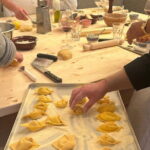
You’re guided through every step of building classic tiramisù: the mascarpone filling, the biscuit/coffee soaking, and the balance that keeps it creamy instead of soggy. The chef shows you how to layer without overdoing any one component, and then you do it.
A few more glasses poured across Florence
- Tuscany Day Trip from Florence: Siena, San Gimignano, Pisa and Lunch at a Winery
★ 5.0 · 21,634 reviews

The one skill that makes tiramisu taste like Italy
It’s the soaking. If the biscuits sit too long, you get mush. Too short, and you miss the flavor transfer. The chef’s approach helps you land in the sweet spot, so the dessert tastes cohesive instead of separated into “cookies plus cream.”
Creative variations (but still grounded)
The class also points out room for a personal twist. That’s helpful because it keeps tiramisu from feeling like a museum piece. After this, you’ll know which changes are realistic and which ones ruin the balance.
Wine Tasting and Unlimited Wine: How It Fits Without Taking Over
Wine can turn a cooking class into a party. Here, the wine is part of the plan. You do a wine tasting meant to complement what you’re cooking, and the session includes unlimited wine, with non-alcoholic options available too.
What I like about this setup is that it treats wine as a matching tool, not just a perk. You’ll be drinking while you cook, but the tasting context keeps it tied to the flavors coming out of the kitchen.
One caution: unlimited wine is still unlimited. If you want to stay sharp for pasta shaping and careful layering, pace yourself. Sip during rests, drink a little more during the meal, and don’t make the classic mistake of finishing the tasting before your dough has even left the table.
Your Sit-Down Meal: The Best Part Is Eating Your Own Work
After cooking comes the payoff. You sit down and eat the meal made from your pasta and tiramisu. This matters more than it sounds, because you get a direct feedback loop: you taste what your hands produced.
The class also creates a friendly, social table. You share the meal with fellow travelers, and the chefs keep the tone relaxed. Several people mention chefs who actively include everyone and keep the room moving at a comfortable pace. That’s not just good manners—it helps beginners learn without feeling rushed.
Group size can affect the vibe
The class is set up so you can participate rather than stand around. In some sessions, the group may be around 10 people and split into two tables for hands-on work. Either way, the structure is meant to keep you actively involved.
What You Take Home: Digital Recipes and a Certificate
This experience includes a digital recipe booklet. That’s more valuable than a vague memory because you’re getting written steps you can follow later, with the techniques you practiced while the chef was there to correct you.
You also receive a certificate of participation. It’s not going to change your life, but it is a nice keepsake, especially for families or solo travelers who want a tangible outcome beyond photos.
If you’re the type who likes to cook after trips, this take-home piece is the difference between a fun night out and something that sticks.
Price and Value in Florence: Why $46 Can Make Sense
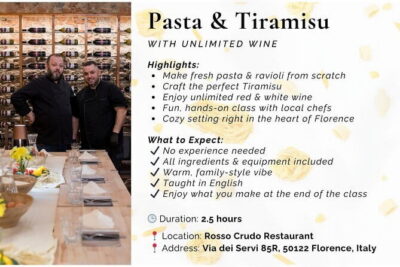
At $46 per person for about 150 minutes, this sits in the “value” zone for Florence activities. You’re paying for three things at once: expert instruction, real ingredients used for both savory and dessert, and a full meal including wine.
Here’s the math that matters. A cooking class with two dishes is usually expensive because it takes time and coaching. Adding unlimited wine raises the appeal, but you still get the core benefit: you learn techniques you can reuse.
Also, because there’s no requirement for prior cooking experience, you’re not paying for “advanced foodies only” skill level. If you’re new, you’re paying for guidance, and that’s exactly what makes it a good deal.
Who should treat this as a priority
If your Florence plan includes eating your way through neighborhoods, you’ll likely enjoy this as a “how it’s made” day. It’s also a strong choice if you want a break from museums and want something tactile.
Logistics That Actually Matter (Without Turning This Into Paperwork)
The meeting point is via delle ruote 32/r. The class is in central Florence and is reachable on foot from Florence city station—about a 10-minute walk.
The class runs about 150 minutes. That length is long enough to do real pasta work and still finish tiramisu and sit down to eat without feeling rushed.
What to bring is simple: comfortable shoes and a camera. Pets aren’t allowed.
Classes are taught in English, even though the instructor may also speak Italian, English, or Portuguese. If you’re traveling with people who don’t share a language, that English structure is a practical win.
Who This Class Fits Best
This class works for beginners. You don’t need prior cooking experience. It also seems flexible for different ages and group types, since the teaching style is designed to include everyone at their pace.
It’s not suitable if you have food allergies or gluten intolerance, based on the course details you’re given.
If you’re traveling solo, it’s a good way to meet people without forcing small talk everywhere. If you’re coming as a couple or with friends, you’ll enjoy the shared teamwork and then the shared meal.
Should You Book This Pasta and Tiramisu Class in Florence?
Yes, you should book it if you want more than a restaurant meal. You’ll leave with hands-on pasta technique, tiramisu layering skills, and a recipe booklet you can actually use.
Skip it only if dietary needs are a factor (food allergies or gluten intolerance), or if you know you won’t handle unlimited wine well and you’d rather keep things totally alcohol-free. Otherwise, this is one of those Florence experiences that turns your visit into something you can recreate later.
If you like cooking, even a little, make this part of your trip plan. It’s practical, social, and delicious in a way you can repeat.
FAQ
What dishes will I learn to make?
You’ll learn fresh handmade pasta and classic tiramisù from scratch.
How long is the class?
The class lasts about 150 minutes.
Is this class beginner-friendly?
Yes. No prior cooking experience is needed.
Is wine included, and are there non-alcoholic options?
Yes. Wine tasting is included, and the class features unlimited wine. Non-alcoholic options are available too.
Where is the meeting point?
You’ll meet at via delle ruote 32/r in Florence.
What languages is instruction in?
Classes are taught in English, with the instructor listed as speaking Italian, English, and Portuguese.
What do I get to take home?
You receive a digital recipe booklet and a certificate of participation.
Is it suitable for food allergies or gluten intolerance?
No. It’s not suitable for people with food allergies or those with gluten intolerance.
If you want, tell me your travel dates (and whether you’re a pasta/ravioli person or more of a tiramisu person). I can help you decide whether to schedule this as an earlier dinner plan or a later evening one so it fits your day best.
More Wine Around Florence
- Tuscany Day Trip from Florence: Siena, San Gimignano, Pisa and Lunch at a Winery
★ 5.0 · 21,634 reviews - Florence: Pasta Cooking Class with Unlimited Wine
★ 4.9 · 10,285 reviews - Florence: Chianti Wineries Tour with Wine Tasting
★ 4.5 · 10,071 reviews - Small-Group Wine Tasting Experience in the Tuscan Countryside
★ 5.0 · 7,392 reviews - Florence: Pasta & Tiramisu Cooking Class with Unlimited Wine
★ 4.9 · 6,708 reviews
More Florence Tours We Have Reviewed
- Florence: Skip-The-Line Uffizi Gallery Timed Entry Ticket
★ 4.5 · 27,832 reviews - Tuscany Day Trip from Florence: Siena, San Gimignano, Pisa and Lunch at a Winery
★ 5.0 · 21,634 reviews - Florence: Timed Entry to Michelangelo’s David + Audio App
★ 4.6 · 19,496 reviews - Florence: Leonardo Interactive Museum Entry Ticket
★ 4.5 · 12,957 reviews - Florence: Michelangelo’s David Skip-the-Line Entry Ticket
★ 4.5 · 12,764 reviews
More Florence Cooking Classes
- Florence: Pasta Cooking Class with Unlimited Wine
★ 4.9 · 10,285 reviews - Florence Pizza or Pasta Class with Gelato Making at a Tuscan Farm
★ 5.0 · 6,801 reviews - Florence: Pasta & Tiramisu Cooking Class with Unlimited Wine
★ 4.9 · 6,708 reviews - Florence: Pasta Cooking Class with Unlimited Wine
★ 5.0 · 6,413 reviews - Cooking Class and Lunch at a Tuscan Farmhouse with Local Market Tour from Florence
★ 5.0 · 4,831 reviews
Fresh from our Florence review desk
- Small-Group Pasta Cooking Class and Market Tour in Florence★ 5.0 · 3 reviews
- Palatina Gallery and Pitti Guided Tour in Florence★ 5.0 · 3 reviews
- Tuscan Evening Tour: Fiat 500, 8:30 to 10 PM★ 5.0 · 3 reviews
- Journey into Art: Florence’s Accademia★ 4.5 · 3 reviews
- Paint and Drink Florentine Hills★ 5.0 · 3 reviews
- Truffle hunting and lunch experience, with Vinci and winery.★ 4.5 · 3 reviews
Wine Tours, compared.
 ★ 5.0Tuscany Day Trip from Florence: Siena, San Gimignano, Pisa and Lunch at a WineryFrom $11421,634 reviews
 ★ 4.9Pasta Cooking Class with Unlimited WineFrom $2110,285 reviews
 ★ 4.5Chianti Wineries Tour with Wine TastingFrom $4110,071 reviews
 ★ 5.0Small-Group Wine Tasting Experience in the Tuscan CountrysideFrom $1077,392 reviews
 ★ 4.9Pasta & Tiramisu Cooking Class with Unlimited WineFrom $566,708 reviews
★ 5.0Pasta Cooking Class with Unlimited Wine6,413 reviews
★ 4.9Pasta & Tiramisu Cooking Class with Unlimited WineFrom $566,708 reviews
★ 5.0Pasta Cooking Class with Unlimited Wine6,413 reviews
 ★ 4.5Pisa, Siena and San Gimignano Day Trip with Lunch & Wine PairingFrom $786,006 reviews
 ★ 5.0SMALL-GROUP Wine Safaris: Tuscan Wine Tasting Tours from FlorenceFrom $1575,088 reviews
Browse the lists this tour appears in