
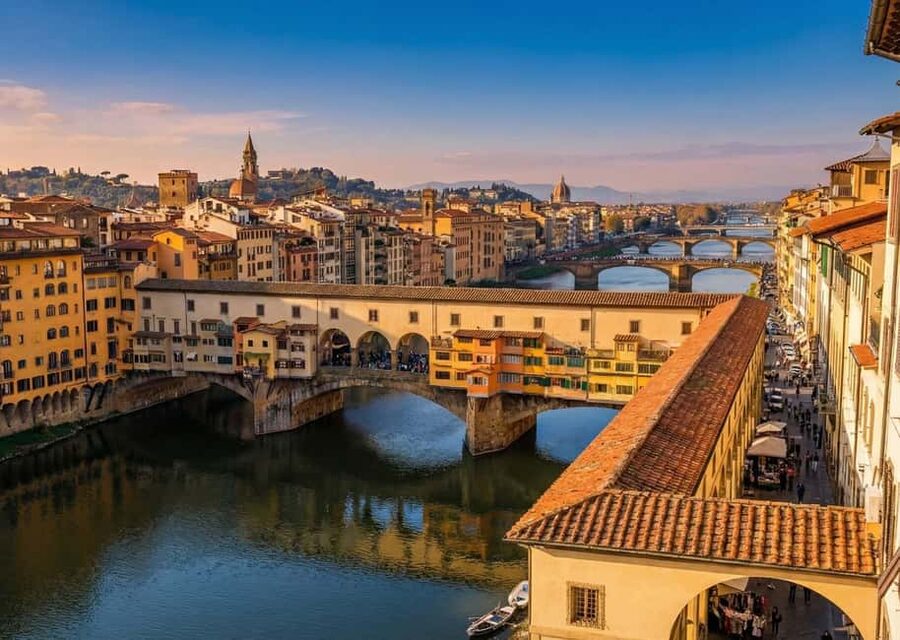
Reviewed · UFFIZI GALLERY TOURS
Florence: Uffizi, David & Gelato Walk with Art Historian
Florence hits hardest when you start reading it, not just seeing it. This semi-private art tour connects the dots between power, faith, and beauty while you move through the Uffizi and the Accademia. I like that it’s guided by an art historian who slows you down in the right spots, and I also love the small-group feel—max 9 guests—so you can actually ask questions.
You’ll also appreciate the practical extras: headsets so you hear every detail without shoulder-to-shoulder shoving, plus a gelato stop that’s tied to Florence’s Medici story. The main drawback is simple: it’s not a casual stroll. It’s a focused, museum-plus-walking format, so if you prefer free wandering and zero structure, this may feel like you’re being guided.
In This Review
- Key highlights you’ll feel right away
- Entering the day: a clear meeting point and a smarter start
- Why the Uffizi-with-an-art-historian format is the real value
- Uffizi stop 1: Botticelli’s Birth of Venus and the hidden way of thinking
- Uffizi stop 2: From medieval stiffness to Leonardo psychology
- After the museum: Piazza della Signoria and the corridor of power
- Gelato with a story: Bernardo Buontalenti and a Medici-era tradition
- Accademia arrives: skip the line and set up your Michelangelo moment
- Prigioni (The Slaves): seeing struggle before the famous statue
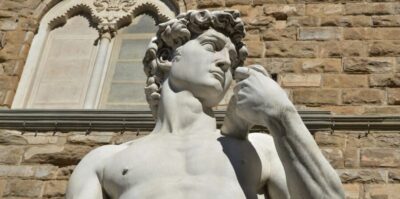
- Standing beneath Michelangelo’s David: political meaning in the details
- The small-group difference: why max 9 guests matters here
- Who this tour suits best
- Price and value: why $112 can make sense
- Guide quality: what you’ll likely notice in the delivery
- Should you book this Florence Uffizi, David, and gelato tour?
- FAQ
- FAQ
- How long is the tour?
- What’s the group size?
- Is it guaranteed to skip the lines at both museums?
- Who leads the tour?
- Is gelato included?
- Where do I meet the group?
- What’s included besides tickets and the guide?
- Do I need hotel pickup?
- Can I pay later or cancel?
Key highlights you’ll feel right away

- Priority skip-the-line entrances to both the Uffizi and the Accademia
- Art historian-led interpretation that turns paintings and sculpture into politics and symbols
- Max 9 guests, which makes it easier to hear, move, and ask follow-ups
- Michelangelo’s David with specific viewing cues like the veins in his hands and his furrowed brow
- A gelato tasting with Medici-era context, linked to Bernardo Buontalenti
More ways into the Uffizi, ranked by Florence visitors
Entering the day: a clear meeting point and a smarter start
You meet at Piazzale degli Uffizi, 1, in the courtyard on the right side of the Uffizi entrance. Look for a representative holding a Florence with Locals Tours flag under the Leonardo da Vinci statue, located opposite Door #3.
That meeting detail matters more than you’d think. Florence can make you feel like you’re playing hide-and-seek with landmarks, especially near major sites. Starting with a tight, recognizable pin keeps you calm so you can spend your energy on the art.
Also, this is a 3.5 to 4 hour experience with live English guidance and no hotel pickup. You’re responsible for getting yourself there, but once you’re there, the schedule is designed to get you through the most time-consuming parts first.
Why the Uffizi-with-an-art-historian format is the real value
The Uffizi can be overwhelming fast. You see a lot, you remember a few things, and you leave thinking you missed the “why.” This tour tackles that by making you read the images like a puzzle.
The big advantage is the combination of priority skip-the-line access plus expert interpretation. You’re not just walking into the galleries sooner—you’re walking in with a guide who knows how to translate symbols into meaning. And in a city where Renaissance art was often tied to religion, learning, and political ambition, that context is everything.
An added benefit is the use of headsets, included. In busy rooms, guides often end up talking over a crowd or shouting to get attention. Headsets help you keep your spot and still hear the explanation clearly, without crowding someone else’s view.
Uffizi stop 1: Botticelli’s Birth of Venus and the hidden way of thinking
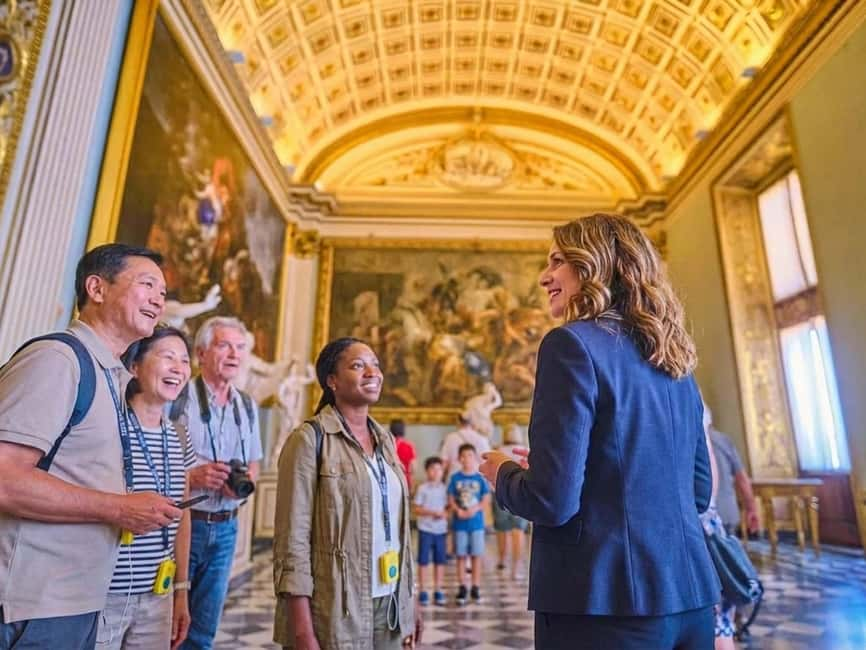
The tour begins near the Uffizi entrance area under the Leonardo da Vinci statue, then it gets into the paintings with a very specific lens: not just what you see, but what people believed.
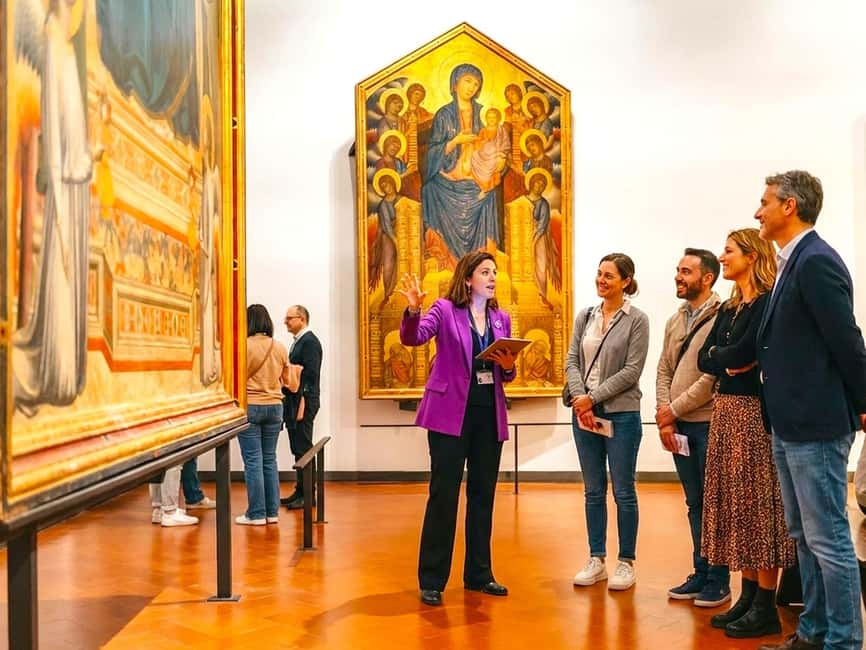
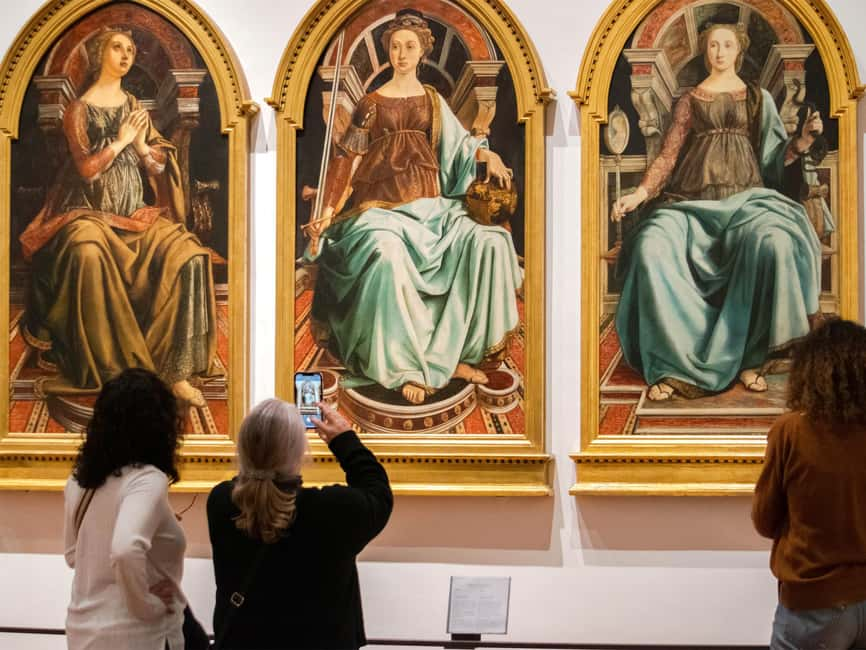
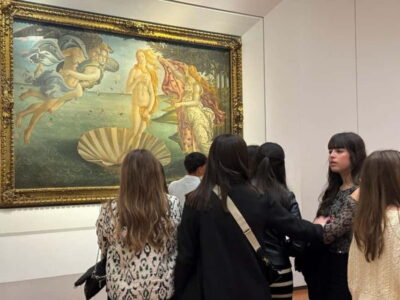
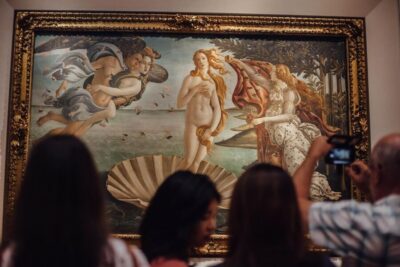
One standout moment is the discussion around Botticelli’s The Birth of Venus. You’ll focus on Neoplatonic codes embedded in the work—especially how the painting uses symbols to talk about love and divinity. Even if you’ve seen the image before, this framing changes how you look at it. Instead of treating it like a pretty scene, you start noticing how art was used to persuade, educate, and reflect elite ideas of beauty and the soul.
This is also where you’ll feel the tour’s underlying theme: the Renaissance wasn’t one style. It was a series of shifts in how artists pictured reality, emotion, and the human mind.
Uffizi stop 2: From medieval stiffness to Leonardo psychology
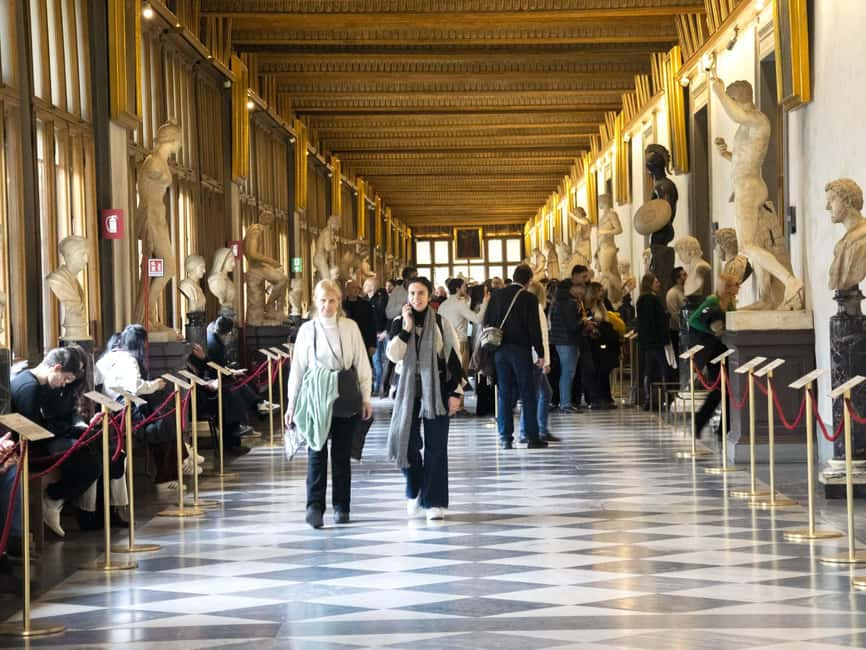
In the Uffizi, the guide helps you track a transformation you might miss if you’re just scanning wall after wall.
You’ll get a sense of how art moved away from medieval stiffness toward a Renaissance interest in psychological depth. The tour specifically connects this shift to the evolution of thinking you see in artists like Leonardo da Vinci—where inward emotion and perception matter—and it sets up the later muscular realism you’ll associate with Michelangelo.
That “connecting the dots” approach is the main reason a tour like this can feel worth it. It turns the gallery into a story rather than a checklist.
After the museum: Piazza della Signoria and the corridor of power
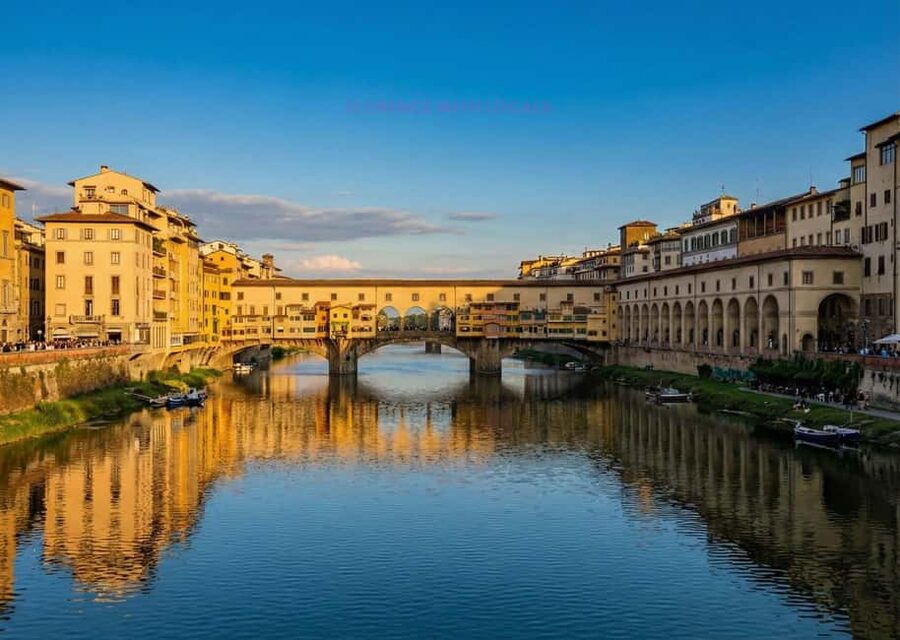
Leaving the Uffizi, you walk into Florence’s public heart: the route described as the corridor of power through Piazza della Signoria. This is where the tour uses the city as a living reference book.
The key idea is that Renaissance art didn’t float in a vacuum. Money, religion, and politics shaped who could commission what, and why. Seeing the squares and civic spaces around the art helps you understand why certain themes keep showing up again and again—power on display, belief in public, and beauty as a political tool.
You’ll also walk through the medieval streets where Dante once walked. You don’t need a dramatic detour to get value here. The point is to feel that you’re not just touring museum rooms—you’re moving through the same kind of urban fabric that shaped Renaissance storytelling.
Every route to the David, compared


Gelato with a story: Bernardo Buontalenti and a Medici-era tradition
Then comes the part everyone likes for practical reasons: gelato. But this isn’t treated like a random food break. The tour frames it as a genuine Florentine tradition.
You’ll learn about Bernardo Buontalenti, described here as the Medici architect credited with inventing this frozen delicacy for the Medici court. With that context, gelato becomes a small edible snapshot of how elite culture traveled outward from court circles into everyday life.
The included tasting is at one of the city’s authentic gelaterias, served as a cup or cone. This is a nice pace reset. You get meaning, then you get a reward you can taste immediately.
Accademia arrives: skip the line and set up your Michelangelo moment
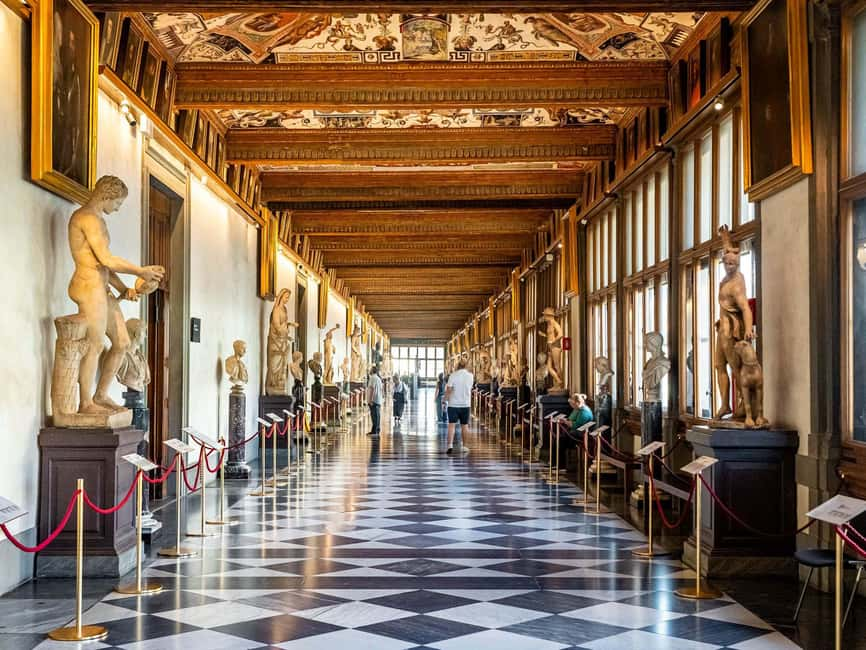
Next you head to the Accademia Gallery with skip-the-line access. This matters because timing and crowd pressure can ruin your experience of sculpture. Standing still long enough to look closely is hard when you’re constantly being nudged forward.
Once inside, the tour keeps the focus on what Michelangelo was doing physically and politically—because with him, the stone is never only stone.
Prigioni (The Slaves): seeing struggle before the famous statue
A smart move here is that the tour doesn’t jump straight to David. Instead, it starts with the Prigioni—the Slaves.
You’ll examine how the figures look like they’re fighting to emerge from the marble block. The guide points you toward the idea of struggle—Michelangelo’s figures as if they are trying to free themselves. That’s more than dramatic interpretation. It changes what you notice later in David. You start seeing a consistent theme: bodies under pressure, motion implied by form, freedom as an idea, not just a physical act.
This “start earlier” strategy is a real quality marker. If you only go for the famous statue, you can miss the deeper logic of the sculpture collection.
Standing beneath Michelangelo’s David: political meaning in the details
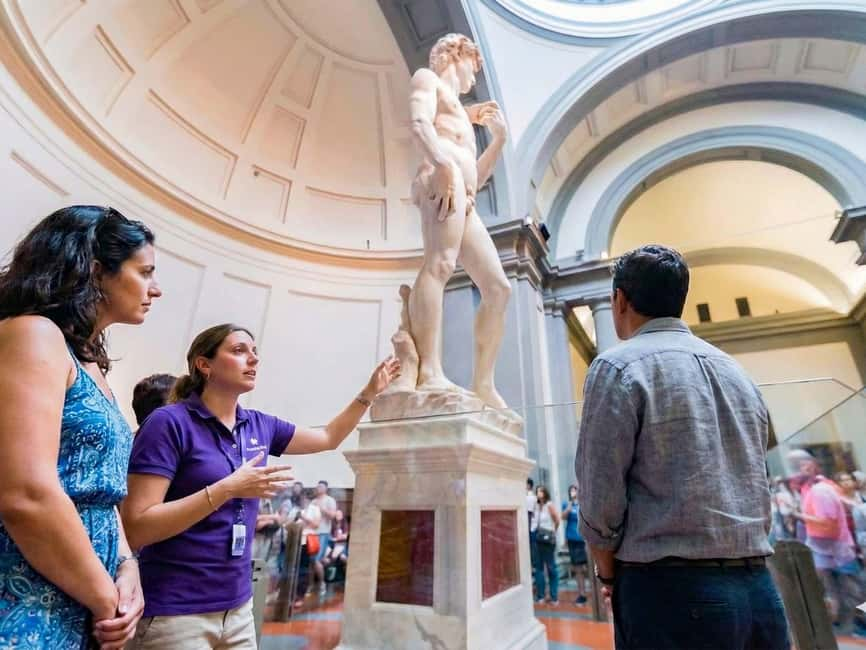
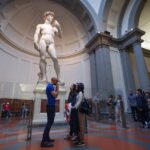
Finally, you stand beneath Michelangelo’s David. And the tour’s emphasis is on the small visual cues that many people walk past.
Your guide shares details like the veins in his hands, his furrowed brow, and the sense of political defiance carried in his eyes. That’s the kind of viewing direction that actually changes your experience. Instead of thinking, wow, that’s big, you start reading the emotion and the message.
This tour also frames David as more than a masterpiece: it’s presented as a manifesto of the Florentine Republic. You get the sense that the city used Michelangelo’s body as a statement—courage, resistance, identity—projected into public space through sculpture.
The small-group difference: why max 9 guests matters here
When museums get busy, group size isn’t a luxury—it’s the difference between hearing your guide and fighting for visibility.
This experience is capped at 9 guests, which makes the pace feel realistic. You’re not constantly stopping someone else’s path, and you’re not stuck behind a wall of coats while the guide talks into the crowd.
In practical terms, that also helps the quality of the questions you can ask. The guide takes time to explain, and you’re set up to hear it all with headsets. In the kind of gallery where one second can change where you’re looking, that attention to comfort is a big part of why the experience scores so well.
Who this tour suits best
This is a great fit if you want more than sightseeing. It’s especially good if you:
- like art that has a story behind it (not just a famous name)
- want help understanding symbolism and Renaissance thinking
- enjoy museums but hate feeling lost in them
- want a tour that respects attention—headsets, small group, and guided looking
It may be less ideal if you:
- prefer self-paced wandering with no structured interpretation
- expect a purely light, casual experience
- don’t want to spend most of the time in galleries plus city walking
Price and value: why $112 can make sense
At $112 per person for roughly 3.5–4 hours, the price is not the cheapest option in Florence. But value here isn’t only about ticketing.
You’re paying for:
- priority skip-the-line access to both major museums (Uffizi and Accademia)
- a live art historian who guides how you look and what you notice
- small group limits (max 9)
- headsets so the experience stays enjoyable even in crowds
- an included gelato tasting
- a digital Insider’s Guide to Florence (PDF) with local restaurant tips
If you’ve ever done these galleries without interpretation, you know how quickly time can vanish and how easily masterpieces can blur together. This tour tries to prevent that by turning the day into a clear narrative. For many people, that’s the real bargain: fewer wasted hours, more understanding per minute.
Guide quality: what you’ll likely notice in the delivery
The experience is led by an art historian, and the guide style is part of what people remember. One guide named Silvia earned praise for being very well informed and for taking time to answer questions. Another review mentions Sylvia as relaxed but knowledgeable.
That naming detail matters because it points to a consistent expectation: you’re not getting a rushed script. You’re getting explanations you can actually absorb.
Should you book this Florence Uffizi, David, and gelato tour?
If you want the short answer: I think this is worth booking when your goal is to understand Florence, not just collect photos.
Book it if you enjoy symbolism, want context for why art looked the way it did, and like the idea of a semi-private day with priority access and headsets. It’s also a smart pick if you’re only in Florence for a limited time and want both the Uffizi and Accademia handled efficiently.
Skip it if your ideal museum day is quiet, independent, and unstructured. This tour is built for guided thinking. If that sounds like your style, you’ll likely leave the galleries with a much clearer view of what Renaissance artists were saying—and why Florence still cares.
FAQ
FAQ
How long is the tour?
It lasts about 3.5 to 4 hours.
What’s the group size?
The experience is limited to a maximum of 9 guests.
Is it guaranteed to skip the lines at both museums?
Yes. It includes priority skip-the-line entrance tickets for both the Uffizi Gallery and the Accademia Gallery.
Who leads the tour?
A live art historian guide leads the tour (English language).
Is gelato included?
Yes. An authentic artisanal gelato tasting is included (cup or cone), as part of the Florence stop.
Where do I meet the group?
Meet at Piazzale degli Uffizi, 1, in the courtyard on the right side of the Uffizi entrance. Look for the Florence with Locals Tours flag under the Leonardo da Vinci statue, opposite Door #3.
What’s included besides tickets and the guide?
You get headsets, plus a digital Insider’s Guide to Florence (PDF) with local restaurant tips.
Do I need hotel pickup?
No. Hotel pickup and drop-off are not included.
Can I pay later or cancel?
You can reserve now & pay later. Free cancellation is available up to 24 hours in advance for a full refund.
More Florence Cooking Classes
- Florence: Pasta Cooking Class with Unlimited Wine
★ 4.9 · 10,285 reviews - Florence Pizza or Pasta Class with Gelato Making at a Tuscan Farm
★ 5.0 · 6,801 reviews - Florence: Pasta & Tiramisu Cooking Class with Unlimited Wine
★ 4.9 · 6,708 reviews - Florence: Pasta Cooking Class with Unlimited Wine
★ 5.0 · 6,413 reviews - Cooking Class and Lunch at a Tuscan Farmhouse with Local Market Tour from Florence
★ 5.0 · 4,831 reviews
Standing Before David, Again
- Florence: Timed Entry to Michelangelo’s David + Audio App
★ 4.6 · 19,496 reviews - Florence: Michelangelo’s David Skip-the-Line Entry Ticket
★ 4.5 · 12,764 reviews - Florence: Timed Entry Ticket to Michelangelo’s David & eBook
★ 4.6 · 4,049 reviews - Florence: Art Tour, Accademia Gallery and David
★ 4.5 · 2,407 reviews - Michelangelo’s David, Accademia & Uffizi Small Group Tour
★ 4.5 · 1,986 reviews
The Uffizi, A Few More Ways In
- Florence: Skip-The-Line Uffizi Gallery Timed Entry Ticket
★ 4.5 · 27,832 reviews - Florence: Uffizi Priority Ticket & Masterpieces Audio App
★ 4.2 · 6,402 reviews - Uffizi Gallery: Renaissance Masterpieces Guided Tour
★ 4.6 · 6,070 reviews - Uffizi Gallery Small Group Tour with Guide
★ 4.5 · 4,923 reviews - Uffizi & Accademia Timed Entry: Small Group Duomo Walking Tour
★ 4.5 · 3,630 reviews
Fresh from our Florence review desk
- Small-Group Pasta Cooking Class and Market Tour in Florence★ 5.0 · 3 reviews
- Palatina Gallery and Pitti Guided Tour in Florence★ 5.0 · 3 reviews
- Tuscan Evening Tour: Fiat 500, 8:30 to 10 PM★ 5.0 · 3 reviews
- Journey into Art: Florence’s Accademia★ 4.5 · 3 reviews
- Paint and Drink Florentine Hills★ 5.0 · 3 reviews
- Truffle hunting and lunch experience, with Vinci and winery.★ 4.5 · 3 reviews
Uffizi Gallery Tours, compared.
 ★ 4.5Skip-The-Line Uffizi Gallery Timed Entry TicketFrom $3027,832 reviews
 ★ 4.2Uffizi Priority Ticket & Masterpieces Audio AppFrom $316,402 reviews
 ★ 4.6Uffizi Gallery: Renaissance Masterpieces Guided TourFrom $886,070 reviews
 ★ 4.5Uffizi Gallery Small Group Tour with GuideFrom $764,923 reviews
 ★ 4.5Uffizi & Accademia Timed Entry: Small Group Duomo Walking TourFrom $503,630 reviews
 ★ 4.2Uffizi Gallery Timed Entry Ticket & Audio GuideFrom $332,794 reviews
 ★ 4.8Uffizi Gallery and Accademia Gallery Guided TourFrom $1402,028 reviews
 ★ 4.7Uffizi Gallery Small-Group Guided Tour with TicketFrom $762,003 reviews
Browse the lists this tour appears in