
Reviewed · TUSCANY WINE TOURS
Pizza Making Private Class with Wine Tasting
Pizza looks easy until you try making it. This Florence class turns dough, sauce, oven heat, and timing into something you can actually feel in your hands, right in a wood-scented pizza lab in the historic center. I like that it is hands-on from start to finish, not a sit-and-watch demo. I also love the added wine tasting pairing, with two local pours that connect to what you’re making.
The main thing to consider is time. At about 1 hour 30 minutes, you’ll learn a lot, but you won’t leave with a long, slow lesson or multiple full pizza sessions to perfect everything. Plan to enjoy the process, not to become a certified pizzaiolo before your next gelato stop.
In This Review
- Key points worth knowing
- Pizza Making With Wine Tasting in Florence: What You’re Paying For
- Step Into Pizzagnolo: Small Group Energy and a Working Oven
- Dough by Hand and Mixer: The Foundation Lessons You’ll Use Anywhere
- What to watch for during shaping
- Rolling Out the Disc and Building the Pizza: Where Skill Becomes Speed
- Oven Setup and Shovels: The Part Most Home Cooks Never Practice
- Temperature Testing: Why This Lesson Feels Like Real Cooking Science
- Wine Tasting in Florence: Chianti Classico and Tuscan Rosé With Your Pizza
- Price and Logistics: A Practical Way to Spend 90 Minutes in Florence
- Who This Pizza Making Class Suits Best
- Possible Drawbacks (Be Smart Before You Go)
- Should You Book This Pizza Making Class With Wine Tasting?
- FAQ
- How long is the Pizza Making Private Class with Wine Tasting?
- Where does the class start in Florence?
- What is included in the price?
- Which wines are tasted?
- What types of pizza-making skills are taught?
- How big is the group?
- Is transportation provided?
- Is the ticket mobile?
- What is the cancellation policy?
Key points worth knowing
- Small group size (up to 8 people) keeps the pacing practical and the instructor close.
- Dough lessons both by hand and with a mixer show you two common workflows.
- Oven work is part of the class including lighting the oven and using the shovels.
- Temperature testing teaches what heat actually does to dough and bake results.
- Two wine tastings included: Chianti Classico (red) and Tuscan Rosé.
- Snacks and facilities are included, so you can focus on learning instead of hunting for extras.
More Tuscan cellars worth the drive from Florence
Pizza Making With Wine Tasting in Florence: What You’re Paying For
For $102.56 per person, you’re not just booking a ticket to a demonstration. You’re paying for access to cooking facilities, guided instruction, snacks, and a built-in tasting component with two wines. In plain terms: you get to do real work, not just stand nearby and hope you remember what to copy later.
Because the class is only about 90 minutes, it’s structured tightly. You’ll move through dough prep, shaping, sauce handling, baking, and tasting in a way that feels like learning a set of steps. That matters in a city like Florence, where time can disappear fast between museums, markets, and long walks.
Also, this is in the historic center area at Pizzagnolo, V. Dell Agnolo 107R (50122 Firenze), and it runs from there back to the meeting point. So you can build it into a day without complex logistics. The activity is also described as near public transportation, and you’ll use a mobile ticket.
Step Into Pizzagnolo: Small Group Energy and a Working Oven
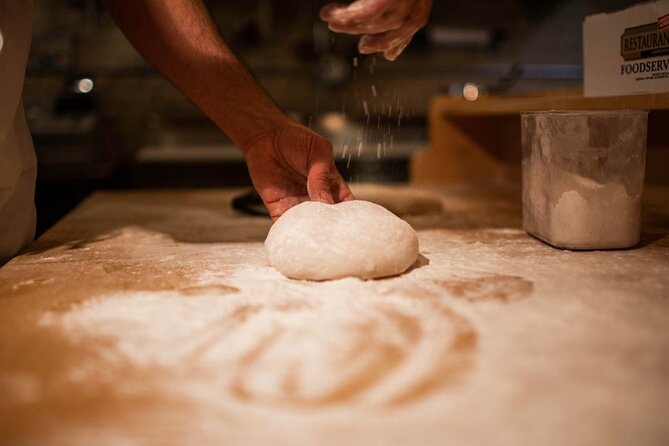
This class takes place inside Pizzagnolo, a working pizza laboratory in Florence’s historic center. The vibe is not formal or stiff. It’s the kind of environment where flour is normal, and the oven is the star of the room.
With a maximum of 8 people, the class stays manageable. That small size is practical because pizza-making is hands-on. When someone is shaping dough or learning how to handle the disc and sauce, you can’t do that well from the back row. You want room to try, ask, and get corrected.
The instructor (an expert master of Italian pizza) is also a big part of why this class earns such strong marks. In the feedback, Antonio is specifically called out as skilled and very kind. That combination matters. Pizza dough has a “feel,” and learning goes faster when the teaching style is patient and clear.
Dough by Hand and Mixer: The Foundation Lessons You’ll Use Anywhere
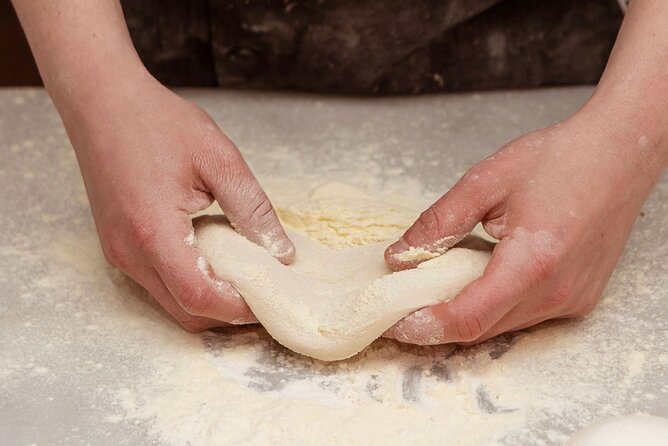
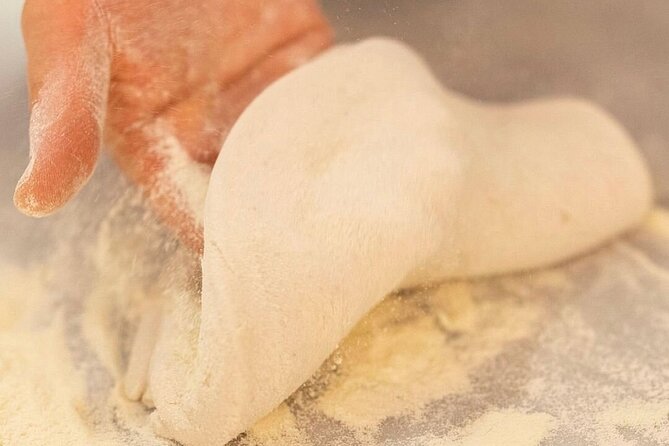
A lot of pizza experiences rush past the base. Here, the class starts with dough work, and it includes two approaches: preparing the dough by hand and using a mixer. That’s a smart setup because it shows you how the dough changes with different mixing methods.
When you learn by hand, you can understand texture early—how flour hydrates, how gluten develops, and when the dough stops looking rough. When you use a mixer, you see a more controlled method and how that can affect consistency. Even if you never own a mixer at home, having both references helps you troubleshoot later.
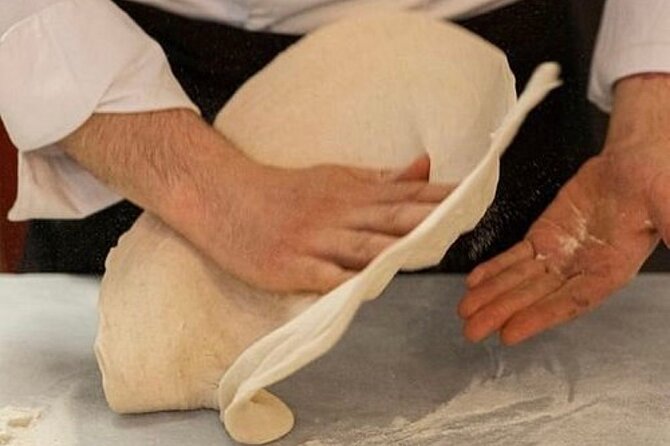
Then you move into forming the dough. That step is where many people overthink at home, because they assume shaping is only about looks. In a class like this, forming is also about structure—how the dough holds tension and how it later behaves when you roll it out.
What to watch for during shaping
You’ll also handle and roll out the disc of pasta and sauce. That’s where technique becomes visible fast:
- You want evenness in thickness so the bake doesn’t go weird in spots.
- You want the sauce handled in a way that won’t weigh the disc down.
- You want a smooth transfer from your hands to the oven zone without tearing.
This is the kind of practical skill you can actually use after you get home, even if your home oven is smaller and hotter than you think.
Rolling Out the Disc and Building the Pizza: Where Skill Becomes Speed
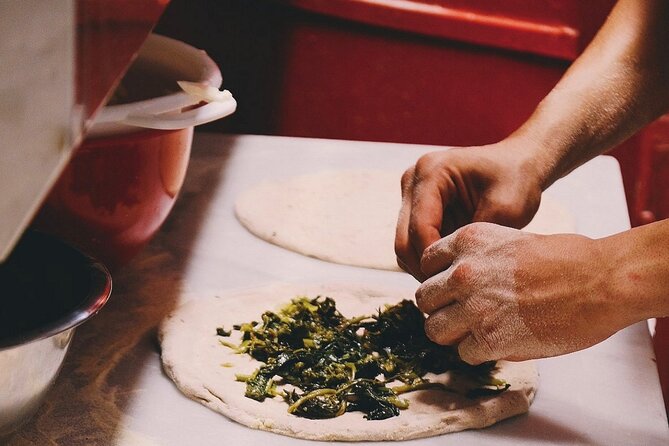
Once you’re comfortable with the dough, the class moves toward rolling out the disc and handling the sauce. This is less about fancy flourishes and more about making pizza behave like pizza: thin enough to bake properly, sturdy enough to lift, and balanced enough to taste right.
It’s also a mental shift. At the start, you’re focused on dough. Then suddenly you’re working with sauce and timing. That is why this class feels valuable. It trains you for the real workflow, not just isolated steps.
During this part of the session, your pacing matters. You’ll want to keep your hands confident and avoid lingering. Pizza-making rewards movement and attention, not speed-for-speed’s sake. And because the group is small, the instructor can correct the most important technique points without wasting time on basic explanations.
Roll up your sleeves for another Florence cooking class
- Cooking Class and Lunch at a Tuscan Farmhouse with Local Market Tour from Florence
★ 5.0 · 4,831 reviews
Oven Setup and Shovels: The Part Most Home Cooks Never Practice
In a typical cooking class, the oven is a passive appliance. In this one, the oven is an active tool. You’ll learn how to:
- Organize the work at the oven
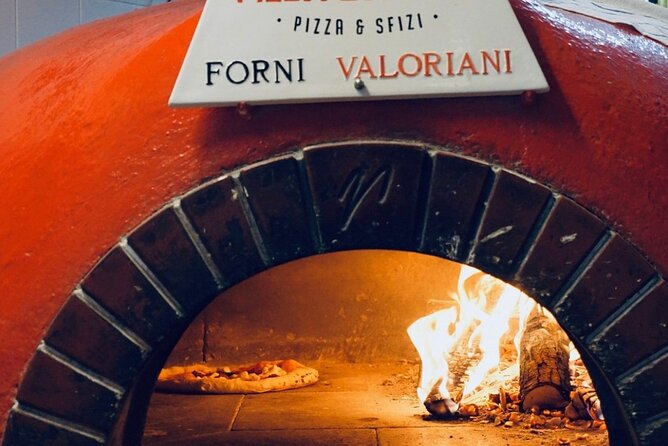
- Light the oven
- Use pizzaiolo shovels for moving the pizza safely
- Bake with attention to timing
This is one of the best learning experiences you can have, because oven technique is a big reason home pizzas fall short. Even with a good recipe, if the oven is not loaded and managed correctly—or if the pizza isn’t transferred cleanly—the bake can go uneven.
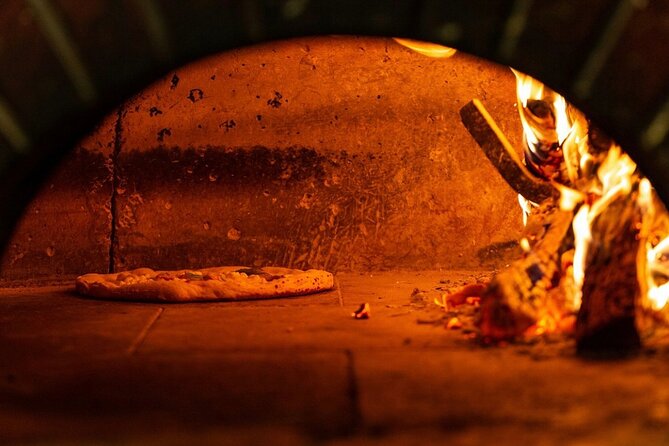
Learning to light the oven and manage that workflow also gives you context. You start to understand that “hot” isn’t just hot. There are effective zones and workable windows. And you’re not guessing, because the class is designed to teach you what optimal temperature parameters look like in practice.
If you’ve ever wondered why restaurant pizza seems to bake faster and better, this oven portion is where the answer lives.
Temperature Testing: Why This Lesson Feels Like Real Cooking Science
One of the more interesting parts of the class is that it does not treat baking as a single setting. You’ll:
- Cook according to optimal temperature parameters
- Differentiate cooking with different temperatures
- Analyze the results
That is rare in short classes, and it’s exactly the kind of detail that helps you later. Pizza is sensitive. Heat affects dough expansion, blistering, browning, and how the base stays crisp versus becoming tough or underbaked.
By comparing outcomes at different temperatures, you learn faster than you would with guesswork at home. And since you can see the differences, you build a mental map for your own oven’s behavior.
This is also where your tasting becomes more meaningful. You’re not just eating pizza. You’re eating pizza you understand a little better, because you connected it to the heat choices you made during the bake.
Wine Tasting in Florence: Chianti Classico and Tuscan Rosé With Your Pizza
After you’ve worked through baking and tasting, the class includes a small tasting of two local wines: a Chianti Classico red and a Tuscan Rosé. They’re presented alongside explanation that connects with the ingredients used during preparation.
This is not just a sip-and-smile add-on. The value is in the pairing education. Pizza and wine can be hit-or-miss if you don’t match acidity, flavor intensity, and salt/fat balance. Chianti Classico tends to work well with tomato-based flavors, while Rosé can add lift and freshness alongside lighter elements.
And because the wines are illustrated in relation to what you made, you have a clearer idea of what to remember for next time. The tasting also helps the class feel complete: you get to learn, cook, eat, and then reflect on why the combination works.
Price and Logistics: A Practical Way to Spend 90 Minutes in Florence
Let’s break down the practical value. The price is $102.56 per person, and the class includes:
- Use of cooking facilities
- Snacks
- An expert master of Italian pizza
Not included:
- Tips (mance)
- Private transportation
For many people, that makes this a more efficient use of money than paying for a meal elsewhere. You’re paying for instruction and access to tools, plus the wine experience. You’re also getting something you can’t easily recreate in a normal restaurant setting: temperature comparisons and hands-on workflow.
In terms of scheduling, the class is about 1 hour 30 minutes, so it fits well between other plans. It’s also a mobile ticket format, so you’re not scrambling the day of.
One more practical point: because you’re in a small group (up to 8), you’ll get a quicker “feedback loop.” That can make the class feel more personal even without being billed as private.
Who This Pizza Making Class Suits Best
This is a great fit if you want:
- A hands-on food activity that teaches technique, not just culture talk
- A short class you can fit into a day in Florence
- The fun factor of a working pizza kitchen with a skilled instructor
It’s especially good for couples, small groups, and anyone who likes learning by doing. If you’re a confident cook, you’ll still appreciate the temperature testing and oven handling. If you’re new to dough, you’ll appreciate having guidance through each step.
It also works well if you like pairing food with drink and want the wines explained, not just poured.
Possible Drawbacks (Be Smart Before You Go)
The main consideration is time. At 1.5 hours, you’ll experience a full process, but you won’t repeat and refine endlessly. You’ll want to keep your expectations realistic: you’re learning technique and fundamentals, not trying to become a master in one session.
Another small consideration is that it’s hands-on and kitchen-focused. You should come ready to get a bit messy and to focus on your station. If you’re hoping for a quiet, sit-down tasting-only activity, this isn’t that.
Should You Book This Pizza Making Class With Wine Tasting?
Yes—if you want a practical, memorable Florence food experience that connects technique to what you eat. This class is built around real steps: dough prep by hand and mixer, shaping, oven setup, baking, and then tasting with Chianti Classico and Tuscan Rosé.
It’s also strong on teaching atmosphere. Antonio is singled out as not only skilled, but also genuinely kind, and that kind of guidance makes technique feel easier and more fun.
If you hate short classes or you only want to watch, you might feel rushed. But if you like doing the work and learning why it matters, this is a very good use of time in Florence.
FAQ
How long is the Pizza Making Private Class with Wine Tasting?
It lasts about 1 hour 30 minutes.
Where does the class start in Florence?
The start point is Pizzagnolo, V. Dell Agnolo, 107R, 50122 Firenze FI, Italy.
What is included in the price?
The price includes use of the cooking facilities, snacks, and an expert master of Italian pizza, plus a wine tasting of two local wines.
Which wines are tasted?
You taste two local wines: a Chianti Classico (red) and a Tuscan Rosé.
What types of pizza-making skills are taught?
You learn how to prepare the dough by hand and with a mixer, form the dough, roll out the disc and sauce, handle oven work (including lighting and using shovels), bake, and how to compare results at different temperatures.
How big is the group?
The class has a maximum of 8 travelers.
Is transportation provided?
Private transportation is not included.
Is the ticket mobile?
Yes, it uses a mobile ticket.
What is the cancellation policy?
Free cancellation is available up to 24 hours in advance for a full refund. If you cancel less than 24 hours before the start time, the amount paid is not refunded.
More Florence Tours We Have Reviewed
- Florence: Skip-The-Line Uffizi Gallery Timed Entry Ticket
★ 4.5 · 27,832 reviews - Tuscany Day Trip from Florence: Siena, San Gimignano, Pisa and Lunch at a Winery
★ 5.0 · 21,634 reviews - Florence: Timed Entry to Michelangelo’s David + Audio App
★ 4.6 · 19,496 reviews - Florence: Leonardo Interactive Museum Entry Ticket
★ 4.5 · 12,957 reviews - Florence: Michelangelo’s David Skip-the-Line Entry Ticket
★ 4.5 · 12,764 reviews
More Florence Cooking Classes
- Florence: Pasta Cooking Class with Unlimited Wine
★ 4.9 · 10,285 reviews - Florence Pizza or Pasta Class with Gelato Making at a Tuscan Farm
★ 5.0 · 6,801 reviews - Florence: Pasta & Tiramisu Cooking Class with Unlimited Wine
★ 4.9 · 6,708 reviews - Florence: Pasta Cooking Class with Unlimited Wine
★ 5.0 · 6,413 reviews - Cooking Class and Lunch at a Tuscan Farmhouse with Local Market Tour from Florence
★ 5.0 · 4,831 reviews
More Tuscan Wine to Taste
- Tuscany Day Trip from Florence: Siena, San Gimignano, Pisa and Lunch at a Winery
★ 5.0 · 21,634 reviews - Florence: Chianti Wineries Tour with Wine Tasting
★ 4.5 · 10,071 reviews - Small-Group Wine Tasting Experience in the Tuscan Countryside
★ 5.0 · 7,392 reviews - SMALL-GROUP Wine Safaris: Tuscan Wine Tasting Tours from Florence
★ 5.0 · 5,088 reviews - Winner 2025 Florence Sunset Food & Wine Tour by Eating Europe
★ 5.0 · 5,015 reviews
Fresh from our Florence review desk
- Small-Group Pasta Cooking Class and Market Tour in Florence★ 5.0 · 3 reviews
- Palatina Gallery and Pitti Guided Tour in Florence★ 5.0 · 3 reviews
- Tuscan Evening Tour: Fiat 500, 8:30 to 10 PM★ 5.0 · 3 reviews
- Journey into Art: Florence’s Accademia★ 4.5 · 3 reviews
- Paint and Drink Florentine Hills★ 5.0 · 3 reviews
- Truffle hunting and lunch experience, with Vinci and winery.★ 4.5 · 3 reviews
Tuscany Wine Tours, compared.
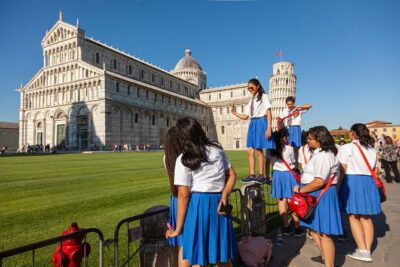 ★ 5.0Tuscany Day Trip from Florence: Siena, San Gimignano, Pisa and Lunch at a WineryFrom $11421,634 reviews
 ★ 4.5Chianti Wineries Tour with Wine TastingFrom $4110,071 reviews
 ★ 5.0Small-Group Wine Tasting Experience in the Tuscan CountrysideFrom $1077,392 reviews
 ★ 5.0SMALL-GROUP Wine Safaris: Tuscan Wine Tasting Tours from FlorenceFrom $1575,088 reviews
 ★ 5.0Winner 2025 Florence Sunset Food & Wine Tour by Eating EuropeFrom $1495,015 reviews
 ★ 4.8From Florence: Siena, San Gimignano, Pisa & Lunch at WineryFrom $1124,538 reviews
 ★ 4.5San Gimignano, Siena, Monteriggioni, Chianti Day Trip with Lunch & Wine TastingFrom $834,432 reviews
 ★ 4.5Chianti Wine Tour from FlorenceFrom $593,979 reviews
Browse the lists this tour appears in