
Reviewed · CHIANTI WINE TOURS
Cooking Class on a Family Farm in Chianti with Lunch
Cooking on a Tuscan hilltop feels like time travel. This Chianti farm cooking class turns you from spectator into cook: you’ll learn pasta by hand, use herbs and extra virgin olive oil, tour the farm, and then eat a full lunch made with your own results. It’s also led by your host on a real working property, so the day feels more like hanging out in someone’s home than checking off a food activity.
I really like two things most: the mix of hands-on teaching (not just watching someone else cook) and the chance to eat what you made with a view over the vineyards and olive trees. One heads-up before you commit: reaching the farm can involve a bumpy, dirt-road drive, so plan extra time and think twice about a low sports car.
In This Review
- Key Highlights
- Entering Cofferi1242: A Chianti Farm Day That Starts Before the Cooking
- Timing: What 10:30 Really Means
- The Farm Tour Part: Olive Grove, Saffron Field, and Herb Garden Context
- Homemade Pasta at a Real Pace: Tagliatelle, Ravioli, and Tortelloni
- Bread Dough Skills That Go Beyond One Loaf
- Building a Full Tuscan Menu: Appetizers Through Dessert
- Lunch Outdoors: Vineyard Views, Olive Trees, and the Best Part of Slow Eating
- What You Should Expect to Taste
- Price and Value: Why $175.43 Can Make Sense Here
- The Practical Stuff That Can Make or Break Your Day: Getting to Via dei Cofferi
- Who This Is For: Families, Couples, and Food People With Short Attention Spans
- A Balanced Take on the Setting: Amazing Views, Rustic Reality
- Should You Book This Chianti Cooking Class?
- FAQ
- How long is the cooking class?
- What time does the class start?
- What language is the class taught in?
- Where is the meeting point?
- Is lunch included?
- Are wine and olive oil included?
- What is the cancellation policy?
Key Highlights
- Hands-on pasta shaping: learn tagliatelle and ravioli/tortelloni by making the dough and working the filling
- Farm tour before you cook: see where olives grow and spot saffron being cultivated
- Bread + Schiacciata dough practice: get taught the dough so you can do more than one bake at home
- A full meal with wine: appetizers, multiple courses, dessert, plus local wine
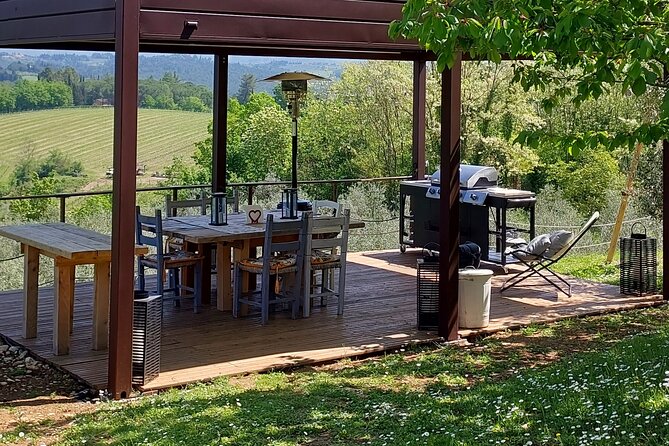
- Al fresco lunch if weather cooperates: eat outdoors in a garden setting with vineyard views
- Small class feel: capped at 20 people, so you’re not lost in a crowd
Back to the Chianti hills for a few more pours
Entering Cofferi1242: A Chianti Farm Day That Starts Before the Cooking
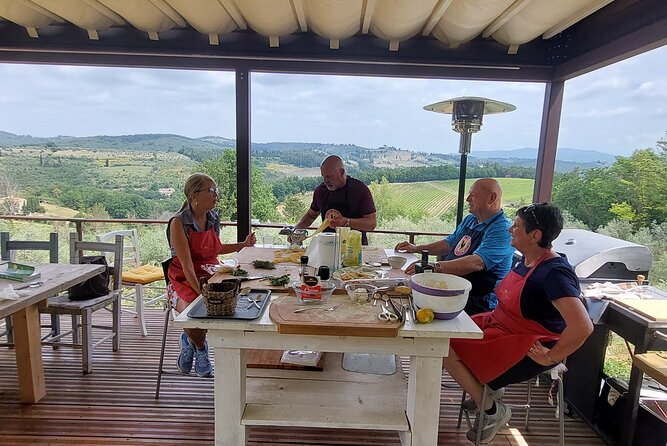
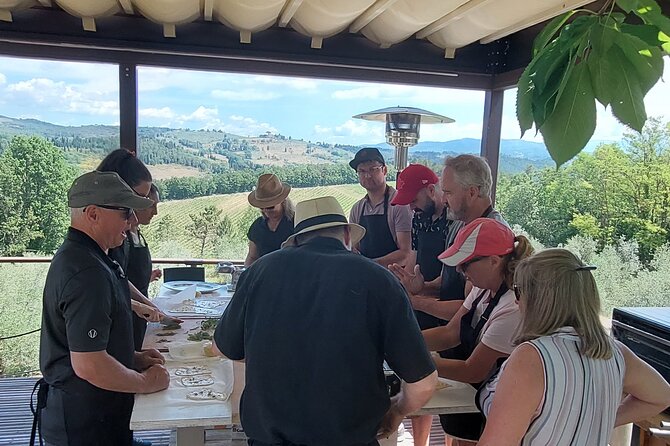
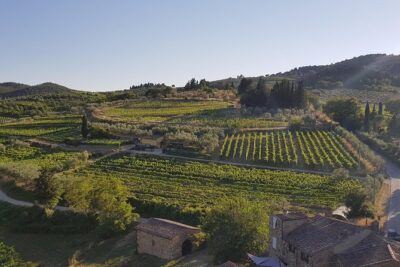
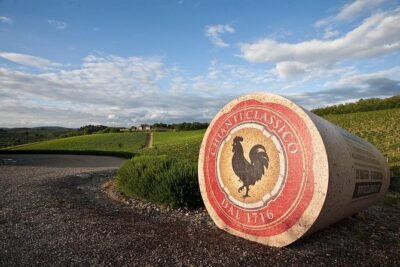
This class doesn’t really begin the moment the knife hits the dough. It starts with arrival and introductions, then a short look around the property so you know where your ingredients come from. The farm sits on top of a hill, surrounded by vineyards, olive trees, and woods that give a sweeping sense of distance from the rest of the world. If you’re chasing a calm day with real rural rhythms, this setting does a lot of the work for you.
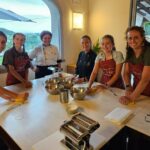
Your host is the core of the experience. The property is run by Cofferi1242 – Camilla Romoli, and in past groups the teaching has also included family members like her daughter Chiara and other hosts such as Fabrizio. That matters because farm cooking works best when questions are welcome and the pace can adjust to the group.
The vibe is also hands-on right away. You’ll see, smell, and then cook, rather than just eating your way through Chianti. That connection is especially strong with the olive oil and garden herbs. Even if you only know the basics of cooking at home, you’ll leave with a clear mental map of how Tuscan pantry ingredients turn into a meal.
Timing: What 10:30 Really Means
The class starts around 10:30 a.m., but don’t assume you’ll arrive and immediately jump into cooking. The schedule includes time to meet, talk a bit, and take that quick farm walk first. That’s why it helps to arrive ready to slow down. You’ll get the full experience in about 4 hours total, so the pacing is compact. It’s a good fit for people who want “worth-it” structure rather than a loose half-day.
The Farm Tour Part: Olive Grove, Saffron Field, and Herb Garden Context
Before pasta ever shows up on your counter, you’ll tour enough of the farm to make the food feel specific. One of the nicest touches is that you’ll see an olive grove and also the field where saffron is grown. Those details aren’t just decorative. They set up why the cooking you do later tastes like Chianti instead of like a generic Italian cooking class.
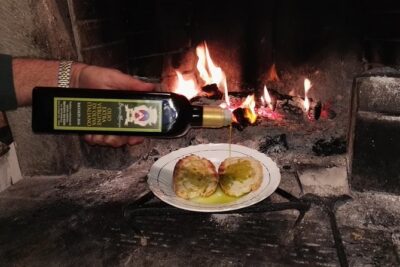
You’ll also get pointed toward the garden component. The plan is to use herbs from the garden and the farm’s extra virgin olive oil in the pasta lesson. That means the ingredients aren’t coming from a store shelf five minutes away. You’re working with ingredients that have been part of someone’s routine.
If you’re the kind of traveler who likes to understand where food comes from, this first phase helps you connect the dots fast. If you’re more interested in techniques than context, you may still enjoy this because it makes the later steps feel less random. You’ll cook with more intention because you know why those flavors are showing up.
Homemade Pasta at a Real Pace: Tagliatelle, Ravioli, and Tortelloni
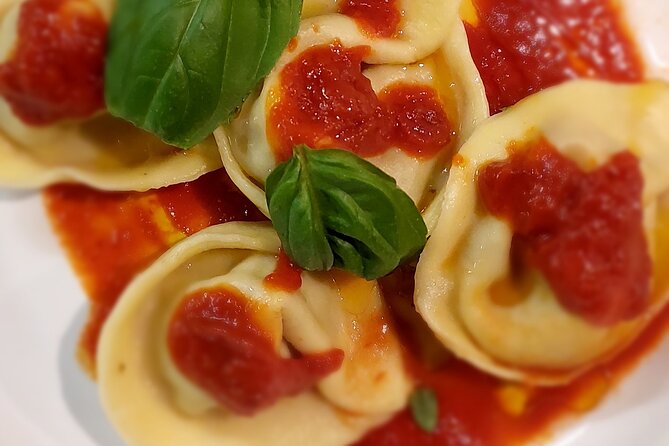
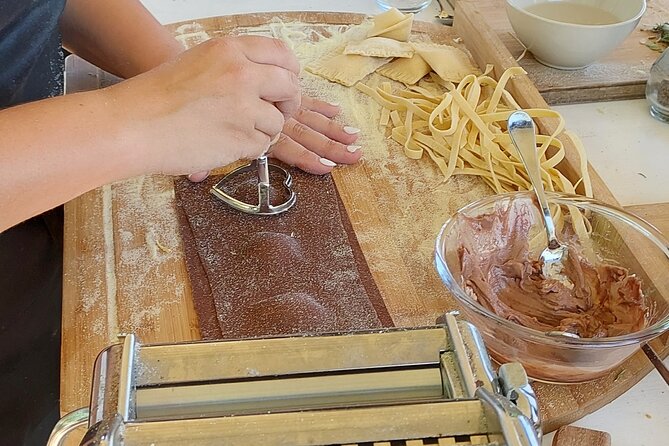
The main event is homemade pasta. You’ll make pasta dough, then learn how to shape it into classic forms. The class includes pasta shapes such as tagliatelle and ravioli, and the sample menu also includes ravioli and tortelloni with sage butter and parmesan.
Here’s what this means for you in practical terms: you aren’t just getting a final plate handed to you. You’ll actively work with dough texture, filling distribution, sealing, and shape. That’s the stuff you actually need if you want to recreate the experience at home.
Dough lessons are taught with an eye toward results, not showmanship. The sample menu uses fillings and flavors that match what you can realistically cook again:
- fresh ricotta, parmesan, lemon zest
- seasoning that includes sage
- butter with sage and parmesan
That combination is classic Tuscan logic: simple ingredients, cooked carefully, with herbs carrying the fragrance. If you’ve ever failed at pasta because your dough tore or your filling was watery, expect the teaching to focus on preventing those common issues.
Bread Dough Skills That Go Beyond One Loaf
After pasta, you shift to dough with bread and Schiacciata. This part is especially useful if you’re thinking about what you’ll do back home. The goal is not just one recipe. You’ll learn how to prepare a versatile dough so you can make different variations.
Schiacciata is often treated like a casual flatbread, but when you know the dough method, you can control thickness, texture, and flavor outcomes. It’s also easier to practice than fresh pasta, which makes this section a great “confidence builder” for home cooking.
Roll up your sleeves for another Chianti cooking class

Building a Full Tuscan Menu: Appetizers Through Dessert
One reason people love this class is that you don’t stop at one dish. You’ll prepare a complete menu that includes:
- appetizers
- first courses
- second courses
- side dishes
- dessert
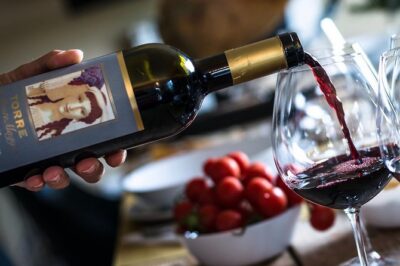
Even in a 4-hour window, that’s ambitious. The structure helps you learn technique in multiple directions while still keeping the day moving. You’ll also sip local wine, and based on the farm’s products and past classes, this often includes house-made or regional wines, with one person highlighting a family red wine and another mentioning Chianti from the area.
The sample menu gives a clear picture of what you’ll likely eat:
- Main: homemade ravioli and tortelloni with sage butter and parmesan
- pasta: homemade tagliatelle served with fresh tomato sauce or fresh courgette pesto
- Dessert: apple pie with crumble
If you’re wondering what the lesson is really teaching beneath the menu list, it’s coordination. You’ll see how courses flow in real kitchens, how sauces and fillings relate to one another, and how timing affects what tastes best. That’s valuable even if you never attempt every course again.
Lunch Outdoors: Vineyard Views, Olive Trees, and the Best Part of Slow Eating
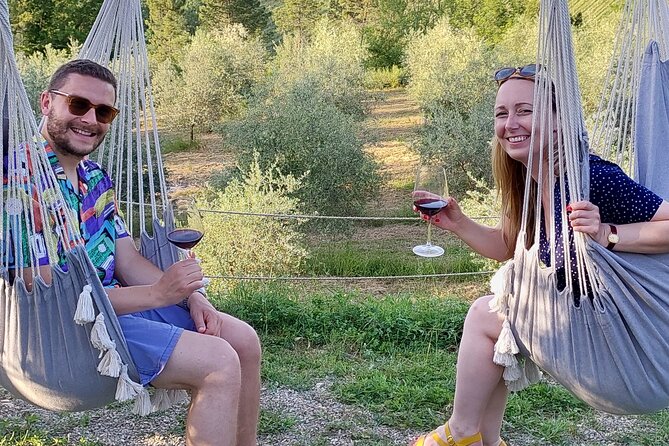
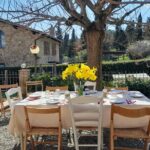
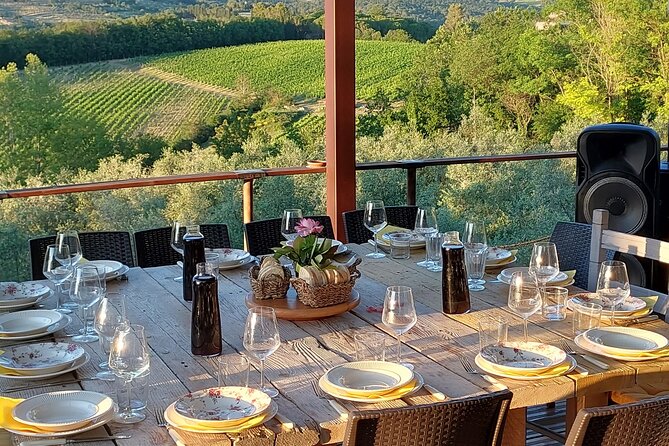
Cooking is fun, but the payoff is eating in the garden. After your work in the kitchen, the plan is to enjoy lunch outdoors in the garden overlooking vineyards and olive trees, weather permitting. The farm’s hilltop setting with its 360-degree woods view turns lunch into more than a meal.
This is also where the farm ingredients matter. You’ll be tasting the olive oil and wine as part of the lunch, not as separate add-ons. That’s one of the best values in the experience: you’re learning the connection between ingredients and flavor in a full, shared meal.
What You Should Expect to Taste
From the course structure, you can expect a heavy emphasis on:
- herb-forward pasta and sauces
- olive oil flavor carried through recipes
- wine paired as part of the experience (not a separate tasting schedule)
One review also notes that wine and olive oil were outstanding and produced on-site. While you shouldn’t assume every drop will match every person’s preferences, the general idea is consistent: this isn’t just about teaching cooking; it’s about sharing the farm’s products.
Price and Value: Why $175.43 Can Make Sense Here
At $175.43 per person for about 4 hours, this class costs more than a basic cooking workshop in a city. But the “value math” is different here because you’re paying for several things at once:
- a farm-based teaching setting (olive grove, saffron field, garden context)
- hands-on instruction for multiple doughs (pasta + bread/Schiacciata)
- a full multi-course lunch built from what you cook
- wine and farm extra virgin olive oil as part of the meal
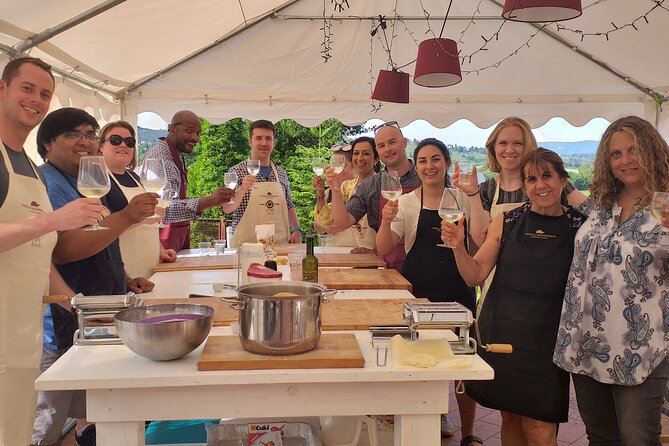
Also, the group size is capped at 20 people, which usually helps with getting attention during hands-on steps. In cooking classes, that matters. When you have limited space at a counter, you learn faster if someone can actually see what you’re doing.
If you’re the type who wants souvenir food experiences, this may feel expensive. But if you want skills and want to eat what you produce in a calm rural setting, the price starts to look more reasonable.
The Practical Stuff That Can Make or Break Your Day: Getting to Via dei Cofferi
The meeting point is at Cofferi1242 – Cooking Class-Olive Oil-Saffron, Via dei Cofferi, 12, Loc, 50026 Il Ferrone FI, Italy, starting around 10:30 a.m. You return to the same meeting point when the activity ends.
The biggest practical caution is the drive. Several notes point to a rocky, bumpy dirt road leading up to the farm, and one person specifically warned not to bring a low sports car. If you’re driving yourself, do two things:
- double-check your directions
- allow extra time so the rough approach doesn’t stress your schedule
If you’re tight on timing, traffic and the road can turn a smooth plan into a rushed one. The class is structured, but it’s also a farm day with a warm pace. You’ll get more out of it if you arrive relaxed.
Once there, expect a mix of outdoor and indoor work areas. The main meals include an outdoor lunch option, but part of the cooking can be indoors when conditions call for it.
Who This Is For: Families, Couples, and Food People With Short Attention Spans
This is ideal for:
- couples who want a memorable Chianti day that isn’t just wine tasting
- food lovers who like learning techniques, not just eating
- families, since past groups included kids (including ages 8 and 11) and the teaching is described as patient
It can also work for multigenerational groups. One account described family members ranging from 21 to 79, and the class kept moving without people feeling left behind. That’s a good sign if you’re traveling with a mix of skill levels.
If you want a high-end, city-style polished restaurant experience, keep your expectations aligned with the reality of a working farm. The setting is peaceful and scenic, but it’s not a showroom. That trade-off can be exactly what you want in Tuscany, as long as you’re comfortable with rustic farm edges.
A Balanced Take on the Setting: Amazing Views, Rustic Reality
The dominant theme is warmth: people describe excellent hospitality, patient instruction, and a relaxed day where you meet others and eat well. The views are repeatedly called incredible, and the farm products like olive oil and wine are often praised as top quality.
Still, one caution that matters: this is a working farm environment. One person found the outdoor and kitchen area rougher than expected based on photos, and mentioned things like weeds around the patio area and a kitchen that felt less orderly than a clean, modern classroom. That doesn’t negate the learning or the food, but it does mean you should treat this as a rustic farm experience, not a hotel event space.
If you’re flexible and more focused on food, technique, and views than perfect presentation, you’ll likely love it. If cleanliness and polished surfaces are dealbreakers for you, it’s worth thinking twice.
Should You Book This Chianti Cooking Class?
I’d book it if you want a real farm connection in Chianti, and you care about learning dough skills you can use later. The class hits a rare combo: pasta technique, bread/Schiacciata practice, farm context, and a full meal outdoors when the weather allows. With a small cap of 20 people, the experience also has a better chance of feeling personal.
I wouldn’t book it if your top priority is a smooth, hassle-free arrival or a perfectly styled venue. The drive can be rough, and the farm setting is rustic by nature.
If you do book, plan your route carefully, arrive on time, and go in ready to cook. The biggest reward here isn’t just the food on your plate. It’s leaving with the confidence to make pasta and Tuscan dough dishes yourself.
FAQ
How long is the cooking class?
It runs for about 4 hours.
What time does the class start?
The class starts around 10:30 a.m.
What language is the class taught in?
The experience is offered in English.
Where is the meeting point?
It meets at Cofferi1242 – Cooking Class-Olive Oil-Saffron, Via dei Cofferi, 12, Loc, 50026 Il Ferrone FI, Italy.
Is lunch included?
Yes. You’ll eat an al fresco lunch outdoors in the garden if weather permits, and it’s based on the dishes you prepare.
Are wine and olive oil included?
Yes. The class includes sipping local wine and using extra virgin olive oil and herbs from the garden in the recipes.
What is the cancellation policy?
You can cancel for a full refund up to 24 hours in advance. Cancellation within 24 hours of the start time isn’t refundable.
More Chianti Tours We Have Reviewed
- Tour and Tasting at an Organic Winery in the Heart of Chianti Classico Area
★ 5.0 · 132 reviews - Greve in Chianti Wine Tasting and Winery Tour
★ 4.5 · 119 reviews - Montefioralle Winery – Tour and Wine Tasting in Chianti
★ 4.5 · 92 reviews - Olive Oil Tours and Tasting at Frantoio di Montalcino
★ 5.0 · 85 reviews - Livorno Shore Excursion: Chianti and Tuscany Countryside Private Wine Tour
★ 5.0 · 56 reviews
More Chianti Cooking Classes
- Cooking, Dinner & Live Opera in the countryside
★ 5.0 · 42 reviews - Truffle Hunting in Chianti, pasta class and lunch
★ 5.0 · 39 reviews - Homemade Pasta Class and Lunch in the Heart of Chianti
★ 5.0 · 21 reviews - Chianti -Fresh Pasta Making Class and Sauces with Lunch or Dinner
★ 5.0 · 19 reviews - Cooking Class in a Real Tuscan Farmhouse
★ 5.0 · 13 reviews
Chianti, Another Pour
- Tour and Tasting at an Organic Winery in the Heart of Chianti Classico Area
★ 5.0 · 132 reviews - Greve in Chianti Wine Tasting and Winery Tour
★ 4.5 · 119 reviews - Montefioralle Winery – Tour and Wine Tasting in Chianti
★ 4.5 · 92 reviews - Livorno Shore Excursion: Chianti and Tuscany Countryside Private Wine Tour
★ 5.0 · 56 reviews - Truffle Hunting in Chianti, pasta class and lunch
★ 5.0 · 39 reviews
Fresh from our Chianti review desk
- Discover Montalcino through its best productions: Brunello & Saffron!!★ 5.0 · 3 reviews
- Wine Tasting of Brunello with Tuscan Cold Cuts and Cheese★ 5.0 · 4 reviews
- Winery Tour & picnic in the vineyard with a bottle of wine★ 4.5 · 5 reviews
- Gourmet Brunello Vertical Tasting★ 4.5 · 5 reviews
- Chianti – Pizza and Tiramisu Course for Only Small Groups★ 5.0 · 5 reviews
- Chianti Truffle Hunting with Lunch or Dinner★ 4.0 · 5 reviews
Chianti Wine Tours, compared.
 ★ 4.5Chianti Wineries Tour with Wine TastingFrom $4110,071 reviews
 ★ 4.5Pisa, Siena, San Gimignano, and Chianti ExperienceFrom $528,393 reviews
 ★ 4.5San Gimignano, Siena, Monteriggioni, Chianti Day Trip with Lunch & Wine TastingFrom $834,432 reviews
 ★ 4.6Pisa, Siena, S. Gimignano, Chianti Wine & LunchFrom $774,354 reviews
 ★ 4.5Chianti Wine Tour from FlorenceFrom $593,979 reviews
 ★ 4.6S. Gimignano, Siena, Chianti Wine Tasting & LunchFrom $823,102 reviews
 ★ 4.5From Florence: Chianti Half-Day Wine Tour with TastingFrom $583,031 reviews
 ★ 4.5Siena, San Gimignano and Chianti Wines Day Tour from FlorenceFrom $782,542 reviews
Browse the lists this tour appears in