
Reviewed · TUSCANY DAY TRIPS FROM FLORENCE
Fiesole : Florentine Hills, Roman Theater & Tuscan Farm Experience
Florence from Fiesole feels like a new city. This small, private outing strings together panoramic viewpoints and Roman-era remains, with a real working farm near Florence. It’s an easy way to understand how the hills shaped everyday life, not just where the statues are.
I love how the route mixes big landmarks with quick, meaningful moments—like Porta San Gallo and Piazza Mino—so you’re not stuck in one kind of sight. I also like that the stops are paced for seeing and photographing, not rushing through everything in one long walk.
One possible drawback: your time is tight. The main archaeological stop (Area Archeologica) has an admission cost not included, and a few highlights are best if you’re comfortable moving in short bursts.
In This Review
- Key Highlights You’ll Actually Notice
- Starting at Porta San Gallo and Piazza Savonarola
- Up Via San Domenico for Fiesole’s Convent Terrace Views
- Piazza Mino and St. Romulus Cathedral: Civic and Religious Florence’s Twin Core
- Area Archeologica: Roman Theater, Baths, and an Etruscan-Roman Temple
- Convento di San Francesco: A Quiet Complex with a Wide-Open Florence View
- Fattoria di Maiano: Organic Tuscany Right Near Florence
- Artemio Franchi Stadium and Liberty Square’s Arch of Triumph
- How Private Pacing and Short Stops Help (and When They Don’t)
- Value Check: Is $86.89 Worth It?
- Who This Tour Fits Best
- Should You Book This Fiesole Hills, Roman Theater, and Farm Tour?
- FAQ
- How long is the Fiesole Hills, Roman Theater, and Tuscan Farm experience?
- What language is the tour offered in?
- Is this a private tour?
- Is there a mobile ticket?
- Which stops are free, and is any admission extra?
- Where does the tour start and where does it end?
- Is it near public transportation?
- Are service animals allowed?
Key Highlights You’ll Actually Notice
- Roman Theater at Area Archeologica: Still used in summer, with Roman baths and an Etruscan-Roman temple nearby
- Wide Florence views at San Francesco: One of the best overlooks across the Arno valley
- Fattoria di Maiano: A centuries-old organic farm experience with gardens, a historic villa, and olive-oil production
- Fiesole’s layered center: Piazza Mino sits on ancient Faesulae (Roman Forum area)
- Rationalist architecture at Artemio Franchi Stadium: Reinforced concrete design by Pier Luigi Nervi, famous for the Maratona Tower
- Private, small-group feel: You stay together as one group and can enjoy the narration at your pace
Further into Tuscany, more day trips from Florence
Starting at Porta San Gallo and Piazza Savonarola
Your tour begins near Caffè Lietta in Piazza della Libertà, an area that’s easy to reach and simple to orient from. Then you work your way toward Porta San Gallo, one of Florence’s monumental ancient gates, built around 1285 as part of the sixth city wall circle. This is a good opening stop because it frames the whole day: Florence grew up around walls, routes, and hill connections.
Right after, Piazza Savonarola gives you a different flavor. It’s outside the historic center and framed by late 19th-century palaces with an airy, “bourgeois” feel. Instead of looking straight at the famous center, you get a sense of how Florentines expanded and lived as the city modernized.
What I like about this opening: you start with structure and geography before you start chasing views. That makes every later overlook click into place.
Up Via San Domenico for Fiesole’s Convent Terrace Views
Next you head along Via San Domenico to San Domenico di Fiesole, a hillside hamlet with a standout anchor: the 15th-century Convent of Beato Angelico. Even if you’re not a serious art-history person, the reason this works is practical—it’s a natural elevated terrace. You get Florence in a way that feels direct and readable, like the city is laid out for you.
The upside here is pure optics: you’re high enough to see the Arno valley and major city patterns, but you’re not doing a long climb. The stop also keeps the tour from becoming only archaeology and buildings. It gives your eyes a chance to relax.
Tip for your photos: bring a little patience for light. Hill viewpoints can look dramatically different within minutes, especially if clouds move in.
Piazza Mino and St. Romulus Cathedral: Civic and Religious Florence’s Twin Core
Piazza Mino is the vital center of Fiesole, built on top of ancient Roman Faesulae. The square looks irregular, but it’s organized by two big statements: the Duomo of St. Romulus (St. Romulus Cathedral) and the Palazzo Pretorio (town hall). In other words, you’re seeing the civic and religious heart in the same visual field.
From here, you get a fork in the experience. You can focus on the Roman layers at the Area Archeologica, or you can take in the quieter museum side of Fiesole at the Convent of San Francesco later. This choice matters because it shapes what the day feels like. If you’re here for deep-time history, you’ll lean archaeology. If you want calm, big views, you’ll prioritize the convent viewpoint.
One consideration: the square is a hub, so it can feel busy at certain times. Keep your “must-see” order clear so you don’t lose time.
Area Archeologica: Roman Theater, Baths, and an Etruscan-Roman Temple
Area Archeologica is where the day turns serious—in the best way. You’ll see preserved remains connected to a Roman Theater (still used in summer), Roman Baths, and an Etruscan-Roman temple. This site is a clear example of how cultures stack over time in one spot: Etruscan roots, Roman expansion, and later medieval-era touches.
Here’s the value angle for your money: even though this stop has an admission cost not included, it’s a concentrated “greatest hits” of ancient life—performance space, bathing, and worship all in one area. If you like archaeology, this is the most payoff-heavy part of the itinerary.
Practical note: since it’s a ticketed stop and your time is limited, decide before you arrive what you want to prioritize. If you spread out too much, you can end up doing a hurried loop. Aim for the theater area first, then the baths, then the temple zones.
Convento di San Francesco: A Quiet Complex with a Wide-Open Florence View
When you move up to the Convento di San Francesco, you trade ruins for calm. This Franciscan complex is described as humble and tranquil, and it includes a Missionary Museum. The big reason people remember this stop is the view: it offers one of the best and widest panoramic overlooks over Florence and the Arno valley.
What makes this one worth it is balance. After Roman stone and artifacts, your mind resets. You get a long view that helps you connect the earlier hillside points with the city you’re seeing below. If you’re traveling with anyone who gets tired of nonstop facts, this is the moment that usually restores energy.
Photo tip: you’ll likely want to linger. If you’re the type who takes a lot of pictures, this is a good place to slow down and stop multitasking.
Prefer something else? A few more Florence tours to weigh up



Fattoria di Maiano: Organic Tuscany Right Near Florence
The afternoon-style shift comes at Fattoria di Maiano, a centuries-old farm tucked into the Fiesole hills. This isn’t a theme-park farm. It’s a thriving organic operation and a producer of award-winning olive oil. Beyond food production, it offers botanical gardens, a historic villa, and the kind of scenery that makes you understand why Tuscany keeps pulling people back.
Even if you skip any longer exploring inside the farm grounds, you’ll still feel the difference between city tourism and rural time. This stop works well because it closes the loop on what you’ve been seeing all day. You saw the Roman past; now you see a working agricultural present.
One helpful consideration: since the farm visit is part of your scheduled time and the stops are short overall, treat it like a taste of farm life rather than a full-day agrotourism retreat.
Artemio Franchi Stadium and Liberty Square’s Arch of Triumph
Back in the broader Florence setting, you’ll end up at Stadio Artemio Franchi, home of ACF Fiorentina and famous for Italian Rationalist architecture. The design is tied to engineer Pier Luigi Nervi, inaugurated in 1931, and the standout details include the reinforced concrete structures such as the Maratona Tower and the cantilever roofs.
If you usually ignore stadium architecture, don’t. This is one of those places where engineering becomes a visible style. Even from outside and at quick stops, you’ll likely notice the bold geometry and the “built-for-forever” feeling.
Then you finish near Liberty Square with the Arch of Triumph, also called the Arch of Triumph in Liberty Square. Built in 1737 to celebrate the arrival of the Habsburg-Lorraine dynasty in Florence (after the Medici), it’s a monumental 18th-century symbol with celebratory reliefs. This closing stop gives you another kind of “history lesson”—one based on power and public celebration, not just religion or theater.
How Private Pacing and Short Stops Help (and When They Don’t)
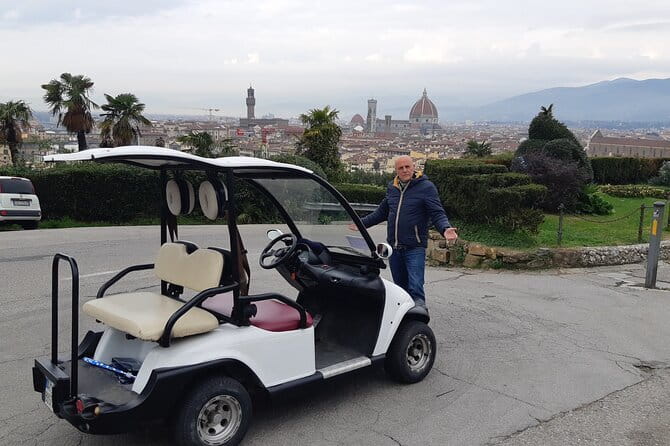
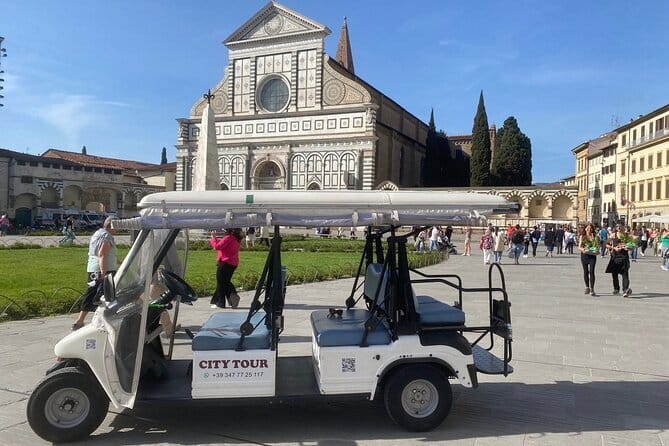
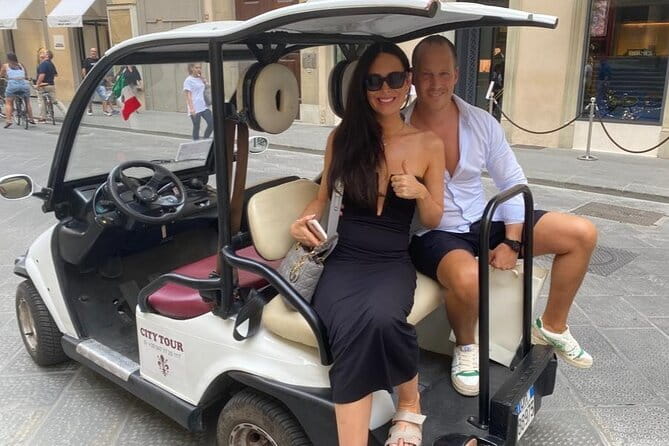
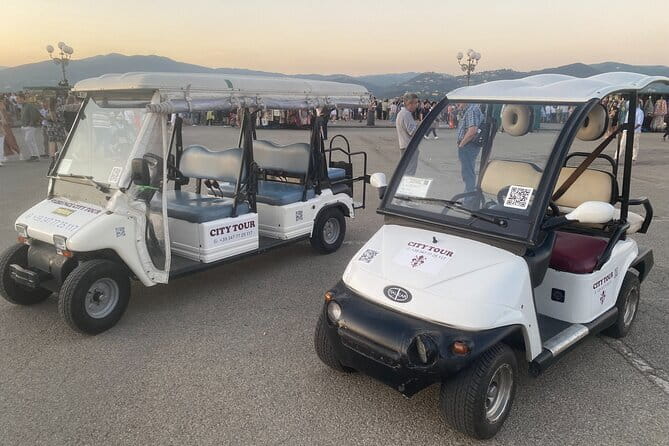
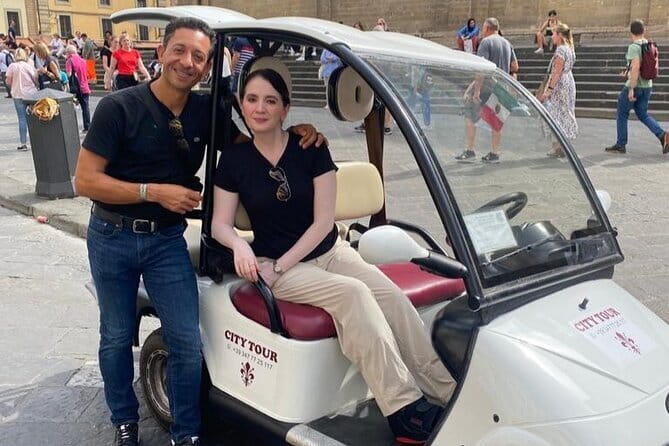
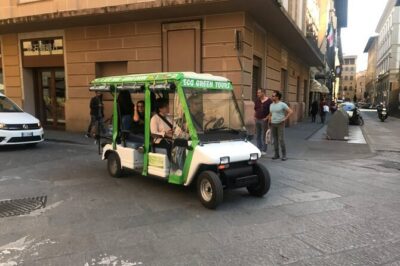
This is a private tour/activity, built around your group rather than a large crowd shuffle. That matters on hill routes where walking can add up fast. A small vehicle ride (many guests describe it as a golf-cart style experience) can also help if you want to cover more ground without tiring your legs.
The tradeoff is time. A comment that comes up in this kind of format is that 90 minutes or similar early segments can feel short if you want to linger at photo spots. Your best strategy: bring your energy for the views (because those are the moments you’ll want to pause), and be selective at sites that require ticketing or extra walking.
If you’re booking this for your first day in Florence, it tends to work especially well. You’ll leave with a mental map: walls and gates, hill viewpoints, the idea of ancient Faesulae under modern streets, and the sense of Florence as a place shaped by both past and architecture.
Value Check: Is $86.89 Worth It?
At $86.89 per person for about 2 hours 15 minutes, the value depends on what you want to get out of it.
You’re paying for:
- Multiple districts and hill viewpoints in a short time
- A smooth flow between major stops without long travel gaps
- The combination of Roman archaeology (with admission not included for Area Archeologica) plus free-entry viewpoint stops and the farm
You’re not paying for:
- The Area Archeologica admission (since it’s not included)
- A long, slow exploration day
So I’d call it a strong value if you want variety and efficiency, especially on a first trip. If you prefer sitting deep inside museums for hours, you might feel rushed. In that case, pair this with one longer, separate day devoted to archaeology or art.
Who This Tour Fits Best
This experience suits you if:
- You want hilltop views without heavy climbing
- You like Roman and Etruscan layers, not just one era
- You want a rural Tuscany break near Florence, not a long drive out of town
- You like small-group, flexible narration and stop-and-go photo time
It’s less ideal if you’re set on long museum time or you need long periods of quiet sitting in one place.
Should You Book This Fiesole Hills, Roman Theater, and Farm Tour?
Book it if you want a smart first-dose of Florence beyond the classic center: gates, viewpoints, Roman remains, and a real organic farm stop in one outing. The mix is practical, and the panoramic payoff is the kind you remember when you’re back in the city center.
Hold off if you’re the type who wants to “stay and study” at one site for a long time, especially with the ticketed Area Archeologica stop and the overall short pacing.
If your plan includes more Florence sightseeing afterward, this is a great way to build your map fast and avoid walking around later with zero context.
FAQ
How long is the Fiesole Hills, Roman Theater, and Tuscan Farm experience?
It’s about 2 hours 15 minutes (approx.).
What language is the tour offered in?
It’s offered in English.
Is this a private tour?
Yes. It’s a private tour/activity, so only your group participates.
Is there a mobile ticket?
Yes. The tour uses a mobile ticket.
Which stops are free, and is any admission extra?
The itinerary lists free admission for several stops, but Area Archeologica admission is not included.
Where does the tour start and where does it end?
It starts at Caffè Lietta, Piazza della Libertà 6/7/8 Rosso, 50129 Firenze FI, Italy, and it ends back at the meeting point.
Is it near public transportation?
Yes, it’s listed as near public transportation.
Are service animals allowed?
Yes, service animals are allowed.
More Farms in Florence
- Florence Pizza or Pasta Class with Gelato Making at a Tuscan Farm
★ 5.0 · 6,801 reviews - Florence: Pizza or Pasta Class with Gelato at a Tuscan Farm
★ 4.9 · 1,181 reviews - Florence: Cooking Class at a Tuscan Farm & Local Market Tour
★ 4.9 · 354 reviews - Farm To table Experience on an organic hilltop estate in Tuscany
★ 5.0 · 99 reviews - It’s Wine Time! 2 wineries & farm-to-table lunch—max 8 pp
★ 5.0 · 89 reviews
More Florence Tours We Have Reviewed
- Florence: Skip-The-Line Uffizi Gallery Timed Entry Ticket
★ 4.5 · 27,832 reviews - Tuscany Day Trip from Florence: Siena, San Gimignano, Pisa and Lunch at a Winery
★ 5.0 · 21,634 reviews - Florence: Timed Entry to Michelangelo’s David + Audio App
★ 4.6 · 19,496 reviews - Florence: Leonardo Interactive Museum Entry Ticket
★ 4.5 · 12,957 reviews - Florence: Michelangelo’s David Skip-the-Line Entry Ticket
★ 4.5 · 12,764 reviews
Deeper Into Tuscany
- Tuscany Day Trip from Florence: Siena, San Gimignano, Pisa and Lunch at a Winery
★ 5.0 · 21,634 reviews - Small-Group Wine Tasting Experience in the Tuscan Countryside
★ 5.0 · 7,392 reviews - San Gimignano, Siena, Monteriggioni, Chianti Day Trip with Lunch & Wine Tasting
★ 4.5 · 4,432 reviews - Florence Vespa Tour: Tuscan Hills and Italian Cuisine
★ 5.0 · 4,019 reviews - Florence: Siena, San Gimignano & Monteriggioni with Tasting
★ 4.6 · 3,218 reviews
Fresh from our Florence review desk
- Transfer Between Florence and Rome with Sightseeing Stop★ 5.0 · 6 reviews
- Florence Highlights Walking Tour★ 5.0 · 6 reviews
- Florence: Guided Flavors of Tuscany Tour★ 5.0 · 6 reviews
- Florence : Photoshoot In The City★ 5.0 · 6 reviews
- Florence: Brunelleschi’s Dome climb Tour★ 4.0 · 6 reviews
- Dan Brown’s INFERNO Walk with a Local★ 3.5 · 6 reviews
Tuscany Day Trips from Florence, compared.
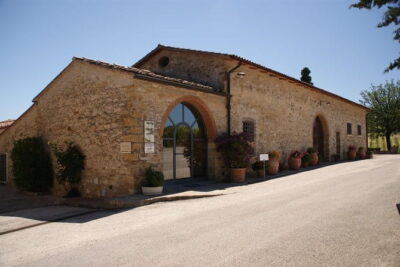
 ★ 5.0Tuscany Day Trip from Florence: Siena, San Gimignano, Pisa and Lunch at a WineryFrom $11421,634 reviews
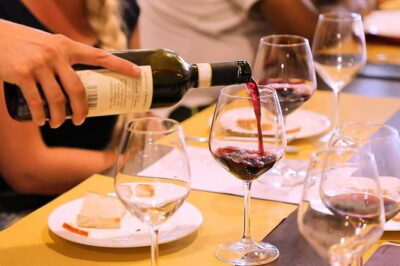
 ★ 5.0Small-Group Wine Tasting Experience in the Tuscan CountrysideFrom $1077,392 reviews
 ★ 4.5San Gimignano, Siena, Monteriggioni, Chianti Day Trip with Lunch & Wine TastingFrom $834,432 reviews
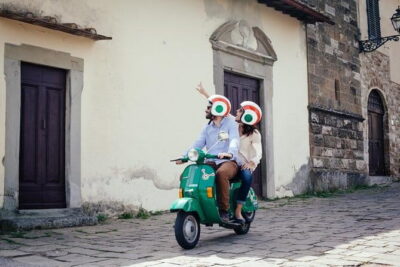 ★ 5.0Florence Vespa Tour: Tuscan Hills and Italian CuisineFrom $784,019 reviews
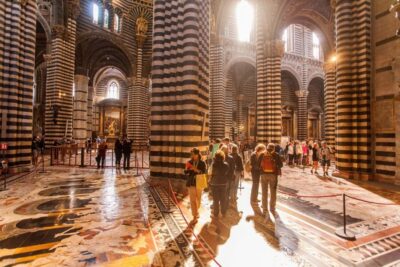 ★ 4.6Siena, San Gimignano & Monteriggioni with TastingFrom $463,218 reviews
 ★ 4.5Golf Cart Tour to Fiesole Roman Theatre and MuseumFrom $952,039 reviews
 ★ 4.5Full Day Tour to Val d’Orcia and Gladiator’s Fields with WinesFrom $941,106 reviews
 ★ 4.6From Florence: Tuscany Highlights Full-Day TourFrom $46857 reviews
Browse the lists this tour appears in