
Reviewed · PRIVATE
Architectural Florence: Private Tour with a Local Expert
Florence is basically an open-air architecture textbook. This private, 2-hour walk is built around the city’s biggest visual punches, from Florentine gothic details to Renaissance engineering. I love the private setup and the way the guide can explain what you’re seeing in plain language. I also love that you hit both the religious side (cathedral complex, basilicas) and the civic and art side (Palazzo Vecchio, Uffizi) without feeling rushed. One thing to keep in mind: it’s mostly a walking tour, and it’s not recommended if you have impaired mobility.
This is the kind of experience that rewards good footwear and a curious mindset. You’ll start at Basilica di Santo Spirito and end near Costa S. Giorgio, with the route adapting to your interests and walking pace, plus weather. The tour is hosted by an independent local expert, and you’ll get that detailed architecture focus people rave about, especially on the big-name stops.
In This Review
- Key things to know before you go
- Why this Florence architecture walk feels worth the cost
- Price and logistics: what to plan for
- Your 2-hour route: Santo Spirito to the Arno river heart
- Santo Spirito in Piazza Santo Spirito: elegant simplicity you can actually notice
- Santa Maria Novella: the gothic-meets-Renaissance landmark façade
- Florence Cathedral dome by Brunelleschi: the skyline moment
- The cathedral bell tower: Florentine gothic and panoramic payoff
- Palazzo Vecchio overlooking Piazza della Signoria: civic power in stone
- Santa Croce at Piazza di Santa Croce: Franciscan church + art treasures
- Uffizi Gallery with ease: Renaissance art in a historic design
- Ponte Vecchio: the arched bridge that keeps selling the Florence story
- Palazzo Pitti in Piazza de’ Pitti: Medici grandeur and museum country
- The villa and beautiful gardens: Renaissance art meets nature
- The guide factor: detailed explanations that make buildings click
- Who should book this private architecture tour
- Book it or skip it?
- FAQ
- How long is the Architectural Florence private tour?
- What’s the group size for this experience?
- What language is the tour offered in?
- What are the main highlights on this route?
- What’s included in the price?
- What’s not included?
- Where does the tour start and end?
- Is cancellation free?
Key things to know before you go
- 2 hours, private group (up to 2): you get a real back-and-forth with a local expert instead of standing in a crowd.
- Architecture-first route: gothic façades, Renaissance domes, Medici-era spaces, and civic power all in one sweep.
- Uffizi + Ponte Vecchio included in the plan: you’re not just doing churches; you’ll also cover the city’s art and river icons.
- Stops can shift with weather: the guide can adjust while keeping the architecture focus intact.
- Entry tickets not included for museums/monuments: you’ll want to budget for admissions and any transport fees.
Just your group: more private Florence tours
Why this Florence architecture walk feels worth the cost
At $786.04 per group (up to 2) for about 2 hours, this isn’t a “cheap and cheerful” deal. But you’re paying for three things that matter in Florence: a private pace, an architectural lens, and a guide who can steer you toward the points that make each building make sense.
In practice, that means you spend less time guessing what matters. Instead of just admiring façades and hoping you recognize the style, you learn the architectural logic behind them—how Renaissance builders framed space, how gothic elements show up in later structures, and why certain landmarks became symbols of power or faith.
Price and logistics: what to plan for
This tour runs in English and uses a mobile ticket. It’s offered as an exclusive private tour, so it’s only your group. Confirmation comes at booking, and the start/end points are on opposite sides of the inner historic core, so you’re not doing a tired out-and-back.
One practical consideration: entry tickets for transportation, museums, and monuments are excluded. That’s a key value point. The guide is taking you through the major sights with an architecture focus, but you still need to handle admissions (like the Uffizi) separately when required.
Your 2-hour route: Santo Spirito to the Arno river heart
You’ll begin at Basilica di Santo Spirito (Piazza Santo Spirito 30). From there, the tour builds momentum city block by city block, moving from elegant Renaissance ideas to gothic/Renaissance mixed landmarks, then to the cathedral complex, then into the civic-art layer of Florence, and finally to the Arno with the legendary river crossing.
Because the itinerary adapts to your interests and walking pace, you can expect the guide to adjust the emphasis—more on domes and engineering if that’s your thing, more on art placement and façade details if you’d rather focus on visual storytelling.
Santo Spirito in Piazza Santo Spirito: elegant simplicity you can actually notice
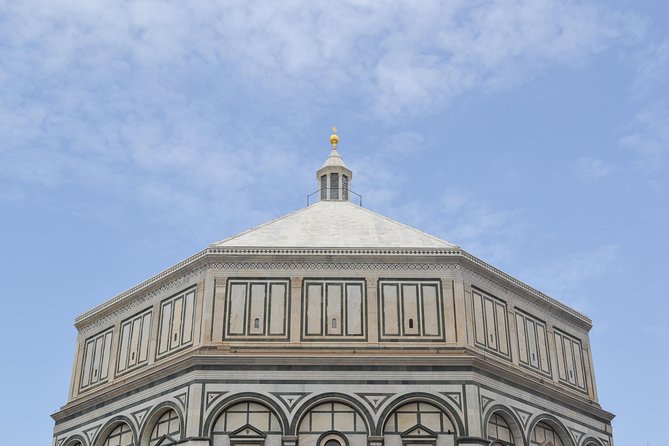
Your first architectural anchor is Basilica di Santo Spirito, tied to Filippo Brunelleschi and known for its elegant simplicity. That phrase can sound vague until you stand in front of the building and the guide points out how the design strips away distraction so the structure and interior feel intentional.
What you’ll like here is the “why it works” feeling. Renaissance architecture often looks calm on the outside, but the effect is more than style—it’s about proportion and clarity. If you enjoy that kind of visual logic, this stop sets the tone for the rest of the day.
Santa Maria Novella: the gothic-meets-Renaissance landmark façade
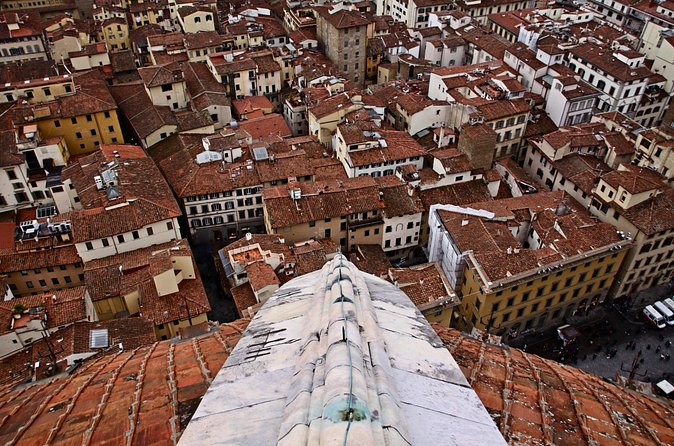
Next is Santa Maria Novella at Piazza di Santa Maria Novella. This basilica is famous for a mix of Gothic and Renaissance elements, and it’s also a heavyweight religious landmark in the city.
This is where having a guide matters. Florence’s façades can look like “pretty stone” until someone connects the decorative choices to the building’s historical timeline. You’ll walk away with a better sense of how Florence kept older Gothic language while also embracing the Renaissance approach.
A consideration: if you’re the type who wants constant movement, this is a stop where you’ll likely pause for façade and interior cues. The time is still tight overall, but this is one of the places to slow down a bit.
- The Best tour in Florence: Renaissance & Medici Tales – guided by a STORYTELLER
★ 5.0 · 12,316 reviews


Florence Cathedral dome by Brunelleschi: the skyline moment
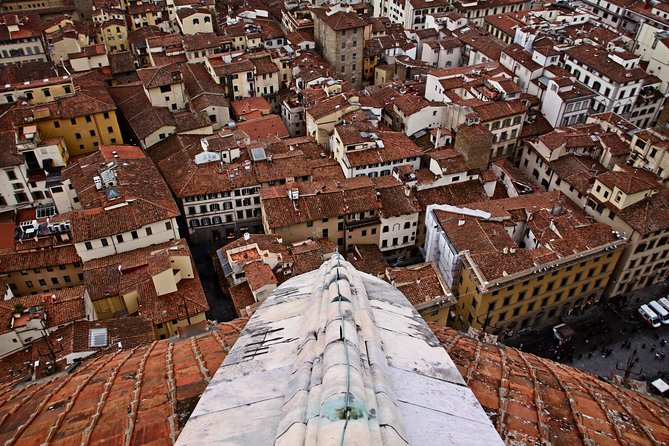
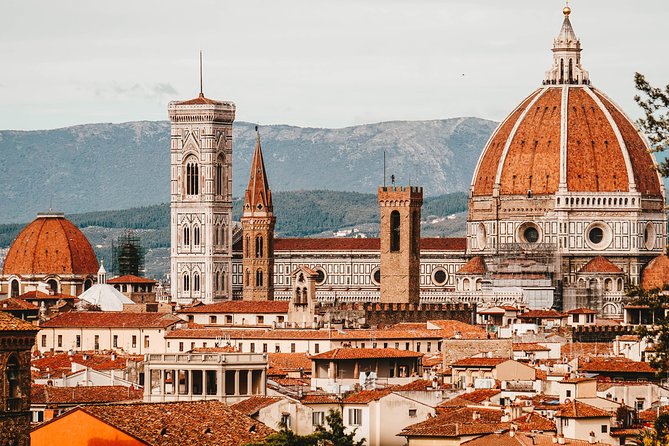
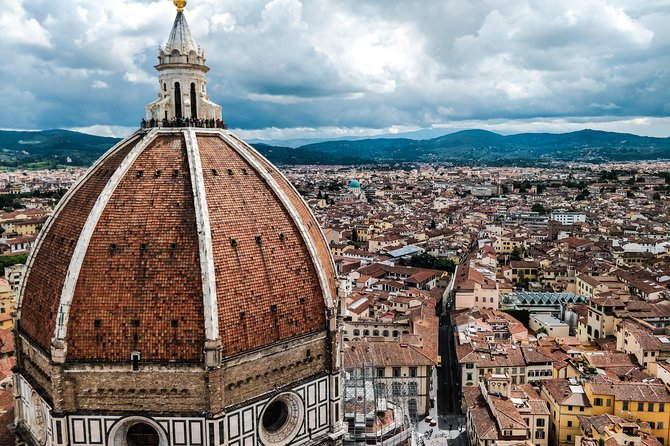
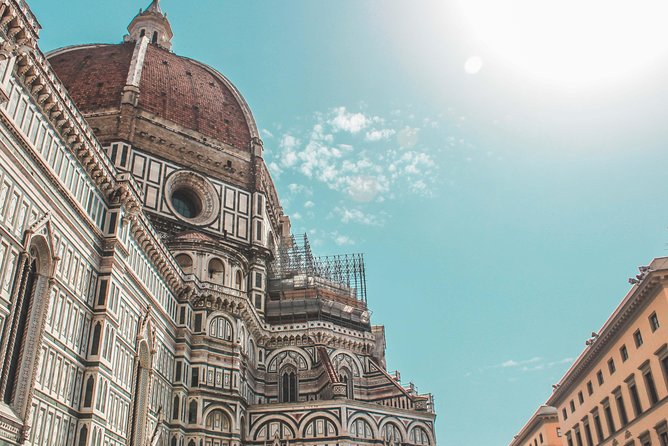
Then you reach the centerpiece of the Renaissance skyline: the cathedral with Brunelleschi’s dome. It’s hard to overstate how much this changes your perspective. From a distance, the dome is a silhouette; up close, it becomes proof of Florence’s engineering confidence.
The guide’s architecture focus helps you move beyond “that’s the famous dome” into “here’s what makes it a Renaissance statement.” Renaissance architecture in Florence isn’t just about decoration; it’s about scale, structure, and the city’s cultural confidence written in stone.
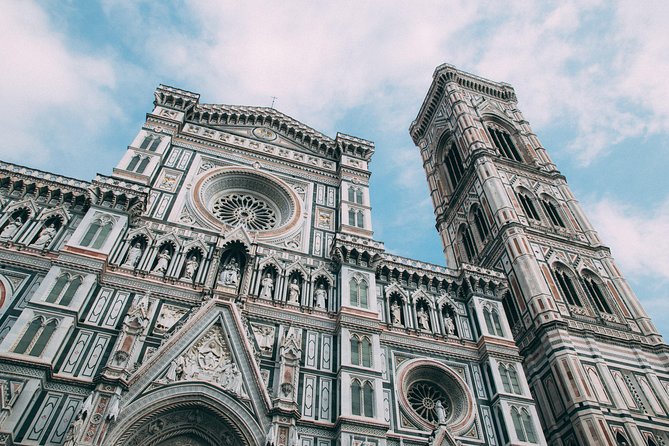
The cathedral bell tower: Florentine gothic and panoramic payoff
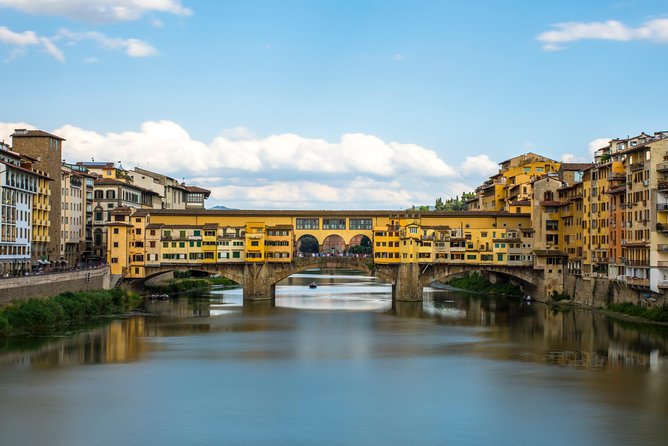
Part of the cathedral complex is the bell tower, highlighted here as an example of Florentine Gothic architecture. This stop is valuable because it adds contrast. You’re not only seeing Renaissance ideas; you’re also seeing how gothic character still shapes Florence’s identity in the same big cathedral zone.
You’ll also get the promise of panoramic views. Even if you don’t treat Florence as a “view” city, it helps to look at how rivers, streets, and architectural density fit together. That wide angle is where a lot of architecture stories click.
Palazzo Vecchio overlooking Piazza della Signoria: civic power in stone
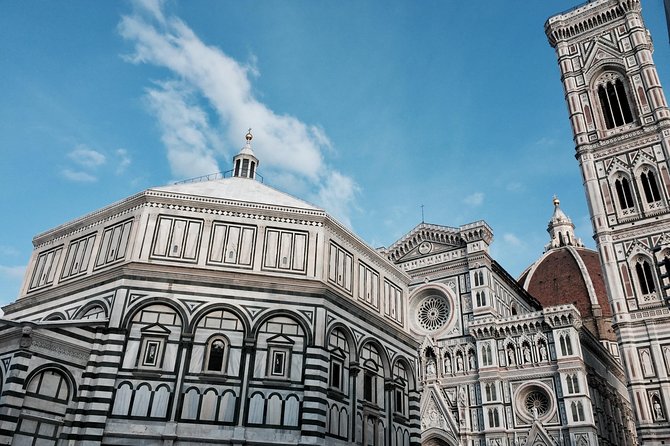
Now you shift from religious architecture to civic symbolism at Palazzo Vecchio, overlooking Piazza della Signoria. This medieval palace is tied to civic power and is known for a crenellated tower—a look that screams authority.
The standout value here is learning to read the building as political messaging, not just a façade. Florence’s civic architecture is designed to say something about governance, pride, and the city’s identity. If you like how buildings communicate power, you’ll enjoy this stop more than you might expect.
Santa Croce at Piazza di Santa Croce: Franciscan church + art treasures
At Piazza di Santa Croce, you reach the principal Franciscan church in Florence, known for art treasures and tombs of illustrious Italians. This is a great counterbalance to cathedral architecture because it blends styles—Gothic and Renaissance—while also functioning as a major art and memory space.
If you’re interested in how architecture and cultural identity overlap, Santa Croce delivers. Even when you’re standing quietly, you can feel the “this matters to Florence” energy. The interior atmosphere is also usually more rewarding when you have a guide telling you what to look for.
Uffizi Gallery with ease: Renaissance art in a historic design
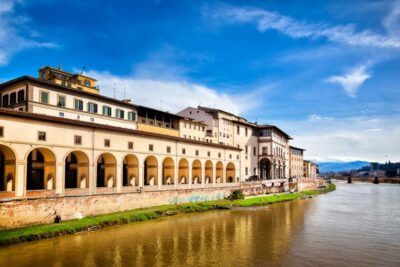
Then it’s time for the Uffizi Gallery, located near Piazza degli Uffizi. This is one of the world’s best-known art museums, and the tour is structured to help you access it without the usual “start from zero” feeling.
What makes this stop useful on a short private tour is that the guide frames the Uffizi as part of Florence’s architectural story—not just a ticket line and a room-by-room shuffle. You’ll see how Renaissance art is presented inside a historic setting, and you can follow the building’s “design logic” while you’re looking at paintings.
A practical heads-up: museum entry is not included, so you’ll want to plan for tickets and timing so you don’t feel rushed.
Ponte Vecchio: the arched bridge that keeps selling the Florence story
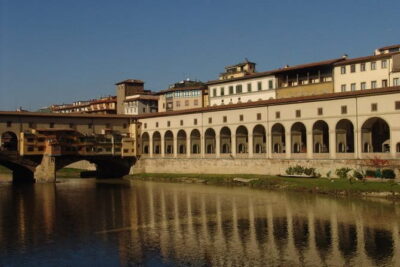
The walk ends with Ponte Vecchio, the medieval stone bridge spanning the Arno River. It’s famous for the shops built along it, and it’s one of the most recognizable symbols of Florence’s historic charm and resilience.
This stop works because it’s architecture you can feel in motion. The guide’s architecture lens helps you notice how the bridge functions as an urban “stage,” not just a crossing. You’re seeing commerce, design, and river geography in one view.
Palazzo Pitti in Piazza de’ Pitti: Medici grandeur and museum country
Next is a Renaissance palace at Piazza de’ Pitti, tied to the Medici family and housing several important museums. Even without going deep into every museum, the exterior and location help you understand why the Medici power translated into architectural scale.
If you like the story of Florence as an artist-and-patron system, this stop gives you the right context. The palace isn’t just grand; it’s a reminder that art and architecture in Florence were closely connected to status, collecting, and political influence.
The villa and beautiful gardens: Renaissance art meets nature
Finally, you get a villa and its gardens, described as a Renaissance-era expression of how art, architecture, and nature connect. This ending choice is smart for two reasons.
First, after dense stone and museum intensity, the gardens give your brain a reset. Second, it reinforces a central Renaissance idea: beauty isn’t only in buildings and paintings; it’s also in how spaces are planned and experienced.
The guide factor: detailed explanations that make buildings click
The most praised part of this tour is the guide’s exceptional knowledge, especially the detailed architecture explanations. That’s exactly what you want in Florence, because so much of what you’ll see can look similar unless someone gives you the vocabulary and the “what to look for” cues.
This is also why a private tour works better than a group-only approach. When a detail catches your eye—say a façade feature, a style shift, or a structural element—you can ask follow-up questions and the guide can adjust on the spot.
Who should book this private architecture tour
This tour is a strong match if you:
- Want an architecture-focused Florence day without building your own self-guided route.
- Prefer private pacing and the ability to slow down for details.
- Care about understanding the “why” behind Renaissance and Gothic mixing.
- Are planning around major anchors like Brunelleschi’s dome, the cathedral complex, and Uffizi + Ponte Vecchio.
It may be less ideal if you:
- Need step-free, low-walking touring (it’s not recommended for impaired mobility).
- Want zero museum-admissions planning, since entry tickets aren’t included.
- Have very tight time constraints for Uffizi, since museum tickets and timing still matter.
Book it or skip it?
If you want a Florence day that feels focused, intelligent, and worth paying for, I’d book it—especially for couples who want a shared “architecture story” and don’t want to guess what matters at each stop. The blend of religious landmarks, civic power, Renaissance art context, and the Arno bridge finale hits the right balance in just about two hours.
If you’re the type who loves to wander on your own and already knows the Renaissance basics, you might not need a private guide. But if you want the buildings to make sense fast, this tour is built for exactly that.
FAQ
How long is the Architectural Florence private tour?
It runs for about 2 hours.
What’s the group size for this experience?
It’s a private tour for your group only, with a maximum of up to 2 people.
What language is the tour offered in?
The tour is offered in English.
What are the main highlights on this route?
You’ll see major architectural stops including Florence’s Cathedral Square area, the Uffizi Gallery, and Ponte Vecchio, along with basilicas and palaces tied to Florentine Gothic and Renaissance design.
What’s included in the price?
Included are a Local Expert Guide, an exclusive private tour, and a tailored itinerary.
What’s not included?
Personal expenses are not included, and entry tickets for transportation, museums, and monuments are excluded.
Where does the tour start and end?
It starts at Basilica di Santo Spirito, Piazza Santo Spirito 30 and ends at Costa S. Giorgio 2.
Is cancellation free?
Yes. You can cancel up to 24 hours in advance for a full refund.
More Private Florence Tours
- Cinque Terre and Pisa Tower Tour from Florence Semi Private
★ 5.0 · 1,406 reviews - From Florence: Private Chianti Hills Tour with Tasting
★ 4.3 · 809 reviews - Private Self-Guided E-Bike Ride in Tuscany with Vineyard Visit
★ 5.0 · 775 reviews - Florence Private Transportation in Rickshaw
★ 5.0 · 730 reviews - Florence: Private Transport by Rickshaw
★ 5.0 · 659 reviews
More Florence Tours to Weigh Up
- The Best tour in Florence: Renaissance & Medici Tales – guided by a STORYTELLER
★ 5.0 · 12,316 reviews - The Best Tour in Florence: Renaissance and Medici Tales
★ 5.0 · 10,810 reviews - Florence: Chianti Wineries Tour with Wine Tasting
★ 4.5 · 10,071 reviews - Florence: Duomo Cathedral 60-Minute Guided Tour
★ 3.7 · 6,829 reviews - Florence: Hop-on Hop-off Bus Tour: 24, 48 or 72-Hour Ticket
★ 4.0 · 6,283 reviews
More Florence Tours We Have Reviewed
- Florence: Skip-The-Line Uffizi Gallery Timed Entry Ticket
★ 4.5 · 27,832 reviews - Tuscany Day Trip from Florence: Siena, San Gimignano, Pisa and Lunch at a Winery
★ 5.0 · 21,634 reviews - Florence: Timed Entry to Michelangelo’s David + Audio App
★ 4.6 · 19,496 reviews - Florence: Leonardo Interactive Museum Entry Ticket
★ 4.5 · 12,957 reviews - Florence: Michelangelo’s David Skip-the-Line Entry Ticket
★ 4.5 · 12,764 reviews
Fresh from our Florence review desk
- Small-Group Pasta Cooking Class and Market Tour in Florence★ 5.0 · 3 reviews
- Palatina Gallery and Pitti Guided Tour in Florence★ 5.0 · 3 reviews
- Tuscan Evening Tour: Fiat 500, 8:30 to 10 PM★ 5.0 · 3 reviews
- Journey into Art: Florence’s Accademia★ 4.5 · 3 reviews
- Paint and Drink Florentine Hills★ 5.0 · 3 reviews
- Truffle hunting and lunch experience, with Vinci and winery.★ 4.5 · 3 reviews
Private, compared.
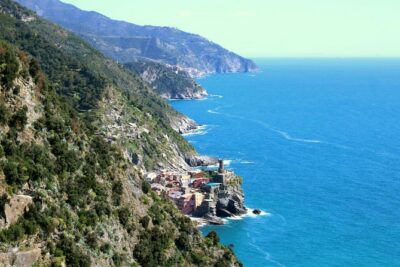 ★ 5.0Cinque Terre and Pisa Tower Tour from Florence Semi PrivateFrom $2851,406 reviews
 ★ 4.3From Florence: Private Chianti Hills Tour with TastingFrom $1,166809 reviews
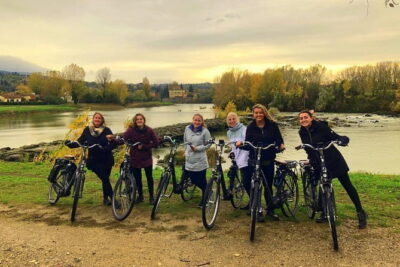 ★ 5.0Private Self-Guided E-Bike Ride in Tuscany with Vineyard VisitFrom $96775 reviews
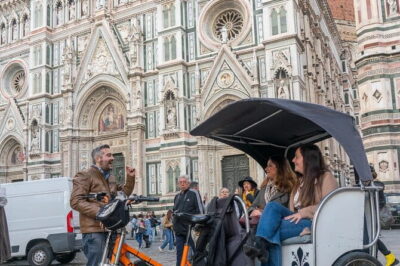 ★ 5.0Florence Private Transportation in RickshawFrom $47730 reviews
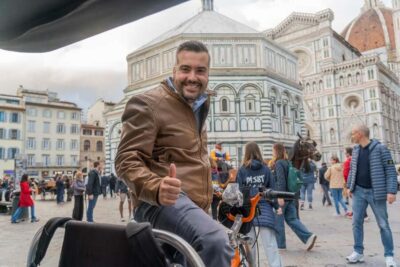 ★ 5.0Private Transport by RickshawFrom $46659 reviews
 ★ 4.5Uffizi Gallery Discovery Private Guided TourFrom $206658 reviews
 ★ 4.5Florence Exclusive PRIVATE Food Tour with 6 or 10 TastingsFrom $137654 reviews
 ★ 4.5Uffizi Highlights, In-Depth Masterclass or Private TourFrom $82641 reviews