
Reviewed · MEDICI & RENAISSANCE TOURS
The Best Tour in Florence: Renaissance and Medici Tales
Florence can feel like a pile of monuments—until someone connects them. This walking tour strings together the Medici rise, Renaissance power, and the key sights you’ll see on your first day, from San Lorenzo to the Piazza della Signoria area. You also get a guide-led story of how Florence’s leaders shaped the city’s art and architecture, not just a list of what to photograph.
Two things I really like: you cover major landmarks and a few smarter stops in about 2 hours, and the guides keep it human, with clear explanations and good storytelling. I also love that the group stays small (up to 30), so questions don’t feel like shouting into the void.
One consideration: this is mostly walk-and-look, with several sites where the admission isn’t included, so you’ll still need to plan for any paid entries or climbs you want later.
In This Review
- Key highlights to look forward to
- San Lorenzo to Medici power: where the story begins
- Palazzo Medici Riccardi and the Baptistery: money, faith, and public image
- Duomo complex: Brunelleschi’s dome and Giotto’s campanile
- Dante’s House to Piazza della Signoria: literature meets politics
- Palazzo Vecchio and the David copy: read the power in plain sight
- Ending near the Uffizi: how to turn the finish into a full art day
- Value, pace, and what to pack for an easy first Florence day
- Should you book this Renaissance and Medici Tales tour?
- FAQ
- Where does the tour start and end?
- How long is the Renaissance and Medici Tales walking tour?
- Is the tour offered in English?
- Do I need to buy admission tickets for each stop?
- What ticket format do I use?
- What is the maximum group size?
- Is the tour weather-dependent?
- Is there free cancellation?
- Are service animals allowed?
- Is the meeting point near public transportation?
Key highlights to look forward to
- Medici meet-and-greet start at Piazza di San Lorenzo, right by the statue of Giovanni de’ Medici on a throne
- San Lorenzo + Palazzo Medici Riccardi connections that explain why Florence looked the way it did
- Duomo complex focus on the Duomo, Giotto’s Campanile, and Brunelleschi’s dome (with the big brick-dome story)
- Dante’s Casa di Dante stop, plus a quick shift from literature to politics in the Piazza della Signoria
- Finish near Uffizi Gallery, so you can continue your art day without backtracking
Deeper into Medici Florence and its Renaissance
San Lorenzo to Medici power: where the story begins
Your tour starts in the heart of Florence at Piazza di San Lorenzo (meeting point listed as 35R). The guide meets you next to the statue of Giovanni de’ Medici sitting on a throne, which is a nice trick. Instead of starting with a random church, you begin with a symbol of Medici authority and spend the next couple of hours learning how that power turned into buildings you can still see today.
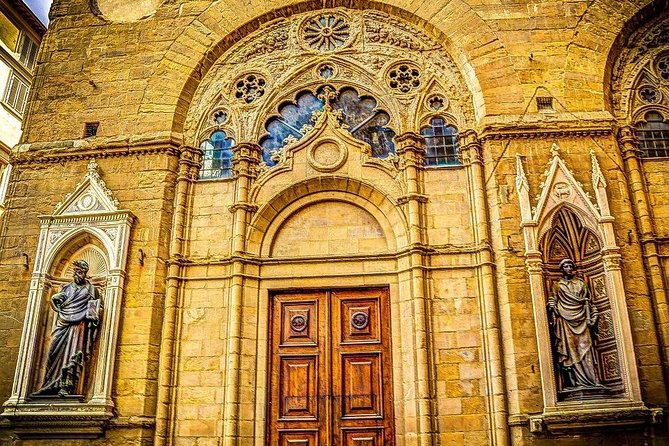
Stop 1 is Basilica di San Lorenzo, a massive church in the city’s main market area. It matters because it’s also the Medici burial church for many key family members, from Cosimo il Vecchio through Cosimo III. If you’ve ever wondered why Florence’s leaders cared so much about art and architecture, this is the kind of anchor point that turns the topic from abstract to personal.
A small tip for this opening stretch: keep your camera ready, but also look at the ground level around you. San Lorenzo sits in an active part of town, and the tour does a good job of giving you that “this is how people actually live here” feeling, not just a museum vibe.
Palazzo Medici Riccardi and the Baptistery: money, faith, and public image
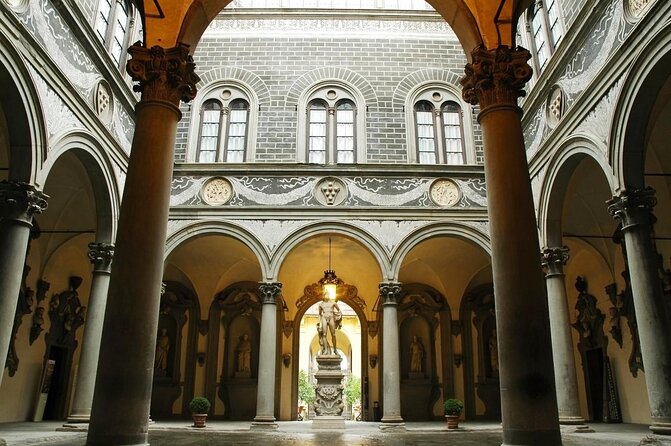
Next you head to Palazzo Medici Riccardi, designed for Cosimo de’ Medici and built between 1444 and 1484. This is one of those stops that changes how you interpret the skyline. You start seeing Renaissance Florence less as a collection of masterpieces and more as a system: banking wealth funding public image, which then created the kind of architecture that announced influence.
The guide’s storytelling here is especially useful if you’re not a specialist. The Medici didn’t just “support art.” They used buildings, placement, and timing to shape what Florence would become. When you understand that, the later stops feel less like isolated facts and more like chapters in one long argument.
Then you visit the Battistero di San Giovanni (Florence Baptistery) across from the Duomo area. It’s one of Florence’s oldest buildings, built between 1059 and 1128, in a Florentine Romanesque style. Even from the outside, it’s a reminder that Florence’s Renaissance didn’t start from nothing; it grew out of older religious and civic traditions.
If you’re the type who likes to know why a place looks the way it does, this portion delivers. You’re walking from Medici residence symbolism to the older sacred center of the city, and the contrast helps the story make sense.
Duomo complex: Brunelleschi’s dome and Giotto’s campanile
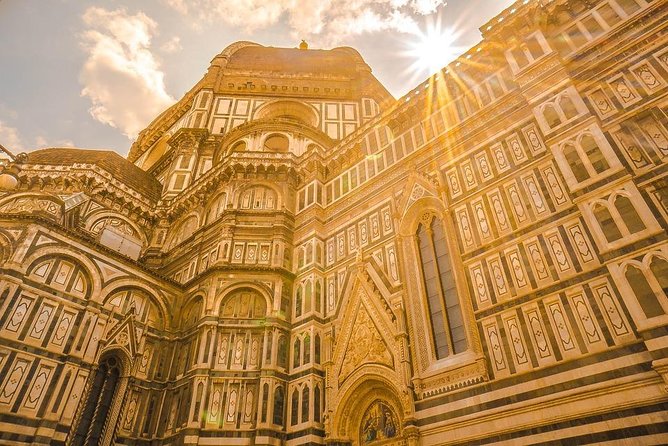
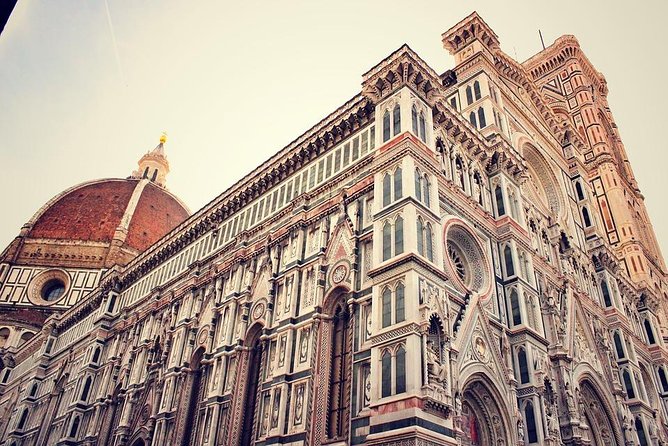
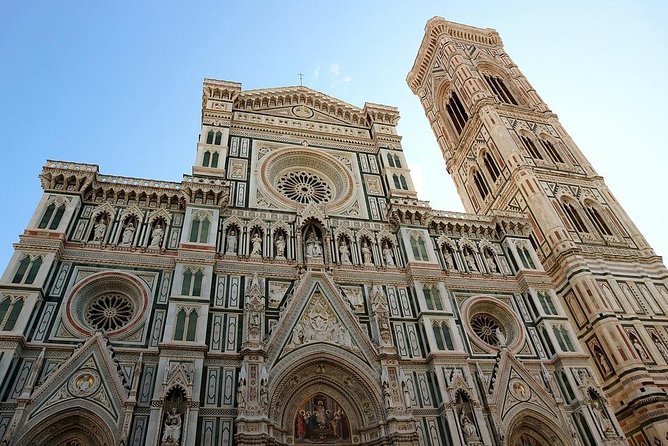
After the Medici and early civic-religious stops, the tour zooms in on the big centerpiece: the Duomo complex. Stop 4 is Florence Cathedral, officially the Cattedrale di Santa Maria del Fiore. It began in 1296 in a Gothic style, designed by Arnolfo di Cambio. The cathedral complex includes the Baptistery and Giotto’s Campanile, and together they’re part of the UNESCO World Heritage Site covering Florence’s historic center.
Stop 5 is Giotto’s Campanile next to the cathedral and Baptistery. This tower is a major showpiece of Florentine Gothic architecture, and the guide focuses on the details: polychrome marble encrustations and the tower’s sculptural decoration, tied to Giotto’s design.
Then comes the highlight many people picture in their heads before they ever arrive: Cupola del Brunelleschi. The dome is described as the largest brick dome ever constructed, and the guide frames it as one of the great mysteries of art and architecture. You don’t need technical language to appreciate this stop. What matters is that the dome represents Renaissance confidence in engineering, plus the ambition to make something breathtaking at a massive scale.
Practical note: the tour doesn’t include paid admission for many of these structures, so treat this as your “see and understand” segment. If you want to go inside or climb for views, you’ll likely need separate tickets and extra time later in your trip.
Dante’s House to Piazza della Signoria: literature meets politics
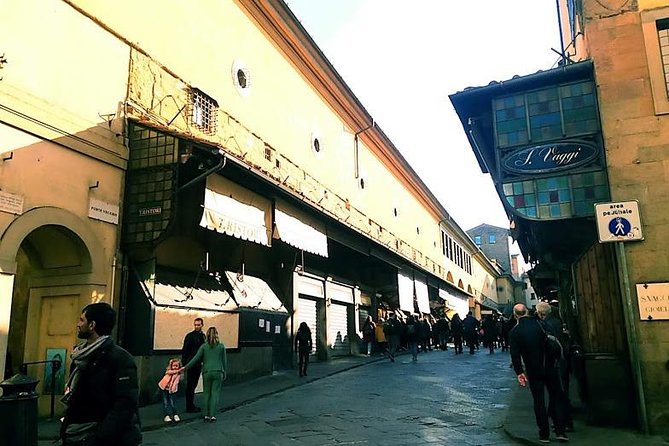
One of my favorite pivots on the route is how it shifts from architecture to ideas. Stop 7 is the Museo Casa di Dante, dedicated to Dante Alighieri and his writing of the Divine Comedy. Even if you only know Dante from classroom memories, the guide’s context helps you connect the literary Renaissance to the same culture that produced major art and major building projects.
Then you move to Piazza della Signoria, a lively L-shaped square right by the Palazzo Vecchio. It’s described as a meeting place for Florentines and tourists, and it’s also the gateway area for what comes next: the Uffizi zone. This is where Florence starts to feel like a stage. The guide points out how power was performed publicly here.
Stop 8 also makes a nice rhythm change: you’re out in open air, with space to reorient yourself. And since the tour spends time explaining what you’re seeing, you’ll be able to plan your next steps rather than wandering with random guesses.
Palazzo Vecchio and the David copy: read the power in plain sight
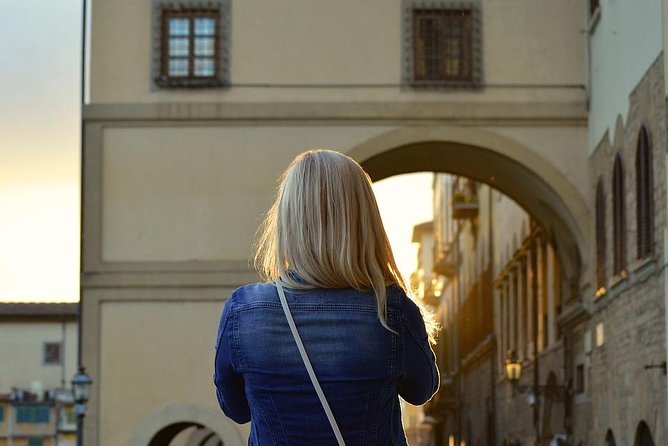
Stop 9 is Palazzo Vecchio, the city’s town hall and a fortress-palace at that. The building dominates the square, and the guide frames it as one of the most significant public places in Italy, not just a pretty facade. When you look up at it after hearing the story, it’s easier to understand how government, wealth, and art were tied together in Renaissance Florence.
In the square, you’ll also spot the copy of Michelangelo’s David. It’s a smart inclusion because it tells you something about Florence’s long relationship with Michelangelo’s work—and how the city keeps re-presenting its icons in public spaces. If you’ve only seen David in one setting, this helps you notice how art works as public messaging.
A drawback here is also fairly obvious: because you’re in one of Florence’s busiest squares, your “quiet learning” moment is short. You’ll still get the explanations, but you’ll want to be flexible about noise and crowds, especially if you’re visiting in peak hours.
- The Best tour in Florence: Renaissance & Medici Tales – guided by a STORYTELLER
★ 5.0 · 12,316 reviews

Ending near the Uffizi: how to turn the finish into a full art day
Stop 10 brings you to Gallerie degli Uffizi, one of Italy’s most important museums and one of the most visited. The Uffizi building began under Giorgio Vasari in 1560 for Cosimo I de’ Medici, originally to house offices for Florentine magistrates. That’s a key detail because it connects back to everything you heard earlier: Medici influence, institutional power, and the transformation of spaces over time.
The tour doesn’t include admission at Uffizi, so think of this as a guided positioning stop. You get oriented, you see where it fits, and you leave with the context to appreciate what you’ll see once you buy your own ticket and go in.
Because your tour ends near Uffizi Gallery, it’s a practical launchpad. If you plan your timing well, you can immediately continue into art without spending more time walking back through the crowded center.
Value, pace, and what to pack for an easy first Florence day
This is one of those tours that works on two levels: it’s low-cost to get in, and it’s high-value in how it organizes Florence for your next moves. The listed price is $3.62 per person, but the experience is also donation-supported—meaning the real “payment” to the guide comes from what you choose at the end based on your satisfaction. Many past participants suggest tipping generously if you feel you got a lot out of the guide; one comment specifically mentioned at least €20 per person. If that fits your budget, it’s a fair guideline.
Timing matters too. The tour runs about 2 hours, which is enough to hit major anchors like the Duomo area and Piazza della Signoria without exhausting you into gridlock fatigue. It’s also a good length for first timers, because it gives you enough structure to come back later for anything that grabbed you.
Group size is capped at 30 travelers, and that’s big enough to meet people, but small enough that a good guide can still keep the energy going. English is offered, so if you’re traveling solo or with friends who want clear narration, you should be in the right lane.
For comfort, I’d pack sensible walking shoes and plan for a lot of pavement. Several stops are near famous sites, so you’ll be stepping around busy areas. Also, the tour requires good weather, so if rain is in the forecast, have your umbrella mindset ready.
One more practical note: you’ll receive a mobile ticket, and the meeting point is a very specific one (San Lorenzo square). Arrive a bit early so you’re not trying to spot the right statue while your group is already moving.
Should you book this Renaissance and Medici Tales tour?
Book it if you want your Florence to make sense fast. This is especially strong for first-time visitors because it gives you the Medici storyline, then threads it through churches, civic buildings, Dante’s legacy, and the public-art power of the Piazza della Signoria.
Skip it or pair it differently if you already have a full-day museum plan and only want tickets for interiors. This walk is built more for orientation and interpretation than for collecting stamps inside paid sites. You’ll still likely want to come back for the Duomo-area interiors and Uffizi once you’ve decided what you care about most.
If you’re choosing one “start here” activity for Florence, this is a smart pick. You’ll finish knowing what to look for the rest of the day—and you’ll be able to answer the question: why these buildings matter, not just that they’re famous.
FAQ
Where does the tour start and end?
The tour starts at Piazza di San Lorenzo, 35R, 50123 Firenze FI, Italy. It ends in the area of Piazza della Signoria, 50122 Firenze FI, Italy, and the exact endpoint can vary slightly within that area.
How long is the Renaissance and Medici Tales walking tour?
The duration is listed as approximately 2 hours.
Is the tour offered in English?
Yes, the tour is offered in English.
Do I need to buy admission tickets for each stop?
Not all stops include admission. Several major sights list admission ticket not included, while some are listed as free (for example, the Duomo is listed as free, and Casa di Dante is listed as free). You should expect that at least some paid entry options may require separate tickets if you want to go inside.
What ticket format do I use?
You’ll have a mobile ticket.
What is the maximum group size?
The tour is limited to a maximum of 30 travelers.
Is the tour weather-dependent?
Yes. The experience requires good weather. If it’s canceled due to poor weather, you’ll be offered a different date or a full refund.
Is there free cancellation?
Yes, free cancellation is available. You can cancel up to 24 hours in advance for a full refund.
Are service animals allowed?
Yes, service animals are allowed.
Is the meeting point near public transportation?
Yes, it’s listed as near public transportation.
More Florence Tours to Weigh Up
- The Best tour in Florence: Renaissance & Medici Tales – guided by a STORYTELLER
★ 5.0 · 12,316 reviews - Florence: Chianti Wineries Tour with Wine Tasting
★ 4.5 · 10,071 reviews - Florence: Duomo Cathedral 60-Minute Guided Tour
★ 3.7 · 6,829 reviews - Florence: Hop-on Hop-off Bus Tour: 24, 48 or 72-Hour Ticket
★ 4.0 · 6,283 reviews - Florence Accademia Gallery Tour with Entrance Ticket Included
★ 4.5 · 6,148 reviews
More Florence Tours We Have Reviewed
- Florence: Skip-The-Line Uffizi Gallery Timed Entry Ticket
★ 4.5 · 27,832 reviews - Tuscany Day Trip from Florence: Siena, San Gimignano, Pisa and Lunch at a Winery
★ 5.0 · 21,634 reviews - Florence: Timed Entry to Michelangelo’s David + Audio App
★ 4.6 · 19,496 reviews - Florence: Leonardo Interactive Museum Entry Ticket
★ 4.5 · 12,957 reviews - Florence: Michelangelo’s David Skip-the-Line Entry Ticket
★ 4.5 · 12,764 reviews
The Medici Story Continues
- The Best tour in Florence: Renaissance & Medici Tales – guided by a STORYTELLER
★ 5.0 · 12,316 reviews - Uffizi Gallery: Renaissance Masterpieces Guided Tour
★ 4.6 · 6,070 reviews - Florence: Renaissance and Medici Tales Guided Walking Tour
★ 4.8 · 1,549 reviews - Guided Medici Tour Florence: Discover Mysteries & History
★ 4.3 · 1,077 reviews - Accademia Gallery: Michelangelo’s David and High Renaissance Art
★ 4.0 · 872 reviews
Fresh from our Florence review desk
- Small-Group Pasta Cooking Class and Market Tour in Florence★ 5.0 · 3 reviews
- Palatina Gallery and Pitti Guided Tour in Florence★ 5.0 · 3 reviews
- Tuscan Evening Tour: Fiat 500, 8:30 to 10 PM★ 5.0 · 3 reviews
- Journey into Art: Florence’s Accademia★ 4.5 · 3 reviews
- Paint and Drink Florentine Hills★ 5.0 · 3 reviews
- Truffle hunting and lunch experience, with Vinci and winery.★ 4.5 · 3 reviews
Medici & Renaissance Tours, compared.
 ★ 5.0The Best tour in Florence: Renaissance & Medici Tales – guided by a STORYTELLERFrom $312,316 reviews
 ★ 4.6Uffizi Gallery: Renaissance Masterpieces Guided TourFrom $886,070 reviews
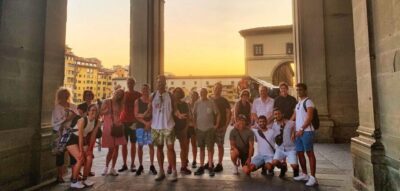 ★ 4.8Renaissance and Medici Tales Guided Walking TourFrom $21,549 reviews
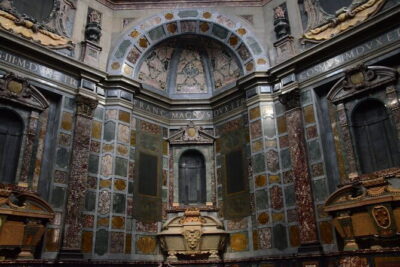 ★ 4.3Guided Medici Tour Florence: Discover Mysteries & HistoryFrom $571,077 reviews
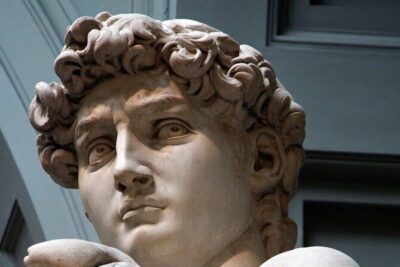 ★ 4.0Accademia Gallery: Michelangelo’s David and High Renaissance ArtFrom $43872 reviews
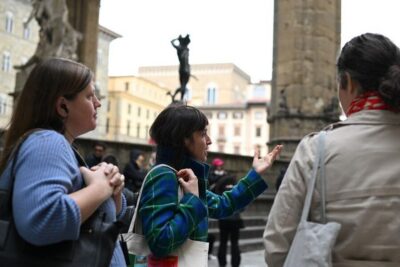 ★ 4.7Guided Tour of Medici Family Secrets and ChapelsFrom $93512 reviews
 ★ 5.0Florence Private Tour: Renaissance, Famous Families & Hidden GemsFrom $199233 reviews
 ★ 4.5Pitti Palace, Palatina Gallery and the Medici: Arts and Power in Florence.From $82223 reviews
Browse the lists this tour appears in