
Reviewed · MEDICI & RENAISSANCE TOURS
Florence: Renaissance and Medici Tales Guided Walking Tour
Florence plays politics in your footsteps. This guided Florence walk turns the Renaissance into street-level drama, with Medici intrigue and symbol spotting guiding you past the city’s best-known monuments. I especially liked how the stories connect power, art, and the buildings you can actually see, but one thing to plan for is that it runs rain or shine, so you’ll want good shoes and a jacket.
You meet by San Lorenzo, near the green umbrella outside the stairs leading to the church entrance, then move through the center with a live guide speaking English or Spanish. I’ve seen guides like Chiara, Michele, and Glenda praised for keeping the pace steady and the details memorable, and the tour ends outside the Uffizi Gallery with practical recommendations for where to eat, drink, and shop.
In This Review
- Key things I’d watch for on this Florence Renaissance walk
- Starting in Piazza di San Lorenzo: the route’s best first move
- Palazzo Medici Riccardi and the Medici power game
- Duomo Complex, Giotto’s Bell Tower, and Brunelleschi’s Dome: seeing the city’s icon with context
- House of Dante: why the tour brings poetry into the politics
- Palazzo Vecchio and Piazza della Signoria: civic power in plain sight
- Loggia dei Lanzi and Ponte Vecchio: finishing the Renaissance story toward the river
- Ending outside the Uffizi Gallery: turn the walk into a smarter museum day
- Price and value: what $2.36 really means in Florence
- Who this Florence Medici tour fits best
- Should you book this Florence Renaissance and Medici Tales tour?
- FAQ
- How long is the Florence Renaissance and Medici Tales guided walking tour?
- Where do I meet the guide for this tour?
- Which major sights are included on the route?
- Where does the tour end?
- What languages are the live guides?
- Does the tour run in bad weather?
- Is the tour wheelchair accessible?
- What should I bring for the walk?
- What’s the cancellation policy and should I tip the guide?
Key things I’d watch for on this Florence Renaissance walk
- Medici stories you can map onto real streets, not a lecture in a classroom
- Duomo Complex and Brunelleschi’s Dome from the outside, so you get orientation fast
- Symbol spotting along the route, with explanations that help you notice what matters
- A route built for first-timers, covering San Lorenzo to Ponte Vecchio and toward Uffizi
- Local tips that actually help, from food stops to shopping areas
- Guides who tell it like a story, with humor and real flow through the 2 hours
Deeper into Medici Florence and its Renaissance
Starting in Piazza di San Lorenzo: the route’s best first move
The tour begins at Piazza di San Lorenzo, with the meetup point tied to Florence Free Tour-Tale. You’re looking for a green umbrella in front of the stairs that lead to the main entrance of San Lorenzo Church, so it’s pretty hard to miss once you’re there.
This matters because it puts you in the right frame of mind immediately. San Lorenzo gives you a visual mix your guide can use right away: the Renaissance and Romanesque architecture blend is visible right at the start, which sets up the tour’s theme of how Florence kept rebuilding itself while staying rooted in older forms.
I like that you’re not thrown straight into the biggest postcard landmarks. You get an opening story first, then the city starts to click into place as a timeline instead of a pile of buildings.
Palazzo Medici Riccardi and the Medici power game
After the start, the tour turns to the Medici, and it doesn’t treat them like a distant name in a textbook. You’ll walk to the Palazzo Medici Riccardi and the guide’s job is to explain why a family could influence Florence’s art, politics, and public image for generations.
What makes this stop work is how it changes your reading of the streets. Once you understand the Medici’s role as patrons and power brokers, buildings that look like “just architecture” start to feel like public statements. You also get those entertaining power-and-intrigue stories that make Renaissance culture feel less museum-dust and more human ambition.
One practical consideration: because this is a walking tour focused on stories and orientation, don’t expect a deep, ticket-based interior visit here. If you want to spend long hours inside palaces or churches, you’ll still need separate timed entry tickets for later.
Duomo Complex, Giotto’s Bell Tower, and Brunelleschi’s Dome: seeing the city’s icon with context
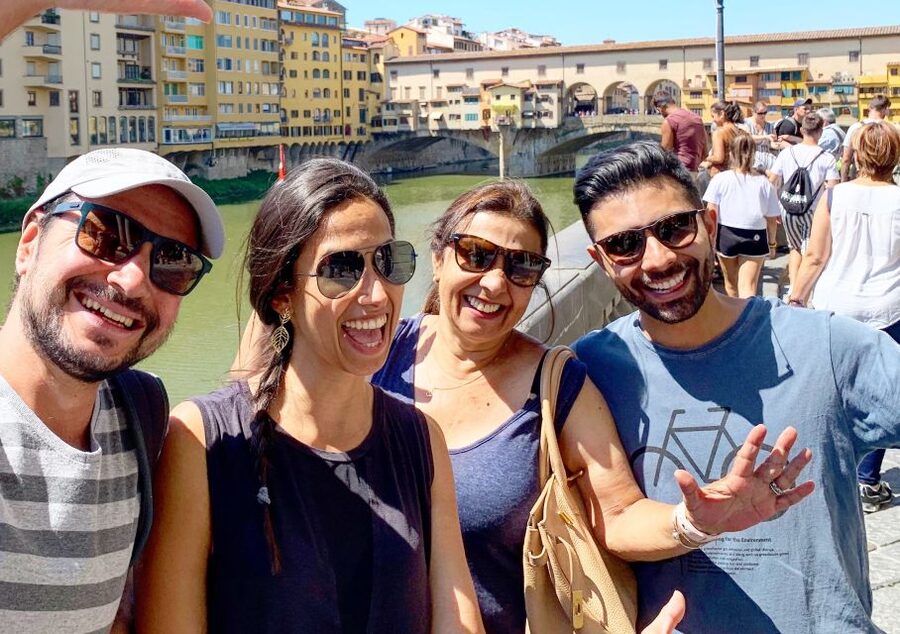
Next comes one of the biggest payoffs for many first-timers: the Duomo Complex, including Giotto’s Bell Tower and Brunelleschi’s Dome. The tour specifically focuses on the exterior area of the cathedral complex, which is a smart way to do it on day one.
From street level, the guide helps you connect what you’re seeing to the broader Renaissance story. You’re not just looking up at the dome; you’re learning how Florence came to treat art and engineering like serious civic identity.
A quick heads-up for your body and your photos: this part of Florence often means crowds and lots of camera aiming. If you’re short, go early in the day when possible, and be ready to lift your chin for views that feel more impressive from a distance than up close.
House of Dante: why the tour brings poetry into the politics
Between the cathedral area and the civic centers, the tour includes the House of Dante. This stop is valuable because it widens the Renaissance angle beyond architecture and patrons.
Instead of making the Medici story the only thread, your guide uses Dante to show how ideas traveled through Florence. You come away understanding that Renaissance Florence wasn’t only about who commissioned art. It was also about writers, symbols, and the way culture turned into influence.
If you’ve ever wondered why Florence’s monuments feel obsessed with meaning, this is where it starts to click. The guide ties the symbols you notice in the streets to the larger narrative, so you stop treating details as decoration and start treating them like communication.
Palazzo Vecchio and Piazza della Signoria: civic power in plain sight
Now the tour swings toward Florence’s public authority with Palazzo Vecchio and the nearby Piazza della Signoria. These stops work because they show you how Renaissance power wasn’t hidden away in palaces. It played out in open civic space.
Your guide explains what to pay attention to as you move through the square: how public buildings and public spaces helped define who mattered and how Florence presented itself to the world. It’s the kind of context that makes later visits to museums feel more connected to place.
One drawback to factor in: squares like this can get busy, especially when you’re walking with a group. If you want quiet photo moments, keep moving with the guide, then plan a second pass on your own afterward when it’s calmer.
Stretch your legs on more Florence walking tours





Loggia dei Lanzi and Ponte Vecchio: finishing the Renaissance story toward the river
From the civic center, you reach the Loggia dei Lanzi and then cross into the famous rhythm of Ponte Vecchio. This sequence is more than sightseeing. It’s a shift from “power and institutions” into “Florence as lived space.”
At Loggia dei Lanzi, your guide helps you keep reading the city’s visual language. In a Renaissance town, public art and architecture often overlap with status, identity, and messaging. Even if you’re not an art specialist, you’ll understand why certain features get attention.
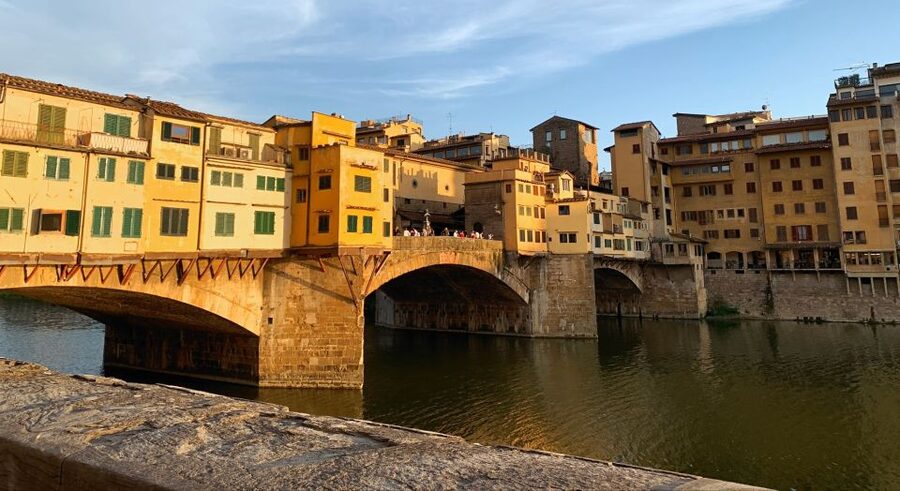
Then you arrive at Ponte Vecchio, a Florence icon that’s easy to recognize and fun to experience on foot. This is a good moment to reset: the stories slow slightly, you get a clearer view, and the city opens up around you.
Practical tip: plan a few minutes after Ponte Vecchio to wander at your own pace. If you stay locked into the group flow, you can miss the best “I’m really here” feeling the bridge gives you.
Ending outside the Uffizi Gallery: turn the walk into a smarter museum day
The tour finishes outside the Uffizi Gallery, which is a handy payoff. By the time you reach this area, you’re already oriented around the city’s major themes: Renaissance ambition, Medici influence, and the cultural symbols scattered through the center.
Even if you don’t have tickets yet, you’ll leave with a clearer plan. Your guide also shares practical tips for what to do next, including where to eat, drink, and shop, in a way that helps you avoid the most touristy detours.
If you’re pairing this with museum time, I’d do it early in your trip. On day one, it gives you a mental map that makes the rest of Florence feel easier to navigate.
Price and value: what $2.36 really means in Florence
On paper, this tour looks like a bargain at $2.36 per person for a roughly 2-hour walk with a live guide. In real life, the value is less about the base price and more about what you get for it: a guided orientation through major sights, plus storytelling that turns those sights into a coherent Renaissance narrative.
Also, keep in mind that this is often run in a free-tour style. A number of guides are praised for being worth a tip, and people explicitly suggest bringing cash to tip based on satisfaction. I treat that as part of the deal: if the guide does a great job (and many guides here are described as doing exactly that), tip accordingly.
If you’re trying to stretch your budget, this is one of those Florence experiences that can pay off for the rest of the trip. You’ll likely understand what you’re looking at later, which saves time and guesswork.
Who this Florence Medici tour fits best
This tour is a great fit if you want:
- a first-day orientation in Florence
- a way to connect the Medici family to the city you’re walking through
- storytelling that helps you remember details, not just facts
- a route that works well for different ages, including kids and teens
I’d also recommend it if you’re traveling solo or as a pair and want to hear an insider-style route explanation without committing to a full-day plan. And because the tour runs rain or shine, it’s useful even when Florence weather refuses to cooperate.
The biggest “not for you” scenario is if you only want interior museum time or you hate walking in crowds. This tour is built for moving through the city while getting context, not for long stays inside attractions.
Should you book this Florence Renaissance and Medici Tales tour?
I’d book it if you want a smart, time-friendly way to understand Florence beyond the skyline. The Medici focus gives you a storyline, the Duomo area gives you immediate context, and the ending near Uffizi makes it easy to keep going.
Just go in with the right expectations: you’re touring the city with a guide’s perspective, mostly from the outside, and you’ll still decide later whether you want deeper, ticket-based time inside specific sites. If you bring good walking shoes, carry a little cash for tipping, and keep an ear open for the symbolism your guide points out, this is one of the easiest ways to make Florence feel personal fast.
FAQ
How long is the Florence Renaissance and Medici Tales guided walking tour?
The tour runs for about 2 hours.
Where do I meet the guide for this tour?
Meet at Florence Free Tour-Tale. Look for the green umbrella in front of the stairs that lead to the main entrance of San Lorenzo Church.
Which major sights are included on the route?
You’ll see stops that include Basilica of San Lorenzo, Palazzo Medici Riccardi, the Duomo Complex area (including Giotto’s Bell Tower and Brunelleschi’s Dome), the House of Dante, Palazzo Vecchio, Piazza della Signoria, Loggia dei Lanzi, and Ponte Vecchio.
Where does the tour end?
It ends outside the Uffizi Gallery.
What languages are the live guides?
Live guides speak Spanish and English.
Does the tour run in bad weather?
Yes. The tour takes place rain or shine.
Is the tour wheelchair accessible?
Yes, it is wheelchair accessible.
What should I bring for the walk?
Bring comfortable shoes, a camera, water, and weather-appropriate clothing.
What’s the cancellation policy and should I tip the guide?
You can cancel up to 24 hours in advance for a full refund. Also, since this is a free-tour style experience, it’s a good idea to bring cash to tip the guide based on your satisfaction.
More Florence Tours to Weigh Up
- The Best tour in Florence: Renaissance & Medici Tales – guided by a STORYTELLER
★ 5.0 · 12,316 reviews - The Best Tour in Florence: Renaissance and Medici Tales
★ 5.0 · 10,810 reviews - Florence: Chianti Wineries Tour with Wine Tasting
★ 4.5 · 10,071 reviews - Florence: Duomo Cathedral 60-Minute Guided Tour
★ 3.7 · 6,829 reviews - Florence: Hop-on Hop-off Bus Tour: 24, 48 or 72-Hour Ticket
★ 4.0 · 6,283 reviews
More Florence Tours We Have Reviewed
- Florence: Skip-The-Line Uffizi Gallery Timed Entry Ticket
★ 4.5 · 27,832 reviews - Tuscany Day Trip from Florence: Siena, San Gimignano, Pisa and Lunch at a Winery
★ 5.0 · 21,634 reviews - Florence: Timed Entry to Michelangelo’s David + Audio App
★ 4.6 · 19,496 reviews - Florence: Leonardo Interactive Museum Entry Ticket
★ 4.5 · 12,957 reviews - Florence: Michelangelo’s David Skip-the-Line Entry Ticket
★ 4.5 · 12,764 reviews
The Medici Story Continues
- The Best tour in Florence: Renaissance & Medici Tales – guided by a STORYTELLER
★ 5.0 · 12,316 reviews - The Best Tour in Florence: Renaissance and Medici Tales
★ 5.0 · 10,810 reviews - Uffizi Gallery: Renaissance Masterpieces Guided Tour
★ 4.6 · 6,070 reviews - Guided Medici Tour Florence: Discover Mysteries & History
★ 4.3 · 1,077 reviews - Accademia Gallery: Michelangelo’s David and High Renaissance Art
★ 4.0 · 872 reviews
Fresh from our Florence review desk
- Small-Group Pasta Cooking Class and Market Tour in Florence★ 5.0 · 3 reviews
- Palatina Gallery and Pitti Guided Tour in Florence★ 5.0 · 3 reviews
- Tuscan Evening Tour: Fiat 500, 8:30 to 10 PM★ 5.0 · 3 reviews
- Journey into Art: Florence’s Accademia★ 4.5 · 3 reviews
- Paint and Drink Florentine Hills★ 5.0 · 3 reviews
- Truffle hunting and lunch experience, with Vinci and winery.★ 4.5 · 3 reviews
Medici & Renaissance Tours, compared.
 ★ 5.0The Best tour in Florence: Renaissance & Medici Tales – guided by a STORYTELLERFrom $312,316 reviews
 ★ 5.0The Best Tour in Florence: Renaissance and Medici TalesFrom $310,810 reviews
 ★ 4.6Uffizi Gallery: Renaissance Masterpieces Guided TourFrom $886,070 reviews
 ★ 4.3Guided Medici Tour Florence: Discover Mysteries & HistoryFrom $571,077 reviews
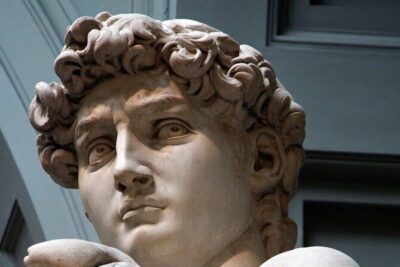 ★ 4.0Accademia Gallery: Michelangelo’s David and High Renaissance ArtFrom $43872 reviews
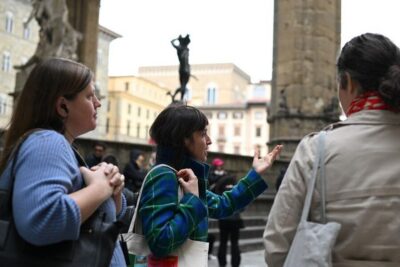 ★ 4.7Guided Tour of Medici Family Secrets and ChapelsFrom $93512 reviews
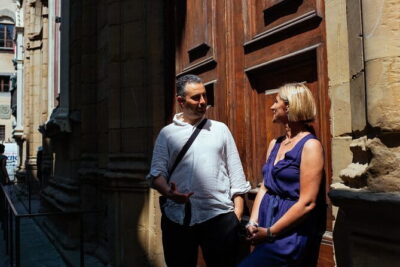 ★ 5.0Florence Private Tour: Renaissance, Famous Families & Hidden GemsFrom $199233 reviews
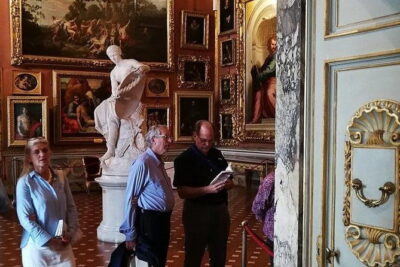 ★ 4.5Pitti Palace, Palatina Gallery and the Medici: Arts and Power in Florence.From $82223 reviews
Browse the lists this tour appears in