
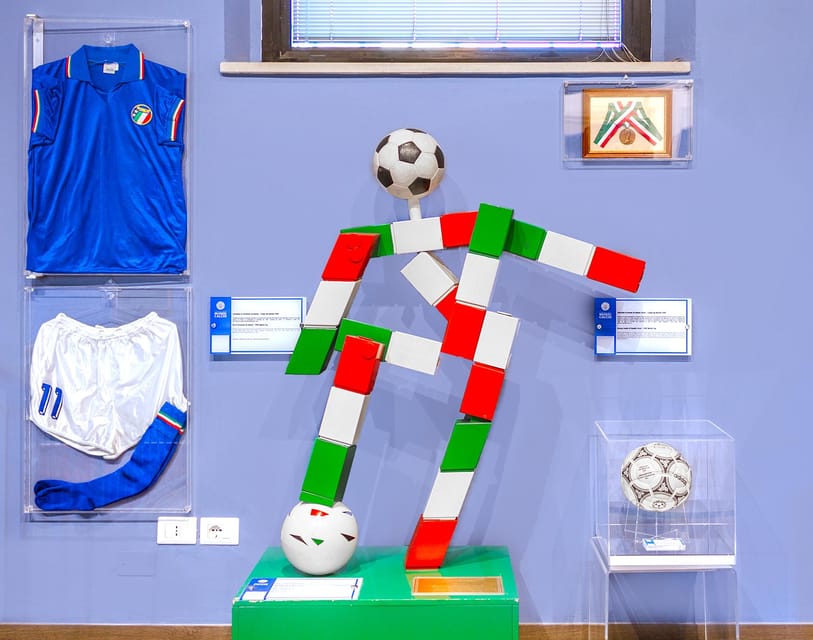
Reviewed · MUSEUMS
Firenze: Italian Football Museum
A visit to Coverciano feels like a football headquarters. At the Italian Football Museum, I love how the Italian national team story runs from 1898 to today, with real trophies and jerseys you can actually take in during a calm, one-hour stop. It’s also an easy win if you’re a fan of the Azzurri and Azzurre: you get to see the pitch area where the teams train, plus video clips of iconic moments.
The World Cup wall is the big emotional pull for me: Italy’s titles (1934, 1938, 1982, 2006) are all there, and the exhibit also covers European Championship wins (1968 and 2021). One possible drawback: this is a smaller museum focused tightly on FIGC/National team memorabilia, so if you’re expecting huge interactive, stadium-style experiences, you may finish thinking it’s a bit short.
In This Review
- Key highlights before you go
- Italian Football Museum at Coverciano: what the experience really is
- How the museum tells the Azzurri and Azzurre story (1898 to today)
- World Cups and European trophies: the emotional centerpiece
- Jerseys, awards, and memorabilia that you can actually appreciate
- The training center setting: watching the pitch from the museum side
- The free audio guide app: how to use it to get more out of an hour
- The FIGC Store and official merch (yes, the shop is part of the fun)
- Timing, cost, and who this museum is for
- Practical tips for a smooth visit
- Should you book the Italian Football Museum in Firenze?
- FAQ
- Where is the Italian Football Museum located?
- How long does the museum visit take?
- How much is the ticket?
- What’s included with my ticket?
- Is there a free audio guide?
- Can I join a guided tour of the training center?
- Is the museum wheelchair accessible and are pets allowed?
Key highlights before you go
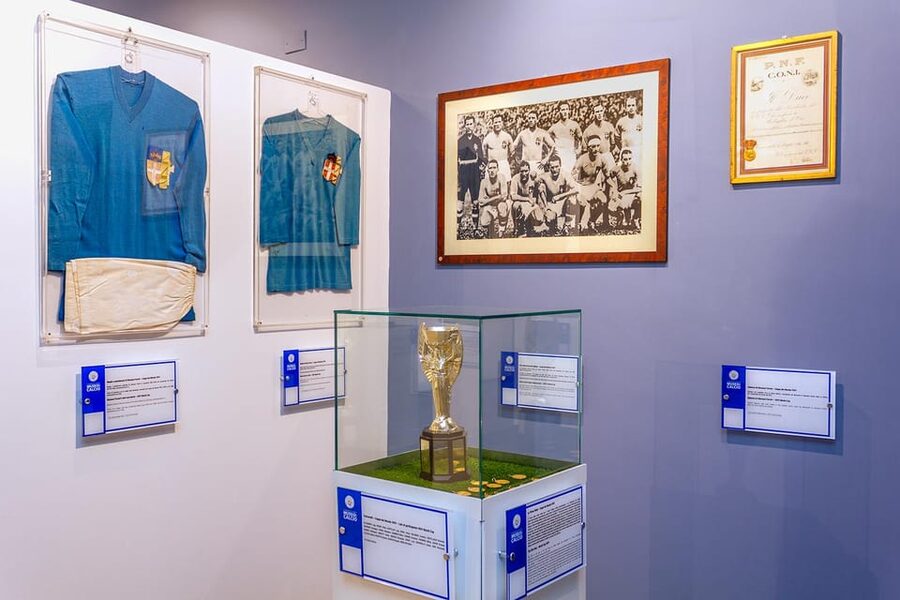
- A full run of Italy’s national-team trophies, including four World Cups (1934, 1938, 1982, 2006)
- European Championship wins shown alongside the World Cup years (1968 and 2021)
- Video replays of iconic Azzurri/Azzurre moments to help the artifacts land emotionally
- A large memorabilia collection, including awards and jerseys from major victories
- Coverciano Technical Centre access, including a chance to admire the training pitch area
- Free mobile audio guide app, with extra content that adds context to what you see
More Florence galleries and collections to wander
Italian Football Museum at Coverciano: what the experience really is

The Italian Football Museum isn’t trying to be a giant theme park. It’s built inside the Coverciano Technical Centre, where Italy’s teams prepare. That setting matters. You’re not just reading about football history—you’re in the place where the national team trains, which gives the whole visit a “you’re on-site” feeling, even if you’re not there for a match day.
The museum itself is focused: it’s about the Italian national teams (Azzurri and Azzurre) and the emotions tied to that identity. Expect an exhibit that moves through major eras and trophies, with lots of artifacts that you can look at slowly. The visit is listed at one hour, which means you can do it without turning it into a half-day mission.
And cost-wise, at $14 per person, the value depends on what you want. If you’re into jerseys, tournament hardware, and the official story of the national team, this price feels reasonable for a compact museum with a free audio guide. If you want hands-on experiences or a big “stadium tour” vibe, you might feel like $14 buys you a neat stop rather than a full football day.
How the museum tells the Azzurri and Azzurre story (1898 to today)
The clearest thing about the museum experience is the timeline focus. You can explore the history of the Italian national teams from 1898 up to today, and that long sweep is the backbone of the visit.
What I like about this setup is how it prevents the museum from becoming random. You’re not wandering. The exhibit keeps pulling you forward: older eras, then the big tournament years, then modern success. Even if you don’t know every date, you still get a sense of how Italy’s national-team identity evolved over time.
As you move through the rooms, the display emphasizes major victories and the symbols of those victories—awards, jerseys, and official memorabilia. This is the kind of museum where photos are useful, but your real value comes from reading and paying attention to details you might otherwise gloss over: the tournament year shown on artifacts, how the display groups trophies, and the way the exhibit frames key moments.
World Cups and European trophies: the emotional centerpiece

If you go for one reason, make it this: Italy’s biggest trophies are front and center. The museum includes the four World Cups won by Italy—1934, 1938, 1982, and 2006. Seeing all four together is a powerful way to understand how recurring success shapes national sports culture.
The exhibit also highlights the two European Championship wins—1968 and 2021. I like that they don’t treat these as footnotes. They’re placed in the same “major achievement” conversation as the World Cups, so the national-team story reads as a broader set of milestones instead of just one tournament.
This is also where video content helps. The museum includes videos of iconic moments. For a museum like this, video does two jobs well: it refreshes your memory if you lived through certain campaigns, and it gives context if you didn’t. You’re not just staring at objects—you’re matching them to moments.
Jerseys, awards, and memorabilia that you can actually appreciate
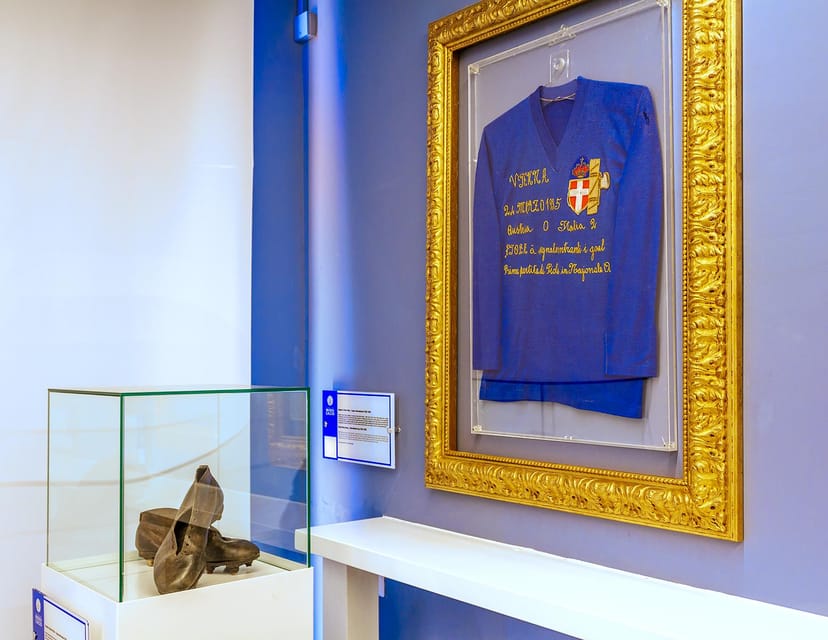
The museum’s charm is in its physical collection. You’ll see a large collection of memorabilia, including jerseys and trophies tied to major triumphs. There’s something satisfying about looking at real football history rather than just relying on modern highlights.
In a smaller museum, you also get a benefit: you don’t need hours to feel oriented. With only about one hour for the visit, you’ll likely focus your attention on the big-ticket artifacts and the video stations, instead of getting exhausted by too much to see.
One fair caution: because it’s focused, the collection may feel concentrated rather than massive. One reviewer criticized it as small, with only a few jerseys and cups, and that’s a reminder to set expectations. If you’re the type who wants an oversized, multi-building football museum with lots of interactive experiences, you may want to compare this against bigger football attractions before committing.
The training center setting: watching the pitch from the museum side
What makes this experience more than a standard museum stop is where it sits. The Italian Football Museum is located in the Coverciano Technical Centre, described as the home of the Italian national teams.
During your visit, you can admire the pitch where the Azzurri make their training and preparation. That detail is worth paying attention to because it changes the mood. You’re not only looking at history; you’re looking at a working football environment tied to the present.
At the same time, it’s important to understand what isn’t included. A guided tour of the training center is not part of the museum ticket. So you might see and admire parts of the training setup, but you should not assume you’ll get a full staff-led behind-the-scenes tour of the whole facility.
Still, even without that extra guided layer, the setting gives context. It makes the trophies feel like they belong to a living system, not just a display case.
- The Best tour in Florence: Renaissance & Medici Tales – guided by a STORYTELLER
★ 5.0 · 12,316 reviews





The free audio guide app: how to use it to get more out of an hour
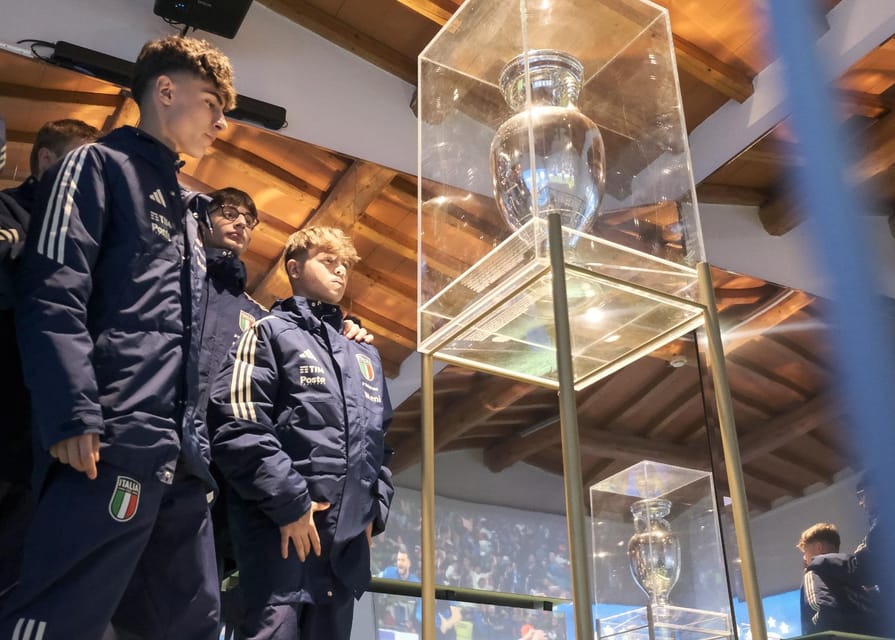
The museum includes a free audio guide app you can download for your mobile. This is one of the best “value multipliers” in the experience, especially because the visit is only listed at one hour.
Here’s how I’d use it so you don’t waste time:
- Start the audio guide early so you understand what you’re about to see.
- Save key areas for when you’re actually looking at the relevant artifacts, not while walking fast.
- If a video station grabs you, pause or line up audio for when you’re standing nearby so you connect the commentary with the moment.
Audio guides are often hit-or-miss in small museums, but here the audio guide is described as offering exclusive contents. That suggests the audio is meant to add meaning to the displayed trophies and jerseys, not just repeat what’s on the wall.
The FIGC Store and official merch (yes, the shop is part of the fun)
Don’t rush past the retail area. The museum includes the FIGC Store, where you can find official merchandising of the Italian national team by adidas.
This can be more than a tourist stop. If you’re collecting something simple—like a scarf, a training-style item, or an officially licensed souvenir—this is a logical place to buy it. And one review specifically praised the store experience, calling out a very kind shop attendant. That kind of small service detail matters when you’re on a tight schedule.
Timing, cost, and who this museum is for
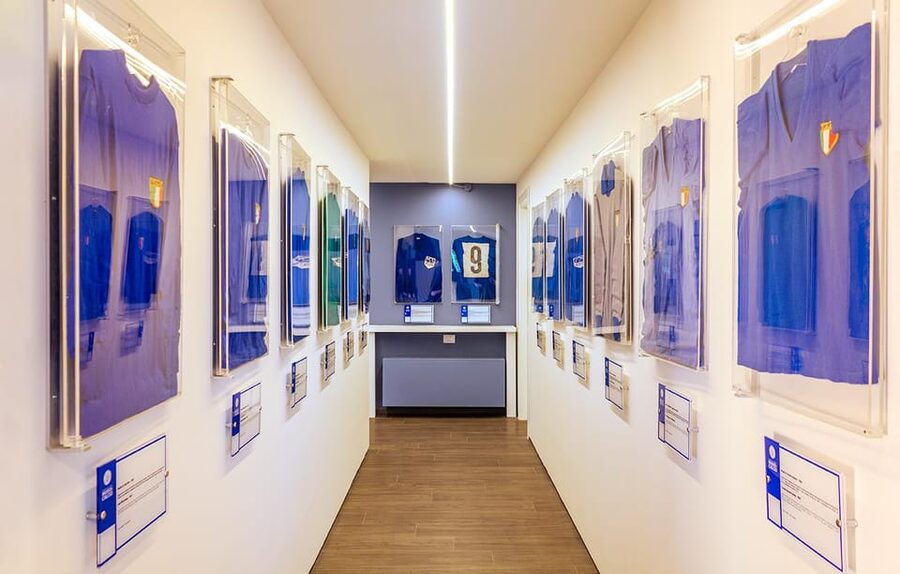
At $14 per person for about one hour, the price is fair if you’re genuinely interested in Italy’s national-team history and memorabilia. It’s also a strong choice if you’re already in the area or doing a broader Florence/area itinerary and want a museum stop that’s connected to a real football institution.
It’s best suited for:
- Football fans who like the national-team story (Azzurri/Azzurre) and major trophies
- People who enjoy seeing jerseys, awards, and official memorabilia up close
- Travelers who want a short, focused museum rather than a long museum marathon
It may feel underwhelming if:
- You want a big interactive experience with lots of activities
- You’re comparing it to stadium tours or large football theme museums that take multiple hours
- You mainly care about club football rather than national-team history
Practical tips for a smooth visit
A few small choices can make the hour feel better:
- Plan to spend the most time where the trophies and jerseys are displayed. That’s where the museum concentrates its impact.
- Use the audio guide actively. Let it time your attention instead of letting it become background noise.
- If you’re shopping, check the store after you’ve finished the main exhibit so you’re not rushed.
- The museum is wheelchair accessible, and pets are not allowed. Keep that in mind when you’re organizing companions.
You’ll also want to check availability for the starting times, since the visit duration is listed at one hour.
Should you book the Italian Football Museum in Firenze?
I’d book it if you want a straightforward, national-team-focused football stop at a real training complex. The World Cups (1934, 1938, 1982, 2006), European wins (1968 and 2021), and the video moments create a satisfying core story for a museum-sized visit. Add a free audio guide and the pitch-side training setting at Coverciano, and you’ve got a good match for a one-hour detour.
I would skip or reconsider if your idea of a great football experience requires big interactive exhibits or extended stadium-style access. Since the museum is compact and training-center guidance isn’t included, you should go in expecting a concentrated tour of history and memorabilia—not an all-day football festival.
If that sounds like your style, this is an easy yes.
FAQ
Where is the Italian Football Museum located?
It’s located inside the Coverciano Technical Centre, the home of the Italian national teams in Tuscany, Italy.
How long does the museum visit take?
The visit is about 1 hour.
How much is the ticket?
The price is $14 per person.
What’s included with my ticket?
Your ticket includes entrance to the Italian Football Museum and an audio guide app.
Is there a free audio guide?
Yes. The audio guide app can be downloaded for free on your mobile.
Can I join a guided tour of the training center?
No. A guided tour of the training center of Coverciano is not included, though the visit does include seeing the pitch area where the Azzurri train.
Is the museum wheelchair accessible and are pets allowed?
Yes, it’s wheelchair accessible. Pets are not allowed.
More Florence Galleries
- Florence: Skip-The-Line Uffizi Gallery Timed Entry Ticket
★ 4.5 · 27,832 reviews - Florence: Leonardo Interactive Museum Entry Ticket
★ 4.5 · 12,957 reviews - Florence Accademia Gallery Tour with Entrance Ticket Included
★ 4.5 · 6,148 reviews - Uffizi Gallery: Renaissance Masterpieces Guided Tour
★ 4.6 · 6,070 reviews - Uffizi Gallery Small Group Tour with Guide
★ 4.5 · 4,923 reviews
More Florence Tours We Have Reviewed
- Florence: Skip-The-Line Uffizi Gallery Timed Entry Ticket
★ 4.5 · 27,832 reviews - Tuscany Day Trip from Florence: Siena, San Gimignano, Pisa and Lunch at a Winery
★ 5.0 · 21,634 reviews - Florence: Timed Entry to Michelangelo’s David + Audio App
★ 4.6 · 19,496 reviews - Florence: Leonardo Interactive Museum Entry Ticket
★ 4.5 · 12,957 reviews - Florence: Michelangelo’s David Skip-the-Line Entry Ticket
★ 4.5 · 12,764 reviews
Fresh from our Florence review desk
- Small-Group Pasta Cooking Class and Market Tour in Florence★ 5.0 · 3 reviews
- Palatina Gallery and Pitti Guided Tour in Florence★ 5.0 · 3 reviews
- Tuscan Evening Tour: Fiat 500, 8:30 to 10 PM★ 5.0 · 3 reviews
- Journey into Art: Florence’s Accademia★ 4.5 · 3 reviews
- Paint and Drink Florentine Hills★ 5.0 · 3 reviews
- Truffle hunting and lunch experience, with Vinci and winery.★ 4.5 · 3 reviews
Museums, compared.
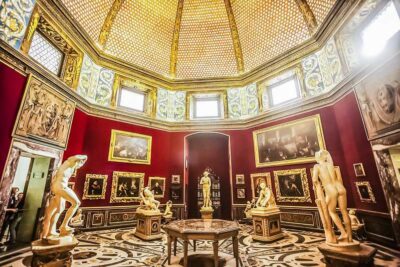 ★ 4.5Skip-The-Line Uffizi Gallery Timed Entry TicketFrom $3027,832 reviews
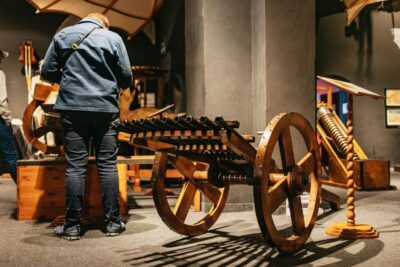 ★ 4.5Leonardo Interactive Museum Entry TicketFrom $512,957 reviews
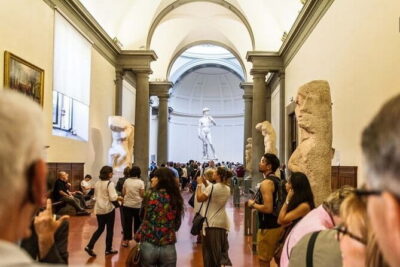 ★ 4.5Florence Accademia Gallery Tour with Entrance Ticket IncludedFrom $456,148 reviews
 ★ 4.6Uffizi Gallery: Renaissance Masterpieces Guided TourFrom $886,070 reviews
 ★ 4.5Uffizi Gallery Small Group Tour with GuideFrom $764,923 reviews
 ★ 4.6Accademia Gallery Guided TourFrom $534,156 reviews
 ★ 4.8Accademia Gallery Skip-the-Line Guided TourFrom $413,044 reviews
 ★ 4.2Uffizi Gallery Timed Entry Ticket & Audio GuideFrom $332,794 reviews