
Reviewed · WORKSHOPS
Florence: Artisanal Crafts and Workshops Guided Tour
Craft hands, not museum walls. This Florence workshop tour strings together real studios in goldsmithing, leather, carving, and perfumery, guided by Martina Cappello, who adjusts the stops to your interests. I love the focus on working craft instead of just looking at finished objects, and I like that Martina sets a comfortable pace while sharing what makes each trade part of everyday Florentine life.
One thing to plan for: you’ll do a moderate amount of walking on historic streets, and the tour is not suitable for wheelchair users or anyone with mobility impairments.
In This Review
- Key things you’ll notice right away
- Florence workshop hopping: why 3 hours feels like more
- Meeting at Piazza della Repubblica and getting your bearings fast
- Goldsmithing in Florence: semi-precious stones and the commesso magic
- Santa Maria Novella pharmacy: the oldest apothecary story in the world
- Leather work inside Santa Croce: Scuola del Cuoio and more
- Carving and frames at Bottega d’Arte Maselli
- Bookbinding and perfumery: the behind-the-scenes skills link
- What’s included, what it costs beyond the ticket
- Practical tips so you enjoy the workshops more
- Who this tour is for (and who might skip it)
- Should you book this Florence crafts tour?
- FAQ
- How long is the Florence artisanal crafts workshop tour?
- How much does it cost?
- Where is the meeting point?
- Is hotel pickup and drop-off included?
- What languages is the guide available in?
- What crafts and places are included?
- Are food and drinks included?
- Is photography allowed?
- Is the tour suitable for wheelchair users?
Key things you’ll notice right away
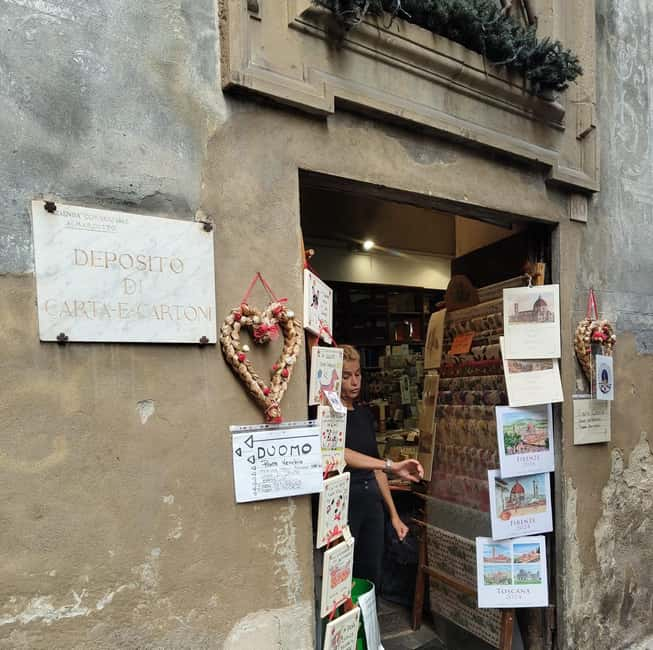
- Martina Cappello tailors the visit by asking about your interests before you meet
- Goldsmithing with Florentine commesso and semi-precious stones at standout workshop stops
- Santa Maria Novella pharmacy (founded 1221) and the origin story of its apothecary craft
- Leather work at Scuola del Cuoio inside the Santa Croce complex
- Carving and framing craft at Bottega d’Arte Maselli, including famous framing history
- Perfumery and room-fragrance shopping connected to the Santa Maria Novella story, plus learning about bookbinding traditions
With a local guide, more of Florence to explore
Florence workshop hopping: why 3 hours feels like more
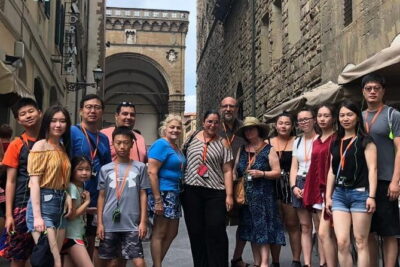
For $116 per person and about 3 hours, this isn’t a long march through Florence’s big sights. It’s a tighter idea: see artisans at work, ask questions, and understand the logic behind the craft. You get hotel pickup and drop-off, so you’re not spending the first half-hour figuring out where to stand and wait.
The biggest value is the variety in a short span. In a day of churches and frescoes, it’s easy to forget that Florence also runs on hands-on skills—how gold is set, how leather is finished, how frames are built, and how scent ties into tradition. This tour gives you a practical way to notice those details without turning it into a rushed shopping trip.
Because it’s a private group, you also tend to get the kind of back-and-forth that makes craftsmanship click. One of the strongest review takeaways is how Martina checks interests and then guides you with a calm, comfortable rhythm.
Meeting at Piazza della Repubblica and getting your bearings fast
You start at Piazza Repubblica, right next to the obelisk. That’s handy because it’s central and easy to orient yourself around, even if you’re coming from a hotel a bit outside the core walking zone.
From there, the pacing matters. The tour is built around workshop visits, which means you’re not sprinting between monuments. You’re walking enough to move from one artisan world to the next, but the format keeps the momentum steady rather than chaotic—exactly what you want when you’re trying to pay attention to small processes.
If you’re the kind of traveler who likes to plan around energy levels, treat this as a morning-or-afternoon event rather than a “shoehorn it between museum lines” choice. You’ll be better off wearing comfortable shoes and giving yourself time to settle into each shop.
Goldsmithing in Florence: semi-precious stones and the commesso magic
This tour’s gold and stone stop is where Florence’s craft reputation becomes very real. You’ll see goldsmithing and semi-precious stones through workshops that keep techniques alive today, not just as a souvenir concept.
Two workshop names stand out in the route description: Arlo Haisek and the Lastrucci family workshop. The Lastrucci workshop is inside the ancient Spedale di San Francesco, and it’s described as one of the very few places in the world making works using the Florentine “commesso” technique.
If you’ve never heard commesso, here’s the practical way to think about it: it’s stone inlay work where semi-precious pieces are cut and fitted to form an image or decorative scene. Seeing it in action (or at least hearing the explanation of how the system works) changes how you look at Florentine art. It stops being only about paintings and starts being about the shared language of design: drawing, material, precision, and patience.
There’s also a broader context built into this stop. Florence’s tradition of goldsmithing is described as rooted as far back as the Etruscan age, so you get a sense that this is not a trendy craft comeback. It’s a craft that has been threaded through generations—passed down, refined, and still economically relevant through workshops that serve collectors and buyers today.
Santa Maria Novella pharmacy: the oldest apothecary story in the world
Then comes a stop that feels like it belongs to a different category—until you realize it fits the whole tour theme. You visit Santa Maria Novella, described as the oldest pharmacy in the world, founded in 1221 by Dominican friars.
Why it’s such a strong workshop-to-history bridge: the apothecary isn’t presented as a dusty relic. It’s framed as the birthplace of the apothecary’s art, which naturally connects to what comes next in the tour—perfumery.
The story includes Renato Bianco, a master perfumer to Catherine de’ Medici, and his fragrance Aqua della Regina. Even if you’re not a fragrance person, this kind of detail helps you understand why perfume in Florence isn’t just a product; it’s connected to patronage, status, and the idea that scent can carry a message.
You also have a place to shop that ties directly to the experience: Aquaflor, where you can purchase room fragrances. If you like bringing home a practical memory (something you’ll actually use), this is a better fit than buying a random trinket.
One small watch-out: food and drinks aren’t allowed inside the workshops, so don’t plan on treating the pharmacy stop like a snack break. If you need a break for water or a quick bite, do it outside the workshop spaces when you can.
Leather work inside Santa Croce: Scuola del Cuoio and more
Leather might sound like a detour when you’re thinking about Florence as a city of paintings. But leather craft is one of those trades where you notice craftsmanship fast—because you can see the finishing, tooling, and edge work up close.
In this tour, leather work is highlighted at the Scuola del Cuoio inside the Santa Croce complex. That location matters. Santa Croce isn’t just a church stop; it’s part of a larger craft ecosystem in the area, and the tour uses that setting to keep the experience connected to real local production.
You’ll also see leather craft through branded workshop-adjacent stops described in the tour info: Il Bisonte (at its shop premises) and Stefano Bemer’s highly refined boutique. The goal isn’t only to show products. It’s to show the craft culture around them—how leather becomes bags, accessories, and decorative pieces, and why finishing details matter.
If you’re picky about what you spend money on, leather stops are a good place to slow down. Look for how the surface is finished and how consistent the work looks across items. And if Martina asks what you like, this is a good moment to say it plainly: do you prefer bold color, understated design, or something handmade with visible technique?
Prefer something else? A few more Florence tours to weigh up
- Cooking Class and Lunch at a Tuscan Farmhouse with Local Market Tour from Florence
★ 5.0 · 4,831 reviews

Carving and frames at Bottega d’Arte Maselli
Next, you move into carving at Bottega d’Arte Maselli, described as world-renowned for frames. Frames sound like a niche topic until you learn the underlying logic: a frame is structural craft plus aesthetic design, meant to protect an artwork and shape how it’s perceived.
The tour info points out something specific that helps you understand the reputation behind the workshop: Maselli’s craftsmen have been honored with framing works by Da Vinci and Rosso Fiorentino. That detail isn’t there to show off. It’s meant to anchor the workshop’s credibility in the kind of clients who cared deeply about how art was presented.
Here’s how this stop can change your mindset. If you’ve been walking Florence thinking only about buildings and murals, frames make you see the “extra layer” behind display—someone’s job is to think about how an object lives in a room. That is very Florence: the idea that beauty is assembled through many crafts, not only one.
Also, carving work tends to reward attention. Even without special training, you can usually spot differences in technique once you know what to look for: sharpness, consistency, and the way the design transitions across materials.
Bookbinding and perfumery: the behind-the-scenes skills link
Two themes are grouped together here: bookbinding and perfumery. You’re not only learning what the final objects are; you’re learning the trades that support how people carry culture around—through books—and how they mark identity and memory—through scent.
Perfumery is naturally anchored by the Santa Maria Novella stop, where the tour ties the pharmacy’s apothecary roots to the perfume craft and its famous historical link to Catherine de’ Medici. That connection makes the topic easier to hold in your head, because you’re not learning perfume as an abstract concept.
For bookbinding, the tour is positioned as part of the artisan arts of Florence. Even without getting a named workshop in the provided details, the purpose is clear: you see how skills in paper, structure, and finishing connect to Florence’s wider “make it by hand” mindset.
If you’re into gifts, this is the part of the tour that often makes people think differently. A book isn’t only a text. With traditional binding, it becomes an object with character. And that’s the shared thread across this whole experience.
What’s included, what it costs beyond the ticket
The tour includes guided visits to historic Florentine workshops, admission to the Scuola del Cuoio and the Lastrucci family workshop, a visit to Santa Maria Novella, and hotel pickup and drop-off.
What isn’t included is straightforward: food and drinks, and personal shopping expenses. That matters because at workshops, you can’t treat time there like a cafe stop. You’ll likely want to eat before or after, then treat shopping as optional.
Price-wise, $116 for 3 hours lands in a practical spot. You’re paying for access, context, and a guide who can explain what you’re seeing in plain language. Since you also get pickup and drop-off, you’re not paying extra time or transport to connect multiple specialized stops yourself.
The tour’s real cost is attention. It asks you to slow down and look at process. If that sounds like you, you’ll feel like the ticket price bought something useful. If you’re in a hurry for big photo landmarks, you might wish you had chosen a monument-focused tour instead.
Practical tips so you enjoy the workshops more
A few details can make or break workshop tours, and this one is no exception.
Wear comfortable walking shoes. The walking is described as moderate, and the stops are in historic workshop locations where surfaces can be uneven.
Expect no food or drinks inside the workshops. If you need a caffeine hit or snack, do it between stops rather than inside.
Photography is described as usually allowed, which is great because you can capture the small details. I’d still be polite—keep your camera ready, but follow the guide’s cue on when filming or photos might distract the artisans.
Finally, if you want the most from Martina Cappello, tell her what you care about before you arrive. The reviews point to how well she can match the route to interests, and that’s exactly the kind of customization that makes workshop time feel efficient.
Who this tour is for (and who might skip it)
This works best if you like:
- Artisanal crafts you can actually see being made
- Learning how Florentine design connects across trades—gold, leather, carving, books, and scent
- A private group experience with time for questions and a comfortable pace
It’s not a great fit if:
- You need wheelchair access or have mobility impairments, since the workshop locations are described as not suitable
- You want mostly large museum interiors and skyline views, because the heart of the tour is small spaces and workshop processes
Should you book this Florence crafts tour?
If you want a Florence experience that feels hands-on—real workshops, not just storefront browsing—this is an easy yes. The combination of Santa Maria Novella’s pharmacy origin story, Scuola del Cuoio leather craftsmanship, goldsmithing with commesso stonework, and carving at Bottega d’Arte Maselli gives you a “craft map” of the city in just 3 hours.
Book it when you can walk comfortably and you enjoy details. Skip it if mobility is a challenge or if you’d rather spend your limited time chasing big-ticket monuments.
If that sounds like your travel style, this is a strong way to spend a chunk of your Florence day—one where you leave with a sharper eye for how art gets made.
FAQ
How long is the Florence artisanal crafts workshop tour?
The tour lasts 3 hours.
How much does it cost?
It costs $116 per person.
Where is the meeting point?
The meeting point is Piazza Repubblica – next to the obelisk.
Is hotel pickup and drop-off included?
Yes, hotel pickup and drop-off are included.
What languages is the guide available in?
The live tour guide speaks Spanish and English.
What crafts and places are included?
You’ll visit historic workshops focused on goldsmithing and semi-precious stones, leather work at Scuola del Cuoio, carving at Bottega d’Arte Maselli, and you’ll also visit Santa Maria Novella pharmacy. The tour also includes learning about bookbinding and perfumery in Florence.
Are food and drinks included?
No. Food and drinks are not included, and food and drinks are not allowed inside the workshops.
Is photography allowed?
Photography is usually allowed.
Is the tour suitable for wheelchair users?
No. The tour is not suitable for wheelchair users or people with mobility impairments.
More Guided Florence
- The Best tour in Florence: Renaissance & Medici Tales – guided by a STORYTELLER
★ 5.0 · 12,316 reviews - Florence: Duomo Cathedral 60-Minute Guided Tour
★ 3.7 · 6,829 reviews - Uffizi Gallery: Renaissance Masterpieces Guided Tour
★ 4.6 · 6,070 reviews - Uffizi Gallery Small Group Tour with Guide
★ 4.5 · 4,923 reviews - Florence: Highlights Walking Tour with Expert Guide
★ 4.6 · 4,662 reviews
More Florence Tours to Weigh Up
- The Best tour in Florence: Renaissance & Medici Tales – guided by a STORYTELLER
★ 5.0 · 12,316 reviews - The Best Tour in Florence: Renaissance and Medici Tales
★ 5.0 · 10,810 reviews - Florence: Chianti Wineries Tour with Wine Tasting
★ 4.5 · 10,071 reviews - Florence: Duomo Cathedral 60-Minute Guided Tour
★ 3.7 · 6,829 reviews - Florence: Hop-on Hop-off Bus Tour: 24, 48 or 72-Hour Ticket
★ 4.0 · 6,283 reviews
More Florence Tours We Have Reviewed
- Florence: Skip-The-Line Uffizi Gallery Timed Entry Ticket
★ 4.5 · 27,832 reviews - Tuscany Day Trip from Florence: Siena, San Gimignano, Pisa and Lunch at a Winery
★ 5.0 · 21,634 reviews - Florence: Timed Entry to Michelangelo’s David + Audio App
★ 4.6 · 19,496 reviews - Florence: Leonardo Interactive Museum Entry Ticket
★ 4.5 · 12,957 reviews - Florence: Michelangelo’s David Skip-the-Line Entry Ticket
★ 4.5 · 12,764 reviews
Fresh from our Florence review desk
- Small-Group Pasta Cooking Class and Market Tour in Florence★ 5.0 · 3 reviews
- Palatina Gallery and Pitti Guided Tour in Florence★ 5.0 · 3 reviews
- Tuscan Evening Tour: Fiat 500, 8:30 to 10 PM★ 5.0 · 3 reviews
- Journey into Art: Florence’s Accademia★ 4.5 · 3 reviews
- Paint and Drink Florentine Hills★ 5.0 · 3 reviews
- Truffle hunting and lunch experience, with Vinci and winery.★ 4.5 · 3 reviews
Workshops, compared.
 ★ 4.9Pasta Cooking Class with Unlimited WineFrom $2110,285 reviews
 ★ 5.0Florence Pizza or Pasta Class with Gelato Making at a Tuscan FarmFrom $1456,801 reviews
 ★ 4.9Pasta & Tiramisu Cooking Class with Unlimited WineFrom $566,708 reviews
★ 5.0Pasta Cooking Class with Unlimited Wine6,413 reviews
 ★ 5.0Cooking Class and Lunch at a Tuscan Farmhouse with Local Market Tour from FlorenceFrom $1454,831 reviews
 ★ 5.0Pastamania – Florence Pasta Making ClassFrom $493,050 reviews
 ★ 5.0Cooking Class Pasta & Tiramisu Making Unlimited WineFrom $892,234 reviews
 ★ 5.0Florence Cooking Class The Art of Making Gelato & Authentic PizzaFrom $642,053 reviews
Browse the lists this tour appears in