
Reviewed · TOURS
Florence: Highilights tour
Florence can feel endless. This short walking tour turns it into an open-air museum you can actually manage. You start with the art-lovers’ stuff—fresco chapels and quiet corners—then move through Florence’s big public squares like you’re skimming the city’s favorite pages in order.
What I like most is the focus on seeing the Medici story in real places, from residences to burial chapels. I also appreciate the built-in audio help: headsets when the group is larger than 4 people, so you don’t have to keep craning your neck to hear your guide.
One thing to consider: it’s a walking tour with a lot of historic stops, and the route includes churches and older streets. That means you’ll want solid shoes and a realistic pace.
In This Review
- Key things to know before you go
- Piazza Santissima Annunziata to Cloister of the Dead: the tour’s art-first start
- Via Cavour and Palazzo Medici Riccardi: seeing power in stone
- Piazza San Lorenzo: the Basilica, Biblioteca Laurenziana, and the Medici Chapels story
- Piazza San Giovanni: Santa Maria del Fiore, the Baptistery, and Giotto’s Bell Tower zone
- Piazza della Signoria and the Uffizi Palace area: sculptures, power, and the art machine
- Ponte Vecchio toward Palazzo Pitti: finishing with a classic river crossing
- Santa Felicita, Ponte Santa Trinita, and Palazzo Strozzi: the in-between stops that make it feel real
- Private group energy and headset audio: what that means for your comfort
- Price and time: does $41 feel like good value?
- A quick word on guide quality: Sara Pallabazzer and what to watch for
- What to bring so nothing slows you down
- Should you book this Florence Highlights walking tour?
- FAQ
- How long is the Florence Highlights tour?
- Where do I meet the guide?
- Is it a private tour?
- What languages are available?
- Are headsets included?
- Is flash photography allowed?
Key things to know before you go
- Frescoed church access without ticket stress: you can enter certain churches where you don’t need a ticket and then focus on the art inside.
- Start at Piazza Santissima Annunziata: the meeting point is right by the equestrian monument, easy to spot once you’re there.
- A Medici-to-significant-squares route: Palazzo Medici Riccardi, Medici Chapels, Piazza San Lorenzo, and more stay connected as a storyline.
- Cathedral area plus the Bell Tower zone: Piazza San Giovanni brings you to Santa Maria del Fiore, the Baptistery, and Giotto’s Bell Tower.
- Old Florence to the river transition: you cross Ponte Vecchio toward Palazzo Pitti and continue your walk from there.
Still comparing? These are the other Florence tours travellers book most.
Piazza Santissima Annunziata to Cloister of the Dead: the tour’s art-first start
Florence often overwhelms on day one. This tour smartly begins where the city’s art is close to your face and your feet. You meet at Piazza Santissima Annunziata, right in front of the equestrian monument, then you head into one of those places that makes you slow down without trying.
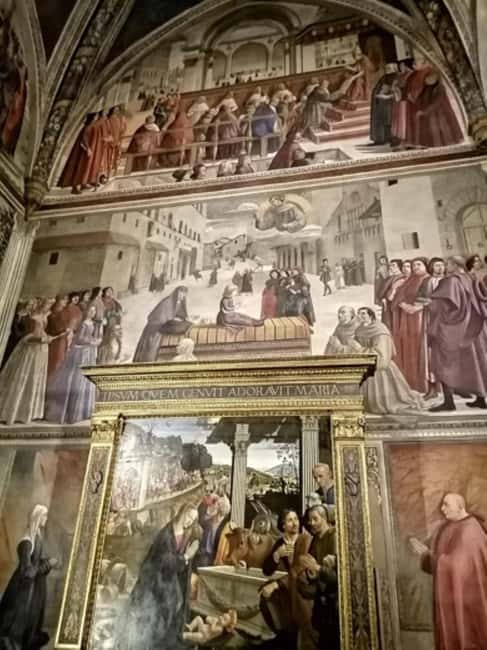
The big opener is the entrance to the Cloister of the Dead, where you can admire frescoes by Pontormo, Rosso Fiorentino, and Andrea del Sarto. Even if you’re not a “fresco person,” this is a great way to orient yourself in Florentine Renaissance art. You’ll see that the Renaissance wasn’t just famous paintings in museums—it lived in chapels, cloisters, and religious buildings people actually used.
Practical tip: this is one of those moments where it helps to look first, listen second. Stand where you can take in the whole scene, then let your guide connect the details.
Via Cavour and Palazzo Medici Riccardi: seeing power in stone
After the cloister, you walk along Via Cavour and land at one of the most recognizable power symbols in Florence: Palazzo Medici Riccardi. This is where your tour turns from “pretty art” into “why Florence looked like Florence.”
The Medici family didn’t just sponsor culture. They helped shape the city’s identity, and Palazzo Medici Riccardi is the kind of building that feels like a statement. From street level, you get a real sense of scale and solidity—less about interior glamour, more about presence.
Why this stop matters: if you’ve ever looked at Florence’s art and thought, who had the money for all this, you’ll start getting answers here. You’ll also get a better sense for how political families used architecture as branding long before Instagram.
Piazza San Lorenzo: the Basilica, Biblioteca Laurenziana, and the Medici Chapels story
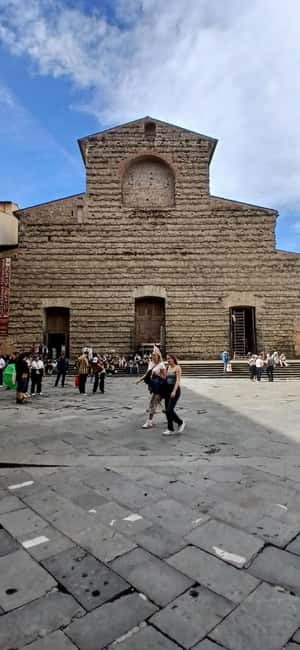
Next comes Piazza San Lorenzo, and it’s a loaded square in the best way. You’ll spend time around the oldest basilica in Florence, the area tied to the first public library founded by the Medici—Biblioteca Laurenziana—and the famous staircase associated with Michelangelo.
This is also where the Medici Chapels come into play, and that’s the heart of the family’s physical legacy: members of the Medici family are buried here. For me, this is where a walking tour earns its keep. You don’t just read about Florence—you stand on the exact ground that made the story.
What to watch for: the guide’s job here is to turn the architecture into something understandable. If your guide is strong, you’ll leave with a clear sense of what the chapels are expressing—devotion, status, memory. If your guide is rushed, it can feel like a blur of names and dates. The good news is that the tour is built around exactly this kind of explain-and-point approach.
One more practical note: church interiors can shift your comfort level quickly. Bring a layer if you run cold in air-conditioned spaces, and keep your water handy for later when the walk heats up.
Piazza San Giovanni: Santa Maria del Fiore, the Baptistery, and Giotto’s Bell Tower zone
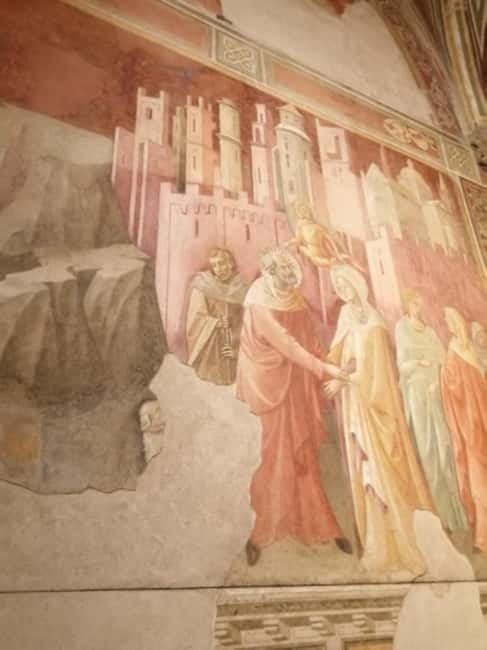
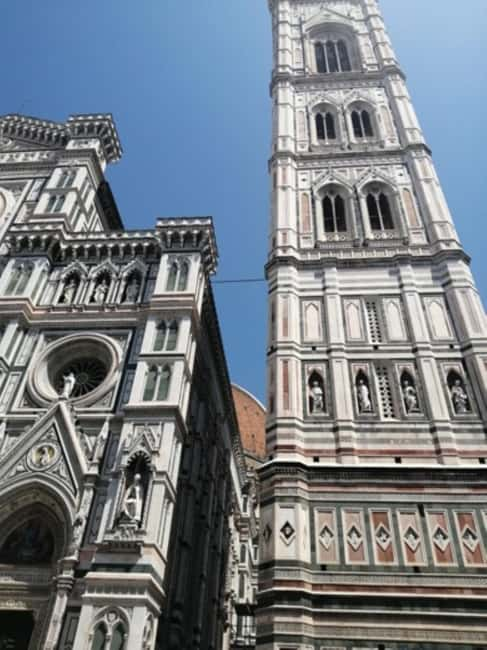
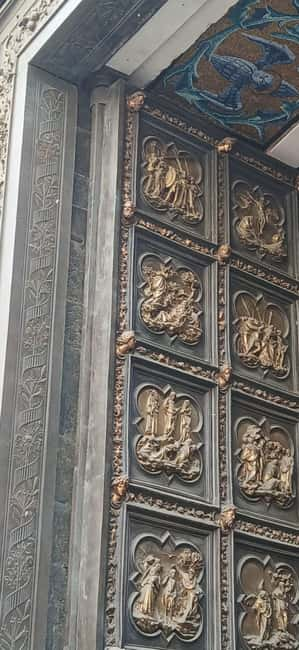
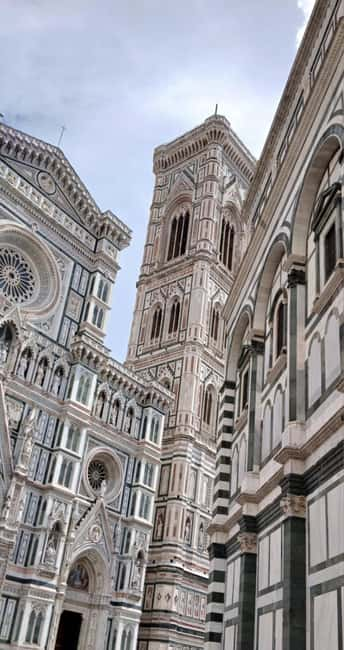
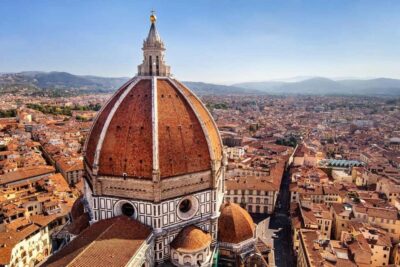
From Piazza San Lorenzo, the tour moves into Piazza San Giovanni, the square of Santa Maria del Fiore (the Cathedral), the Baptistery, and Giotto’s Bell Tower. This is the Florence postcard moment, but it’s also more than a photo stop if your guide connects the dots.
Here’s what makes it valuable: you can see how Florence treated religious life as public life. Squares weren’t just empty space; they were stages where the city’s beliefs and artistic ambitions were on display.
If you like architecture, this is a good time to slow down and compare silhouettes. The Baptistery and bell tower feel like they belong to the same visual world as the cathedral, but they also read differently from each angle. Even without going inside every element (the tour emphasizes guided time), you get a coherent sense of place.
Piazza della Signoria and the Uffizi Palace area: sculptures, power, and the art machine
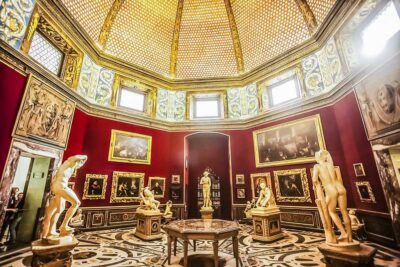
Then you reach Piazza della Signoria, one of Florence’s most important squares for public art and civic identity. You’ll see the Loggia packed with sculptures and the Uffizi Palace area nearby.
This stop can work two ways. If you’re mainly a “walk and look” person, it’s still satisfying because the square is visual—statues, façades, the whole scene. If you like context, your guide can make it click: Florence wasn’t just building churches. It was creating public spaces that trained citizens to recognize art as part of everyday life.
Practical tip: if you’re photographing, be mindful of where flash is restricted. The tour info notes that photography is allowed, but flash photography is not permitted inside certain attractions. So plan to turn off flash as a habit rather than scrambling mid-visit.
- The Best tour in Florence: Renaissance & Medici Tales – guided by a STORYTELLER
★ 5.0 · 12,316 reviews

Ponte Vecchio toward Palazzo Pitti: finishing with a classic river crossing
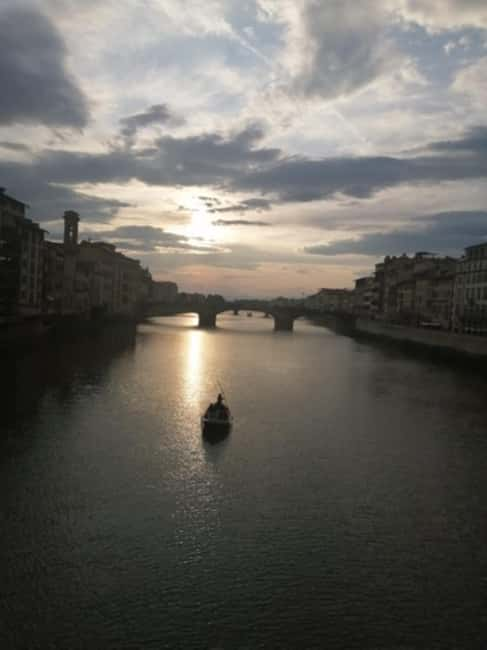
After Piazza della Signoria, the tour heads to Ponte Vecchio for a guided walk, then continues toward Palazzo Pitti. Crossing the river is a smart way to wrap up because it changes your scale and perspective. Streets tighten, then open. The city breathes again.
Ponte Vecchio is famous, but the value here is what the guide helps you notice as you cross—how the river divides the city’s moods and how the architecture shifts from the dense historic center toward a new cluster of landmarks.
What I like about this finish: it naturally points you onward. When you reach the area around Palazzo Pitti, you’re positioned to keep exploring without feeling stuck at the end of a program.
Santa Felicita, Ponte Santa Trinita, and Palazzo Strozzi: the in-between stops that make it feel real
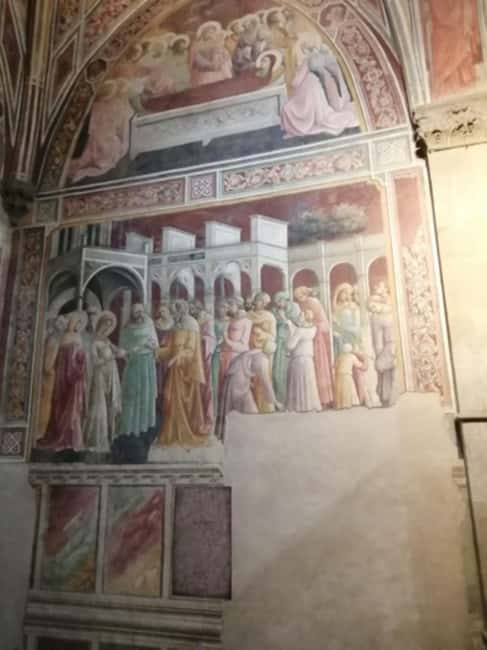
Not every stop is the loudest name in Florence. Along the way you’ll also visit Church of Santa Felicita, walk near Ponte Santa Trinita, and stop at Palazzo Strozzi.
This is where the tour feels less like a checklist and more like a lived-in city route. Santa Felicita gives you another church experience on the way, and Palazzo Strozzi adds a different type of architectural storytelling than the Medici stops.
Why these pauses matter: Florence is all about contrast. If you only see the biggest symbols, the city can feel like one long parade. These in-between moments help you see how Renaissance wealth and taste showed up in different forms, not just in the headline buildings.
Private group energy and headset audio: what that means for your comfort
The tour is a private group, which is a big deal in Florence. You’re not trapped behind a crowd. That makes it easier to stop, listen, and ask questions without playing tug-of-war with other visitors.
Audio is also handled well. You’ll get headsets (especially when the group is more than 4 people), so you can hear your guide clearly as you walk and when you’re standing in louder outdoor squares.
A small reality check: because it’s a walking experience and several stops involve interiors, you’ll still want to pace yourself. Wear comfortable shoes and plan for changing weather. Florence can shift quickly between bright sun and cool shade, and the tour asks you to keep moving.
Price and time: does $41 feel like good value?
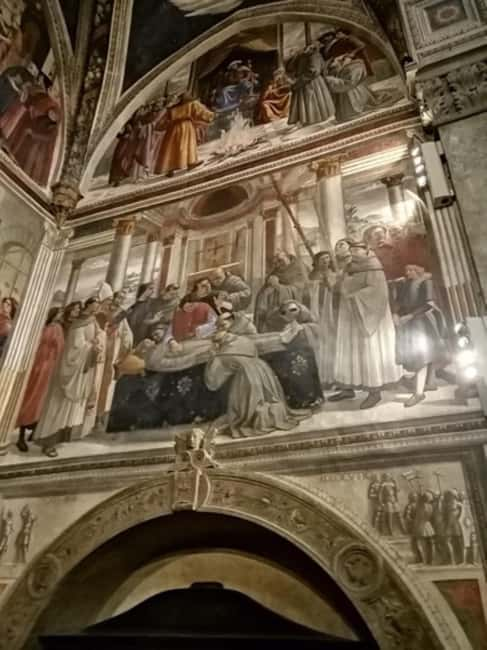
For about 150 minutes and $41 per person, you’re paying for three things: a local guide, a structured route through major Florence areas, and included access to churches where you don’t need a ticket for entry and can focus on frescoed chapels.
That access piece is the part that can make the price feel fair fast. Entrance fees add up in museums and paid sites, and this tour leans into spaces where the art is accessible without extra ticket friction. On top of that, the route saves you from the mental energy of figuring out where to go next.
What’s not included is also worth noting: no hotel pickup/drop-off and no food or drinks. So bring a plan for breaks. The good value comes from staying in motion for the guided 2.5 hours without turning it into a half-day detour.
A quick word on guide quality: Sara Pallabazzer and what to watch for
The tour is led by Sara Pallabazzer, and the overall tone is that she can be friendly and fun while taking time to explain details and answer questions. That’s exactly what you want for Florence, where every street corner can mean something.
One caution from the same overall picture: if your guide’s explanations feel a bit scattered or hurried, you lose the plot. This kind of tour works best when you get clear connections—why a chapel matters, how a building fits into Medici power, what to look for before you move on.
If you arrive early and you’re ready with questions, you’ll usually get the most out of the experience, even with a fast-moving city.
What to bring so nothing slows you down
This is not the time for fancy shoes. The tour suggests bringing:
- a sun hat
- a camera
- sunscreen
You’ll also be happier with a water bottle, and comfortable walking shoes are non-negotiable. Flash photography isn’t allowed inside certain attractions, so keep that in mind.
And yes, it’s a walking route. If you want the art to land, you’ll need your legs to cooperate.
Should you book this Florence Highlights walking tour?
Book it if you want a well-paced, art-forward route that connects Florence’s big-name landmarks with the quieter church interiors and fresco chapels. The private group setup and headset audio are strong bonuses, especially if you’re traveling with a small set of people and you want your guide’s attention.
Skip it if you’re sensitive to long walking stretches or you need very specific mobility accommodations, because the route involves older streets and multiple church stops. Also, the information provided about accessibility is mixed—something lists wheelchair accessibility while another note says it’s not suitable for wheelchair users—so confirm details directly before booking.
If you like Florence with context, not chaos, this is a solid way to see the city as a connected story in just 150 minutes.
FAQ
How long is the Florence Highlights tour?
It lasts 150 minutes.
Where do I meet the guide?
Meet right in front of the equestrian monument in Piazza Santissima Annunziata.
Is it a private tour?
Yes, it’s a private group experience.
What languages are available?
The tour is offered in English and Italian.
Are headsets included?
Yes, headsets are provided to hear the guide clearly, especially for groups larger than 4 people.
Is flash photography allowed?
Photography is allowed, but flash photography is not permitted inside certain attractions.
More Florence Tours to Weigh Up
- The Best tour in Florence: Renaissance & Medici Tales – guided by a STORYTELLER
★ 5.0 · 12,316 reviews - The Best Tour in Florence: Renaissance and Medici Tales
★ 5.0 · 10,810 reviews - Florence: Chianti Wineries Tour with Wine Tasting
★ 4.5 · 10,071 reviews - Florence: Duomo Cathedral 60-Minute Guided Tour
★ 3.7 · 6,829 reviews - Florence: Hop-on Hop-off Bus Tour: 24, 48 or 72-Hour Ticket
★ 4.0 · 6,283 reviews
More Florence Tours We Have Reviewed
- Florence: Skip-The-Line Uffizi Gallery Timed Entry Ticket
★ 4.5 · 27,832 reviews - Tuscany Day Trip from Florence: Siena, San Gimignano, Pisa and Lunch at a Winery
★ 5.0 · 21,634 reviews - Florence: Timed Entry to Michelangelo’s David + Audio App
★ 4.6 · 19,496 reviews - Florence: Leonardo Interactive Museum Entry Ticket
★ 4.5 · 12,957 reviews - Florence: Michelangelo’s David Skip-the-Line Entry Ticket
★ 4.5 · 12,764 reviews
Fresh from our Florence review desk
- Small-Group Pasta Cooking Class and Market Tour in Florence★ 5.0 · 3 reviews
- Palatina Gallery and Pitti Guided Tour in Florence★ 5.0 · 3 reviews
- Tuscan Evening Tour: Fiat 500, 8:30 to 10 PM★ 5.0 · 3 reviews
- Journey into Art: Florence’s Accademia★ 4.5 · 3 reviews
- Paint and Drink Florentine Hills★ 5.0 · 3 reviews
- Truffle hunting and lunch experience, with Vinci and winery.★ 4.5 · 3 reviews
Tours, compared.
 ★ 5.0The Best tour in Florence: Renaissance & Medici Tales – guided by a STORYTELLERFrom $312,316 reviews
 ★ 5.0The Best Tour in Florence: Renaissance and Medici TalesFrom $310,810 reviews
 ★ 4.5Chianti Wineries Tour with Wine TastingFrom $4110,071 reviews
 ★ 3.7Duomo Cathedral 60-Minute Guided TourFrom $96,829 reviews
 ★ 4.0Hop-on Hop-off Bus Tour: 24, 48 or 72-Hour TicketFrom $246,283 reviews
 ★ 4.5Florence Accademia Gallery Tour with Entrance Ticket IncludedFrom $456,148 reviews
 ★ 4.6Uffizi Gallery: Renaissance Masterpieces Guided TourFrom $886,070 reviews
 ★ 5.0SMALL-GROUP Wine Safaris: Tuscan Wine Tasting Tours from FlorenceFrom $1575,088 reviews