
Reviewed · ACCADEMIA GALLERY TOURS
Florence: Highlights and Small-Group Accademia Tour
Florence hits hard in just a few hours. This small-group walk strings together the big-name sights—Piazza della Signoria, Ponte Vecchio, and the Duomo—then gets you to the Accademia for Michelangelo’s original David.
I love how the guide connects the monuments to the people who shaped Florence, especially the Medici era and the political weight of Piazza della Signoria. I also love the practical payoff: a skip-the-line ticket to the Accademia means less waiting and more time looking closely at David and the Prisoners. The one catch to plan for is simple—this is still a walking tour, and one review noted the guide sometimes walked ahead without clear visual signals, so you’ll want to stay alert and keep the group in sight.
In This Review
- Key things to know before you go
- A 3-hour Florence circuit that saves your feet and your time
- Piazza della Repubblica: the start point with Roman echoes
- Piazza della Signoria and Palazzo Vecchio: where Florentine power plays out
- Ponte Vecchio and the Vasari Corridor story over the water
- Pitti Palace and Oltrarno: dukes’ splendor meets the artist neighborhood vibe
- Ponte Santa Trinita and the best Ponte Vecchio photo angle
- Via Tornabuoni and Palazzo Strozzi: Renaissance style with street-level context
- Duomo area: Brunelleschi’s Dome, Baptistery, and when you might enter
- Accademia entry: David and the Prisoners, plus what your guide will point out
- Price and value: is $117 worth it for a Florence highlights walk?
- Tips for a smoother day (and an easier group experience)
- Who should book this Florence tour?
- FAQ
- How long is the Florence highlights and Accademia walking tour?
- Where do we meet the guide?
- Does the tour include skip-the-line tickets to see David?
- Will I be able to go inside the Duomo?
- Is food or drink included?
- What should I bring, and what isn’t allowed?
- Should you book this tour?
Key things to know before you go
- Skip-the-line Accademia ticket: Preferential entrance for the Accademia collection, including David and the Prisoners
- Big Florence moments, in one route: Piazza della Repubblica, Piazza della Signoria, Ponte Vecchio, Pitti Palace, Duomo, and Accademia
- Stories that put buildings in context: Florentine Republic, Medici family, Palazzo Vecchio, and palace lore
- Photo-friendly viewpoints: You’ll stop for a stunning picture of Ponte Vecchio from the Ponte Santa Trinita side
- Flexible guide narration tools: Live licensed guide plus an included audio guide in multiple languages
Other Accademia visits we have walked through in Florence
A 3-hour Florence circuit that saves your feet and your time
This tour is built for people who want the essentials without spending your day hopping randomly between sites. Florence is compact, but the concentration of landmarks is intense. The smart move here is having a guide stitch the highlights into a route you can actually remember, not just a checklist you rush through.
You’ll spend about 2.5 to 3 hours walking, starting in the city center and ending at the Accademia. Along the way, you’ll hit the kind of spaces that make you understand why Florence mattered: power in the plazas, wealth in the palaces, and genius in the art.
There’s also a built-in time buffer strategy. The Accademia visit includes a skip-the-line ticket, and the Duomo area may allow you to see the inside if the line isn’t too long. In a place where queues can be unpredictable, that kind of planning is the difference between a good visit and a frustrating one.
Piazza della Repubblica: the start point with Roman echoes
Your tour begins at Piazza della Repubblica, by the central column topped with a lady statue. It’s a useful meeting spot because it’s central and easy to find once you’re in the historic core.
From there, you’ll move into Piazza della Repubblica, where the ancient Roman Forum originally was. That detail matters. When you’re standing in modern Florence, it’s easy to think everything “started” in the Renaissance. This tour gives you a quick reset: Florence’s importance didn’t appear out of thin air. The city layered eras on top of each other, and this square is one of the places where that history shows up.
If you like to get your bearings fast, this opening works well. It sets the stage before the walk turns more political and more artistic.
Piazza della Signoria and Palazzo Vecchio: where Florentine power plays out
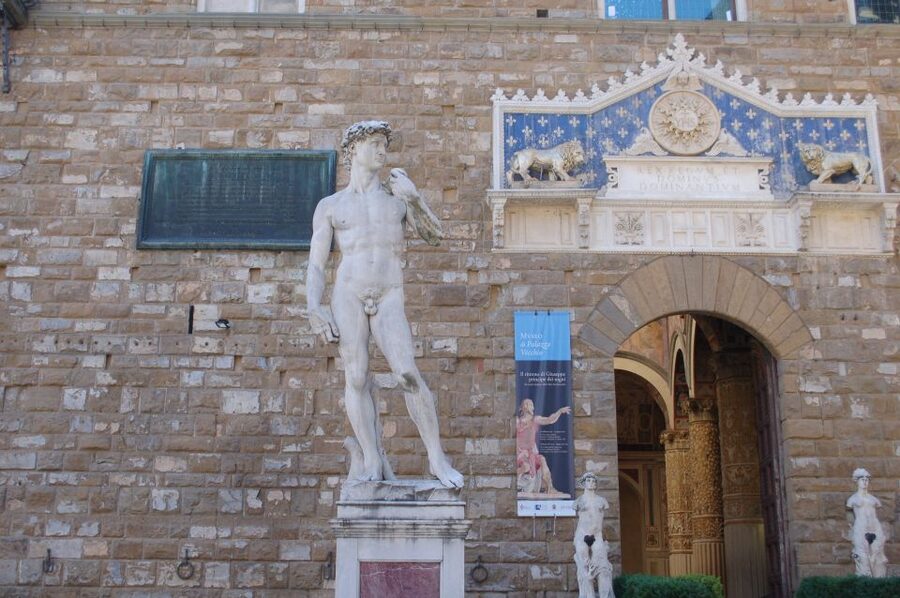
Next comes Piazza della Signoria, described as the political heart of the city—and you’ll feel that in the way the space is arranged. It’s not a casual park. It’s a place built for public life, decision-making, and symbolism.
Your guide will talk through the Florentine Republic, the Medici family, and Palazzo Vecchio. You’re not just seeing stone and statues; you’re hearing why people in power built impressive settings for power to happen in plain sight.
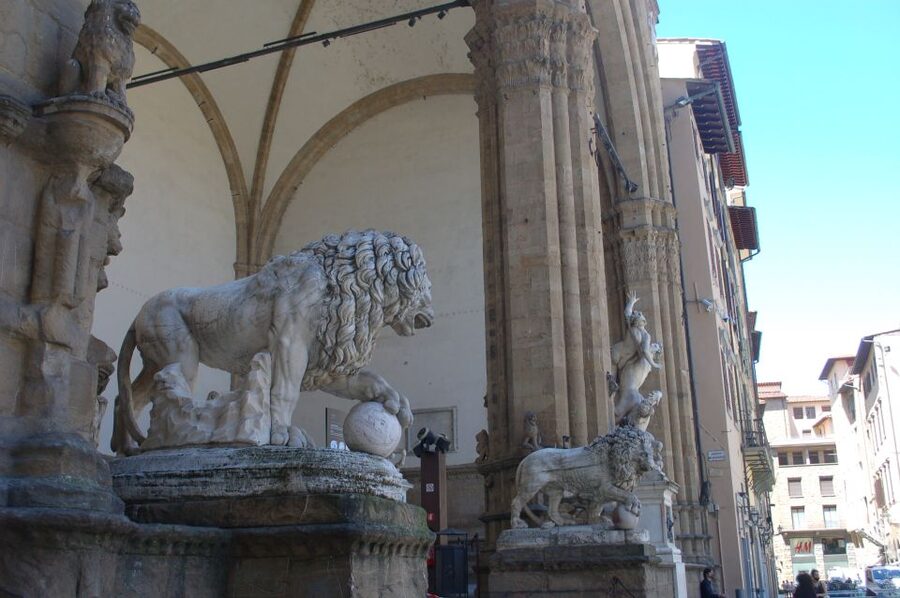
You’ll also see the sculptures that make this piazza one of the most famous in the world. That matters because the plaza isn’t only “pretty.” It’s part art gallery, part civic stage.
Practical note: keep your phone charged and ready. You’ll want photos here, but also take a moment to look up. That’s where the “this was designed to impress” feeling lands.
Ponte Vecchio and the Vasari Corridor story over the water
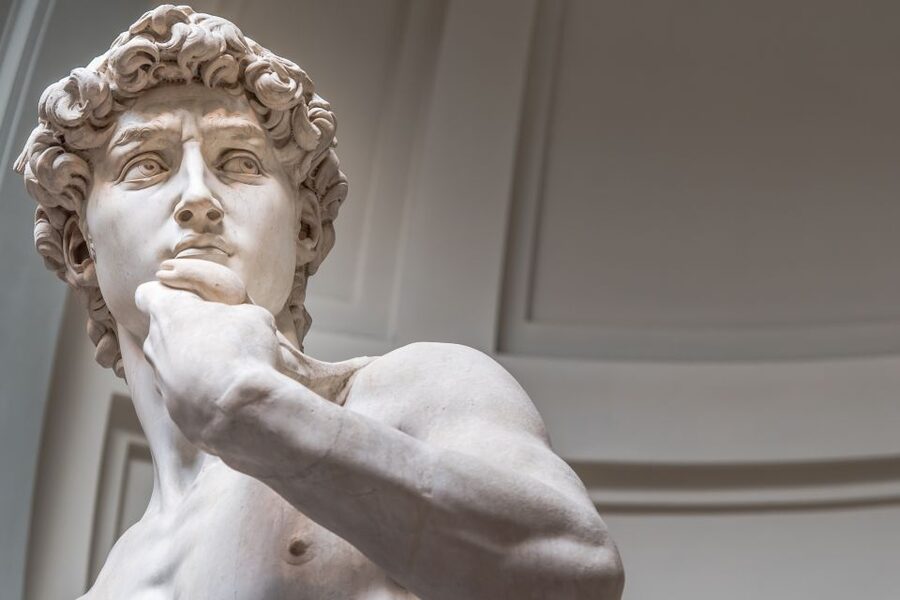
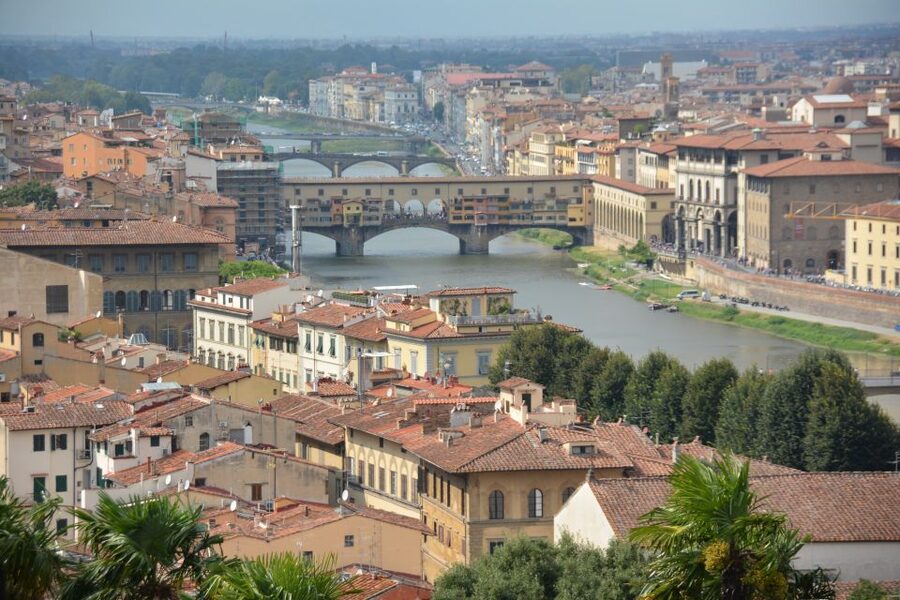
Then you’ll cross into Ponte Vecchio, famous for jewelry shops and for the atmosphere around the river. The walk takes you into one of Florence’s most recognizable scenes, and the guide adds what makes it memorable: the unique history of the Vasari Corridor, told as you pass above it.
If you’ve ever wondered why this bridge feels different from other bridges in Europe, the answer is in the way Florence reused and repurposed spaces. This stop helps you connect the physical city to the stories behind it, rather than treating Ponte Vecchio as a photo backdrop only.
You’ll then continue onward toward the Pitti Palace, but before that, you’ll get one of the tour’s best “stand here” moments. Florence can be slippery with crowded sidewalks, so it helps that the route includes deliberate viewpoints instead of nonstop marching.
Pitti Palace and Oltrarno: dukes’ splendor meets the artist neighborhood vibe
At Pitti Palace, you’ll admire the splendor of a residence that was once tied to the grand dukes’ private life. Even if you don’t go inside, the building’s scale and presence tell you what you need to know about status in Florence.
From there, you walk through Oltrarno, the area described as bohemian, with artists, workshops, and lovely cafes. This is a nice switch from the more official political spaces. Instead of only power and art “at museums,” you get a sense of Florence as a working creative city.
Oltrarno also gives you a break in pace. The sidewalks feel more lived-in, and the streets can be less about crowds-per-square-meter and more about neighborhood energy. It’s a smart emotional balance after Piazza della Signoria and the palace-heavy segments.
- Tuscany Day Trip from Florence: Siena, San Gimignano, Pisa and Lunch at a Winery
★ 5.0 · 21,634 reviews

Ponte Santa Trinita and the best Ponte Vecchio photo angle
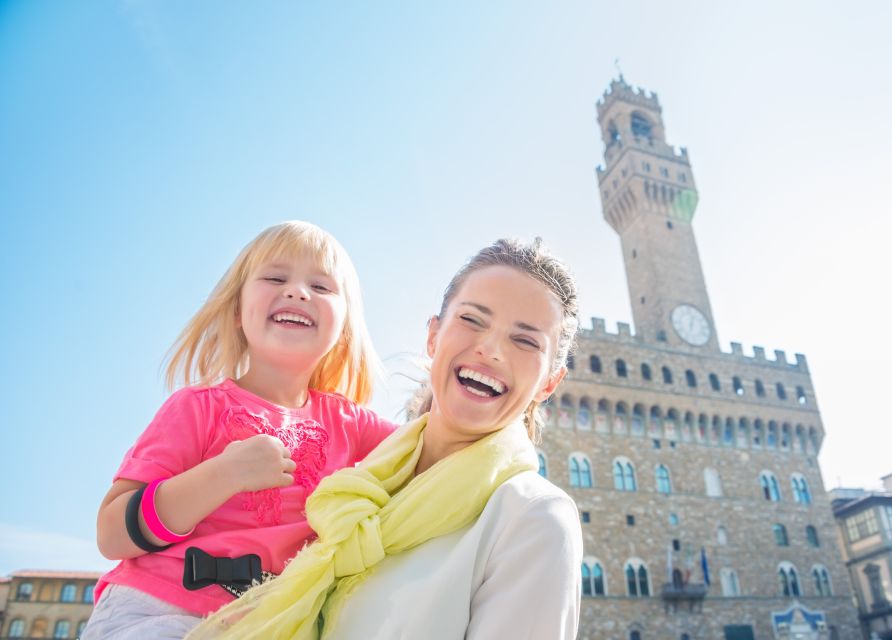
Next you cross Ponte Santa Trinita and stop for a stunning picture of Ponte Vecchio from this side. This is one of those tour moments that feels small while you’re doing it, but it becomes the photo you end up loving later.
Why? Because the view is different. Florence’s main sights are photographed from predictable angles all day, so a viewpoint shift can refresh your experience even if you’re seeing the same iconic bridge.
If you’re the kind of traveler who likes to capture architecture, don’t rush this stop. Give yourself time to frame it from a couple spots and let the river scene “click” visually.
Via Tornabuoni and Palazzo Strozzi: Renaissance style with street-level context
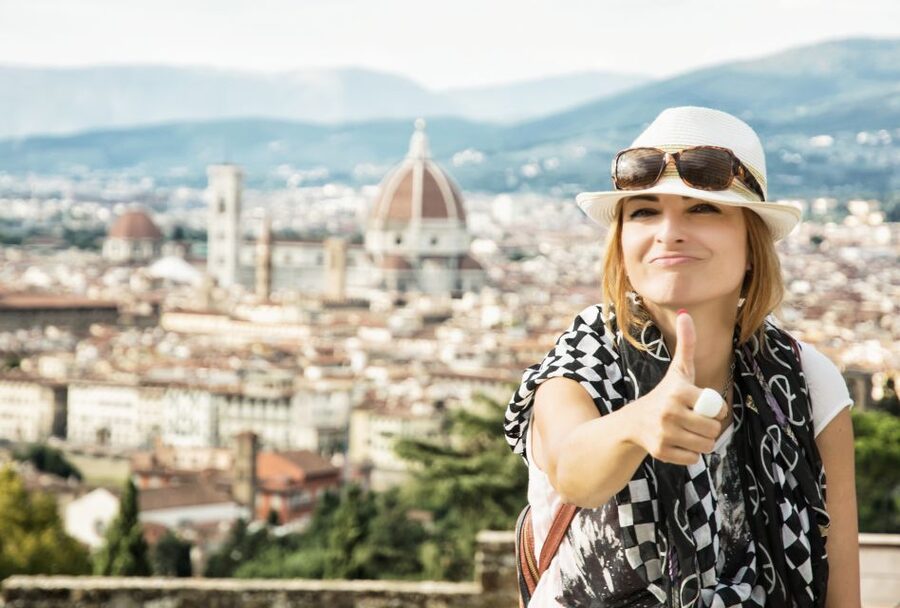
After the river views, the tour shifts to Via Tornabuoni, known as a fashion designer street where you’ll be amazed by the beautiful windows. It’s an enjoyable contrast: Renaissance Florence wasn’t just about statues in plazas. Today’s city adds another layer, and the street shows it.
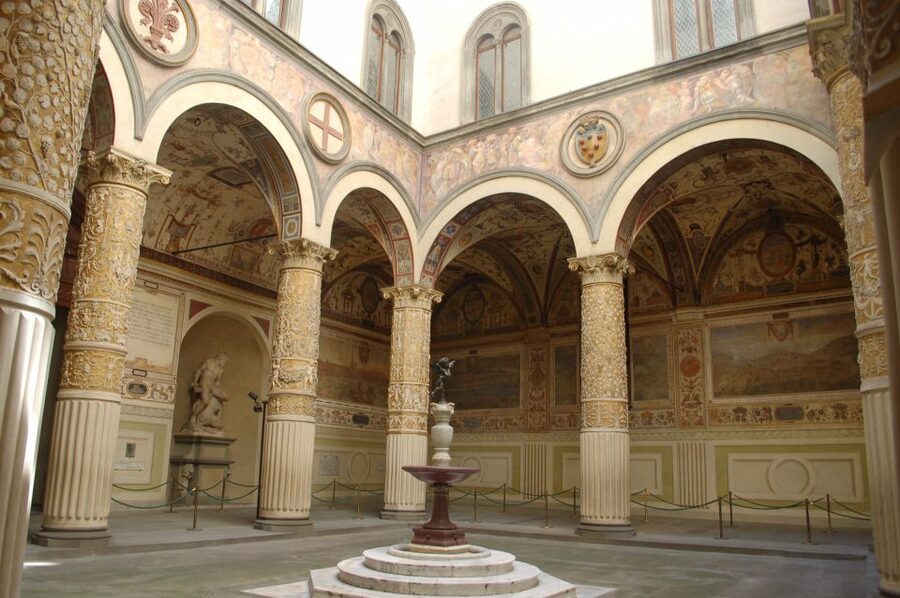
Then you pass through Palazzo Strozzi’s courtyard, where you’ll get to admire the essence of Renaissance architecture. Courtyards can feel like “extra” on tours, but here they work because they show structure and proportion without the chaos of a ticket line or museum crowds.
If you want to understand how Renaissance architecture shapes human movement—how light hits stone, how space frames people—this courtyard stop gives you that understanding more quickly than a textbook ever will.
Duomo area: Brunelleschi’s Dome, Baptistery, and when you might enter
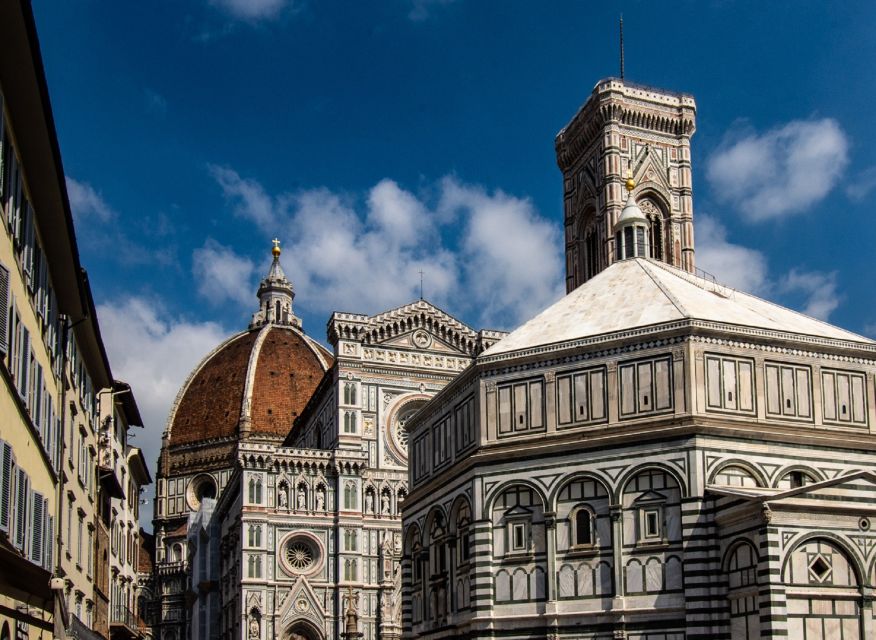
Now you reach the Duomo area to admire the Cathedral, Brunelleschi’s Dome, and the Baptistery. Even if you’ve seen photos, the scale lands differently in person. This is one of those places where it’s hard not to stare up.
The tour also notes that if the line is not too long, you will also see the inside. That’s the realistic planning approach: don’t promise the inside as a guaranteed win, because queues can change minute to minute.
Two timing considerations to keep in mind:
- The Cathedral is not accessible on Sunday morning.
- If you’re going on the first Sunday of the month, entrance may be free, but tickets can’t be reserved ahead of time, and entry is not guaranteed.
So when Duomo is on your must-see list, plan around those constraints. Even if you only see the exterior today, the sightlines and the scale still deliver.
Accademia entry: David and the Prisoners, plus what your guide will point out
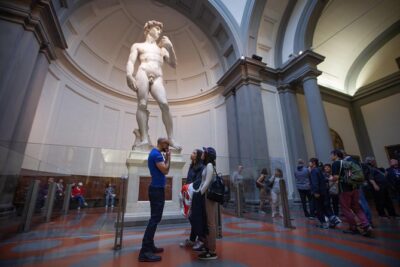
Finally, you end at the Accademia, where you get preferential entrance with a skip-the-line ticket. This is the payoff stop.
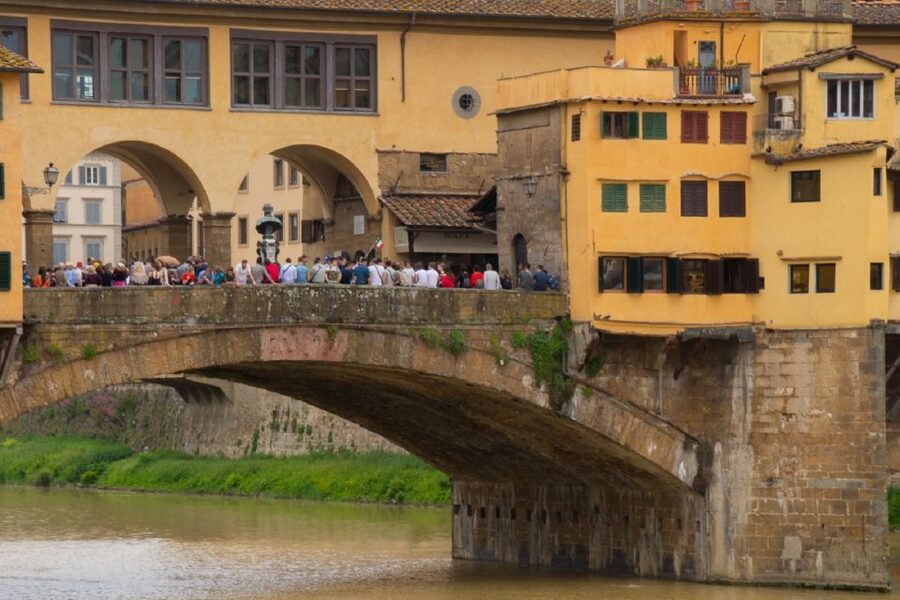
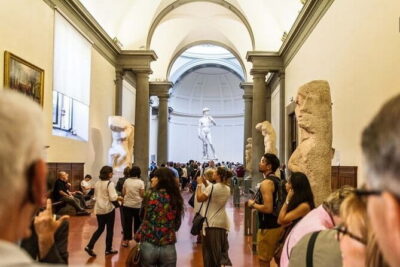
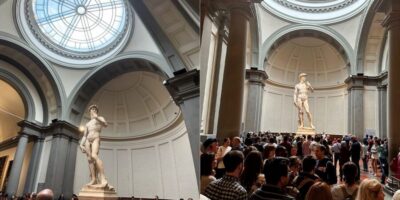
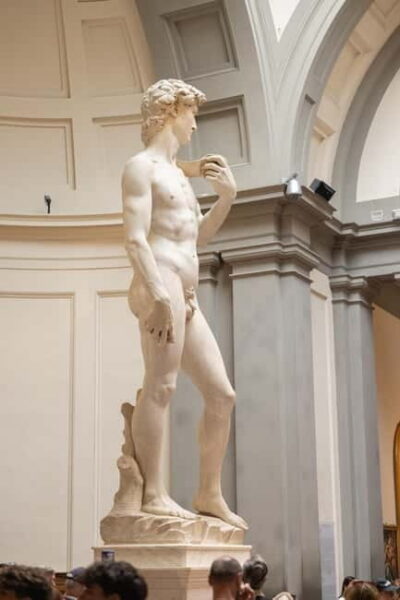
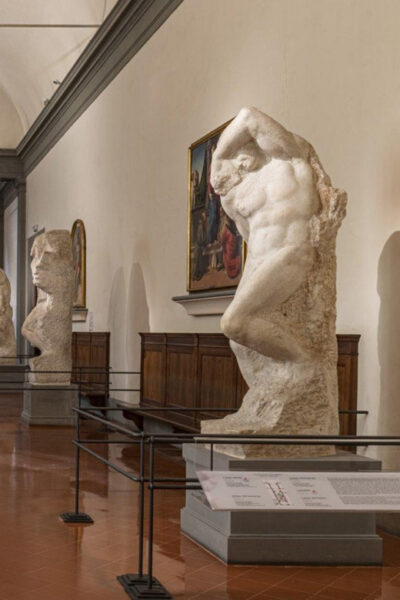
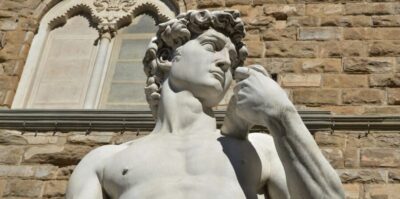
You’ll see the original Michelangelo’s David and also the Prisoners. The guide will tell you secrets behind these statues and share background on Michelangelo’s life, which is what turns “I saw David” into “I understood what I was looking at.”
One important caveat: the tour information says if the queue is long then there is no priority entrance. So while the ticket is designed to help, you should still arrive with flexible expectations. In practice, the Accademia can be crowded, and your best strategy is to stay focused when you get inside.
Also, do yourself a favor and slow down when you reach David. Don’t rush to the next statue. The point of having a guide here isn’t speed. It’s context. You’ll get more out of those seconds when your attention is guided to the details that matter.
In one review, a guide named Jessica was praised for making the crowded visit feel meaningful. That’s exactly what you want from a museum moment: not just facts, but a sense of what to look for and why it matters.
Price and value: is $117 worth it for a Florence highlights walk?
At $117 per person for a 2.5 to 3 hour small-group experience, you’re paying for two things: guided storytelling and time savings at the Accademia.
If you tried to DIY this route, you’d spend time figuring out where to start, what to prioritize, and how to sequence everything so you don’t lose the day. You’d also still face museum crowds at the Accademia. Here, you get a licensed English-speaking guide, plus an included audio guide in several languages, and a skip-the-line ticket for the Accademia.
Is it the cheapest way to see Florence? No. But it’s also not a “just walk and point” kind of tour. The itinerary is designed to connect major landmarks with the stories behind them, and that’s where a guide earns their fee.
One more value factor: no food or drink is included. That’s normal for walking tours, but it means you’re free to choose where you want to eat afterward. The trade-off is on you: budget for a stop on your own.
Tips for a smoother day (and an easier group experience)
Walking tours sound simple. Then you’re in the real world with crowds, narrow streets, and people stopping to take photos.
Here’s what helps:
- Wear comfortable shoes. You’ll be moving from plaza to plaza and down to river crossings.
- Bring a passport or ID card (and for children, bring the required ID as well).
- Don’t bring luggage or large bags. The tour doesn’t allow them, so travel light.
- Keep an eye on your guide at intersections and bottlenecks. One review noted an issue with the guide walking ahead without clear signals, so it’s on you to stay aware and stick close.
If you want the most control, you can also choose private group available. Private can help when you’re traveling with family, want a calmer pace, or simply don’t want to think about group dynamics.
This tour is also listed as wheelchair accessible, which is great if you need that option. Still, a walking-heavy city day always benefits from planning your route and timing.
Who should book this Florence tour?
This is a strong match if you:
- Want a guided overview that hits Florence’s major highlights without chaos
- Care about understanding Medici and Florentine Republic stories, not just snapping photos
- Have Michelangelo on your list and want the Accademia skip-the-line advantage
It may be less ideal if you:
- Prefer to wander freely with no structured stops
- Need guaranteed museum time for every indoor site regardless of queues (the Duomo inside is conditional, and Accademia priority depends on crowd levels)
- Hate walking in crowds, even with a small group
If you want one “anchor tour” to organize your Florence day, this is a good choice.
FAQ
How long is the Florence highlights and Accademia walking tour?
It lasts about 2.5 to 3 hours.
Where do we meet the guide?
Meet at Piazza della Repubblica, by the central column with the statue of a lady on top.
Does the tour include skip-the-line tickets to see David?
Yes. It includes a skip-the-line ticket (preferential entrance) to the Accademia, where you’ll see Michelangelo’s original David and the Prisoners.
Will I be able to go inside the Duomo?
If the line is not too long, you may also see the inside. The Cathedral is not accessible on Sunday morning.
Is food or drink included?
No. Food or drink is not included.
What should I bring, and what isn’t allowed?
Bring a passport or ID card (including for children). Wear comfortable shoes. Luggage or large bags are not allowed.
Should you book this tour?
If your goal is Florence in one focused shot—major squares, Ponte Vecchio, Duomo area, and then real time with David—book it. The skip-the-line Accademia access is the main reason, and the route is built to help you connect the city’s power centers to its art.
Just go in with the right mindset: it’s still a walking tour, queues can affect indoor access, and you’ll get the best experience by staying close to the guide and soaking in the stories as you move.
More Florence Tours to Weigh Up
- The Best tour in Florence: Renaissance & Medici Tales – guided by a STORYTELLER
★ 5.0 · 12,316 reviews - The Best Tour in Florence: Renaissance and Medici Tales
★ 5.0 · 10,810 reviews - Florence: Chianti Wineries Tour with Wine Tasting
★ 4.5 · 10,071 reviews - Florence: Duomo Cathedral 60-Minute Guided Tour
★ 3.7 · 6,829 reviews - Florence: Hop-on Hop-off Bus Tour: 24, 48 or 72-Hour Ticket
★ 4.0 · 6,283 reviews
More Florence Tours We Have Reviewed
- Florence: Skip-The-Line Uffizi Gallery Timed Entry Ticket
★ 4.5 · 27,832 reviews - Tuscany Day Trip from Florence: Siena, San Gimignano, Pisa and Lunch at a Winery
★ 5.0 · 21,634 reviews - Florence: Timed Entry to Michelangelo’s David + Audio App
★ 4.6 · 19,496 reviews - Florence: Leonardo Interactive Museum Entry Ticket
★ 4.5 · 12,957 reviews - Florence: Michelangelo’s David Skip-the-Line Entry Ticket
★ 4.5 · 12,764 reviews
More Time With the Accademia
- Florence Accademia Gallery Tour with Entrance Ticket Included
★ 4.5 · 6,148 reviews - Florence: Accademia Gallery Guided Tour
★ 4.6 · 4,156 reviews - Uffizi & Accademia Timed Entry: Small Group Duomo Walking Tour
★ 4.5 · 3,630 reviews - Florence: Accademia Gallery Skip-the-Line Guided Tour
★ 4.8 · 3,044 reviews - Florence: Art Tour, Accademia Gallery and David
★ 4.5 · 2,407 reviews
Fresh from our Florence review desk
- Small-Group Pasta Cooking Class and Market Tour in Florence★ 5.0 · 3 reviews
- Palatina Gallery and Pitti Guided Tour in Florence★ 5.0 · 3 reviews
- Tuscan Evening Tour: Fiat 500, 8:30 to 10 PM★ 5.0 · 3 reviews
- Journey into Art: Florence’s Accademia★ 4.5 · 3 reviews
- Paint and Drink Florentine Hills★ 5.0 · 3 reviews
- Truffle hunting and lunch experience, with Vinci and winery.★ 4.5 · 3 reviews
Accademia Gallery Tours, compared.
 ★ 4.5Florence Accademia Gallery Tour with Entrance Ticket IncludedFrom $456,148 reviews
 ★ 4.6Accademia Gallery Guided TourFrom $534,156 reviews
 ★ 4.5Uffizi & Accademia Timed Entry: Small Group Duomo Walking TourFrom $503,630 reviews
 ★ 4.8Accademia Gallery Skip-the-Line Guided TourFrom $413,044 reviews
 ★ 4.5Art Tour, Accademia Gallery and DavidFrom $582,407 reviews
 ★ 4.6Accademia Gallery Guided Tour with Entry TicketFrom $492,253 reviews
 ★ 4.8Uffizi Gallery and Accademia Gallery Guided TourFrom $1402,028 reviews
 ★ 4.5Michelangelo’s David, Accademia & Uffizi Small Group TourFrom $471,986 reviews
Browse the lists this tour appears in