
Reviewed · MUSEUMS
Florence: National Archeological Museum of Florence
One museum. Three ancient worlds. This 2-hour guided visit to the National Archaeological Museum of Florence pulls together Etruscan burial finds, famous Greek and Roman bronzes, and a major Egyptian collection—all inside a building that used to be a convent. Two things I really like are the dramatic first-floor bronze sculptures, including the restored Chimera, and the chance to see standout Egyptian objects like Amenophis III and the chariots. One possible drawback: with so much to see, 2 hours can feel tight if you want to linger extra long in every gallery.
The tour also gives you a plan, not just a walk. A guide meets you in Piazza della Santissima Annunziata (15 minutes for orientation), then you focus on the museum itself for about 105 minutes. It’s a private group format, and the guide is live in multiple languages, including English, so you won’t be stuck translating your way through big rooms.
In This Review
- Key highlights you’ll actually notice on this tour
- How the 2-hour plan works (and why it matters)
- Piazza della Santissima Annunziata: the quick start that sets your bearings
- The museum building: a convent connection you’ll remember
- First floor Etruscans and the Chimera: the “wow, stop and look” zone
- Greek, Roman, and Renaissance bronzes: where details become clearer
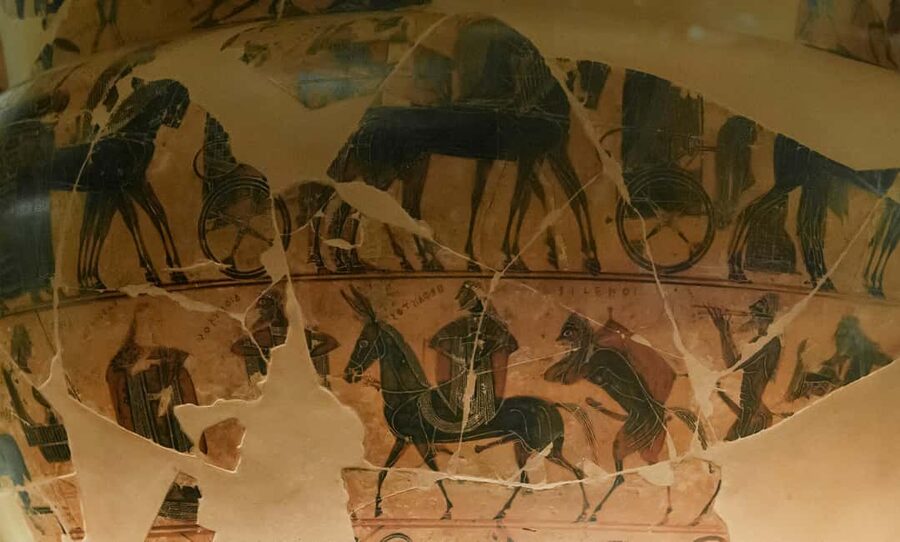
- The François Vase: myth you can actually follow
- Egyptian Museum highlights: over 14,000 artifacts, focused attention
- Garden time: the Etruscan tomb reconstruction in the open air
- Who this private guided tour suits best
- Price and value: what you’re really paying for
- Should you book this guided visit?
- FAQ
- How long is the tour?
- Where do I meet the guide?
- Does this experience skip the ticket line?
- What happens in the first part of the tour outside the museum?
- What will I see on the first floor inside the museum?
- Is the François Vase included?
- How many Egyptian artifacts are included?
- Is the tour wheelchair accessible?
- What languages are available?
Key highlights you’ll actually notice on this tour
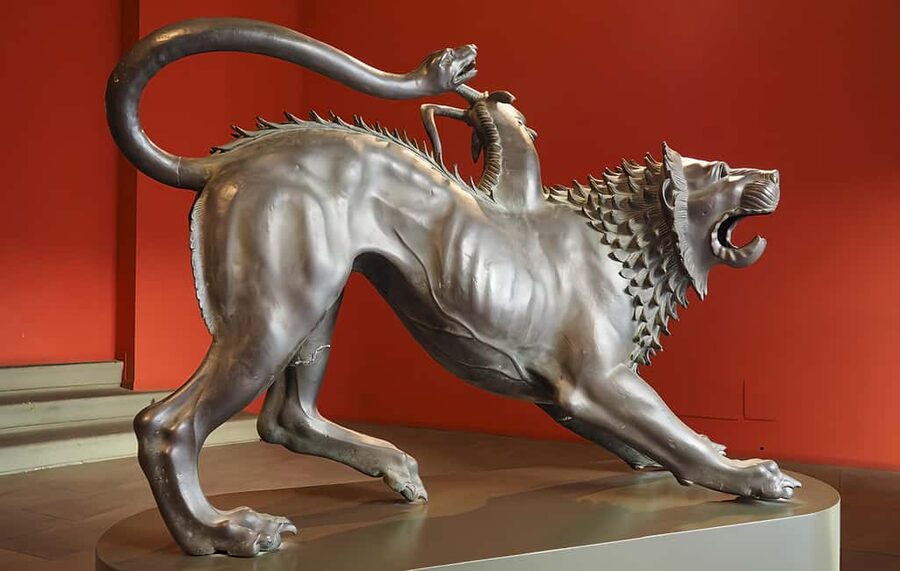
- Bronze Chimera restored in 1500 by Benvenuto Cellini: you get the story behind the famous sculpture, not just the photo spot.
- First-floor Etruscan burial goods tied to the region between Populonia and Vulci: one stop that helps you understand who the Etruscans were.
- Greek myth in the François Vase: you’ll see the vase’s key scenes explained, making it easier to read.
- Greek/Roman/Renaissance bronzes up close, including the Torso of Livorno and Medici-associated works.
- Egyptian Museum with over 14,000 artifacts, with specific attention on Amenophis III and mummies.
- Garden reconstruction of an Etruscan tomb (Inghirami of Volterra) with original alabaster urns: an outdoor payoff after the galleries.
More Florence galleries and collections to wander
How the 2-hour plan works (and why it matters)
This tour is built for efficient sightseeing. You don’t just enter and wander; you get a guided route that hits the museum’s most talk-worthy objects, plus the building story that connects everything.
The timing is simple:
- 15 minutes in Piazza della Santissima Annunziata for your start and orientation.
- 105 minutes inside the National Archaeological Museum of Florence for the main highlights.
- Then you’re back at the museum.
Why this matters: the National Archaeological Museum is big enough that a self-guided visit can turn into a blur. With a guide, you can focus on objects that connect across time—Etruscan burials leading to Greek and Roman sculpture, and then onward to Egyptian funerary culture.
Piazza della Santissima Annunziata: the quick start that sets your bearings
Your meeting point is right in front of the Archeological Museum on SS. Annunziata square (Piazza della Santissima Annunziata). If you arrive a bit early, you’ll have a small buffer to find the group.
That short pre-museum time isn’t there for sightseeing just for sightseeing’s sake. It helps you:
- get oriented so you don’t spend your best museum minutes figuring out where to go next
- understand what you’ll be looking for upstairs and downstairs
- ask basic questions before you enter crowded rooms
It’s also a practical win if you’re visiting with kids or family members who get antsy when a plan goes missing.
The museum building: a convent connection you’ll remember
Before you even reach the galleries, the setting adds another layer. This museum lives in an older structure with a convent past—once a branch of the Crocetta, where Maria Maddalena de Medici lived.
This kind of detail helps on a guided visit. When you know the building wasn’t made just to display objects, you start noticing how the museum rooms feel. You also get a sense that you’re walking through layered history: Renaissance-era life in the structure, and then ancient civilizations behind glass.
It’s one of those small facts that makes your visit feel less like a checklist.
First floor Etruscans and the Chimera: the “wow, stop and look” zone
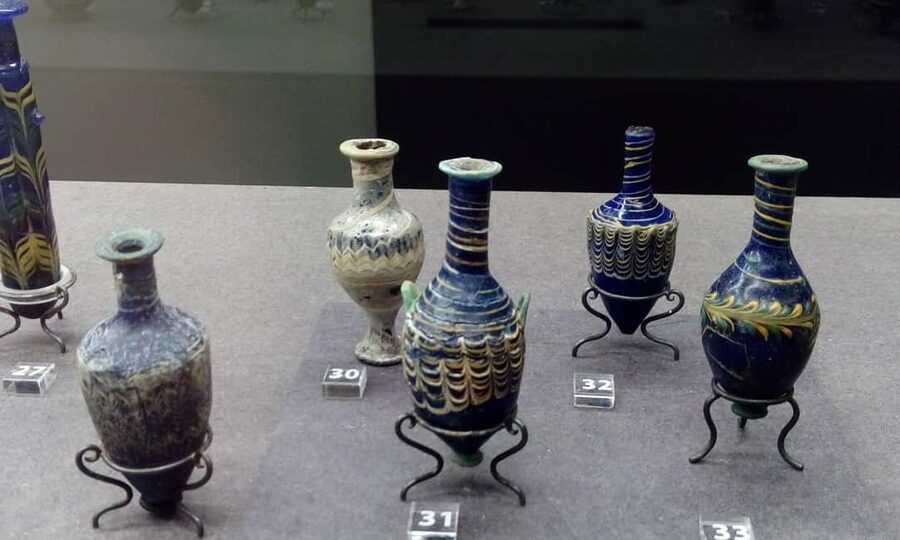
The first-floor section is where the tour earns its big impact. You’ll start by seeing Etruscan burial goods from the region between Populonia and Vulci. Even if you don’t know much about Etruscans, these items work as a foundation. Burial goods are a window into beliefs, status, and what people expected after death.
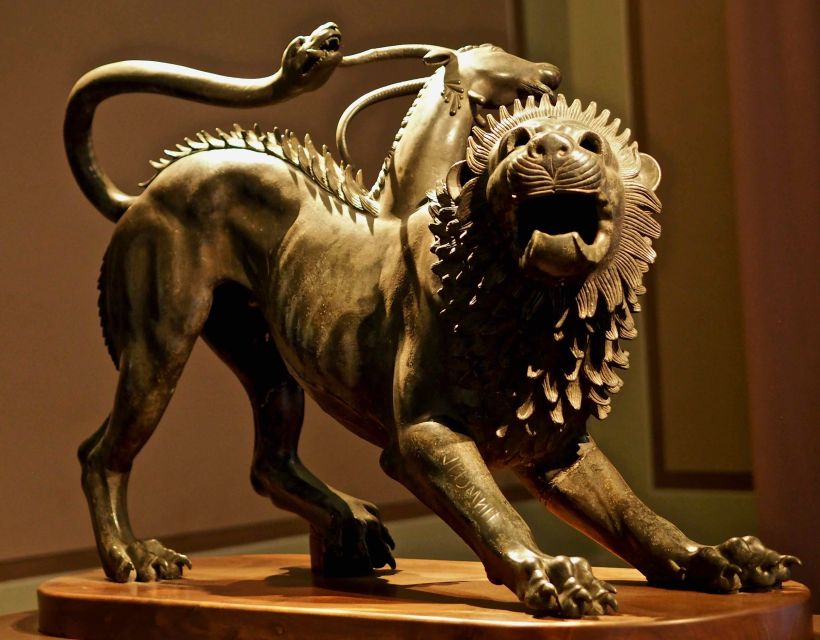
Then the tour shifts to the bronze centerpiece: the Chimera statues. These are on the first floor, and the guide points out that they were restored in 1500 by Benvenuto Cellini.
What I like about seeing this early: the Chimera is the perfect bridge from “ancient world” to “Renaissance fascination.” You’re not only looking at a myth creature; you’re also seeing evidence that later artists and patrons cared enough to restore and preserve it. That makes the museum feel like a conversation across centuries, not just a storage room for artifacts.
A practical tip: don’t rush past the Chimera. Stand a moment, read the explanation, then look again. The more you know what you’re seeing, the more the bronze takes over your attention.
Greek, Roman, and Renaissance bronzes: where details become clearer
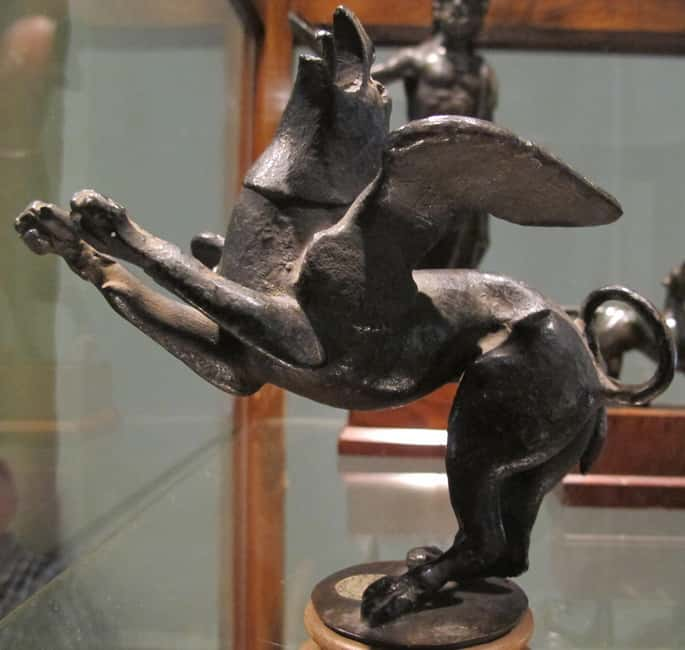
On the second floor, the tour expands into bronze works spanning ancient Greek, Roman, and Renaissance traditions. This is where the museum stops being about one culture and becomes about connections.
You’ll be directed to major works including:
- the Torso of Livorno
- the Medici Riccardi horse head
- the Idolino of Pesaro
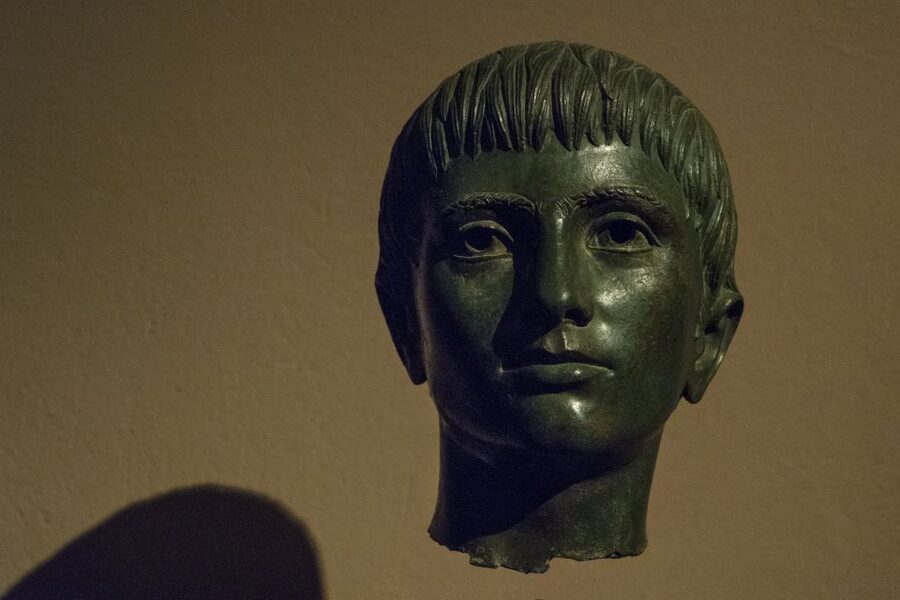
These pieces are small enough to miss if you’re not guided, but they’re big enough to reward patience. A guided route helps you catch what matters: what a sculpture emphasizes, why a form is important, and how later artists carried forward classical ideas.
If you’ve seen famous statues in other cities, you might expect everything here to look the same. It doesn’t. The bronze style and the historical context keep changing, and the guide’s explanations help you keep track of what era you’re in.
- The Best tour in Florence: Renaissance & Medici Tales – guided by a STORYTELLER
★ 5.0 · 12,316 reviews




The François Vase: myth you can actually follow
One of the tour’s named highlights is the François Vase, described as one of the most important finds in the world of Greek art. You’ll get time to look closely, and the guide explains the myth scenes painted on it.
Why this matters for your enjoyment: Greek vase painting can feel like decorative background if you don’t know what you’re looking at. When the story is laid out for you, the images stop being random figures. You start seeing them like chapters in a book.
Also, the François Vase is a great object for mixed groups. If you’re with older kids, it gives them something narrative. If you’re with adults, it’s the kind of artifact that rewards close looking without needing a PhD.
Egyptian Museum highlights: over 14,000 artifacts, focused attention
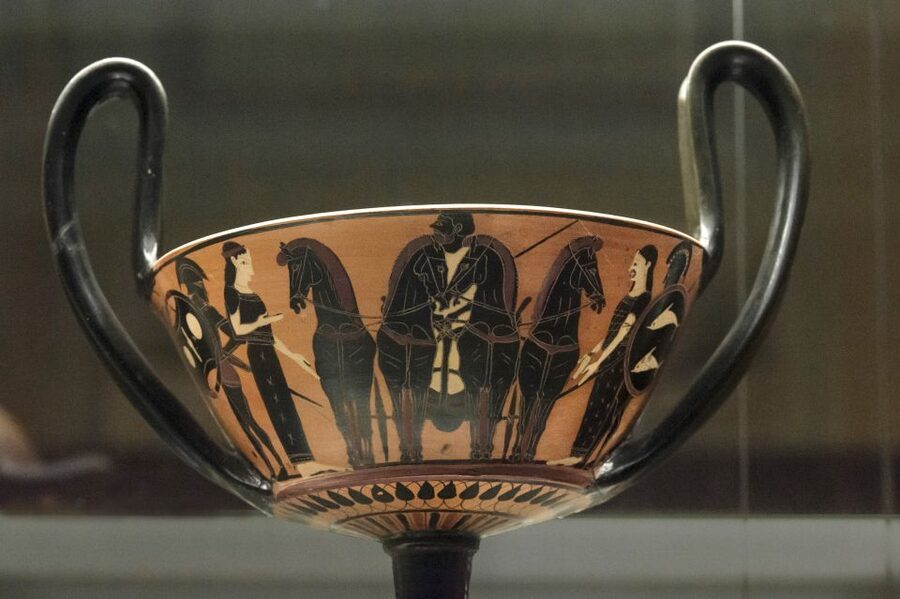
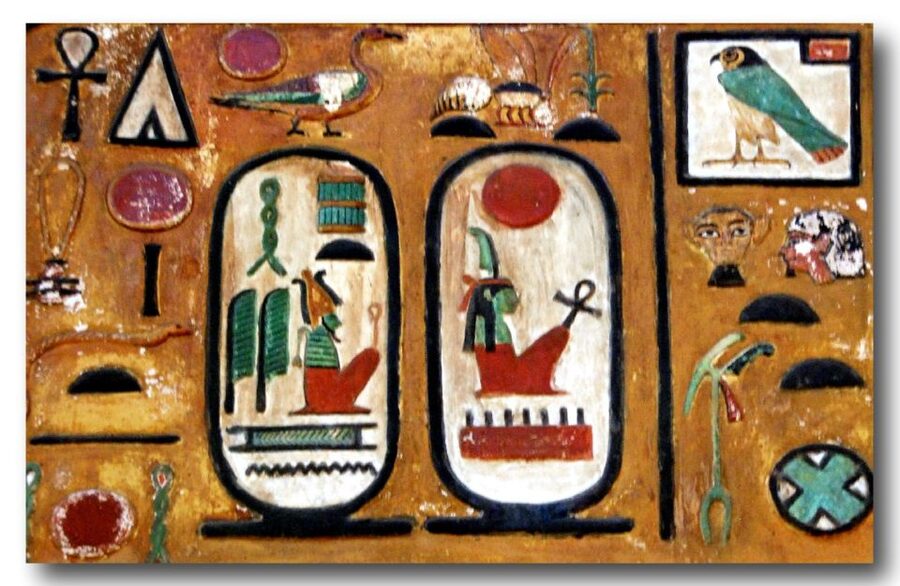
The Egyptian Museum section is a major payoff. You’ll see over 14,000 artifacts, with items that include steles, vases, ushabti, amulets, and bronzes.
The tour also spotlights a few standout pieces so you don’t end up staring at everything at once. Among the specific highlights:
- the statue of Amenophis III
- a war chariot from the seventeenth dynasty
- mummies described as perfectly preserved
Even in a short 2-hour window, this structure helps you. The museum can easily overwhelm you if you treat it like a museum warehouse. With a guide, you get anchor points—objects that represent broader practices like royal power, funerary beliefs, and craft skill.
If you’re the type who likes to connect details, the Egyptian section is a great fit. Amulets and burial-related objects aren’t just objects; they’re evidence of what people thought mattered after death.
Garden time: the Etruscan tomb reconstruction in the open air
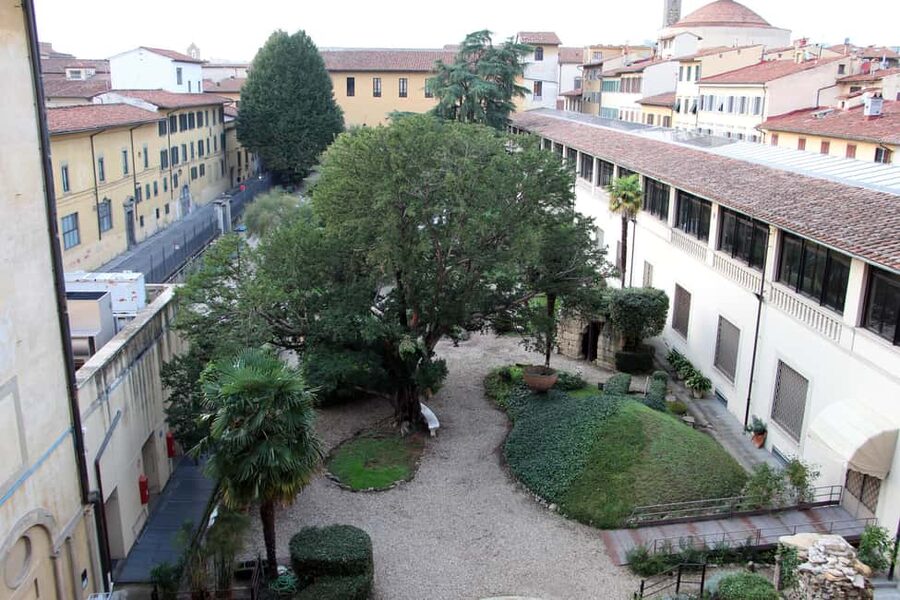
After the indoor galleries, you’ll step into the garden to see the reconstruction of an Etruscan tomb: the Inghirami tomb of Volterra. The key detail here is that it contains the original alabaster urns that were placed there in ancient times.
This is more than a nice outdoor break. It changes the “scale” of what you’re seeing. Indoors, you get artifacts presented at display distance. Outdoors, you get a space that feels closer to the original setting—so the Etruscan burial theme becomes more physical.
It’s also a good mental reset at the end of the tour. If your feet are tired, the garden gives you something calmer without losing the story thread.
Who this private guided tour suits best
This experience is ideal if you:
- want a tight, guided route through a big museum
- care about understanding stories behind objects, not only reading labels
- are traveling as a private group and want less chaos than a free-for-all
It also works well for families. The guide’s explanations can be paced to keep kids engaged while still satisfying adult curiosity.
Because you’ll see a broad set of cultures—Etruscans, Greek and Roman bronzes, then Egyptian funerary artifacts—it’s a good choice if you’re trying to get “a lot of ancient world” without choosing just one theme.
Price and value: what you’re really paying for
You’re paying for three things that matter more than any single artifact:
- A focused route through major highlights in about 2 hours
- Skip-the-ticket-line convenience, which is real time saved in a popular museum
- A live guide in multiple languages, so explanations don’t get lost
Even without knowing the exact cost, the value logic is clear. If you have limited time in Florence, paying for a guided plan usually beats spending that time searching for what matters most. If you have flexibility and want to wander at your own pace, a self-guided visit might suit you better—but you’d trade away the object-by-object context that makes the tour memorable.
Should you book this guided visit?
Book it if you want a smart overview that still hits the museum’s headline objects: the Chimera, major bronze highlights, the François Vase, and key pieces in the Egyptian Museum (including Amenophis III and mummies). The garden reconstruction is also a nice finish that keeps the Etruscan theme tangible.
Skip it only if you’re the type who needs hours in each gallery and plans to read every label slowly. With 2 hours, the museum is best treated like a guided “greatest hits” tour, not an all-day archaeology seminar.
FAQ
How long is the tour?
The tour duration is 2 hours.
Where do I meet the guide?
Meet your guide in front of the Archeological Museum on Piazza della Santissima Annunziata.
Does this experience skip the ticket line?
Yes, it includes skip-the-ticket-line access.
What happens in the first part of the tour outside the museum?
You’ll start with a guided visit in Piazza della Santissima Annunziata for about 15 minutes.
What will I see on the first floor inside the museum?
On the first floor, you’ll see a selection of large bronze statues of the Chimera and Etruscan burial goods.
Is the François Vase included?
Yes. The tour includes time to see the François Vase and learn about the mythical tales depicted on it.
How many Egyptian artifacts are included?
The Egyptian Museum portion includes over 14,000 artifacts.
Is the tour wheelchair accessible?
Yes, the tour is wheelchair accessible.
What languages are available?
The live guide is available in English, Italian, Spanish, German, and French.
More Florence Galleries
- Florence: Skip-The-Line Uffizi Gallery Timed Entry Ticket
★ 4.5 · 27,832 reviews - Florence: Leonardo Interactive Museum Entry Ticket
★ 4.5 · 12,957 reviews - Florence Accademia Gallery Tour with Entrance Ticket Included
★ 4.5 · 6,148 reviews - Uffizi Gallery: Renaissance Masterpieces Guided Tour
★ 4.6 · 6,070 reviews - Uffizi Gallery Small Group Tour with Guide
★ 4.5 · 4,923 reviews
More Florence Tours We Have Reviewed
- Florence: Skip-The-Line Uffizi Gallery Timed Entry Ticket
★ 4.5 · 27,832 reviews - Tuscany Day Trip from Florence: Siena, San Gimignano, Pisa and Lunch at a Winery
★ 5.0 · 21,634 reviews - Florence: Timed Entry to Michelangelo’s David + Audio App
★ 4.6 · 19,496 reviews - Florence: Leonardo Interactive Museum Entry Ticket
★ 4.5 · 12,957 reviews - Florence: Michelangelo’s David Skip-the-Line Entry Ticket
★ 4.5 · 12,764 reviews
Fresh from our Florence review desk
- Small-Group Pasta Cooking Class and Market Tour in Florence★ 5.0 · 3 reviews
- Palatina Gallery and Pitti Guided Tour in Florence★ 5.0 · 3 reviews
- Tuscan Evening Tour: Fiat 500, 8:30 to 10 PM★ 5.0 · 3 reviews
- Journey into Art: Florence’s Accademia★ 4.5 · 3 reviews
- Paint and Drink Florentine Hills★ 5.0 · 3 reviews
- Truffle hunting and lunch experience, with Vinci and winery.★ 4.5 · 3 reviews
Museums, compared.
 ★ 4.5Skip-The-Line Uffizi Gallery Timed Entry TicketFrom $3027,832 reviews
 ★ 4.5Leonardo Interactive Museum Entry TicketFrom $512,957 reviews
 ★ 4.5Florence Accademia Gallery Tour with Entrance Ticket IncludedFrom $456,148 reviews
 ★ 4.6Uffizi Gallery: Renaissance Masterpieces Guided TourFrom $886,070 reviews
 ★ 4.5Uffizi Gallery Small Group Tour with GuideFrom $764,923 reviews
 ★ 4.6Accademia Gallery Guided TourFrom $534,156 reviews
 ★ 4.8Accademia Gallery Skip-the-Line Guided TourFrom $413,044 reviews
 ★ 4.2Uffizi Gallery Timed Entry Ticket & Audio GuideFrom $332,794 reviews