
Reviewed · PRIVATE
Florence: Private Astronomical Tour of the Museo Galileo
Galileo figured out the sky, right here in Florence. This private Museo Galileo tour is a focused way to see original instruments and learn how people measured space, time, and even temperature. I especially love getting up close to Galileo’s original telescopes and keeping the visit efficient with fast-track entry. One caution: if you’re hunting for lots of hands-on, science-mechanics explanation, you may find the guide’s focus more historical than technical, and you’ll probably want the museum’s own video help too.
This is also a Medici-era science collection story in disguise. You’ll see how the collection was built starting with Cosimo I de’ Medici in the 1500s, then expanded by successors, with a major push in 1657 through the scientific Academy of Assay, and carried forward by Grand Duke Leopoldo from the Lorena family. In a private format with headsets, you can actually ask why these instruments mattered, not just where they are.
Logistics are simple but not automatic. Plan to arrive 15 minutes early, swap your voucher at the ticket office, and meet your guide inside the City Florence Tours office—then wear comfortable shoes because you’ll move around the museum at a steady pace. Also note: photography is allowed without flash, and large bags may need to be stored in the cloakroom.
In This Review
- Key highlights worth your time
- Where this tour fits in Florence (and why it feels different)
- Step inside Museo Galileo: the Medici science collection in context
- Galileo’s original telescopes: the moment the sky becomes measurable
- Astrolabes and celestial globes: learning to read the heavens
- Measuring time, space, and temperature: the science of everyday precision
- The Nocturnal (1568) and Santucci’s Armillary Sphere (1593)
- Optics, electrostatics, and the way a guide changes what you notice
- The best way to spend the 1.5 hours (so you don’t feel rushed)
- Photography rules and practical tips inside the museum
- Who this private Galileo tour is best for
- Value: is $159 per person worth it?
- Should you book this private astronomical tour of Museo Galileo?
- FAQ
- How long is the private Galileo tour?
- What’s included in the price?
- Where do I meet the guide?
- Which languages are available?
- Is photography allowed?
- Is the museum accessible for wheelchairs?
- Is it suitable for children?
Key highlights worth your time
- Original Galileo telescope and study instruments, not replicas
- Fast-track entry so you lose less time to security and queues
- Astrolabes, celestial globes, and measurement tools tied to real questions
- Timekeeping and measurement objects like clocks and thermometers
- Nocturnal (Girolamo della Volpaia, 1568) and other rare surveying-style devices
- Headsets that make a private tour feel clear and comfortable
Just your group: more private Florence tours
Where this tour fits in Florence (and why it feels different)
Florence is famous for art, stone, and slow walks. This tour gives you a different kind of Florence: the intellectual workshop behind the masterpieces. The Museo Galileo isn’t just a place to look at objects; it’s a curated timeline of how astronomy and physics tools grew from practical needs—measuring, predicting, and explaining.
I like that this visit is private and headset-supported. That matters in a museum where sound can bounce and people can drift. With a 1.5-hour format, the guide can keep you focused on the key displays without turning the whole experience into a blur.
Step inside Museo Galileo: the Medici science collection in context
Your guide starts by placing the museum in the Medici world. The collection began with Cosimo I de’ Medici in the 16th century and then kept evolving with later rulers. The big historical point is that science wasn’t treated as a side hobby—it was tied to court life, prestige, and serious institutions, including the 1657 founding of the scientific Academy of Assay.
You’ll also hear how Galileo Galilei fit into this setting. During the reign of Cosimo II de’ Medici, Galileo carried out his functions at the court of the Grand Dukes of Florence. That framing changes how you look at the objects: they aren’t only inventions, they’re products of a specific culture that funded and valued measurement.
Even if you only catch parts of the story, the museum architecture and display choices do the rest. You’ll get the feeling that this collection is trying to show a chain of thinking—how one instrument leads to the next question.
Galileo’s original telescopes: the moment the sky becomes measurable
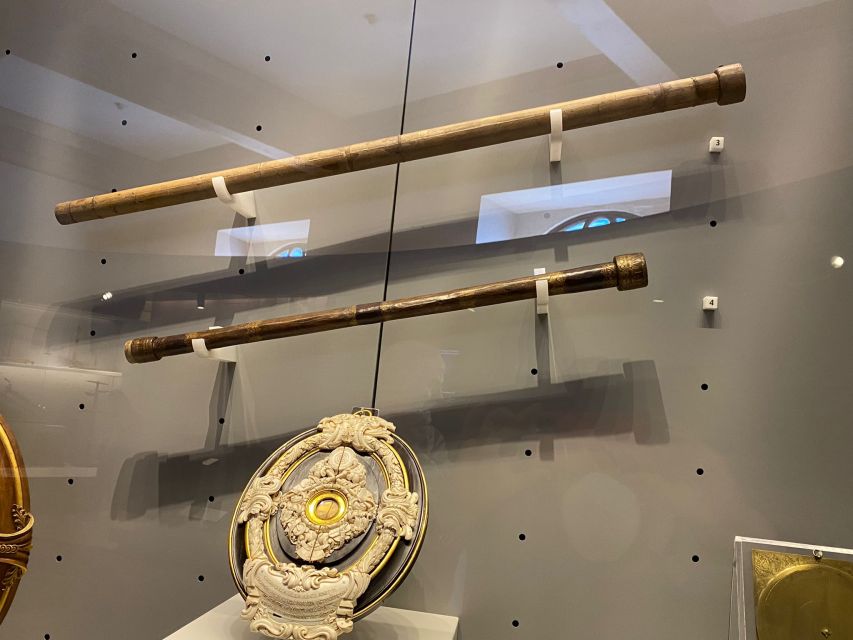
The headliner is seeing Galileo Galilei’s original telescopes and instruments. You’re not just reading about optics—you’re standing in front of the actual tools used for his astronomical and scientific studies.
This is where the tour’s tone can make or break your experience. If your guide emphasizes the historical arc—who used what, and when—you’ll still leave with a clear story of Galileo’s impact. But if you want the full technical breakdown of how lenses, viewing setups, and optical choices worked, you might notice you’re not always getting every “why” in detail.
Either way, this stop is visually and emotionally satisfying because the devices connect directly to real observations. It’s one thing to imagine the sky; it’s another to see an instrument designed to make it legible.
Astrolabes and celestial globes: learning to read the heavens
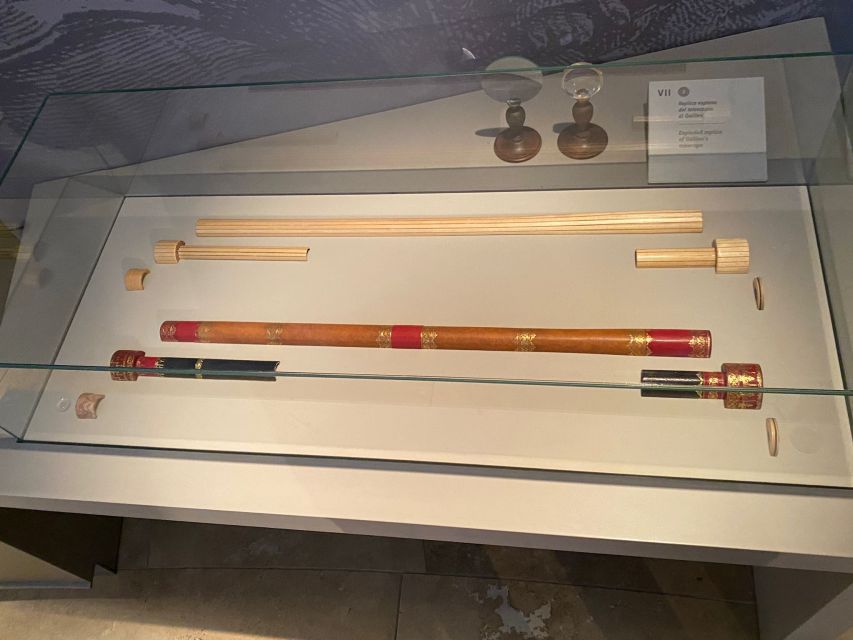
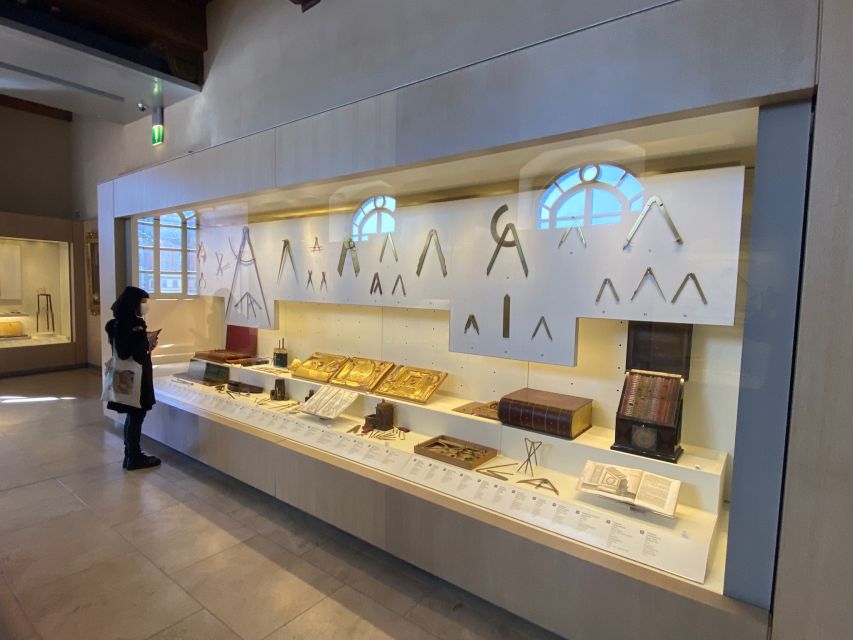
From telescopes, the museum naturally turns to other tools people used to track the sky. You’ll spend time with a wide collection of astrolabes and celestial globes—objects built for solving practical problems, not just displaying knowledge.
Here’s what I find useful for you: these instruments help you understand astronomy as a craft. Instead of thinking of it as only math and theory, you see the workflow—measure, map, compare, adjust. A guide can point out how the objects relate to the bigger theme of how space was measured over time.
If you’re traveling with kids, this section is often the sweet spot. It’s visual, it feels like a puzzle, and it connects to the idea that people once learned the sky by using physical tools, not apps.
Measuring time, space, and temperature: the science of everyday precision
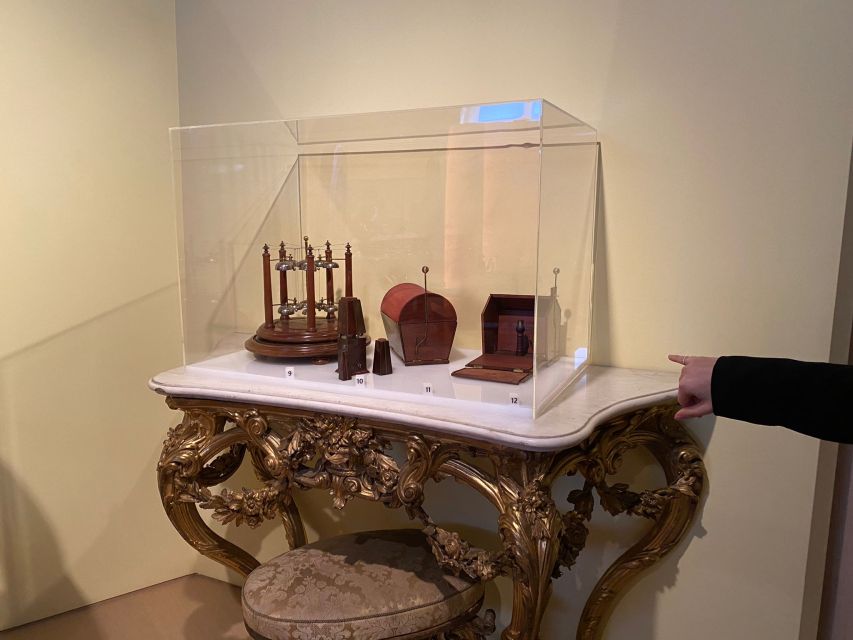
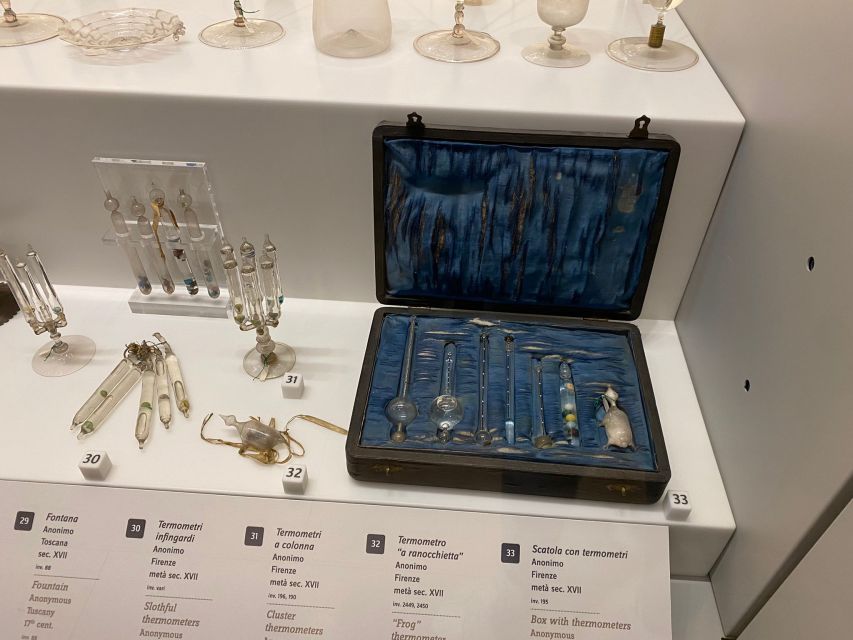
One of the best parts of this tour is how it stretches beyond astronomy. You’re told that the collection includes examples of how people measured time, space, and temperature, and you’ll actually see the artifacts that supported that work.
Expect to look at:
- antique clocks
- globe maps
- thermometers
- and more measuring devices tied to scientific and navigational needs
This is where the tour becomes more than “Galileo the guy.” It becomes Galileo the system—how measurement tools formed a foundation for physics, astronomy, and even everyday decision-making.
If you’re the kind of traveler who loves the bridge between art and science, this section often hits hardest. It shows that the same Renaissance mindset that produced great artworks also chased accuracy and repeatable observation.
- The Best tour in Florence: Renaissance & Medici Tales – guided by a STORYTELLER
★ 5.0 · 12,316 reviews


The Nocturnal (1568) and Santucci’s Armillary Sphere (1593)
Two object mentions in particular stand out because they feel specific and story-rich.
First: the Nocturnal by Girolamo della Volpaia (1568). This type of device is tied to telling time and orientation using the sky—basically turning celestial position into usable information. Seeing it firsthand helps you understand why astronomy mattered to daily life, not just to scholars.
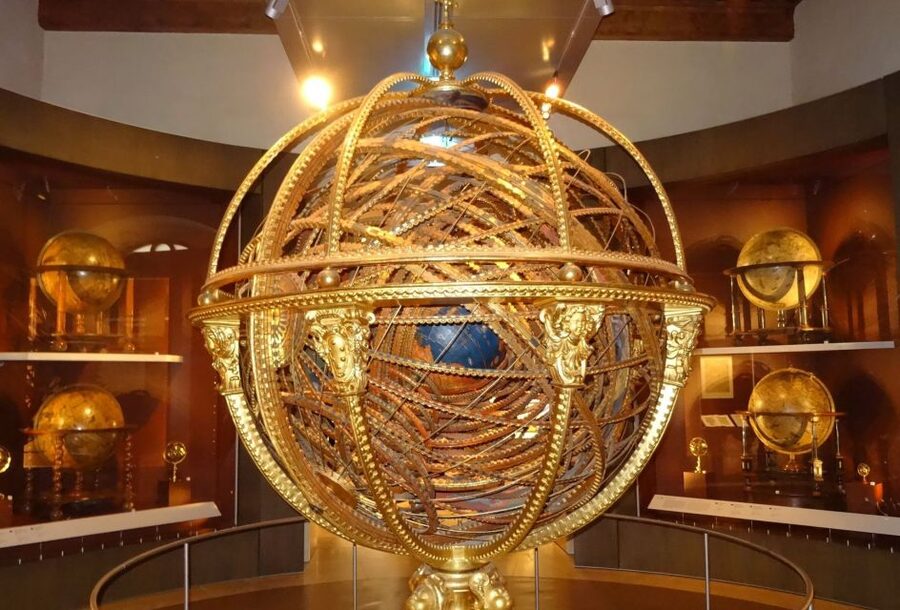
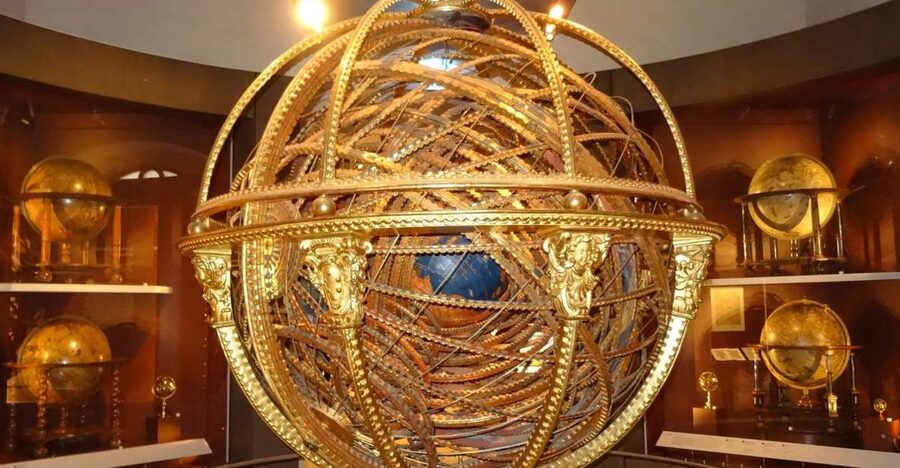
Second: the Santucci’s Armillary Sphere (1593). An armillary sphere is a way of modeling the heavens with physical rings. It makes abstract ideas about orbits and reference frames visible. In a guide-led tour, this is often explained as part of the evolution of how people represented space—moving from conceptual diagrams to tangible, mechanical models.
Even if you don’t catch every detail, those object types give you a clear takeaway: people built tools that helped them convert the sky into measurement.
Optics, electrostatics, and the way a guide changes what you notice
Your tour is designed to connect objects to concepts, including optics and electrostatics. That’s a big deal because it widens the “science scope” beyond astronomy alone.
That said, your experience will depend on how your guide talks through it. One of the main caution signals is that a science museum can still turn into mostly historical context if the guide doesn’t provide enough technical explanation. If you’re comfortable with that style, you’ll still enjoy the collection and the cultural story.
If you’re not, there’s a smart workaround: plan to use the museum’s app videos for the devices you want to understand more deeply. A good approach is to do the guided session as a historical map of what to look at, then let the app provide the scientific mechanics on your own time.
The best way to spend the 1.5 hours (so you don’t feel rushed)
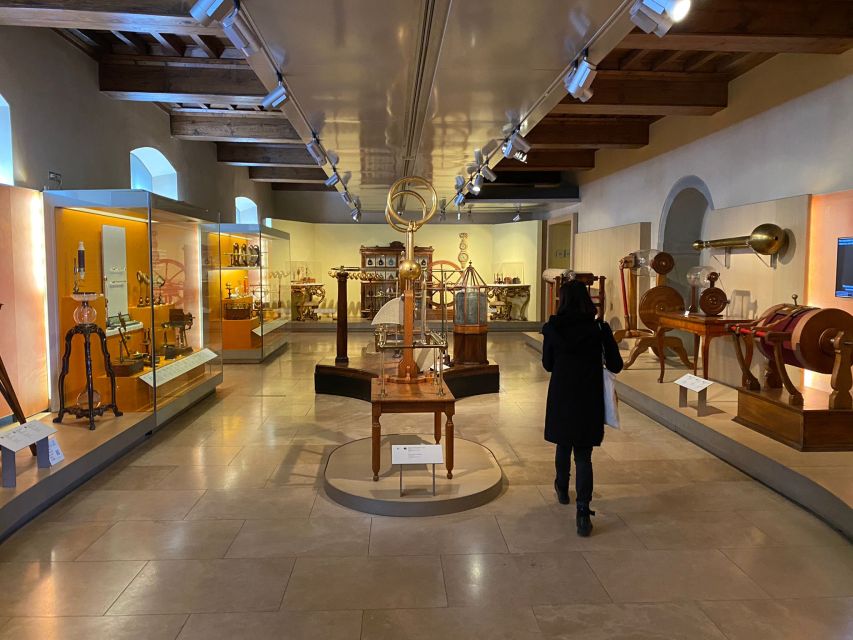
A private tour can go two ways: either it feels tailored, or it feels like a checklist. With a 1.5-hour duration, you should expect a tight, curated route through the museum’s most important science displays.
Here’s how to get more out of it:
- Focus your questions on one theme at a time: timekeeping, measuring space, or optical instruments.
- If a display looks complex, spend a full minute just looking before you ask what it does.
- Wear shoes you can stand in comfortably; you’ll be moving around the collection.
Because the tour includes headsets, you should also speak up if you can’t hear well. It’s a small fix that makes a huge difference in whether the guide’s explanation lands.
Photography rules and practical tips inside the museum
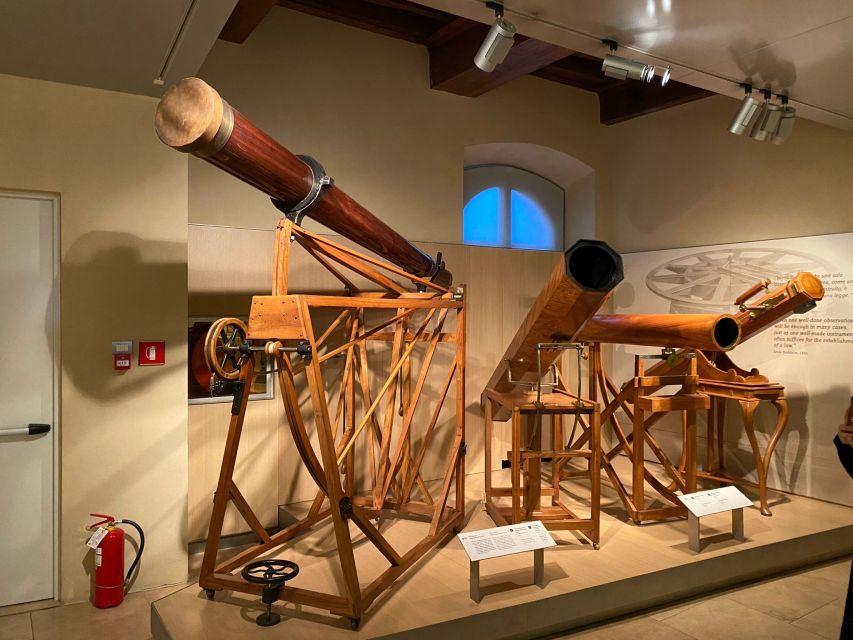
You’re allowed to take photos, as long as there’s no flash to protect the artifacts. That’s common in museums, but it’s still worth planning for—flash-free shooting can be tricky in dim rooms.
Also plan for storage if you arrive with a large bag or backpack. The tour information notes these may need to be stored in the cloakroom.
Finally, photography + looking means you’ll slow down naturally. Don’t fight that. The goal isn’t to rush through the objects; it’s to understand why each instrument belongs in a chain of measurement.
Who this private Galileo tour is best for
This tour fits best if you like science museums but want a guide to do the “what am I seeing and why does it matter” part.
You’ll likely enjoy it most if:
- you’re curious about how space, time, and temperature were measured
- you want to see original instruments like Galileo’s telescope and specific named devices
- you prefer private pacing with headsets
- you’re traveling with children and want an educational visit (the museum experience is described as suitable for kids, with games of the past)
It may be less satisfying if your top goal is deep technical science instruction in every room. In that case, treat the guided tour as a historical orientation and use the museum’s own video explanations for the heavy mechanics.
Value: is $159 per person worth it?
At $159 per person for 1.5 hours, you’re paying for three things that matter in a museum: private guiding, fast-track entry, and headsets. If you’re a small group, this format can feel like better value than it first appears because you’re not splitting attention across multiple tour groups.
The key value question for you is this: do you want interpretation and context? If yes, the price makes sense because a guide helps you connect objects like the Nocturnal and armillary sphere to bigger themes like how time and space were represented.
If you’d rather self-navigate and spend longer on technical explanations, you might feel the time pressure. That’s where pairing a shorter guided visit with a longer self-guided or app-assisted session can work better for science-first travelers.
Should you book this private astronomical tour of Museo Galileo?
Book it if you want an efficient, private introduction to Galileo and the instruments behind measurement in Florence. The fast-track access, headset clarity, and the chance to see original telescope and named artifacts make this a strong science-culture stop.
Skip or modify your plan if you’re expecting a heavy dose of technical science explanation for every display. The museum clearly supports deeper understanding through videos, so consider using that as your supplement if you’re the type who wants the mechanics as well as the history.
If you like your travel with a story you can see—telescopes, timekeeping tools, and the Medici funding behind it—this is a very good match.
FAQ
How long is the private Galileo tour?
It lasts about 1.5 hours.
What’s included in the price?
Included are fast-track entrance tickets, reservation fees, a professional tour guide, and headsets.
Where do I meet the guide?
Meet at the City Florence Tours office. Arrive 15 minutes early and exchange your voucher at the ticket office before the tour begins.
Which languages are available?
The guide can lead in English, Spanish, German, Italian, and French.
Is photography allowed?
Yes, photography is allowed without flash.
Is the museum accessible for wheelchairs?
The museum is described as fully wheelchair accessible, and the tour lists wheelchair accessibility. At the same time, the activity description also marks it as not suitable for people with mobility impairments, so it’s smart to confirm your specific needs with the provider before booking.
Is it suitable for children?
Yes. The tour information says it’s suitable for children and includes games of the past, making it an educational experience for families.
More Private Florence Tours
- Cinque Terre and Pisa Tower Tour from Florence Semi Private
★ 5.0 · 1,406 reviews - From Florence: Private Chianti Hills Tour with Tasting
★ 4.3 · 809 reviews - Private Self-Guided E-Bike Ride in Tuscany with Vineyard Visit
★ 5.0 · 775 reviews - Florence Private Transportation in Rickshaw
★ 5.0 · 730 reviews - Florence: Private Transport by Rickshaw
★ 5.0 · 659 reviews
More Florence Tours to Weigh Up
- The Best tour in Florence: Renaissance & Medici Tales – guided by a STORYTELLER
★ 5.0 · 12,316 reviews - The Best Tour in Florence: Renaissance and Medici Tales
★ 5.0 · 10,810 reviews - Florence: Chianti Wineries Tour with Wine Tasting
★ 4.5 · 10,071 reviews - Florence: Duomo Cathedral 60-Minute Guided Tour
★ 3.7 · 6,829 reviews - Florence: Hop-on Hop-off Bus Tour: 24, 48 or 72-Hour Ticket
★ 4.0 · 6,283 reviews
More Florence Tours We Have Reviewed
- Florence: Skip-The-Line Uffizi Gallery Timed Entry Ticket
★ 4.5 · 27,832 reviews - Tuscany Day Trip from Florence: Siena, San Gimignano, Pisa and Lunch at a Winery
★ 5.0 · 21,634 reviews - Florence: Timed Entry to Michelangelo’s David + Audio App
★ 4.6 · 19,496 reviews - Florence: Leonardo Interactive Museum Entry Ticket
★ 4.5 · 12,957 reviews - Florence: Michelangelo’s David Skip-the-Line Entry Ticket
★ 4.5 · 12,764 reviews
Fresh from our Florence review desk
- Small-Group Pasta Cooking Class and Market Tour in Florence★ 5.0 · 3 reviews
- Palatina Gallery and Pitti Guided Tour in Florence★ 5.0 · 3 reviews
- Tuscan Evening Tour: Fiat 500, 8:30 to 10 PM★ 5.0 · 3 reviews
- Journey into Art: Florence’s Accademia★ 4.5 · 3 reviews
- Paint and Drink Florentine Hills★ 5.0 · 3 reviews
- Truffle hunting and lunch experience, with Vinci and winery.★ 4.5 · 3 reviews
Private, compared.
 ★ 5.0Cinque Terre and Pisa Tower Tour from Florence Semi PrivateFrom $2851,406 reviews
 ★ 4.3From Florence: Private Chianti Hills Tour with TastingFrom $1,166809 reviews
 ★ 5.0Private Self-Guided E-Bike Ride in Tuscany with Vineyard VisitFrom $96775 reviews
 ★ 5.0Florence Private Transportation in RickshawFrom $47730 reviews
 ★ 5.0Private Transport by RickshawFrom $46659 reviews
 ★ 4.5Uffizi Gallery Discovery Private Guided TourFrom $206658 reviews
 ★ 4.5Florence Exclusive PRIVATE Food Tour with 6 or 10 TastingsFrom $137654 reviews
 ★ 4.5Uffizi Highlights, In-Depth Masterclass or Private TourFrom $82641 reviews