
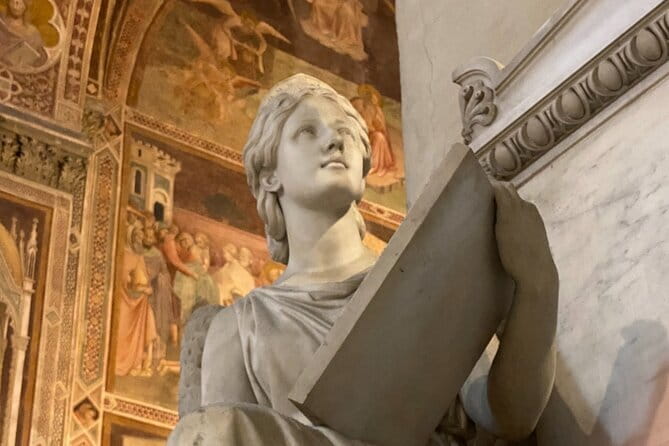
Reviewed · PRIVATE
Florence SANTA CROCE Basilica Private Tour
Skulls, saints, and secrets in one basilica. Santa Croce is the kind of church where art and big-name stories sit side by side, and you spend your hour focused on what you’re seeing, not wandering around guessing. You’ll hear how this is often described as the biggest Franciscan church in the world, plus the lesser-known tales tied to the people buried there.
I love the headsets part. They make a real difference in a busy interior, so you can follow your guide without craning your neck or hunting for every word. I also love that it’s truly private: only your group, so you get personal attention instead of being squeezed into a larger flow.
One possible drawback: the visit is about 1 hour, so if you want to linger over every tomb, fresco corner, and chapel detail on your own, you may feel a little rushed.
In This Review
- Key points at a glance
- Santa Croce: a Franciscan church where symbols matter
- Your 1-hour flow: what you’ll do and what you’ll actually learn
- Entering the basilica: the medieval floor is the story
- Dante’s empty grave and the Statue of Liberty connection
- Michelangelo and Galileo: two genius stories tied to Florence
- Giotto frescoes and the reason some art was lost
- Donatello’s Annunciation and Brunelleschi’s Pazzi Chapel
- The Stendhal syndrome story: what it really points to
- Guide quality is the whole experience (Irina, and Alda too)
- Price and value: is $106.59 worth it for Santa Croce?
- Meeting point: Largo Piero Bargellini and staying oriented
- Who this Santa Croce private tour suits best
- Should you book this Santa Croce private tour?
- FAQ
- How long is the Florence Santa Croce private tour?
- Is this tour private?
- Is the tour offered in English?
- Is the admission ticket included?
- Where is the meeting point?
- Does the tour end at the same place it starts?
- Are headsets included so we can hear the guide?
- Can I bring a service animal?
- Can I cancel for free?
- When should I book to get a good chance of availability?
Key points at a glance
- Headsets included so you hear stories clearly inside the basilica.
- Medieval grave details including skull-and-crossbones symbols in the floor.
- Big names in context: Dante, Michelangelo, and Galileo are woven into the site.
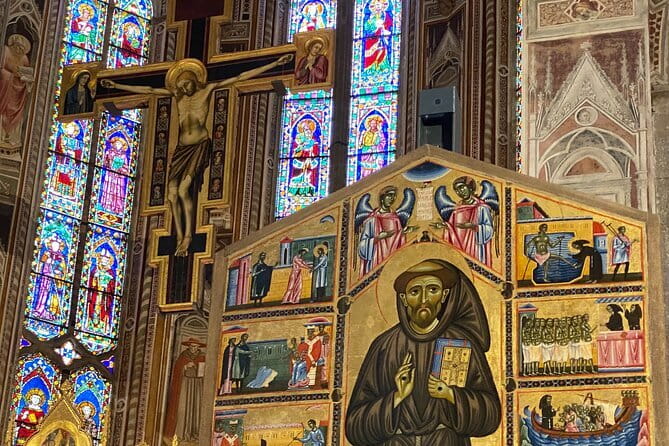
- Art highlights you can point to: Giotto frescoes, Donatello’s Annunciation, and Brunelleschi’s Pazzi Chapel.
- A memorable Stendhal syndrome story (the real one behind the famous warning).
- Guides like Irina and Alda deliver the history in a way that actually clicks.
Just your group: more private Florence tours
Santa Croce: a Franciscan church where symbols matter
Santa Croce in Florence isn’t just pretty marble and famous artworks. It’s a place where symbols carry messages, families tried to control how history would remember them, and the church became a kind of public stage for politics, faith, and power.
That’s why this private format works so well. You’re not just looking at the basilica; you’re learning how to read it. Once you know what certain carvings and tomb choices are hinting at, the whole interior starts making sense fast.
Your 1-hour flow: what you’ll do and what you’ll actually learn
This is built as a focused, one-hour visit. The pace is enough to cover the major “wow” moments without turning your visit into a sprint through corridors. You also get an admission ticket included, so you don’t waste time sorting entry details while the basilica is calling.
Inside Santa Croce, the guide leads you through a mix of architecture, tombs, and standout artworks. Expect stories connected to the floor level—where graves and memorials sit—and to specific chapels and artworks that you can then recognize again later as you walk around Florence.
Entering the basilica: the medieval floor is the story
Santa Croce has that classic church trick: the most important details aren’t always on the walls. A lot of meaning is built into the floor-level graves and the way Florentines marked status, faith, and identity.
You’ll step onto medieval burial areas tied to Florentine aristocrats. And yes, the tour includes the striking carvings like skulls and crossbones engraved on some graves. That kind of detail is hard to interpret alone, but with a guide it becomes more than spooky decoration—it becomes a clue about how people wanted to be remembered.
This is also where the site’s mysteries come in. You’ll hear the story about Dante’s empty grave, and you’ll get a surprising connection connected to the Statue of Liberty origin story. Even if you’ve heard fragments online, having the guide connect it to the basilica’s context is what makes it stick.
Dante’s empty grave and the Statue of Liberty connection
Dante is a name you can’t visit Florence without bumping into. What makes Santa Croce special is how the basilica connects him to a physical memorial idea—then adds an element of uncertainty through the so-called empty grave story.
You’ll also hear a claim about where the Statue of Liberty’s roots connect. It’s the sort of story that sounds strange at first, but the point of the tour isn’t just the punchline. It’s showing how Florence’s symbols traveled through time and how artists and patrons borrowed meaning from earlier places.
If you like historical puzzles, this is one of the most satisfying segments. It’s not just facts; it’s a “why would anyone do this here?” kind of explanation.
Michelangelo and Galileo: two genius stories tied to Florence
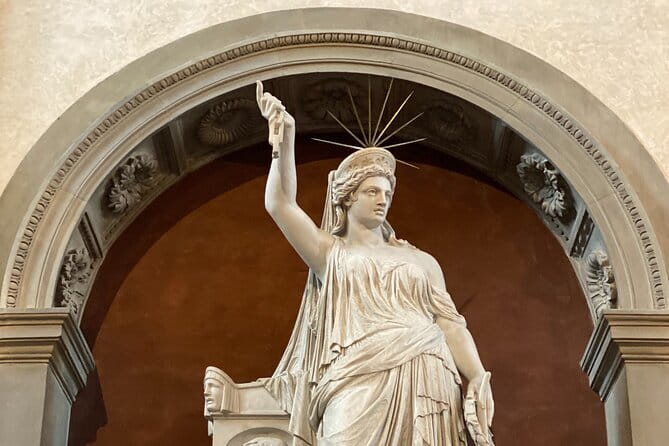
Santa Croce is famous for art, but your visit goes further into the history of how brilliant bodies and brilliant minds were treated when they were gone.
You’ll hear the dramatic account of Michelangelo’s body being stolen from Rome and why it ended up here. Then the tour shifts gears to Galileo Galilei, including the story of where he was secretly buried for a hundred years. That’s the kind of detail that changes how you look at a memorial space. You stop treating tombs as background and start treating them as chapters in a bigger conflict between institutions.
This is also where a private guide helps most. If you ask questions, you’re not waiting for your turn. And if you’re the type who likes to understand motives—political, religious, personal—these Galileo and Michelangelo stories give you something concrete to hold onto.
- Tuscany Day Trip from Florence: Siena, San Gimignano, Pisa and Lunch at a Winery
★ 5.0 · 21,634 reviews

Giotto frescoes and the reason some art was lost
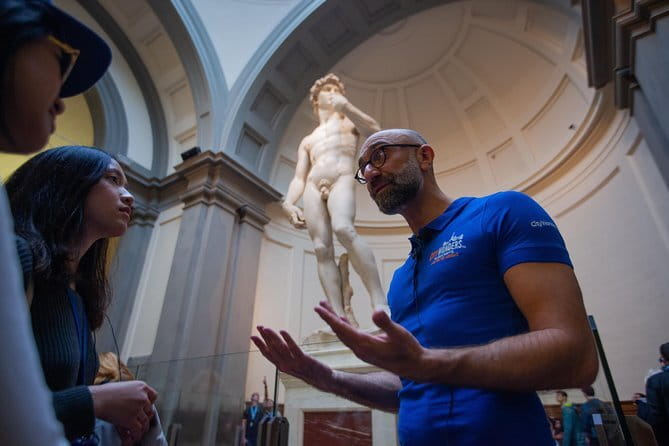
A major highlight is the focus on wall art, especially Giotto’s frescoes. Frescoes are easy to admire from afar, but they’re harder to understand when you don’t know what to notice. Your guide explains what you’re seeing and why certain portions were lost or damaged over time.
That matters because it teaches you the difference between viewing art as “forever” and viewing art as “survived.” You begin to appreciate the survival story alongside the artwork itself.
If you come to Florence wanting more than postcard impressions, this part helps you connect art style to history and consequences. You leave with the sense that the basilica is still a working document of time.
Donatello’s Annunciation and Brunelleschi’s Pazzi Chapel
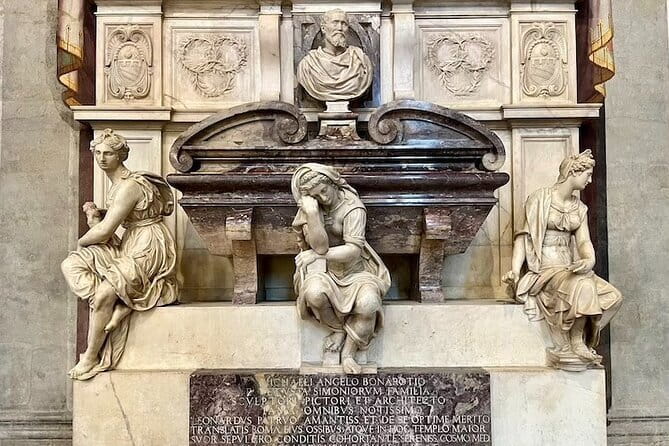
You’ll also hit two standout artistic anchors: Donatello’s Annunciation and Brunelleschi’s Pazzi Chapel.
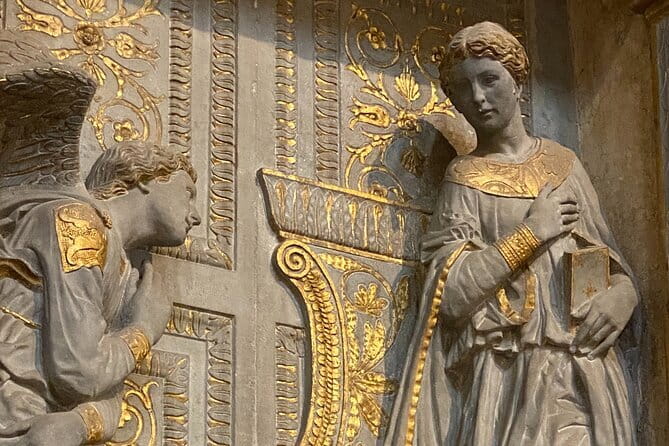
Donatello’s Annunciation is the kind of work that rewards close attention. With a guide, you’ll understand how it fits into the church’s wider artistic program, not just why it’s famous. You’ll look at details with purpose—how form, placement, and emphasis work together in a religious setting.
And then there’s the Pazzi Chapel by Brunelleschi. Even if you don’t know Renaissance architecture by name, this is where you learn how style and structure create a feeling. The guide’s explanations help you “see” the design choices instead of just passing through them.
The Stendhal syndrome story: what it really points to
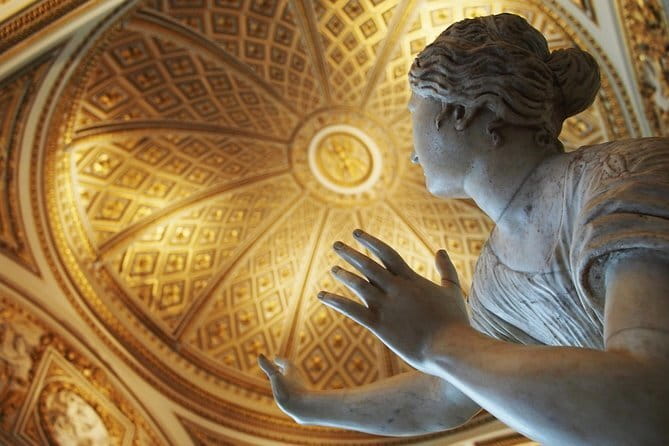
Stendhal syndrome is one of those Florence topics that gets repeated so much it turns into a meme. Here, you get a specific story about the syndrome’s background and how the idea became associated with overwhelming art.
Rather than treating it as horror trivia, the tour frames it as a sign that art can hit hard. The takeaway is practical: slow down where the guide tells you to. If you do, you’ll actually understand why people connect emotion with artistic intensity in places like Santa Croce.
Guide quality is the whole experience (Irina, and Alda too)
The biggest difference between a so-so church visit and a memorable one is how the guide makes connections. This tour shines because the guidance is very story-driven and easy to follow, with clear communication supported by headsets.
You may meet Irina in Florence; she’s highlighted for being articulate and for knowing the basilica’s corners and details. In one-on-one discussions, Alda is described as an art historian who explains the historical context and the religious and political meaning behind works you’re standing in front of.
What I’d pay attention to in your booking decision is how you like to learn. If you want a teacher who guides you through the “why” behind tombs and artworks, you’ll likely feel at home here.
Price and value: is $106.59 worth it for Santa Croce?
At $106.59 per person for about 1 hour with a private setup, this isn’t the cheapest way to see Santa Croce. But value in Florence often comes down to time and focus—especially in major sites where self-guided wandering can turn into guesswork.
You’re getting:
- Admission ticket included
- Headsets included
- Private experience (only your group)
- A tight plan that connects floor graves, major artworks, and the site’s dramatic stories
If you’re visiting with a companion and you care about history + art history (not just checking a box), the math starts to make sense. If you’re traveling solo and just want a casual walk-through, you might consider a less structured option. For many visitors, though, the storytelling and speed-to-insight ratio is exactly what makes this price feel fair.
Also, this tends to get booked ahead (on average about 75 days). If you have specific dates, earlier booking is smart.
Meeting point: Largo Piero Bargellini and staying oriented
You’ll meet at Largo Piero Bargellini, 1, 50122 Firenze FI, Italy. The tour ends back at the same meeting point, which is handy when you’re planning the rest of your afternoon.
It’s also noted as near public transportation, so it’s not a hassle to reach. Practically, I’d treat this as your anchor on the day. Santa Croce is central enough that you can stack it with other sights nearby, but keeping it as a planned stop helps you avoid running late.
Who this Santa Croce private tour suits best
This tour fits best if you:
- Love history that’s tied to objects on the ground (tombs, carvings, specific locations)
- Want art history explained in plain language
- Prefer a guide-led structure inside a big church
- Have limited time and want the main stories delivered clearly in about an hour
It’s also a good choice if you don’t want to fight for audio in crowded interiors. The headsets help you focus on what matters instead of competing with the room.
Should you book this Santa Croce private tour?
Book it if you want Santa Croce to feel like a coherent experience, not a collection of impressive rooms. The guide storytelling—especially the floor-level tomb symbolism, plus the Michelangelo and Galileo threads—turns the basilica into a live, readable place.
Skip it only if your priority is free roaming and long lingering with no structure. With only about an hour, you’ll get highlights and context, but you won’t get a slow, detailed personal study of every corner.
If your travel style is history-and-art with a strong “show me what to look at” approach, this is an excellent way to spend a short afternoon.
FAQ
How long is the Florence Santa Croce private tour?
It lasts about 1 hour.
Is this tour private?
Yes. Only your group participates.
Is the tour offered in English?
Yes, it is offered in English.
Is the admission ticket included?
Yes, the admission ticket is included.
Where is the meeting point?
The meeting point is Largo Piero Bargellini, 1, 50122 Firenze FI, Italy.
Does the tour end at the same place it starts?
Yes, it ends back at the meeting point.
Are headsets included so we can hear the guide?
Yes, headsets are included.
Can I bring a service animal?
Yes, service animals are allowed.
Can I cancel for free?
Yes. Free cancellation is available, and you can cancel up to 24 hours in advance for a full refund.
When should I book to get a good chance of availability?
On average, it’s booked about 75 days in advance, so booking ahead is a good idea.
More Private Florence Tours
- Cinque Terre and Pisa Tower Tour from Florence Semi Private
★ 5.0 · 1,406 reviews - From Florence: Private Chianti Hills Tour with Tasting
★ 4.3 · 809 reviews - Private Self-Guided E-Bike Ride in Tuscany with Vineyard Visit
★ 5.0 · 775 reviews - Florence Private Transportation in Rickshaw
★ 5.0 · 730 reviews - Florence: Private Transport by Rickshaw
★ 5.0 · 659 reviews
More Florence Tours to Weigh Up
- The Best tour in Florence: Renaissance & Medici Tales – guided by a STORYTELLER
★ 5.0 · 12,316 reviews - The Best Tour in Florence: Renaissance and Medici Tales
★ 5.0 · 10,810 reviews - Florence: Chianti Wineries Tour with Wine Tasting
★ 4.5 · 10,071 reviews - Florence: Duomo Cathedral 60-Minute Guided Tour
★ 3.7 · 6,829 reviews - Florence: Hop-on Hop-off Bus Tour: 24, 48 or 72-Hour Ticket
★ 4.0 · 6,283 reviews
More Florence Tours We Have Reviewed
- Florence: Skip-The-Line Uffizi Gallery Timed Entry Ticket
★ 4.5 · 27,832 reviews - Tuscany Day Trip from Florence: Siena, San Gimignano, Pisa and Lunch at a Winery
★ 5.0 · 21,634 reviews - Florence: Timed Entry to Michelangelo’s David + Audio App
★ 4.6 · 19,496 reviews - Florence: Leonardo Interactive Museum Entry Ticket
★ 4.5 · 12,957 reviews - Florence: Michelangelo’s David Skip-the-Line Entry Ticket
★ 4.5 · 12,764 reviews
Fresh from our Florence review desk
- Small-Group Pasta Cooking Class and Market Tour in Florence★ 5.0 · 3 reviews
- Palatina Gallery and Pitti Guided Tour in Florence★ 5.0 · 3 reviews
- Tuscan Evening Tour: Fiat 500, 8:30 to 10 PM★ 5.0 · 3 reviews
- Journey into Art: Florence’s Accademia★ 4.5 · 3 reviews
- Paint and Drink Florentine Hills★ 5.0 · 3 reviews
- Truffle hunting and lunch experience, with Vinci and winery.★ 4.5 · 3 reviews
Private, compared.
 ★ 5.0Cinque Terre and Pisa Tower Tour from Florence Semi PrivateFrom $2851,406 reviews
 ★ 4.3From Florence: Private Chianti Hills Tour with TastingFrom $1,166809 reviews
 ★ 5.0Private Self-Guided E-Bike Ride in Tuscany with Vineyard VisitFrom $96775 reviews
 ★ 5.0Florence Private Transportation in RickshawFrom $47730 reviews
 ★ 5.0Private Transport by RickshawFrom $46659 reviews
 ★ 4.5Uffizi Gallery Discovery Private Guided TourFrom $206658 reviews
 ★ 4.5Florence Exclusive PRIVATE Food Tour with 6 or 10 TastingsFrom $137654 reviews
 ★ 4.5Uffizi Highlights, In-Depth Masterclass or Private TourFrom $82641 reviews