
Uffizi can overwhelm you fast. This 2-hour private guide tour turns a huge museum into a clear, story-driven route through the Middle Ages, Renaissance, and Baroque genius.
I especially love the small-group feel (limited to 6), because it makes the guide’s explanations feel personal rather than rushed. I also love how the tour doesn’t just name paintings, it explains why they mattered and what to notice while you’re standing in front of them. One possible drawback: you’ll see a lot of major works, so if you want maximum time lingering in front of every masterpiece, you may feel a bit time-pressured.
In This Review
- Key highlights you’ll notice right away
- Meeting at Piazzale degli Uffizi and starting in the right place
- What a small-group private guide format really buys you
- The museum as a debate: antiquity vs modern thinking
- Middle Ages room stop: Giotto and the break from old rules
- Gentile da Fabriano: Adoration of the Magi and the hidden meaning
- Portraits by Piero della Francesca: women’s fashion and virtues in paint
- Filippo Lippi and Cosimo the Old: Medici influence you can feel
- Botticelli rooms: Lorenzo the Magnificent and the role of muse
- Leonardo da Vinci hall: three works and the 23-painting mystery
- Caravaggio’s Medusa shield and a surprising Medici link
- Timing and pacing: how to get value from only 2 to 2.5 hours
- Practical tips before you go inside
- Value for money: why this tour can be worth it
- Who should book this Uffizi guide tour
- Should you book this Uffizi Gallery 2-hour private guide tour?
- FAQ
- Where is the meeting point for the Uffizi tour?
- How long is the guided tour?
- Do I need to wait in the ticket line?
- What group size is this tour?
- Is the tour wheelchair accessible and is it in English?
- What should I bring, and is flash photography allowed?
Key highlights you’ll notice right away
- Skip-the-line access so you spend more time looking and less time waiting.
- A tight 2-hour route focused on big names and the ideas behind their art.
- Clear artist stories linking Florence power, patrons, and everyday life.
- Stop-by-stop context for works like Giotto, Botticelli, Leonardo, and Caravaggio.
- Wheelchair accessible with a route designed for practical museum touring.
- English live guide who keeps the facts flowing without turning it into a lecture.
More ways into the Uffizi, ranked by Florence visitors
Meeting at Piazzale degli Uffizi and starting in the right place
This tour begins at Piazzale degli Uffizi, 6, and you meet under the statue of Leonardo da Vinci (coordinates 43.76893615722656, 11.2556734085083). From there, it’s a short walk to the museum entrance, so you’re not wasting time getting oriented once you arrive.
Why this matters: Uffizi is famous, which also means it’s busy. Starting with a guide means you’re not playing guess-the-line at the worst possible moment. You also get the benefit of skipping the ticket line, which is a real time saver when crowds spike.
Bring comfortable shoes. The tour is about 2 to 2.5 hours total, and you’ll do multiple museum-floor transitions while staying on schedule.
What a small-group private guide format really buys you
This is a live tour with a guide in English, limited to 6 participants. That small size changes the experience. You’re more likely to get explanations that stay grounded in what you’re looking at, not generic museum facts.
A big theme here is that the guide “reads” the museum with you. Instead of wandering, you follow a planned arc called Uffizi through the ages—so you understand the works as part of Florence’s cultural shift, not as isolated paintings on walls.
That’s also why the tour works even if you’re not a hardcore art person. The guide connects the dots: Middle Ages symbolism, Renaissance patronage, and the idea of how artists were shaped by their customers and their customers’ politics.
The museum as a debate: antiquity vs modern thinking
The Uffizi route you’ll follow is framed like a long argument between older ways of seeing and newer ways of seeing. That sounds abstract, but it becomes practical once you’re in the rooms.
You’ll begin with Middle Ages art, where the rules of painting and meaning were strict. As the tour progresses, you’ll see how those rules loosened, and how artists started experimenting with emotion, perspective, and realism. By the time you reach the bigger names like Botticelli, Leonardo, and Caravaggio, you’ll understand that the changes in style also reflect changes in power and philosophy.
In other words: you won’t just look at paintings. You’ll learn how Florence thought.
Middle Ages room stop: Giotto and the break from old rules
The tour starts with the halls of the Middle Ages and includes a masterpiece by Giotto. The guide focuses on what makes him different—how he moved away from traditional painting canons and pushed innovation.
If you’ve ever felt stuck staring at medieval art and wondering why it looks so different, this kind of framing helps. You learn to see structure, symbolism, and storytelling choices, then notice how Giotto’s choices shift the viewer’s experience. The guide compares his innovation to other famous revolutionaries of art (the point is that Giotto wasn’t copying the past).
Practical tip: once you hear what the guide expects you to notice, you’ll spend less time asking what you’re supposed to see and more time finding it.
Gentile da Fabriano: Adoration of the Magi and the hidden meaning
Next comes Gentile da Fabriano and Adoration of the Magi. The guide highlights the symbolism of the work and promises to reveal the secret of the patron connected to the painting.
That’s a smart approach because the Uffizi isn’t only about artists. It’s also about who paid for art, who commissioned it, and what messages they wanted delivered. When you understand the customer, the painting starts to feel less like a static image and more like a carefully designed statement.
In the Uffizi, many works become easier when you know the “why.” This stop gives you that.
More Florence tickets and timed entries to book




Portraits by Piero della Francesca: women’s fashion and virtues in paint
One of the most interesting sections is built around portrait painter Piero della Francesca. The guide shares curious stories about women’s fashion of the time and the virtues that wives and husbands were expected to embody.
This is more than trivia. Portrait painting often carries values: clothing, pose, and even the way certain details are shown can reflect social expectations. When you learn those expectations, you’ll look differently at faces and garments.
If you like human details—how people dressed, how they were supposed to act—this part is a good payoff. You’ll likely find it easier to connect to the people represented in the portraits.
Filippo Lippi and Cosimo the Old: Medici influence you can feel
The tour then turns to Filippo Lippi, described as a favorite of Cosimo the Old. You’ll see portraits connected to Lippi, including his wife, son, and the artist himself.
Why this section matters: the Medici family weren’t just wealthy. They were powerful patrons whose taste shaped what got created and what got celebrated. In this tour, the Medici presence isn’t abstract. It shows up as relationships—people tied to people, patrons tied to artists.
If you want a clearer understanding of how the Medici shaped Florence’s cultural rise, this is one of the most direct ways to get there in only 2 hours.
Botticelli rooms: Lorenzo the Magnificent and the role of muse
Later you’ll enter two rooms dedicated to Botticelli, where the guide discusses the reign of Lorenzo the Magnificent and the artist’s muse. The structure here is helpful: you learn the political atmosphere around the art, then how personal relationships and ideals might feed into the work.
Botticelli can feel mysterious if you’ve only seen famous images online. A guided explanation adds a second layer: not just what the scene looks like, but what the symbols are meant to communicate in that specific moment in Florence.
The tour also includes Slander (connected to the idea that ignorance can block people from seeing the truth). This is exactly the type of message that benefits from a guide’s interpretation. You’ll likely find yourself reading the painting like a text, not just viewing it as an image.
Leonardo da Vinci hall: three works and the 23-painting mystery
The Leonardo da Vinci hall is a highlight, and the tour includes three works by Leonardo. The guide also addresses why Leonardo painted only 23 paintings, which is a fascinating framing choice for someone trying to understand his priorities and working habits.
Then there’s The Annunciation. The guide points out an optical illusion in the masterpiece—so you know what to look for instead of staring at details without a clue.
This is one of the smartest parts of the tour: an optical illusion needs a pointer. Once you’re told what the effect is, your eyes start playing along. That makes a short visit feel meaningful, because you’re not missing the trick the artist built into the composition.
Caravaggio’s Medusa shield and a surprising Medici link
Near the later route you’ll see Caravaggio’s shield with the head of Medusa, and the guide explains how it’s connected with the Medici family.
Caravaggio can feel intense on first glance. When a guide ties the work to Florence’s major patrons, it stops being only about drama and shock. You understand why certain images mattered to influential people, and how patronage shaped what hung in elite collections.
If the tour’s earlier stops make you think mostly about Renaissance ideals and court culture, this Caravaggio section brings tension and attitude into the mix.
Timing and pacing: how to get value from only 2 to 2.5 hours
This tour is built for people who want the core of Uffizi without turning it into a full-day commitment. With a fixed duration (2 to 2.5 hours), the guide has to manage the route efficiently.
That means you’ll hit big names—Giotto, Gentile da Fabriano, Piero della Francesca, Filippo Lippi, Botticelli, Leonardo da Vinci, and Caravaggio—without the wandering. The upside is you get a coherent story arc. The downside is you won’t have long stretches to sit in silence at every painting.
If you already know you like guided explanation, this pacing is a plus. If you prefer slow museum breathing time, consider pairing this with later self-guided browsing, or choose fewer stops when you plan your day.
Practical tips before you go inside
Here’s how to make the visit easier and more comfortable:
- Wear comfortable shoes. You’re on your feet, and museum floors add up.
- Avoid flash photography. It’s not allowed, so keep your phone on silent and ready.
- Bring your best patience for Florence crowds. This tour helps with the waiting by skipping the ticket line, but Uffizi remains a popular place.
Also, keep your expectations realistic. The guide’s job is to connect art to story. Your job is to look with intent. When the guide says notice this symbol or watch how the composition leads your eye, try to do it while you still have the painting in front of you. That’s where the tour becomes more than a list of names.
Value for money: why this tour can be worth it
You’re paying for three things that self-guided visits struggle to deliver fast:
- Time saved through skip-the-line access.
- Interpretation so paintings make sense without months of art history.
- A curated storyline across centuries, so you aren’t forced to invent your own structure.
Even without seeing a price tag, it’s easy to judge value on what you get. If you’re going to spend money anyway on tickets, the decision often comes down to whether you want guidance. With a small group and a plan that connects the Medici family, patronage, and art symbolism, this tour typically delivers strong returns for the time spent.
And based on the strong 4.8 rating, the best experience here is usually tied to the guide’s ability to explain clearly and keep things entertaining.
Who should book this Uffizi guide tour
This tour fits best if you want:
- A focused highlights route rather than a marathon museum day.
- A guide-led explanation that connects art to Florence power and patronage.
- An English tour that’s approachable even if you’re not an expert.
It’s also a good pick when your schedule is tight. In only 2 hours, you’ll see major paintings and learn the story logic that links them.
If you’re the type who likes to read every label and take lots of photos, you might prefer a timed-entry ticket plus an audio guide. But if you want someone to point out the key moves in the painting, a live guide is the faster way to get it.
Should you book this Uffizi Gallery 2-hour private guide tour?
I’d book it if you want your Uffizi visit to feel structured and satisfying, with real context for why the art was made and how it connects to Florence culture. The small-group size, English live guidance, and skip-the-ticket-line access are practical wins.
I wouldn’t book it if you know you need long, quiet time at each artwork. The route is built for momentum, not slow museum drifting.
My rule of thumb: if you’re visiting for the first time and want the strongest highlights with meaning, this is a smart way to do it.
FAQ
Where is the meeting point for the Uffizi tour?
You meet under the statue of Leonardo da Vinci at Piazzale degli Uffizi, 6 (meeting coordinates: 43.76893615722656, 11.2556734085083).
How long is the guided tour?
The guided portion lasts about 2 hours, with the full experience running around 2 to 2.5 hours.
Do I need to wait in the ticket line?
No. This tour includes skip-the-ticket line entry.
What group size is this tour?
It’s a small group, limited to 6 participants.
Is the tour wheelchair accessible and is it in English?
Yes, it is wheelchair accessible, and the live guide provides the tour in English.
What should I bring, and is flash photography allowed?
Wear comfortable shoes, and flash photography is not allowed during the visit.
More Florence Tours to Weigh Up
- The Best tour in Florence: Renaissance & Medici Tales – guided by a STORYTELLER
★ 5.0 · 12,316 reviews - The Best Tour in Florence: Renaissance and Medici Tales
★ 5.0 · 10,810 reviews - Florence: Chianti Wineries Tour with Wine Tasting
★ 4.5 · 10,071 reviews - Florence: Duomo Cathedral 60-Minute Guided Tour
★ 3.7 · 6,829 reviews - Florence: Hop-on Hop-off Bus Tour: 24, 48 or 72-Hour Ticket
★ 4.0 · 6,283 reviews
More Florence Tours We Have Reviewed
- Florence: Skip-The-Line Uffizi Gallery Timed Entry Ticket
★ 4.5 · 27,832 reviews - Tuscany Day Trip from Florence: Siena, San Gimignano, Pisa and Lunch at a Winery
★ 5.0 · 21,634 reviews - Florence: Timed Entry to Michelangelo’s David + Audio App
★ 4.6 · 19,496 reviews - Florence: Leonardo Interactive Museum Entry Ticket
★ 4.5 · 12,957 reviews - Florence: Michelangelo’s David Skip-the-Line Entry Ticket
★ 4.5 · 12,764 reviews
The Uffizi, A Few More Ways In
- Florence: Skip-The-Line Uffizi Gallery Timed Entry Ticket
★ 4.5 · 27,832 reviews - Florence: Uffizi Priority Ticket & Masterpieces Audio App
★ 4.2 · 6,402 reviews - Uffizi Gallery: Renaissance Masterpieces Guided Tour
★ 4.6 · 6,070 reviews - Uffizi Gallery Small Group Tour with Guide
★ 4.5 · 4,923 reviews - Uffizi & Accademia Timed Entry: Small Group Duomo Walking Tour
★ 4.5 · 3,630 reviews
Fresh from our Florence review desk
- Small-Group Pasta Cooking Class and Market Tour in Florence★ 5.0 · 3 reviews
- Palatina Gallery and Pitti Guided Tour in Florence★ 5.0 · 3 reviews
- Tuscan Evening Tour: Fiat 500, 8:30 to 10 PM★ 5.0 · 3 reviews
- Journey into Art: Florence’s Accademia★ 4.5 · 3 reviews
- Paint and Drink Florentine Hills★ 5.0 · 3 reviews
- Truffle hunting and lunch experience, with Vinci and winery.★ 4.5 · 3 reviews
Uffizi Gallery Tours, compared.
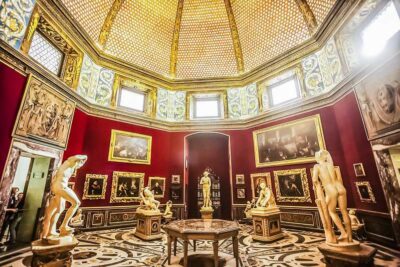 ★ 4.5Skip-The-Line Uffizi Gallery Timed Entry TicketFrom $3027,832 reviews
 ★ 4.2Uffizi Priority Ticket & Masterpieces Audio AppFrom $316,402 reviews
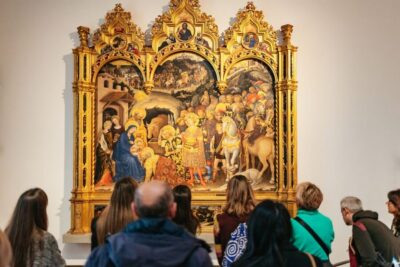 ★ 4.6Uffizi Gallery: Renaissance Masterpieces Guided TourFrom $886,070 reviews
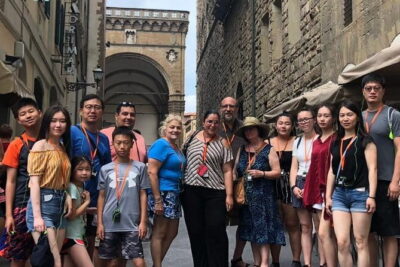 ★ 4.5Uffizi Gallery Small Group Tour with GuideFrom $764,923 reviews
 ★ 4.5Uffizi & Accademia Timed Entry: Small Group Duomo Walking TourFrom $503,630 reviews
 ★ 4.2Uffizi Gallery Timed Entry Ticket & Audio GuideFrom $332,794 reviews
 ★ 4.8Uffizi Gallery and Accademia Gallery Guided TourFrom $1402,028 reviews
 ★ 4.7Uffizi Gallery Small-Group Guided Tour with TicketFrom $762,003 reviews
Browse the lists this tour appears in