
Reviewed · PRIVATE
Journey Through Time in Volterra – Exclusive Private Tour
Volterra packs centuries into two hours. This exclusive private walk through the walled, mountaintop town lets you see how the same streets carried Etruscan power, Roman ambition, and medieval civic life. If you like history you can read with your eyes, this format is strong.
I especially like how the tour stays focused on the big public landmarks: Piazza dei Priori for the civic heart, then the key archaeological and religious stops that shape Volterra’s story. You’ll get a clear route, not a scattershot stroll.
One thing to consider: the tour doesn’t aim for interior visits. The Duomo area is a square visit only, and the Roman theater is explained from a viewpoint, so if you want to go inside buildings, you’ll want to plan that separately.
In This Review
- Key things to know before you go
- Volterra makes a smart stop for a private 2-hour history walk
- Where the tour starts and ends (and why that matters)
- Piazza dei Priori: Volterra’s civic heart and the Communal Age feel
- Porta all’Arco: the Etruscan city gate that still reads like a story
- The Duomo square (Santa Maria Assunta) and a surprising papal link
- Teatro Romano: Roman continuity from a viewpoint, plus those height views
- Luisa Quaglia’s style: why the tour feels intense in a good way
- Price and value: $248.05 for up to 10 people, guided start to finish
- Practical tips to make your two hours go smoothly
- Should you book this Volterra private tour?
- FAQ
- How long is the private tour in Volterra?
- How many people can be in a group?
- What language is the tour offered in?
- Where do I meet for the tour?
- Where does the tour end?
- What stops are included on the route?
- Are any admission tickets included or required?
- Does the tour include going inside the Duomo or the Roman theater?
- What’s included in the price?
- What happens if weather is poor?
Key things to know before you go
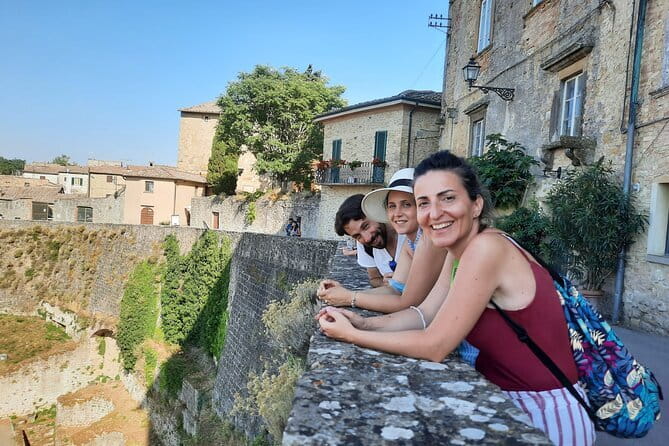
- Private guide for your group: Licensed guide Luisa Quaglia leads only your party (up to 10 people), so you can ask questions without barriers.
- Four landmark stops, tight timing: About 20 minutes at Piazza dei Priori, Porta all’Arco, the Duomo square, and Teatro Romano.
- Etruscan through Roman, then medieval life: You connect eras by moving from gate to civic center to religious square to theater views.
- Square-and-viewpoint sightseeing: No inside visits at the Duomo area and no entry into the theater.
- Short walk with panoramic moments: Volterra sits high, so the elevated position supports great orientation and city-wide views.
- Weather matters: The experience needs good weather, and plans may shift if conditions are poor.
Just your group: more private Florence tours
Volterra makes a smart stop for a private 2-hour history walk
Volterra is the kind of town where time feels physical. You don’t just hear about ancient civilizations; you stand near the places they used, then watch the setting change your perspective.
That’s why this tour works. It’s short enough to keep energy up, but structured enough that you’ll finish with a mental map. You start at the city’s core, then move outward to an Etruscan gate, the main religious square, and finally a Roman theater vantage point. When a tour is this compact, it’s easier to remember details.
And yes, Volterra is mountainous and walled. That matters because it shapes how you experience the streets and viewpoints. The guide’s explanations land better when you can connect them to what you’re seeing below and around you.
Where the tour starts and ends (and why that matters)
You’ll meet at Piazza Martiri della Libertà in Volterra, then finish at Teatro Romano. That “start-to-finish” flow is more than logistics; it helps you move in the same direction the town naturally unfolds.
Starting in a major public area also helps you get your bearings fast. From there, your guide can set the theme: this town was never just one era. Volterra layered Etruscan, Roman, and medieval elements on top of each other, and the walking route is designed to show those overlaps.
Ending at Teatro Romano is a nice payoff because it’s where the Roman story becomes visible in context—especially from an outside viewpoint. After the tour, you’re already positioned to keep exploring in that direction.
Piazza dei Priori: Volterra’s civic heart and the Communal Age feel
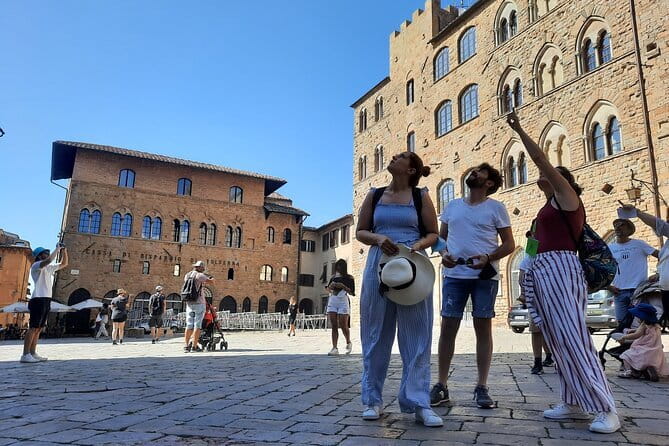
Your first stop is Piazza dei Priori, the center of Volterra. This square is overlooked by key buildings from the Communal Age, including Palazzo dei Priori and Palazzo Pretorio.
What I like about starting here is how quickly you understand the town’s “public engine.” You’re not beginning with a distant monument. You begin with the civic space where governance and community life would have played out.
It also works well for first-time visitors because the square gives you an easy visual anchor. Once you clock where the important buildings face, everything after starts to make more sense. Even with only about 20 minutes, you get a strong sense of scale and layout, which makes the rest of the walk easier to follow.
A practical note: squares are great for orientation, but they can also be exposed to wind. If you’re visiting when it’s cooler, bring a light layer even if Florence feels warm.
Porta all’Arco: the Etruscan city gate that still reads like a story
Next comes Porta all’Arco, one of Volterra’s standout Etruscan remains. The tour highlights it as a rare surviving example of an Etruscan city gate.
A city gate is never just a door in the wall. It’s a statement about defense, trade, and identity. Standing near Porta all’Arco is your first real moment of “this is ancient fabric.” The guide can connect what you’re seeing to how Volterra once functioned as a rich and powerful Etruscan city.
The value here is interpretation. You’re not just looking at an old structure; you’re getting a guided explanation of why this gate is unusual and what it reveals about the city’s layout and priorities.
Also, since the tour is private, you can linger a bit longer if something catches your eye. That flexibility is one of the reasons this experience scores so highly in feedback.
The Duomo square (Santa Maria Assunta) and a surprising papal link
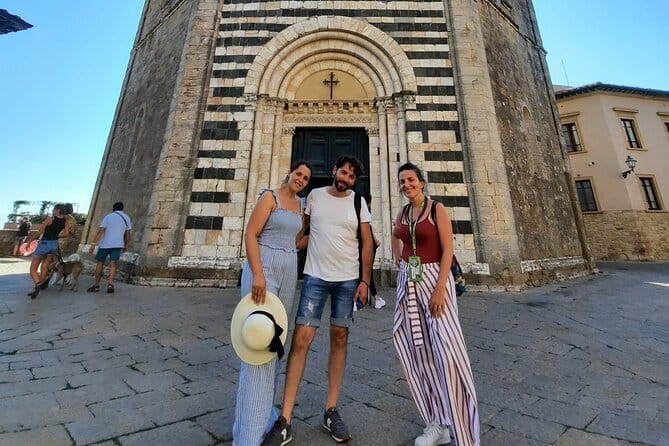
After the Etruscan gate, you move to the square around the Cattedrale di Santa Maria Assunta (Duomo di Volterra). The tour focuses on the open area and key religious buildings that frame it, including the cathedral, the baptistery, and the former hospital.
Here’s a detail worth filing away: Volterra is noted for being the birthplace of St. Linus, described as the second pope after St. Peter. That early evangelization helped form an early diocese, which later became influential and wealthy through the Middle Ages and beyond.
This stop is fascinating because it shows how religious importance can reshape a town. Even though you’re only visiting the square (not going inside), you still get the effect of a religious hub—architecture gathered around one central space.
One consideration: because the tour doesn’t include inside visits, you’ll get less of the interior wow-factor that some people expect from a Duomo stop. If you love interiors, plan a separate time to enter the buildings on your own. If you mainly want the bigger “why this matters” story, this version is a strong fit.
- The Best tour in Florence: Renaissance & Medici Tales – guided by a STORYTELLER
★ 5.0 · 12,316 reviews



Teatro Romano: Roman continuity from a viewpoint, plus those height views
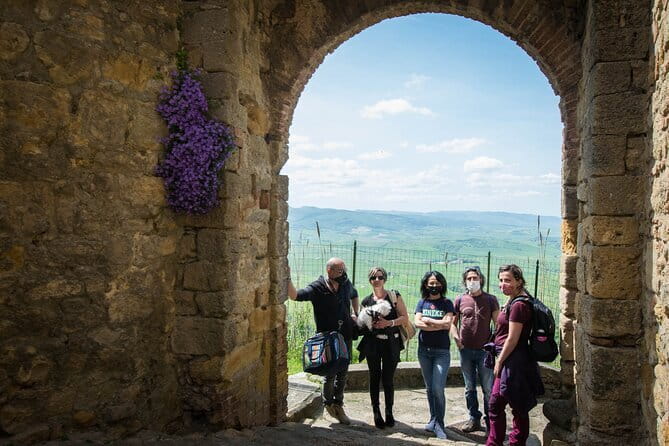
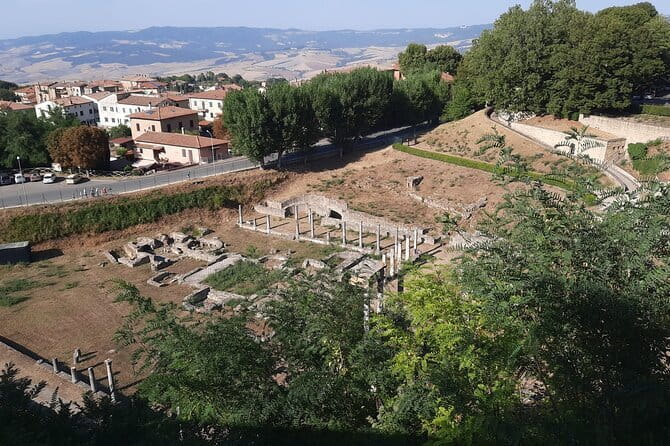
You end at Teatro Romano. Volterra stayed important after Roman conquest, and the tour leans on that idea by pointing out the theater as one of the key structures that still signals Roman influence.
The tour doesn’t go inside the theater. Instead, the guide explains it from a vantage point that allows its story to make sense without crossing the threshold. That approach can actually be more efficient for a short tour, because you’re not spending time coordinating entry or navigating separate ticket areas.
And because Volterra sits elevated, this stop also supports the best kind of photos: views that make the Roman-era discussion feel connected to the town around it. You get context—where the theater fits within Volterra—rather than treating it like a standalone relic.
If you’re the type who likes to understand how public spaces worked, this ending can be satisfying. You leave with a mental picture of what kind of building it was and why it mattered, even without stepping into it.
Luisa Quaglia’s style: why the tour feels intense in a good way
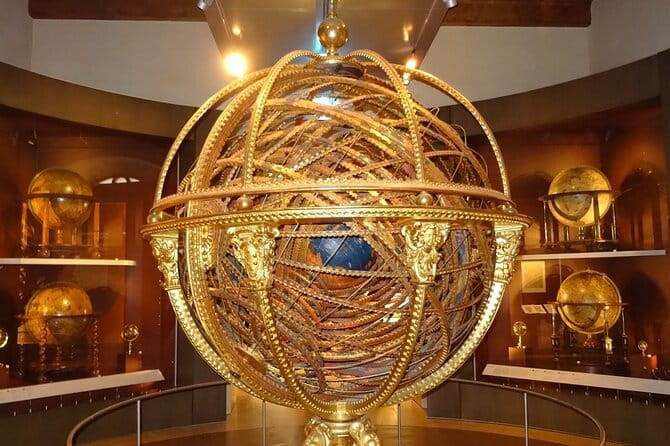
This experience is led by Luisa Quaglia, a professional and licensed tour guide. One standout theme in the guide’s approach is how she teaches through conversation and questions.
In the feedback tied to this tour, people describe an energetic, content-heavy experience—intense, but in the best way. The key is that Luisa connects topics and keeps answers flexible. She’s also described as using an explanation style that feels like teaching, a method that can help you keep up even when the timeline gets complicated.
There’s also mention of learning how Volterra’s alabaster becomes sculptures. The exact timing of that piece isn’t spelled out in the route details you’ll see ahead of time, but it aligns with the town’s identity. If you like practical art-and-craft context, this is the kind of story that can make a walk feel more alive than just dates and names.
If you prefer passive listening only, a question-friendly guide might not be your thing. But if you like to ask why something looks the way it does, you’ll likely enjoy this approach.
Price and value: $248.05 for up to 10 people, guided start to finish
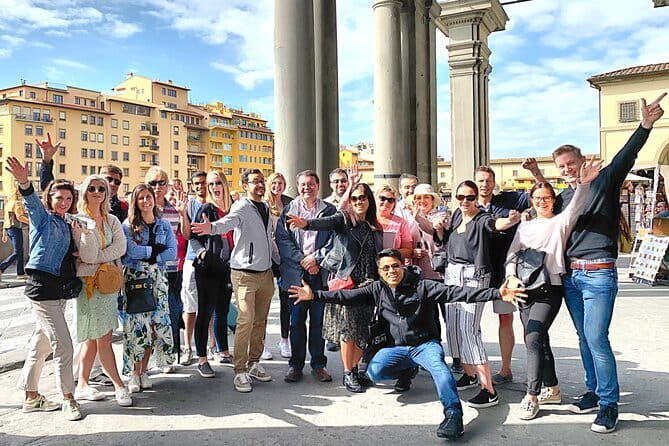
The price is $248.05 per group for up to 10 people, with a 2-hour duration (approx.). The included cost is a professional licensed guide—there’s no mention of transportation included.
So how do you judge value? You compare two things:
- the guide time (2 hours of structured, private interpretation)
- your group size (up to 10)
If you’re traveling as a couple, you’re essentially paying for a “private lesson” price. If you’re traveling with a small group of friends or family, the cost can feel more reasonable because you’re splitting a single guide fee.
Another value factor: the stops are described with admission ticket free for the listed sights. That means you’re not juggling extra paid entries during the tour window. You still benefit from the guided narrative and the route planning.
One more planning detail: this tour tends to be booked about 41 days in advance on average. If you’re traveling in a high-demand stretch, I’d treat it like a popular slot and not a last-minute decision.
Practical tips to make your two hours go smoothly
Here’s how to make the most of the structure.
Wear shoes you trust. Volterra’s old-town walking can involve uneven surfaces, and your time is limited to about two hours. Comfort matters so you can focus on the guide’s explanations instead of your feet.
Bring a small snack or water strategy, but keep it simple. Since the tour concentrates on four major stops, you don’t want a long break. If you plan a longer day afterward, eat before or after rather than during the tour.
Ask questions early. Because the guide’s teaching style is interactive, asking one good question at the start can steer how you experience the rest of the walk.
Weather is real here. The experience requires good weather, and if it’s canceled due to poor conditions, you should expect an alternative date or a full refund. Keep an eye on the forecast and have a flexible mindset.
Finally, use the mobile ticket. A mobile ticket helps keep things easy on arrival, especially if you’re meeting in a busy public space.
Should you book this Volterra private tour?
Book it if you want a focused Volterra overview that connects eras fast: Etruscan gate to civic square to the Duomo area to the Roman theater viewpoint. The private setup with Luisa Quaglia is ideal if your group likes asking questions and wants a guided narrative rather than a self-directed checklist.
Skip it (or plan extra time alongside it) if you strongly prioritize interior visits. This tour is square-and-viewpoint oriented, so the Duomo and Roman theater are explained from outside rather than entered.
If you can handle an “active but efficient” two hours and your timing lines up with good weather, it’s a smart way to understand Volterra without spending a whole day figuring out the order of things.
FAQ
How long is the private tour in Volterra?
It’s about 2 hours (approx.).
How many people can be in a group?
The private tour is priced per group for up to 10 people.
What language is the tour offered in?
The tour is offered in English.
Where do I meet for the tour?
The meeting point is Piazza Martiri della Libertà, 56048 Volterra PI, Italy.
Where does the tour end?
The tour ends at Teatro Romano, 56048 Volterra, Province of Pisa, Italy.
What stops are included on the route?
You’ll visit Piazza dei Priori, Porta all’Arco, the Cattedrale di Santa Maria Assunta Duomo square area (without entering), and the Teatro Romano viewpoint.
Are any admission tickets included or required?
The stops listed are marked as admission ticket free.
Does the tour include going inside the Duomo or the Roman theater?
No. The Duomo stop includes only the square, and the Roman theater is explained from a vantage point without going inside.
What’s included in the price?
A professional and licensed tour guide is included. Private transportation is not included.
What happens if weather is poor?
The experience requires good weather. If it’s canceled due to poor weather, you’ll be offered a different date or a full refund.
More Private Florence Tours
- Cinque Terre and Pisa Tower Tour from Florence Semi Private
★ 5.0 · 1,406 reviews - From Florence: Private Chianti Hills Tour with Tasting
★ 4.3 · 809 reviews - Private Self-Guided E-Bike Ride in Tuscany with Vineyard Visit
★ 5.0 · 775 reviews - Florence Private Transportation in Rickshaw
★ 5.0 · 730 reviews - Florence: Private Transport by Rickshaw
★ 5.0 · 659 reviews
More Florence Tours to Weigh Up
- The Best tour in Florence: Renaissance & Medici Tales – guided by a STORYTELLER
★ 5.0 · 12,316 reviews - The Best Tour in Florence: Renaissance and Medici Tales
★ 5.0 · 10,810 reviews - Florence: Chianti Wineries Tour with Wine Tasting
★ 4.5 · 10,071 reviews - Florence: Duomo Cathedral 60-Minute Guided Tour
★ 3.7 · 6,829 reviews - Florence: Hop-on Hop-off Bus Tour: 24, 48 or 72-Hour Ticket
★ 4.0 · 6,283 reviews
More Florence Tours We Have Reviewed
- Florence: Skip-The-Line Uffizi Gallery Timed Entry Ticket
★ 4.5 · 27,832 reviews - Tuscany Day Trip from Florence: Siena, San Gimignano, Pisa and Lunch at a Winery
★ 5.0 · 21,634 reviews - Florence: Timed Entry to Michelangelo’s David + Audio App
★ 4.6 · 19,496 reviews - Florence: Leonardo Interactive Museum Entry Ticket
★ 4.5 · 12,957 reviews - Florence: Michelangelo’s David Skip-the-Line Entry Ticket
★ 4.5 · 12,764 reviews
Fresh from our Florence review desk
- Small-Group Pasta Cooking Class and Market Tour in Florence★ 5.0 · 3 reviews
- Palatina Gallery and Pitti Guided Tour in Florence★ 5.0 · 3 reviews
- Tuscan Evening Tour: Fiat 500, 8:30 to 10 PM★ 5.0 · 3 reviews
- Journey into Art: Florence’s Accademia★ 4.5 · 3 reviews
- Paint and Drink Florentine Hills★ 5.0 · 3 reviews
- Truffle hunting and lunch experience, with Vinci and winery.★ 4.5 · 3 reviews
Private, compared.
 ★ 5.0Cinque Terre and Pisa Tower Tour from Florence Semi PrivateFrom $2851,406 reviews
 ★ 4.3From Florence: Private Chianti Hills Tour with TastingFrom $1,166809 reviews
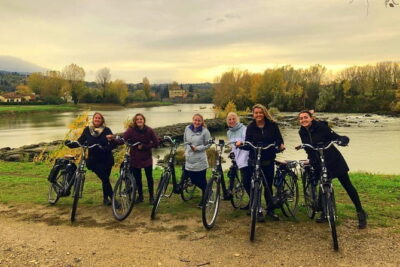 ★ 5.0Private Self-Guided E-Bike Ride in Tuscany with Vineyard VisitFrom $96775 reviews
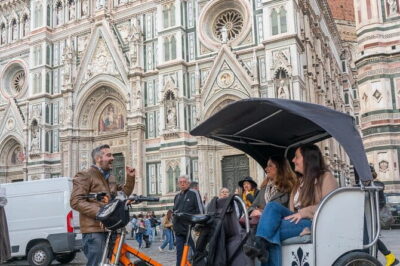 ★ 5.0Florence Private Transportation in RickshawFrom $47730 reviews
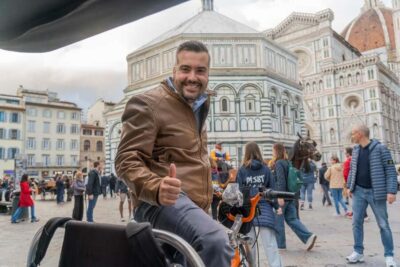 ★ 5.0Private Transport by RickshawFrom $46659 reviews
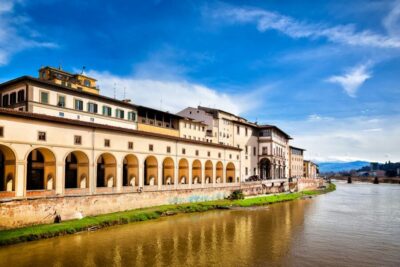 ★ 4.5Uffizi Gallery Discovery Private Guided TourFrom $206658 reviews
 ★ 4.5Florence Exclusive PRIVATE Food Tour with 6 or 10 TastingsFrom $137654 reviews
 ★ 4.5Uffizi Highlights, In-Depth Masterclass or Private TourFrom $82641 reviews