
Reviewed · MICHELANGELO'S DAVID TOURS
Michelangelo’s David & More: Early Entry Guided Tour
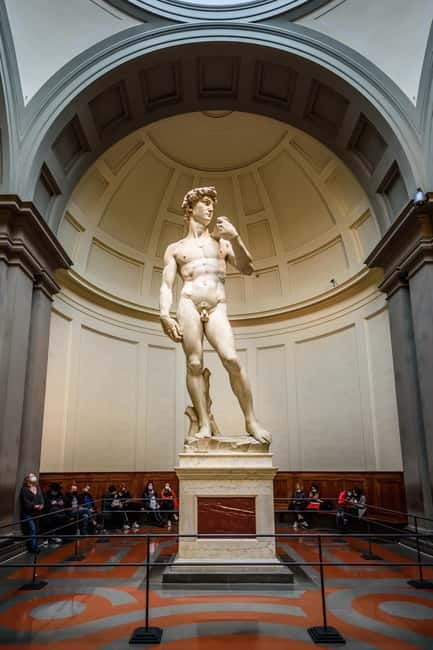
Want to see David before the crowd crush? This early-entry Accademia Gallery tour gives you a calm, guided way to enjoy Michelangelo’s masterpieces while the lines are still forming. I especially love getting close-up time with David and hearing the story behind it from a licensed guide like Anna, who stays focused and genuinely passionate. One thing to keep in mind: the experience is only about an hour, and the museum rules are strict—no big bags or backpacks—so plan light and arrive on time.
What makes this work well is the small-group format and the smooth on-the-ground logistics. The tour uses a live guide with a microphone/headset, and in practice it means you can actually hear the explanation without doing the usual Florence shoulder-to-shoulder eavesdropping. The only real drawback is that if you want to linger for a long time at every wall, a guided hour will feel a bit fast.
Beyond David, you’ll get time with the unfinished Prisoners sculptures, Giambologna’s Rape of the Sabine Women in plaster, and Renaissance paintings that put Michelangelo’s world into context. You’ll meet in Piazza delle Belle Arti, and the tour ends back at the same spot—simple, no extra wandering needed.
In This Review
- Key Things I’d Pay Attention To
- Early Entry at Accademia: Your Best Shot at David
- Meeting at Piazza Delle Belle Arti: Quick, Clear Start
- What Your 1-Hour Guided Tour Actually Covers
- David Up Close: Seeing More Than the Statue
- Michelangelo’s Unfinished Prisoners: The Power of the Almost-Done
- Giambologna’s Rape of the Sabine Women in Plaster
- Renaissance Paintings: Context for the Sculpture World
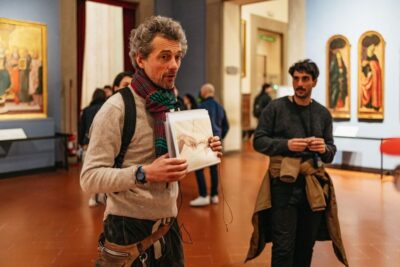
- The Guide Makes the Difference: Anna and Clear Audio
- Logistics and Rules: What You Need to Know Before You Go
- Price and Value: Is $78 for 1 Hour Fair?
- Who This Tour Is Best For (and Who Should Skip It)
- Should You Book This Early-Entry David Tour?
- FAQ
- Where does the tour start?
- How long is the Michelangelo’s David & More tour?
- What’s included in the price?
- Is the tour language English?
- What items are not allowed at the gallery?
- Do kids need ID?
Key Things I’d Pay Attention To
- Early-entry access to Accademia Gallery so you start your art time before the busiest rush
- Michelangelo’s David up close, with a guide helping you see details you’d otherwise miss
- Unfinished Prisoners sculptures, explained in a way that makes the process feel real
- Giambologna’s Sabine Women in plaster, a striking look at form and materials
- Renaissance paintings and Medici context, so David isn’t floating in isolation
- Headset microphone that keeps the guide’s voice clear during the walk-through
Every route to the David, compared
Early Entry at Accademia: Your Best Shot at David
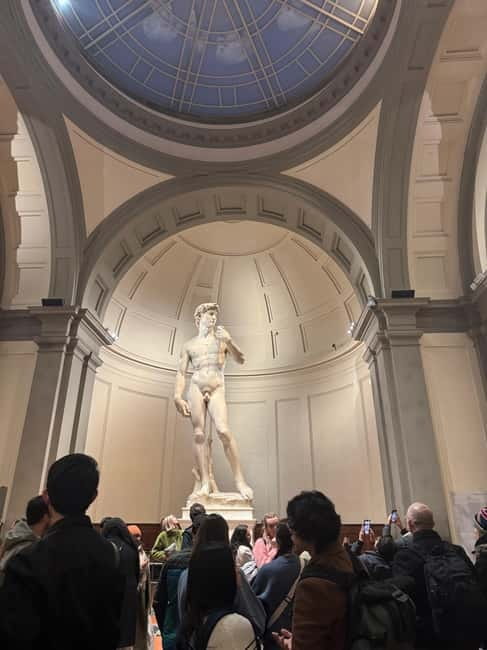
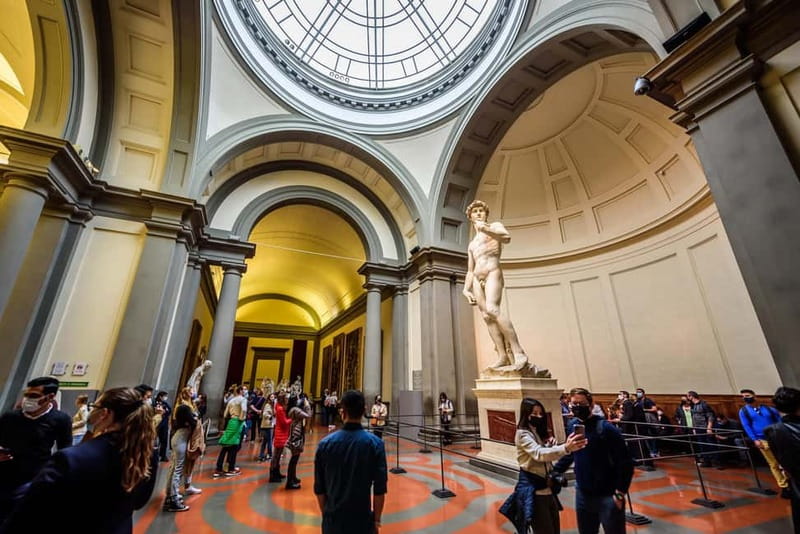
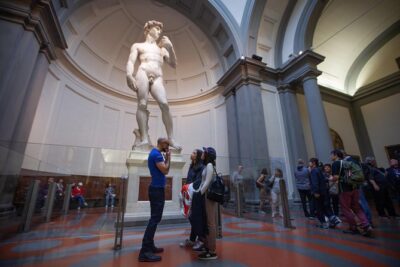
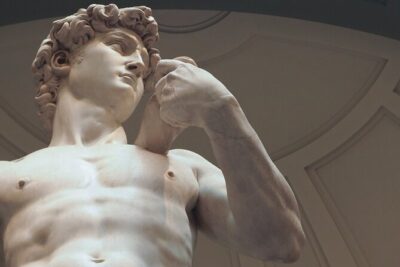
The big reason to book this kind of tour is simple: timing. Michelangelo’s David is famous for a reason, but that fame brings crowds. An early-entry schedule helps you experience the sculpture with less noise and fewer people trying to photograph around you.
You’re not just looking at a statue from far away. The guided flow is designed so you can take in the scale and the expression without constantly playing human traffic control. When you’re standing there, it hits harder than any museum postcard.
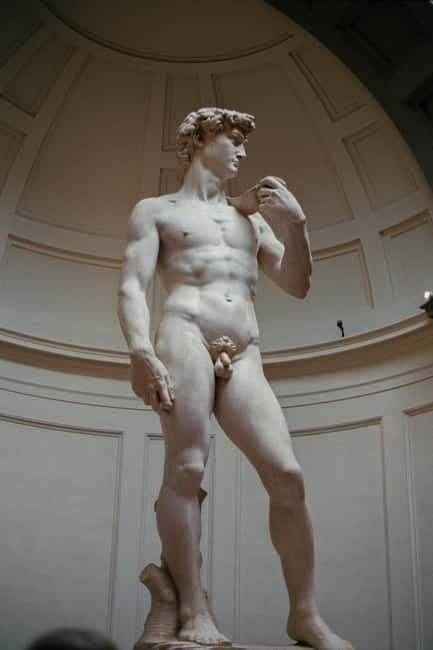
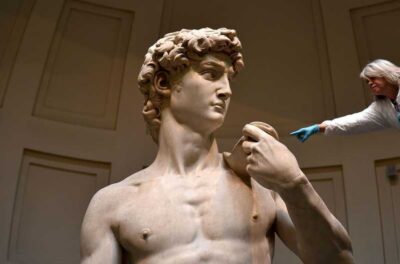
Even if you’ve seen David in photos, you’ll still likely be surprised by how “present” it feels in real life—especially when your guide points out what to notice first: the pose, the emotion, and how Michelangelo made stone feel like skin and breath. Starting early makes it easier to slow down.
Meeting at Piazza Delle Belle Arti: Quick, Clear Start
This tour begins at Piazza delle Belle Arti. Your guide meets you in front of the square with a sign for BellaVita tour—so you’re not stuck trying to decode a meetup spot.
Plan to arrive about 15 minutes early. It’s a small detail, but it matters because everyone is trying to get through the museum’s security and bag rules. When you start on time, the whole hour runs smoothly instead of feeling like you’re sprinting to your first stop.
It also helps that the tour ends back at the meeting point. No complicated “meet elsewhere for your next connection.” Just gather up your stuff and go.
What Your 1-Hour Guided Tour Actually Covers
This is a 1-hour, guided experience focused on the Accademia Gallery highlights. There are three main art stops in the pacing, but the guide keeps the story connected—so you don’t feel like you’re bouncing between unrelated rooms.
You’ll spend time with:
- Michelangelo’s David (the centerpiece)
- Michelangelo’s unfinished Prisoners sculptures
- Giambologna’s Rape of the Sabine Women in plaster
- Renaissance paintings for broader context
The value here is the structure. You get a sequence that helps you connect patronage (hello Medici influence), process (unfinished works), and materials (marble versus plaster) without having to build that understanding yourself at the gallery.
David Up Close: Seeing More Than the Statue
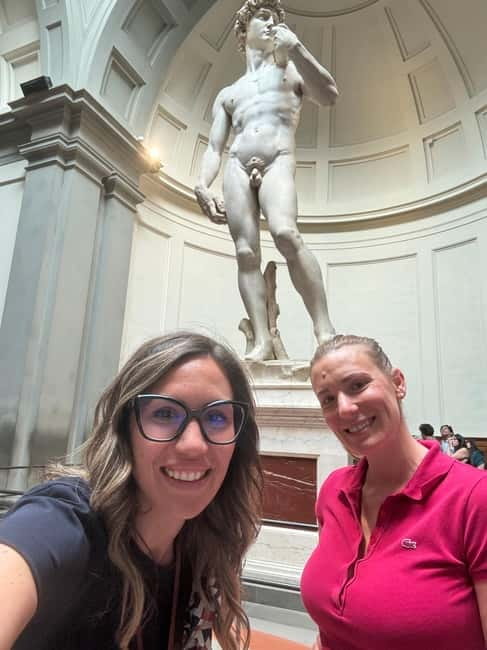
David is the anchor. The goal of the tour is to help you experience it as more than a famous face. With a guide in front of you, you’ll get a clearer sense of why this work changed art and how people in Michelangelo’s time would have read it.
I like that the tour keeps the focus on story and interpretation, not just facts. You’ll hear about Michelangelo’s genius and the Medici family’s influence, which is important because David wasn’t created in a vacuum. Understanding the patron context changes how you look at the work.
Also, early access helps. When you stand in front of David with fewer people crowding around, you can actually notice the details your eyes would otherwise skip. It’s the difference between seeing David and studying David for a few minutes.
If you’re the type who likes to take photos, you can still do it—but the tour encourages you to prioritize looking first. That’s how you get the real payoff.
Michelangelo’s Unfinished Prisoners: The Power of the Almost-Done
One of my favorite parts is the time spent with the unfinished Prisoners sculptures. “Unfinished” can sound like a letdown if you expect everything to be fully polished.
But here’s the point: unfinished works show you the thinking. You start to see the sculptor’s process—how the forms are taking shape and how ideas live inside the stone before they’re completed.
In a guided tour setting, you’ll get help reading what you see. Instead of feeling like you’re staring at incomplete slabs, you’ll understand why these works matter and what Michelangelo was working through. It’s a reminder that great art often includes decision-making, not just finished perfection.
And because this stop isn’t as crowded as David, it tends to feel more conversational. With the small-group format, you’re more likely to ask questions without feeling like you’re interrupting a swarm.
With a local guide, more of Florence to explore
- The Best tour in Florence: Renaissance & Medici Tales – guided by a STORYTELLER
★ 5.0 · 12,316 reviews

Giambologna’s Rape of the Sabine Women in Plaster
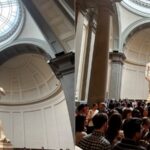
The tour also includes Giambologna’s Rape of the Sabine Women in plaster. Seeing a plaster work next to the bigger, more iconic figures is a useful reality check.
Plaster isn’t the same as final sculpture materials. You might notice how the medium affects the look and feel of the figures—how form reads slightly differently and how the surface interacts with light. That difference can make you pay closer attention to movement and anatomy.
This stop is valuable because it expands your view of Renaissance sculpture beyond one superstar moment. You start to connect how artists experimented, how drafts and models functioned, and how a gallery collection tells a bigger story than one masterpiece alone.
Renaissance Paintings: Context for the Sculpture World
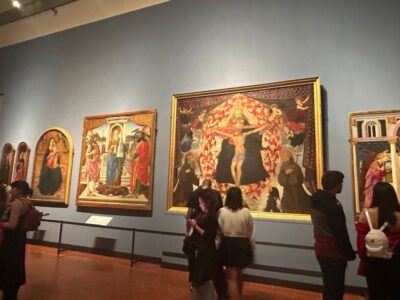
David is impossible to miss, but the tour doesn’t treat it like an isolated museum miracle. You’ll also see Renaissance paintings, and the guide ties them back to what’s happening around Michelangelo’s circle and the broader artistic age.
For me, this is where the tour starts to feel like a true “world” instead of a checklist. When you can connect the visual language across sculpture and painting, you understand better why Renaissance art looked the way it did.
You’ll also hear more about artists, patrons, and how Florence became a center for a new artistic push. The Medici connection helps tie the story together, so you come away with a stronger sense of why these works exist and who benefited from them.
If you like seeing how one art form echoes another, this extra context is a big reason the tour feels worth it—even if David is your main goal.
The Guide Makes the Difference: Anna and Clear Audio
The guide experience is a major part of why people rate this tour so highly. One review highlighted Anna as very informative and passionate, and that enthusiasm matters in a museum. It’s easy for a guide to recite names; it’s harder to make you care about why the art matters.
Another practical win: the tour uses a microphone and headset, and the audio has been reported as working without issues. In a gallery, sound can be tricky—people whisper, and walls swallow noise. When you can clearly hear your guide, you’ll follow the story better and spend less time trying to catch every word.
The small-group style also helps you feel less like a number in a line. You can ask questions and move at a pace that doesn’t feel frantic. That’s a quiet upgrade, but it changes the entire museum vibe.
Logistics and Rules: What You Need to Know Before You Go
You’ll want to pack smart for this tour because the gallery has clear restrictions. Here’s what you should plan around:
- No oversize luggage, no luggage or large bags
- No backpacks
- No flash photography
- Only water is allowed inside the museum
- Plastic bottles are not allowed
If you’re used to traveling light, this won’t be a problem. If you tend to carry a daypack full of extras, you’ll need to rethink that. Arrive early enough to manage any bag situation you’ll have before the museum entrance.
There’s also a kids rule: children under 18 need to show an ID (ID pictures are okay). If you’re traveling with a teen, bring the documentation. It avoids last-minute stress at check-in.
The good news is that these rules create a more controlled visit. The trade-off is you can’t treat the museum like a normal stroll with any kind of gear.
Price and Value: Is $78 for 1 Hour Fair?
$78 per person for a 1-hour guided tour isn’t a “cheap add-on,” but it can be good value for the right traveler. Here’s how I’d judge it.
First, you’re paying for early access, which helps you dodge the worst crowd friction. Second, you’re getting a licensed guide who provides context—especially around David and the Medici influence. Third, you also get the ticket-line skip, which saves time and reduces the feeling of spending your precious morning in queue mode.
If your goal is to see David and understand what you’re looking at, the guided format earns its keep. If you only want a quick glance and you’re the type who prefers reading on your own, you might decide the price isn’t worth it for a single hour.
So I’d frame it like this: you’re buying time and clarity more than you’re buying access.
Who This Tour Is Best For (and Who Should Skip It)
This works best for you if:
- You want to prioritize Michelangelo’s David as your first stop
- You like explanations that connect art to patrons and context
- You prefer a smaller, quieter experience
- You appreciate practical logistics like clear meeting points and audio support
It may not be ideal if you:
- Need to carry a lot of personal items in a backpack or large bag
- Want to spend hours at Accademia on your own terms
- Don’t care about story and interpretation—only the photo-op
Think of it as a focused art morning. It’s designed for attention, not wandering.
Should You Book This Early-Entry David Tour?
Yes, I’d book it if you want David to feel meaningful, not just famous. Early entry, skip-the-line convenience, and a clear guided story make this a strong way to start your day in Florence. The added stops—Prisoners, plaster sculpture, and Renaissance paintings—turn it into more than a one-statue visit.
Just be honest with yourself about the trade-offs. You’ll be traveling with museum rules in mind, and it’s an hour long. If you like structure and want help seeing what matters, you’ll be glad you paid for the guide.
If you tell me your travel dates and whether you’re carrying a daypack, I can help you decide if this format fits your style.
FAQ
Where does the tour start?
The tour meets in front of Piazza Delle Belle Arti. Look for the BellaVita tour sign. You should arrive about 15 minutes before the start.
How long is the Michelangelo’s David & More tour?
The tour lasts about 1 hour.
What’s included in the price?
The price includes a guided tour by a professional. Tickets are part of the experience, and the tour includes skipping the ticket line.
Is the tour language English?
Yes. The live tour guide is English.
What items are not allowed at the gallery?
Oversize luggage, luggage or large bags, backpacks, and flash photography are not allowed. Plastic bottles are also not allowed.
Do kids need ID?
Yes. Children and kids under 18 need to show an ID, and an ID picture is accepted.
More Florence Tours to Weigh Up
- The Best tour in Florence: Renaissance & Medici Tales – guided by a STORYTELLER
★ 5.0 · 12,316 reviews - The Best Tour in Florence: Renaissance and Medici Tales
★ 5.0 · 10,810 reviews - Florence: Chianti Wineries Tour with Wine Tasting
★ 4.5 · 10,071 reviews - Florence: Duomo Cathedral 60-Minute Guided Tour
★ 3.7 · 6,829 reviews - Florence: Hop-on Hop-off Bus Tour: 24, 48 or 72-Hour Ticket
★ 4.0 · 6,283 reviews
More Florence Tours We Have Reviewed
- Florence: Skip-The-Line Uffizi Gallery Timed Entry Ticket
★ 4.5 · 27,832 reviews - Tuscany Day Trip from Florence: Siena, San Gimignano, Pisa and Lunch at a Winery
★ 5.0 · 21,634 reviews - Florence: Timed Entry to Michelangelo’s David + Audio App
★ 4.6 · 19,496 reviews - Florence: Leonardo Interactive Museum Entry Ticket
★ 4.5 · 12,957 reviews - Florence: Michelangelo’s David Skip-the-Line Entry Ticket
★ 4.5 · 12,764 reviews
Standing Before David, Again
- Florence: Timed Entry to Michelangelo’s David + Audio App
★ 4.6 · 19,496 reviews - Florence: Michelangelo’s David Skip-the-Line Entry Ticket
★ 4.5 · 12,764 reviews - Florence: Timed Entry Ticket to Michelangelo’s David & eBook
★ 4.6 · 4,049 reviews - Florence: Art Tour, Accademia Gallery and David
★ 4.5 · 2,407 reviews - Michelangelo’s David, Accademia & Uffizi Small Group Tour
★ 4.5 · 1,986 reviews
Fresh from our Florence review desk
- Small-Group Pasta Cooking Class and Market Tour in Florence★ 5.0 · 3 reviews
- Palatina Gallery and Pitti Guided Tour in Florence★ 5.0 · 3 reviews
- Tuscan Evening Tour: Fiat 500, 8:30 to 10 PM★ 5.0 · 3 reviews
- Journey into Art: Florence’s Accademia★ 4.5 · 3 reviews
- Paint and Drink Florentine Hills★ 5.0 · 3 reviews
- Truffle hunting and lunch experience, with Vinci and winery.★ 4.5 · 3 reviews
Michelangelo's David Tours, compared.
 ★ 4.6Timed Entry to Michelangelo’s David + Audio AppFrom $3319,496 reviews
 ★ 4.5Michelangelo’s David Skip-the-Line Entry TicketFrom $4512,764 reviews
 ★ 4.6Timed Entry Ticket to Michelangelo’s David & eBookFrom $374,049 reviews
 ★ 4.5Art Tour, Accademia Gallery and DavidFrom $582,407 reviews
 ★ 4.5Michelangelo’s David, Accademia & Uffizi Small Group TourFrom $471,986 reviews
 ★ 4.6Accademia Gallery & David Skip-the-Line TicketFrom $411,905 reviews
 ★ 4.3Michelangelo’s David Entrance Ticket and Audio AppFrom $381,901 reviews
 ★ 4.5David & Accademia Guided Tour with Time Entry TicketFrom $371,705 reviews
Browse the lists this tour appears in