
Reviewed · FLORENCE
Museo di San Marco in Florence: Beato Angelico, Savonarola and the Medicis
Florence can feel like it’s all about the big-ticket sights. San Marco is different: it’s a whole Renaissance world designed for prayer, study, and reform. You get to walk through the church and the quiet spaces of the convent, with a guide turning the art and stories into something you can picture (not just read).
I particularly love how the tour makes Fra Angelico feel human. You’re not only seeing paintings and frescoes; you’re also learning how they fit into the daily life of the monastery. Second, I like that you visit multiple parts of the complex in one go, including the cloisters and the areas tied to famous names like Cosimo de’ Medici and Girolamo Savonarola.
One possible drawback: this experience is very time-bound. If you’re coming on a day when opening hours have changed, you could waste precious time. I’d treat it as a “confirm hours before you go” stop, especially if your Florence schedule is tight.
In This Review
- Key things you should know
- Why San Marco isn’t like other Florence museum stops
- Two hours inside the complex: what the guide actually helps you see
- Entering the church: where Fra Angelico’s art gets a proper frame
- The convent and friars’ cells: the story becomes physical
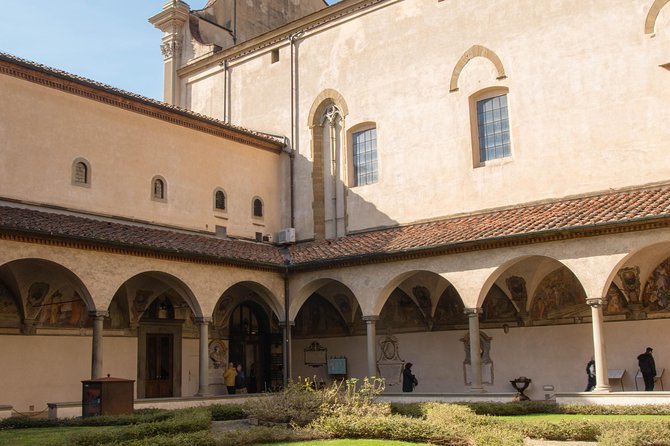
- The cloisters: architecture that explains the monastery’s rhythm
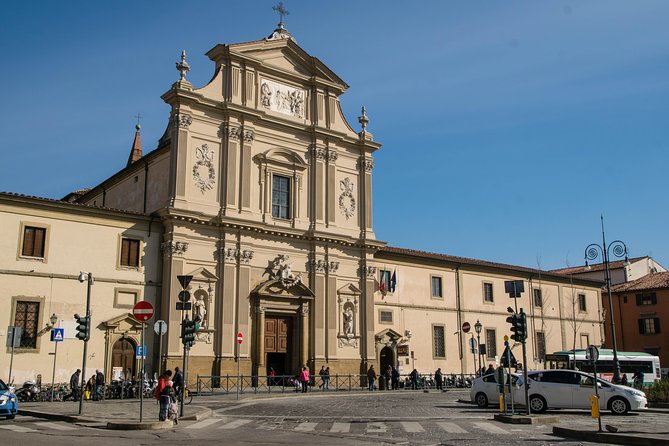
- The facade: Renaissance power you can read in the design
- The Renaissance Library of Pope Leo X: study as a form of devotion
- Guide quality matters: Katherine and Suzanna as examples of what you want
- Price and value: what you’re really paying for at $189.18
- Logistics that actually affect your day
- Who should book this tour
- Should you book Museo di San Marco with this private guided format?
- FAQ
- Where does the tour start and end?
- How long is the Museo di San Marco tour?
- Is the entry ticket included?
- Is this a private tour?
- What languages is the tour offered in?
- Do I need hotel pickup?
- Is it accessible and easy to reach with public transportation?
- What’s the cancellation window?
Key things you should know
- Skip the long-line hassle with pre-booked entrance included
- Private tour format means your pace and questions stay in your hands
- You cover five distinct areas: church, convent, facade, first cloister, second cloister
- Savonarola’s presence is part of the story, not just a name on a wall
- Medici design context matters: commissioned by Cosimo de’ Medici, with architecture by Michelozzo
- Guide clarity can make or break it (one guide I saw had strong English, another less so)
Still comparing? These are the other Florence tours travellers book most.


Why San Marco isn’t like other Florence museum stops
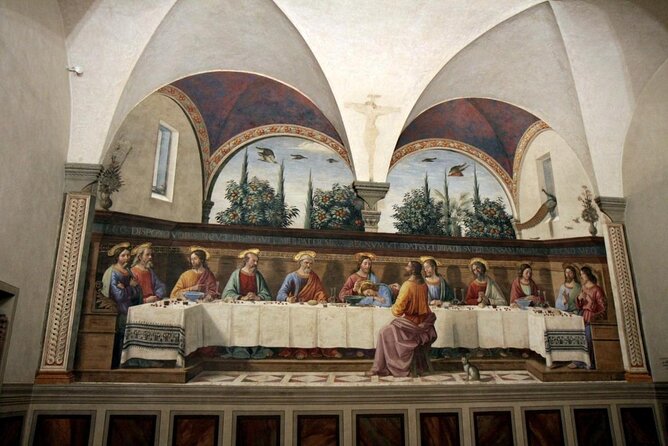
San Marco is one of those places where Florence’s famous names feel close-up instead of distant. The complex was commissioned by Cosimo de’ Medici, and the architecture was shaped in part by Michelozzo. That matters because it explains the vibe of the site: this wasn’t built just to impress. It was built to support a way of life.
What you do in the tour helps you notice things you’d miss on your own. You’ll connect Fra Angelico’s artwork to the spaces meant for contemplation. You’ll also hear how Girolamo Savonarola fits into the same setting, including time tied to his cells. The result is that the art isn’t floating in space. It has a room, a purpose, and a schedule.
And because this is a private tour, you can linger where you want. If you’re the type who freezes in front of a fresco and starts reading every wall, you’ll appreciate having that time protected.
Two hours inside the complex: what the guide actually helps you see
The tour runs about 2 hours. You’ll meet at Piazza San Marco and then enter the Museo di San Marco complex with a guide. From there, the visit is organized around five parts: the church, convent, facade, and the first and second cloisters.
The clever part is that these areas change the mood. The church gives you a public spiritual space. The convent and cloisters shift you into quieter, more enclosed life. The facade and the outer architecture put the site in context with Renaissance design and Medici power.
Here’s how I’d think about each segment so you can decide what to pay attention to.
Entering the church: where Fra Angelico’s art gets a proper frame
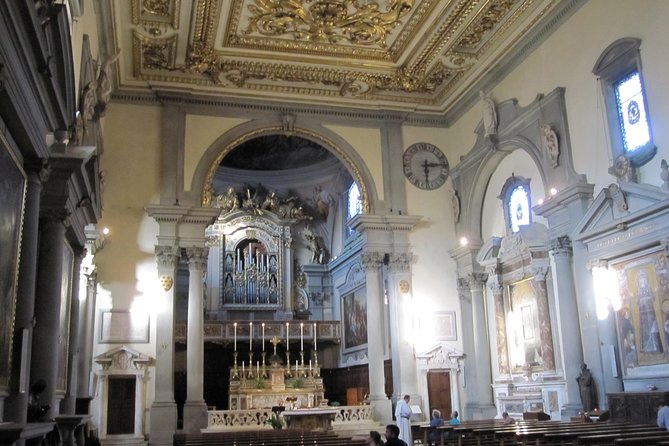
The church is the most straightforward “wow” moment, because it’s built for seeing. You’ll spend time with Fra Angelico’s paintings and frescoes, and a good guide helps you read them as more than pretty religious scenes.
The key is that Fra Angelico’s work isn’t meant to be rushed. The monastery setting encourages slow looking, and the tour structure gives you that slow looking with context. The guide explains what you’re seeing and how it connects to the monastic world around it.
If you’re used to Florence’s cathedral-scale chaos—crowds, lines, and speed—San Marco feels like a breather. In a good way. You can actually stand still and let the imagery work on you.
The convent and friars’ cells: the story becomes physical
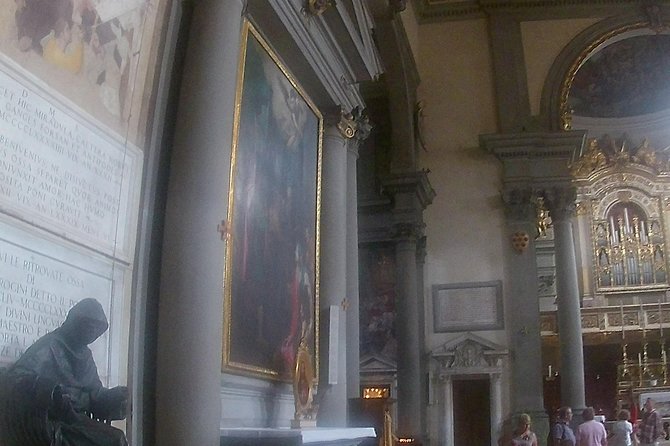
The convent areas are where the tour turns from “museum visit” into something more personal. You’re not only viewing history; you’re walking through the kind of spaces monks lived in.
You’ll see the cells of the friars, and this is where the name Girolamo Savonarola becomes more than a famous quote. The tour includes time tied to Savonarola’s cells, so you get a sense of how reform and spirituality played out in real rooms, not just in books.
I also like that the guide ties these spaces back to Fra Angelico. It helps you understand why his art has that calm focus. When you see the environment it came from, it becomes easier to believe that the paintings weren’t just commissioned. They were part of a working spiritual rhythm.
The cloisters: architecture that explains the monastery’s rhythm
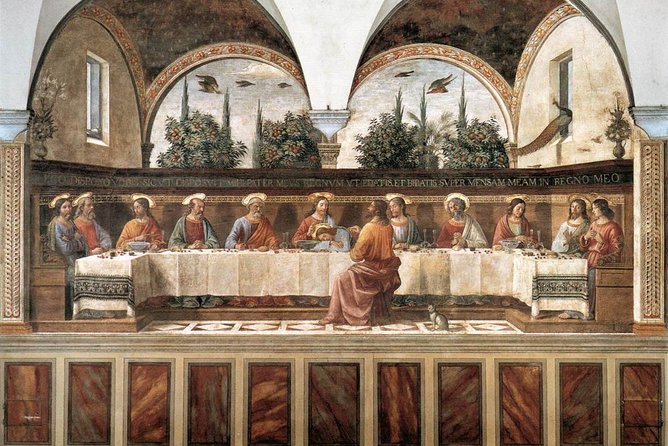
The cloisters are the connective tissue of San Marco. The tour takes you through both the first and second cloisters, and that’s important. You’ll start to notice how the monastery flows—how movement between spaces supports contemplation, routine, and study.
Cloisters often look similar if you’re not paying attention. A guide keeps you from doing that. They help you see how each part functions and how the complex was designed to support monastery life.
This is one of those moments where you’ll feel the value of a private guide. You can ask questions like why a space is shaped the way it is, or how the layout supports quiet time. Without a guide, you can still enjoy it, but you’ll likely miss the “why.”
- The Best tour in Florence: Renaissance & Medici Tales – guided by a STORYTELLER
★ 5.0 · 12,316 reviews




The facade: Renaissance power you can read in the design
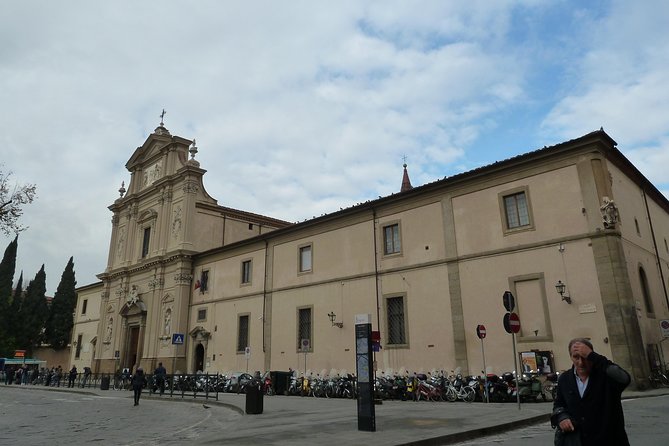
You also visit the facade, which gives you a more public-facing view of the complex’s identity. Since Cosimo de’ Medici commissioned San Marco, the site carries Medici-era influence. The facade helps you sense that this wasn’t an isolated retreat. It was part of Florence’s Renaissance story.
If you like architecture, this is a good add-on. It won’t take over the tour, but it changes your perspective. You’ll go from thinking about rooms and paintings to understanding how the monastery’s presence was shaped by the people funding it and the architect involved.
It’s also a nice contrast after the quieter interior spaces. You feel the balance between public statement and private practice.
The Renaissance Library of Pope Leo X: study as a form of devotion
One of the standouts in the tour experience is the Renaissance Library of the Pope Leo X. This is where San Marco expands beyond “art and saints” and into “ideas and learning.”
The library adds weight to the story that this place wasn’t only about prayer. It was also about study. And when you connect that to what you’ve already seen—cells, cloisters, and art—you start to understand the monastery as a full ecosystem.
For me, this is where the visit becomes intellectually satisfying, not just visually impressive. If you enjoy museums where you leave thinking, not just photographing, you’ll appreciate this part.
Guide quality matters: Katherine and Suzanna as examples of what you want
In a private tour, the guide isn’t a background element. They’re the difference between seeing and understanding.
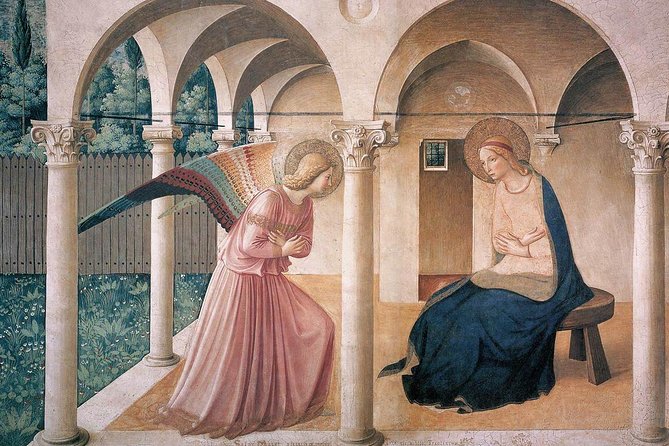
I’ve seen how guides like Katherine can make Fra Angelico’s works feel alive by explaining them in a way that clicks. You don’t just get facts. You get a thread that ties the paintings to the monastic setting.
I’ve also encountered strong performance from guides like Suzanna, who comes across as pleasant and genuinely instructional. The practical lesson for you: if English clarity matters, this is a tour where you’ll feel it fast. If your group needs very clear English, it’s worth keeping an eye on that expectation when booking.
Price and value: what you’re really paying for at $189.18
At $189.18 per person, this isn’t the cheapest thing you can do in Florence. But you’re paying for several value boosters in one package.
First, it’s a private tour. That alone changes the math. You’re paying to have the guide adjust to your pace, not the other way around.
Second, entrance is included, and it’s pre-booked. If you’ve ever lost time to lines, you know why this matters. Less waiting means more of the time you paid for actually goes to the experience.
Third, you get a guide who focuses on context. Instead of treating the site like a checklist of rooms, you’ll understand how the church, convent, cloisters, facade, and library connect. That context is what makes the ticket feel worth it.
If you’re traveling with 2–4 people and want more than a quick museum sweep, this price can feel fair. If you’re traveling alone and you’re fine self-guiding, you might question whether you need a private format. But for many visitors, San Marco is one of those places where having a guide pays off quickly.
Logistics that actually affect your day
You meet at Piazza San Marco, Firenze FI, Italy. The activity ends back at the meeting point. There’s no hotel pickup, so you’ll want to plan your travel to the piazza on your own.
The tour is offered in English, and there’s a mobile ticket. Service animals are allowed, and the tour notes that most travelers can participate and it’s near public transportation.
One more practical note: check opening hours before you go. There’s evidence of at least one situation where the museum status or hours changed on a Monday. If your travel dates include Mondays or you’re on a tight schedule, don’t assume the website and the tour timing will automatically match. Verify before you set out.
Who should book this tour
You’ll likely love this experience if:
- You care about Fra Angelico, especially if you want context for the art
- You want San Marco to feel like a story with characters: Medici, Savonarola, and Angelico
- You prefer calmer Florence stops over the biggest crowds
- You like guided interpretation more than reading placards at your own speed
You might skip it if:
- You’re happy to go at your own pace and read everything yourself
- You’re only in Florence for a “grab the highlights” day and can’t afford a 2-hour commitment
Should you book Museo di San Marco with this private guided format?
Yes, I’d book it if San Marco is on your must-see list and you want real understanding, not just photos. The mix of church + convent + two cloisters + facade + the Pope Leo X library gives you more than a single “famous room” visit. And the included, pre-booked entry helps protect your time.
My main caution is your schedule. Double-check opening hours, particularly if you’re visiting on a day that might have changes. If your plan depends on that entry working, build in a small flexibility buffer.
If you want a Florence stop where the art, architecture, and ideas all talk to each other, this is a strong choice.
FAQ
Where does the tour start and end?
The tour starts at Piazza San Marco, Firenze FI, Italy and ends back at the same meeting point.
How long is the Museo di San Marco tour?
It runs about 2 hours.
Is the entry ticket included?
Yes. Entrance Ticket Museo San Marco is included, and the tickets are pre-booked.
Is this a private tour?
Yes. It’s listed as a private tour/activity, so only your group participates.
What languages is the tour offered in?
The tour is offered in English.
Do I need hotel pickup?
No. Hotel pickup and drop-off are not included.
Is it accessible and easy to reach with public transportation?
It’s near public transportation. Service animals are allowed, and most travelers can participate based on the tour’s notes.
What’s the cancellation window?
You can cancel up to 24 hours in advance for a full refund.
If you tell me your travel dates (and whether you’re visiting on a Monday), I can help you think through timing so San Marco doesn’t get squeezed out.
More Florence Tours We Have Reviewed
- Florence: Skip-The-Line Uffizi Gallery Timed Entry Ticket
★ 4.5 · 27,832 reviews - Tuscany Day Trip from Florence: Siena, San Gimignano, Pisa and Lunch at a Winery
★ 5.0 · 21,634 reviews - Florence: Timed Entry to Michelangelo’s David + Audio App
★ 4.6 · 19,496 reviews - Florence: Leonardo Interactive Museum Entry Ticket
★ 4.5 · 12,957 reviews - Florence: Michelangelo’s David Skip-the-Line Entry Ticket
★ 4.5 · 12,764 reviews
Fresh from our Florence review desk
- Small-Group Pasta Cooking Class and Market Tour in Florence★ 5.0 · 3 reviews
- Palatina Gallery and Pitti Guided Tour in Florence★ 5.0 · 3 reviews
- Tuscan Evening Tour: Fiat 500, 8:30 to 10 PM★ 5.0 · 3 reviews
- Journey into Art: Florence’s Accademia★ 4.5 · 3 reviews
- Paint and Drink Florentine Hills★ 5.0 · 3 reviews
- Truffle hunting and lunch experience, with Vinci and winery.★ 4.5 · 3 reviews