
Reviewed · PITTI PALACE & BOBOLI GARDENS TOURS
Pitti Palace & Boboli gardens tour with a Local Guide
Medici power, served in palaces and gardens. This tour strings together Palazzo Pitti’s best interiors with the famous Boboli Gardens, and you start by crossing the Arno into the world of Florentine courts. I like how it’s not just museum-walking. The guide helps you connect who lived here, what they collected, and why the rooms feel the way they do.
I especially love the Palatine Gallery experience: the art is arranged in that older “gallery style,” so you’re not just speed-reading masterpieces in chronological order. Second, I like that your ticket doesn’t stop at paintings—you also get into the Treasury of the Grand Dukes (silver and jewels) plus the Museum of Costume and Fashion. One consideration: there can be a lot of steps, so plan for stairs and don’t treat this like a gentle stroll.
In This Review
- Key points before you go
- Crossing the Arno to Palazzo Pitti: Set the Medici Scene
- Palatine Gallery at Palazzo Pitti: Why the Hanging Style Feels Different
- Tesoro dei Granduchi: Silver, Semi-Precious Stones, and Court Luxury
- Galleria d’Arte Moderna + Fashion and Costume: When Pitti Changes Gears
- Boboli Gardens: Renaissance Garden Planning Meets Real Views
- Stairs, Time, and Earphones: How to Prepare
- Price and Value: Is $234.80 Worth It?
- Who Should Book This Palazzo Pitti and Boboli Tour?
- Should you book this tour?
- FAQ
- What is the duration of the Palazzo Pitti and Boboli Gardens tour?
- How much does the tour cost?
- Is the tour offered in English?
- What’s the maximum group size?
- What’s included in the ticket price?
- Does the tour include Boboli Gardens admission and guided time?
- Is there a lot of walking or stairs?
- FAQ
- Can I cancel for a full refund?
- What is the latest time I can cancel?
Key points before you go
- Small group (max 9) keeps the tour human, with time to ask questions
- Earphones included help you catch the guide’s explanations without craning your neck
- Palatine Gallery is guided, in the opulent rooms Medici and later families actually used
- Treasury + modern art + costume means you see multiple “faces” of Pitti, not one theme only
- Boboli Gardens add the payoff with fountains, statues, grottos, and big Florence views
Pitti Palace and Boboli, a little further
Crossing the Arno to Palazzo Pitti: Set the Medici Scene
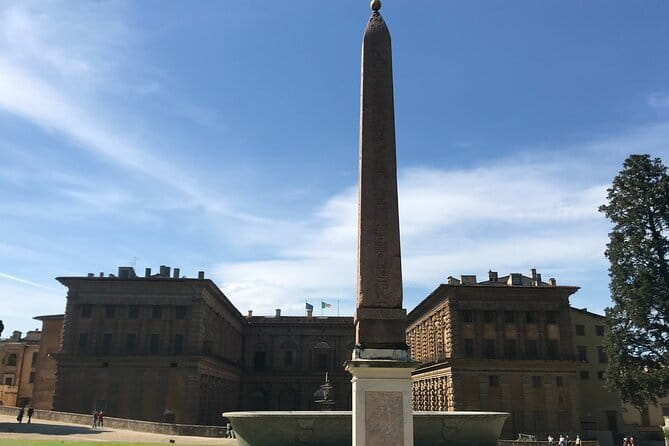
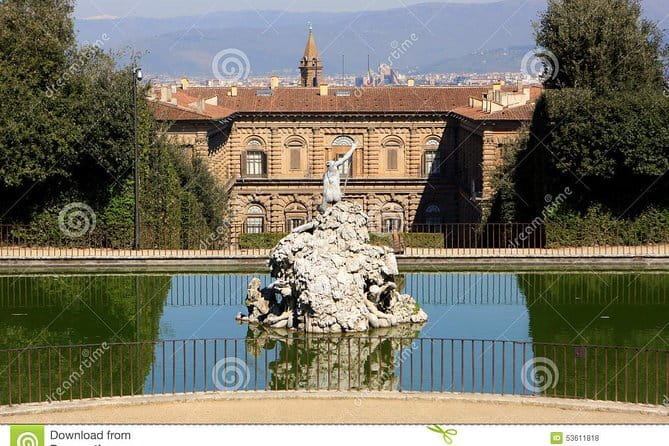
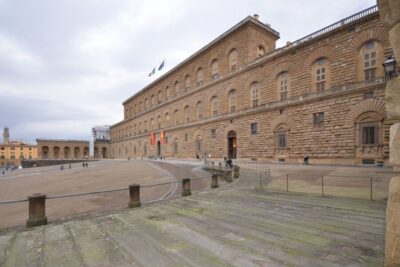
You meet at Palazzo Pitti, right in the Piazza de’ Pitti area. Even though Palazzo Pitti is the star, the route helps you feel the geography of Florence. You effectively shift across the Arno from the classic postcard center into a more “palace and power” zone, where the city feels wider and more planned.
Then the tour gets practical fast. You’re in a small group, and the guide uses earphones, so you can stay focused on the art instead of hunting for the loudest voice in the room. That matters inside Pitti, where sound bounces around and people naturally form little clumps. With earphones, you can keep moving at a steady pace while still hearing the story.
The bigger value here is context. Palazzo Pitti isn’t one museum. It’s a sequence of eras layered into the same building. The guide’s job is to make that layering feel logical: Medici residence first, then later families and royal use. Once you understand that, each room makes more sense—why certain collections sit where they do and why the palace feels so “theatrical,” even when you’re just standing still.
If you get a guide who threads the narrative well, you’ll walk out thinking you saw a coherent story, not a checklist.
Palatine Gallery at Palazzo Pitti: Why the Hanging Style Feels Different
The Palatine Gallery is the moment when this tour earns its place near the top of Florence lists. You’re in the state rooms that served as residence for the Medici, then the Lorraine family, and later the Savoy. So you’re not just looking at paintings. You’re looking at paintings inside the rooms that shaped court taste.
What I love here is the way the guide frames the gallery’s layout. The paintings aren’t arranged in strict chronological order. They’re grouped in the 17th-century “gallery style,” aiming for visual harmony and decorative effect. That means the experience changes. You start noticing how artists and subjects “match” each other from room to room—light with color, drama with softness, one painter’s mood balancing another.
Expect major names. You might see works connected to Raphael, Titian, Rubens, Caravaggio, Andrea del Sarto, and Pietro da Cortona, including the ceiling frescoes by da Cortona. Those big names are great, but the real win is how the guide helps you look. You’ll catch details you’d miss if you were simply reading wall labels: why a scene would appeal to a court, how patronage connected to power, and why the rooms themselves matter as a viewing tool.
Time saver tip: when you enter each room, take 10 seconds to orient yourself before you start drifting. In a gallery this curated, your first “scan” sets you up to enjoy the rest instead of feeling rushed.
Tesoro dei Granduchi: Silver, Semi-Precious Stones, and Court Luxury
On the ground floor, the Treasury of the Grand Dukes can feel like a sudden glow-up. Once called the Museum of Silverware, it’s not subtle: jewels, silver objects, vases in semi-precious stones, and rock crystal items. It’s the kind of collection that makes you stop mid-sentence because your brain goes from art mode to “how did they make this?” mode.
This stop also has a nice story layer. The richly frescoed rooms date from the 17th century and were once part of the Medici’s summer apartments. So even though you’re surrounded by luxury objects, you’re also in spaces designed for life—stylish, cooler, and made for comfort during warmer months.
A guided visit helps because the guide doesn’t treat the treasury like a shiny photo op. They connect materials to status and to taste. Silver isn’t just silver here. It’s a signal: who could afford it, what kind of refinement mattered, and how display worked inside a court.
Practical heads-up: this stop is short (around 20 minutes). That’s good news for your stamina, but it also means you should pick one or two pieces to focus on rather than trying to see everything. If you chase every item, you’ll leave with a blur of sparkle.
Galleria d’Arte Moderna + Fashion and Costume: When Pitti Changes Gears

Pitti isn’t frozen in Renaissance time. Up on the top floor is the Gallery of Modern Art, which charts Italian art from Neoclassicism to the early 20th century. The historical setting matters. You’re in rooms that were royal apartments for the Lorraine and later the Savoy, which makes the transition from older court taste to newer artistic movements feel less like whiplash and more like evolution.
You’ll see artists connected to major trends in Italian painting and sculpture, including Canova and Hayez, and then names tied to the Macchiaioli movement (a Florentine precursor to Impressionism), like Fattori and Signorini. Even if you aren’t an art-history buff, this stop is useful because it gives you a timeline anchored to place. You can’t help but notice how styles shift—light, realism, and the “spot” approach of Macchiaioli work.
Then comes a totally different kind of history: the Museo della Moda e del Costume in the Palazzina della Meridiana. It’s the only museum in Italy dedicated entirely to the history of fashion and dress. That alone makes this stop feel like a smart add-on, not a filler.
You’ll see garments, accessories, and theatrical costumes from the 18th century to today, drawn from fashion-house pieces, historical collections, and royal wardrobes. The guide can help you connect fashion to power and identity—how clothing communicates rank, role, and even political taste. You also get a look at Medici-related dresses and work by Italian and international contemporary designers, depending on what’s on display during your visit.
If you’re the type who likes museum variety: this is where the tour becomes more memorable. You’re not stuck in one aesthetic bubble. You get court painting, then object luxury, then changing art styles, then the story of how people dressed to be seen.
Boboli Gardens: Renaissance Garden Planning Meets Real Views

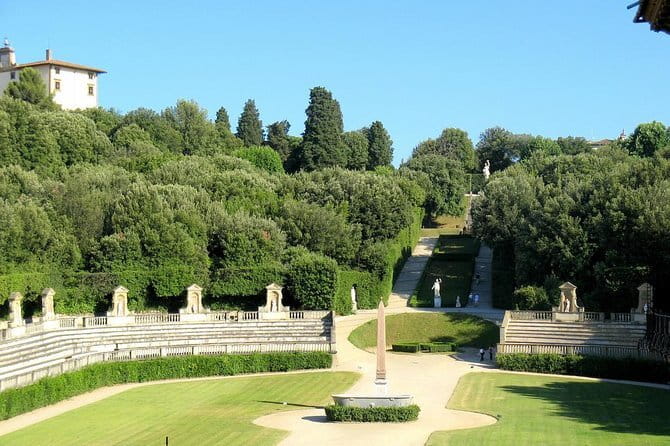
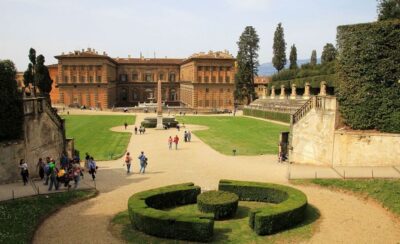
Then you step into the open air. Boboli Gardens sit behind Palazzo Pitti and are one of Europe’s best-known historic gardens. These are Italian Renaissance gardens at their confident best, and yes—Boboli influenced later landscaping ideas, including what people associate with Versailles.
What makes Boboli work as a tour stop is the mix of structure and surprise. You’ll walk tree-lined avenues, see fountains and statues, pass through grottos, and end up on panoramic terraces above Florence. The guide helps you see the “why” behind the layout: how geometry and sightlines create power and pleasure at the same time.
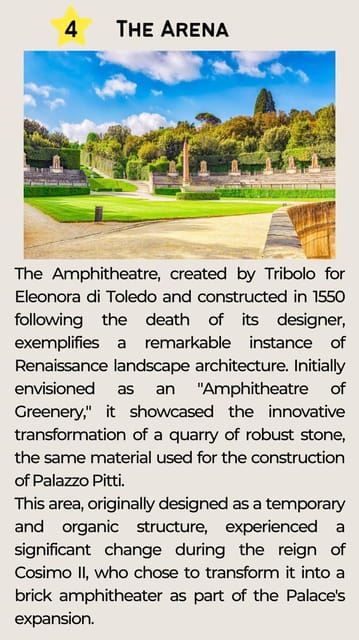
Key spots include the Amphitheatre, the Fountain of Neptune, and the Buontalenti Grotto. Even if you don’t know the names, the spaces have distinct moods. The Amphitheatre feels like a stage. The fountains and statues give you a myth-and-mastery feeling. The terraces let the city show off, which is when your photos start looking less like tourist snapshots and more like actual travel memories.
This portion is about 30 minutes, so it’s not a long nature walk. Treat it like a curated garden experience. If you linger too long in one corner, you can miss the best terrace views.
Heat strategy: there’s no mention of included refreshments, but the tour experience can still include short pacing adjustments. If it’s hot, ask your guide if you can slow down for water. Courtyards and fountains won’t help you if your energy drops.
With a local guide, more of Florence to explore
- The Best tour in Florence: Renaissance & Medici Tales – guided by a STORYTELLER
★ 5.0 · 12,316 reviews




Stairs, Time, and Earphones: How to Prepare

Let’s talk body reality. One of the most consistent cautions is the number of steps. Palazzo interiors and garden routes can involve stairs and uneven changes in level. If you have knee issues or fatigue fast, you’ll want to plan accordingly—comfortable shoes are non-negotiable.
Also plan for a “museum rhythm” day. This tour hits multiple museum spaces in a sequence, each with different crowds and lighting. Your brain can feel overloaded if you try to read every label. Instead, go with this approach:
- Pick one or two artists or objects to anchor your attention in each indoor stop.
- Let the guide’s narrative do the connecting work.
- Save your questions for when you’re standing still, not while you’re moving.
The earphones are a big help for keeping your pace steady. Without them, you’ll constantly turn your head, lose track, and feel rushed. With them, you can keep your eyes on the room while still hearing the story.
Timing is set at about 2 hours 30 minutes total. That’s fairly efficient for five distinct museum/garden elements. In practice, that means you’ll see highlights, not every corner of every gallery. If your goal is total “stand and stare” time, you might find yourself wishing for more minutes in one specific place. This is a highlights-and-context tour.
Small group size (maximum 9) helps. You won’t feel like you’re part of a stampede. It’s still active, but it stays controllable.
Price and Value: Is $234.80 Worth It?
At $234.80 per person, this isn’t the budget option. But the value case is pretty clear: you’re paying for guided access plus ticket coverage across multiple parts of Palazzo Pitti and the Boboli Gardens.
Here’s what you’re getting for that price, in plain terms:
- Guided time in the Palatine Gallery (not just a self-guided roam)
- Entry to the Treasury of the Grand Dukes
- Entry to the Gallery of Modern Art
- Entry to the Museum of Fashion and Costume
- Guided time in Boboli Gardens
- Earphones so you can actually hear the guide
- A certified tour guide with a single-language experience (English)
The cost makes more sense if you care about interpretation. If you just want to wander, you could theoretically piece together museum visits on your own. But if you want the “Medici court lived here” thread pulled tight—plus the way the painting layout and royal transitions connect—that’s what the guide is selling.
The other value factor is group size. Paying extra for a tour where you’re not shoulder-to-shoulder can be worth it in Florence, where lineups and crowds can turn a good day sour fast.
One more practical point: the tour is commonly booked about 39 days in advance on average. That’s a hint to plan ahead, especially if you’re traveling in peak season or want a specific day.
Who Should Book This Palazzo Pitti and Boboli Tour?
You’ll enjoy this most if you like art and interiors but also want variety. The lineup covers Renaissance and Baroque paintings, royal luxury objects (silver and jewels), Italian art changes through modern movements, and the story of fashion and costume.
It’s also a strong choice if you like tours where the guide helps you look smarter instead of just moving you along. This experience is all about interpretation: why the rooms matter, why the gallery arrangement works, and how Boboli’s design creates those famous views.
This may be less ideal if:
- You need very low walking or step-free access.
- You hate structured time limits and prefer unhurried wandering for hours.
- You only care about one narrow slice (like only paintings). This tour spreads attention across several areas.
Should you book this tour?
If you want a single, efficient way to see a major chunk of Palazzo Pitti and then hit Boboli Gardens with context, I’d book it. The combination of guided painting viewing plus silver-and-costume variety makes the hours feel full without being chaotic. Just pack for stairs, wear shoes you trust, and lean on the guide to connect the dots.
If you’re already planning separate visits to each site on your own, then the decision depends on your patience for self-guided interpretation. If you’d rather have that done for you, this one is a good use of money and time.
FAQ
What is the duration of the Palazzo Pitti and Boboli Gardens tour?
It runs for about 2 hours 30 minutes.
How much does the tour cost?
The price is $234.80 per person.
Is the tour offered in English?
Yes, it’s offered in English.
What’s the maximum group size?
The tour has a maximum of 9 travelers.
What’s included in the ticket price?
Ticket and guided coverage includes Palazzo Pitti (including Palatine Gallery guidance), the Treasury of the Grand Dukes, the Gallery of Modern Art, and the Museum of Costume and Fashion, plus a guided Boboli Gardens visit. Earphones are also included.
Does the tour include Boboli Gardens admission and guided time?
Yes. Boboli Gardens are included with a guided tour and admission.
Is there a lot of walking or stairs?
Be prepared for many steps, especially inside Palazzo Pitti.
FAQ
Can I cancel for a full refund?
Yes, you can cancel up to 24 hours in advance for a full refund.
What is the latest time I can cancel?
You must cancel at least 24 hours before the experience’s start time for a full refund, based on local time.
More Florence Tours to Weigh Up
- The Best tour in Florence: Renaissance & Medici Tales – guided by a STORYTELLER
★ 5.0 · 12,316 reviews - The Best Tour in Florence: Renaissance and Medici Tales
★ 5.0 · 10,810 reviews - Florence: Chianti Wineries Tour with Wine Tasting
★ 4.5 · 10,071 reviews - Florence: Duomo Cathedral 60-Minute Guided Tour
★ 3.7 · 6,829 reviews - Florence: Hop-on Hop-off Bus Tour: 24, 48 or 72-Hour Ticket
★ 4.0 · 6,283 reviews
More Florence Tours We Have Reviewed
- Florence: Skip-The-Line Uffizi Gallery Timed Entry Ticket
★ 4.5 · 27,832 reviews - Tuscany Day Trip from Florence: Siena, San Gimignano, Pisa and Lunch at a Winery
★ 5.0 · 21,634 reviews - Florence: Timed Entry to Michelangelo’s David + Audio App
★ 4.6 · 19,496 reviews - Florence: Leonardo Interactive Museum Entry Ticket
★ 4.5 · 12,957 reviews - Florence: Michelangelo’s David Skip-the-Line Entry Ticket
★ 4.5 · 12,764 reviews
Pitti and Boboli, Room by Room
- Florence: Uffizi, Pitti Palace & Boboli Combined 5-Day Pass
★ 4.5 · 1,726 reviews - Florence: Pitti Palace and Boboli Gardens Ticket & eBook
★ 4.5 · 835 reviews - Florence: Uffizi, Pitti, Boboli and 7 Attractions 5-Day Pass
★ 4.5 · 652 reviews - Florence: Pitti Palace, Boboli Garden, Palatine Gallery Tour
★ 4.9 · 558 reviews - Pitti Palace, Boboli Garden & Palatina Gallery Guided Tour
★ 5.0 · 264 reviews
Fresh from our Florence review desk
- Small-Group Pasta Cooking Class and Market Tour in Florence★ 5.0 · 3 reviews
- Palatina Gallery and Pitti Guided Tour in Florence★ 5.0 · 3 reviews
- Tuscan Evening Tour: Fiat 500, 8:30 to 10 PM★ 5.0 · 3 reviews
- Journey into Art: Florence’s Accademia★ 4.5 · 3 reviews
- Paint and Drink Florentine Hills★ 5.0 · 3 reviews
- Truffle hunting and lunch experience, with Vinci and winery.★ 4.5 · 3 reviews
Pitti Palace & Boboli Gardens Tours, compared.
 ★ 4.5Uffizi, Pitti Palace & Boboli Combined 5-Day PassFrom $811,726 reviews
 ★ 4.5Pitti Palace and Boboli Gardens Ticket & eBookFrom $45835 reviews
 ★ 4.5Uffizi, Pitti, Boboli and 7 Attractions 5-Day PassFrom $81652 reviews
 ★ 4.9Pitti Palace, Boboli Garden, Palatine Gallery TourFrom $115558 reviews
 ★ 5.0Pitti Palace, Boboli Garden & Palatina Gallery Guided TourFrom $118264 reviews
 ★ 4.9Pitti Palace and Palatina Gallery Ticket and TourFrom $80255 reviews
 ★ 4.5Pitti Palace, Palatina Gallery and the Medici: Arts and Power in Florence.From $82223 reviews
 ★ 4.6Pitti Palace and Boboli Gardens Walking TourFrom $117182 reviews
Browse the lists this tour appears in