
Reviewed · AUDIO TOURS
Self Guided Tours Florence With 100 Captivating Audio Stories
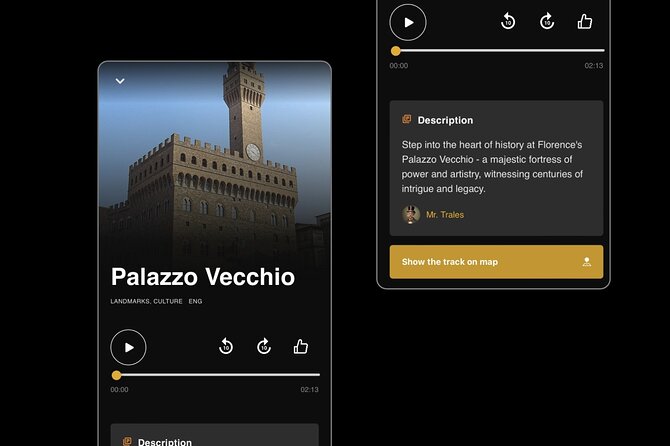
Florence moves fast. This audio tour helps you keep up. You walk the city with your phone and headphones while 100+ location-based audio stories add context right where you are standing, from the big sights to the side streets. I like that it uses a simple browser-based setup instead of making you hunt for files before you start.
Two things I really like: the stories let you choose what to hear next as you pass landmarks, and the web app includes a map so you’re not guessing where to go. The time is flexible too, so you can spend 10 minutes on one stop or linger when something catches your eye.
One drawback to consider: it needs internet access and it’s not recommended for travelers with hearing impairment. Also, treat it as a narration guide, not an entrance ticket—if you’re trying to get into a church with special access rules, you’ll need to handle that separately.
In This Review
- Key things to know before you go
- 100 Stories, One Phone: How This Audio Tour Really Works
- Duomo to Uffizi: The Smart Way to Plan Your 1–2 Hours
- Florence Cathedral Stop: Santa Maria del Fiore Without the Headache
- Ponte Vecchio: One Bridge, Several Stories at Once
- Piazza della Signoria: Art, Power, and Street-Corner Explanations
- Basilica of Santa Maria Novella: A Church Stop With Big Payoff
- San Miniato al Monte: Romanesque Calm on a Different Hill
- Mercato Centrale: Where the Stories Meet Your Hunger
- Uffizi Gallery Stop: Plan for Time and Separate Ticket Needs
- Price and Value: Why $3.47 Can Make Sense
- Getting Started Without Panic: Your Best Pre-Trip Checklist
- Is This the Right Tour for You?
- Should You Book This Florence Audio Story Tour?
- FAQ
- How long is the Florence audio tour?
- What does the tour cost?
- Do I need to download an app?
- Do I need my own headphones?
- Is offline access included?
- Does it include a map?
- Where does the tour start and end?
- Is this tour an entrance ticket to churches or attractions?
- Is the tour suitable for travelers with hearing impairment?
- Can I cancel and get a refund?
Key things to know before you go
- 100+ location-based stories: Tap into short narratives that match where you walk.
- Browser access, no downloads: Start from your phone’s browser right away.
- Map in the web app: Helps you follow the route without extra apps.
- Short stop style: Many stops are built around roughly 10-minute listens.
- Bring your own headphones: You supply the tech; Trales supplies the audio experience.
- Internet required: Offline access is not included.
With a local guide, more of Florence to explore


100 Stories, One Phone: How This Audio Tour Really Works
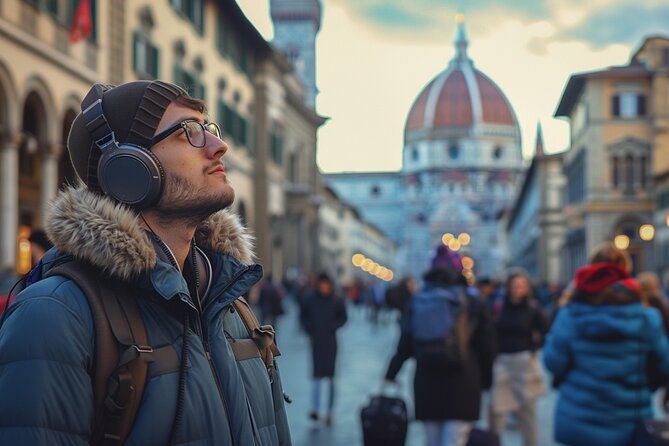
This isn’t a bus tour with a script. It’s closer to carrying a good friend with strong opinions and good timing, except that friend lives inside your browser and speaks through headphones.
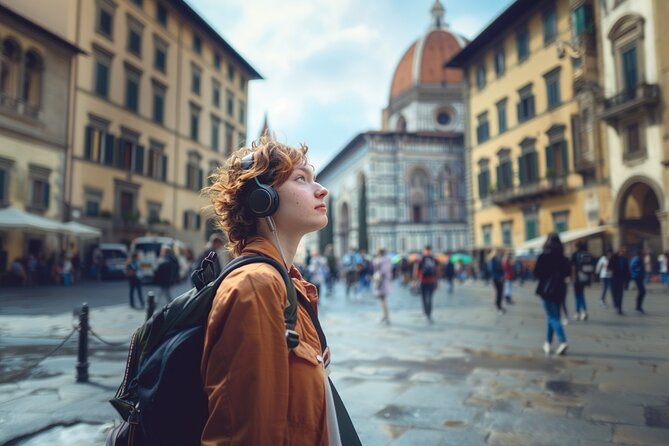
You’ll use a smartphone with internet access plus your favorite headphones. Then you open a link to activate the audio guide in a web app with a map. From there, you follow along with a set of major stops and a wider set of additional “pass-by” stories around Florence. The “start and stop whenever you want” style matters here. You’re not locked into a fixed group pace, so you can wait for a quieter moment at a viewpoint, or skip ahead if you’re already tired of crowds.
The audio is described as “captivating storytelling & soundscapes,” which usually means you’ll hear more than dry facts. In practice, it’s the kind of sound design that helps you stay oriented while you’re walking and not constantly reading your phone screen.
Also: there’s no offline mode. That’s not a small detail in Florence. If your signal dips in the middle of a maze of buildings, you might lose the story unless you can reconnect. If you know your phone struggles with data coverage in certain areas, plan accordingly (or keep a backup plan for continuing on foot without audio for a few minutes).
Duomo to Uffizi: The Smart Way to Plan Your 1–2 Hours
The route is built as a sequence of major Florence landmarks with roughly 10-minute story blocks. You can do a tight loop in about 1 hour if you keep moving and don’t overstay at each stop. Or you can stretch it toward 2 hours by letting stories guide you but not rushing through the sights.
A practical way to make this efficient:
- Start near the Duomo area, then work toward the river and central squares.
- Layer in churches and neighborhoods as you pass them.
- End with the Uffizi Gallery stop when you’re ready to trade street-level wandering for a museum mindset.
The tour ends back at the meeting point, but since it’s self-guided, you’ll get the best experience if you treat the stops as anchor points, not prison bars.
And one more practical note. This isn’t an all-day plan. It’s meant to sharpen your first hours in Florence, or add a narrative layer to a longer stay when you already know you want to hit the big names.
Florence Cathedral Stop: Santa Maria del Fiore Without the Headache
The Duomo stop is for your wow moment: Cattedrale di Santa Maria del Fiore. The audio story focuses on what the cathedral represents and why people keep returning to it, long after the first photo is taken.
Why it works well as an early stop:
- You get your bearings fast. Florence’s center of gravity is here.
- The building’s scale is hard to understand without context, and audio can explain what you’re seeing without you stopping to read signs.
One important consideration: this kind of audio guide is not automatically an entrance ticket. If a church or complex requires its own access rules, you handle entry separately. I’d rather you find out before you reach the doors than after.
If you want a smoother visit, keep your expectations simple: use the audio to understand the place, then rely on official ticketing/entry where needed.
Ponte Vecchio: One Bridge, Several Stories at Once
Next up is Ponte Vecchio. The audio story highlights that it’s the only bridge survivor from WWII, which is the kind of detail that makes you look differently at the shops and walkways you see today.
What I like about putting Ponte Vecchio in the middle of the route:
- It connects your walking experience to survival, rebuilding, and change.
- It’s a natural “pause and look” stop. The bridge is busy, but it’s also one of those places where you can stand still for a few minutes and actually read the scene with your eyes.
Keep your headphones on low-volume enough that you still hear your surroundings. This is a crowded spot at many hours, and the goal is to enjoy Florence, not get tunnel vision.
Piazza della Signoria: Art, Power, and Street-Corner Explanations
Piazza della Signoria can feel like a stage set, because it’s famous, central, and photographed so often. That’s exactly why an audio guide helps. The story helps you understand how history and culture stack up in one open-air space.
This stop is also good for people who don’t want a museum-only trip. You’re learning through the city’s layout—what’s placed where, and why that matters.
A small drawback: depending on the time of day, the square can be crowded or noisy, which can make headphones less magical. If soundscapes are a big part of your enjoyment, consider visiting at a time when the square is slightly calmer.
At your own pace, more self-guided Florence


Basilica of Santa Maria Novella: A Church Stop With Big Payoff
Santa Maria Novella is another major church on the route, and the audio focus here is on art and historical context, with a mention of bell sounds as part of the experience.
What you can expect:
- A shift from open squares and the river to a more interior, architectural moment.
- A story format that gives meaning to features you might otherwise glance past.
If you’re the type who rushes through churches, this stop encourages you to slow down at least enough to match what you hear with what you see. That’s where audio guides earn their keep.
Just remember the earlier point: narration is not the same thing as entry. If you hit restrictions, you’ll need to follow the church’s own rules.
San Miniato al Monte: Romanesque Calm on a Different Hill
The route then adds Basilica of San Miniato al Monte, described as a Romanesque gem with hidden tales.
Why I like this stop in particular: it changes the mood. Florence isn’t just monuments. It’s also viewpoints, hills, and the sense that the city has layers you can’t see from the river.
Potential drawback: if your legs are already tired, the walk up can feel like extra work. The cathedral-and-river loop is easier on foot than a hill stop. If you’ve got limited mobility, consider swapping your order or using local transit to reduce strain—this tour is near public transportation, so you’re not stuck.
Mercato Centrale: Where the Stories Meet Your Hunger
Then comes Mercato Centrale, a place for senses, not just sightseeing. The audio focus here is on flavors and the way the market connects to Florence’s Renaissance spirit.
This is a smart stop because it gives you permission to take a break. Even if you don’t sit down for a full meal, it’s the perfect place for a snack and a reset—especially mid-walk.
One thing to plan: markets are chaotic in a good way. If you want the audio story at its best, pause somewhere near a less hectic edge instead of trying to listen while you’re weaving through a crowd.
Uffizi Gallery Stop: Plan for Time and Separate Ticket Needs
The route includes an Uffizi Gallery stop with audio guidance about what treasures you’ll find inside its grand corridors.
Here’s the practical reality: a gallery visit requires enough time for the exhibits, and entry is not something you should assume based on an audio guide alone. Even if you’re only doing a short visit, plan it like a real museum stop, not like another quick street corner.
How to make this work within a 1–2 hour plan:
- If you want the Uffizi experience, be honest about what you can cover. Even a short museum walk adds time quickly.
- If you’re short on time, you might use the audio before entry to set your priorities, then adjust your museum pacing once you’re inside.
Also keep in mind the audio is designed for “location-based” moments. The museum environment can change how well you hear audio depending on crowd levels and sound control.
Price and Value: Why $3.47 Can Make Sense
At $3.47 per person with a 1–2 hour format, the value proposition is simple: you’re paying for context, not for a guide in person or a ride.
This is a good fit if:
- You like self-paced walking.
- You want stories without spending museum-guide money.
- You enjoy learning while you move, instead of reading a booklet at each stop.
It may not be the best deal if:
- You rely on offline access or you have unreliable mobile data.
- You need guaranteed accessibility accommodations for hearing.
- You’re expecting it to function like an entry pass to churches or paid sites.
The biggest value comes from flexibility. You can pick your moments, stop when you want, and keep going without coordinating with others. That’s especially useful in Florence, where crowd density can change by the hour.
On the downside, the experience is non-refundable. That means you should only book if you’re confident you’ll have the time and internet access to make it work.
Getting Started Without Panic: Your Best Pre-Trip Checklist
Here’s how to avoid the most common “wait, what now?” moments:
- Bring a charged phone. This is your map and your audio player.
- Download nothing, but do make sure the browser link you receive works before you reach your first stop.
- If you’re asked to enter a promo code using the last 5 digits of your phone number on Trales.io after confirmation, do it promptly so you’re not stuck at the start.
- Use headphones that fit securely. Florence walking plus headphone adjustments can kill your rhythm fast.
- If you love turn-by-turn navigation, use your preferred map app alongside the tour’s map. Some people want tighter integration, and having both open can help you stay oriented.
One more practical note: keep your expectations focused on what this is—a guided audio layer. You’ll still need to handle entry rules and tickets through official channels when required.
Is This the Right Tour for You?
You’ll likely enjoy this experience if you:
- Want an easy way to add story context to your first Florence walk.
- Prefer self-paced sightseeing over strict schedules.
- Like short, scene-by-scene listening that matches where you are.
You might want to skip or adjust your expectations if you:
- Need offline audio.
- Have difficulty with hearing-based experiences.
- Are looking for a full guided tour experience with a person who can answer questions on the spot.
It’s also a good choice for couples or solo travelers who don’t want group logistics. Since it’s private to your group, you’re not sharing your headphones moment with strangers.
Should You Book This Florence Audio Story Tour?
If your goal is to make your first 1–2 hours in Florence more meaningful, I’d say yes. The price is low enough that you’re not taking a big financial risk, and the format is flexible enough to fit around your energy level.
But book it with a simple rule: treat it as audio guidance, not ticketing. If you care about specific church entries or paid museum access, plan those separately. Also, confirm you’ll have internet and charged headphones ready, because the tour does not offer offline playback.
If that all checks out, this is a smart way to turn “I’ve seen the photo spot” into “I understand why it matters.”
FAQ
How long is the Florence audio tour?
It’s listed as about 1 to 2 hours.
What does the tour cost?
The price shown is $3.47 per person.
Do I need to download an app?
No downloads are required. You start the audio guide from your browser.
Do I need my own headphones?
Yes. You need to bring your own smartphone and headphones.
Is offline access included?
No. Offline access is not included.
Does it include a map?
Yes. The web app includes a map.
Where does the tour start and end?
It starts in Florence, Metropolitan City of Florence, Italy, and ends back at the meeting point.
Is this tour an entrance ticket to churches or attractions?
The audio guide is not described as an entrance ticket. You should plan on handling entry separately where needed.
Is the tour suitable for travelers with hearing impairment?
It is not recommended for travelers with hearing impairment.
Can I cancel and get a refund?
This experience is non-refundable and cannot be changed for any reason.
More Guided Florence
- The Best tour in Florence: Renaissance & Medici Tales – guided by a STORYTELLER
★ 5.0 · 12,316 reviews - Florence: Duomo Cathedral 60-Minute Guided Tour
★ 3.7 · 6,829 reviews - Uffizi Gallery: Renaissance Masterpieces Guided Tour
★ 4.6 · 6,070 reviews - Uffizi Gallery Small Group Tour with Guide
★ 4.5 · 4,923 reviews - Florence: Highlights Walking Tour with Expert Guide
★ 4.6 · 4,662 reviews
More Florence Tours to Weigh Up
- The Best tour in Florence: Renaissance & Medici Tales – guided by a STORYTELLER
★ 5.0 · 12,316 reviews - The Best Tour in Florence: Renaissance and Medici Tales
★ 5.0 · 10,810 reviews - Florence: Chianti Wineries Tour with Wine Tasting
★ 4.5 · 10,071 reviews - Florence: Duomo Cathedral 60-Minute Guided Tour
★ 3.7 · 6,829 reviews - Florence: Hop-on Hop-off Bus Tour: 24, 48 or 72-Hour Ticket
★ 4.0 · 6,283 reviews
More Florence Tours We Have Reviewed
- Florence: Skip-The-Line Uffizi Gallery Timed Entry Ticket
★ 4.5 · 27,832 reviews - Tuscany Day Trip from Florence: Siena, San Gimignano, Pisa and Lunch at a Winery
★ 5.0 · 21,634 reviews - Florence: Timed Entry to Michelangelo’s David + Audio App
★ 4.6 · 19,496 reviews - Florence: Leonardo Interactive Museum Entry Ticket
★ 4.5 · 12,957 reviews - Florence: Michelangelo’s David Skip-the-Line Entry Ticket
★ 4.5 · 12,764 reviews
Fresh from our Florence review desk
- Small-Group Pasta Cooking Class and Market Tour in Florence★ 5.0 · 3 reviews
- Palatina Gallery and Pitti Guided Tour in Florence★ 5.0 · 3 reviews
- Tuscan Evening Tour: Fiat 500, 8:30 to 10 PM★ 5.0 · 3 reviews
- Journey into Art: Florence’s Accademia★ 4.5 · 3 reviews
- Paint and Drink Florentine Hills★ 5.0 · 3 reviews
- Truffle hunting and lunch experience, with Vinci and winery.★ 4.5 · 3 reviews
Audio Tours, compared.
 ★ 4.6Timed Entry to Michelangelo’s David + Audio AppFrom $3319,496 reviews
 ★ 4.2Uffizi Priority Ticket & Masterpieces Audio AppFrom $316,402 reviews
 ★ 4.2Uffizi Gallery Timed Entry Ticket & Audio GuideFrom $332,794 reviews
 ★ 4.3Michelangelo’s David Entrance Ticket and Audio AppFrom $381,901 reviews
 ★ 4.4Uffizi & Accademia Priority Tickets with Audio AppFrom $921,253 reviews
 ★ 4.6Eco-Friendly Golf Cart City Tour with Audio GuideFrom $671,094 reviews
 ★ 4.4Palazzo Vecchio Entry Ticket with Audio GuideFrom $36837 reviews
 ★ 3.5Florence Duomo Cathedral with Host & Audio Guide (Interior Only)From $7702 reviews
Browse the lists this tour appears in