

Reviewed · UFFIZI GALLERY TOURS
Uffizi Gallery: Guided Tour with Skip-the-Line Entry
Florence has a lot of famous art. The Uffizi is where it all clicks. This guided, skip-the-line visit turns a big museum into a clear story you can follow in real time.
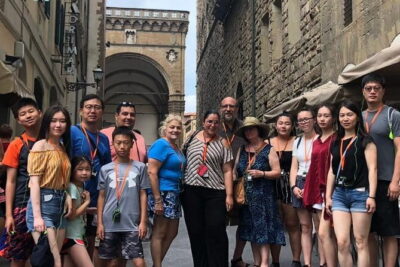
I especially love the small group size (limited to 9) and the fact that you get headphones when the group is over 4. It makes the explanations feel aimed at you, not at a crowd.
One thing to consider: the tour is tightly timed at about 105 minutes, so if you want to linger on many individual paintings, you’ll need to plan that for your self-guided time after the tour.
In This Review
- Key things to know before you go
- Entering the Uffizi: Faster Start, Less Waiting
- The Skip-the-Line Setup: What You Get for $113
- The Building Itself: Giorgio Vasari Near the Arno
- Botticelli’s Venus and Primavera: How the Story Gets Clear
- The Big Names: Leonardo, Caravaggio, and Michelangelo
- Medici Collections: From Administration to Art Power
- Staying On Your Own: Make the Uffizi Yours
- Group Size and Headphones: When the Details Actually Land
- Meeting the Tour: Practical Tips That Save Time
- Who This Tour Fits Best (and Who Might Prefer DIY)
- Should You Book This Uffizi Skip-the-Line Tour?
- FAQ
- What’s the duration of the Uffizi guided tour?
- How much does the tour cost?
- Does this tour include skip-the-line entry?
- What’s included in the tour price?
- What languages are available for the live guide?
- How big is the group?
- Where do we meet the guide?
- Is food or drink included?
- Does the tour run on the first Sunday of each month?
- What ID do I need to bring?
- Is the booking refundable?
Key things to know before you go

- Skip-the-line entry saves time so you can start seeing art faster.
- Small-group guidance (max 9) makes it easier to hear details and keep up.
- Headphones included when the group is larger than 4.
- Renaissance stars covered: Botticelli, Michelangelo, Leonardo da Vinci, Caravaggio, and more.
- Medici context included so the collection feels connected, not random.
- Tour ends with free time, letting you go back to the works that caught your attention.
More ways into the Uffizi, ranked by Florence visitors
Entering the Uffizi: Faster Start, Less Waiting

The biggest practical win here is the skip-the-line setup. The Uffizi is popular, and time disappears fast when you’re stuck in queues. With a guided entrance, you spend your effort where it matters: inside, looking closely.
Plan to arrive a few minutes early. Your meeting point is Via dei Castellani, 18 rosso, 50122 Firenze FI, Italia. If you’re the type who likes visual confirmations, take a quick moment at the start to identify your guide before the group moves on. One useful trick I’ve picked up from real-world confusion: the guide may not always match the description you’re expecting—so if you don’t see them right away, contact the operator quickly so they can help you connect. It’s much less stressful than trying to “guess” which line is correct.
The tour runs about 105 minutes, and the schedule can vary by starting times, so check availability before you lock in other plans. Also note the fine print that matters: the tour is not operative on the first Sunday of each month.
The Skip-the-Line Setup: What You Get for $113
Let’s talk value, because $113 can feel like a lot until you match it to what’s included. In this case, you’re paying for three things that are hard to DIY in one smooth trip:
- Ticket to the Uffizi (so you’re not buying separately)
- Guided tour with a live expert
- Skip-the-ticket line so you lose less time to waiting
Add in the small-group factor, plus headphones when the group is larger, and you’ve got a format that’s built for listening—especially in a museum where even small details matter.
If you’re the kind of person who likes art but also wants the “why” behind it (patrons, myths, symbolism, how artists built their messages), this is usually a good spend. If you’re purely a casual wanderer who wants to stroll and pick at your own pace, then DIY might be cheaper—but you’ll miss a lot of the connective tissue.
The Building Itself: Giorgio Vasari Near the Arno
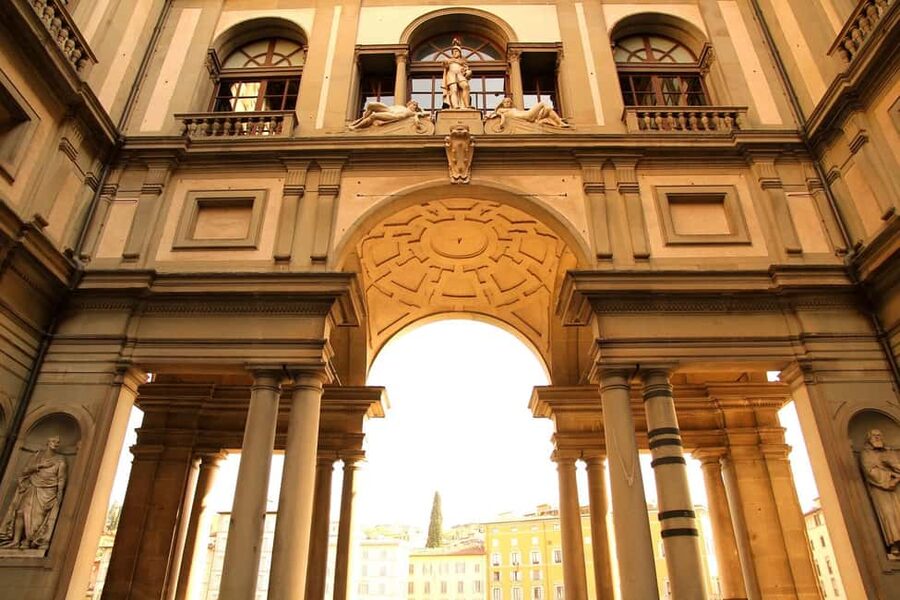
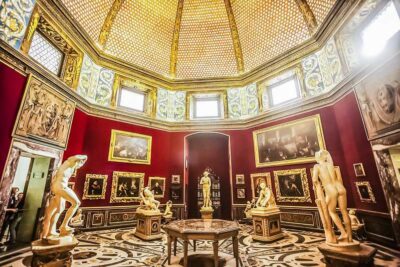
You don’t just see Renaissance painting at the Uffizi. You also walk into a 16th-century building associated with Giorgio Vasari. The setting isn’t neutral. The architecture helps you understand how this collection was shaped for a courtly world—built to display power, taste, and learning.
This matters because the Uffizi isn’t only a box for masterpieces. It’s housed in the Medici palace complex, which began as an administrative center under the Medici. That’s a key mindset shift: you’re viewing art that traveled from politics and patronage into public culture.
As you move through the tour, keep an eye on how your guide frames the rooms and sightlines. Even if you don’t study architecture, the building’s logic helps you make sense of what you’re seeing and why certain works appear where they do.
Botticelli’s Venus and Primavera: How the Story Gets Clear
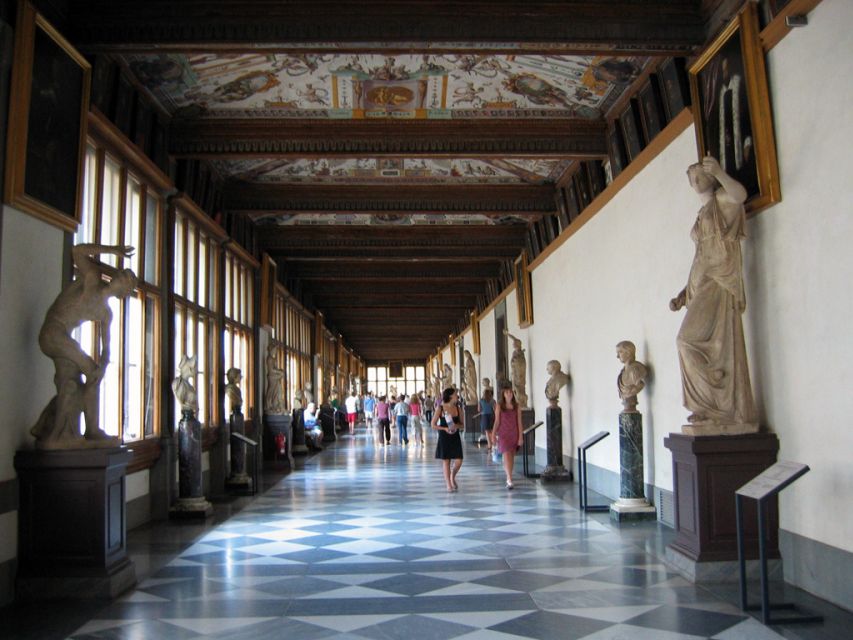
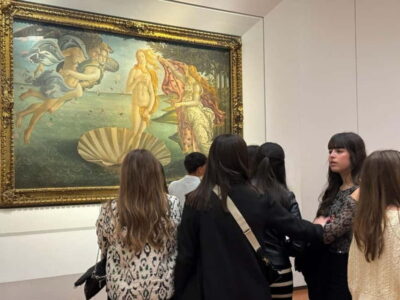
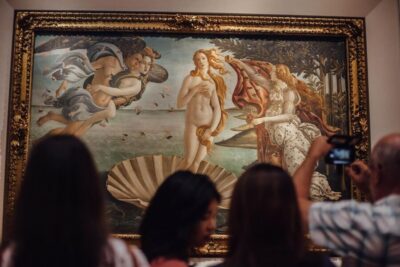
The tour is built around famous, high-demand works—especially Botticelli. You’ll spend time on Primavera and Birth of Venus. These paintings are iconic, yes, but the real payoff is how they’re explained.
Here’s what you should expect: your guide ties the images to Renaissance ideas—myth, symbolism, patronage, and the way artists used classical stories to speak about contemporary life. Without that layer, it’s easy to admire the surface and still miss what the picture is doing.
The most useful part for me is how a good guide trains your eyes to look for meaning. You start noticing how figures relate to each other, how symbols repeat, and what the artists are signaling with gestures and composition. It turns an “I’ve heard of this” moment into a “now I get what I’m seeing” moment.
And because the tour is in a small group, you’re not just passively absorbing facts. You can usually follow the logic of the explanation without having your attention yanked away by constant crowd surges.
The Big Names: Leonardo, Caravaggio, and Michelangelo
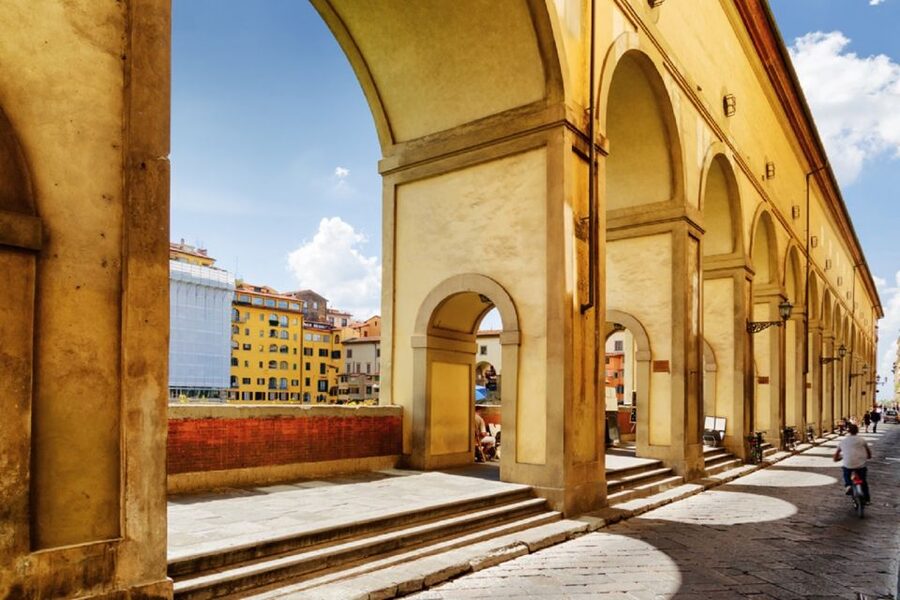
The Uffizi tour doesn’t treat Renaissance art like a museum checklist. You’ll meet the major heavyweights: da Vinci (Leonardo da Vinci), Caravaggio, and Michelangelo, plus other artists tied to the Medici era.
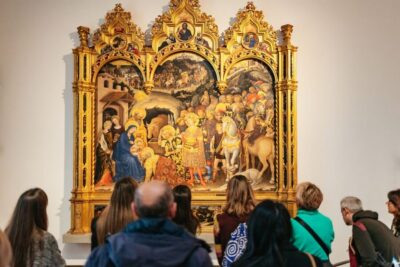
Your guide will focus on what makes each artist’s approach feel different. That might sound obvious on paper, but in a real museum it’s easy to lump everything together as “old paintings.” With a guide, you learn what to notice first for each artist—how they build space, how they use light, how anatomy and expression communicate meaning, and how religious or mythological subject matter gets translated into visual drama.
Michelangelo is often one of those artists people feel they already know—until they see how the work’s handling of form can change your whole sense of what the painting is doing. Same with Leonardo: the guide helps you connect observation and technique to the bigger idea behind the piece.
The tour format also encourages you to keep moving in a way that stays connected. Instead of jumping room to room randomly, you’ll get a guided path through the highlights, so the names start to feel like a coherent conversation.
With a local guide, more of Florence to explore
- The Best tour in Florence: Renaissance & Medici Tales – guided by a STORYTELLER
★ 5.0 · 12,316 reviews



Medici Collections: From Administration to Art Power

One of the most grounded aspects of this experience is the Medici context. You’re not only looking at masterpieces; you’re learning how the Uffizi grew out of the Medici world.
At the start, your guide explains the gallery’s origins—beginning as the Medici’s administrative center before becoming a museum space. That shift is more than trivia. It helps you understand why so much art in Florence was commissioned, collected, and displayed as part of a broader system of influence.
You’ll also see how the Uffizi sits in an environment connected to the Grand Duke of Tuscany. That royal angle changes your reading of the art. Even when a painting seems personal or mythological, it was still part of a larger social and political ecosystem.
If you like your museum visits to have a “so what” answer, this section is where you’ll feel it most.
Staying On Your Own: Make the Uffizi Yours
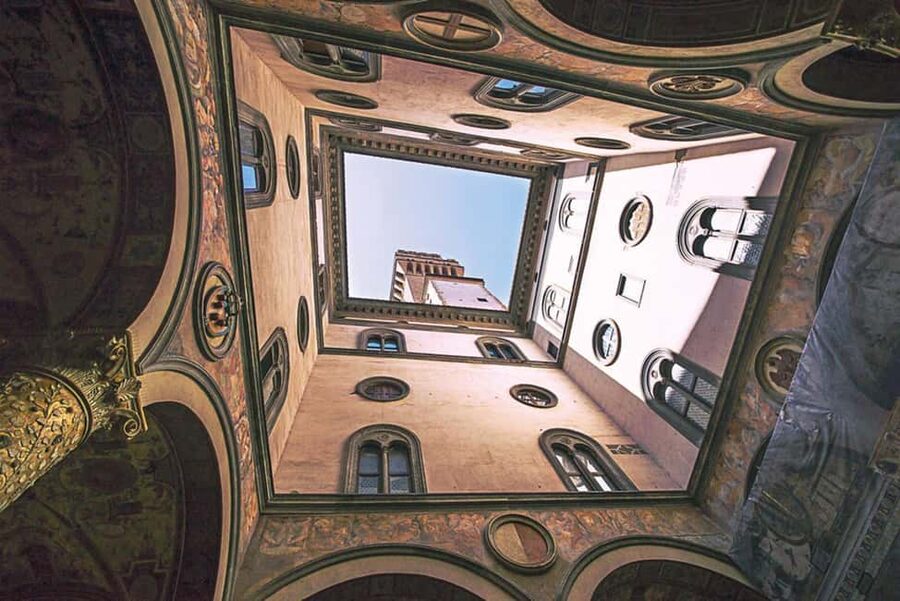
After the guided portion, you get time to stay in the gallery and explore independently. This is a smart design choice. A 105-minute guided tour covers the headliners, but it can’t cover everything you might want to study.
Use this free time like a repeat visit, not a second job. Pick a couple of works that grabbed you most during the tour and go back for a slower look. If you saw Primavera or Birth of Venus and found yourself wanting to understand one symbol more clearly, this is when you can do it.
Also, don’t ignore the sculptures and antiques mentioned in the tour highlights. The Uffizi is often treated as “just paintings,” but once you slow down, the three-dimensional works start to change the experience. You’ll notice more contrasts in style and subject than you expected.
If you’re traveling with kids or you’re easily bored by long museum marathons, the guided time helps you get the point quickly. Your self-paced time then becomes a selection game: see what interests you, skip what doesn’t.
Group Size and Headphones: When the Details Actually Land
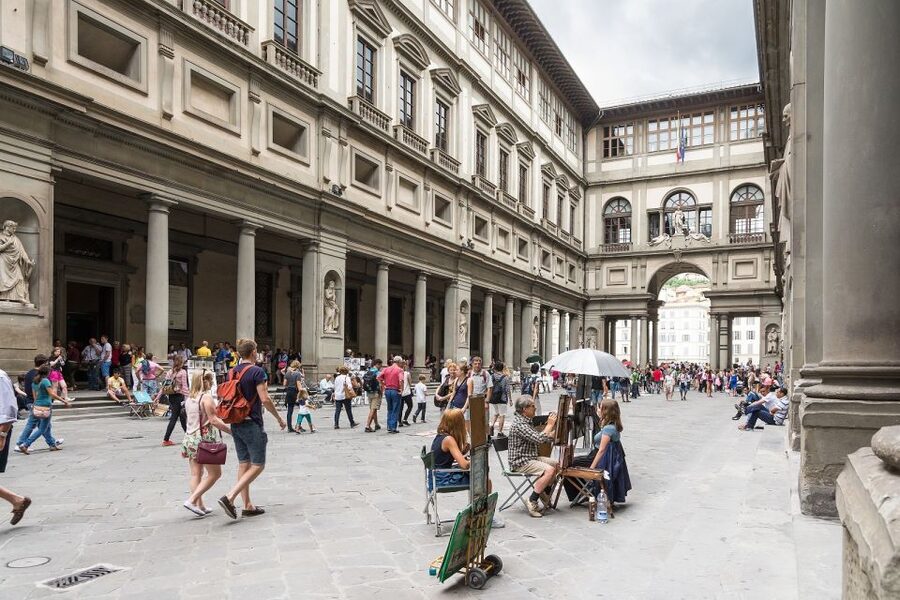
The tour is limited to 9 participants, and it’s described as a monolingual guided tour with live guide narration. If you care about being able to hear the guide clearly, this is a big deal.
When groups are larger than 4, headphones are included. That removes one of the most frustrating museum problems: guessing what your guide said because you’re stuck two steps too far back, or distracted by the crowd.
The tone matters too. A well-paced guide can slow down just enough for questions without turning the tour into chaos. On the other hand, the one drawback I noted is that some people experience the tour as a bit rushed—especially when the group is small but the pace stays fast. If you want a more interactive pace, be ready to ask a question early rather than waiting until the last room.
Meeting the Tour: Practical Tips That Save Time
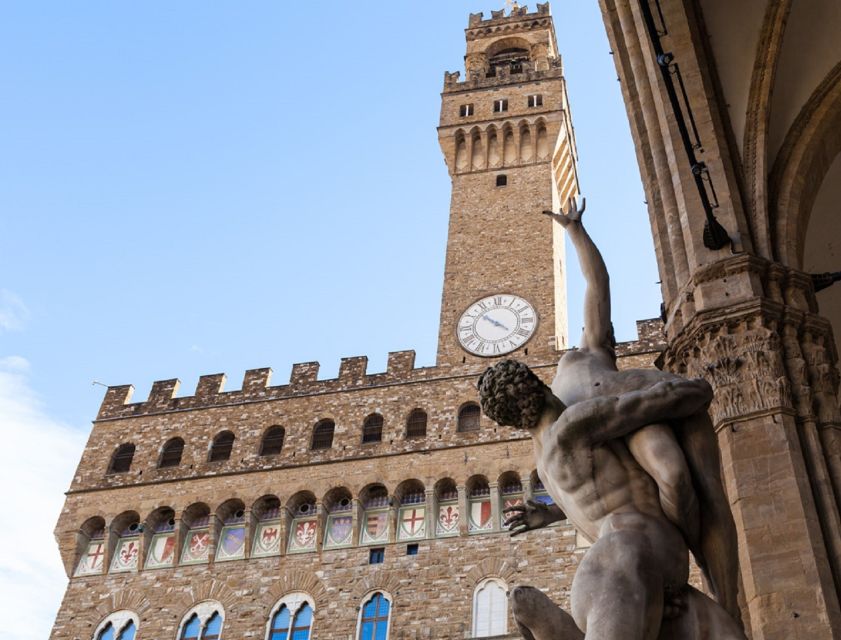
A smooth museum tour is mostly about two things: finding the right start point and getting your bearings quickly.
- Meet at Via dei Castellani, 18 rosso.
- Wear comfortable shoes. Museums are long days in disguise.
- Bring a passport or ID card, and keep track of ID rules for minors: an identity document is required for children under 18 to be shown to the guide.
- Dress for comfort. You’ll likely move through indoor galleries with limited time to rest.
If you’re worried about confusion at the meeting spot, here’s what to do: give yourself a short buffer, and if you can’t find your guide, use the provided contact method right away. In one real situation, the guide was not where expected and the team sorted it quickly by contacting the group.
Who This Tour Fits Best (and Who Might Prefer DIY)
This guided skip-the-line format is best for people who want Florence to feel organized. If you’re curious about Renaissance art but don’t want to guess the context, you’ll get a lot from a guide’s narration—especially for Botticelli, Leonardo, Caravaggio, and Michelangelo.
It’s also a great fit if you:
- Like masterpieces but want the symbolism and patronage explained
- Prefer small-group pacing over big bus tours
- Want to keep your day moving without sacrificing quality
You might prefer DIY if you already have a strong background and you want maximum time per artwork with no fixed sequence. You could also do DIY if you don’t care about interpretation and mostly just want to look at what you recognize.
Should You Book This Uffizi Skip-the-Line Tour?
Yes—if you want a Florence art experience that’s easy to follow and gives you the “why” behind the icons. For $113, you get entry plus a guide plus a time-saving skip, and the small group and headphones make the explanations practical to enjoy.
Before you book, decide how you feel about a 105-minute guided route. If you love museum slow time, plan to stay after and revisit your favorite works. If you’re the type who wants a structured hit of Renaissance art without the stress of handling tickets and crowd logistics, this format is a strong match.
In short: if you’re ready to see the Uffizi like a conversation—not a random gallery—this tour is a solid choice.
FAQ
What’s the duration of the Uffizi guided tour?
The tour lasts about 105 minutes.
How much does the tour cost?
The price is listed as $113 per person.
Does this tour include skip-the-line entry?
Yes. It includes skip-the-ticket line entry.
What’s included in the tour price?
You get the Uffizi ticket, a guided tour, and headphones for groups with over 4 participants.
What languages are available for the live guide?
The tour offers live guide narration in French, Spanish, English, Italian, and German.
How big is the group?
The group is limited to 9 participants.
Where do we meet the guide?
The meeting point is Via dei Castellani, 18 rosso, 50122 Firenze FI, Italia.
Is food or drink included?
No. Food and drinks are not included.
Does the tour run on the first Sunday of each month?
No. On the first Sunday of each month, the tour is not operative.
What ID do I need to bring?
Bring a passport or ID card. For children under 18, an identity document is required to be shown to the guide.
Is the booking refundable?
No. The activity is non-refundable.
More Florence Tours to Weigh Up
- The Best tour in Florence: Renaissance & Medici Tales – guided by a STORYTELLER
★ 5.0 · 12,316 reviews - The Best Tour in Florence: Renaissance and Medici Tales
★ 5.0 · 10,810 reviews - Florence: Chianti Wineries Tour with Wine Tasting
★ 4.5 · 10,071 reviews - Florence: Duomo Cathedral 60-Minute Guided Tour
★ 3.7 · 6,829 reviews - Florence: Hop-on Hop-off Bus Tour: 24, 48 or 72-Hour Ticket
★ 4.0 · 6,283 reviews
More Florence Tours We Have Reviewed
- Florence: Skip-The-Line Uffizi Gallery Timed Entry Ticket
★ 4.5 · 27,832 reviews - Tuscany Day Trip from Florence: Siena, San Gimignano, Pisa and Lunch at a Winery
★ 5.0 · 21,634 reviews - Florence: Timed Entry to Michelangelo’s David + Audio App
★ 4.6 · 19,496 reviews - Florence: Leonardo Interactive Museum Entry Ticket
★ 4.5 · 12,957 reviews - Florence: Michelangelo’s David Skip-the-Line Entry Ticket
★ 4.5 · 12,764 reviews
The Uffizi, A Few More Ways In
- Florence: Skip-The-Line Uffizi Gallery Timed Entry Ticket
★ 4.5 · 27,832 reviews - Florence: Uffizi Priority Ticket & Masterpieces Audio App
★ 4.2 · 6,402 reviews - Uffizi Gallery: Renaissance Masterpieces Guided Tour
★ 4.6 · 6,070 reviews - Uffizi Gallery Small Group Tour with Guide
★ 4.5 · 4,923 reviews - Uffizi & Accademia Timed Entry: Small Group Duomo Walking Tour
★ 4.5 · 3,630 reviews
Fresh from our Florence review desk
- Small-Group Pasta Cooking Class and Market Tour in Florence★ 5.0 · 3 reviews
- Palatina Gallery and Pitti Guided Tour in Florence★ 5.0 · 3 reviews
- Tuscan Evening Tour: Fiat 500, 8:30 to 10 PM★ 5.0 · 3 reviews
- Journey into Art: Florence’s Accademia★ 4.5 · 3 reviews
- Paint and Drink Florentine Hills★ 5.0 · 3 reviews
- Truffle hunting and lunch experience, with Vinci and winery.★ 4.5 · 3 reviews
Uffizi Gallery Tours, compared.
 ★ 4.5Skip-The-Line Uffizi Gallery Timed Entry TicketFrom $3027,832 reviews
 ★ 4.2Uffizi Priority Ticket & Masterpieces Audio AppFrom $316,402 reviews
 ★ 4.6Uffizi Gallery: Renaissance Masterpieces Guided TourFrom $886,070 reviews
 ★ 4.5Uffizi Gallery Small Group Tour with GuideFrom $764,923 reviews
 ★ 4.5Uffizi & Accademia Timed Entry: Small Group Duomo Walking TourFrom $503,630 reviews
 ★ 4.2Uffizi Gallery Timed Entry Ticket & Audio GuideFrom $332,794 reviews
 ★ 4.8Uffizi Gallery and Accademia Gallery Guided TourFrom $1402,028 reviews
 ★ 4.7Uffizi Gallery Small-Group Guided Tour with TicketFrom $762,003 reviews
Browse the lists this tour appears in