
Florence has a secret route. This tour pairs the Uffizi’s top masterpieces with the reopened Vasari Corridor, so you see the city the way the Medici court could. You also cross Ponte Vecchio from a very different angle than your usual photo stop, which makes the whole day feel like more than a museum visit.
Two things I especially like: you get skip-the-line entrance to both sights, and the guide keeps the art and architecture moving at a good pace. In the Uffizi, you’ll focus on major hits like Botticelli’s Venus, Leonardo’s Annunciation, and Titian’s Venus of Urbino—plus enough context to make those works click fast.
One consideration: the total time is about 2 hours 30 minutes, so this is not a slow, wander-at-will museum day. And since the experience is non-refundable and can’t be changed once booked, you’ll want to be sure your schedule is locked in.
In This Review
- Key highlights to look for before you go
- Why this Uffizi + Vasari Corridor combo is such good value
- Entering the Uffizi: how you’ll experience the big masterpieces
- The Vasari Corridor: the Medici commute you can walk
- Ponte Vecchio pass-by: worth it even when it’s short
- What you can expect from the pacing (and why 2.5 hours works)
- The guide quality matters more than you think
- Meeting point and where the tour ends inside Palazzo Pitti
- Tickets, mobile access, and the one requirement you can’t skip
- Price and value: what $343.10 buys you in the real world
- Who should book this tour
- Should you book the Vasari Corridor and Uffizi exclusive tour?
- FAQ
- How long is the Vasari Corridor and Uffizi exclusive tour?
- Where does the tour start and end?
- Are tickets included?
- Do I need to bring a passport or ID?
- Is the tour private?
- What art highlights are included at the Uffizi?
- Is Ponte Vecchio included?
- Is there a mobile ticket?
- What is the price per person?
Key highlights to look for before you go
- Exclusive connection: you start in the Uffizi and then step directly into the Vasari Corridor.
- Medici-era purpose: the corridor was built so the Grand Duke could move between palaces without mixing with ordinary people.
- Skip-the-line access: admission tickets are included for both the Uffizi and the corridor.
- Art on point: expect world-famous works like Botticelli, Leonardo, and Titian.
- Ponte Vecchio pass-by: you get the most famous bridge’s scene as part of the route, not as a separate detour.
More ways into the Uffizi, ranked by Florence visitors
Why this Uffizi + Vasari Corridor combo is such good value
Uffizi tickets are in demand, and the Vasari Corridor is even more selective. What you’re paying for here is not just entry—it’s time saved and access delivered in a logical sequence: you see the art first, then the built structure that helps explain how power, design, and daily life all fit together in Florence.
At $343.10 per person for about 2.5 hours, the math works best if you want a guided, high-signal visit. The tickets are included, and you’re not spending half your day hunting entry points. You’re also taking a route most people never experience: an elevated passage originally commissioned in 1565 by Giorgio Vasari for the Medici court, linking the Palazzo Vecchio area to the Palazzo Pitti side of town.
This is also a great use of time if you only have a day (or part of a day) in Florence. The Uffizi is huge. Doing it well usually takes more time than most itineraries allow.
Entering the Uffizi: how you’ll experience the big masterpieces
Your tour begins at the Gallerie Degli Uffizi inside the Palazzo degli Uffizi, which literally translates to Palace of Offices. That name matters: Florence didn’t start out building museums in the modern sense. The building’s original identity helps explain why the art experience here feels both grand and structured.
From there, the focus is on signature works that most people come to see anyway, but with guidance that puts them in context. You can expect to encounter major pieces such as:
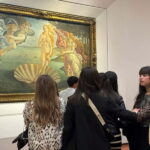
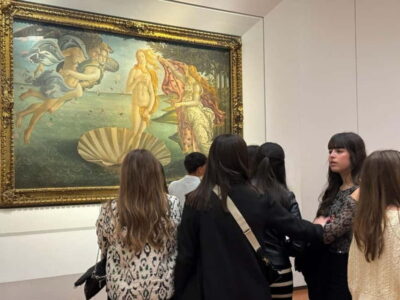
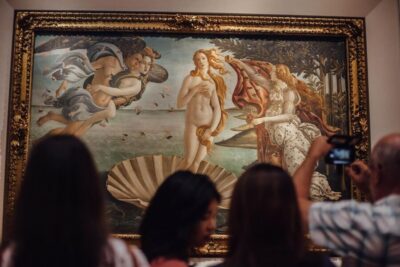
- Botticelli’s Venus
- Leonardo da Vinci’s Annunciation
- Titian’s Venus of Urbino
Here’s what makes this valuable: you’re not just collecting famous titles. A good guide turns those names into a story you can follow in real time—style, symbolism, and why these works mattered to people living centuries ago. And because your time is limited, you’re less likely to feel like you’re sprinting through a checklist without connecting the dots.
A practical heads-up: the Uffizi can be busy. The skip-the-line ticket included in the tour is where you feel the benefit most—less frustration, more looking.
The Vasari Corridor: the Medici commute you can walk
Then comes the main event: the Corridoio Vasariano, the elevated enclosed passageway in Florence. It connects the Palazzo Vecchio with the Palazzo Pitti, and your route specifically connects from the Uffizi side.
The story behind it is unforgettable. In 1565, Cosimo I de’ Medici commissioned the corridor so the Grand Duke could travel between residences without mixing with ordinary people. In other words, it wasn’t built for tourists or artists to admire art from above. It was built for control, privacy, and power—an architectural shortcut through the city.
As you move along the corridor, you get a rare kind of city view: one that feels like you’re seeing Florence through the eyes of someone who never needed to step into the street crowds. Even if you’re not a hardcore architecture person, that shift changes how you look. The corridor becomes a lens for the city—bridges, roofs, and streets all start to make sense as pieces of a larger puzzle.
The tour calls it the Prince’s Path for a reason. When you’re inside, you feel the designed separation between court life and the everyday city. That sense is hard to replicate on your own because the corridor isn’t an everyday sightseeing walking route. Having it placed after the Uffizi also works well: you just saw the art system of Florence. Now you see the human system behind the patronage and control that helped create it.
Ponte Vecchio pass-by: worth it even when it’s short
You’ll get Ponte Vecchio as a pass-by during the route. It’s the medieval stone bridge spanning the Arno River and famous for shops built along its length—jewelers, art dealers, and souvenir vendors.
Even though this is not a long stop to linger with coffee (food isn’t included), the pass-by still makes sense. Think of it as a “bridge moment” that connects the corridor experience to the most recognizable landmark in central Florence. You’re already moving through a Medici-era pathway; seeing Ponte Vecchio as part of the story helps the city feel continuous rather than chopped into separate attractions.
If you want extra time on the bridge for photos or shopping, plan to add that on your own before or after. The tour is built for a specific arc: art first, corridor second, bridge moment along the way.
What you can expect from the pacing (and why 2.5 hours works)
This whole experience runs about 2 hours 30 minutes. That’s short, but it’s short in a smart way. The Uffizi alone can swallow a day if you follow every impulse. The corridor, meanwhile, is a one-track experience—you’re moving through a set path and focusing on what’s there.
So you’ll likely get a curated set of stops and explanations, not everything the museum has to offer. That’s not a flaw. For most people, it’s the point. You want to walk out feeling you truly understood what you saw, not just that you saw a lot of walls and frames.
One detail I like from the guide experiences people shared: guides such as Giacomo, Susana, and Ingrid have a knack for compressing key points into something manageable. The best kind of museum guide doesn’t dump facts. They help you connect what you’re looking at to why it mattered, and they keep the pace steady so you don’t lose the thread.
In other words: if you’re the type who hates spending a whole morning reading labels without any structure, this kind of pace can feel like relief.
More Florence galleries and collections to wander


The guide quality matters more than you think
Here’s why the guide is such a big part of the value. The corridor is not just a pretty hallway. It’s a physical example of how power operated: who moved where, why certain routes existed, and how architecture supported that system. Without explanation, you might admire the views and the cool shape of the passage, then forget it later.
The same goes for the Uffizi. Those famous works are famous for a reason, but the meanings can feel abstract if nobody points you toward the right angle. When guides like Susana bring years of experience and Ingrid shares that art-historian perspective (including fluent English), it changes the visit from seeing to understanding.
If you like your tours guided but not lecture-y, this style seems to hit that balance. And because the corridor visit is more unusual than a typical museum round, a strong guide helps you make the most of the limited time.
Meeting point and where the tour ends inside Palazzo Pitti
Logistics affect the vibe of a Florence day. Start at Fontana del Nettuno, with the meeting point listed at 50 125 Florence. You’ll end at Grotta del Buontalenti, in Piazza de’ Pitti 1.
Important detail: the tour exit is described as going through the door next to the Grotta Buontalenti, and you’ll be accompanied from the courtyard of Palazzo Pitti. This matters because Florence is a network of courtyards and odd one-way paths. If you’re the kind of person who hates wandering after a structured tour, pay attention to the end point so you can regroup without stress.
The tour is also listed as near public transportation, which is helpful if you’re hopping between neighborhoods.
Tickets, mobile access, and the one requirement you can’t skip
This experience includes entrance tickets to both the Uffizi and the Vasari Corridor with skip-the-line entry, plus a guide.
You’ll also use a mobile ticket, which usually means less paper juggling. Still, don’t count on phone battery being unlimited. Save your ticket info before you leave your hotel.
And yes, you must bring your passport or ID card on the day of the visit. That requirement is not a “nice to have.” Plan for it the way you’d plan for museum entry everywhere else in Europe: keep it on you.
One more time-and-money note: you’ll spend about 2.5 hours in total, and food and drinks are not included. If you’re pairing this with other Florence plans, grab a quick bite before you start or plan a short meal after.
Price and value: what $343.10 buys you in the real world
Let’s be honest: $343.10 per person is not pocket change. So the value question is fair.
Here’s what you’re paying for, based on what’s included:
- Guided access to both a world-class museum and a rare, Medici-era corridor experience
- Skip-the-line tickets for both parts
- A route that connects the Uffizi directly into the corridor experience instead of forcing you to figure out timing and entry gaps
Also, the tour is described as exclusive, and it’s typically booked about 47 days in advance on average. When demand is that high, you’re often buying peace of mind. You’re not hoping you’ll find tickets. You’re not dealing with uncertainty. You show up with a plan.
If you’re traveling as a couple or small group and you want a guided “must-see” day without wasting time in queues, this can be a strong choice. If you’d rather roam the Uffizi at your own pace for hours and hours, you might be happier with standard museum admission plus a separate plan for the corridor only if you can get it.
Who should book this tour
This is a great fit if:
- You want both the Uffizi and the Vasari Corridor, and you want it done efficiently
- You like a guide who can explain the famous stuff and make it feel coherent
- Your schedule is tight and you don’t want to guess how to manage timed entry in a busy city
It’s less ideal if:
- You want a long, slow Uffizi day (this tour is timed, and it won’t cover everything)
- You’re a spontaneous planner who doesn’t like committing to a fixed schedule, since changes aren’t possible once booked
Should you book the Vasari Corridor and Uffizi exclusive tour?
My take: book it if you care about doing Florence’s “one unusual access” experiences the right way. The best part of this tour is that it links the art and the architecture into one story, while also giving you skip-the-line entry so you spend your time looking—not waiting.
If you’re okay with a 2.5-hour, focused visit and you’ll be ready with your ID and your mobile ticket, this is an efficient, high-impact way to see the Vasari Corridor at its best. For anyone who wants more than a quick photo stop and less than a full-day museum marathon, it’s a strong match.
FAQ
How long is the Vasari Corridor and Uffizi exclusive tour?
It runs about 2 hours 30 minutes.
Where does the tour start and end?
It starts at Fontana del Nettuno in Florence and ends at Grotta del Buontalenti, Piazza de’ Pitti 1, Firenze.
Are tickets included?
Yes. Entrance tickets to both the Uffizi Gallery and the Vasari Corridor are included with skip-the-line access.
Do I need to bring a passport or ID?
Yes. You must bring your passport or ID card on the day of the visit.
Is the tour private?
Yes. It’s listed as a private activity, with only your group participating.
What art highlights are included at the Uffizi?
The tour description specifically mentions Botticelli’s Venus, Leonardo da Vinci’s Annunciation, and Titian’s Venus of Urbino.
Is Ponte Vecchio included?
You’ll pass by Ponte Vecchio as part of the route.
Is there a mobile ticket?
Yes. The tour includes a mobile ticket.
What is the price per person?
The price listed is $343.10 per person.
More Florence Tours to Weigh Up
- The Best tour in Florence: Renaissance & Medici Tales – guided by a STORYTELLER
★ 5.0 · 12,316 reviews - The Best Tour in Florence: Renaissance and Medici Tales
★ 5.0 · 10,810 reviews - Florence: Chianti Wineries Tour with Wine Tasting
★ 4.5 · 10,071 reviews - Florence: Duomo Cathedral 60-Minute Guided Tour
★ 3.7 · 6,829 reviews - Florence: Hop-on Hop-off Bus Tour: 24, 48 or 72-Hour Ticket
★ 4.0 · 6,283 reviews
More Florence Tours We Have Reviewed
- Florence: Skip-The-Line Uffizi Gallery Timed Entry Ticket
★ 4.5 · 27,832 reviews - Tuscany Day Trip from Florence: Siena, San Gimignano, Pisa and Lunch at a Winery
★ 5.0 · 21,634 reviews - Florence: Timed Entry to Michelangelo’s David + Audio App
★ 4.6 · 19,496 reviews - Florence: Leonardo Interactive Museum Entry Ticket
★ 4.5 · 12,957 reviews - Florence: Michelangelo’s David Skip-the-Line Entry Ticket
★ 4.5 · 12,764 reviews
The Uffizi, A Few More Ways In
- Florence: Skip-The-Line Uffizi Gallery Timed Entry Ticket
★ 4.5 · 27,832 reviews - Florence: Uffizi Priority Ticket & Masterpieces Audio App
★ 4.2 · 6,402 reviews - Uffizi Gallery: Renaissance Masterpieces Guided Tour
★ 4.6 · 6,070 reviews - Uffizi Gallery Small Group Tour with Guide
★ 4.5 · 4,923 reviews - Uffizi & Accademia Timed Entry: Small Group Duomo Walking Tour
★ 4.5 · 3,630 reviews
Fresh from our Florence review desk
- Small-Group Pasta Cooking Class and Market Tour in Florence★ 5.0 · 3 reviews
- Palatina Gallery and Pitti Guided Tour in Florence★ 5.0 · 3 reviews
- Tuscan Evening Tour: Fiat 500, 8:30 to 10 PM★ 5.0 · 3 reviews
- Journey into Art: Florence’s Accademia★ 4.5 · 3 reviews
- Paint and Drink Florentine Hills★ 5.0 · 3 reviews
- Truffle hunting and lunch experience, with Vinci and winery.★ 4.5 · 3 reviews
Uffizi Gallery Tours, compared.
 ★ 4.5Skip-The-Line Uffizi Gallery Timed Entry TicketFrom $3027,832 reviews
 ★ 4.2Uffizi Priority Ticket & Masterpieces Audio AppFrom $316,402 reviews
 ★ 4.6Uffizi Gallery: Renaissance Masterpieces Guided TourFrom $886,070 reviews
 ★ 4.5Uffizi Gallery Small Group Tour with GuideFrom $764,923 reviews
 ★ 4.5Uffizi & Accademia Timed Entry: Small Group Duomo Walking TourFrom $503,630 reviews
 ★ 4.2Uffizi Gallery Timed Entry Ticket & Audio GuideFrom $332,794 reviews
 ★ 4.8Uffizi Gallery and Accademia Gallery Guided TourFrom $1402,028 reviews
 ★ 4.7Uffizi Gallery Small-Group Guided Tour with TicketFrom $762,003 reviews
Browse the lists this tour appears in