
Reviewed · MEDICI & RENAISSANCE TOURS
Art, Medicis and Renaissance. Explore Florence with Vincenzo
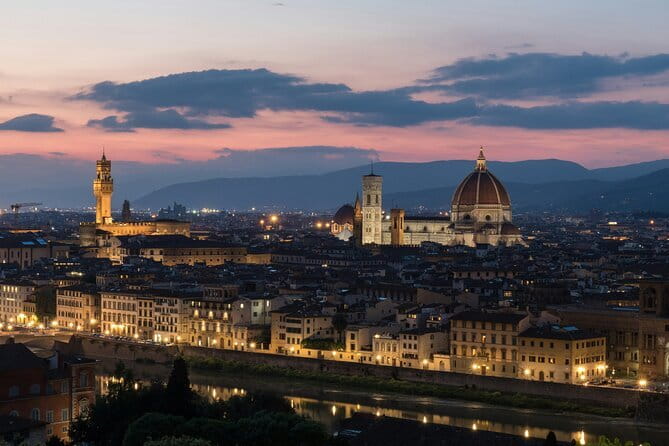
Florence hits you fast, even on a short walk. This 1 hour 30 minutes experience ties together Medici art and the city’s biggest landmarks, using smart stop-by-stop explanations that help you see what you’re actually looking at. The guide, Vincenzo Manole, keeps it lively and easy to follow while moving you through the most important symbolism in the center of town.
I especially like the way this tour zooms in on Cosimo I de’ Medici at Palazzo Vecchio and then connects that power to what you can still see today. I also like the pacing: you get time at the Duomo dome and breathing room at Ponte Vecchio, instead of racing past everything.
One consideration: the Duomo stop isn’t included for entry, so you’ll want to plan on paying that separate admission if you want to go inside.
In This Review
- Key Things to Know Before You Go
- A 90-Minute Route That Puts Medici Power Front and Center
- Meeting at Grand Hotel Minerva and Getting Oriented Fast
- Palazzo Vecchio: Cosimo I, Statues, and Medici Wedding Frescoes
- The Florence Duomo Stop: Santa Maria del Fiore and Brunelleschi’s Dome
- Ponte Vecchio: Medieval Atmosphere and Why Jewelers Took Over
- Santa Maria Novella Square: Chariot Races and Florence’s Roman Connection
- The Value: Why This Tour Fits First-Timers (and Return Visits)
- Weather, Timing, and How to Make the Most of 1.5 Hours
- Should You Book Art, Medicis and Renaissance With Vincenzo?
- FAQ
- How long is the tour?
- Where do we meet and where does the tour end?
- Is the tour offered in English?
- What about tickets and admission fees?
- What group size should I expect?
- What if the weather is bad?
Key Things to Know Before You Go
- Medici focus, not random photo stops: you’ll learn who Cosimo I de’ Medici was and why the art in public spaces mattered.
- Short but information-heavy: it’s only about 90 minutes, yet you’ll get context for art, architecture, and local politics.
- A real sense of Florence streetscapes: Ponte Vecchio’s atmosphere is part of the story, not just a backdrop.
- Duomo entry is separate: the cathedral ticket is not included, so budget a bit extra.
- Small group size: up to 20 people, which makes questions and conversation more realistic.
Deeper into Medici Florence and its Renaissance
A 90-Minute Route That Puts Medici Power Front and Center
Florence can feel like one big museum that never shuts. The trick is choosing what to look at first. This tour does that for you with a tight, end-to-end walk that starts in one of the city’s political heartbeats and finishes in one of its most recognizable medieval scenes. In a short time, you get the “why” behind key sights—so the next time you wander on your own, you’ll spot details instead of just collecting impressions.
The guide matters here. Vincenzo Manole has the kind of energy that keeps both adults and kids interested, and you’ll feel it in how he frames each stop. The explanations aren’t dry, either. They connect art to people, and they connect people to decisions—especially when Medici influence is at the center. That is the real value of the tour: it turns Florence into a story you can remember.
Logistically, this runs on a simple structure: mobile ticket, English language, and a small cap of 20 participants. You meet at a major, easy-to-find hotel area near Santa Maria Novella, then you move toward Ponte Vecchio, one of the best final points if you plan to keep walking afterward or grab a meal close by.
And you’re not stuck staring at a single building for hours. You’re moving through Florence’s main “signals”: government and art (Palazzo Vecchio), civic religion and engineering (Duomo), commerce and craft (Ponte Vecchio), and a square that points to Florence’s connection with the Roman world (Santa Maria Novella).
Meeting at Grand Hotel Minerva and Getting Oriented Fast
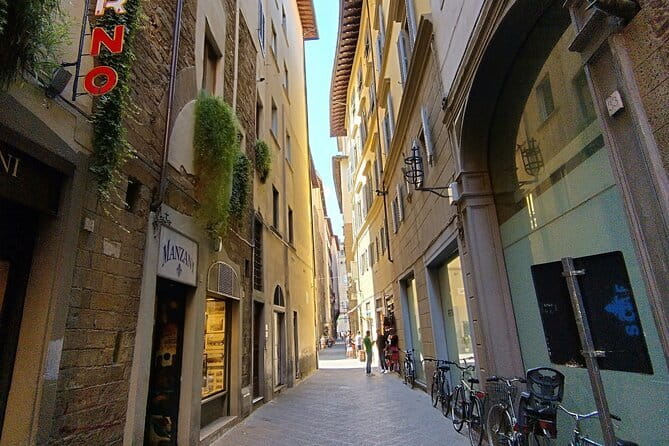
The meeting spot is at Grand Hotel Minerva, in the Piazza di Santa Maria Novella area. That’s a practical choice. You’re starting near a central hub, so if you’re arriving from the station area, you won’t feel lost for long. It’s also a good anchor if you want to build the rest of your day around the tour.
You’ll end at Ponte Vecchio, which is great because it drops you into a central zone with lots of onward options. You don’t have to backtrack across town just to continue sightseeing or search for dinner.
The tour duration is about 1 hour 30 minutes. That’s short enough to fit into an arrival day or a day when you want to save energy for other stops. It’s also long enough for the guide to provide context without turning it into a sprint.
One small planning note: since this is an outdoor walking experience, you’ll want to dress for changing weather. The experience requires good weather, and if it gets canceled for poor weather, you should be offered another date or a full refund.
Palazzo Vecchio: Cosimo I, Statues, and Medici Wedding Frescoes
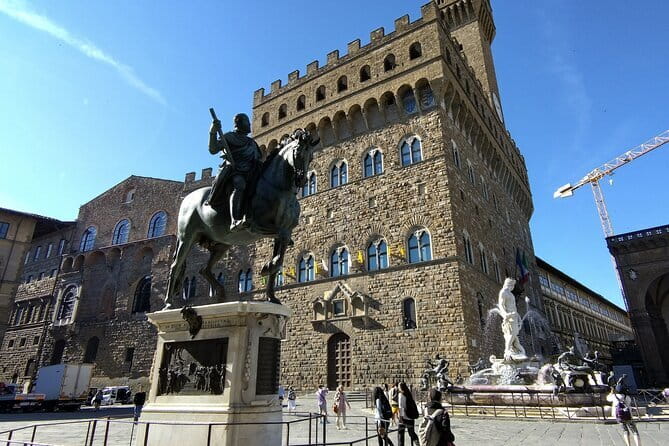
Palazzo Vecchio is where Florentine power becomes visible. This is not a place you visit only for big walls and impressive rooms. Here, you learn how leadership used art to legitimize itself and shape public identity.
The standout focus is on Cosimo I de’ Medici, the first Grand Duke of Tuscany. You’ll connect him to what’s around you, especially the statues in the square. That matters because in Florence, sculptures and monuments aren’t just decorative. They’re political messages frozen in stone.
You’ll also take a look at frescoes commissioned in honor of his son’s wedding. That detail is important for understanding the Medici strategy. Marriages were alliances, and alliances were leverage. By celebrating key family moments with large-scale art, the Medici family reinforced their position as the center of Tuscany’s story.
Is this the moment you’ll start seeing Florence differently? Often, yes. When you understand the link between rulers and public art, the city stops being a collection of beautiful buildings. It becomes a place where power and culture rubbed shoulders.
A possible drawback: the stop is short—around 15 minutes. If you love spending time staring at every carved detail, you may want to return later. But for a first pass with meaning, this is a strong start.
The Florence Duomo Stop: Santa Maria del Fiore and Brunelleschi’s Dome
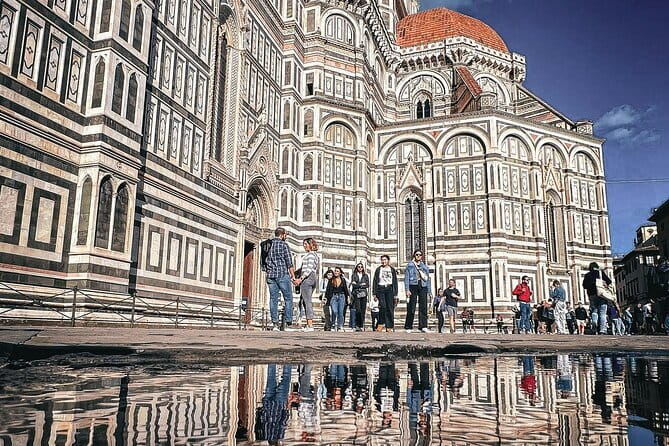
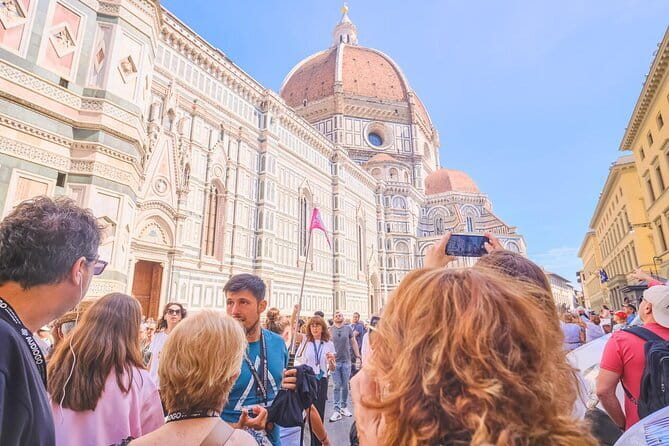
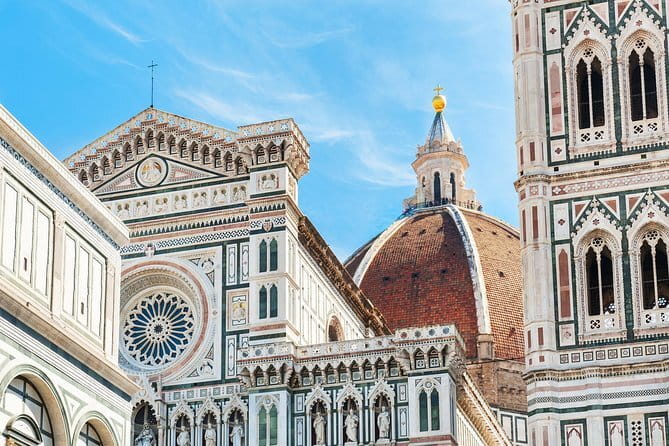
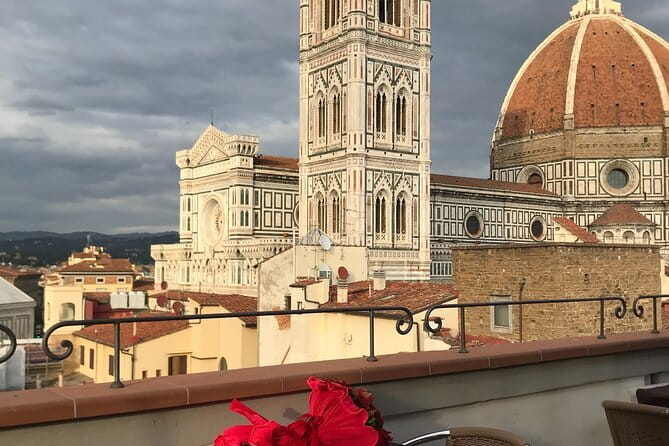
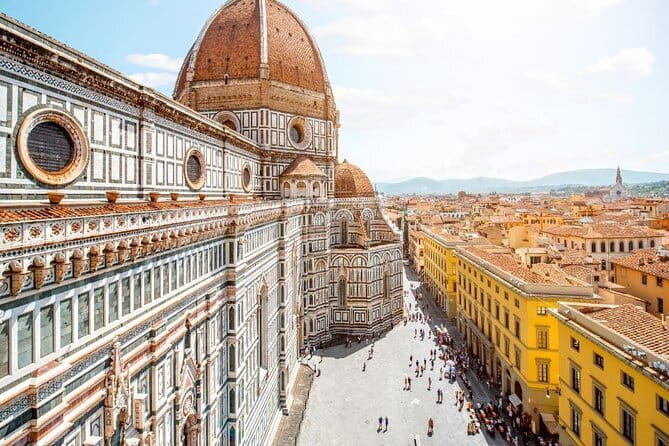
If Palazzo Vecchio explains rule, the Duomo explains ambition. Cattedrale di Santa Maria del Fiore is Florence’s most important religious landmark, and you’ll spend about 20 minutes here with a focus on how it was made and on the dome.
The dome is credited to Filippo Brunelleschi, and that’s the kind of detail that instantly gives you a lens. Once someone explains the dome’s importance and the bigger engineering story around it, you’ll look up more than you planned to. In a city famous for art, this is where architecture becomes the main character.
One practical point: the cathedral admission isn’t included. So if you want to go inside (or access areas that require a ticket), budget for that separate cost. The good news is that the tour still gives you value even if you only appreciate the cathedral exterior and the dome details from where the tour stops.
The other good news: this stop is time-balanced. You don’t get trapped for so long that you miss the rest of the walk. You also don’t have to decide between the Duomo and everything else. The tour is structured so you can keep moving.
My tip: plan your Duomo ticket decision based on your energy and the rest of your schedule. If you’re the type who gets the most out of being inside historic spaces, pay for admission. If you’re mostly here for the landmark view and the context, you’ll still come away with a clearer picture.
Ponte Vecchio: Medieval Atmosphere and Why Jewelers Took Over
Ponte Vecchio is one of those places where the setting does half the work for you. The bridge has been standing for centuries, and the medieval atmosphere is part of what makes it feel like Florence has layers. You’ll spend about 15 minutes here, and you’ll focus on what you see rather than just taking in the postcard view.
The big question the guide helps you answer is simple: why are there jewelers along Ponte Vecchio? The answer matters because it turns a line of shops into a clue about Florence’s economy and how certain trades gathered where people already flowed.
You don’t need to be a history major to enjoy this stop. It’s approachable. You’ll get a story that explains patterns, not just facts. And once you understand the “why,” the bridge becomes more than a pretty crossing. It becomes an example of how craft, commerce, and space interact in the city.
Another reason this works well at the end of the tour is emotional pacing. By the time you arrive at Ponte Vecchio, you’ve already been given the political and architectural context from earlier stops. Now you get a human, street-level Florence—where money, trade, and craft show up in a visually distinct way.
- The Best tour in Florence: Renaissance & Medici Tales – guided by a STORYTELLER
★ 5.0 · 12,316 reviews
Santa Maria Novella Square: Chariot Races and Florence’s Roman Connection
Santa Maria Novella isn’t only about the church. The square around it carries a bigger story. You’ll stop near the area connected with Santa Maria Novella, and the focus is on how that space was once used for races with chariots, similar to what people associate with Rome.
That detail is a great example of why this tour feels like more than sightseeing. You’re learning that Florence didn’t only look inward with Renaissance art—it also borrowed public spectacle and civic energy from older Roman traditions. The guide helps you connect the idea to Florence itself, and you’ll leave with a better sense of the city’s cultural confidence.
What I like about this stop is that it changes the tone. Earlier you’re in political and engineering territory. Now you’re in civic life—how people gathered, watched, and celebrated. Even if you’re not a racing fan, the concept helps you imagine daily life and public events in a way that makes the city feel lived-in.
The drawback here is again the time. It’s about 20 minutes, so you won’t get deep into every building detail around the square. But as a “why is this here?” stop, it’s exactly the kind of context that makes the rest of your self-guided walking more interesting.
The Value: Why This Tour Fits First-Timers (and Return Visits)
At $29.79 per person for about 90 minutes, this tour sits in the “affordable and useful” category. You’re paying for interpretation: a guide who connects art, politics, and architecture so you can experience Florence with better odds of understanding what you’re seeing.
The value shows up in a few ways:
- You get a consistent story thread around Medici influence instead of a scattershot highlights list.
- You spend enough time at the key landmarks to absorb explanations without feeling stuck.
- You also get practical, real-world suggestions. In the reviews, Vincenzo specifically mentioned culinary recommendations, not just generic advice. That’s the kind of detail that can help you plan the rest of your day.
The group size is capped at 20, which keeps the experience from turning into chaos. That matters because Florence sights are crowded by nature. A smaller group makes it easier to hear, and it makes the guide’s energy more effective.
Who will like this most? If you’re a first-timer who wants structure, you’ll enjoy it. If you’ve been to Florence before and you want a smarter lens—especially for Medici art and how power expressed itself publicly—you’ll still find it useful. And if you’re traveling with kids, the tour’s pace and energetic delivery are a real plus.
Weather, Timing, and How to Make the Most of 1.5 Hours
Because the experience requires good weather, your best move is to pick a day when conditions look stable. If weather cancels it, you should get offered another date or a full refund, so you’re not stuck losing your money.
Time-wise, treat this as your “anchor tour.” Do it early in your trip if possible. You’ll get context for later wanders, and you’ll understand relationships between sites that otherwise feel like separate attractions.
Also, plan your next stop with Ponte Vecchio in mind. Since that’s where you end, it’s easy to continue on foot. It’s a good place to transition from guided time to your own curiosity.
If you’re planning a Duomo visit beyond what the guide shows outside, factor in ticket timing. The cathedral admission isn’t included, so don’t assume your tour ticket covers everything.
Should You Book Art, Medicis and Renaissance With Vincenzo?
I’d book this tour if you want Florence fast, with meaning. The best reason is the Medici angle—Cosimo I de’ Medici, public art, and the way major buildings reflect power. Vincenzo Manole also brings a kind of momentum that makes the information stick, and the pace works well for a short visit.
Skip or reconsider if you’re the type who needs long, quiet time inside major sites. This is structured for context in limited time. You’ll likely come away wanting to return to the places that grabbed you most—especially the Duomo area—on your own schedule.
If your goal is to get oriented quickly and walk away with a story you can repeat to yourself later, this tour is a strong value.
FAQ
How long is the tour?
It runs for about 1 hour 30 minutes.
Where do we meet and where does the tour end?
You start at Grand Hotel Minerva, Piazza di Santa Maria Novella 16, Florence, and you end at Ponte Vecchio, very central and close to other attractions.
Is the tour offered in English?
Yes, it’s offered in English.
What about tickets and admission fees?
Palazzo Vecchio and Ponte Vecchio stops are listed as free admission. The Duomo stop says admission ticket is not included.
What group size should I expect?
The experience has a maximum of 20 travelers.
What if the weather is bad?
The tour requires good weather. If it’s canceled due to poor weather, you’ll be offered a different date or a full refund.
More Florence Tours We Have Reviewed
- Florence: Skip-The-Line Uffizi Gallery Timed Entry Ticket
★ 4.5 · 27,832 reviews - Tuscany Day Trip from Florence: Siena, San Gimignano, Pisa and Lunch at a Winery
★ 5.0 · 21,634 reviews - Florence: Timed Entry to Michelangelo’s David + Audio App
★ 4.6 · 19,496 reviews - Florence: Leonardo Interactive Museum Entry Ticket
★ 4.5 · 12,957 reviews - Florence: Michelangelo’s David Skip-the-Line Entry Ticket
★ 4.5 · 12,764 reviews
The Medici Story Continues
- The Best tour in Florence: Renaissance & Medici Tales – guided by a STORYTELLER
★ 5.0 · 12,316 reviews - The Best Tour in Florence: Renaissance and Medici Tales
★ 5.0 · 10,810 reviews - Uffizi Gallery: Renaissance Masterpieces Guided Tour
★ 4.6 · 6,070 reviews - Florence: Renaissance and Medici Tales Guided Walking Tour
★ 4.8 · 1,549 reviews - Guided Medici Tour Florence: Discover Mysteries & History
★ 4.3 · 1,077 reviews
Fresh from our Florence review desk
- Small-Group Pasta Cooking Class and Market Tour in Florence★ 5.0 · 3 reviews
- Palatina Gallery and Pitti Guided Tour in Florence★ 5.0 · 3 reviews
- Tuscan Evening Tour: Fiat 500, 8:30 to 10 PM★ 5.0 · 3 reviews
- Journey into Art: Florence’s Accademia★ 4.5 · 3 reviews
- Paint and Drink Florentine Hills★ 5.0 · 3 reviews
- Truffle hunting and lunch experience, with Vinci and winery.★ 4.5 · 3 reviews
Medici & Renaissance Tours, compared.
 ★ 5.0The Best tour in Florence: Renaissance & Medici Tales – guided by a STORYTELLERFrom $312,316 reviews
 ★ 5.0The Best Tour in Florence: Renaissance and Medici TalesFrom $310,810 reviews
 ★ 4.6Uffizi Gallery: Renaissance Masterpieces Guided TourFrom $886,070 reviews
 ★ 4.8Renaissance and Medici Tales Guided Walking TourFrom $21,549 reviews
 ★ 4.3Guided Medici Tour Florence: Discover Mysteries & HistoryFrom $571,077 reviews
 ★ 4.0Accademia Gallery: Michelangelo’s David and High Renaissance ArtFrom $43872 reviews
 ★ 4.7Guided Tour of Medici Family Secrets and ChapelsFrom $93512 reviews
 ★ 5.0Florence Private Tour: Renaissance, Famous Families & Hidden GemsFrom $199233 reviews
Browse the lists this tour appears in