
Reviewed · DARK FLORENCE & MYSTERY TOURS
Basilica of Santa Croce: Where Legends Rest in Florence
Santa Croce is where Florence keeps its legends. This tour pairs an official certified guide with a radio system, so you hear the stories clearly instead of guessing in silence. The main catch is practical: you must meet the church dress code, and if you’re late you can’t join.
Inside, Santa Croce delivers Florence at full volume: Giotto frescoes, key chapels, and the final resting place of big names like Michelangelo, Galileo, and Machiavelli. You also get the kind of interpretation that makes art and architecture click fast, without needing hours of reading.
If you add the wine option, you’ll finish with a Tuscan wine tasting and pairings. Just note the timing can shift for departures that include wine, so you’ll want to plan your schedule carefully.
In This Review
- Key things that make this tour worth your time
- Santa Croce Basilica: What You’re Really Paying For
- Piazza di Santa Croce and the June Calcio Storico Link
- Inside the Basilica: Giotto Frescoes, Gaddi Chapel, and Donatello’s Crucifix
- Brunelleschi’s Chapel: How Architecture Changes the Feel
- The Tombs of Michelangelo, Galileo, and Machiavelli
- The Monumental Cemetery and the Story of Restored Paintings
- Hearing Your Guide: Why the Radio System Matters in Practice
- Wine Tasting Option: Tuscan Pairings and the Shift in Timing
- Logistics That Matter in Florence (and Avoid the Usual Headaches)
- Who This Tour Fits Best (and Who Might Want Something Different)
- Should You Book This Santa Croce Tour?
- FAQ
- How long is the Santa Croce tour?
- How much does the tour cost?
- What’s included in the ticket?
- Is the wine tasting included automatically?
- Is there a dress code for Santa Croce?
- What happens if I arrive after the tour start time?
- What group size can I expect?
Key things that make this tour worth your time
- Official certified guide who can point out what matters and why it matters in Santa Croce
- Radio system so your hearing is covered, even in busy church spaces
- Giotto and Brunelleschi highlights in one tight, well-paced hour
- Famous tombs of Michelangelo, Galileo, and Machiavelli included in the narrative
- Optional Tuscan wine tasting with pairings if you want a second “layer” to the visit
Still curious about the darker side of Florence?
Santa Croce Basilica: What You’re Really Paying For
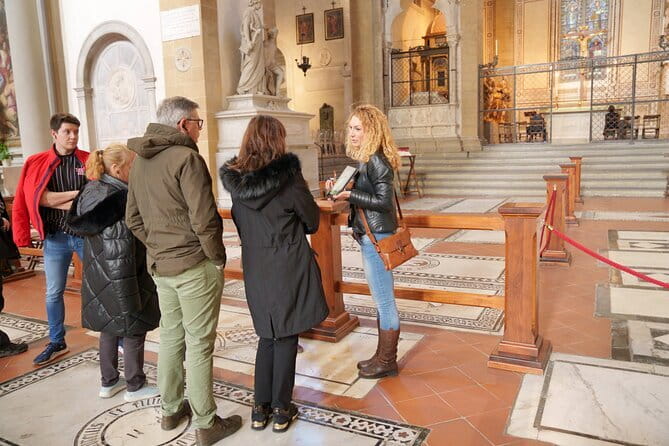
For $56.48 per person, you’re not just buying entrance. You’re buying interpretation plus access to the highlights of one of Florence’s most important church-and-art complexes. The tour is about 1 hour, and it’s capped at 20 travelers, so you’re not stuck in a giant crowd where it’s hard to see or hear.
The two features that make the biggest difference are the official certified guide and the radio system. In churches like Santa Croce, sound can be unpredictable and everyone shifts positions. Radios fix the problem fast. You get to follow along as you move from chapel to chapel, instead of doing the classic tourist math: squint, guess, move on.
Piazza di Santa Croce and the June Calcio Storico Link
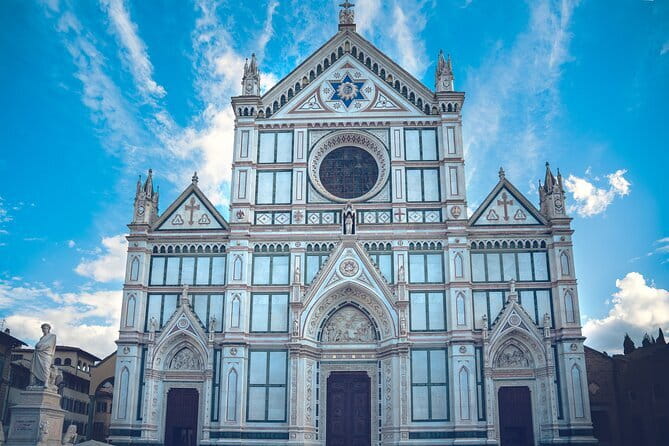
Your visit starts right in Piazza di Santa Croce, a square with a very Florentine rhythm. One detail I love here is the mention of Calcio Storico, the famous June event. Even if you’re not in town for it, it helps you frame the place: Santa Croce isn’t frozen in museum mode. It’s part of living city life.
From the piazza, the tour’s approach makes sense. You begin outside, then step inside with context. That matters because Santa Croce can feel overwhelming at first glance. A good guide helps you focus on the right corners, not just the biggest rooms.
Inside the Basilica: Giotto Frescoes, Gaddi Chapel, and Donatello’s Crucifix
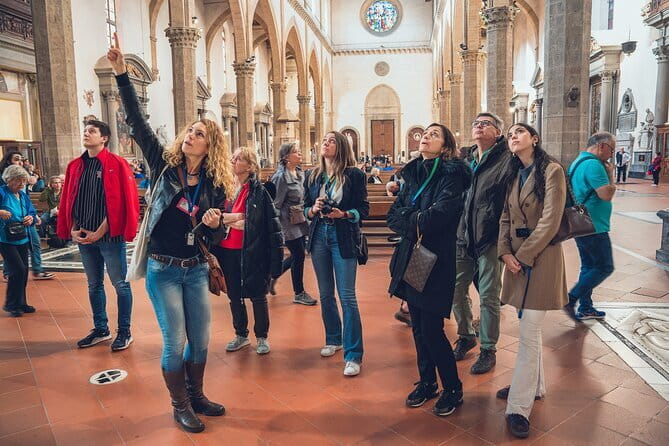
Once you’re in, Santa Croce rewards you quickly—especially if you know what to look for. The tour focuses on several standout artistic layers, each tied to a specific chapel or monument.
Here’s what you can expect the guide to point out:
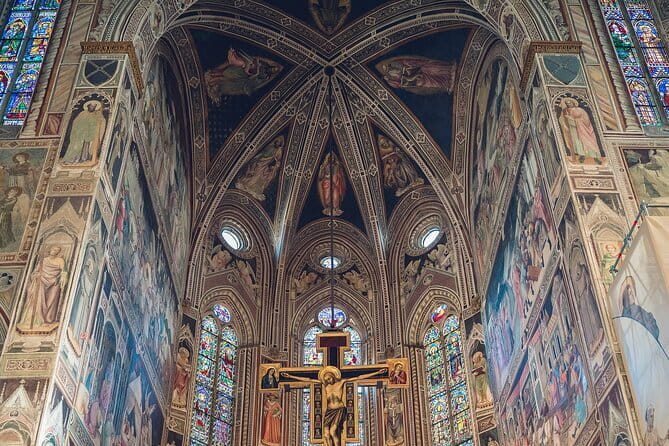
- Cappella Maggiore and frescoes by Gaddi, including the painted story connected to Santa Croce
- Giotto frescoes in the Bardi and Peruzzi Chapels, showing scenes from the lives of St. Francis and St. John
- A reference to Donatello’s crucifix, described in the tour as jewel-like and worth slowing down for
- A notable memorial near the entrance to playwright Niccolini, tied in the tour narrative to an idea often associated with the Statue of Liberty
Even if you’ve seen Florence postcards, Giotto’s presence here can still surprise you. The frescoes are not just decoration. They’re a way of understanding how Florentine religious art communicated emotion and meaning. With a guide, you’re more likely to notice composition choices and how the scenes connect.
I also appreciate that the tour doesn’t treat Santa Croce like a single-page brochure. You get guided stops that cluster the experience: artwork first, then architecture, then the people connected to the place.
Brunelleschi’s Chapel: How Architecture Changes the Feel
Florence has a talent for mixing art types, and Santa Croce is a good example. After the fresco highlights, the tour shifts your attention to how the building is shaped.
A key moment is Brunelleschi’s Cappella de’ Pazzi. The tour frames it as harmonious and architecturally perfect, and that’s exactly the point. When you’re inside, the chapel helps you understand why Renaissance architecture became its own kind of storytelling. The space feels ordered in a way that makes you look around rather than only up.
This is the part of the visit where I think a guide earns their fee. Without context, you might admire the chapel and move quickly. With context, you’re more likely to notice how design creates calm, proportion, and visual balance—especially after walking through sections with louder visual intensity.
The Tombs of Michelangelo, Galileo, and Machiavelli
Santa Croce is often described like a kind of “pantheon,” and the tour doesn’t shy away from the names. You’ll see the final resting place of famous figures including Michelangelo, Galileo, and Machiavelli.
What I like about this part is the human scale of it. It’s not just famous art; it’s famous lives and ideas placed within a religious space. The guide’s job here is to connect the tombs to the broader meaning of Santa Croce as a Florence landmark—so you don’t leave with a list of names and no sense of what they represent.
Also, don’t underestimate how these monuments affect the pacing. Even if the tour is only an hour, this section tends to slow you down naturally. That’s good. Santa Croce works best when you give the space a moment.
- The Best tour in Florence: Renaissance & Medici Tales – guided by a STORYTELLER
★ 5.0 · 12,316 reviews


The Monumental Cemetery and the Story of Restored Paintings
A standout element in the tour is the monumental cemetery area, specifically tied to restoration work. The tour notes that restoration has brought flood-damaged paintings back.
That detail matters because it changes how you interpret what you see. Instead of treating the cemetery as a static collection, you start to think about preservation—what survived, what was repaired, and why restoration is part of the building’s ongoing life.
If you care about conservation or you simply don’t like rushing through quiet spaces, this stop can be one of the most moving moments of the hour. It’s also a useful reminder that Santa Croce is not only art on walls. It’s a place with ongoing work behind the scenes.
Hearing Your Guide: Why the Radio System Matters in Practice
In churches, people talk low, footsteps echo, and crowds shift. That’s where the radio system earns its keep. The tour is designed so you can actually follow your guide as you move through different corners of the basilica.
In plain terms, this means:
- you don’t have to repeatedly crane your neck to hear a sentence
- you can keep your attention on the artwork rather than on the acoustics
- the hour stays productive, not frustrating
The tour also has a maximum of 20 travelers, which is a practical detail for sightlines. Smaller groups make it easier to pause at chapels without feeling like you’re constantly behind someone’s head.
Wine Tasting Option: Tuscan Pairings and the Shift in Timing
The optional add-on is a Tuscan wine tasting class with pairings. If you choose it, the wine part is included, along with the pairings.
The key detail to plan around is timing. If you select the wine option, the Santa Croce Guided Tour operating at 10:30am or 3:00pm may initially start later, and then the wine tasting portion happens at Meeting Point 02.
So if you’re building your day around reservations elsewhere, give yourself breathing room. You don’t want to be sprinting across Florence with your mind half in the church and half on your next stop.
Logistics That Matter in Florence (and Avoid the Usual Headaches)
A few practical points will help you get the most out of this experience:
- Admission tickets are included, so you’re not doing an extra purchase step mid-trip.
- Hotel pickup/drop-off isn’t included, so you’ll be responsible for getting yourself to the meeting point area on time.
- The tour runs in all weather conditions, so bring weather-appropriate clothes. Rain gear isn’t a luxury here; it’s smart.
- Arrive on time. If you come after the start time, you won’t be able to join, and it won’t be refunded or rescheduled.
And yes, Florence churches can be strict. The dress code requires knees and shoulders covered for both men and women. That means no shorts and no sleeveless tops. If you don’t comply, entry can be refused, and the tour won’t be rescheduled or refunded.
That rule can feel annoying, but it’s also a quick filter. If you dress appropriately, the visit stays smooth.
Who This Tour Fits Best (and Who Might Want Something Different)
This is a great choice if you:
- want to see Giotto and Brunelleschi without spending a whole day figuring out where to go
- like being guided but still want a compact footprint (about 1 hour)
- value clear explanation, especially with the radio system
- want a single “Santa Croce” plan that ties together art, tombs, and the cemetery area
It may be less ideal if you:
- prefer a slow, self-paced church wander without structure
- have trouble following dress rules (because refusal of entry is real)
- are arriving late to Florence and can’t reliably show up on time
One more note from real-world experience: guides bring different energy. On some departures, you might be guided by people like Silvia, who is described as having a wonderful personality, or Armida, who shares a very personal Florentine passion. Another example is Guido, including a Spanish-language tour experience. The common thread is storytelling and clarity.
Should You Book This Santa Croce Tour?
If you want a smart, time-efficient way to understand Santa Croce, I’d book it. The pricing feels reasonable when you factor in the official certified guide, radio system, and admission tickets bundled into a tight 1-hour visit.
I’d book especially early if your dates are fixed. This one tends to be planned ahead, and that’s usually a sign you’ll get better pickup times and fewer “plan B” headaches.
Skip it only if you’re determined to do Santa Croce entirely on your own and you’re comfortable navigating chapels, tombs, and fresco highlights without interpretation.
If you’re traveling with limited time in Florence and you want the highlights connected into a coherent story, this tour is a solid bet.
FAQ
How long is the Santa Croce tour?
The tour runs for about 1 hour.
How much does the tour cost?
The price listed is $56.48 per person.
What’s included in the ticket?
You get an official certified guide, a radio system so you can hear clearly, entrance tickets, and (if you select it) a Tuscan wine tasting and pairing class.
Is the wine tasting included automatically?
No. The wine tasting and pairing class are included only if you select the wine tasting option.
Is there a dress code for Santa Croce?
Yes. You must cover your knees and shoulders. Shorts and sleeveless tops are not allowed, and entry can be refused if you don’t meet the requirements.
What happens if I arrive after the tour start time?
If you arrive after the tour starts, you won’t be able to join, and you will not receive a refund or a rescheduled time.
What group size can I expect?
There is a maximum of 20 travelers, and the tour requires a minimum of two guests to run.
More Florence Tours We Have Reviewed
- Florence: Skip-The-Line Uffizi Gallery Timed Entry Ticket
★ 4.5 · 27,832 reviews - Tuscany Day Trip from Florence: Siena, San Gimignano, Pisa and Lunch at a Winery
★ 5.0 · 21,634 reviews - Florence: Timed Entry to Michelangelo’s David + Audio App
★ 4.6 · 19,496 reviews - Florence: Leonardo Interactive Museum Entry Ticket
★ 4.5 · 12,957 reviews - Florence: Michelangelo’s David Skip-the-Line Entry Ticket
★ 4.5 · 12,764 reviews
The Darker Side of Florence
- The Dark Side of Florence: Mysteries and Legends
★ 5.0 · 2,785 reviews - Florence: Dark Mysteries and Legends Guided Walking Tour
★ 4.6 · 1,081 reviews - Guided Medici Tour Florence: Discover Mysteries & History
★ 4.3 · 1,077 reviews - Skip-the-Line Accademia Guided Visit: David Secrets and Beyond
★ 4.0 · 525 reviews - Florence: Guided Tour of Medici Family Secrets and Chapels
★ 4.7 · 512 reviews
Fresh from our Florence review desk
- Small-Group Pasta Cooking Class and Market Tour in Florence★ 5.0 · 3 reviews
- Palatina Gallery and Pitti Guided Tour in Florence★ 5.0 · 3 reviews
- Tuscan Evening Tour: Fiat 500, 8:30 to 10 PM★ 5.0 · 3 reviews
- Journey into Art: Florence’s Accademia★ 4.5 · 3 reviews
- Paint and Drink Florentine Hills★ 5.0 · 3 reviews
- Truffle hunting and lunch experience, with Vinci and winery.★ 4.5 · 3 reviews
Dark Florence & Mystery Tours, compared.
 ★ 5.0The Dark Side of Florence: Mysteries and LegendsFrom $32,785 reviews
 ★ 4.6Dark Mysteries and Legends Guided Walking TourFrom $21,081 reviews
 ★ 4.3Guided Medici Tour Florence: Discover Mysteries & HistoryFrom $571,077 reviews
 ★ 4.0Skip-the-Line Accademia Guided Visit: David Secrets and BeyondFrom $58525 reviews
 ★ 4.7Guided Tour of Medici Family Secrets and ChapelsFrom $93512 reviews
 ★ 5.0Medici Legends & Renaissance Wonders: Florence Small Group TourFrom $119205 reviews
 ★ 4.5Dark Secrets & Scandals Evening Walking TourFrom $16120 reviews
 ★ 4.8Florence on Foot: Stories, Secrets & Daily LifeFrom $40113 reviews
Browse the lists this tour appears in