
Reviewed · MEDICI & RENAISSANCE TOURS
Medici Legends & Renaissance Wonders: Florence Small Group Tour
Florence can feel like a blur of domes and statues—so this tour slows it down with a Medici lens. In about 1 hour 45 minutes, you connect major sights to the people who shaped power, art, and banking in Renaissance Florence. It also mixes in a few side stories that help you spot details most first-time visitors miss.
I especially like the small group size (max 15). That makes the pace feel human, and questions don’t get swallowed by the crowd. I also like the whisper system, which is a smart add-on when you’re walking through loud streets.
One possible drawback: it’s not a pure Medici-only experience. The route is Medici-flavored, but it still spends real time on Florence’s bigger hits—so if you want a deep dive into the Medici powerhouses, you may want a separate museum visit too.
In This Review
- Key things I’d circle before you book
- A 1h45 Medici runway through central Florence
- Getting started at Caffè Scudieri and staying in sync
- Basilica di San Lorenzo: where Medici power meets burial stone
- Biblioteca Medicea Laurenziana: Michelangelo’s design and Mannerist drama
- Medici Chapels (Cappelle Medicee): Sagrestia Nuova and the art of persuasion
- Palazzo Medici Riccardi: banking family origins made architectural
- Duomo complex fast portraits: cathedral, baptistery, campanile, and dome
- Santa Maria del Fiore (Duomo): Gothic beginnings
- Battistero di San Giovanni: Romanesque roots
- Campanile di Giotto: a tower that’s basically a sculpture gallery
- Cupola del Brunelleschi: a dome with engineering swagger
- Palazzo Vecchio and Piazza della Signoria: civic power in plain sight
- Ponte Vecchio: the oldest Arno crossing with a shop-lined twist
- Palazzo Pitti and the Uffizi: ending with Medici art muscle
- Price and ticket reality (and why it’s still good value)
- Who this tour suits best (and who should pair it with something else)
- Named guides you may hear about
- Should you book Medici Legends & Renaissance Wonders?
- FAQ
- FAQ
- How long is the Florence Medici legends tour?
- What’s the group size limit?
- Is the tour offered in English?
- What’s included in the price?
- Are entrance tickets included?
- Where do I meet the guide?
- Where does the tour end?
- What time does the tour start?
- What happens if the weather is bad?
- Can I get a full refund if my plans change?
Key things I’d circle before you book

- Max 15 people keeps this intro tour from feeling like a conga line
- Whisper system helps you follow the guide while you’re moving street to street
- San Lorenzo to Uffizi gives you both Medici sites and the art they helped set in motion
- Michelangelo connections everywhere: from the Laurentian Library’s architecture to the Sagrestia Nuova
- Stops are quick (about five minutes each), so you see a lot without getting stuck long inside ticket lines
- Ending at Ponte Vecchio is a satisfying payoff for the walk
Deeper into Medici Florence and its Renaissance
A 1h45 Medici runway through central Florence
This tour is built for people who want Florence to make sense fast. You’re not just ticking off landmarks—you’re seeing how the Medici family used religion, civic power, architecture, and art to shape what the city became.
The timing matters. With a schedule of short stops (roughly five minutes each), the whole experience stays punchy. You’ll get orientation for streets, squares, and viewpoints, so your future self-guided walks start feeling effortless.
Getting started at Caffè Scudieri and staying in sync
You meet at Caffè Scudieri Firenze, on Piazza di San Giovanni (19R), and the tour starts at 12:15 pm. It ends near Ponte Vecchio, which is a great natural finish point because that area is easy to keep exploring afterward.
You’ll also have a mobile ticket, so you can avoid fumbling with paper on a busy sidewalk. And while you’re walking, the tour uses a whisper-style headset system. One smart way to think about this: the guide isn’t “performing” for people staring forward. They’re talking while you’re moving, so audio clarity is part of the value.
If you rely on hearing aids or you’re sensitive to street noise, I’d still plan to position yourself closer to the guide at each stop. Even with the system, narrow streets can get loud.
Basilica di San Lorenzo: where Medici power meets burial stone
Your route begins at Basilica di San Lorenzo, in the heart of Florence’s main market district. This isn’t just another big church. It’s a Medici family anchor point: the burial place for major Medici figures from Cosimo il Vecchio through Cosimo III.
What I like here is the way a guide can connect “famous names” to a physical place. Once you understand that the Medici are literally interwoven with the church, it changes how you see the rest of the tour. Architecture stops being decoration and starts reading like political messaging.
Ticket note: admission isn’t included, so if you want to go inside more deeply, you’ll need separate entry.
Biblioteca Medicea Laurenziana: Michelangelo’s design and Mannerist drama
Next up is the Laurentian Library, supported through the patronage of the Medici pope Clement VII. The point wasn’t only to store books. It was also to signal status—showing the Medici as part of intelligent and ecclesiastical society, not just merchants.
The library’s reputation comes partly from its architecture, which is associated with Michelangelo and is often linked to Mannerism. Even if you’re not an art-studies person, it’s easy to feel that something is slightly off-balance in a good way—designed for attention.
The practical value: this stop gives you context before the tour hits the Duomo and the big museum finish. You start seeing Florence as a place where art, theology, and politics share the same stage.
Medici Chapels (Cappelle Medicee): Sagrestia Nuova and the art of persuasion
At Cappelle Medicee, you’re moving into the story of how the Medici used church space to celebrate themselves. The chapels were built across the 16th and 17th centuries, connected as extensions to Brunelleschi’s earlier church work.
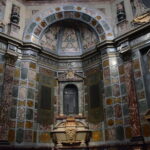
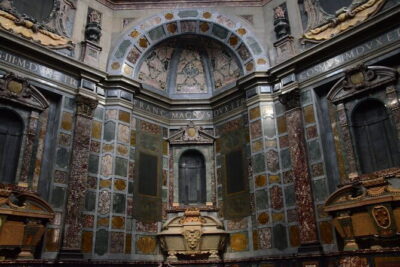
The highlight is Sagrestia Nuova, the New Sacristy, designed by Michelangelo. This is the stop where a good guide’s storytelling really pays off, because the Medici here aren’t just remembered—they’re staged. Think of it as Renaissance branding made of stone, sculpture, and ceremony.
Again, admission is not included. You’ll get the architectural orientation from outside and in passing, then decide if you want to spend time on ticketed interiors.
Still curious about the darker side of Florence?


Palazzo Medici Riccardi: banking family origins made architectural
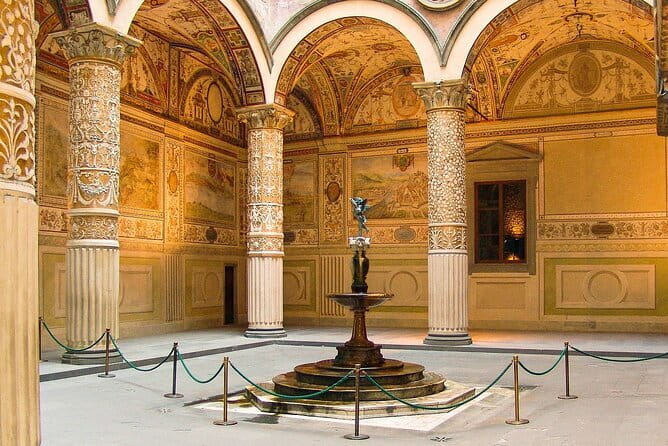
Then you shift from church authority to banking ambition at Palazzo Medici Riccardi. The building was created for Cosimo de’ Medici, leader of the Medici banking family, built between 1444 and 1484.
I like this stop because it’s a clean reminder that the Medici didn’t rise only through luck or royal connections. They rose through finance and then used that leverage to fund cultural power. You can almost see the logic: money becomes buildings, buildings become influence, influence becomes lasting art.
This is also one of the better “time economy” moments. Even on a quick schedule, the guide can explain why these walls matter without demanding that you spend hours on one site.
Duomo complex fast portraits: cathedral, baptistery, campanile, and dome
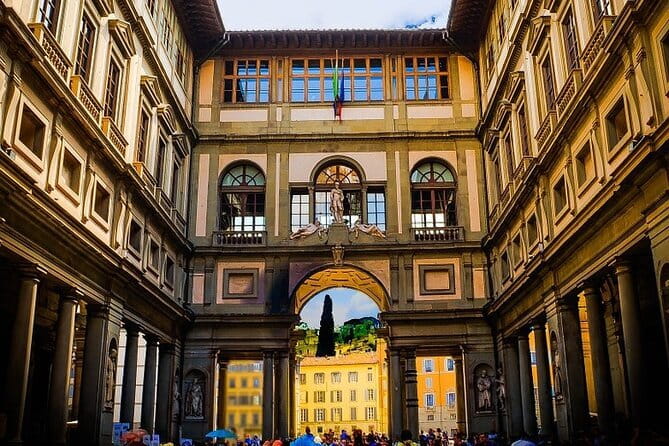
The tour spends a chunk of time around Piazza del Duomo and related structures. That’s smart because these buildings are best understood together, not one at a time.
Santa Maria del Fiore (Duomo): Gothic beginnings
You’ll see Cattedrale di Santa Maria del Fiore, Florence Cathedral, where construction began in 1296 with a Gothic plan credited to Arnolfo di Cambio. The exterior marble palette—white, green, and pink—is the big visual hook, but the guide’s job is to help you read why it looks the way it does.
Battistero di San Giovanni: Romanesque roots
Crossing the piazza, you’ll find the Florence Baptistery (Battistero di San Giovanni). It dates to 1059–1128, built in Florentine Romanesque style. This is where you notice Florence layers time: the Renaissance Medici story still sits inside older foundations.
Campanile di Giotto: a tower that’s basically a sculpture gallery
You’ll also see Campanile di Giotto, adjacent to the cathedral and baptistery. It’s famed for rich sculptural decoration and polychrome marble inlays. The tower is one of those landmarks where, once you know to look for the details, you start seeing patterns everywhere.
Cupola del Brunelleschi: a dome with engineering swagger
Finally, the Cupola del Brunelleschi gets its own spotlight. The dome was the largest in the world at its time and remains the largest brick dome ever constructed. People call it a mystery for a reason: the scale feels impossible until you’re standing close enough to understand how it visually holds together.
Ticket note: admission for these big sights is not included, so treat this part as orientation plus “wow” factor. If you want to climb or go deep inside, plan for separate entries.
Palazzo Vecchio and Piazza della Signoria: civic power in plain sight
After the cathedral area, you head to Palazzo Vecchio, the fortress-like town hall. It’s one of the most dramatic civic buildings in Tuscany, and you get the sense it was built to look unmovable.
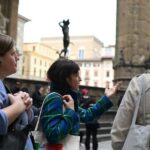
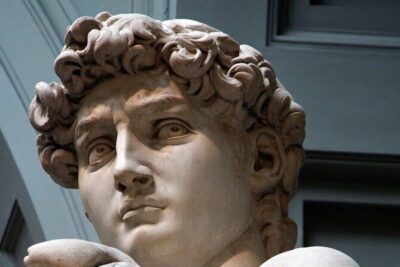
The square in front—Piazza della Signoria—is where you connect politics and public art. You’ll see the area framed by statuary like the Loggia dei Lanzi, and there’s also a copy of Michelangelo’s David in the square (a nice practical landmark for orientation when you’re later hunting for the original).
The value here is not just the view. It’s the shift in theme: you’ve gone from Medici as patrons of church and culture to Medici shaping civic identity. Florence’s public spaces are part of the story, not just backdrops.
Ponte Vecchio: the oldest Arno crossing with a shop-lined twist
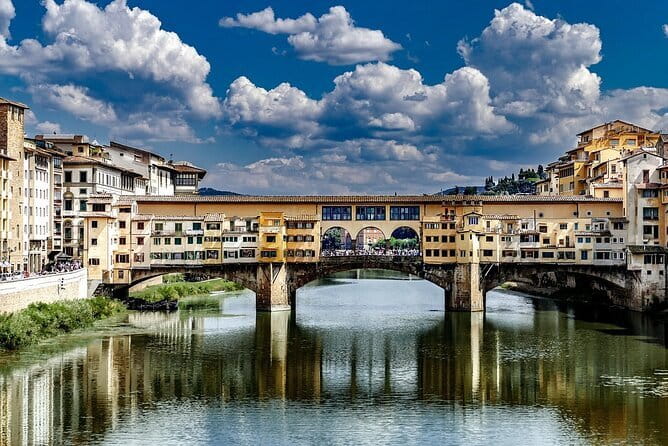
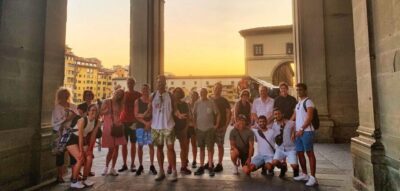
The tour ends a major stretch of walking at Ponte Vecchio. This bridge is noted as the oldest bridge over the Arno. Once, the shops along it were occupied by butchers, tanners, and farmers. Today, jewelers and art dealers dominate the storefronts.
This is the “breathing moment” in the middle of all that architecture. It’s busy, yes, but it’s also a great place to let the guide’s story settle. The Medici theme lands differently here: commerce, craftsmanship, and prestige all share the same walkway.
Ponte Vecchio itself is listed as free in the tour stops, so this is a payoff you don’t have to budget for in the moment.
Palazzo Pitti and the Uffizi: ending with Medici art muscle
You wrap up with Palazzo Pitti, which the Medici bought in 1549. It became the chief residence of ruling families in the Grand Duchy of Tuscany, and it expanded into a major treasure house where later generations collected paintings, plates, jewelry, and other luxury possessions.
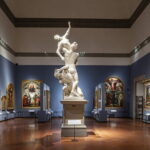
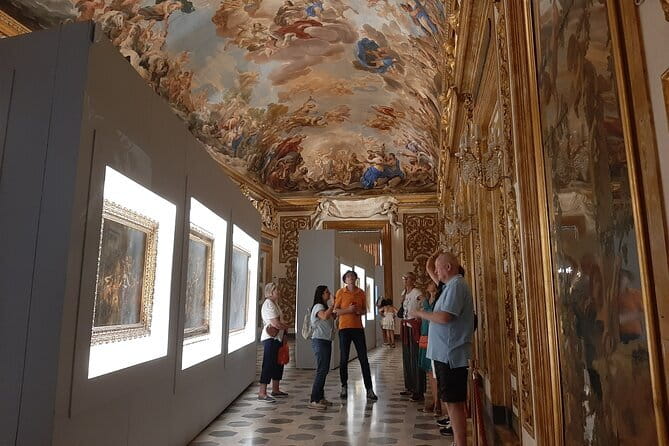
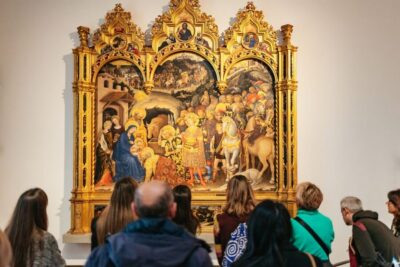
Then comes the grand finish: Gallerie degli Uffizi. The Uffizi is one of Italy’s most important museums and is famous (and crowded) for Renaissance painting. You’ll find works attributed to major masters including Michelangelo, Leonardo da Vinci, Raphael, and Botticelli. The tour frames it as a long art journey across more than 80 halls, with a focus spanning the 12th to 16th centuries.
Here’s why this ending works for most people. Earlier stops teach you the players and settings: churches, libraries, chapels, and palaces tied to Medici influence. The Uffizi is the payoff where the art becomes evidence. You’re not just looking at paintings. You’re recognizing how power and patronage shaped what got made and preserved.
Price and ticket reality (and why it’s still good value)
At $119.77 per person for about 1 hour 45 minutes, this tour sits in the “worth it if you’re short on time” category. You’re paying for a licensed guide, a small group setup (max 15), and the whisper system—plus a route that stitches together multiple major stops that are easy to get lost in if you’re self-guiding.
One thing to keep in mind: admission tickets are not included. So your all-in cost depends on what you choose to enter fully. For many people, that’s fine. The tour format helps you decide where you want extra time because you’ll see and understand things first.
My practical take: if you’re visiting for a first time and you want Florence to feel coherent, this is a strong buy. If you already have a big background in Medici history and you mainly want museums with deeper access, you might end up wishing for more time in specific ticketed interiors.
Who this tour suits best (and who should pair it with something else)
This tour is best for:
- First-time Florence visitors who want orientation fast
- People who like art and architecture, but also want the “why” behind them
- Families with kids around 10 and up (some feedback highlighted it working well for teenagers too)
- Anyone who likes a guide who tells stories with humor and small details that make names stick
Pair it with something else if:
- You want a Medici-only itinerary. This route is Medici-focused, but it also gives plenty of Florence beyond the family.
- You love museums and want more time in interiors. The structure is quick, so you might come away wanting a second pass.
Also, if you’re hearing-sensitive, take the headset system seriously. A guide can be excellent, and still the street noise can make every word harder in places like crowded piazzas.
Named guides you may hear about
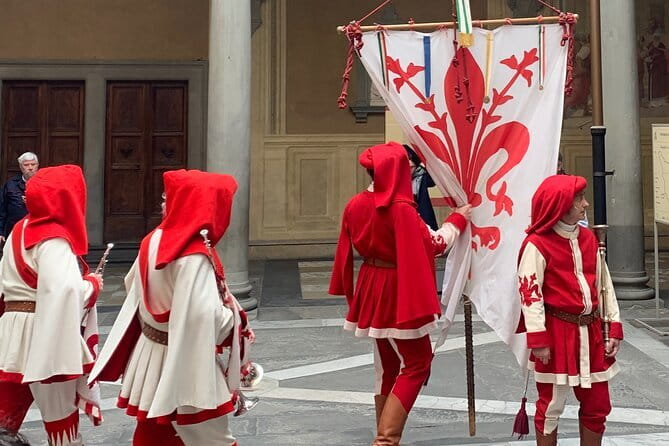
Feedback called out guides including Manuel, Martina, Amanda, and Giacomo. Across names, the themes were consistent: strong storytelling, lots of small Medici details, and an ability to turn Florence streets into a living timeline. One guide was especially praised for explaining the Medici crest and how it evolved—exactly the kind of detail that makes you start spotting symbols on your own afterward.
Should you book Medici Legends & Renaissance Wonders?
If you’re in Florence for a short stay, I’d book it. The route covers the big Medici anchors—San Lorenzo, Laurentian Library, Medici Chapels, and Palazzo Medici Riccardi—then connects them to the sights that make Florence feel like Florence, especially the Duomo complex and the Uffizi.
Don’t book it only if you want one thing: nonstop Medici depth inside every relevant museum. This tour is more like a sharp, well-told introduction that points you toward what’s worth deeper ticket time later.
FAQ
FAQ
How long is the Florence Medici legends tour?
It’s listed at approximately 1 hour 45 minutes.
What’s the group size limit?
The tour has a maximum of 15 travelers.
Is the tour offered in English?
Yes, it’s offered in English.
What’s included in the price?
You get a licensed tour guide, a small group experience, and a whisper system.
Are entrance tickets included?
No. Admission tickets are not included for the stops that require entry.
Where do I meet the guide?
Meet at Caffè Scudieri Firenze, Piazza di San Giovanni, 19R, 50123 Firenze FI, Italy.
Where does the tour end?
It ends at Ponte Vecchio (the exact endpoint can vary slightly in the area).
What time does the tour start?
The start time is 12:15 pm.
What happens if the weather is bad?
The tour requires good weather. If it’s canceled due to poor weather, you’ll be offered a different date or a full refund.
Can I get a full refund if my plans change?
Yes. You can cancel up to 24 hours in advance for a full refund.
More Florence Tours We Have Reviewed
- Florence: Skip-The-Line Uffizi Gallery Timed Entry Ticket
★ 4.5 · 27,832 reviews - Tuscany Day Trip from Florence: Siena, San Gimignano, Pisa and Lunch at a Winery
★ 5.0 · 21,634 reviews - Florence: Timed Entry to Michelangelo’s David + Audio App
★ 4.6 · 19,496 reviews - Florence: Leonardo Interactive Museum Entry Ticket
★ 4.5 · 12,957 reviews - Florence: Michelangelo’s David Skip-the-Line Entry Ticket
★ 4.5 · 12,764 reviews
The Darker Side of Florence
- The Dark Side of Florence: Mysteries and Legends
★ 5.0 · 2,785 reviews - Florence: Dark Mysteries and Legends Guided Walking Tour
★ 4.6 · 1,081 reviews - Guided Medici Tour Florence: Discover Mysteries & History
★ 4.3 · 1,077 reviews - Skip-the-Line Accademia Guided Visit: David Secrets and Beyond
★ 4.0 · 525 reviews - Florence: Guided Tour of Medici Family Secrets and Chapels
★ 4.7 · 512 reviews
The Medici Story Continues
- The Best tour in Florence: Renaissance & Medici Tales – guided by a STORYTELLER
★ 5.0 · 12,316 reviews - The Best Tour in Florence: Renaissance and Medici Tales
★ 5.0 · 10,810 reviews - Uffizi Gallery: Renaissance Masterpieces Guided Tour
★ 4.6 · 6,070 reviews - Florence: Renaissance and Medici Tales Guided Walking Tour
★ 4.8 · 1,549 reviews - Guided Medici Tour Florence: Discover Mysteries & History
★ 4.3 · 1,077 reviews
Fresh from our Florence review desk
- Small-Group Pasta Cooking Class and Market Tour in Florence★ 5.0 · 3 reviews
- Palatina Gallery and Pitti Guided Tour in Florence★ 5.0 · 3 reviews
- Tuscan Evening Tour: Fiat 500, 8:30 to 10 PM★ 5.0 · 3 reviews
- Journey into Art: Florence’s Accademia★ 4.5 · 3 reviews
- Paint and Drink Florentine Hills★ 5.0 · 3 reviews
- Truffle hunting and lunch experience, with Vinci and winery.★ 4.5 · 3 reviews
Medici & Renaissance Tours, compared.
 ★ 5.0The Best tour in Florence: Renaissance & Medici Tales – guided by a STORYTELLERFrom $312,316 reviews
 ★ 5.0The Best Tour in Florence: Renaissance and Medici TalesFrom $310,810 reviews
 ★ 4.6Uffizi Gallery: Renaissance Masterpieces Guided TourFrom $886,070 reviews
 ★ 4.8Renaissance and Medici Tales Guided Walking TourFrom $21,549 reviews
 ★ 4.3Guided Medici Tour Florence: Discover Mysteries & HistoryFrom $571,077 reviews
 ★ 4.0Accademia Gallery: Michelangelo’s David and High Renaissance ArtFrom $43872 reviews
 ★ 4.7Guided Tour of Medici Family Secrets and ChapelsFrom $93512 reviews
 ★ 5.0Florence Private Tour: Renaissance, Famous Families & Hidden GemsFrom $199233 reviews
Browse the lists this tour appears in