
Reviewed · WALKING TOURS
Discover the best of Florence: an accessible 2 hours walking tour
Four Florence stops in two hours—on foot. This accessible small-group walk is a smart way to get the big sights without racing around, and it’s built for people who need a bit more room to move. You start in the ancient heart and end on the Arno with iconic views.
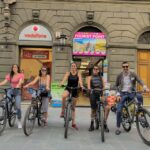
I especially liked two things. I loved the way Veronica keeps the pace human—questions welcome, and the walk feels more like city time with a knowledgeable friend than a lecture. I also love that you can use headsets (for groups over 4), so you hear every detail even when the streets get crowded.
One thing to plan for: the main highlights include stops where admission tickets aren’t included, so if you want to go inside certain buildings, you’ll need to budget for those entries separately.
In This Review
- Key highlights at a glance
- Why this Florence walk fits a tight schedule
- Starting at Caffè Gilli and ending at Ponte Vecchio
- The Forum start: connecting Florentia to what you see now
- Piazza del Duomo: Cathedral views and Brunelleschi’s Dome moment
- Torre della Pagliazza: medieval legends in a more intimate pocket
- Piazza della Signoria: Palazzo Vecchio and an open-air sculpture vibe
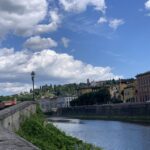
- Ponte Vecchio: the iconic bridge finale with Arno views
- Small group size and headsets: the comfort factor
- Price and value: is $126.03 worth it?
- What the guide style feels like in real life (Veronica’s approach)
- The timing: 30 minutes per stop works, with one ticket exception
- Who should book this accessible Florence walk
- Practical tips before you go
- Should you book this Florence tour?
- FAQ
- How long is the Florence walking tour?
- Where does the tour start and end?
- What’s the group size limit?
- What language is the tour offered in?
- Are the Duomo and Signoria admission tickets included?
- Which stops are free of admission?
- Does the tour provide headsets?
- Is the tour accessible for people with mobility needs?
- Are sign language or tactile supports available?
- Is free cancellation available?
Key highlights at a glance
- Max 10 people keeps the experience intimate and manageable, not like a photo line.
- Accessibility supports on request include sign language interpretation and tactile help for blind people.
- Headsets for groups larger than 4 make a huge difference on busy sidewalks.
- A story-first approach ties monuments to everyday life, legends, and art.
- Duomo-area tickets are separate, while some iconic viewpoints are free to enjoy.
Stretch your legs on more Florence walking tours
Why this Florence walk fits a tight schedule
Florence can be overwhelming fast: lanes, crowds, stone-on-stone beauty, and a million things vying for your attention. This tour is designed for focus. In about 2 hours, you hit the core landmarks that define the city’s visual identity, and you get context while you’re standing right there.
The small-group size matters more than you might think. With a maximum of 10 people, your guide can slow down when the group needs it and speed up only when it makes sense. If you like walking tours that feel organized (not rushed), this one tends to deliver.
Also, this isn’t a “stand-and-stare” loop. You get time at each stop—about 30 minutes per major area—so you can look, ask, and take photos without feeling like you’re being dragged onward.
Starting at Caffè Gilli and ending at Ponte Vecchio
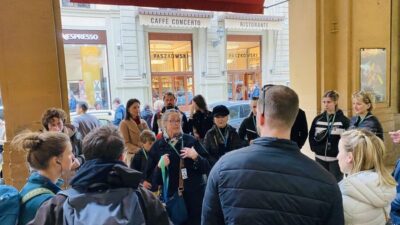
You meet at Caffè Gilli, Via Roma 1r. It’s a useful meeting point because it’s easy to spot and it puts you close to the action immediately. From there, the route threads through the old layers of Florence rather than bouncing around by far-flung taxi stops.
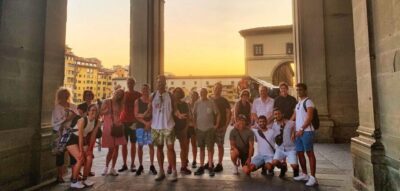
The tour ends on Ponte Vecchio, one of the best places to finish because it’s visually rewarding even if you’re tired. You walk away with the Arno in front of you, and you’re in the heart of the postcard zone where it’s still easy to continue exploring on your own.
If you like practical walking days, this ending is a bonus. You’re not locked into a “back to the meeting point” situation. You finish where you likely want to linger.
The Forum start: connecting Florentia to what you see now
The tour begins from the ancient Forum, the center of the Roman city Florentia. That first moment is a good setup. Florence often feels like “Renaissance this, Renaissance that,” but the Roman foundation is part of the story.
Your guide’s job here is to help you look with intention. Instead of treating buildings as standalone icons, you start seeing Florence as something built in layers—new power and new art placed over older ground.
It’s a small start, but it changes how you experience the next stops. You’re not just collecting sights—you’re understanding why certain places became important.
Piazza del Duomo: Cathedral views and Brunelleschi’s Dome moment
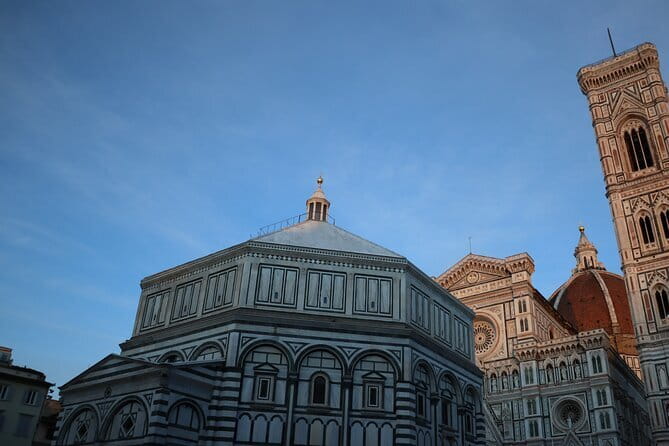
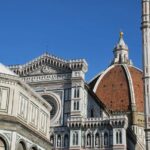
Next up is Piazza del Duomo, Florence’s religious center. This stop is all about the major landmarks: the Cathedral, the Baptistery, the Bell Tower, and Brunelleschi’s Dome.
What I like about this kind of stop is that you get orientation fast. From the square, you can take in how the architecture relates to each other—mass, height, placement. Then your guide adds the “why it matters” context so the buildings start making sense as a set, not separate souvenirs.
Here’s the key practical note: admission tickets aren’t included for the Duomo stop. That doesn’t make the visit less valuable—Piazza views alone can be spectacular—but it does mean you should decide ahead of time whether you want to go inside. If you do, plan for extra time and tickets you’ll have to arrange separately.
If you’re traveling during peak season, expect the area to be busy. The benefit of a guide in this location is pacing: you’re less likely to lose time trying to figure out what to look at first.
Torre della Pagliazza: medieval legends in a more intimate pocket

After the Duomo’s big-ticket focus, you move to Torre Della Pagliazza, in Florence’s medieval heart. The payoff here isn’t just the views. It’s the stories—history and legends tied to the city’s earlier eras.
This stop works well because it’s a tempo shift. You’ve just absorbed major religious architecture; now you’re hearing the kinds of details that make a city feel lived-in. If you like tours where your guide explains how people might have moved through streets, neighborhoods, and daily life long ago, this is the kind of moment that sticks.
It’s also free in terms of admission, so you’re not forced into a ticketed experience to get value from the time. You’re paying for interpretation and perspective, not entry fees.
Prefer something else? A few more Florence tours to weigh up

Piazza della Signoria: Palazzo Vecchio and an open-air sculpture vibe

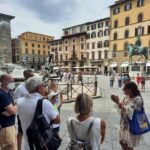
Then you reach Piazza della Signoria, dominated by Palazzo Vecchio and filled with Renaissance sculpture that turns the square into a sort of outdoor gallery.
If you’ve only seen pictures of Palazzo Vecchio, standing in the square is a different experience. The building’s scale hits you, and the sculptures around you start to feel like part of a larger “message system” for the city.
This is also a good stop for people who care about art, politics, and symbolism. Your guide can connect what you see to Florence’s Renaissance priorities—how power was displayed, and how art was used in public life.
Admission for this stop is not included, according to the tour details. Even if you don’t purchase entry, the square itself gives plenty to enjoy. You’re there long enough to look, listen, and reposition your photos as you learn what matters.
Ponte Vecchio: the iconic bridge finale with Arno views
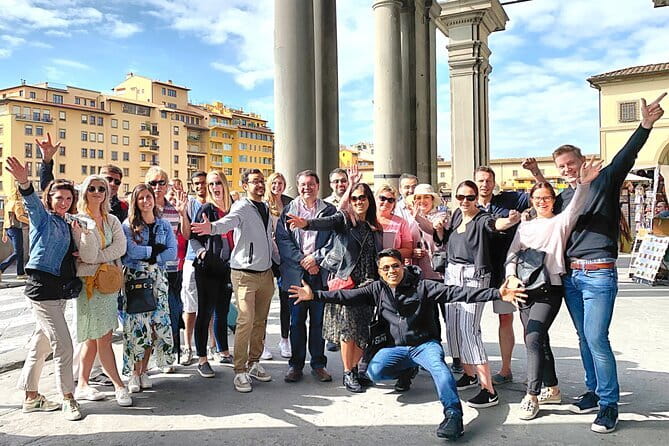
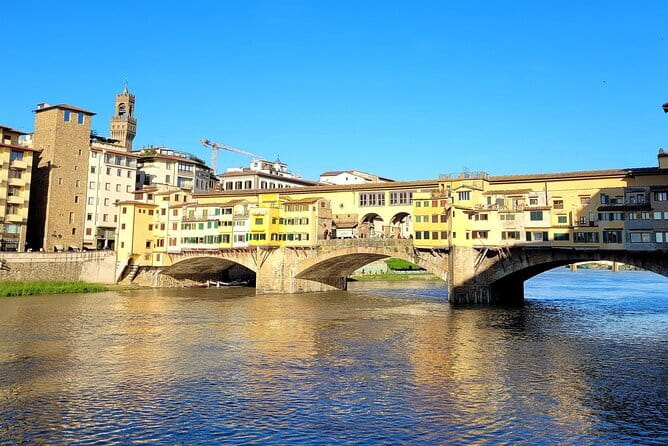
The last stop is Ponte Vecchio, Florence’s oldest and most iconic bridge spanning the Arno River. It’s known for its medieval design and its famous jewelry shops, plus the views that open up from the bridge itself.
This is the moment where the tour “pays off” visually. You’re not just collecting information anymore—you’re standing in one of the most recognizable urban scenes in Italy. It’s also a great place to slow down. You have time to look left and right, catch the light, and watch the river traffic go by.
Admission for this stop is free, so it’s a low-stress finish. If you want to continue walking afterward, you’re already in the best possible place to keep the momentum.
Small group size and headsets: the comfort factor
Florence sidewalks are narrow, the city is full of stops and starts, and crowds can make even a short day feel longer. That’s why I think the combination of max 10 people plus headsets (when the group is bigger than 4) is such a smart choice.
Headsets help you stay oriented. You don’t have to strain. You can keep your eyes on the buildings while still hearing explanations clearly. That means less stopping to “catch up” with the guide’s voice, which keeps the walk smoother.
The tour is also offered as a wheelchair-friendly route that goes where cars can’t—important if you want a walking experience that feels realistic, not theoretical. And accessibility support is available on request, including sign language interpreters and tactile support for blind people.
If your group includes people with mobility challenges, one of the most helpful pieces of information is that the guide can accommodate needs and adjust the route and pace. That kind of flexibility is the difference between a tour that’s only accessible on paper and one that works in real life.
Price and value: is $126.03 worth it?
At $126.03 per person, this isn’t a budget stroll. But it’s also not trying to sell you a full-day museum plan or a high-cost private driver experience.
You’re paying for three things that matter in Florence:
- A licensed guide who explains what you’re seeing and keeps the flow organized.
- A small-group format (max 10) that reduces waiting and improves the chance of a question getting answered.
- Practical quality-of-life features like headsets and an accessible route design.
Short tours can be tricky: you want value, but you don’t want to feel like you’re speeding through highlights. Here, the time is evenly distributed across four major areas, and that helps.
So who gets the best value? People who want the top landmarks plus context, but don’t want a day-long commitment. Also, if accessibility is a factor in your trip, the structured pacing and supportive format can make the experience feel worth paying for—because it reduces stress.
What the guide style feels like in real life (Veronica’s approach)
This tour is led by Veronica, and the consistent theme in the feedback is that she brings Florence to life. The big difference isn’t just facts. It’s how she shares them.
Expect storytelling that connects architecture and art to everyday life. She’s described as warm and professional, with a relaxed pace that leaves room to talk and reflect. That matters on a short tour, because you only get so many opportunities to ask questions before you’re at the final bridge.
Veronica is also praised for keeping the experience engaging for younger people. If you’re traveling as a family, that’s a real advantage. A tour can be “kid-friendly” on paper, but the best ones actually keep kids involved without turning it into chaos.
And yes—people love the food tip element, too. One of the standout mentions was a local gelato recommendation. Even if you plan your gelato stops in advance, having a guide point you toward something worth trying saves you from guessing.
The timing: 30 minutes per stop works, with one ticket exception
A useful way to plan your day is to assume about 30 minutes per main stop, for a total of about 2 hours.
There’s one practical exception: the Duomo stop includes time for the sights, but tickets are not included. If you want to go inside, you may need to adjust your expectations. If you’re happy with square views and exterior details, you can enjoy the stop without ticket logistics getting in your way.
Other stops are described as free for admission in the tour details, which helps keep the day smooth.
If you’re booking alongside other plans, leave yourself a buffer. Florence is the kind of place where you’ll find yourself lingering at a doorway or a viewpoint longer than you planned. This tour gives you a structure, but it doesn’t fight your curiosity.
Who should book this accessible Florence walk
I’d target this tour if you fit one (or more) of these:
- You want the main landmarks—Duomo, Signoria, and Ponte Vecchio—without committing to a full-day itinerary.
- You care about context, not just photos. You’ll enjoy the “why” behind the places.
- Your group includes mixed ages, including kids, and you want a guide who can keep everyone engaged.
- Accessibility matters, whether you use a wheelchair or you need support like sign language interpretation or tactile help (available on request).
- You prefer a small group so you can actually hear, ask, and move at a comfortable pace.
This is also a good choice if you’ve got limited time and you’re thinking: I can’t do everything, but I want to do the best-known Florence correctly. The route is built for that.
Practical tips before you go
A walking tour is still walking, even when it’s accessible. Wear comfortable shoes with good grip. Bring a light layer if the weather shifts—Florence can change its mind quickly.
Also, set your expectation for the Duomo area: it’s iconic, it’s busy, and it’s visually layered. If you’re buying tickets separately for entry, do that early when possible. If you’re not, you’ll still get a solid experience from the square views and guided context.
Finally, think about your arrival time at Caffè Gilli. Being on time makes everything easier for the whole group, especially when the route is planned around a comfortable walking pace.
Should you book this Florence tour?
I’d say yes if you want a focused Florence experience with a guide who can explain what you’re seeing and keep the group comfortable. The small group size, headsets, and Veronica’s engaging, story-forward style are strong reasons to book—especially if you have accessibility needs.
If you know you want to go inside ticketed areas in the Duomo complex, confirm ahead of time what you’re planning to do so you’re not surprised by extra admission costs. And if your idea of a perfect day is “wander alone with no structure,” this might feel a bit too guided.
But if you want a short, organized, and genuinely enjoyable walk through Florence’s signature sights, this one is a solid match.
FAQ
How long is the Florence walking tour?
The tour lasts about 2 hours.
Where does the tour start and end?
It starts at Caffè Gilli, Via Roma 1r, 50123 Firenze and ends at Ponte Vecchio, 50125 Firenze.
What’s the group size limit?
The tour has a maximum of 10 travelers.
What language is the tour offered in?
The tour is offered in English.
Are the Duomo and Signoria admission tickets included?
No. The Piazza del Duomo stop states admission tickets are not included, and Piazza della Signoria also lists admission tickets as not included.
Which stops are free of admission?
Torre Della Pagliazza and Ponte Vecchio list admission as free.
Does the tour provide headsets?
Yes. Headsets are provided for groups larger than 4 people.
Is the tour accessible for people with mobility needs?
The tour is described as a wheelchair-friendly walking tour that goes where cars can’t.
Are sign language or tactile supports available?
Yes. Sign language interpreters and tactile supports for blind people are available on request.
Is free cancellation available?
Yes. You can cancel for free up to 24 hours in advance for a full refund.
More Florence Walks
- Florence: Highlights Walking Tour with Expert Guide
★ 4.6 · 4,662 reviews - Uffizi & Accademia Timed Entry: Small Group Duomo Walking Tour
★ 4.5 · 3,630 reviews - Florence: Duomo Complex with Tickets & City Walk Guided Tour
★ 4.7 · 2,057 reviews - Florence: Guided Walking Tour
★ 4.6 · 1,602 reviews - Florence: Renaissance and Medici Tales Guided Walking Tour
★ 4.8 · 1,549 reviews
More Florence Tours to Weigh Up
- The Best tour in Florence: Renaissance & Medici Tales – guided by a STORYTELLER
★ 5.0 · 12,316 reviews - The Best Tour in Florence: Renaissance and Medici Tales
★ 5.0 · 10,810 reviews - Florence: Chianti Wineries Tour with Wine Tasting
★ 4.5 · 10,071 reviews - Florence: Duomo Cathedral 60-Minute Guided Tour
★ 3.7 · 6,829 reviews - Florence: Hop-on Hop-off Bus Tour: 24, 48 or 72-Hour Ticket
★ 4.0 · 6,283 reviews
More Florence Tours We Have Reviewed
- Florence: Skip-The-Line Uffizi Gallery Timed Entry Ticket
★ 4.5 · 27,832 reviews - Tuscany Day Trip from Florence: Siena, San Gimignano, Pisa and Lunch at a Winery
★ 5.0 · 21,634 reviews - Florence: Timed Entry to Michelangelo’s David + Audio App
★ 4.6 · 19,496 reviews - Florence: Leonardo Interactive Museum Entry Ticket
★ 4.5 · 12,957 reviews - Florence: Michelangelo’s David Skip-the-Line Entry Ticket
★ 4.5 · 12,764 reviews
Fresh from our Florence review desk
- Small-Group Pasta Cooking Class and Market Tour in Florence★ 5.0 · 3 reviews
- Palatina Gallery and Pitti Guided Tour in Florence★ 5.0 · 3 reviews
- Tuscan Evening Tour: Fiat 500, 8:30 to 10 PM★ 5.0 · 3 reviews
- Journey into Art: Florence’s Accademia★ 4.5 · 3 reviews
- Paint and Drink Florentine Hills★ 5.0 · 3 reviews
- Truffle hunting and lunch experience, with Vinci and winery.★ 4.5 · 3 reviews
Walking Tours, compared.
 ★ 4.6Highlights Walking Tour with Expert GuideFrom $274,662 reviews
 ★ 4.5Uffizi & Accademia Timed Entry: Small Group Duomo Walking TourFrom $503,630 reviews
 ★ 4.7Duomo Complex with Tickets & City Walk Guided TourFrom $932,057 reviews
 ★ 4.6Guided Walking TourFrom $271,602 reviews
 ★ 4.8Renaissance and Medici Tales Guided Walking TourFrom $21,549 reviews
 ★ 4.7Uffizi & Accademia Small Group Walking TourFrom $1481,380 reviews
 ★ 5.0Skip-the-Line Florence Highlights and David Walking TourFrom $1171,127 reviews
 ★ 4.6Dark Mysteries and Legends Guided Walking TourFrom $21,081 reviews
Browse the lists this tour appears in