
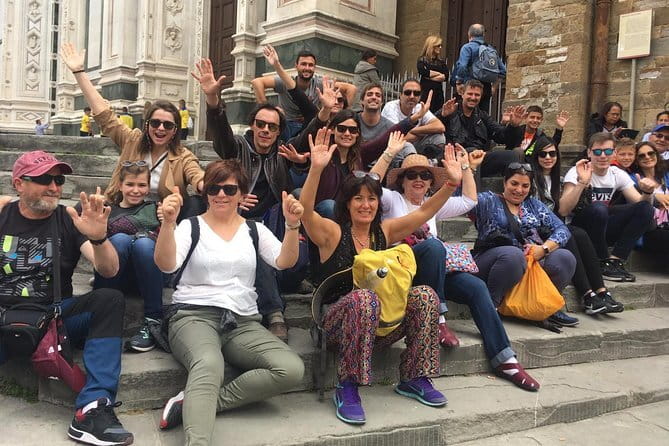
Reviewed · WALKING TOURS
Experience Florence’s Art and Architecture on a Walking Tour
Florence makes more sense when you walk it. This guided art and architecture route is a smart way to get oriented fast, with a leader who helps you see what matters and where to look. I like that you skip the map-and-guidebook grind and still hit major highlights, and I like the way the walk strings together churches, sculpture, and landmark squares in one morning-sized chunk.
One thing to keep in mind: in very crowded spots, audio can be tricky. If you are sensitive to sound or need clearer narration, you may want to position yourself where you can hear best, since this tour is designed for a small group rather than full headset-style coverage.
In This Review
- Key things to know before you go
- How a 2-hour 15-minute walk helps you read Florence
- Santa Maria Novella: your compass for the whole city
- Via de’ Tornabuoni and Palazzo Strozzi without the map
- Piazza della Repubblica and the Roman layer under Florence
- Santa Maria del Fiore complex: Giotto and your ticket choice
- Orsanmichele sculpture stop with names like Donatello
- Piazza della Signoria to Ponte Vecchio: Medici power and big-city art
- Santa Croce and Dante’s monument: closing the loop
- Price, group size, and audio: what the value really means
- Should you book this Florence art and architecture walking tour?
- FAQ
- How long is the Florence art and architecture walking tour?
- What time does the tour start, and where do I meet?
- Where does the tour end?
- Is the tour offered in English?
- Is admission included for all stops?
- Can I cancel for free?
Key things to know before you go
- Small-group pace: capped at about 20 travelers, so the route stays manageable
- English narration: tour is offered in English, with guides who share practical local context
- Top Florentine landmarks: Santa Maria Novella, the Duomo complex area, Orsanmichele, Palazzo Vecchio area, Santa Croce
- Mostly free to look around: many stops are listed with free admission, but the Duomo area ticket is not included
- Meeting and ending are easy: it starts near Piazza di Santa Maria Novella and ends at Piazza di Santa Croce
Stretch your legs on more Florence walking tours
How a 2-hour 15-minute walk helps you read Florence
This is the kind of tour that works like a starter key. Florence is full of art and stone, but the city can feel like a blur if you only wander alone. Here, you get a guided line of travel through the old center, with history tied to what you can actually see from street level.
The timing is the other big win. At roughly 2 hours 15 minutes, you get a full sweep of key areas without turning your whole day into museum lineups. That matters if you have limited time, you want one morning to orient yourself, or you plan to come back later for deeper visits.
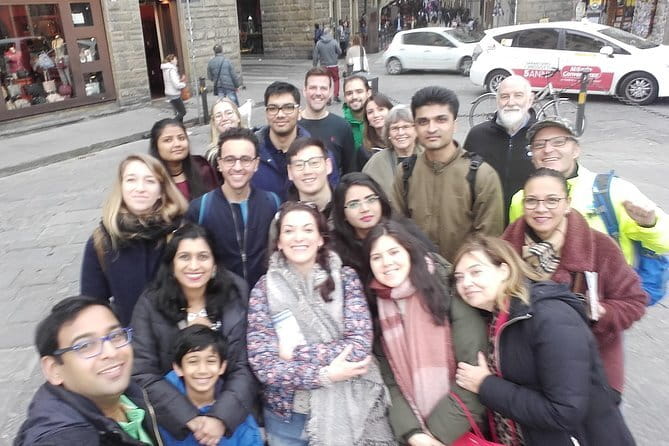
Group size also changes the feel. With a maximum around 20 people, you should have an easier time hearing directions and keeping up. And since it is a walking tour, you are not stuck in a bus schedule or waiting for gates to open.
The tour is also priced unusually low compared to many guided options. That does not mean it is low effort. You should treat it as excellent value and show appreciation in the usual Florence way—by tipping if you enjoy the guide’s work. Some guides are known for adding practical extras like where to grab food, useful shortcuts, and details that you would miss on your own.
Santa Maria Novella: your compass for the whole city
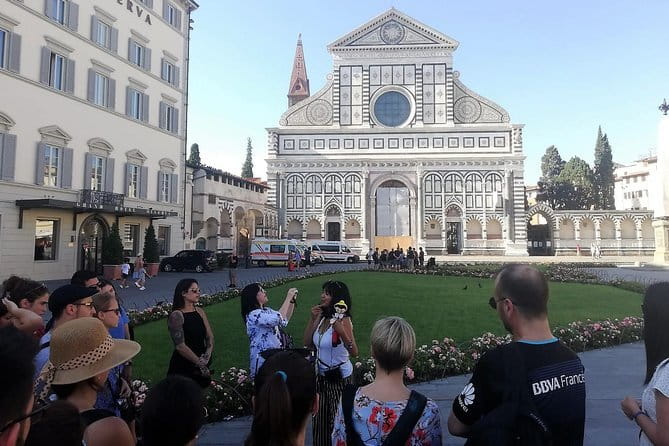
You begin at Piazza di Santa Maria Novella, right by the Basilica of Santa Maria Novella. This is a strong opening point because the church sits in one of Florence’s main entry zones, so it helps you set your bearings early. You also get the advantage of learning how to look at the city’s layers—what is sacred, what is civic, and what is power—before you move into the denser highlight zones.
From here, the tour gives you a first dose of architectural thinking. You learn what to notice on facades and along corridors of street views. That becomes useful later when you reach the Duomo complex area and the sculpture-focused stops, because you will already have a framework for reading buildings.
Another practical benefit: starting in this area makes the early part of the walk feel efficient. You are not trekking across town before you get the story. It is also easy to build the rest of your day after you finish, since you end near Santa Croce.
If you are the kind of traveler who wants a calm morning plan, this start fits. You get structure first, then freedom. You can use what you learn to decide what to revisit later—whether it is another church interior, a museum, or a long linger in a square.
Via de’ Tornabuoni and Palazzo Strozzi without the map
Next you move into the rhythm of central Florence. The route takes you along Via de’ Tornabuoni, which is famous for grand buildings and an upscale shopping atmosphere. Even if you are not shopping, the street is a great visual corridor: you can track where the city’s wealth shows up in architecture and how the street opens toward bigger public spaces.
You also get a helpful cross-check of landmarks along the way. The walk passes Piazza Antinori, then moves toward a cluster that includes Palazzo Strozzi and the area around Piazza Santa Trinita. That is a lot of famous name power in a short distance, which is exactly what you want from an express tour.
Why this section is worth it: it trains your eye. When you walk with someone who points out what to focus on, Florence stops being random. You begin to notice things like proportions, how buildings frame the street, and how plazas connect to churches and larger civic areas.
A nice bonus from guides on this kind of route: they sometimes add side stories that make the streets feel lived-in, not just postcard-perfect. People also mention extras like the so-called wine windows on similar walks. You might hear about them as you pass through older lanes, which is the sort of detail that makes Florence feel specific and not generic.
Piazza della Repubblica and the Roman layer under Florence
Then you shift to Piazza della Repubblica, a square that helps you understand Florence beyond the Renaissance spotlight. This stop is short, but it is a useful pivot point. The tour connects Florence’s later fame to older roots, including the Roman layer that still shows up in the city’s structure and story.
This is also where the route helps you in a practical way: it shows you how Florence’s streets funnel people from major churches into open spaces. Those transitions are important because the city is built for wandering, but only if you know where the next open moment is.
Even if you do not take long at this square, you gain orientation. You learn what direction your day is going in, and you start recognizing how major sites relate to one another. That can save you time later when you pick your own route for an afternoon wander.
One small caution here: this area can get busy. If you want a calmer experience, position yourself near the front of the group so you can keep track of the guide’s pointing and explanations. Crowd density affects hearing and photo timing.
Santa Maria del Fiore complex: Giotto and your ticket choice
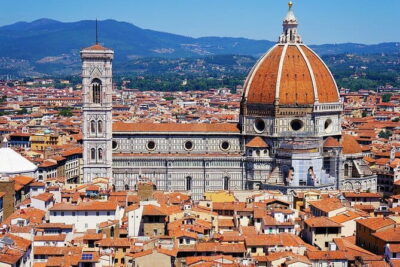
Now you reach the Duomo zone, the area with Santa Maria del Fiore and the supporting monuments—especially the Battistero, Giotto’s Campanile, and Brunelleschi’s Dome. This is the big visual center of Florence, and a walking tour is a smart way to start processing it before you commit to paying for interiors or climbs.
The key practical note: the Duomo complex stop includes admission not included. That means you should expect to see plenty from outside as the guide connects the art to the architecture. If you want to go inside the Baptistery, climb the Campanile, or access dome-related areas, you’ll need to purchase those tickets separately.
This matters for planning. If you are on a tight schedule, you can still get a strong experience just by understanding what you are looking at from street level. Then later, you can decide which paid option fits your energy and budget.
I also like how this stop ties together artists and architectural ambition in a way that feels grounded in what you can actually see. Giotto’s influence, the Baptistery’s role, and Brunelleschi’s dome idea all become easier to understand when you have someone narrate while you look up.
Photo tip: bring your eyes up, not your phone down. A lot of travelers miss details because they focus on one perfect shot. With narration, you learn what shapes matter—then you can frame your photos with intention.
- The Best tour in Florence: Renaissance & Medici Tales – guided by a STORYTELLER
★ 5.0 · 12,316 reviews

Orsanmichele sculpture stop with names like Donatello
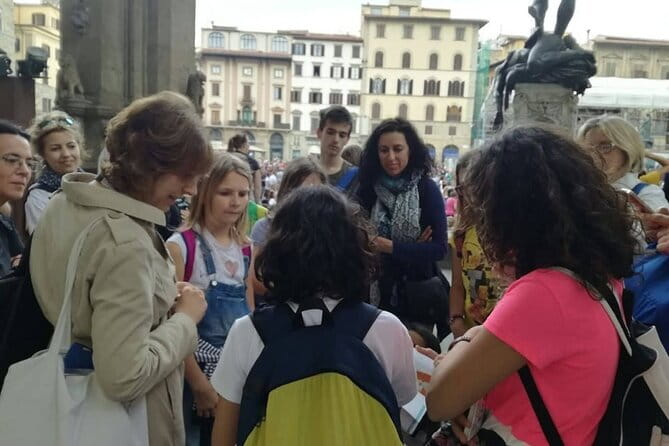
Next comes the Church and Museum of Orsanmichele, one of the most rewarding stops for art lovers on a short schedule. This is where sculpture enters the story in a serious way. The tour focuses on major works and artists associated with the building, with references that include Donatello, Lorenzo Ghiberti, and artists such as Giambologna and Verrocchio. Other names mentioned in the tour context include Brunelleschi, Sangallo, Orcagna, and Cellini.
Even if you do not go deep into the museum sections, the guided explanation helps you understand what you are seeing and why it exists where it does. Orsanmichele sits at the intersection of religion, civic life, and artistic competition. Florence’s great art is often tied to institutions and power structures, not just individual talent. This stop makes that connection feel real.
It also helps your longer-term planning. If you later decide to do a museum visit, you will know what names to look for and what themes to expect. That turns a second visit into something more meaningful.
One more practical benefit: this section often gives you a chance to slow down a little and focus. In an express tour, that balance is important. You get less time to admire art on your own, but the guide’s framing makes your short look more satisfying.
If you are visiting in hotter months, pay attention to how the guide manages the walking. Some guides have managed to find shade when conditions were hot, which can make the difference between a fun morning and a miserable one.
Piazza della Signoria to Ponte Vecchio: Medici power and big-city art
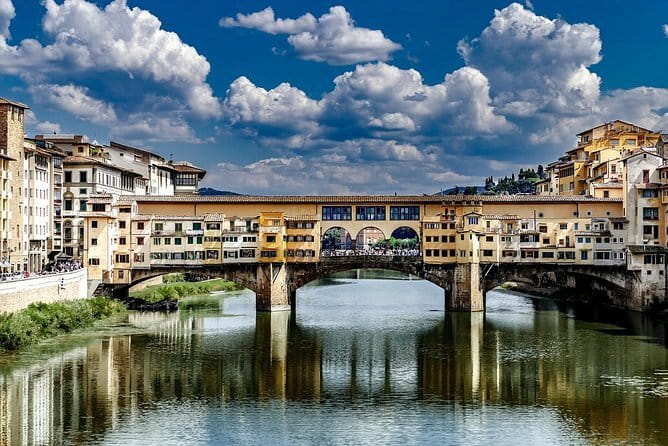
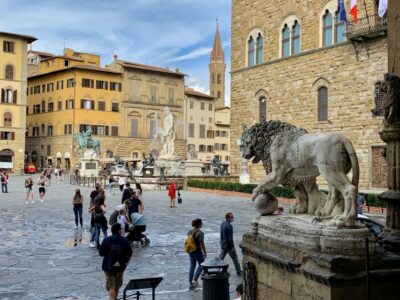
After Orsanmichele, the walk opens into one of the most famous civic stages in Europe: Piazza della Signoria. This is where Florence stops being only beautiful and starts becoming political. You are in the zone of Palazzo Vecchio and the broad artistic orbit of the Uffizi area nearby, and the route connects that civic gravity to what you see around you.
This part also brings in the story of the Medici. Mentions in the tour context include figures like Cosimo de’ Medici and artistic symbolism around sculptures and monuments that reflect Medici interests. You may also hear about works such as David and Marzocco, plus other statue-focused references like Perseo and Cellini.
Then the walk continues toward the bridge area, including Ponte Vecchio and the view corridor around Loggia de’ Lanzi and related points like the Torre di Arnolfo. Even if you are not stopping for long, the guided route helps you place each element in relation to the others.
Why I think this stop is one of the most valuable parts of the tour: it teaches you to read Florence’s art as a system. Statues are not just decoration here. They are messaging. Buildings are not just buildings. They are statements about who mattered and why.
Also, this is an easy zone to use for planning. If you want to spend more time, you know where to return. If you want to take a longer evening walk later, you will understand the geography.
Santa Croce and Dante’s monument: closing the loop
The walk ends in the Piazza di Santa Croce area, at Piazza di Santa Croce, 18R, with the tour finishing near the Basilica of Santa Croce. Ending here is smart because Santa Croce is one of the most iconic farewell scenes in Florence. It is a great place to stop, check your photos, and decide what to do next.
The tour focuses on the basilica’s story and the presence of a monument to Dante. That makes the ending feel more than a drop-off. You close the loop from Renaissance art and civic power into a broader Italian cultural thread—literature, memory, and public identity.
If you want a smooth finish, this is a good landing. You can head to dinner nearby without needing transportation. You can also use Santa Croce as a starting point for an afternoon wander through nearby streets.
If your goal is to get a strong first impression of Florence’s big names and big spaces, ending at Santa Croce gives you emotional traction. It is one of those places where you can feel the city’s identity in the air, even if you keep it simple and just take in the square and the church facade.
Price, group size, and audio: what the value really means
On paper, the price is very low—about $3.63 per person—and that is part of the appeal. But value is not only about the sticker price. It is about what you get for your time: a structured route, a guide who connects architecture to meaning, and access to multiple major sites in roughly 2 hours 15 minutes.
The group cap around 20 travelers also affects value. A smaller group usually means less chaos at each stop. You are more likely to get clearer explanations and less time waiting for the whole crew to reposition.
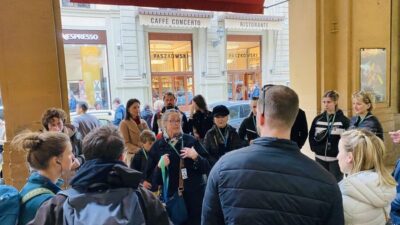
The one practical drawback to watch for is sound. A couple of people reported it was hard to hear despite a small speaker. That is not surprising in crowded squares where wind and background noise fight the audio. My advice: choose a spot where you can face the guide, and if sound is poor, gently move closer rather than giving up immediately.
Also, since this is an English tour, it helps to check your own comfort level with listening outdoors. If you rely on headphones, you might still do better bringing your own portable listening setup if that is something you normally use. (The tour info does not promise headset audio, so you should be ready for standard outdoor conditions.)
Finally, remember the Duomo complex admission note. Many stops are listed as free admission, but the Duomo area is not included. That means part of the cost is optional, depending on whether you want interior access.
Should you book this Florence art and architecture walking tour?
Book it if you want a guided first-morning sweep of Florence’s main art and architecture zones. It is a strong option when your schedule is tight, you want to cut through indecision, or you prefer learning on foot rather than reading at home later.
I would also book it if you like story-based sightseeing. The route connects churches, sculpture, civic spaces, and major Renaissance figures into a coherent path. Even in short stops, you come away with names and visual cues that make later visits click.
I would hesitate if you know you struggle with outdoor audio in crowds, especially if you need near-perfect sound to enjoy guided commentary. In that case, plan to position well for hearing and be ready for some narration to be lost to city noise.
If you book, bring comfortable shoes, wear light layers, and arrive a few minutes early at Piazza di Santa Maria Novella. Then use what you learn as a map for your remaining days: return to the places that grabbed you and skip the ones that did not.
FAQ
How long is the Florence art and architecture walking tour?
It runs for about 2 hours 15 minutes.
What time does the tour start, and where do I meet?
The start time is 10:30 am. The meeting point is in Piazza di Santa Maria Novella, 4n, 50123 Florence.
Where does the tour end?
The tour ends in Piazza di Santa Croce, 18R, 50122 Florence, near the Basilica of Santa Croce.
Is the tour offered in English?
Yes. The tour is offered in English.
Is admission included for all stops?
Many stops are listed as free admission, but the Cathedral of Santa Maria del Fiore complex stop has admission not included.
Can I cancel for free?
Free cancellation is available. You can cancel up to 24 hours in advance for a full refund.
More Florence Walks
- Florence: Highlights Walking Tour with Expert Guide
★ 4.6 · 4,662 reviews - Uffizi & Accademia Timed Entry: Small Group Duomo Walking Tour
★ 4.5 · 3,630 reviews - Florence: Duomo Complex with Tickets & City Walk Guided Tour
★ 4.7 · 2,057 reviews - Florence: Guided Walking Tour
★ 4.6 · 1,602 reviews - Florence: Renaissance and Medici Tales Guided Walking Tour
★ 4.8 · 1,549 reviews
More Florence Tours to Weigh Up
- The Best tour in Florence: Renaissance & Medici Tales – guided by a STORYTELLER
★ 5.0 · 12,316 reviews - The Best Tour in Florence: Renaissance and Medici Tales
★ 5.0 · 10,810 reviews - Florence: Chianti Wineries Tour with Wine Tasting
★ 4.5 · 10,071 reviews - Florence: Duomo Cathedral 60-Minute Guided Tour
★ 3.7 · 6,829 reviews - Florence: Hop-on Hop-off Bus Tour: 24, 48 or 72-Hour Ticket
★ 4.0 · 6,283 reviews
More Florence Tours We Have Reviewed
- Florence: Skip-The-Line Uffizi Gallery Timed Entry Ticket
★ 4.5 · 27,832 reviews - Tuscany Day Trip from Florence: Siena, San Gimignano, Pisa and Lunch at a Winery
★ 5.0 · 21,634 reviews - Florence: Timed Entry to Michelangelo’s David + Audio App
★ 4.6 · 19,496 reviews - Florence: Leonardo Interactive Museum Entry Ticket
★ 4.5 · 12,957 reviews - Florence: Michelangelo’s David Skip-the-Line Entry Ticket
★ 4.5 · 12,764 reviews
Fresh from our Florence review desk
- Small-Group Pasta Cooking Class and Market Tour in Florence★ 5.0 · 3 reviews
- Palatina Gallery and Pitti Guided Tour in Florence★ 5.0 · 3 reviews
- Tuscan Evening Tour: Fiat 500, 8:30 to 10 PM★ 5.0 · 3 reviews
- Journey into Art: Florence’s Accademia★ 4.5 · 3 reviews
- Paint and Drink Florentine Hills★ 5.0 · 3 reviews
- Truffle hunting and lunch experience, with Vinci and winery.★ 4.5 · 3 reviews
Walking Tours, compared.
 ★ 4.6Highlights Walking Tour with Expert GuideFrom $274,662 reviews
 ★ 4.5Uffizi & Accademia Timed Entry: Small Group Duomo Walking TourFrom $503,630 reviews
 ★ 4.7Duomo Complex with Tickets & City Walk Guided TourFrom $932,057 reviews
 ★ 4.6Guided Walking TourFrom $271,602 reviews
 ★ 4.8Renaissance and Medici Tales Guided Walking TourFrom $21,549 reviews
 ★ 4.7Uffizi & Accademia Small Group Walking TourFrom $1481,380 reviews
 ★ 5.0Skip-the-Line Florence Highlights and David Walking TourFrom $1171,127 reviews
 ★ 4.6Dark Mysteries and Legends Guided Walking TourFrom $21,081 reviews
Browse the lists this tour appears in