
Florence has wine windows for passing strangers. This 2-hour walk through the historic center blends famous Renaissance sights with real street-level stories, including a stop at a Wine Window where you’ll learn how wine was sold through tiny stone openings. I also like the expert guide’s storytelling, which turns big monuments like the Duomo and Piazza della Signoria into understandable, human-scale history.
One thing to plan for: admission tickets are not included for Santa Maria Novella and the Duomo-area landmarks, so if you want to go inside, you’ll likely pay extra on top of the $46.13 price.
In This Review
- Key Highlights to Look Forward To
- A 2-Hour Florence Walk That Feels Like the City, Not a Stamp Card
- Santa Maria Novella Square: Alberti’s Facade in One Clear Starting Shot
- Finestra delle Belle Donne Wine Window: A Plague-Era Idea That Still Feels Strange
- Piazza del Duomo: Seeing Brunelleschi, Giotto, and the Baptistery Without Getting Lost
- Piazza della Repubblica to Ponte Vecchio: Cafes, Roman Lines, and Goldsmith Shops
- Piazza De’ Pitti and Piazza della Signoria: Medici Power in Two Very Different Forms
- Price and Value: What $46.13 Covers (and What You May Add)
- Should You Book This Florence Wine Window Walking Tour?
- FAQ
- FAQ
- How long is the Florence 2-Hour Walking Tour?
- What language is the tour offered in?
- What’s included in the price?
- Where do I meet and where does the tour end?
- Are admission tickets included for the main church and Duomo-area sights?
- Are there stops with free admission?
- Do I need to bring snacks?
- Is the tour affected by weather?
- Can I cancel for a full refund?
Key Highlights to Look Forward To
- Wine Window stop (buchette del vino): Hear the 17th-century story and see how the nobles sold wine through stone openings.
- Leon Battista Alberti’s Santa Maria Novella facade: A Renaissance front with precise geometry and polychrome marbles.
- Piazza del Duomo viewpoint focus: Dome, Giotto’s bell tower, and the Baptistery lined up like a skyline lesson.
- Piazza della Repubblica to Ponte Vecchio route: Roman roots, refined cafes, and the goldsmith shops along the Arno.
- Ending at Palazzo Pitti and Piazza della Signoria: Medici power in architecture, sculpture, and political symbolism.
Stretch your legs on more Florence walking tours
A 2-Hour Florence Walk That Feels Like the City, Not a Stamp Card
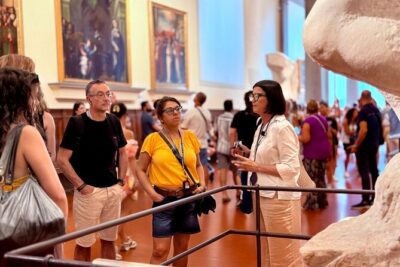
This tour is built for people who want Florence in two hours without sprinting. The pace stays brisk enough to cover a lot, but the timed stops (mostly 15 minutes, with a shorter wine-window stop) give you room to look closely, take photos, and ask follow-up questions.
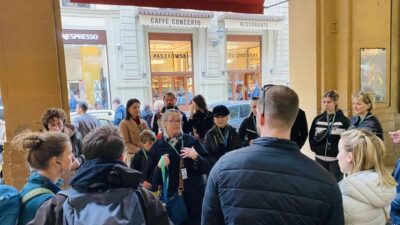
You’ll be guided in English by Regina City Tour (FI), and the group size cap is up to 99 people. That doesn’t automatically ruin the experience, but it does mean you should stand where you can hear well and stay near your guide when crowds thicken.
It’s also set up to be easy to manage in a busy city: you get a mobile ticket, the meeting point is in the center (near public transit), and the route runs from Piazza di Santa Maria Novella to Palazzo Pitti, so you finish near more Medici-era sights.
Santa Maria Novella Square: Alberti’s Facade in One Clear Starting Shot
Your walk begins at Piazza di Santa Maria Novella, the kind of Florence square that feels old and active at the same time. The star attraction is the Basilica of Santa Maria Novella, with its facade designed by Leon Battista Alberti—famous for its strong geometric structure and polychrome marble details.
What I love about starting here is how quickly it sets the tone. You’re not just looking at a church; you’re seeing Renaissance thinking made visible in stone. The square itself also has an everyday rhythm—historic shops, cafes, and period buildings—so your first minutes feel like arriving in real Florence rather than stepping into a museum corridor.
Important practical note: the tour doesn’t include admission for this stop. If you want to go inside the basilica, plan for extra time and tickets. If your priority is exterior views and the guide’s explanations, you can still get a lot without paying for entry.
Finestra delle Belle Donne Wine Window: A Plague-Era Idea That Still Feels Strange
Then comes the detour that makes this tour memorable: Finestra delle Belle Donne, one of Florence’s “buchette del vino,” or wine windows. These are small stone openings set into palace walls, used since the 17th century so nobles could sell wine directly to passers-by.
Here’s the part that makes it click: during the plague, these openings offered a safer way to serve wine without direct contact. It’s a simple concept, but it connects you to how people adapted their daily lives under pressure—long before modern health rules ever existed.
This is also where the tour earns its name. You’ll stop in front of a historic wine window, hear the story, and you’re served a glass of wine as part of the experience (so it’s not only talk). It’s short—about 5 minutes—but it’s the kind of moment you remember when you’re later walking past similar stonework and realizing how much practical design hid inside the city’s elegance.
Piazza del Duomo: Seeing Brunelleschi, Giotto, and the Baptistery Without Getting Lost
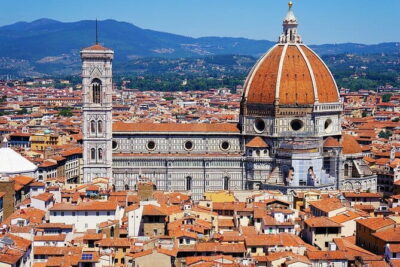
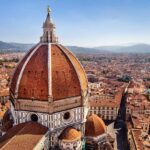
Piazza del Duomo is the artistic and spiritual centerpiece of Florence, and this stop is built around understanding what you’re looking at. The tour focuses on three major landmarks that shape the skyline: Santa Maria del Fiore (the Cathedral), Giotto’s Bell Tower, and the Baptistery of San Giovanni.
You’ll learn how Brunelleschi’s dome became one of the big Renaissance statements in architecture. You’ll also connect the bell tower’s colored marble surfaces with Giotto’s style and Florence’s taste for ornament. And for the Baptistery, you’ll hear about its age and its famed gilded bronze doors—another reason this spot feels mythic even when you’re standing in it for the first time.
One practical consideration: admission tickets aren’t included for this area. Also, the tour time here is about 15 minutes, so you’ll be seeing the square and key exteriors more than doing a full interior circuit. If you want to go inside the cathedral, tower, or baptistery, decide ahead of time which one you want most—otherwise you may feel rushed or forced to skip.
Piazza della Repubblica to Ponte Vecchio: Cafes, Roman Lines, and Goldsmith Shops
Next, you shift from the Duomo’s grand religious axis into the city’s more civic and everyday energy. Piazza della Repubblica sits on earlier Roman ground, built over an ancient Forum. Your guide helps make sense of how that layers of history can exist under the same pavement.
You’ll also get a feel for the more refined 19th-century Florence here—palaces, arcades, and the kind of grand cafes that have long been meeting points for artists and writers. Iconic names like Caffè Gilli and Caffè Paszkowski come up naturally in the conversation, so you’re not just learning facts; you’re learning why people liked being here.
In the center stands the Column of Abundance, marking the intersection of ancient Roman streets. That’s a great detail because it gives you a mental map: you’re not only admiring buildings, you’re understanding how the city’s street logic evolved.
Then you arrive at Ponte Vecchio, one of the most recognizable bridges on earth. You’ll cross (about 15 minutes of this stop), and you’ll see how the bridge survived the Second World War bombings while many structures elsewhere did not. That survival makes the bridge feel less like a souvenir photo and more like living continuity.
The view from the bridge is also the payoff. The Arno runs below you, and along the arches you’ll spot the historic goldsmith shops that still carry the character of medieval commerce. Your guide also points out the Vasari Corridor, the elevated passage that once connected Palazzo Vecchio and Palazzo Pitti for the Medici to move away from the public.
A small tip: if you want the best light and less crowd crush, you’ll usually get a better experience by pausing mid-span and watching the river traffic rather than only photographing the shops at the first moment you step on.
With a local guide, more of Florence to explore
- The Best tour in Florence: Renaissance & Medici Tales – guided by a STORYTELLER
★ 5.0 · 12,316 reviews

Piazza De’ Pitti and Piazza della Signoria: Medici Power in Two Very Different Forms
The walk ends near Palazzo Pitti, finishing at Piazza de’ Pitti. This broad square frames the palace facade and sets you up to keep exploring on your own. Palazzo Pitti is the Medici residence powerhouse, and while this tour doesn’t replace a museum visit, it helps you understand why the building matters so much.
You’ll also be pointed toward the Boboli Gardens view from the square. Even if you don’t go inside right away, seeing the relationship between the palace and its gardens helps the Medici story feel real instead of abstract.
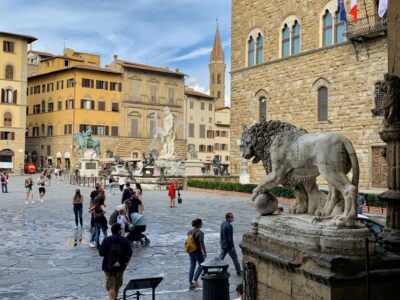
But the tour doesn’t stop at the palace perspective. It also includes Piazza della Signoria, Florence’s political and symbolic heart. This is where the city turns into an open-air gallery of power. Palazzo Vecchio still functions as a city hall, and around it are famous sculptures under the Loggia dei Lanzi.
Your guide explains key works you’ll likely recognize:
- Michelangelo’s copy of David
- Neptune by Ammannati
- Perseus with the head of Medusa by Benvenuto Cellini
What I like here is the way the art and the politics get linked. Statues aren’t presented as isolated masterpieces; they’re tied to Renaissance rivalries, civic identity, and the Medici-era push to broadcast authority through culture.
If your legs start to feel it, this part is still worth it because you’ll be standing still enough to register details. Then you can decide whether you want to keep going on your own after the tour finishes near Palazzo Pitti.
Price and Value: What $46.13 Covers (and What You May Add)
At $46.13 per person for about two hours, this is the kind of tour that tries to pay you back quickly. What you’re getting for the money is the expert English guide, the carefully chosen route through major squares, and the signature stop at the wine window, which is the emotional highlight.
However, two costs may sit outside the base price. Tickets aren’t included for Santa Maria Novella and the Duomo-area landmarks. So if you want interiors, you should budget extra. Also, snacks aren’t included, so if you’re visiting at midday, it’s smart to plan a small snack or coffee stop before your tour.
The balance is still fair, especially if you’re traveling with limited time. This tour compresses a lot of Florence’s main sights into one smooth flow without making you figure out everything yourself. It’s also a good fit if you want the guide to interpret details you might otherwise miss, like Alberti’s facade logic or how civic squares connect to Medici influence.
Should You Book This Florence Wine Window Walking Tour?
Yes, if you want a focused Florence overview that includes one truly unusual stop. The combination of Renaissance landmarks with the buchette del vino moment gives you more variety than the usual “big church, big view, next church” routine.
Book it if:
- you like learning how and why things were built, not just seeing them
- you want a short, manageable two-hour plan
- you’d enjoy a drink tied to a real historic practice, not a generic tasting
Maybe skip or adjust your expectations if:
- you mainly want museum entry time, because this tour doesn’t include admission for key stops and is designed around exterior viewing and storytelling
- you dislike larger group dynamics, since the tour has a max group size up to 99
FAQ
FAQ
How long is the Florence 2-Hour Walking Tour?
It runs for about 2 hours.
What language is the tour offered in?
The tour is offered in English.
What’s included in the price?
You get an expert guide in English, plus the tour’s wine-window experience during the walk.
Where do I meet and where does the tour end?
You start at Piazza di Santa Maria Novella and end at Palazzo Pitti (Piazza de’ Pitti, 1).
Are admission tickets included for the main church and Duomo-area sights?
No. Admission ticket(s) are not included for the Basilica of Santa Maria Novella and for the Duomo-area stop.
Are there stops with free admission?
Yes. The tour notes free admission for Piazza della Repubblica, Ponte Vecchio, Piazza De’ Pitti, and Piazza della Signoria.
Do I need to bring snacks?
Snacks aren’t included.
Is the tour affected by weather?
Yes. It requires good weather. If it’s canceled due to poor weather, you’ll be offered a different date or a full refund.
Can I cancel for a full refund?
Free cancellation is available up to 24 hours in advance for a full refund.
More Florence Walks
- Florence: Highlights Walking Tour with Expert Guide
★ 4.6 · 4,662 reviews - Uffizi & Accademia Timed Entry: Small Group Duomo Walking Tour
★ 4.5 · 3,630 reviews - Florence: Duomo Complex with Tickets & City Walk Guided Tour
★ 4.7 · 2,057 reviews - Florence: Guided Walking Tour
★ 4.6 · 1,602 reviews - Florence: Renaissance and Medici Tales Guided Walking Tour
★ 4.8 · 1,549 reviews
More Florence Tours to Weigh Up
- The Best tour in Florence: Renaissance & Medici Tales – guided by a STORYTELLER
★ 5.0 · 12,316 reviews - The Best Tour in Florence: Renaissance and Medici Tales
★ 5.0 · 10,810 reviews - Florence: Chianti Wineries Tour with Wine Tasting
★ 4.5 · 10,071 reviews - Florence: Duomo Cathedral 60-Minute Guided Tour
★ 3.7 · 6,829 reviews - Florence: Hop-on Hop-off Bus Tour: 24, 48 or 72-Hour Ticket
★ 4.0 · 6,283 reviews
More Florence Tours We Have Reviewed
- Florence: Skip-The-Line Uffizi Gallery Timed Entry Ticket
★ 4.5 · 27,832 reviews - Tuscany Day Trip from Florence: Siena, San Gimignano, Pisa and Lunch at a Winery
★ 5.0 · 21,634 reviews - Florence: Timed Entry to Michelangelo’s David + Audio App
★ 4.6 · 19,496 reviews - Florence: Leonardo Interactive Museum Entry Ticket
★ 4.5 · 12,957 reviews - Florence: Michelangelo’s David Skip-the-Line Entry Ticket
★ 4.5 · 12,764 reviews
Fresh from our Florence review desk
- Small-Group Pasta Cooking Class and Market Tour in Florence★ 5.0 · 3 reviews
- Palatina Gallery and Pitti Guided Tour in Florence★ 5.0 · 3 reviews
- Tuscan Evening Tour: Fiat 500, 8:30 to 10 PM★ 5.0 · 3 reviews
- Journey into Art: Florence’s Accademia★ 4.5 · 3 reviews
- Paint and Drink Florentine Hills★ 5.0 · 3 reviews
- Truffle hunting and lunch experience, with Vinci and winery.★ 4.5 · 3 reviews
Wine Tours, compared.
 ★ 5.0Tuscany Day Trip from Florence: Siena, San Gimignano, Pisa and Lunch at a WineryFrom $11421,634 reviews
 ★ 4.9Pasta Cooking Class with Unlimited WineFrom $2110,285 reviews
 ★ 4.5Chianti Wineries Tour with Wine TastingFrom $4110,071 reviews
 ★ 5.0Small-Group Wine Tasting Experience in the Tuscan CountrysideFrom $1077,392 reviews
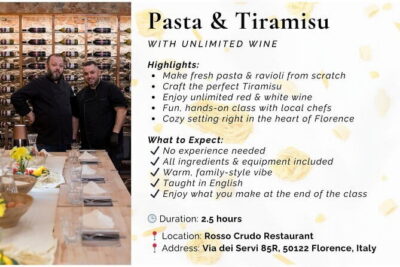 ★ 4.9Pasta & Tiramisu Cooking Class with Unlimited WineFrom $566,708 reviews
★ 5.0Pasta Cooking Class with Unlimited Wine6,413 reviews
 ★ 4.5Pisa, Siena and San Gimignano Day Trip with Lunch & Wine PairingFrom $786,006 reviews
 ★ 5.0SMALL-GROUP Wine Safaris: Tuscan Wine Tasting Tours from FlorenceFrom $1575,088 reviews
Browse the lists this tour appears in