
Reviewed · MEDICI & RENAISSANCE TOURS
Florence by Foot : Discover the Heart of the Renaissance
Florence makes sense after this walk. I like that you cover major Renaissance landmarks in about 90 minutes, and headsets help you catch every word without straining. I also like the no-ticket format, which keeps costs down while you still see the big sights. One watch-out: the talk leans a lot into Florence’s religious monuments, so if that’s not your main interest, you may feel the focus is narrow.
This walk is built for people who want a fast, guided orientation of the city center. You’ll move between important UNESCO sites with an officially certified guide, using a radio system so you can keep walking and listening at the same time. The small-group limit (up to 25) helps you stay together in Florence’s busy lanes.
Expect outdoor walking the whole time. The tour depends on good weather, and it’s timed so you’ll need to be on-site at the start—late arrivals can miss the experience.
In This Review
- Key points before you go
- Meeting at Hard Rock Cafe: timing, duration, and how to plan your day
- What you’re really buying for $33.78 in Florence
- Stop 1: Piazza della Repubblica and the Renaissance origin story
- Stop 2: Piazza del Duomo route and the Michelangelo David symbolism
- Stop 3: Ponte Vecchio and why Uffizi comes up mid-walk
- Stop 4: Palazzo Pitti and the Pitti-to-Medici power chain
- Headsets, crowds, and rainy-day reality
- The walking style: how the pace affects your enjoyment
- Which guides’ styles you might prefer
- Who should book this Florence by Foot tour
- Value and logistics at a glance: what makes it easy
- Should you book Florence by Foot?
- FAQ
- How long is the Florence by Foot tour?
- Where does the tour start?
- Is the tour offered in English?
- What is included in the price?
- Are entrance tickets included?
- Do I need hotel pickup or transportation?
- Can I join if I arrive late?
- What happens if the weather is bad?
Key points before you go
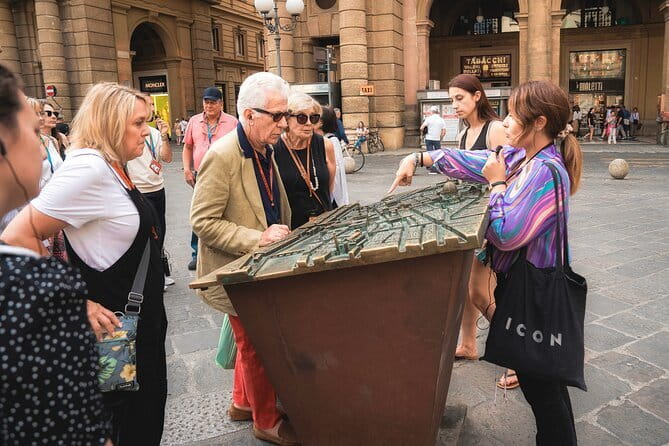
- Headsets included so you hear your guide clearly while you’re on the move
- Outside-only sightseeing means no entrance tickets are needed
- UNESCO World Heritage areas in one loop for a strong first overview
- Duomo-square stop with iconic Renaissance names you’ll recognize on sight
- Ponte Vecchio and Palazzo Pitti round out the Renaissance power story
- Small-group pace that’s friendly for time-pressed schedules
Deeper into Medici Florence and its Renaissance
Meeting at Hard Rock Cafe: timing, duration, and how to plan your day
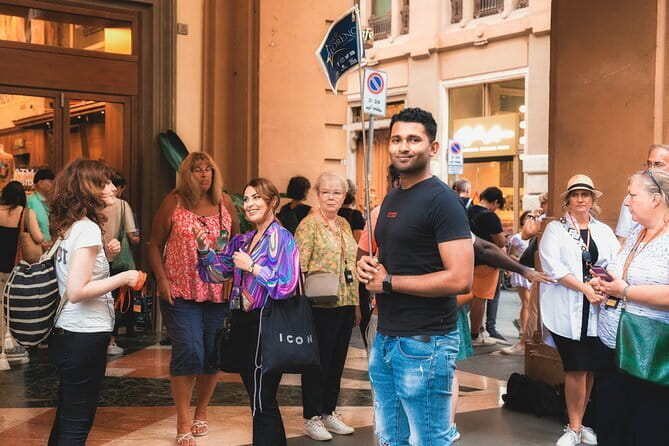
The tour starts at Hard Rock Cafe, Via dei Brunelleschi 1, 50123 Firenze. It runs in English, and it ends back at the same meeting point, which makes it easy to pick up later plans nearby.
The advertised length is about 1 hour 30 minutes, but in practice you may be out closer to 2 hours depending on pacing and your guide’s style. That means you should treat this as a “core orientation” part of your day, not a quick stroll you can squeeze into any empty gap.
Since the tour is walking-only and outdoors, wear shoes you trust. Florence streets can feel deceptively flat until you’re doing it for real. Also keep a hat or sunglasses handy, and if it’s hot, plan for sun time even in late afternoon.
Finally, be early enough to avoid getting stuck at the start. If you arrive after the tour begins, you can’t join and it won’t be rescheduled.
What you’re really buying for $33.78 in Florence
At $33.78 per person, the value isn’t just the route. The real win is getting an expert-led explanation of why these places mattered—at the scale of a short walk.
Two practical money-savers stand out:
- You don’t need entrance tickets. This runs entirely from outside, so you’re not adding museum costs on top.
- Headsets/radio system are included, which helps you get the full experience without awkward “stop-and-start” listening.
If you’re visiting with limited time, this format helps you choose what to do next. You walk away with names and context—especially around the Renaissance shift and Florence’s power families—so later museum visits or self-guided wandering feel less like random wandering.
One note for budgeting: Palazzo Pitti has an admission note in the format (not included), but the tour itself is designed to operate from outside stops. So you’ll be able to appreciate the exterior context without being forced into ticket decisions during the walk.
Stop 1: Piazza della Repubblica and the Renaissance origin story
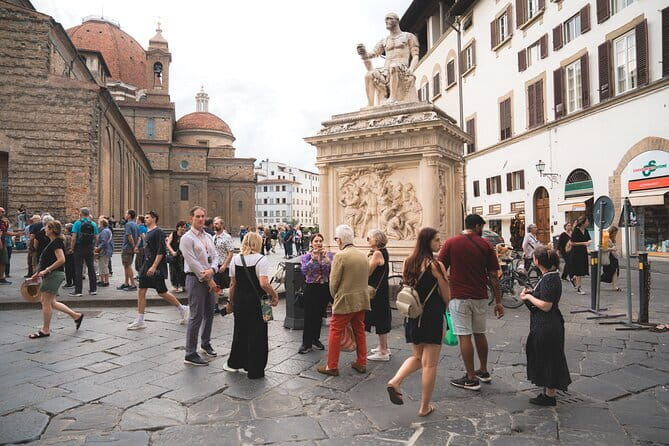
You’ll begin in Piazza della Repubblica, where the guide sets the stage. This isn’t a “check the square and move on” start. You get an explanation of Florence as a Renaissance city and how this cultural movement reshaped not only Florence but later Europe.
Then you transition into the Duomo area. The walk is short, but it matters because it anchors your mental map fast: the square-to-cathedral zone is where Florence starts to feel like one connected story rather than separate attractions.
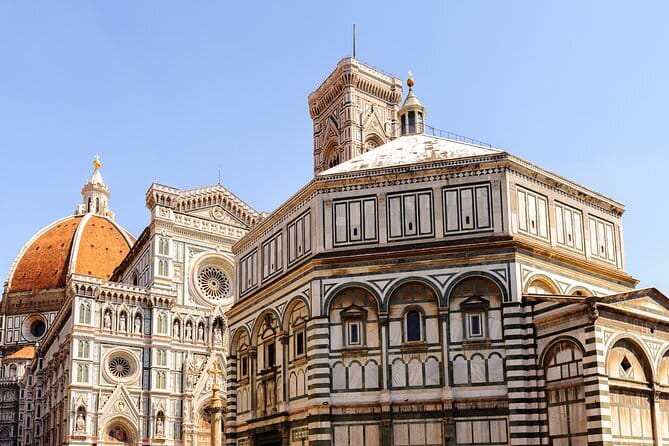
At the Piazza Duomo side, you’ll see major Renaissance-era names tied to the architecture and sculpture you recognize from postcards. The guide points out the showstoppers associated with Filippo Brunelleschi, Giotto, Arnolfo, and Francesco Talenti. Even if you don’t go inside during this tour, that context helps you understand why people treat this area as the city’s center of gravity.
A nice bonus: you’ll spend about 15 minutes on this opening sequence, which is just enough to get orientation without making you feel rushed.
Stop 2: Piazza del Duomo route and the Michelangelo David symbolism
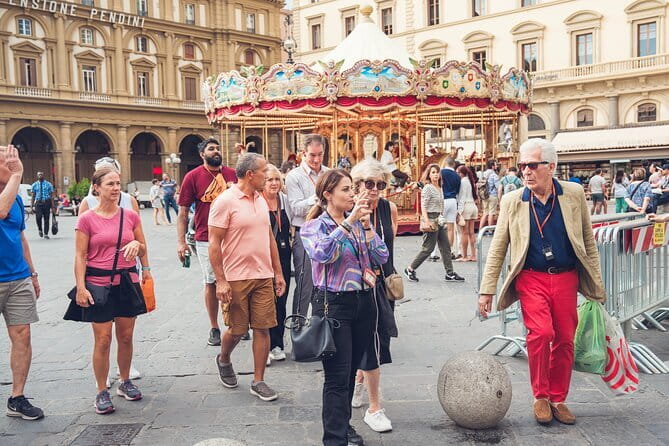
From Piazza Duomo, you’ll walk past old buildings and key landmarks, heading toward Palazzo Vecchio. This part is useful because it shifts from grand architecture to political meaning.
Here’s the standout moment: you’ll see the David’s’ sculpture placed outside Palazzo Vecchio. The guide explains it as a symbol of the Republic’s defiance of the tyrannical Medici. The guide also frames where the original Michelangelo David is housed—Galleria dell’Accademia—so you know what you’re seeing here vs. what’s inside that museum.
This stop works especially well when you’re visiting Florence for the first time. The city can feel like art everywhere. This helps you understand that many of the big works are also political statements—who had power, and how they wanted the world to remember them.
One practical tip: this area can feel crowded. If you have trouble keeping up, the headsets make it easier to hear instructions and not fall behind during busy crosswalk moments.
Stop 3: Ponte Vecchio and why Uffizi comes up mid-walk
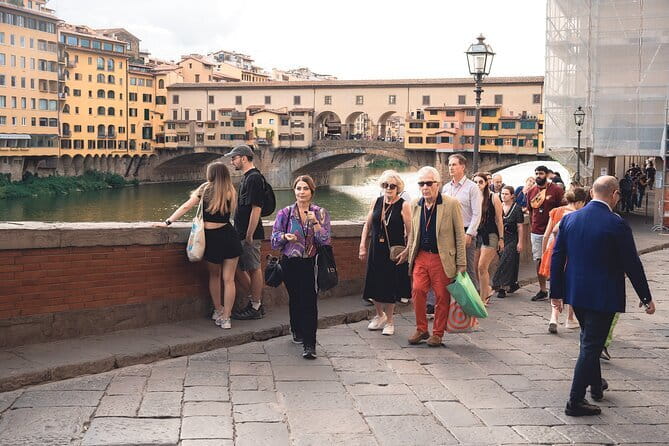
Next comes Ponte Vecchio, Florence’s famous old bridge. You reach it after walking past Palazzo Vecchio, and the guide uses the route to explain the broader art ecosystem too.
One detail that’s genuinely helpful for planning: as you move along, the guide talks about the Uffizi Gallery—described as one of the greatest museums in the world. The point isn’t to sell you a ticket. It’s to help you understand where it fits in Florence’s story so you can decide later whether you want to enter.
Even if your plans don’t include the Uffizi, Ponte Vecchio gives you a clean “anchor stop.” It’s an instant photo moment, but it’s also a transition: from government symbolism and major squares to the kind of Florence that’s famous worldwide.
The stop time is around 15 minutes, which is enough to listen, take in the bridge, and keep moving.
- Tuscany Day Trip from Florence: Siena, San Gimignano, Pisa and Lunch at a Winery
★ 5.0 · 21,634 reviews



Stop 4: Palazzo Pitti and the Pitti-to-Medici power chain
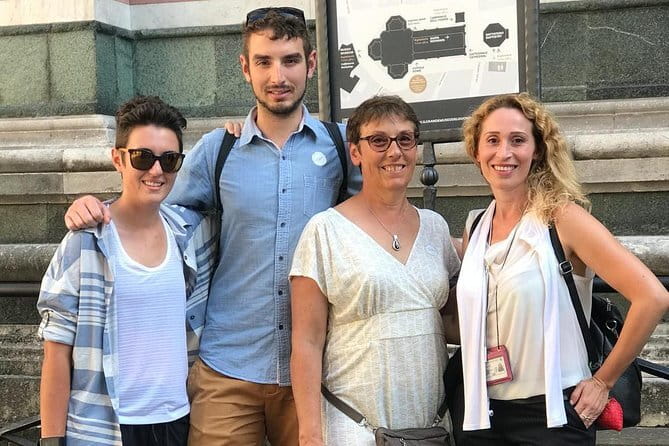
The final major stop is Palazzo Pitti, described as an enormous palace tied to Florence’s largest architectural monuments associated with Filippo Brunelleschi. The guide connects it to the Pitti family, and then to the Medicis, showing how control and prestige shifted over time.
This is where the Renaissance theme clicks into place. You start in public squares, move through symbolism of republican defiance, reach the iconic bridge, and end at a palace tied to dynastic power. That arc is exactly what you want from a short guided orientation: a story you can carry with you as you explore on your own afterward.
Time-wise, the walk takes about two hours in the way it’s commonly paced, with about 30 minutes set aside at this last stop (with admission not included).
Headsets, crowds, and rainy-day reality
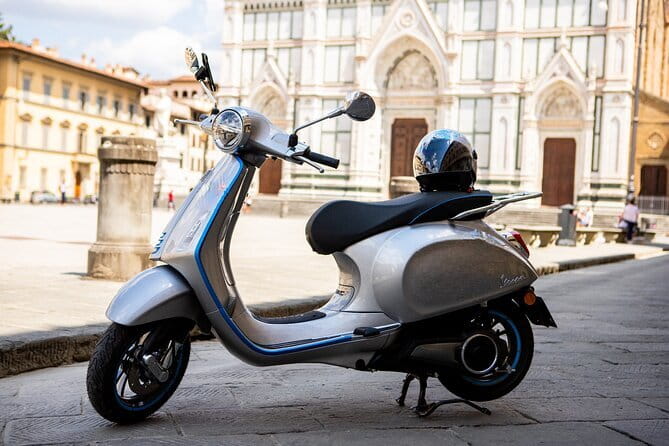
The tour includes an audio radio system, which is a big deal in Florence. It means you can keep your face forward instead of constantly turning to chase the guide’s voice.
The best part of that setup is clarity. Many people noted they could hear the guide well, including detailed answers to questions. Some guides named in this tour’s feedback—like Pam, Ana, Martina, Elena, Roberta, Claudia, and Marie—were praised for being easy to understand and for adding practical pointers beyond landmarks.
The one downside to know: technology doesn’t always behave perfectly. There was at least one experience where the microphone/speaker didn’t work well enough, leading to missed information. If your headset cuts out, the fix is simple: tell the guide right away so they can repeat or adjust.
Also, Florence weather happens. Rain can hit fast, and one guide kept the tour going in poor conditions while staying informative. If the forecast looks questionable, bring a light rain layer so you’re not miserable for 90 minutes.
The walking style: how the pace affects your enjoyment
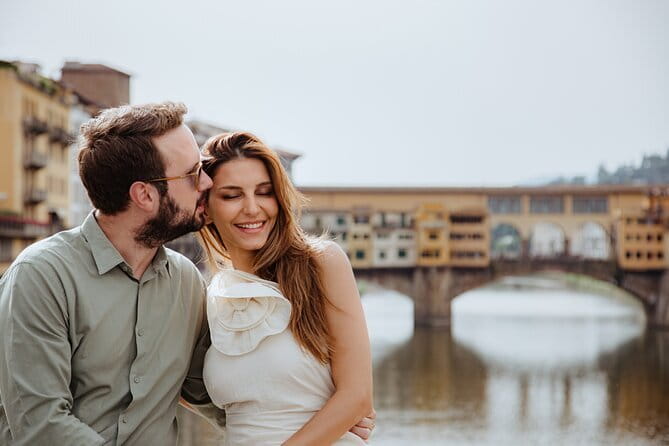
This is not a museum tour. It’s an outdoor walk with explanations timed to keep you moving between key stops.
The upside is focus. You’re not waiting in lines, and you’re not splitting your attention between signs, ticket desks, and audio. In a city like Florence, that matters because you’ll see more—and understand more—before you decide what to enter later.
The downside can be depth. In a short time, the guide has to prioritize the story they think matters most. Some feedback pointed out that the tour leans heavily into religious features. If your interests are more political, architectural, or everyday life, you might still enjoy the walk, but you’ll want a follow-up plan that balances that perspective.
Which guides’ styles you might prefer
This tour’s guide quality seems to be a real strength. The names showing up in feedback suggest a range of teaching styles, but a shared goal: make Florence feel graspable fast.
- Pam was described as thorough, helpful, and adding restaurant/food tips.
- Francesco was praised as one of the best guides people had, which usually means the storytelling landed.
- Ana was mentioned for passionate detail about the Medici story.
- Claudia, Martina, Elena, and Roberta were highlighted for clear explanations and for helping people understand the city in the time window they had.
If you’re hoping for more practical add-ons, that’s often where guides shine—like museum suggestions, plus tips for navigating daily life (even down to advice like how to recognize real gelato and gift ideas, depending on the guide).
Who should book this Florence by Foot tour
This tour is a strong match if you:
- want a first-time orientation of central Florence
- have limited time and want the big names explained
- like walking tours where the guide does the heavy lifting on context
- need an audio system to keep up without constantly stopping
It can be a less perfect match if you:
- mainly want secular art history and not religious monument context
- need a lot of “inside” time or prefer ticketed museum visits
Good news: because you’re outside and not tied to timed entry tickets, you can flex your next moves easily once the walk ends.
Value and logistics at a glance: what makes it easy
What makes this tour feel like good value is the combination of guide expertise and included audio, plus the outside-only structure.
You get:
- officially certified guide
- radio system so you actually hear details
- key Renaissance landmarks in one loop
- a duration that fits into a tight schedule
You don’t get:
- hotel pickup/drop-off
- food and drinks
- transportation
- any entrance tickets
So it’s best when you’re already comfortable moving through the city on foot and you’re happy to do the “learn first, choose later” approach.
Should you book Florence by Foot?
If you’re trying to understand Florence quickly, I’d book this. It’s built for momentum: you start at a clear meeting point, follow a simple walk sequence through major squares and palaces, and come away with enough context to explore intelligently afterward.
I’d skip it only if your top priority is an interior-heavy day, or if you strongly prefer a tour that doesn’t spend most of its time on religious monument context. In that case, pair your orientation with a museum-focused plan instead of relying on this as your only Florence deep dive.
If you do book, arrive early, wear comfortable shoes, and use the headsets. When the audio works, it turns a crowded city walk into a calm, guided storyline.
FAQ
How long is the Florence by Foot tour?
It lasts about 1 hour 30 minutes, approximately.
Where does the tour start?
It starts at Hard Rock Cafe, Via dei Brunelleschi 1, 50123 Firenze FI, Italy.
Is the tour offered in English?
Yes. The tour is offered in English.
What is included in the price?
You get an officially certified guide and a radio system so you can hear the guide.
Are entrance tickets included?
No. The tour operates from outside the attractions, and no entrance tickets are included.
Do I need hotel pickup or transportation?
No. Hotel pickup and drop-off, and transportation to/from attractions are not included.
Can I join if I arrive late?
If you arrive after the tour start time, you can’t join and you won’t be refunded or rescheduled.
What happens if the weather is bad?
The tour requires favorable weather. If it’s canceled due to poor weather, you’ll be offered an alternative date or a full refund.
More Florence Tours We Have Reviewed
- Florence: Skip-The-Line Uffizi Gallery Timed Entry Ticket
★ 4.5 · 27,832 reviews - Tuscany Day Trip from Florence: Siena, San Gimignano, Pisa and Lunch at a Winery
★ 5.0 · 21,634 reviews - Florence: Timed Entry to Michelangelo’s David + Audio App
★ 4.6 · 19,496 reviews - Florence: Leonardo Interactive Museum Entry Ticket
★ 4.5 · 12,957 reviews - Florence: Michelangelo’s David Skip-the-Line Entry Ticket
★ 4.5 · 12,764 reviews
The Medici Story Continues
- The Best tour in Florence: Renaissance & Medici Tales – guided by a STORYTELLER
★ 5.0 · 12,316 reviews - The Best Tour in Florence: Renaissance and Medici Tales
★ 5.0 · 10,810 reviews - Uffizi Gallery: Renaissance Masterpieces Guided Tour
★ 4.6 · 6,070 reviews - Florence: Renaissance and Medici Tales Guided Walking Tour
★ 4.8 · 1,549 reviews - Guided Medici Tour Florence: Discover Mysteries & History
★ 4.3 · 1,077 reviews
Fresh from our Florence review desk
- Transfer Between Florence and Rome with Sightseeing Stop★ 5.0 · 6 reviews
- Florence Highlights Walking Tour★ 5.0 · 6 reviews
- Florence: Guided Flavors of Tuscany Tour★ 5.0 · 6 reviews
- Florence : Photoshoot In The City★ 5.0 · 6 reviews
- Florence: Brunelleschi’s Dome climb Tour★ 4.0 · 6 reviews
- Dan Brown’s INFERNO Walk with a Local★ 3.5 · 6 reviews
Medici & Renaissance Tours, compared.
 ★ 5.0The Best tour in Florence: Renaissance & Medici Tales – guided by a STORYTELLERFrom $312,316 reviews
 ★ 5.0The Best Tour in Florence: Renaissance and Medici TalesFrom $310,810 reviews
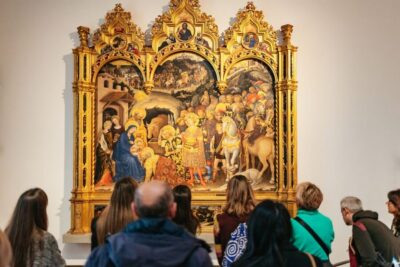 ★ 4.6Uffizi Gallery: Renaissance Masterpieces Guided TourFrom $886,070 reviews
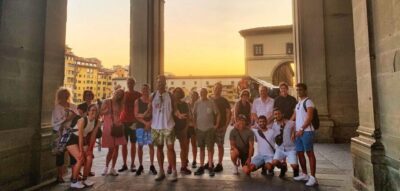 ★ 4.8Renaissance and Medici Tales Guided Walking TourFrom $21,549 reviews
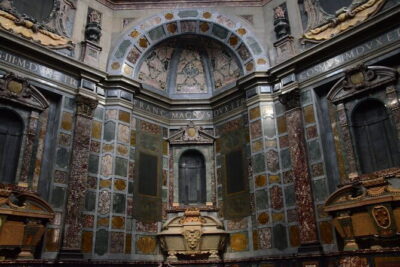 ★ 4.3Guided Medici Tour Florence: Discover Mysteries & HistoryFrom $571,077 reviews
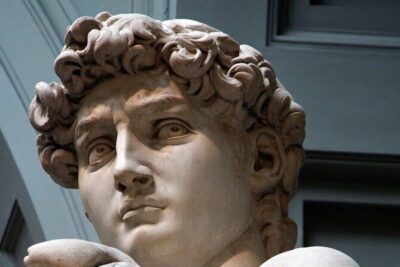 ★ 4.0Accademia Gallery: Michelangelo’s David and High Renaissance ArtFrom $43872 reviews
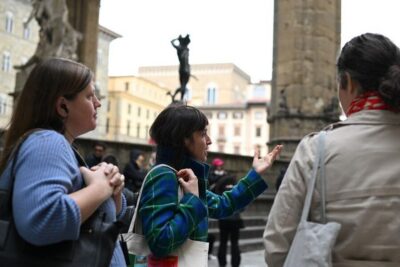 ★ 4.7Guided Tour of Medici Family Secrets and ChapelsFrom $93512 reviews
 ★ 5.0Florence Private Tour: Renaissance, Famous Families & Hidden GemsFrom $199233 reviews
Browse the lists this tour appears in