
Reviewed · WALKING TOURS
Florence: Guided walking tour
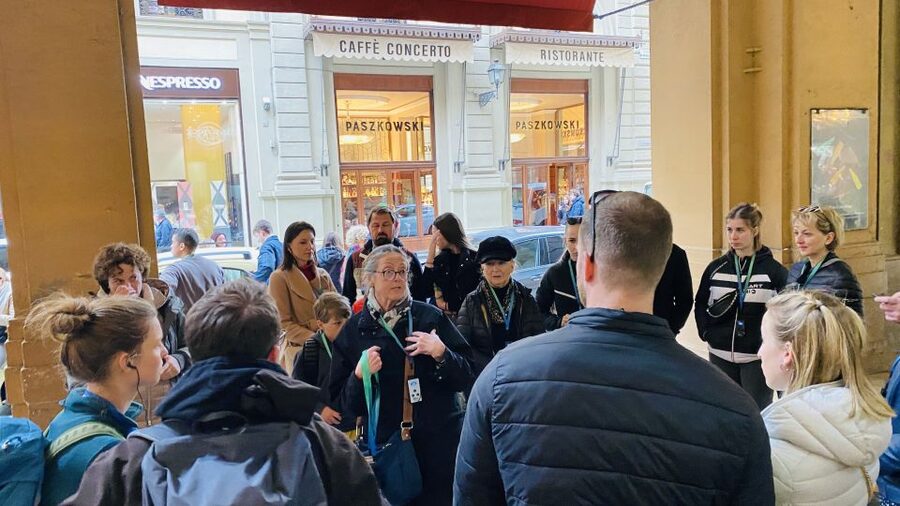
Florence history walks right beside you. This 2-hour guided walk brings Renaissance stories to life on the actual lanes of central Florence, starting at the ItalyPass shop on Via de’ Pucci. You’ll be listening through a hearing device, which matters in a city of stone walls and windy corners.
What I like most is the way the guide keeps the pace human—no sprinting, just steady walking through the areas most visitors only glance at. I also love the focus on character-driven storytelling, from Medici politics to names like Dante, Botticelli, and Michelangelo, tied to the streets you’re standing on.
One caution: the tour includes the guide and hearing device, but it does not include museum tickets, and some people get surprised by how entry access is handled for certain sights. Before you go, check exactly what your booking includes for any indoor stops.
In This Review
- Key highlights you’ll feel fast
- Starting at ItalyPass on Via de’ Pucci: where your tour really begins
- The 2-hour street route: Duomo, Piazza della Signoria, and Ponte Vecchio
- Piazza della Signoria: politics in stone
- Duomo area: the architecture takes over
- Ponte Vecchio: where the city learned to trade
- Medici, Dante, Botticelli, and Michelangelo: why the stories feel grounded
- The Medici angle: more than money
- Dante and the city’s mood
- Botticelli and Michelangelo: art that belongs to the street
- Why the hearing device and small-group format actually matters
- What’s included versus what you must sort out (tickets and entry)
- Value for $39: who this tour fits best
- Should you book this Florence guided walking tour?
- FAQ
- Where is the meeting point for the guided tour?
- What do I need to show to meet the guide?
- How long is the Florence guided walking tour?
- Is the guide available in English?
- What is included in the tour price?
- Is the tour wheelchair accessible, and are museum tickets included?
Key highlights you’ll feel fast
- A local guide’s routing: you follow a practical path that helps you move through the center without feeling stuck in the thickest lines
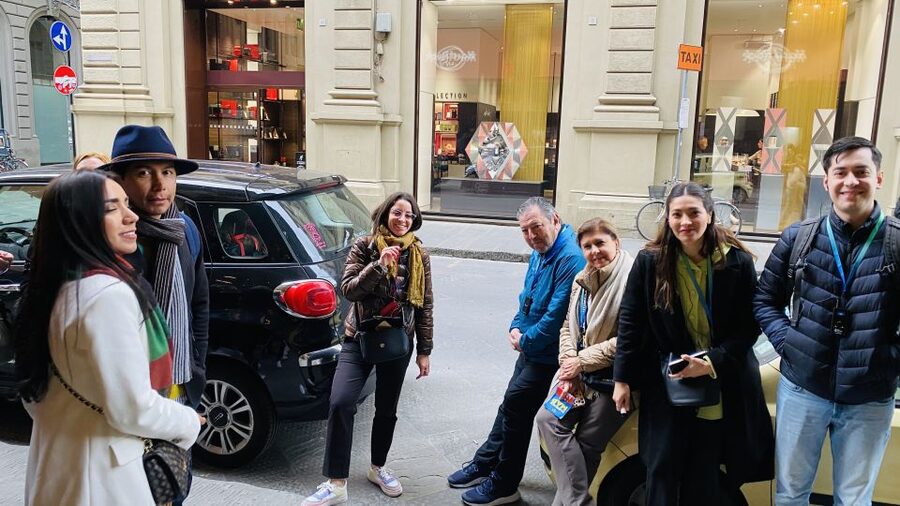
- Hearing device included: you can actually hear the guide while you walk and stop often
- Renaissance names connected to real places: Medici power, Dante, Botticelli, and Michelangelo come with context
- Iconic sights, but not as a photo checklist: Duomo, Piazza della Signoria, and Ponte Vecchio are treated as part of one story
- Room for a flexible pace: you slow down when the guide wants you to look, not when crowds force you
Stretch your legs on more Florence walking tours
Starting at ItalyPass on Via de’ Pucci: where your tour really begins
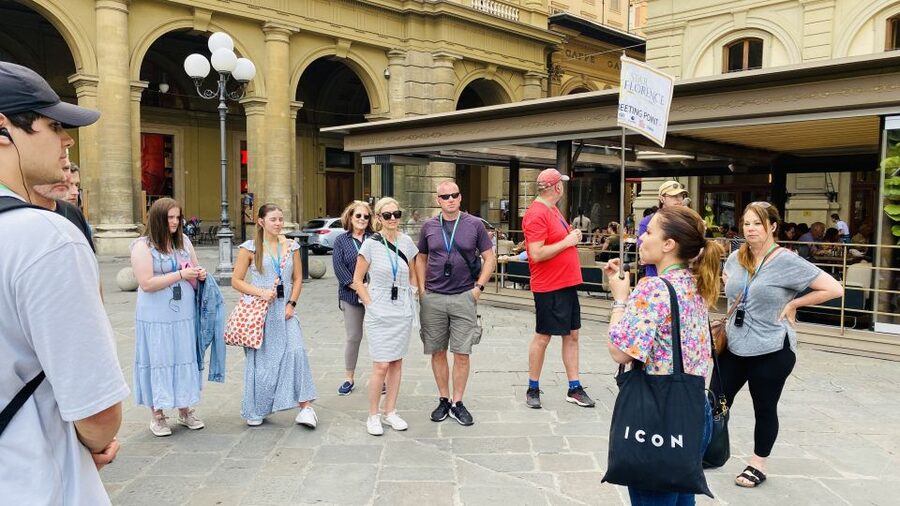
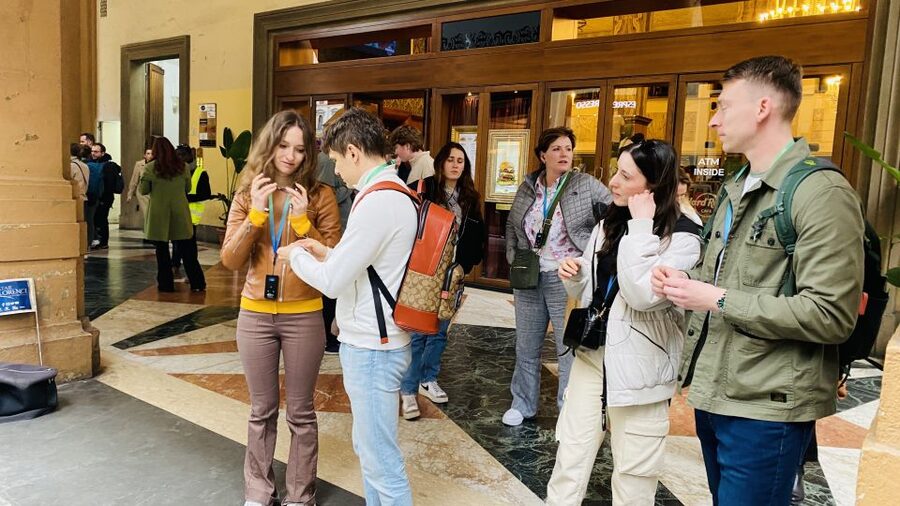
The meeting point is easy to find once you know the address: Via de’ Pucci 37/39, at the ItalyPass store. Plan to show up a few minutes early so you have time to find the right entrance and get settled.
When you arrive, you’ll present your voucher at the reception of ItalyPass, and that’s how you meet your guide. This matters more than it sounds, because Florence is compact and there are lots of shops that look similar—having the voucher ready helps you skip the awkward scramble.
The tour runs in English, and it’s designed for a walking format you can follow without needing museum logistics. You’re on your feet for about two hours, with stops where the guide explains what you’re looking at and why it mattered.
The 2-hour street route: Duomo, Piazza della Signoria, and Ponte Vecchio
This is a walking tour built around Florence’s major landmarks, but the value is in how they connect. The Duomo isn’t treated as a standalone “big thing to see.” It becomes part of the city’s shift from Roman roots to Renaissance ambition, and that theme shows up again when you reach the political center at Piazza della Signoria.
Piazza della Signoria: politics in stone
Piazza della Signoria is where Florence shows its civic muscle. You’ll stand in a square that feels serious and ceremonial—like the city’s “public face.” The guide uses it to explain how power and art weren’t separate in Florence. This is where the Medici story makes more sense, because you’re seeing the space where influence would have played out in front of everyone.
If you’re the type who gets tired of “look at the building” tours, you’re in luck here. The square becomes a stage for meaning: who had authority, what the city valued, and why art and politics kept shaking hands.
Duomo area: the architecture takes over
The towering Duomo is one of those sights that’s hard to capture in a single glance. On this tour, you’re meant to see it from the streets—at angles that let you take in scale. Even if you don’t go inside, the guide’s focus on the surrounding places helps you understand why this complex became a symbol of Florence’s identity.
A key real-world detail: while the tour itself doesn’t promise museum tickets, at least some bookings have led to people getting into the Duomo areas, and they’ve described shorter lines and a breathtaking interior. That’s a great outcome when it’s included, but it’s also why you should verify your specific entry coverage before assuming you’ll skip queues.
Ponte Vecchio: where the city learned to trade
Ponte Vecchio is ancient, practical, and intensely Florence. You’ll cross or stop near the bridge while your guide ties it to the city’s long memory—how commerce, craft, and prestige lived side by side.
This stop works well because it changes your viewpoint. After the solemnity of Piazza della Signoria and the vertical drama around the Duomo, Ponte Vecchio brings you back down to human scale: the city’s rhythms, not just its monuments.
With a local guide, more of Florence to explore
- The Best tour in Florence: Renaissance & Medici Tales – guided by a STORYTELLER
★ 5.0 · 12,316 reviews



Medici, Dante, Botticelli, and Michelangelo: why the stories feel grounded
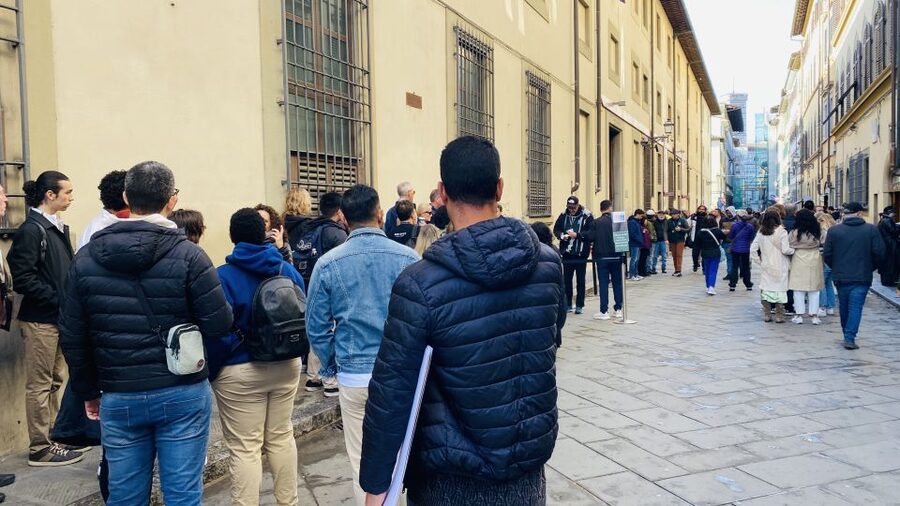
Florence is famous for geniuses, but the trick is understanding how genius worked here—who funded it, who competed, and who wrote the rules. This tour spends its time on that exact kind of relationship-building.
The guide frames Florence as a layered city: Roman origins (the story points to 59 B.C.), then the later Renaissance power shift when names like the Medicis rose to shape culture and politics. You’re not just hearing biographies. You’re seeing how a place can function like a memory palace, where a square, a bridge, or a cathedral area points to a bigger political or artistic system.
The Medici angle: more than money
You’ll hear about the Medici as powerful and political—less like a “supporting cast” and more like the engine. The tour’s description leans into the idea of secretive influence, and the walk itself supports that: as you move from civic space to monumental space, you can feel how power would travel through Florence.
Dante and the city’s mood
Dante’s name fits naturally in this kind of storytelling because he’s the bridge between literature and the city’s public imagination. On a walking route like this, you can connect the poet to the atmosphere of Florence—where identity was debated and recorded in culture, not just in government.
Botticelli and Michelangelo: art that belongs to the street
Botticelli and Michelangelo are used as anchor points for what Renaissance art meant. The goal isn’t to turn you into an art-history student in two hours. It’s to help you recognize why those names became so enduring—and why Florence still feels like it’s talking to you even centuries later.
Why the hearing device and small-group format actually matters
A lot of Florence tours struggle with audio. Narrow streets act like sound traps, and then you add crowds and wind and everyone doing their best impression of a quiet library. That’s why I’m glad this tour includes a hearing device.
Practically, that means you can listen without craning your neck or drifting behind the group. You can also stop for photos or to look closely without losing the thread of the story. It’s the kind of “small detail” that makes the difference between enjoying the walk and constantly asking people to repeat themselves.
The tour is described as a small-group experience. While the exact number isn’t stated, the benefit you can expect is more personal attention from the guide: you’re not just being shepherded past sights. You’re meant to move at a flexible, stress-free pace, with time for the guide to explain what you’re seeing and why it connects to the Renaissance story.
What’s included versus what you must sort out (tickets and entry)
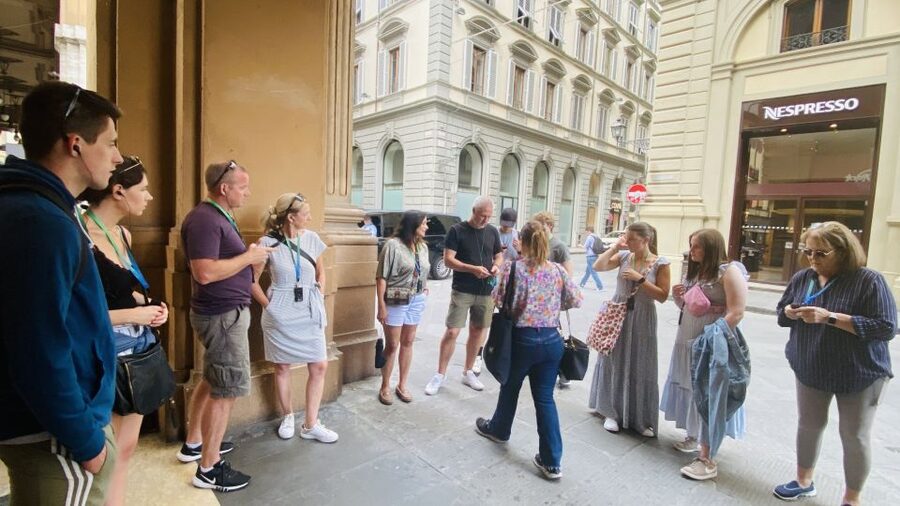
Here’s the clean list of what this experience includes: a guided tour and a hearing device.
What’s not included: tickets to museum, hotel pickup and drop-off, and food and beverage.
That setup is totally normal for walking tours in Florence, but it creates one important practical issue: indoor access and any skip-the-line benefits are not automatically guaranteed by the tour price.
So, what should you do? Before you go, confirm two things:
- Whether your specific booking includes any museum or cathedral-area entry
- Whether any “faster access” you’re expecting is explicitly part of your ticket package
The reason I’m so firm about this is that people have reported mixed experiences: some were happy with shorter lines and described visiting indoor Duomo-related areas, while others felt the ticket details weren’t clear and that the promised convenience wasn’t matched by what they received. In other words, the walking guide is one part of the deal, and the entry-ticket permissions are another.
If you want the smoothest day, treat this as a guided street experience first—and only treat museum-style access as a bonus if your booking clearly states it.
Value for $39: who this tour fits best
At $39 per person for a two-hour walk, you’re paying for three main things:
1) a live guide who connects names and power to the places you see
2) the hearing device that keeps the experience enjoyable, not frustrating
3) a route designed to help you move through central sights at a human pace
If you like history that has personality—Medici politics, Dante’s cultural presence, and Renaissance artists tied to real locations—this feels like good value. You’ll likely leave with a clearer sense of how Florence became the Florence on postcards, and why it still grabs people.
This tour is also a good match if you don’t want an all-day commitment. Two hours in a dense city is enough to get your bearings and see key anchors without burning your whole day.
Who might not love it?
- If you want guaranteed museum entry or a strict, timed “skip the line” experience, you’ll need to verify what’s covered for your specific ticket add-ons.
- If you hate walking and need frequent long breaks, keep in mind it’s a walking tour designed to be flexible, but it’s still two hours on the go.
Wheelchair accessible is listed, which is reassuring. As always, ask about the route details if you need specific help on walking surfaces.
Should you book this Florence guided walking tour?
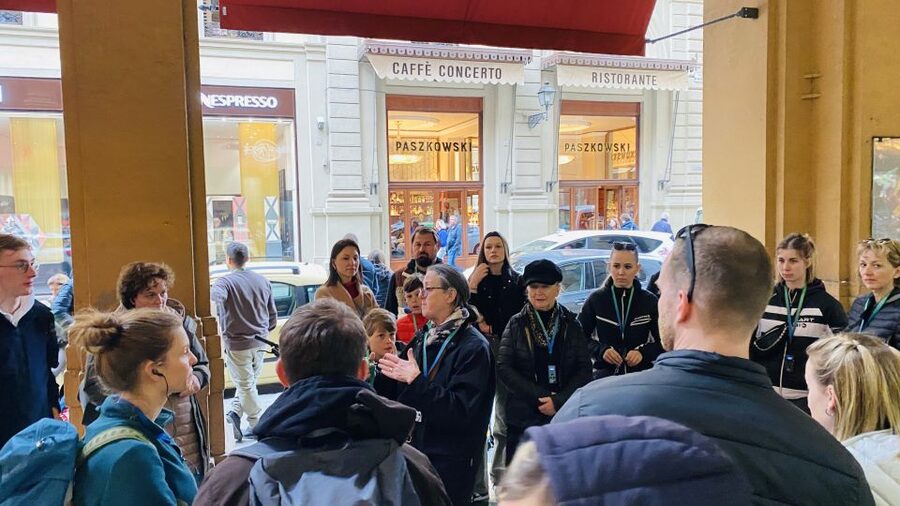
Book it if you want a fast, story-driven Florence introduction built around the Duomo area, Piazza della Signoria, and Ponte Vecchio—with the comfort of a hearing device and a small-group pace. It’s a strong pick for first-timers who want more than a checklist and for anyone who likes Renaissance culture explained in a way that feels connected to real space.
Hold off or verify first if your main goal is indoor museum or cathedral-area access, especially if you’re expecting skip-the-line convenience. This experience is clearly built as a guided walk with aural support—not a guaranteed museum-ticket bundle.
If you’re happy treating tickets as separate (and double-checking what your booking covers), this one is likely to give you the Florence feeling people keep chasing.
FAQ
Where is the meeting point for the guided tour?
You meet at the ItalyPass store at Via de’ Pucci 37/39. You’ll meet your guide there after checking in at the store reception.
What do I need to show to meet the guide?
Bring your voucher. You present it at the reception of the ItalyPass store to meet the guide.
How long is the Florence guided walking tour?
The tour lasts 2 hours.
Is the guide available in English?
Yes, the live tour guide speaks English.
What is included in the tour price?
The tour includes the guided tour and a hearing device.
Is the tour wheelchair accessible, and are museum tickets included?
Wheelchair accessibility is listed for the activity. Museum tickets are not included, so if you want indoor access you’ll need to make sure that part is covered separately in your booking.
More Florence Walks
- Florence: Highlights Walking Tour with Expert Guide
★ 4.6 · 4,662 reviews - Uffizi & Accademia Timed Entry: Small Group Duomo Walking Tour
★ 4.5 · 3,630 reviews - Florence: Duomo Complex with Tickets & City Walk Guided Tour
★ 4.7 · 2,057 reviews - Florence: Guided Walking Tour
★ 4.6 · 1,602 reviews - Florence: Renaissance and Medici Tales Guided Walking Tour
★ 4.8 · 1,549 reviews
More Florence Tours to Weigh Up
- The Best tour in Florence: Renaissance & Medici Tales – guided by a STORYTELLER
★ 5.0 · 12,316 reviews - The Best Tour in Florence: Renaissance and Medici Tales
★ 5.0 · 10,810 reviews - Florence: Chianti Wineries Tour with Wine Tasting
★ 4.5 · 10,071 reviews - Florence: Duomo Cathedral 60-Minute Guided Tour
★ 3.7 · 6,829 reviews - Florence: Hop-on Hop-off Bus Tour: 24, 48 or 72-Hour Ticket
★ 4.0 · 6,283 reviews
More Florence Tours We Have Reviewed
- Florence: Skip-The-Line Uffizi Gallery Timed Entry Ticket
★ 4.5 · 27,832 reviews - Tuscany Day Trip from Florence: Siena, San Gimignano, Pisa and Lunch at a Winery
★ 5.0 · 21,634 reviews - Florence: Timed Entry to Michelangelo’s David + Audio App
★ 4.6 · 19,496 reviews - Florence: Leonardo Interactive Museum Entry Ticket
★ 4.5 · 12,957 reviews - Florence: Michelangelo’s David Skip-the-Line Entry Ticket
★ 4.5 · 12,764 reviews
Fresh from our Florence review desk
- Small-Group Pasta Cooking Class and Market Tour in Florence★ 5.0 · 3 reviews
- Palatina Gallery and Pitti Guided Tour in Florence★ 5.0 · 3 reviews
- Tuscan Evening Tour: Fiat 500, 8:30 to 10 PM★ 5.0 · 3 reviews
- Journey into Art: Florence’s Accademia★ 4.5 · 3 reviews
- Paint and Drink Florentine Hills★ 5.0 · 3 reviews
- Truffle hunting and lunch experience, with Vinci and winery.★ 4.5 · 3 reviews
Walking Tours, compared.
 ★ 4.6Highlights Walking Tour with Expert GuideFrom $274,662 reviews
 ★ 4.5Uffizi & Accademia Timed Entry: Small Group Duomo Walking TourFrom $503,630 reviews
 ★ 4.7Duomo Complex with Tickets & City Walk Guided TourFrom $932,057 reviews
 ★ 4.6Guided Walking TourFrom $271,602 reviews
 ★ 4.8Renaissance and Medici Tales Guided Walking TourFrom $21,549 reviews
 ★ 4.7Uffizi & Accademia Small Group Walking TourFrom $1481,380 reviews
 ★ 5.0Skip-the-Line Florence Highlights and David Walking TourFrom $1171,127 reviews
 ★ 4.6Dark Mysteries and Legends Guided Walking TourFrom $21,081 reviews
Browse the lists this tour appears in