
Reviewed · FLORENCE OPERA & CONCERT TICKETS
Florence: Italian Opera
Opera in Florence hits different.
This one-day concert is a smart first taste of Italian opera, built around the best-known arias from Puccini, Verdi, Mozart, and Rossini. I like that it’s not a full multi-act marathon; it’s a focused evening that still feels dramatic, thanks to two historic performance spaces and a lineup that leans into emotion.
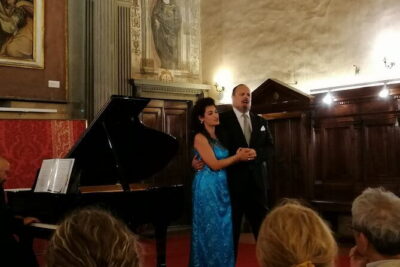
Two things I especially enjoy here are the strong vocal performances and the fact that the show is paired with a skilled pianist (Gianni Cigna) instead of just background music. One drawback to consider: the program includes a piano intermezzo and multiple breaks, so if you’re hoping for long, uninterrupted story-driven opera, this format may feel a bit segmented.
In This Review
- Key things to know before you go
- Italian opera in Florence’s historic halls: what you’re really seeing
- Zeffirelli Concert Hall + Auditorium of Santo Stefano by Ponte Vecchio
- The program: Puccini, Verdi, Mozart, Rossini in one evening arc
- The cast and piano work: where the emotion comes from
- Choosing your seating category without second-guessing
- What’s included, what isn’t, and how to budget smart
- Timing the night: how to enjoy without stress
- Where to relax on-site: garden and tea room breaks
- Who should book this Florence opera evening
- Should you book this Florence: Italian Opera experience?
- FAQ
- What is the duration of the Florence Italian Opera concert?
- How much does it cost?
- What venues are used for the performance?
- What music is included in the program?
- Who performs in the concert?
- What is included with the ticket?
- What is not included?
- Is the experience wheelchair accessible?
Key things to know before you go
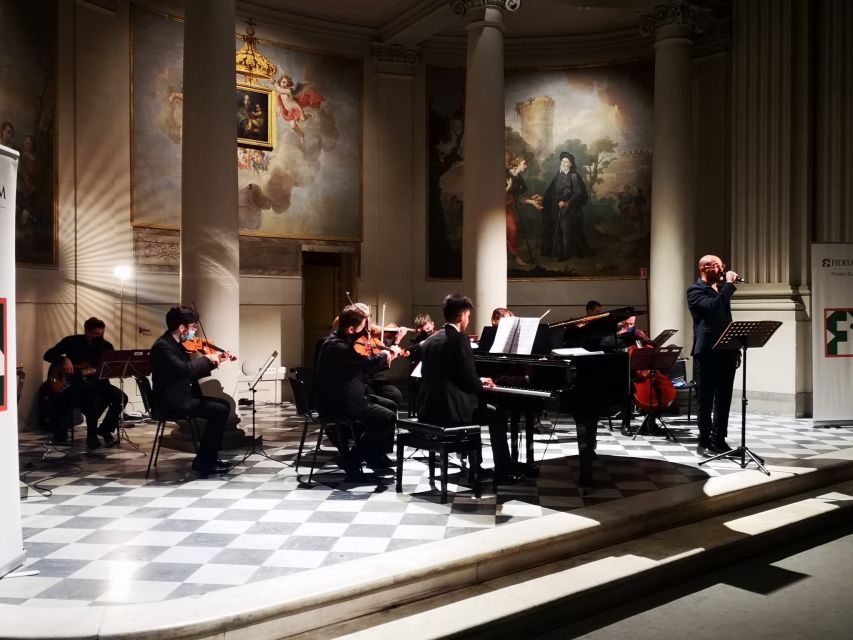
- Two historic venues: Zeffirelli Concert Hall and the Auditorium of Santo Stefano near Ponte Vecchio
- A compact best-of program spanning Puccini, Verdi, Mozart, and Rossini
- Three seating categories that can change how close you feel to the performers
- A real “opera with piano” setup, including a piano-only intermezzo
- On-site relaxing options like a garden area and a tea room during the evening
An evening of music in Florence, a few more seats
Italian opera in Florence’s historic halls: what you’re really seeing
Think of this as opera as a greatest-hits concert. You’ll hear recognizable highlights, including major moments from Tosca, La Bohème, La Traviata, Gianni Schicchi, Falstaff, Don Giovanni, and The Barber of Seville—mostly in aria form. If you’re new to opera, that’s a win: you get the emotional punches without needing to follow a whole evening’s plot arc.
If you already love opera, this can still work because you hear big melodies and big character moments in a shorter, more approachable format. You’re also in Florence, which makes the whole night feel like a special outing rather than just a performance you fit in between museum stops.
The show also leans hard on vocal technique. The sound you’re aiming for is clarity plus drama, and the lineup is designed for that. The pianist’s role matters here; in these kinds of programs, the piano doesn’t just keep time. It shapes phrasing and helps the singers land their lines.
Zeffirelli Concert Hall + Auditorium of Santo Stefano by Ponte Vecchio
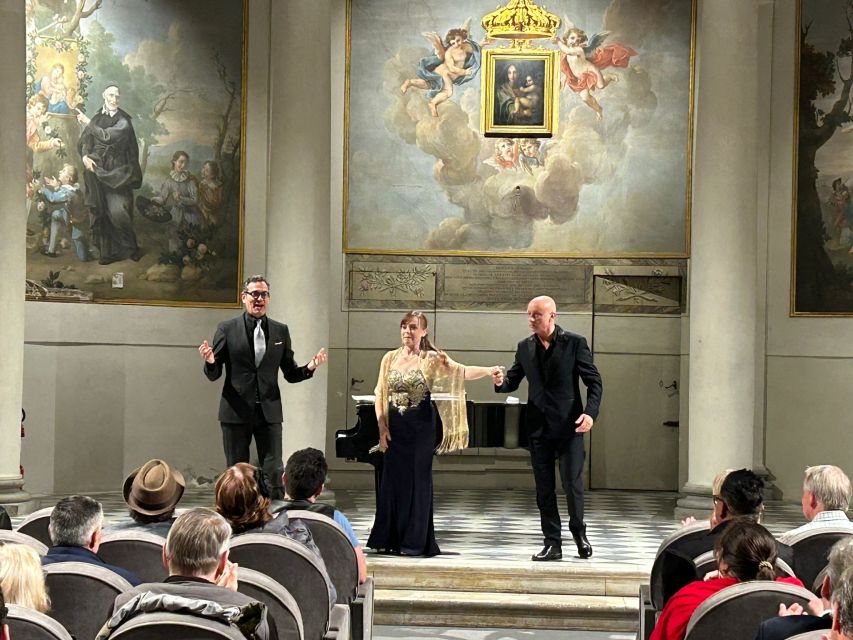
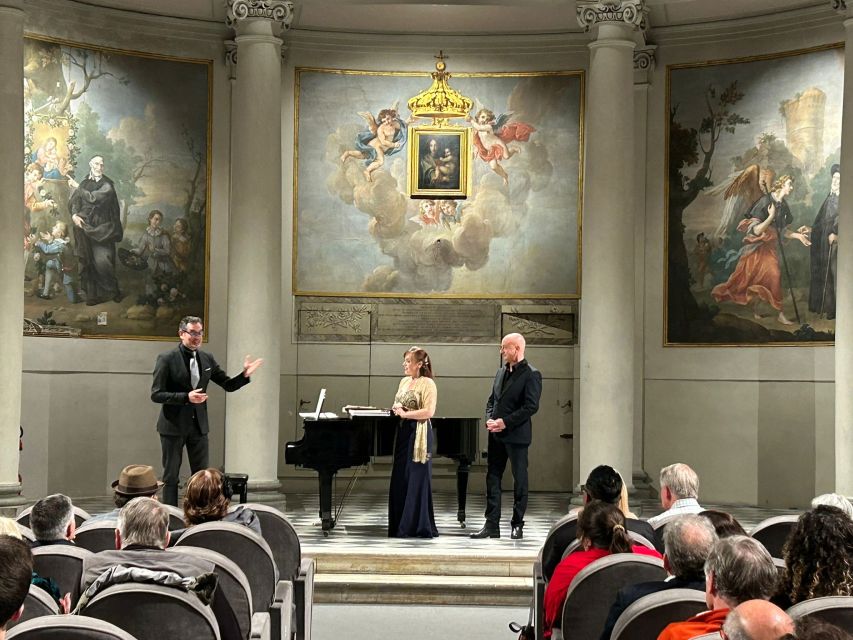
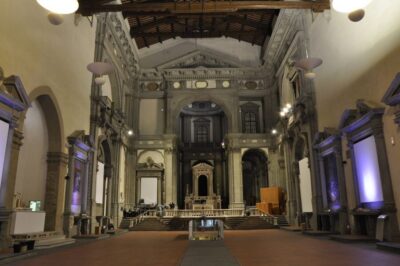
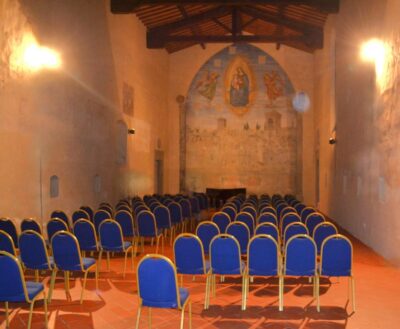
This concert runs across two historic spaces, and the venue change is part of the experience. One venue is the Zeffirelli Concert Hall, and the other is the Auditorium of Santo Stefano, located by Ponte Vecchio in central Florence.
The Auditorium of Santo Stefano is the standout setting for many people, mainly because of how the room handles sound. The building traces back to a Romanesque style, then later saw Gothic and Baroque transformations. It also endured major shocks over the past century, including damage during World War II, the 1966 flood, and the 1993 Georgofili bombing, before being restored in the late 1990s.
Why this matters for you: acoustics aren’t just a technical detail here. In an aria-heavy concert, the room’s resonance can make quiet passages feel intimate and louder moments feel full and powerful. Add to that the sense of occasion from a centuries-old space near one of Florence’s most famous bridges, and you’ve got a night that feels more like culture-on-purpose than a casual event.
The program: Puccini, Verdi, Mozart, Rossini in one evening arc
The program is structured into two parts with an intermission, so you’ll get a clear rhythm to the night. In the first part, you start with lighter comic energy and move toward big, dramatic contrasts.
First part highlights include:
- Largo al factotum from The Barber of Seville (Rossini)
- Tre sbirri una carrozza from Tosca (Puccini)
- A piano solo intermezzo
- Quando me’n vo from La Bohème (Puccini)
- È strano… Sempre libera from La Traviata (Verdi)
- Cinque, dieci, venti from The Marriage of Figaro (Mozart)
Then comes intermission, followed by the second half.
Second part highlights include:
- O mio babbino caro from Gianni Schicchi (Puccini)
- È sogno o realtà from Falstaff (Verdi)
- La ci darem la mano from Don Giovanni (Mozart)
- Dunque io son from The Barber of Seville (Rossini)
Here’s what I think is smart about this order. You get a mix of styles: Rossini’s wit, Puccini’s melodic emotional pull, Verdi’s dramatic authority, and Mozart’s crisp character energy. Even if you don’t know the operas, you’ll recognize how the music “speaks” differently from composer to composer.
One caveat: the inclusion of a piano intermezzo is intentional, but it means the evening isn’t just straight-through vocal performance. If you prefer fewer pauses and longer continuous sections, that might annoy you a little.
The cast and piano work: where the emotion comes from
This concert is built around three key performers, and their names matter because you can plan to listen for their specific strengths.
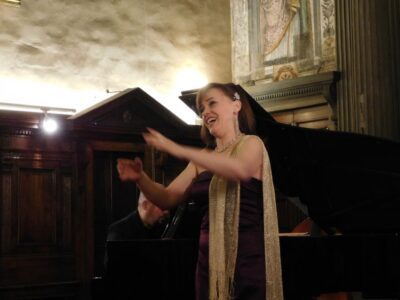
- Soprano: Alessia Battini
She’s described as an emerging star with a voice that combines lyrical power and emotional depth.
- Baritone: David Ciarrocchi
He’s known for a rich, expressive baritone sound and frequent work in Mozart and Verdi repertoire, including major Italian musical settings.
- Pianist: Gianni Cigna
He’s a vocal coach and opera accompanist, which is huge for this kind of program. In an aria-focused concert, the piano partnership can make or break the phrasing.
I love that the show doesn’t treat the piano as a background player. With opera highlights, accompaniment is storytelling. It helps set pace, underline emotion, and make each aria feel connected—even when the pieces come from different operas.
Also, seeing how different voices cover different roles helps you understand opera faster. The soprano brings the bright emotional line, while the baritone often adds weight and character gravity. Then the Mozart selections add precision and lighter drama that’s a nice contrast to the heavier Verdi and Puccini moments.
Choosing your seating category without second-guessing
You get three seating categories. The good news is you’re not locked into one “best” option blindly. Many opera newcomers worry they’ll buy a ticket that’s too far from the stage or too close to the wrong angle. With this kind of show, where arias are the focus, your distance and sightline can change how much you catch facial expression and hand gestures.
A practical tip from people who have done this: if you’re choosing between sections, VIP or middle seats often feel like the sweet spot because the venue isn’t treated like a cattle-call event. I’d lean that way if you want the best overall experience for the money.
If you’re on a tighter budget, you can still have a great evening. Opera highlights let you enjoy the sound even if you’re not in the front row. Just remember that opera is both sound and performance, so the closer you are, the more you’ll catch in addition to what you hear.
- The Best tour in Florence: Renaissance & Medici Tales – guided by a STORYTELLER
★ 5.0 · 12,316 reviews

What’s included, what isn’t, and how to budget smart
The price is $41 per person for a one-day concert ticket. For Florence, that’s the kind of price that makes opera accessible. You’re not paying for a long full-scale production with elaborate costumes and sets. Instead, you’re paying for the performance itself: ticket access plus a printed program.
What’s included:
- Concert ticket
- Printed program
What’s not included:
- Food and drinks
- Hotel pickup and drop-off
So for budgeting, plan like this: ticket first, then add whatever you want to eat or drink around the performance time. If you’d like a drink during the evening, remember you’ll need to cover it yourself.
This format is also good value because you’re seeing a high-quality selection of repertoire in a compact block. If opera is new to you, that “try it without over-committing” feeling is often worth more than the cheapest ticket to something longer.
Timing the night: how to enjoy without stress
There’s no hotel pickup, and the meeting point can vary depending on the option you book. That means you should build in extra time to get yourself to the correct entrance and be seated before the performance settles.
Because it’s a one-day activity and the show runs in two parts, you’ll want to treat it like a real evening out. Arrive early enough to get your bearings. Then when intermission hits, use it to reset and check out any on-site spaces offered for relaxing.
One more practical note: the program is split into two halves, so you’ll likely end up watching the first set, then returning for the second. The intermezzo and break are part of the pacing, so don’t plan a tight “I must be somewhere else” schedule afterward.
Where to relax on-site: garden and tea room breaks
One of the nicer perks is that you’re not stuck in a hallway for the downtime. The experience includes space to relax in a garden area or in the tea room. That’s a small thing, but it makes intermission feel less like waiting and more like a breather.
In a performance setting, comfort matters. You’ll be listening closely for the vocal lines, and having a calm place to sit during the pause helps you return with better focus.
If you’re someone who gets a little restless during breaks, this is worth paying attention to, because it can genuinely improve how enjoyable the whole night feels.
Who should book this Florence opera evening
This works best for:
- First-time opera lovers who want the biggest hits in manageable pieces
- People who love classical music and want a clear, enjoyable night
- Travelers who like historic spaces and want acoustics plus setting
It might not be ideal for:
- Anyone expecting a long, continuous opera drama with fewer breaks
- People who dislike the idea of a piano intermezzo and want mostly vocal content the whole time
If you’re standing at the “not sure if I’ll like opera” starting line, I’d treat this as a confident starting point. The mix of composers and the way the program flows makes it easier to connect emotionally, even if you don’t know every character or plot detail.
Should you book this Florence: Italian Opera experience?
My advice: yes, if you want an opera night that’s focused, approachable, and tied to a great Florence setting. With major arias from Puccini, Verdi, Mozart, and Rossini, plus a performer team built for clear vocal impact, this is the kind of cultural evening that feels like a highlight rather than a checkbox.
I’d book it sooner if you:
- Want opera without committing to a full-length production
- Like hearing recognizable music in a well-sounding historic room
- Appreciate that the piano is an active part of the performance
I’d think twice if you:
- Expect nonstop vocal performance with no intermezzo-style pauses
- Are very sensitive to program pacing and interruption
FAQ
What is the duration of the Florence Italian Opera concert?
It’s a 1-day experience. The program is split into two parts with an intermission.
How much does it cost?
The price listed is $41 per person.
What venues are used for the performance?
The concert takes place at the Zeffirelli Concert Hall and the Auditorium of Santo Stefano in Florence.
What music is included in the program?
The program includes selections from Puccini, Verdi, Mozart, and Rossini, such as arias from Tosca, La Bohème, La Traviata, Gianni Schicchi, Falstaff, Don Giovanni, and The Barber of Seville.
Who performs in the concert?
The listed performers are Alessia Battini (soprano), David Ciarrocchi (baritone), and Gianni Cigna (pianist).
What is included with the ticket?
Your ticket includes the concert admission plus a printed program.
What is not included?
Food and drinks are not included, and there is no hotel pickup and drop-off.
Is the experience wheelchair accessible?
Yes, it is listed as wheelchair accessible.
More Florence Tours We Have Reviewed
- Florence: Skip-The-Line Uffizi Gallery Timed Entry Ticket
★ 4.5 · 27,832 reviews - Tuscany Day Trip from Florence: Siena, San Gimignano, Pisa and Lunch at a Winery
★ 5.0 · 21,634 reviews - Florence: Timed Entry to Michelangelo’s David + Audio App
★ 4.6 · 19,496 reviews - Florence: Leonardo Interactive Museum Entry Ticket
★ 4.5 · 12,957 reviews - Florence: Michelangelo’s David Skip-the-Line Entry Ticket
★ 4.5 · 12,764 reviews
More Music Nights in Florence
- Florence: Santa Monaca Church Italian Opera Concert Ticket
★ 4.7 · 2,692 reviews - Florence Duomo, Baptistery & Opera Museum Audioguided Tour
★ 4.2 · 607 reviews - Italian Opera Concert Ticket in Florence’s Santa Monaca Church
★ 4.5 · 602 reviews - Florence: Evening Classical Music Concert
★ 4.6 · 574 reviews - Heart of Florence: Dinner and Three Tenors Concert Ticket
★ 4.0 · 400 reviews
Fresh from our Florence review desk
- Small-Group Pasta Cooking Class and Market Tour in Florence★ 5.0 · 3 reviews
- Palatina Gallery and Pitti Guided Tour in Florence★ 5.0 · 3 reviews
- Tuscan Evening Tour: Fiat 500, 8:30 to 10 PM★ 5.0 · 3 reviews
- Journey into Art: Florence’s Accademia★ 4.5 · 3 reviews
- Paint and Drink Florentine Hills★ 5.0 · 3 reviews
- Truffle hunting and lunch experience, with Vinci and winery.★ 4.5 · 3 reviews
Florence Opera & Concert Tickets, compared.
 ★ 4.7Santa Monaca Church Italian Opera Concert TicketFrom $352,692 reviews
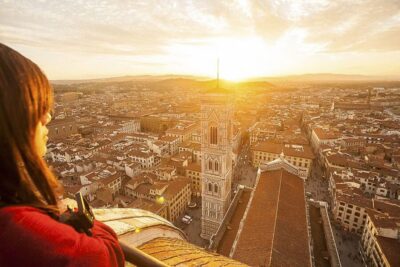 ★ 4.2Florence Duomo, Baptistery & Opera Museum Audioguided TourFrom $65607 reviews
 ★ 4.5Italian Opera Concert Ticket in Florence’s Santa Monaca ChurchFrom $36602 reviews
 ★ 4.6Evening Classical Music ConcertFrom $41574 reviews
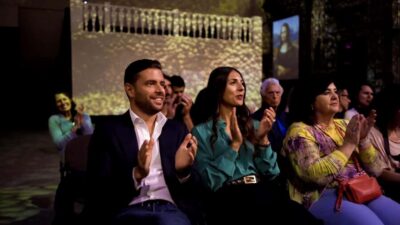 ★ 4.0Heart of Florence: Dinner and Three Tenors Concert TicketFrom $88400 reviews
 ★ 4.8Opera Concert Entrance TicketFrom $32377 reviews
 ★ 4.0Dinner and Concert with “Three Tenors”: A Real Italian ExperienceFrom $104265 reviews
 ★ 4.3Pizza Dinner and Opera Arias ConcertFrom $98238 reviews
Browse the lists this tour appears in