
Reviewed · HISTORICAL TOURS
Florence: Meet the Artisans & Explore Historic Shops
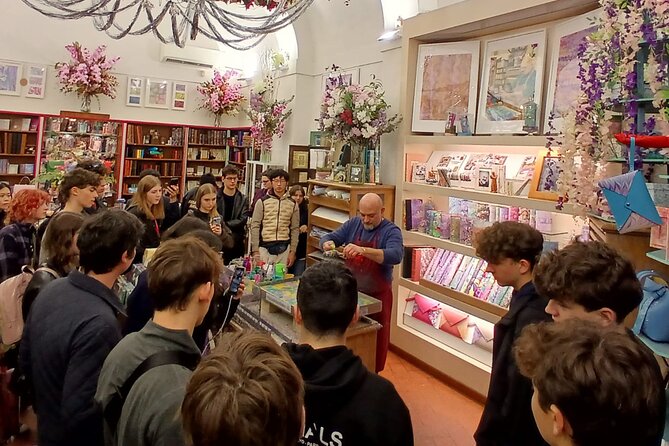
Florence can feel like a museum. This tour feels more like the workshop next door, if that next door is scattered across some of the city’s most famous squares. I like the way it ties craftsmanship to real places you already want to walk through, with hands-on craft stops and short, guided access that doesn’t waste time.
Two things I especially like: you start with a welcome coffee or tea (and you’re not scrambling to find it), and you get a guided tasting of three Tuscan extra virgin olive oils that teaches you how to taste instead of just sampling. One thing to keep in mind: several stops include shops as part of the experience, so if you’re hoping for full-time, open-to-the-public production the whole time, you’ll want to set expectations and ask questions on the spot.
In This Review
- Quick hits before you go
- Four hours of real Florentine making, starting with coffee
- Leather in Piazza Santa Croce: Scuola del Cuoio and Florentine craftsmanship
- The Duomo’s restoration workshop and a goldsmith’s studio near Santa Maria del Fiore
- Piazza della Signoria’s measurement stone and the Porcellino’s coin ritual
- Olive oil at Piazza Del Limbo: tasting like a pro, not a tourist
- Marbled paper at Ponte alle Grazie: Renaissance technique in motion
- Oltrarno woodworking at Ponte Santa Trinita, plus crafts around Palazzo Pitti and engraving
- Ponte Vecchio shoemaking and a ceramics stop by the Lungarno
- Value, pacing, and the one drawback you should plan for
- Should you book this Florence artisan tour?
- FAQ
- How long is the Florence artisan tour?
- What does the tour cost, and what’s included?
- What language is the tour offered in?
- How big is the group?
- Where do I meet, and where does the tour end?
- Is there a ticket cost for the specific stops?
- Can I cancel and get a full refund?
- Final call: book or pass?
Quick hits before you go
- Small group, max 10 people: more room to ask questions without feeling herded.
- Coffee + snacks included: a practical start, plus tasting three oils during the walk.
- Duomo restoration workshop access: you’ll see the careful side of Florence’s biggest landmark.
- Oltrarno artisan rhythm: leather, wood, mosaics, engraving, and paper-making in one route.
- Pace is city-friendly: lots of 15-minute stops that keep you moving through Florence efficiently.
- Built-in contrast: history-focused spots like Piazza della Signoria mixed with sensory stops like the olive oil square.
Layers of history: more Florence stories
Four hours of real Florentine making, starting with coffee
This is a 4-hour small-group walk built around the idea that Florence’s art isn’t only on walls. It’s in the making: leather, goldsmith work, restoration, mosaics, engraving, marbled paper, woodworking, and more. The route ends near Ponte Vecchio, which is a smart finish because you land in the middle of the city’s postcard grid without having to figure out your own exit plan.
You’ll meet at Local Guides Tour, Via di S. Giuseppe, 4r, 50122 Firenze FI, and from there the tour moves through central Florence and then into the Oltrarno artisan side of the city. Since the stops are usually short (often around 15 minutes), comfortable shoes matter. Also, bring a little patience: artisans often work at their own speed, not your tour schedule.
Price-wise, $78.60 per person is easier to swallow when you remember what’s included. You get a coffee or tea at the agency, bottled water to refill, and a guided tasting of three Tuscan extra virgin olive oils with snacks to pair. That’s not just a “look at pretty things” tour—it’s a mix of education and food, plus guided access to specialist workshops.
Leather in Piazza Santa Croce: Scuola del Cuoio and Florentine craftsmanship
Your tour begins around Piazza Santa Croce, with a visit to the courtyard of the Scuola del Cuoio. This is the kind of place where the craft is taught with traditional techniques, not just displayed. You’ll walk through an active learning environment where young apprentices practice leatherwork.
Then you continue to a historic leather shop where Florentine leather goods take center stage. This is where the tour does something I really value: it helps you notice what makes Florentine leather feel different—quality of materials, fine finishing, and the care behind the details. Even if you don’t buy anything, you’ll leave better able to tell the difference between mass-produced “souvenir leather” and items made with proper attention.
A practical consideration: leather is one of those crafts where a shop stop can turn into a sales moment. That doesn’t ruin the experience, but it can affect the vibe. If you’re price-shopping or art-analyzing, stay curious and ask how pieces are made and how long key steps take.
The Duomo’s restoration workshop and a goldsmith’s studio near Santa Maria del Fiore
From there, the route tightens near the Duomo (Santa Maria del Fiore), with a focus on a lesser-known side of the cathedral: the Opera del Duomo restoration workshop. This is where Florence’s pride turns into technique. You’ll see artisans working with patience and precision, restoring sculptures and decorative elements so older craftsmanship can survive for the next generation.
Then you move a bit closer to the glinting side of the city: a historic goldsmith’s workshop. The tour highlights a display of jewelry that reproduces details and ornaments drawn from Florence’s greatest artistic masterpieces. This isn’t just a “look at jewelry” stop—it’s about how designs travel from monumental art into wearable form.
If you’re the type who likes materials and process, you’ll probably enjoy this pairing. Restoration is slow and careful. Goldsmith work is also careful—just with different tools and a different kind of shine. In one reported experience, guide Vanessa even brought extra building history and made the visit feel more technical and personal, including engaging moments around materials and craft practices.
Piazza della Signoria’s measurement stone and the Porcellino’s coin ritual
At Piazza della Signoria, you get a compact lesson in how Florence used precision to run its economy. You’ll see the Braccio Fiorentino, a stone-carved unit of measurement used by medieval fabric merchants to keep transactions fair and uniform. It’s a small detail, but it explains why Florentine textile arts became so respected: standards mattered.
Next door you’ll also notice Palazzo della Lana, tied to the old Wool Guild—one of the city’s most powerful corporations. You don’t need a textbook here. The point is simple: craftsmanship in Florence grew alongside institutions that protected quality and controlled production.
Then the tour heads toward Fontana del Porcellino at the Loggia del Porcellino. This stop is half history, half theater. The Porcellino statue is a bronze fountain associated with good luck: rub the snout and let a coin drop through the grate.
The other layer is darker and oddly memorable. The stone of shame (pietra dello scandalo) was used to publicly humiliate merchants who couldn’t repay debts, and that punishment even fed into the Italian expression rimanere in mutande (used today to signal financial loss). It’s a reminder that Florence’s commercial strength came with hard social rules.
Olive oil at Piazza Del Limbo: tasting like a pro, not a tourist
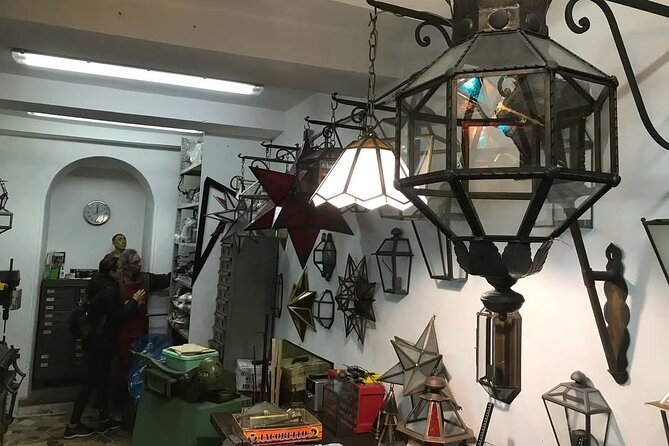
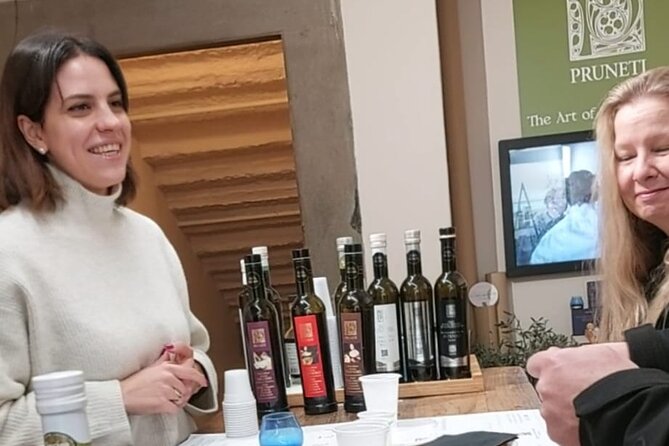
By Piazza Del Limbo, you reach the most sensory part of the route. Here, you pause for olive oil—Tuscany’s oldest tradition—through a guided visit to a specialty shop. You’ll learn how to recognize the qualities of real Tuscan extra virgin olive oil, and you’ll taste guided varieties to understand their aroma, intensity, and character.
This is the stop I’d call the tour’s anchor. In multiple experiences shared with the tour provider, the olive oil tasting was singled out as a highlight because it turns something most people think they already understand into a real learning moment. You don’t need fancy language; you just need guidance and something to compare.
Tip: if you’re shopping afterward, pay attention to what you liked during the tasting—not what’s the most expensive bottle in the case. The guide’s tasting notes are the quickest way to match your preferences.
Browse on with more Florence shopping trips
- Cooking Class and Lunch at a Tuscan Farmhouse with Local Market Tour from Florence
★ 5.0 · 4,831 reviews


Marbled paper at Ponte alle Grazie: Renaissance technique in motion
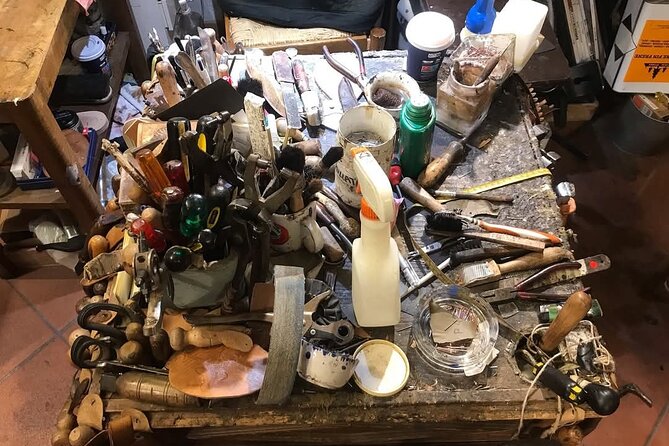
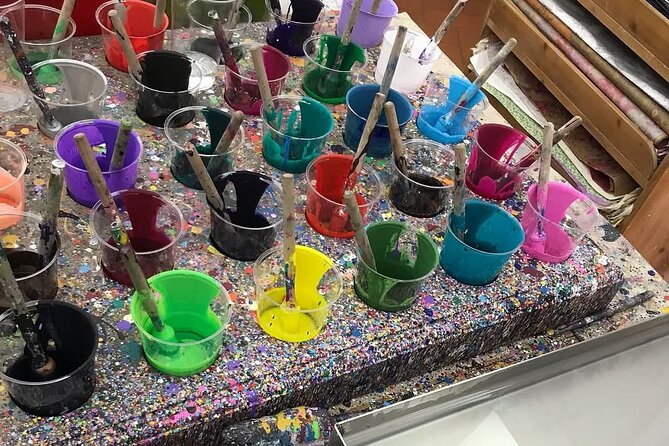
Next is a workshop visit near Ponte alle Grazie, focused on marbled paper. This craft creates unique sheets using a centuries-old technique where pigments move through water and then transfer onto paper in wavy patterns.
You’ll learn the process step by step: pigments, water, and the transfer of the design onto paper. Even today, it’s used to decorate books, notebooks, and fine objects, so you’re not just watching a historic demo—you’re seeing a living technique.
One caution, based on reported experience: don’t assume you’ll see every possible product form or related process beyond the marbling itself. If you care about what’s possible with the technique, ask directly what else they can show or what projects are made with their marbled sheets.
Oltrarno woodworking at Ponte Santa Trinita, plus crafts around Palazzo Pitti and engraving
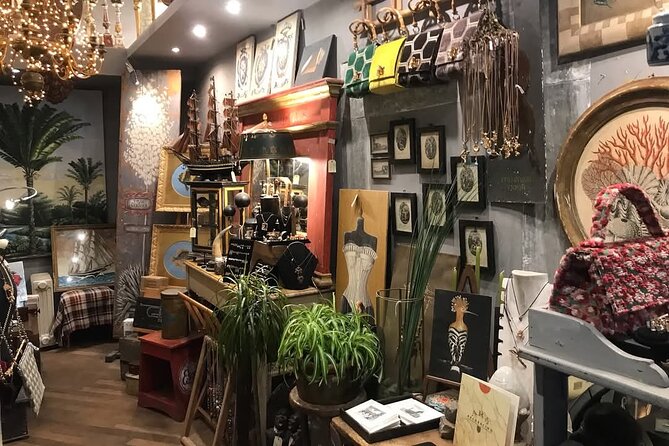
Now you cross into the mood of the Oltrarno, Florence’s artisan district. At Ponte Santa Trinita, the tour visits a traditional woodworking workshop where skilled hands create objects using techniques passed down through generations—carving, polishing, and use of traditional tools.
This is the part of the tour that can feel like watching an old skill keep its balance. Woodwork takes time, and you get a chance to see that care up close. It’s also a good stop for people who like functional art: frames, furniture, and handmade objects made with the same patience used for bigger masterpieces.
Then, near Palazzo Pitti, you shift to two more craft languages:
- Commesso fiorentino mosaics, made with semi-precious stones into intricate compositions.
- Handcrafted jewelry, inspired by Renaissance motifs, using fine materials and traditional techniques.
Depending on how the workshop is operating that day, you might see more of finished pieces than active building. The tour wording emphasizes visiting a workshop where these crafts are practiced, but keep your expectations flexible—work flow is real and artisans don’t always stop mid-task for photographs.
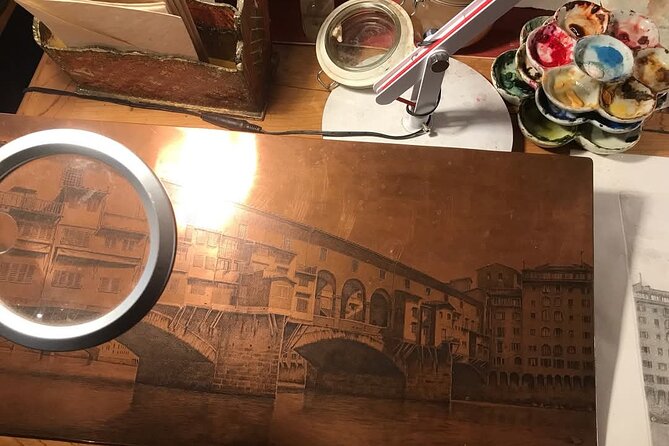
For another printmaker-style craft, the tour continues to Piazza Santo Spirito for engraving and etching. You’ll visit an atelier where artisans use time-honored tools to engrave metal plates and create printing matrices. The key method described is etching, which uses acid to carve detailed designs into metal plates for printing on paper.
If you’ve ever wondered why Florence is linked to artists like Michelangelo in printmaking history, this is the kind of stop that explains how the workflow connects art ideas to physical copies.
Ponte Vecchio shoemaking and a ceramics stop by the Lungarno

The tour’s classic Florence moment is Ponte Vecchio. It’s not just a landmark. It’s associated with historic goldsmith shops, and it’s also where you’ll see additional craft-focused context on the route.
Right nearby, you visit a traditional shoemaking workshop where fine leather is transformed into handcrafted shoes. You’ll get a close-up view of the leather-to-finish process, including stitching and finishing steps.
Then, along the Lungarno, you stop at a handcrafted ceramics shop to admire hand-painted ceramic pieces inspired by traditional Renaissance motifs and older Tuscan techniques. Ceramics can be an easy craft to “admire and forget,” but this is a nice final stop because it pulls you back into design details: color choices, brushwork style, and how motifs carry forward.
Value, pacing, and the one drawback you should plan for
If you’re wondering whether this tour is worth it, here’s how I’d judge it: you’re paying for three things at once—guided access, craft education, and included food. With coffee or tea, water, snacks, and a three-oil tasting included, the price becomes more reasonable than a pure sightseeing walk where you’d have to pay for everything yourself.
The other big value is the small-group format (maximum 10). That matters because craft workshops generate real questions. People who like history and materials often get more out of this kind of pacing, especially when the guide connects dots across different crafts.
The one potential drawback is also clear from the tour experience style: some stops are in spaces where selling is part of the daily rhythm. In an art-focused report, leather and paper places were interesting, but at some craft shops the feeling was more showroom than studio. Another person noted a marbled paper shop was cute but didn’t match their expectation of seeing a full book binding process. That doesn’t mean the craft isn’t real—it means the tour is time-boxed, and what you see depends on what’s scheduled and what’s happening that day.
My practical advice if you care about seeing working hands:
- Ask what’s happening right now in the workshop.
- Ask which steps are done by hand versus by workshop tools.
- If you’re an artist or work with materials, bring specific questions about tools and finishing.
Should you book this Florence artisan tour?
Book it if you want a compact, well-paced introduction to Florence’s craft world without getting stuck in long lines or trying to guess which workshops are worth your time. I’d especially recommend it if the idea of learning to taste olive oil matters to you, and if you like guides who explain the how behind the look.
Skip it or keep expectations modest if your dream is to watch a fully working studio from start to finish at every stop. This route is designed for breadth across leather, restoration, metalwork, mosaics, engraving, paper, woodworking, shoes, and ceramics in a single afternoon. It’s not a one-craft-only workshop retreat.
FAQ
How long is the Florence artisan tour?
It runs about 4 hours.
What does the tour cost, and what’s included?
The price is $78.60 per person. Included are a welcome coffee and/or tea, bottled water you can refill, and snacks with a guided tasting of three Tuscan extra virgin olive oils.
What language is the tour offered in?
The tour is offered in English.
How big is the group?
The tour has a maximum of 10 travelers.
Where do I meet, and where does the tour end?
You meet at Local Guides Tour, Via di S. Giuseppe, 4r, 50122 Firenze FI, Italy. The tour ends near Ponte Vecchio (the endpoint is approximate).
Is there a ticket cost for the specific stops?
The stops listed include admission tickets marked as free.
Can I cancel and get a full refund?
Yes. You can cancel up to 24 hours in advance for a full refund. If you cancel within 24 hours of the start time, the amount paid is not refunded.
Final call: book or pass?
I’d book it if you want Florence through the lens of craft, not just monuments, and you like the idea of turning food into a learning moment with the olive oil tasting. If you’re the kind of traveler who needs nonstop, behind-the-scenes studio production, plan to treat this as a guided sampling route through multiple artisans rather than a single deep workshop day.
More Florence Shopping
- Cooking Class and Lunch at a Tuscan Farmhouse with Local Market Tour from Florence
★ 5.0 · 4,831 reviews - Small Group Cooking Class & Market Food Tour in Florence
★ 5.0 · 1,574 reviews - Pasta and Tiramisu Cooking Class with optional Local Market Tour
★ 5.0 · 515 reviews - Florence: Cooking Class with Local Food Market Tour
★ 4.9 · 407 reviews - Florence: Cooking Class at a Tuscan Farm & Local Market Tour
★ 4.9 · 354 reviews
More Florence History
- Guided Medici Tour Florence: Discover Mysteries & History
★ 4.3 · 1,077 reviews - Tipsy Tour: Guided Bar Crawl In Florence with Dark History
★ 5.0 · 271 reviews - Florence Cooking Course with Historic Local Market Visit
★ 4.5 · 151 reviews - Florence to Fiesole golf cart tour:History & Panoramic views
★ 4.9 · 121 reviews - Florence: Medici Family History Tour
★ 4.3 · 93 reviews
More Florence Tours We Have Reviewed
- Florence: Skip-The-Line Uffizi Gallery Timed Entry Ticket
★ 4.5 · 27,832 reviews - Tuscany Day Trip from Florence: Siena, San Gimignano, Pisa and Lunch at a Winery
★ 5.0 · 21,634 reviews - Florence: Timed Entry to Michelangelo’s David + Audio App
★ 4.6 · 19,496 reviews - Florence: Leonardo Interactive Museum Entry Ticket
★ 4.5 · 12,957 reviews - Florence: Michelangelo’s David Skip-the-Line Entry Ticket
★ 4.5 · 12,764 reviews
Fresh from our Florence review desk
- Small-Group Pasta Cooking Class and Market Tour in Florence★ 5.0 · 3 reviews
- Palatina Gallery and Pitti Guided Tour in Florence★ 5.0 · 3 reviews
- Tuscan Evening Tour: Fiat 500, 8:30 to 10 PM★ 5.0 · 3 reviews
- Journey into Art: Florence’s Accademia★ 4.5 · 3 reviews
- Paint and Drink Florentine Hills★ 5.0 · 3 reviews
- Truffle hunting and lunch experience, with Vinci and winery.★ 4.5 · 3 reviews
Historical Tours, compared.
 ★ 4.3Guided Medici Tour Florence: Discover Mysteries & HistoryFrom $571,077 reviews
 ★ 5.0Tipsy Tour: Guided Bar Crawl In Florence with Dark HistoryFrom $78271 reviews
 ★ 4.5Florence Cooking Course with Historic Local Market VisitFrom $95151 reviews
 ★ 4.9Florence to Fiesole golf cart tour:History & Panoramic viewsFrom $116121 reviews
 ★ 4.3Medici Family History TourFrom $13793 reviews
 ★ 3.5Historical Guided Tour of Florence’s Iconic CathedralFrom $1088 reviews
 ★ 4.2Fashion History Guided Walking Tour & Museum VisitFrom $9072 reviews
 ★ 5.0The History of Florence: The Renaissance Era Private TourFrom $19849 reviews
Browse the lists this tour appears in