
Reviewed · WALKING TOURS
Florence: Occult & Esotericism Walking Tour For The Curious
Florence gets spooky once you know where to look. This is a 3-hour symbol-and-story walk that turns famous Florentine sites into a kind of real-world puzzle box, from grisly deaths and punishments to alchemy-flavored church details. It’s about finding the marks, then letting the guide connect them into a bigger picture of fear, belief, and power.
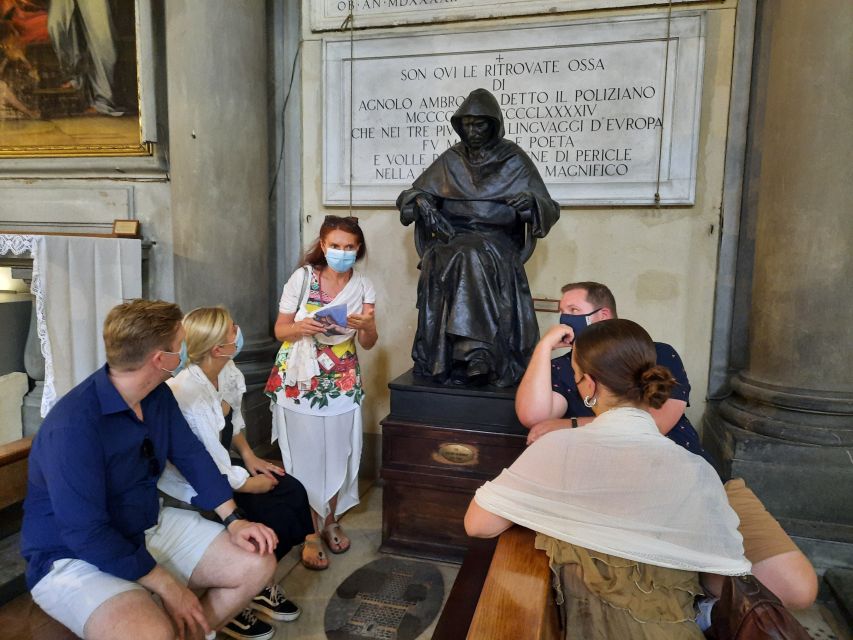
I really liked the way the tour spots esoteric symbols on major facades and street-facing corners, not just inside museum walls. I also loved the stop at the Museum of Masonic Symbols, where the objects and etched designs get explained in a way you can actually carry with you after the walk.
One thing to consider: if you’re hoping for ultra-close decoding of every carved code on every monument, the experience may feel a bit story-driven rather than microscope-level. One earlier guest even wished for more detail on the facade cues, even though the guide was friendly and on point.
In This Review
- Key things I’d circle before you go
- Finding The Starting Point At San Marco Square
- Piazza San Marco: where the tour turns “thinking” into danger
- Santa Maria Novella, Santa Croce, and Florence’s facade “symbol radar”
- The Duomo complex: the Baptistery’s Latin palindrome mystery
- Piazza Santissima Annunziata: bees, Ferdinand I, and playful symbolism
- Piazza della Signoria: Savonarola’s 1498 execution and the weight of punishment
- Ponte Vecchio and Oltrarno: the city’s secret threads across neighborhoods
- The Museum of Masonic Symbols: when the signs become objects
- Price and value: $215.24 for 3 hours that include the museum
- Who this tour fits best (and where it may not)
- Should you book Florence: Occult & Esotericism Walking Tour For The Curious?
- FAQ
- How long is the Florence Occult & Esotericism Walking Tour?
- Where do I meet my guide?
- Is Museum of Masonic Symbols entrance included?
- What languages is the tour offered in?
- Does the tour run in bad weather?
- Is the tour wheelchair accessible?
- What should I bring?
Key things I’d circle before you go
- Start in the right place (San Marco Square): you meet at the Monument to General Manfredo Fanti, then the guide steers you into the city’s symbol hotspots fast.
- Savonarola’s 1498 execution nearby: you hear how Girolamo Savonarola was executed in Piazza della Signoria, and how that history lingers in the square.
- Church facades treated like clues: Santa Croce and Santa Maria Novella are used for spotting signs where “science” and esotericism show up together.
- The Baptistery’s Latin palindrome: you get directed to a text-like mystery engraved in the Florence Baptistery.
- Arsenic poisoning tied to famous thinkers: the tour focuses on Pico della Mirandola and Agnolo Poliziano and what happened around 1494.
- A museum built for the curious: the Museum of Masonic Symbols is the first Italian museum devoted to masonic ideology, with ritual objects showing etched and printed symbols.
Stretch your legs on more Florence walking tours
Finding The Starting Point At San Marco Square
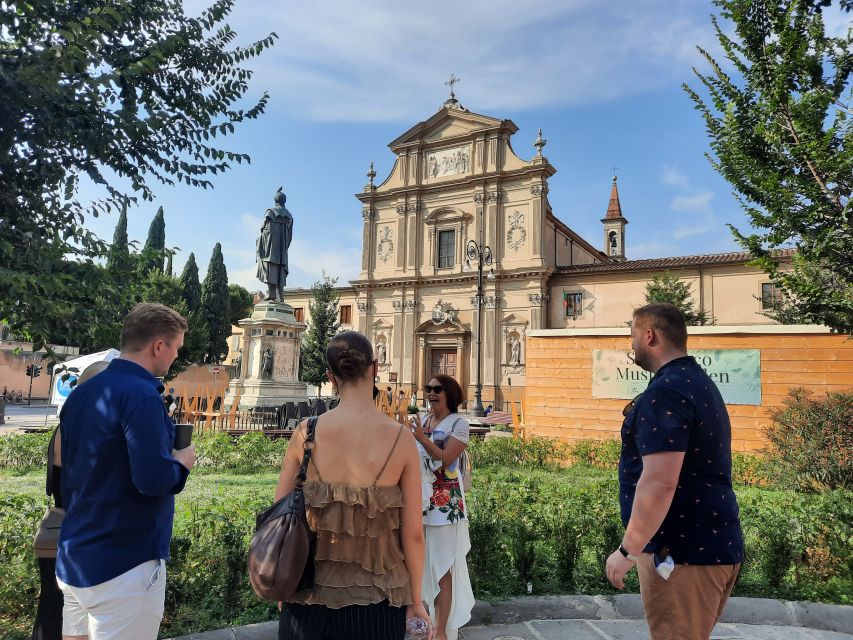
The tour begins where you can quickly orient yourself: in the middle of San Marco Square, at the Monument to General Manfredo Fanti. That matters more than it sounds. If you’re the kind of traveler who gets anxious about “where do we go next,” this start helps you relax and fall into the route without overthinking it.
From there, the pace is walking + short guided segments at each key location. You’ll spend a bit of time in Piazza San Marco (about 15 minutes with the guide), then move onward through the historic center. The whole idea is to keep you looking outward—at facades, inscriptions, and street-level clues—while the stories give the symbolism its emotional punch.
Also, the tour runs rain or shine, so wear shoes you can trust. You’re on your feet for roughly three hours, and you’ll want steady footing, especially on older stone streets.
Piazza San Marco: where the tour turns “thinking” into danger
Piazza San Marco is where the tour starts mixing the spooky with the intellectual. You’re not just hearing “weird Florentines did weird things.” You’re watching the guide tie locations to people who shaped Renaissance ideas, including people linked to major tragedies.
A highlight here is the discussion of arsenic poisoning involving Pico della Mirandola and Agnolo Poliziano, both connected to the intellectual circle of Lorenzo the Magnificent. The guide also points you toward the fact that they rest together in the Church of San Marco. That kind of detail changes the tone of the square. It stops being background scenery and becomes a place with consequences.
This stop also sets up the tour’s central theme: Florence is famous for art and ideas, but it also has a dark underside of punishment, rumor, and coded belief. If you like history that feels human—fearful, political, and sometimes cruel—this early segment does a good job getting you ready for what comes next.
Santa Maria Novella, Santa Croce, and Florence’s facade “symbol radar”
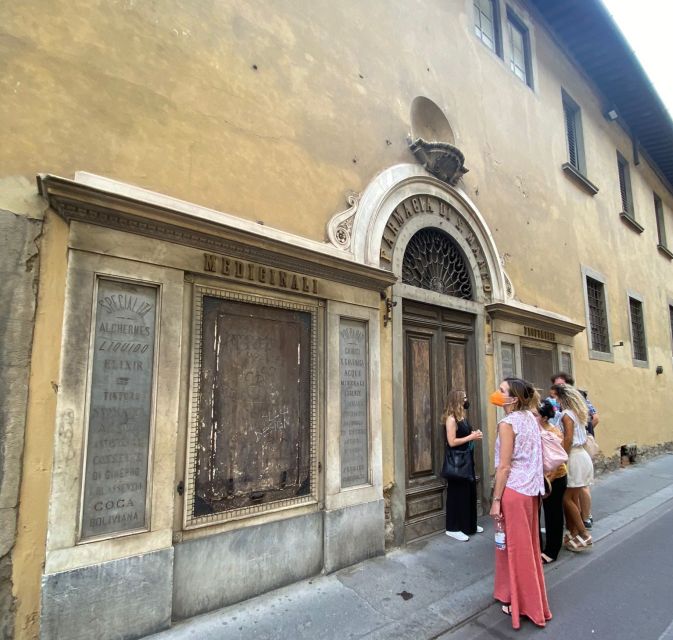
One of the strongest parts of this tour is how it teaches you to look at big church fronts like they’re pages in a book. You’ll explore the facades of Santa Croce and Santa Maria Novella, and you’ll be invited to spot the signs where the guide suggests science and esoteric symbolism overlap.
I like this approach because it gives you a practical skill. You stop treating monuments as “pretty buildings” and start noticing how they communicate. If you walk away with even a few new ways to read carvings, inscriptions, and recurring shapes, you’ll get more out of Florence long after the three hours end.
That said, this is where expectations can shift. The tour isn’t described as a full architectural analysis. One earlier guest felt the tour should have offered more exacting detail on the facade cues and codes on monuments. If you’re the type who wants every carved line discussed, consider going in with the mindset of guided spotting and interpretation, not exhaustive decoding.
The Duomo complex: the Baptistery’s Latin palindrome mystery
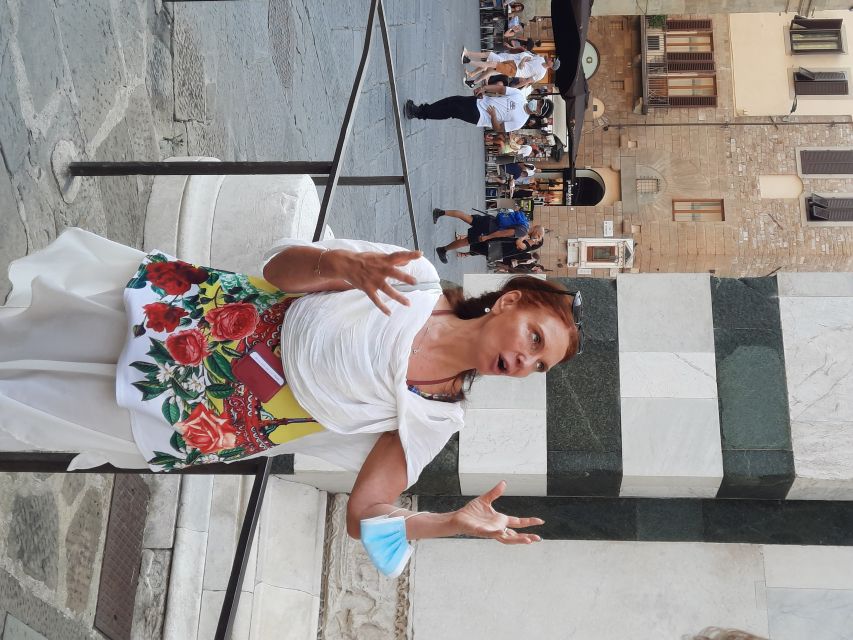
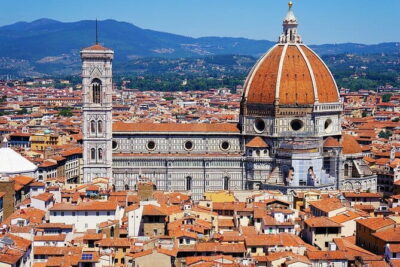
Next you move into the Florence Duomo complex area for a longer guided segment (about 30 minutes with sightseeing and walking). This is one of the best places to practice “symbol radar,” because the architecture is already full of inscriptions and deliberate design.
The guide highlights the Florence Baptistery, including a Latin palindrome engraved there. The tour frames it as a mystery you can’t quite solve just by looking once. Even if you don’t get a single definitive answer, the exercise works: you’re trained to slow down, scan carefully, and ask what kind of message someone would hide on a religious monument.
This stop also fits the tour’s overall tone. Florence’s public art was rarely accidental. When you start looking at the Duomo complex this way, you begin to notice that the city loves symbols that reward repeat attention—like puzzles that only make sense if you stay curious.
Piazza Santissima Annunziata: bees, Ferdinand I, and playful symbolism
Then you shift to Piazza Santissima Annunziata, where the guide gives you an activity that’s both odd and memorable: try counting the bees on the statue of Ferdinand I. It’s the kind of small task that breaks the “lecture mode,” and it also reminds you that symbolism isn’t only about dark stories.
This is still an esotericism tour, but the mood lightens. The point isn’t just to be scared. It’s to see how symbols traveled through Renaissance politics and identity. Bees, medals, saints, and inscriptions all function as signals—sometimes official, sometimes coded, sometimes both.
You’ll get about 15 minutes guided here, enough time to do the counting, check the details, and let the guide explain why the motif matters. If you enjoy learning through observation (rather than only listening), this stop is a strong match.
- The Best tour in Florence: Renaissance & Medici Tales – guided by a STORYTELLER
★ 5.0 · 12,316 reviews



Piazza della Signoria: Savonarola’s 1498 execution and the weight of punishment
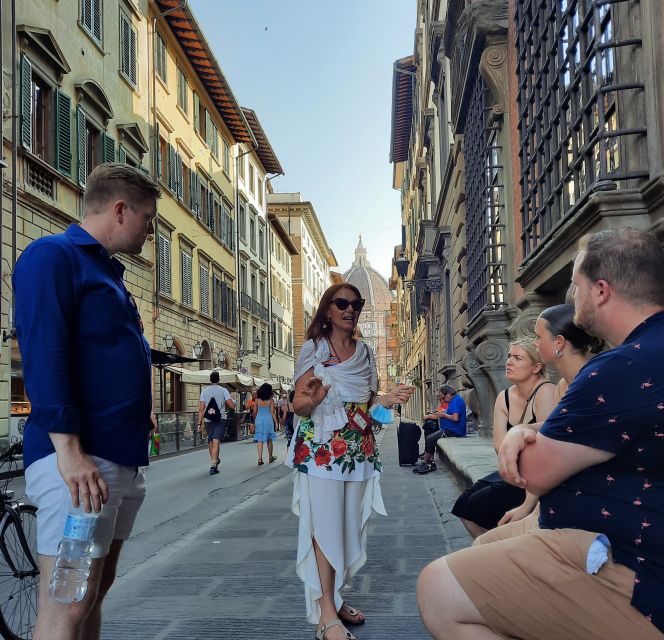
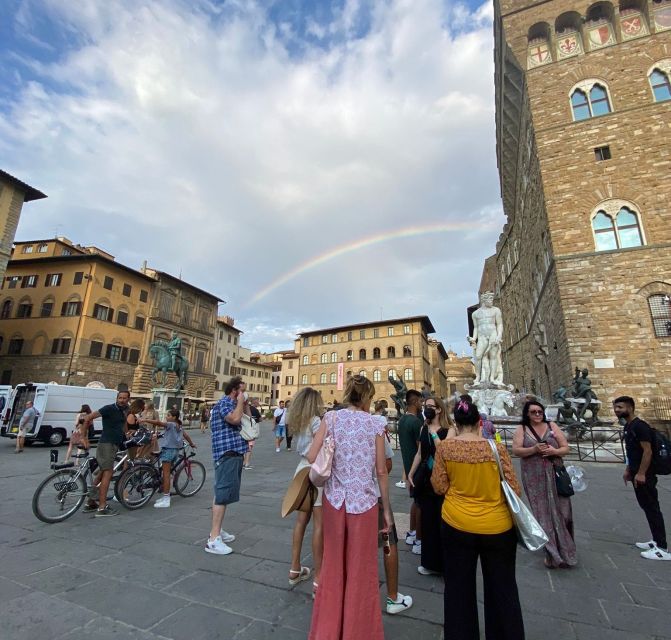
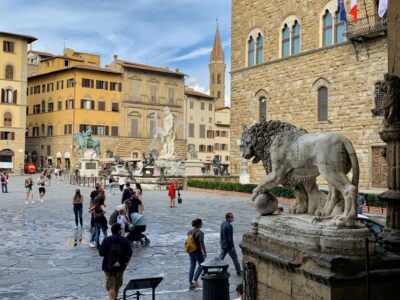
Piazza della Signoria is dramatic even before you add the occult layer. Here, the guide turns the square into a stage for a specific event: the 1498 execution of Girolamo Savonarola in Piazza della Signoria, where he was hanged and then burned.
That story hits harder when you’re standing in the same kind of space where public spectacle happened. The tour uses Savonarola’s downfall to explain how belief could become a political weapon, and how people got punished for what they preached, what they represented, or what others feared they represented.
This is also where the tour blends fear, ideology, and hidden orders—bringing in references tied to the Templars and Cathars in Florence, plus the city’s first masonic lodge. Even if you don’t read these groups the same way, it helps you understand the broader pattern: Florence was a city where ideas met power, and power didn’t always play fair.
You’ll spend about 15 minutes guided here, plus walking time. It’s enough to land the key story, and then keep moving before you lose energy.
Ponte Vecchio and Oltrarno: the city’s secret threads across neighborhoods
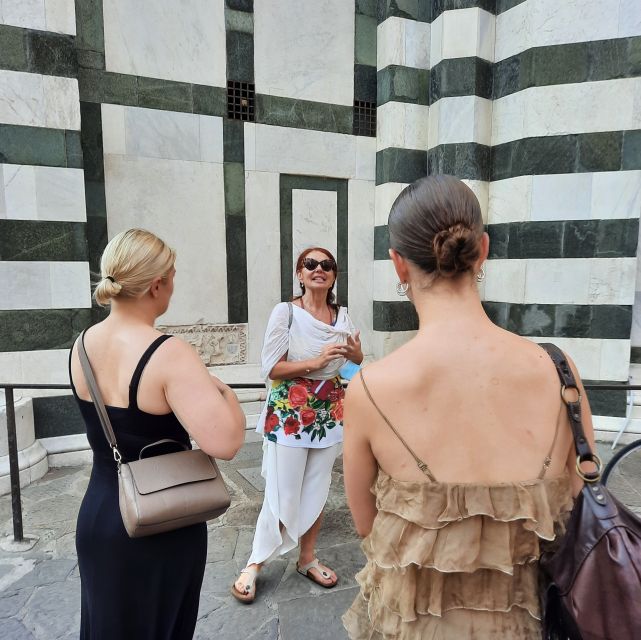
After Piazza della Signoria, the route continues via Ponte Vecchio (about 15 minutes guided, plus walking time). Ponte Vecchio is gorgeous, but on this tour it’s more than scenery. The guide uses movement through the city to show how stories and symbols aren’t confined to one church or one square.
Then you head into Oltrarno for another longer segment (about 30 minutes guided and walking). This area is ideal for the tour’s mood because it feels like the city’s quieter side—an easy place to believe that older layers of meaning could survive beneath daily life.
In this part of the walk, you’ll hear more of the tour’s darker threads, including the idea of hidden beginnings and rejected futures. The tour mentions a dark period when babies born with visible disabilities were reportedly rejected by families and killed in secret, never to be found, due to the fear that they were children of the devil. That’s heavy material, and the guide’s job is to keep it contextual rather than sensational.
If you’re sensitive to grim stories, this is where you’ll want to mentally brace yourself. It’s also a reminder that Florence’s history wasn’t only stained-glass beauty and clever poetry. It was lived with fear.
The Museum of Masonic Symbols: when the signs become objects
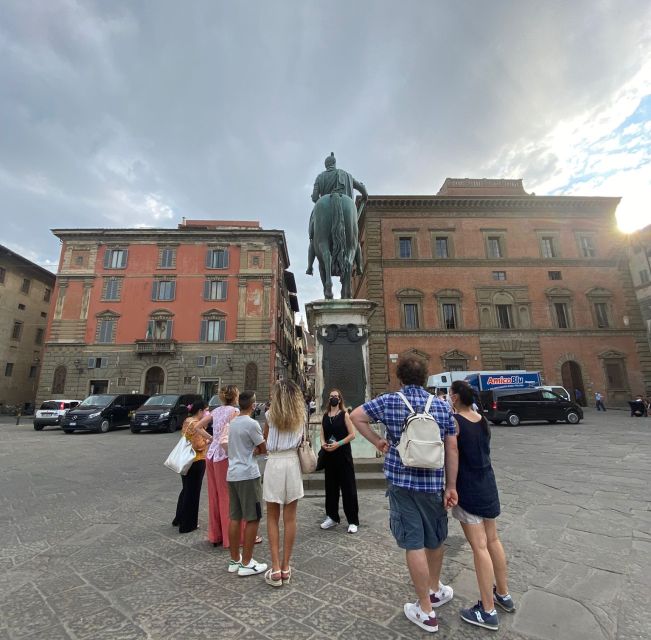
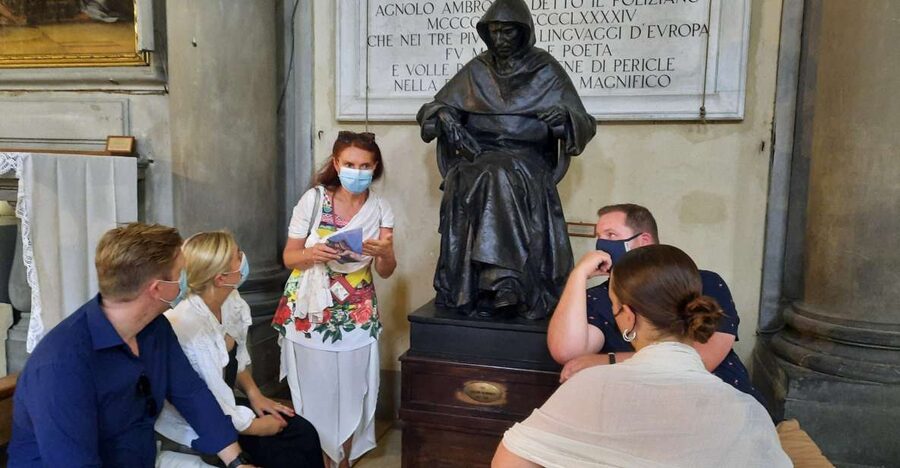
The last stretch is the Museum of Masonic Symbols, where the tour’s symbolism becomes tangible. It’s about a one-hour visit with a guided component, and it’s included in your ticket price—so you’re not scrambling later to add an extra stop.
This museum is described as the first Italian museum devoted to masonic ideology. What you’ll see isn’t just theory. The tour points you to a display of ritual objects with etched, embroidered, printed, and engraved symbols. That matters for practical reasons. If all you heard were stories, you might leave unsure what you were supposed to look for. With objects in hand, your brain gets a reference point.
I also like that this final stop helps you “reset” the emotional tone of the walk. Earlier you had executions, poison, and rejection in secret. Here you end with a structured look at symbols and what they meant to the ideas behind the craft.
The tour finishes back at the museum area, so you get a clean ending and an easier time finding your next meal afterward.
Price and value: $215.24 for 3 hours that include the museum
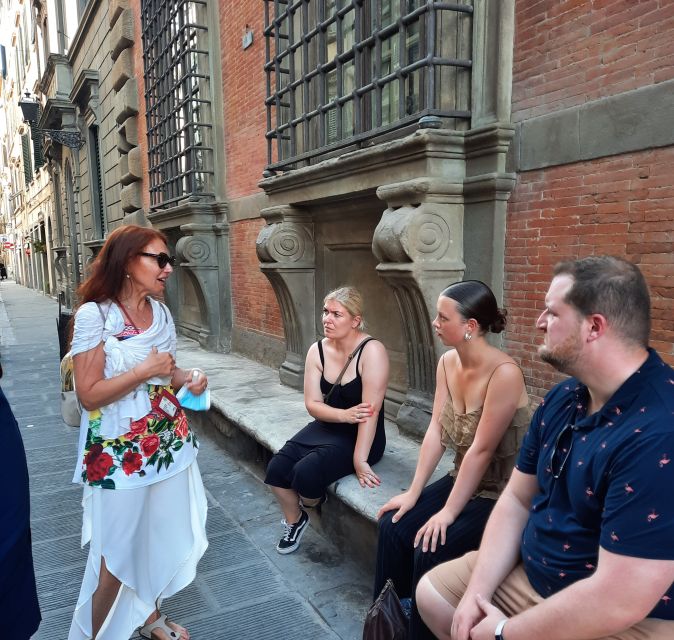
At $215.24 per person for a 3-hour experience, this isn’t a cheap add-on. But it does offer real value for the type of travel you’re doing.
You’re getting a licensed live guide, a guided museum visit with entrance included, and a skip-the-ticket-line element. You’re also getting a route that covers multiple major landmarks—Piazza San Marco, Piazza della Signoria, the Duomo complex zone, Ponte Vecchio, and Oltrarno—without having to organize it yourself.
For me, the “value” piece comes down to whether you like guided interpretation. If you prefer wandering solo with a guidebook, you could build your own route. If you like someone connecting dots (symbol spotting plus historical context), the price starts to make sense. And if you’re specifically interested in masonic philosophy and ritual symbolism, the museum inclusion alone is a strong practical reason to book rather than research on the fly.
Who this tour fits best (and where it may not)
This tour suits you if you:
- enjoy symbolism and want help reading it on real monuments
- like history with darker stories tied to famous names and specific places
- want a guided route that covers the historic center efficiently in about three hours
- are curious about masonic ideology and see symbolism through objects, not just anecdotes
It may be less ideal if you:
- want heavy, ultra-detailed architectural forensics on every facade carving
- prefer lighter subject matter and don’t want grim history segments
- expect a full “translation workshop” for every inscription without any story context
The best strategy is to go in curious and ask the guide to point out the exact marks you’re meant to notice. The tour is built for that kind of interaction.
Should you book Florence: Occult & Esotericism Walking Tour For The Curious?
I’d book it if you’re the kind of traveler who looks at a church door and thinks, What is that supposed to mean? The route is concentrated, the guiding centers on real places (not vague claims), and the museum stop gives the symbolism a physical anchor.
There’s also a clear quality signal in the guide experience. In particular, Susanna stands out as superb—smiling, friendly, and strong at keeping the atmosphere engaging while still moving you through the key stops. Just keep one expectation in check: this tour aims to tell connected stories around select focal points, not to provide exhaustive, close-up decoding of every carved code.
If that matches your style, this is a fun, slightly unsettling way to see Florence with sharper eyes.
FAQ
How long is the Florence Occult & Esotericism Walking Tour?
The tour lasts about 3 hours.
Where do I meet my guide?
Meet your guide in the middle of San Marco Square at the Monument to General Manfredo Fanti.
Is Museum of Masonic Symbols entrance included?
Yes. Entrance to the Museum of Masonic Symbols is included, and you also skip the ticket line.
What languages is the tour offered in?
The guide offers the tour in English, Italian, French, and Spanish.
Does the tour run in bad weather?
Yes, it takes place rain or shine.
Is the tour wheelchair accessible?
Yes, the tour is wheelchair accessible.
What should I bring?
Wear comfortable shoes and comfortable clothes. Bring a passport or ID card (and for children, passport or ID card is required; a copy is accepted).
More Florence Walks
- Florence: Highlights Walking Tour with Expert Guide
★ 4.6 · 4,662 reviews - Uffizi & Accademia Timed Entry: Small Group Duomo Walking Tour
★ 4.5 · 3,630 reviews - Florence: Duomo Complex with Tickets & City Walk Guided Tour
★ 4.7 · 2,057 reviews - Florence: Guided Walking Tour
★ 4.6 · 1,602 reviews - Florence: Renaissance and Medici Tales Guided Walking Tour
★ 4.8 · 1,549 reviews
More Florence Tours to Weigh Up
- The Best tour in Florence: Renaissance & Medici Tales – guided by a STORYTELLER
★ 5.0 · 12,316 reviews - The Best Tour in Florence: Renaissance and Medici Tales
★ 5.0 · 10,810 reviews - Florence: Chianti Wineries Tour with Wine Tasting
★ 4.5 · 10,071 reviews - Florence: Duomo Cathedral 60-Minute Guided Tour
★ 3.7 · 6,829 reviews - Florence: Hop-on Hop-off Bus Tour: 24, 48 or 72-Hour Ticket
★ 4.0 · 6,283 reviews
More Florence Tours We Have Reviewed
- Florence: Skip-The-Line Uffizi Gallery Timed Entry Ticket
★ 4.5 · 27,832 reviews - Tuscany Day Trip from Florence: Siena, San Gimignano, Pisa and Lunch at a Winery
★ 5.0 · 21,634 reviews - Florence: Timed Entry to Michelangelo’s David + Audio App
★ 4.6 · 19,496 reviews - Florence: Leonardo Interactive Museum Entry Ticket
★ 4.5 · 12,957 reviews - Florence: Michelangelo’s David Skip-the-Line Entry Ticket
★ 4.5 · 12,764 reviews
Fresh from our Florence review desk
- Small-Group Pasta Cooking Class and Market Tour in Florence★ 5.0 · 3 reviews
- Palatina Gallery and Pitti Guided Tour in Florence★ 5.0 · 3 reviews
- Tuscan Evening Tour: Fiat 500, 8:30 to 10 PM★ 5.0 · 3 reviews
- Journey into Art: Florence’s Accademia★ 4.5 · 3 reviews
- Paint and Drink Florentine Hills★ 5.0 · 3 reviews
- Truffle hunting and lunch experience, with Vinci and winery.★ 4.5 · 3 reviews
Walking Tours, compared.
 ★ 4.6Highlights Walking Tour with Expert GuideFrom $274,662 reviews
 ★ 4.5Uffizi & Accademia Timed Entry: Small Group Duomo Walking TourFrom $503,630 reviews
 ★ 4.7Duomo Complex with Tickets & City Walk Guided TourFrom $932,057 reviews
 ★ 4.6Guided Walking TourFrom $271,602 reviews
 ★ 4.8Renaissance and Medici Tales Guided Walking TourFrom $21,549 reviews
 ★ 4.7Uffizi & Accademia Small Group Walking TourFrom $1481,380 reviews
 ★ 5.0Skip-the-Line Florence Highlights and David Walking TourFrom $1171,127 reviews
 ★ 4.6Dark Mysteries and Legends Guided Walking TourFrom $21,081 reviews
Browse the lists this tour appears in