
Reviewed · MEDICI & RENAISSANCE TOURS
Florence Renaissance walking tour
Florence is more than just the Duomo. What I like about this tour is that it connects the city’s Renaissance power centers (Medici-era Florence) with the art and architecture you see in public spaces, then finishes inside the UNESCO-listed Florence Cathedral complex. You’re not stuck in one monument; you’re walking through the way Florence thinks.
Two things I really love: first, the guide is a professional art historian, so the stop-at-the-right-place commentary is clear and practical. Second, the tour pairs the cathedral area with other landmark moments like Giotto’s Campanile and the Baptistery in the piazza, plus the older bridges and neighborhoods that make Florence feel lived-in. One possible drawback: if your guide’s voice comes across a bit soft, you may need to stay close for best hearing, even though earphones help.
The group size stays small (a private party of up to 12 adults), which makes questions easier and helps you move at a human pace. If you’re the type who wants a long stop in museums or a lot of inside-ticket time everywhere, note that most major sites beyond the Duomo are more “see and learn” than “fully ticket and tour.”
In This Review
- Key highlights at a glance
- Why This Florence Renaissance Walk Starts Beyond the Duomo
- Art-Historian Guidance: How You’ll Read the Buildings
- From Lungarno to the Oldest Bridge: Getting Your Bearings Fast
- Uffizi, the Medici Story, and Piazza della Signoria’s Big Stage
- Oltrarno Craft Stops and the Walk Toward Pitti
- Michelangelo’s Bridge Views and the Ponte Vecchio Moment
- Piazza della Repubblica and the Roman-Layer Florence Feeling
- Inside the Piazza del Duomo: Brunelleschi’s Cupola and the Baptistery Door
- Price and Value: Is $40.33 Worth It?
- Who This Tour Fits Best (And Who Might Skip It)
- Should You Book This Florence Renaissance Tour?
- FAQ
- How long is the Florence Renaissance walking tour?
- What’s included in the tour price?
- Do I need tickets for other stops like Uffizi or Palazzo Pitti?
- Is the Duomo visit included?
- What group size should I expect?
- Where does the tour start and end?
- What time does the tour begin?
- Is the tour family friendly?
- Is cancellation free?
Key highlights at a glance
- Art historian guide who explains what you’re looking at in plain, readable terms
- Duomo entry included as part of a 2-hour walking loop
- Small private group (up to 12 adults; overall cap listed at 15 travelers)
- Florence’s Renaissance and Gothic story told through street-level landmarks
- Earphones provided so you can follow the narration as you walk
- Oltrarno craft stop to balance the big monuments with hands-on artisan culture
Deeper into Medici Florence and its Renaissance
Why This Florence Renaissance Walk Starts Beyond the Duomo
The smartest part of this tour is that it doesn’t treat the Duomo like the only reason Florence exists. You start on the Lungarno side near Lungarno degli Acciaiuoli, then move through the historic center with a “walk, look, understand” rhythm. That means by the time you reach the cathedral complex, you’ve already learned the context that makes it click.
Florence is famous for its big-name buildings, but the city’s real education happens in the spaces between them: bridges, squares, and streets where power, religion, and artists overlap. This tour leans into that idea, so you get a compact hit of Renaissance design and Gothic structure without needing a full day.
You also get a tour that feels like it has shape. Instead of a random grab-bag of photos, the route moves through Medici associations, civic squares, artisan workshops in Oltrarno, then heads for the cathedral set-piece.
Art-Historian Guidance: How You’ll Read the Buildings
This is not a “walk and point” experience. A professional art historian guides you, and the commentary is aimed at helping you understand what you’re seeing—especially at the Duomo.
You’ll hear the story of the cathedral as a blend of styles and intentions. Florence Cathedral (Cattedrale di Santa Maria del Fiore) is famous for its scale and for Brunelleschi’s work on the cupola. But the bigger value is that the guide frames the Gothic structure and the Renaissance design choices as part of one long conversation in art and architecture. You’ll walk away with mental labels that make future visits easier.
What I’d watch for: one review noted the guide can be a bit soft spoken. Earphones are included, which helps, but if you like to hear every word, position yourself nearer to the guide during quieter stretches.
From Lungarno to the Oldest Bridge: Getting Your Bearings Fast
The walk begins at Lungarno degli Acciaiuoli, 10 and starts at 11:00 am. From there, you ease into Florence with a sequence that helps you orient quickly—especially if it’s your first time in the city.
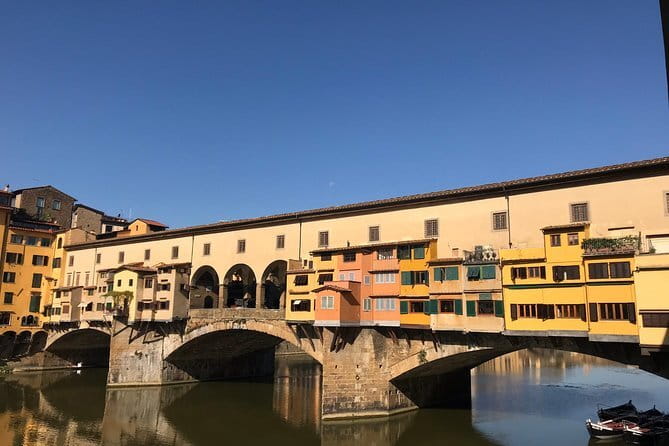
One of the early moments is a stop to admire the oldest bridge in Florence. That’s not just a scenic photo break. Bridges in Florence are where the city’s geography becomes social life: connections between neighborhoods, routes for commerce, and viewpoints over the Arno. This early stop sets you up to see the later bridges with better understanding.
If you prefer to learn by seeing, this kind of opening works well. You’re not waiting for the “main attraction.” You’re already practicing how to look.
Uffizi, the Medici Story, and Piazza della Signoria’s Big Stage
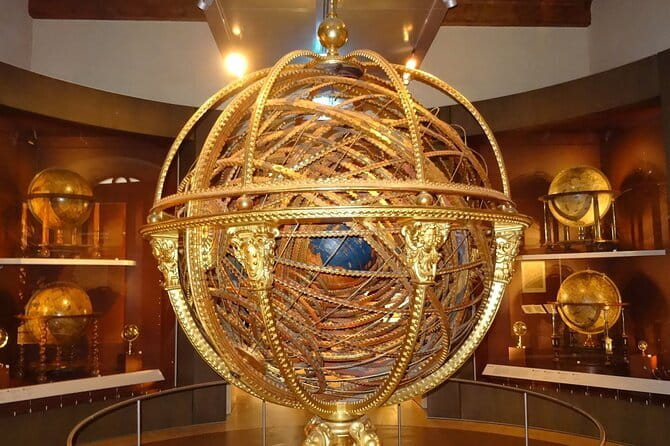
One of the scheduled stops is at Gallerie Degli Uffizi, but it’s brief—about 10 minutes—and you should plan for a guided orientation rather than a full museum visit. Admission isn’t included for that stop, so if you want to spend serious time inside the Uffizi, you’ll need separate tickets on a different day.
Still, this moment helps you connect the dots with the Medici family and their art collections. Even a quick pass through this part of Florence’s cultural power makes the later civic squares feel more meaningful. You start to see how patronage and politics shaped the city’s artistic identity.
Then you move to Piazza della Signoria. This is one of Florence’s most important public stages, and you’ll spend around 10 minutes here. The big draw is the impressive replica of Michelangelo’s David. It’s a smart inclusion because it gives you a Renaissance anchor in a lively civic space—plus it’s exactly the kind of square where you can feel Florence’s “outside is also inside” attitude.
The time is short, so you won’t tour everything. But you will get enough context to know what you’re looking at and why the place mattered.
Oltrarno Craft Stops and the Walk Toward Pitti
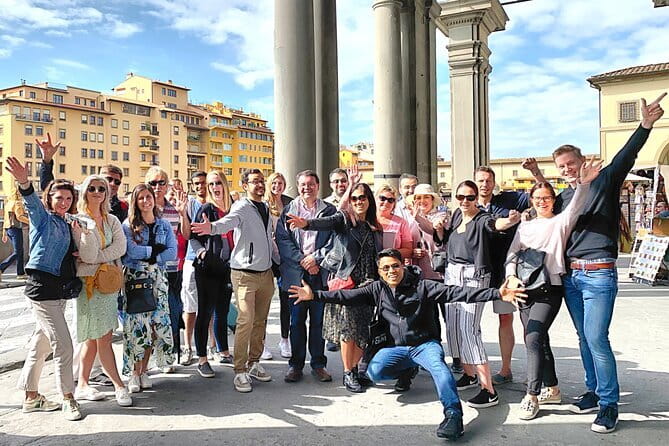
After the formal civic and art-power landmarks, the route pivots toward a more “Florence in motion” feel. There’s a walking segment along a renewed passage up to Pitti Palace, with another brief stop around 10 minutes at Palazzo Pitti.
Palazzo Pitti is described as the magnificent palace that was home of the Medici family and of the King of Italy. Again, admission for that stop is not included, so plan to appreciate it from the outside and learn the context from your guide. If you’re the kind of traveler who loves interiors, consider treating Pitti as a future ticketed day trip, and keep this tour as your context builder.
Then comes Oltrarno, where you stop in a few artcrafts labs for a typical Tuscan artisan look. This is about 15 minutes. The value here is balance. Florence can tilt toward monumental sightseeing, but crafts and workshops are where you see continuity—how skills and making traditions exist alongside the Renaissance story.
Even if you don’t buy anything, you’ll get a better sense of what “authentic” can mean in a living city: not a staged street performance, but everyday creative labor.
Stretch your legs on more Florence walking tours





Michelangelo’s Bridge Views and the Ponte Vecchio Moment
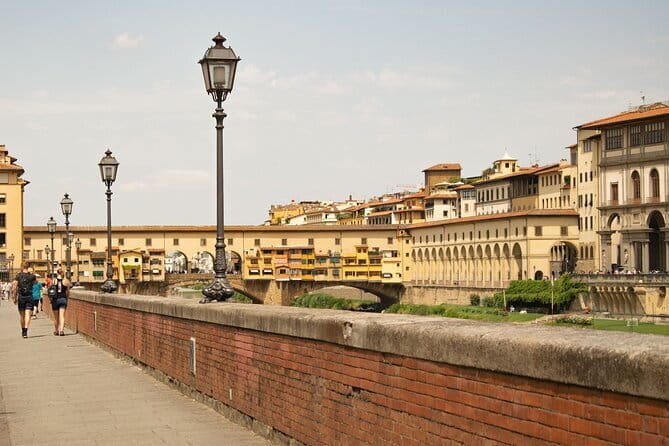
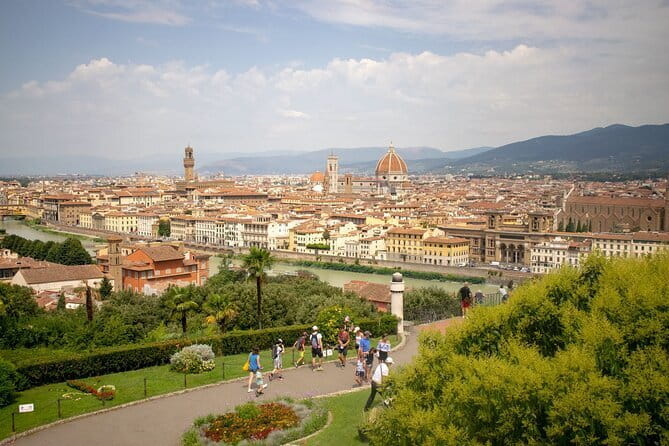
One of the most enjoyable sections is the set of bridge and viewpoints. You’ll walk on a bridge designed by Michelangelo, with a stunning view toward Ponte Vecchio. This is the part of the tour where pictures tend to happen, but the real win is that you’re seeing the river like a map—how bridges route people and how sightlines frame the city.
Florence is built for walking, and these crossing moments help you understand the layout quickly. If you’re visiting for a short time, this kind of scenic transfer can be more useful than an extra museum hour. It also breaks up the day so your brain doesn’t feel like it’s stuck inside landmarks.
You’ll also pass the road of fashion. The details of the shopping street aren’t spelled out in what you’re given, but expect a more “street-level Florence” vibe—architecture and storefront energy rather than museum corridors.
Piazza della Repubblica and the Roman-Layer Florence Feeling

You finish the earlier city-walk portion at Piazza della Repubblica, with a 10-minute stop. This square is described as the ancient Roman city center where the community used to live. Even if you’re not a Roman history specialist, it’s a helpful reminder that Florence’s Renaissance fame is built on older layers.
That matters because many visitors think of Florence as one era. The truth is more interesting: Florence keeps changing while reusing its most important geography. Squares like this are the stage where those layers show up.
If you like your travel with a time machine effect—Gothic to Renaissance to earlier Roman roots—these transitions make the city feel bigger than a single highlight reel.
Inside the Piazza del Duomo: Brunelleschi’s Cupola and the Baptistery Door
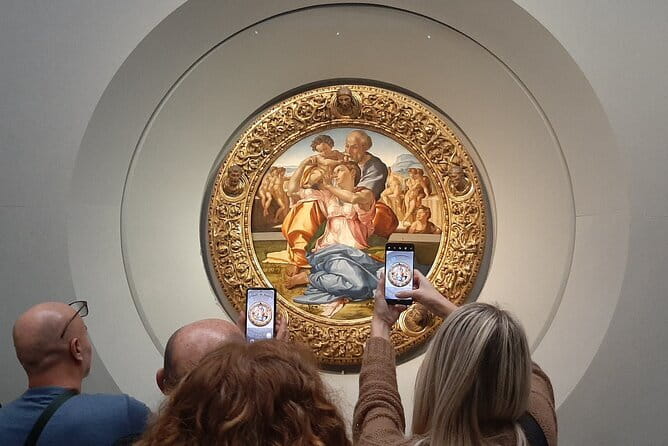
The final portion lands at Piazza del Duomo with about 15 minutes there. This is where Florence Cathedral takes the center stage.
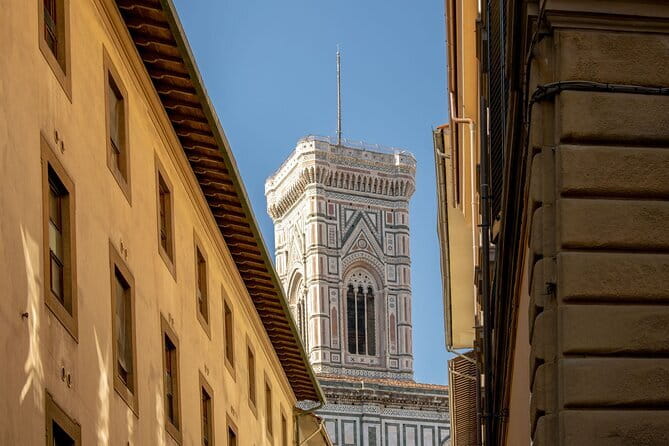
You’ll admire the cathedral and the impressive cupola by Brunelleschi, plus the precious golden door of the Baptistery. The tour description also notes that you’ll get to see Giotto’s Campanile and the Baptistery in the piazza as part of the Duomo-area experience.
And then you’ll head inside the Duomo for a guided visit with entry included. This is where the art historian guidance matters most. A building this iconic can feel overwhelming if you’re just looking at surfaces. With a guide, you start to see structure—why things are shaped the way they are, how Gothic elements and Renaissance ambitions show up in the same view.
One practical note: the time inside is limited because the tour stays around 2 hours total. If you love cathedral interiors and want to linger, treat this as a smart introduction. You can always return later for a longer independent visit.
Price and Value: Is $40.33 Worth It?
At $40.33 per person for about 2 hours, this tour sits in a value zone where you’re paying mainly for expertise and access timing, not for a full-day museum plan. And the balance is good.
Here’s what you’re getting that justifies the cost:
- A professional art historian guide (the biggest value-add in a short time)
- Entry included for the Duomo portion
- Earphones to hear clearly while walking
- A route that covers multiple major Florence moments without wasting time
What you’re not paying for:
- Most additional museum admissions (Uffizi and Pitti are listed as not included)
- Refreshments (you’ll want to plan your own snack and water)
If you’re trying to fit Florence into limited time, this kind of tour is often the best use of money. You’re buying context. And context is what makes the city feel more like a place you understand and less like a series of landmarks you forget.
If you already know a lot about Renaissance art and you want long, quiet museum time, you might find it too short. But for first-timers who want a guided line through the city, it’s a very workable price.
Who This Tour Fits Best (And Who Might Skip It)
This Florence Renaissance walking tour is a strong match if:
- You’re in Florence for a short stay and want to see the Duomo area plus the Medici-era story in one compact plan
- You enjoy walking between landmarks and prefer guided interpretation over solo wandering
- You like small groups and ask-and-answer moments more than crowd-line sightseeing
It may be less ideal if:
- You want a museum-heavy schedule with lots of long indoor hours (several major stops list admission as not included)
- You’re sensitive to hearing distance and plan to stand far away from the guide (earphones help, but soft voice was noted)
- You only want one monument and nothing else (this is intentionally a multi-stop loop)
The small group size helps a lot. The tour also moves near public transportation, which is handy if you want to connect to other plans before or after.
Should You Book This Florence Renaissance Tour?
I’d book it if you want a smart introduction to Florence’s Renaissance and Gothic storytelling that doesn’t take over your whole day. The Duomo entry plus the art historian-led explanation makes it easier to understand what you’d otherwise just admire.
Choose this tour over a generic walking tour if you care about the “why,” not only the “what.” The Medici connections, the civic square stops, the Oltrarno craft labs, and the Duomo interior all work together to give you a more coherent Florence than the typical checklist route.
Before you go, plan your expectations: this is about learning and orientation in two hours. If you want long museum time, put that on a separate day with separate tickets. Also, if you’re hard to hear in group settings, stand nearer to the guide during explanations.
FAQ
How long is the Florence Renaissance walking tour?
It lasts about 2 hours.
What’s included in the tour price?
You get a professional art historian guide, a guided walk, a single-language tour, earphones to follow explanations clearly, and entry for the Duomo portion of the experience.
Do I need tickets for other stops like Uffizi or Palazzo Pitti?
Admission for Gallerie Degli Uffizi and Palazzo Pitti is not included, so you’ll need separate tickets if you want to go inside those sites.
Is the Duomo visit included?
Yes. The tour includes entry to the UNESCO-listed Florence Cathedral area as part of the guided visit.
What group size should I expect?
It’s described as a private party with a maximum of 12 adults, and the overall maximum is listed as 15 travelers.
Where does the tour start and end?
It starts at Lungarno degli Acciaiuoli, 10, 50123 Firenze FI, Italy, and ends at Piazza del Duomo, 50122 Firenze FI, Italy.
What time does the tour begin?
The start time is 11:00 am.
Is the tour family friendly?
Children must be accompanied by an adult, and most travelers can participate.
Is cancellation free?
Cancellation is free, and you can cancel up to 24 hours in advance for a full refund.
More Florence Tours to Weigh Up
- The Best tour in Florence: Renaissance & Medici Tales – guided by a STORYTELLER
★ 5.0 · 12,316 reviews - The Best Tour in Florence: Renaissance and Medici Tales
★ 5.0 · 10,810 reviews - Florence: Chianti Wineries Tour with Wine Tasting
★ 4.5 · 10,071 reviews - Florence: Duomo Cathedral 60-Minute Guided Tour
★ 3.7 · 6,829 reviews - Florence: Hop-on Hop-off Bus Tour: 24, 48 or 72-Hour Ticket
★ 4.0 · 6,283 reviews
More Florence Tours We Have Reviewed
- Florence: Skip-The-Line Uffizi Gallery Timed Entry Ticket
★ 4.5 · 27,832 reviews - Tuscany Day Trip from Florence: Siena, San Gimignano, Pisa and Lunch at a Winery
★ 5.0 · 21,634 reviews - Florence: Timed Entry to Michelangelo’s David + Audio App
★ 4.6 · 19,496 reviews - Florence: Leonardo Interactive Museum Entry Ticket
★ 4.5 · 12,957 reviews - Florence: Michelangelo’s David Skip-the-Line Entry Ticket
★ 4.5 · 12,764 reviews
The Medici Story Continues
- The Best tour in Florence: Renaissance & Medici Tales – guided by a STORYTELLER
★ 5.0 · 12,316 reviews - The Best Tour in Florence: Renaissance and Medici Tales
★ 5.0 · 10,810 reviews - Uffizi Gallery: Renaissance Masterpieces Guided Tour
★ 4.6 · 6,070 reviews - Florence: Renaissance and Medici Tales Guided Walking Tour
★ 4.8 · 1,549 reviews - Guided Medici Tour Florence: Discover Mysteries & History
★ 4.3 · 1,077 reviews
Fresh from our Florence review desk
- Small-Group Pasta Cooking Class and Market Tour in Florence★ 5.0 · 3 reviews
- Palatina Gallery and Pitti Guided Tour in Florence★ 5.0 · 3 reviews
- Tuscan Evening Tour: Fiat 500, 8:30 to 10 PM★ 5.0 · 3 reviews
- Journey into Art: Florence’s Accademia★ 4.5 · 3 reviews
- Paint and Drink Florentine Hills★ 5.0 · 3 reviews
- Truffle hunting and lunch experience, with Vinci and winery.★ 4.5 · 3 reviews
Medici & Renaissance Tours, compared.
 ★ 5.0The Best tour in Florence: Renaissance & Medici Tales – guided by a STORYTELLERFrom $312,316 reviews
 ★ 5.0The Best Tour in Florence: Renaissance and Medici TalesFrom $310,810 reviews
 ★ 4.6Uffizi Gallery: Renaissance Masterpieces Guided TourFrom $886,070 reviews
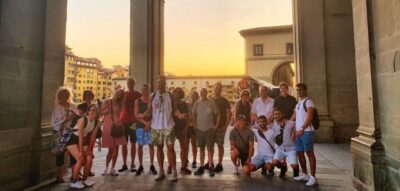 ★ 4.8Renaissance and Medici Tales Guided Walking TourFrom $21,549 reviews
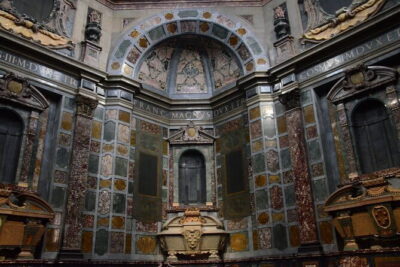 ★ 4.3Guided Medici Tour Florence: Discover Mysteries & HistoryFrom $571,077 reviews
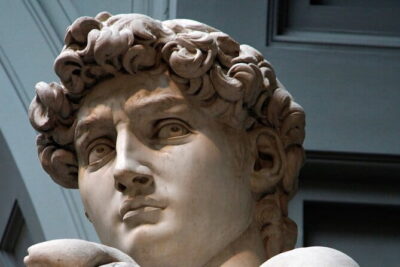 ★ 4.0Accademia Gallery: Michelangelo’s David and High Renaissance ArtFrom $43872 reviews
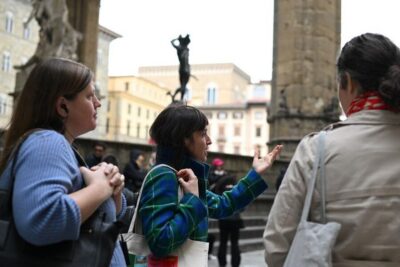 ★ 4.7Guided Tour of Medici Family Secrets and ChapelsFrom $93512 reviews
 ★ 5.0Florence Private Tour: Renaissance, Famous Families & Hidden GemsFrom $199233 reviews
Browse the lists this tour appears in