
Reviewed · WALKING TOURS
Florence: The Medicis Private Walking Tour
Medici power shows up everywhere in Florence. This private walking tour strings it together into one clear story, starting with family origins near Mugello and ending with the dynasty’s decline, all with a guide-led timeline you can follow at street level. I like how fast it is to orient yourself—2 hours, clear stops, and earphones so you don’t miss the details. One thing to keep in mind: you’ll mainly see Medici-related places from the outside, and entrance tickets aren’t included, so plan on orientation more than full museum time.
You start at Piazza San Marco and finish near Pitti Palace, so you get a natural flow from the center of Medici influence toward the larger, later power base. The result feels less like “looking at buildings” and more like walking through a Renaissance drama, with context that makes the stone make sense.
In This Review
- Key Highlights You’ll Actually Notice
- Why the Medici Story Fits This 2-Hour Walking Format
- Price and Value: What $118.95 Buys in Florence
- Meeting at Piazza San Marco: Starting With the Right Frame
- Palazzo Medici Riccardi and San Lorenzo: Where Power Shows Up in Stone
- The Duomo Complex and Piazza San Firenze: Learning to Read Florence’s Layout
- Bargello and Palazzo Gondi: Big Names, Smaller Moments
- Piazza della Signoria and Palazzo Vecchio: The Political Heartbeat
- Uffizi, Vasari Corridor, and Ponte Vecchio: Art, Access, and a River View
- Santa Felicita and Pitti: How the Center of Gravity Moves
- Who This Tour Is Best For (and Who Should Skip It)
- Should You Book This Florence Medici Walking Tour?
- FAQ
- Where does the tour start?
- How long is the Florence Medici tour?
- Is this a private group?
- What’s included in the price?
- Are entrance tickets included?
- Are food and drinks included?
- What languages does the guide speak?
- Is the tour wheelchair accessible?
- Can I cancel for a refund?
- What about starting times?
Key Highlights You’ll Actually Notice
- A licensed guide tells the Medici timeline from rise to extinction
- Earphones included for crisp storytelling on busy sidewalks
- Medici sites from the outside across churches, palaces, and major squares
- Secret-passage talk with the Vasari Corridor stop in the mix
- Stops are tightly scheduled (mostly 5–10 minutes each) for a concentrated hit
- Private group pacing that works better than rushing through alone
Stretch your legs on more Florence walking tours
Why the Medici Story Fits This 2-Hour Walking Format
Florence can feel like a giant open-air classroom—great, but also overwhelming. This tour is built for the people who want the big picture fast: who the Medici were, how they gained power, and how that power shaped the city around them.
What I like most is the structure. You’re not handed random landmarks. You move through places that connect like chapters: origins, rise, then the physical footprint in churches and palaces, then the political centers in public squares, and finally the shift toward Pitti. Even if you’ve only heard the name Medici in passing, you’ll leave with a mental map.
Also, it’s paced to stay enjoyable. The guided time at each stop is typically 5–10 minutes, which keeps the tour from turning into a marathon lecture. The included earphones help a lot here—when streets get noisy, your guide doesn’t have to compete.
The only real caution: it’s not positioned as a museum day. Entrance tickets aren’t part of the price, so you’re seeing and learning, not necessarily walking deep into every interior.
Price and Value: What $118.95 Buys in Florence
At $118.95 per person for about 2 hours, you’re paying for three things: a licensed guide, private-group attention, and earphones. In a city like Florence, those add up quickly—especially if you’d otherwise spend time figuring out what you’re looking at and where to go next.
This is value if you want context. The Medici story isn’t hard to read on a plaque, but it is hard to assemble into a coherent narrative while you’re walking. That’s where the guide earns their fee. The short stop structure means you don’t waste time backtracking or searching for “the important building.”
It’s less of a value play if your goal is purely ticketed access—inside-the-museum time or long interior visits. Because entrance tickets aren’t included, you may still need to plan separate paid entries if you want deeper interior exposure.
Think of the price as paying for orientation, story, and efficiency rather than a checklist of ticketed sites.
Meeting at Piazza San Marco: Starting With the Right Frame
The tour begins at Piazza San Marco, at the statue in the middle of the square. That matters because it’s a good “orientation anchor.” Instead of launching you into Florence’s maze with zero context, you get the opening explanation first—who the Medici were and how Florence’s power story developed.
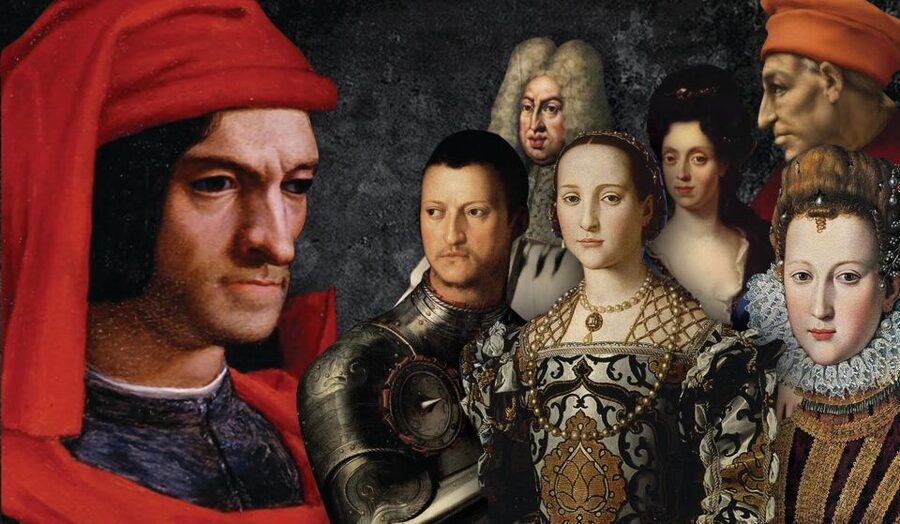
From the start, you’ll hear the basic arc: the Medici began as a family tied to the Mugello area (north of Florence) and rose to become central during the Renaissance period. That origin detail helps you interpret what comes next. You stop treating the Medici as generic “patrons” and start seeing them as a family climbing a ladder—political, religious, and cultural.
Practical tip: even if you’re an independent walker, arriving a few minutes early helps. Meeting at a specific statue is clear, but Florence sidewalks are busy. Give yourself a small buffer so you’re not sprinting.
Palazzo Medici Riccardi and San Lorenzo: Where Power Shows Up in Stone
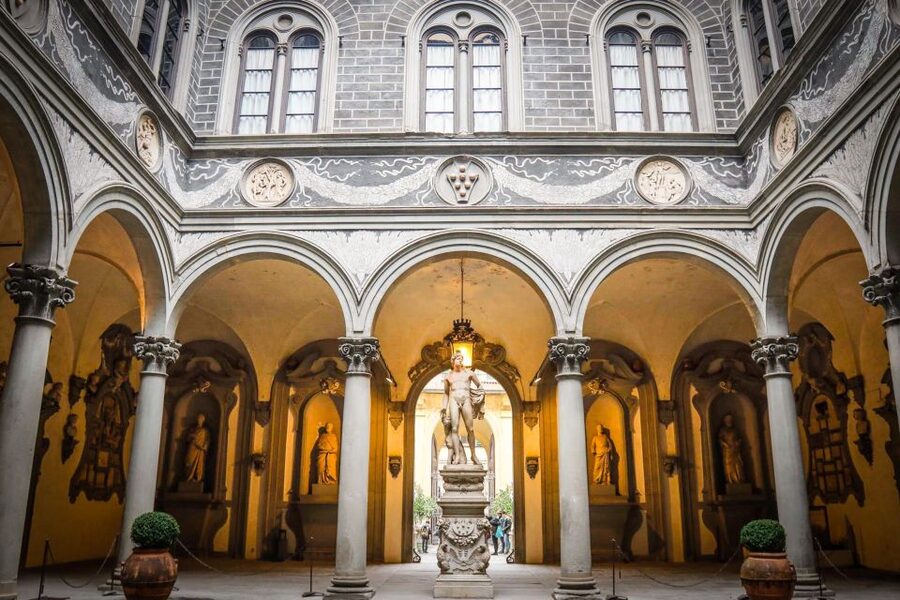
Stop one after the meeting point is Palazzo Medici Riccardi. This is one of the most recognizable “Medici-adjacent” signals in the city, and the guide uses it to show you how their importance grew—from family standing to public influence.
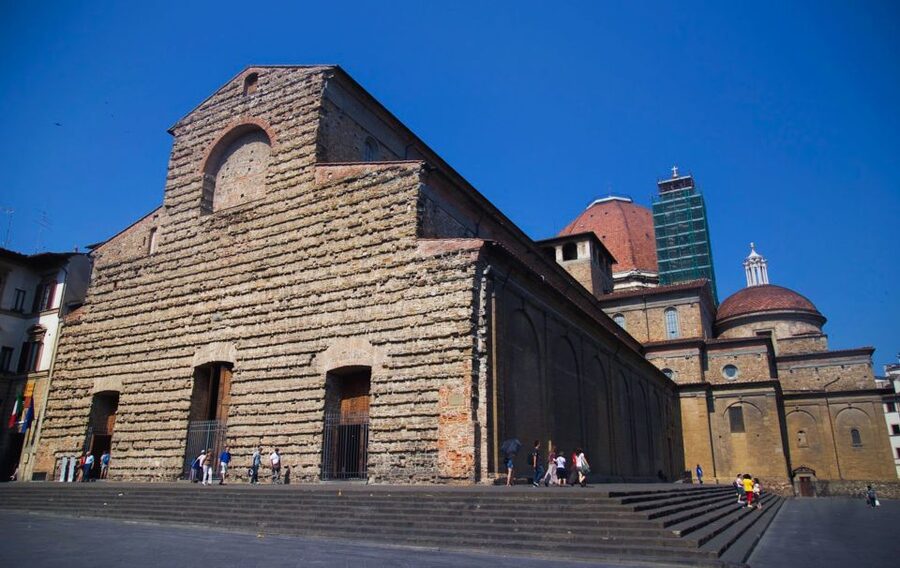
Then you move to the Basilica of San Lorenzo. This isn’t just a church stop. It’s part of how the Medici shaped religious and civic visibility. Even if you’re mostly seeing the buildings from the outside, you’ll get the why behind the symbolism: religious spaces were wrapped into elite identity.
The Medici Chapel comes next, with another focused guided segment. This is where the story becomes personal and dynastic—showing how a family’s legacy could be built into Florence’s sacred landscape.
A useful mindset here: don’t just notice the architecture. Listen for how the guide links architecture to authority. You’ll start recognizing “this is here because the Medici wanted it to matter” instead of “this is here because it’s old.”
The Duomo Complex and Piazza San Firenze: Learning to Read Florence’s Layout
Next up is the Florence Duomo complex. Even without long ticketed access, a short guided orientation can be powerful. The guide’s job is to connect the Medici story to the city’s most prominent religious and civic center, so you understand where influence was anchored in public life.
You’ll then pass through Piazza San Firenze. Plazas like this are where Florence feels most “social”—the kind of place where power plays out as much through visibility as through policy. In a Medici context, squares and key churches work together: one frames public identity, the other reinforces it.
One practical consideration: because each stop is short (often 5–10 minutes), the tour works best if you’re comfortable standing, looking up, and moving quickly. If you love long photo sessions at one spot, you’ll need to pick your moments.
This is also a good time to decide what you want to remember. I like marking a few mental anchors—Palazzo Medici Riccardi, San Lorenzo, Medici Chapel—so the rest of the tour feels like a network rather than random walking.
Just your group: more private Florence tours



Bargello and Palazzo Gondi: Big Names, Smaller Moments
You’ll hit the National Museum of Bargello next, followed by Palazzo Gondi. Even though these are well-known addresses, the “value” here is less about checking off a museum logo and more about seeing how elite families threaded themselves through multiple locations.
Bargello’s stop works as a reminder that power isn’t only about palaces you can photograph from postcard angles. It’s also about civic space and institutions that mattered to how Florence functioned.
Palazzo Gondi gives you a contrasting piece of Florence’s elite geography. It’s useful for context because it shows you the Medici story isn’t happening in a vacuum. Florence’s political and artistic life was shared territory, and elite families shaped each other’s visibility.
Don’t expect deep ticketed exploration here. Since entrance tickets aren’t included, you’re getting the guided “why” and “how this fits” version. That’s still worth it—you just shouldn’t build your day around entering every site.
Piazza della Signoria and Palazzo Vecchio: The Political Heartbeat
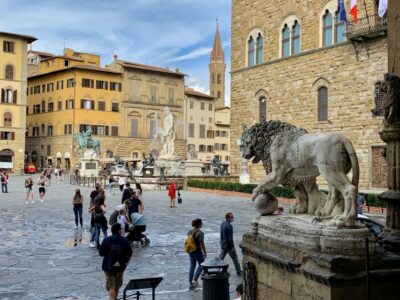
Piazza della Signoria is one of the city’s most dramatic stages, and the tour uses it to explain how Medici influence was tied to Florence’s political identity. You’ll learn how the Medici rose and then managed visibility in public spaces.
Then you move to Palazzo Vecchio, with a guided segment. This is a classic Florence power location, and the guide’s narrative helps you see what makes it more than just an impressive building. In this part of the tour, you’re essentially learning how authority was performed—through buildings, squares, and proximity to government.
Quick advice: take a step back during this stop. When you’re close to facades, it’s easy to miss the overall spatial sense of the square. A few seconds of perspective makes the story click.
This is also where the tour’s pacing pays off. You’ve already built the origin-to-rise context earlier. Now you’re seeing the “stage” where that power mattered.
Uffizi, Vasari Corridor, and Ponte Vecchio: Art, Access, and a River View
The itinerary then includes the Uffizi Gallery and Vasari Corridor, followed by Ponte Vecchio. The sequence matters because it links culture and movement to elite control.
Uffizi Gallery is a big-name stop, but entrance tickets aren’t included here. That means your time is likely about orientation—what the site represents and why it ties into the Medici’s cultural influence. You’ll walk away with a better sense of what that famous artistic world was doing for Medici status.
The Vasari Corridor stop is the “secret passageways” clue in action. Even if you’re not going inside for a long period, the guide can explain why the corridor is so tied to Medici planning—access and privacy at the highest level.
Finally, Ponte Vecchio gives you a shift to view and atmosphere. You’ll get the guided context and then the river landscape does its job. Florence’s water crossings have always shaped movement, and that matters when you’re talking about elite control and citywide influence.
Practical tip: don’t plan to be under the most perfect photo light here. With a guided walking schedule, you’re better off getting a solid view rather than chasing perfect timing.
Santa Felicita and Pitti: How the Center of Gravity Moves
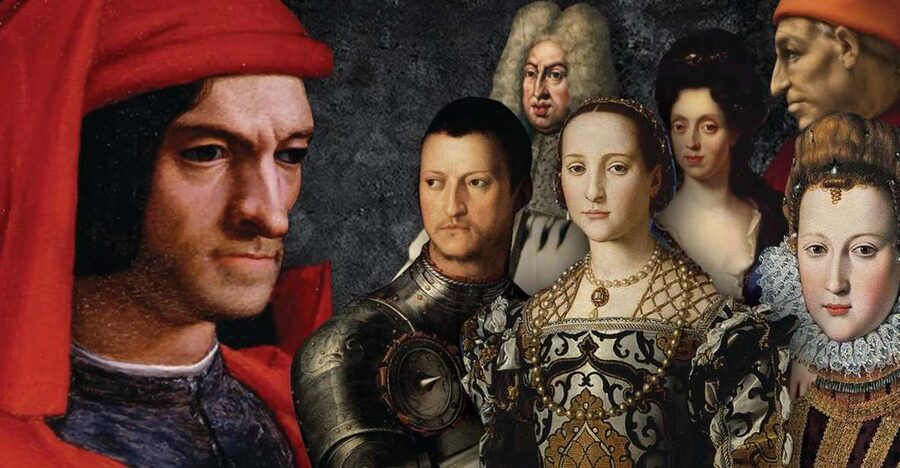
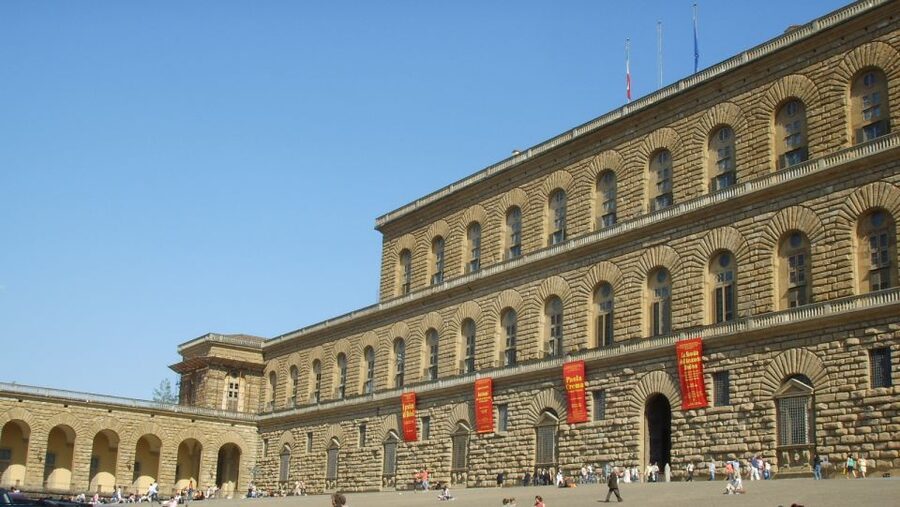
After the river area, the tour heads to the Church of Santa Felicita, then Piazza Pitti, and finally Pitti Palace. This section is important because it shows how power doesn’t stay in one exact neighborhood forever.
Santa Felicita keeps the story connected to religious and civic identity, while Piazza Pitti sets up the later, larger center of Medici influence. Then Pitti Palace brings you to the “bigger footprint” end of the narrative.
Even though you’re still mainly seeing places from the outside, the tour gives you a sense of momentum. You’re not just learning names; you’re watching influence shift across Florence’s map.
If you’re the kind of person who likes closure, you’ll like the finish. The tour ends at Piazza de’ Pitti (after stopping at Pitti Palace), which feels like a natural landing point. You can then keep exploring the area on your own if you want.
Who This Tour Is Best For (and Who Should Skip It)
This tour is a great fit if you:
- want the Medici story in a clear, guided timeline in about 2 hours
- prefer walking between multiple sights rather than spending your day inside ticketed venues
- like understanding why buildings matter, not just admiring them
- want a private-group experience with earphones for easier listening
I’d think twice if you:
- want a tour packed with long interior museum time or multiple paid entrances
- expect full access everywhere as part of one price (entrance tickets aren’t included)
- need long seated stops, since the structure is made for walking and short guided segments
One more point: the tour is listed as wheelchair accessible, but it also says it is not suitable for people with mobility impairments. If you have mobility needs, that contradiction is exactly the kind of thing you should confirm directly before booking.
Should You Book This Florence Medici Walking Tour?
I’d book it if you want Florence’s Medici story told in a practical, easy-to-follow way—without spending hours figuring out where to go and what connects. The combination of a licensed guide, earphones, and a private group format is what makes it feel worth the $118.95.
Skip it or plan around it if your top priority is ticketed interior access. This tour is built for outside viewing plus meaning, not a full “enter everything” day. If you want both—story and interiors—use this tour as your storyline first, then add separate museum or church tickets after you know what you care about.
FAQ
Where does the tour start?
The tour starts at Piazza San Marco, at the statue in the middle of the square.
How long is the Florence Medici tour?
It runs for 2 hours.
Is this a private group?
Yes. The group type is private.
What’s included in the price?
Included are a 2-hour guided tour and earphones.
Are entrance tickets included?
No. Entrance tickets are not included.
Are food and drinks included?
No. Food and drinks are not included.
What languages does the guide speak?
The live guide offers Italian, English, and French.
Is the tour wheelchair accessible?
The activity is listed as wheelchair accessible, but it is also marked not suitable for people with mobility impairments. Check with the provider before booking if mobility is a factor.
Can I cancel for a refund?
Yes. Free cancellation is available up to 24 hours in advance for a full refund.
What about starting times?
Starting times can vary, so you’ll need to check availability to see the times offered.
More Florence Walks
- Florence: Highlights Walking Tour with Expert Guide
★ 4.6 · 4,662 reviews - Uffizi & Accademia Timed Entry: Small Group Duomo Walking Tour
★ 4.5 · 3,630 reviews - Florence: Duomo Complex with Tickets & City Walk Guided Tour
★ 4.7 · 2,057 reviews - Florence: Guided Walking Tour
★ 4.6 · 1,602 reviews - Florence: Renaissance and Medici Tales Guided Walking Tour
★ 4.8 · 1,549 reviews
More Florence Tours to Weigh Up
- The Best tour in Florence: Renaissance & Medici Tales – guided by a STORYTELLER
★ 5.0 · 12,316 reviews - The Best Tour in Florence: Renaissance and Medici Tales
★ 5.0 · 10,810 reviews - Florence: Chianti Wineries Tour with Wine Tasting
★ 4.5 · 10,071 reviews - Florence: Duomo Cathedral 60-Minute Guided Tour
★ 3.7 · 6,829 reviews - Florence: Hop-on Hop-off Bus Tour: 24, 48 or 72-Hour Ticket
★ 4.0 · 6,283 reviews
More Florence Tours We Have Reviewed
- Florence: Skip-The-Line Uffizi Gallery Timed Entry Ticket
★ 4.5 · 27,832 reviews - Tuscany Day Trip from Florence: Siena, San Gimignano, Pisa and Lunch at a Winery
★ 5.0 · 21,634 reviews - Florence: Timed Entry to Michelangelo’s David + Audio App
★ 4.6 · 19,496 reviews - Florence: Leonardo Interactive Museum Entry Ticket
★ 4.5 · 12,957 reviews - Florence: Michelangelo’s David Skip-the-Line Entry Ticket
★ 4.5 · 12,764 reviews
Fresh from our Florence review desk
- Small-Group Pasta Cooking Class and Market Tour in Florence★ 5.0 · 3 reviews
- Palatina Gallery and Pitti Guided Tour in Florence★ 5.0 · 3 reviews
- Tuscan Evening Tour: Fiat 500, 8:30 to 10 PM★ 5.0 · 3 reviews
- Journey into Art: Florence’s Accademia★ 4.5 · 3 reviews
- Paint and Drink Florentine Hills★ 5.0 · 3 reviews
- Truffle hunting and lunch experience, with Vinci and winery.★ 4.5 · 3 reviews
Walking Tours, compared.
 ★ 4.6Highlights Walking Tour with Expert GuideFrom $274,662 reviews
 ★ 4.5Uffizi & Accademia Timed Entry: Small Group Duomo Walking TourFrom $503,630 reviews
 ★ 4.7Duomo Complex with Tickets & City Walk Guided TourFrom $932,057 reviews
 ★ 4.6Guided Walking TourFrom $271,602 reviews
 ★ 4.8Renaissance and Medici Tales Guided Walking TourFrom $21,549 reviews
 ★ 4.7Uffizi & Accademia Small Group Walking TourFrom $1481,380 reviews
 ★ 5.0Skip-the-Line Florence Highlights and David Walking TourFrom $1171,127 reviews
 ★ 4.6Dark Mysteries and Legends Guided Walking TourFrom $21,081 reviews
Browse the lists this tour appears in