
Reviewed · LEONARDO DA VINCI MUSEUM TICKETS
Florence: Visit the Leonardo Da Vinci Museum
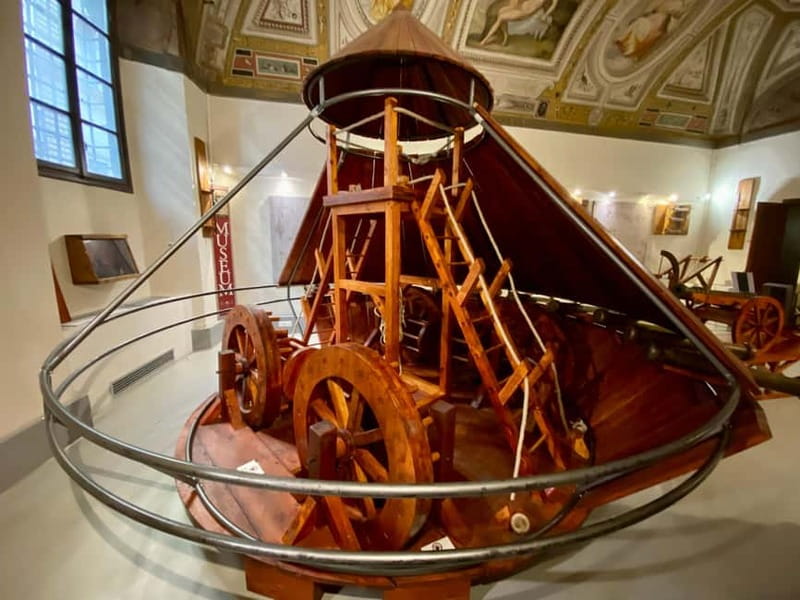
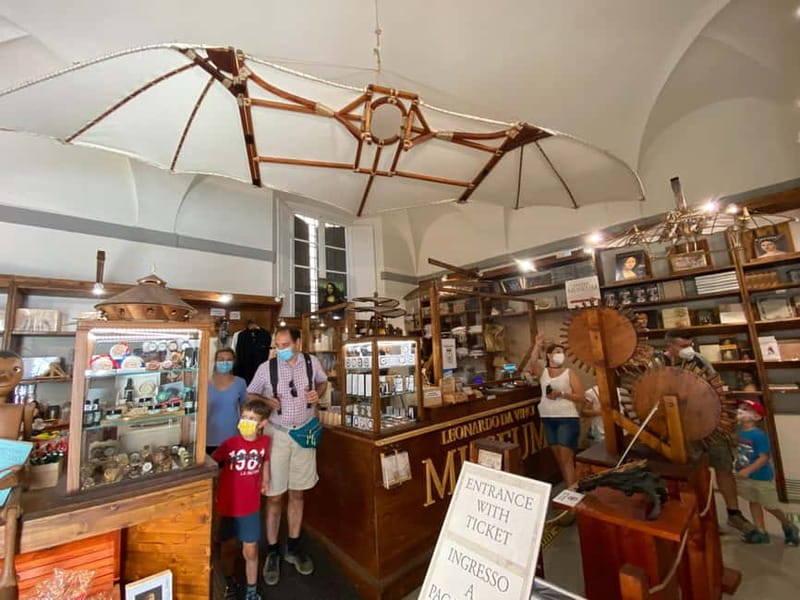
A museum with working ideas, not just glass cases. The Leonardo da Vinci Museum in Florence is 800 square meters packed across three floors, with 120+ models and a big share of hands-on stuff. I especially like the mix of engineering imagination and real museum craft—original frescoes from Vasari’s school sit alongside the inventions. One thing to consider: there’s no luggage storage included, so travel light.
This is also one of those rare places where it makes sense for multiple ages (it’s designed for ages 3 to 99). If you want a science/tech stop that doesn’t feel like homework, the interactive models and workshops do most of the heavy lifting for you.
You’ll go in on your own—there’s no guided, personalized tour included in the ticket—so it helps to arrive ready to explore at your own pace (with your reservation shown at the ticket office before entry).
In This Review
- Key things that make this museum worth your time
- What the Leonardo da Vinci Museum is (and why it’s better than a typical “model museum”)
- A one-day plan: how to pace the three floors
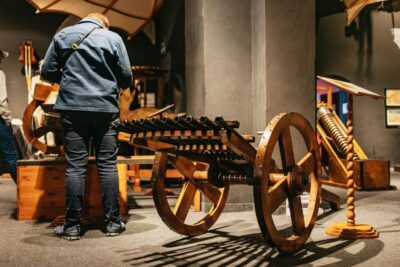
- Ground floor: flights, war tech, and a big dose of “do something”
- First floor: dome-building thinking, more flight, and the music room
- Basement floor: anatomy, documentary, and more interaction
- The value question: is $11 really enough?
- Tips that make your visit smoother (and more fun)
- Who this museum fits best (and who might feel “meh”)
- Logistics you’ll actually want to know
- Should you book the Leonardo da Vinci Museum in Florence?
- FAQ
- How long is the Florence Leonardo da Vinci Museum visit?
- What does the ticket cost?
- Is a guided or personalized tour included in the ticket price?
- What’s included with admission besides the exhibits?
- Is there luggage storage or a checkroom included?
- Do I need to show my reservation before entering?
- Is the museum wheelchair accessible, and are there language supports?
Key things that make this museum worth your time
- Europe’s largest collection of Leonardo da Vinci models and related inventions
- 120+ models across 3 floors, with 50 interactive stations for the public
- Ever-evolving science museum feel, with hands-on areas and workshops
- Original frescoes from Vasari’s school included in the same visit
- A smart setup for families, with activities for kids and content that still holds adult attention
- English/French/Spanish/Italian support via an English/French/Spanish/Italian host or greeter
More Leonardo in Florence, if the machines drew you in
What the Leonardo da Vinci Museum is (and why it’s better than a typical “model museum”)
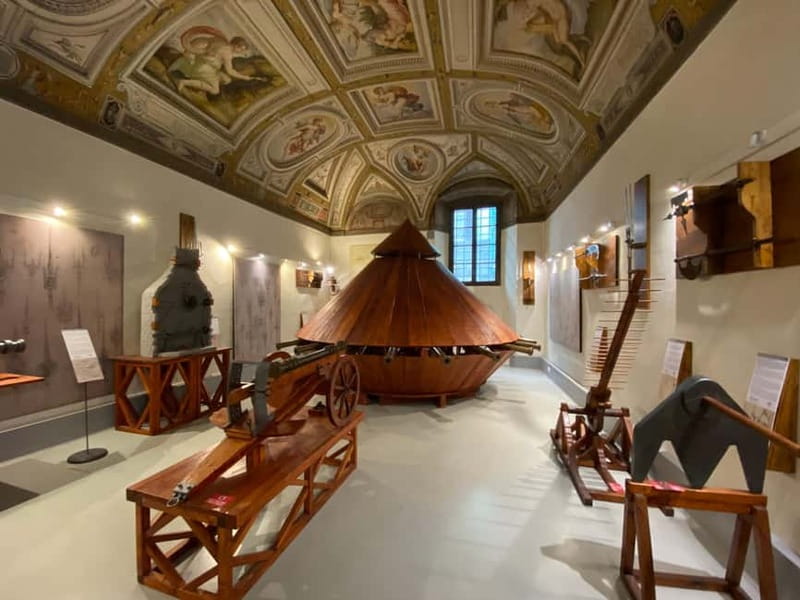
Florence has no shortage of museums, so you want the ones that earn their space in your day. This one does. The Leonardo da Vinci Museum is built around the idea that Leonardo’s drawings are only half the story—his inventions become real when you can see how parts move, how forces work, and what happens when you try.
The museum’s size matters: 800 square meters doesn’t sound huge until you’re inside. It’s divided into three levels, each with its own “theme energy.” That means you can wander without feeling like you’re repeating the same exhibit format over and over.
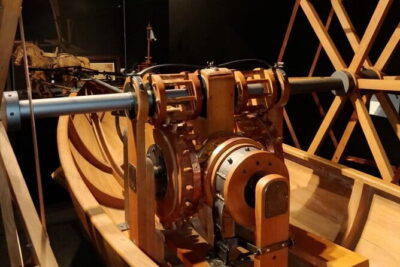
The other reason it works is the hands-on balance. You’re not just looking at displays; you’re encouraged to use fifty interactive models. Even if you’re the kind of person who usually skips anything that says “try it,” the interactive sections are the draw here.
And yes, you’ll still find the documentary and the more traditional museum components. There’s a documentary on Leonardo’s life, plus an on-site Book Shop if you want something to take home besides photos.
A one-day plan: how to pace the three floors
This experience is valid for one day, so you can structure it however you like. The good news: the museum is organized clearly by level, and the topics shift as you go.
Ground floor: flights, war tech, and a big dose of “do something”
Start on the ground floor, where the museum blends visual history with built mechanics. Here’s what to look for:
- Bookshop right up front: useful for orientation and for grabbing an English-friendly souvenir if you want one.
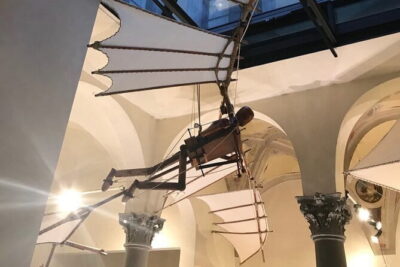
- Hall of Flight: this is where Leonardo’s obsession with air shows up in a way that feels more practical than poetic.
- Interactive Laboratory: this is one of the spots that makes the museum feel alive rather than static.
- Hall of War: an uncomfortable topic, but it’s presented as part of invention thinking. It’s worth paying attention to how ideas are translated into physical concepts.
- Original frescoes from Vasari’s school: this is a curveball you might not expect in a science-heavy museum. You get art and anatomy of style—plus it gives the building a deeper “Florence” feel.
How to pace it: don’t rush the interactive pieces just to “check boxes.” If you treat them as mini experiments—press, watch, compare—you’ll understand more in less time.
Possible drawback: if you’re short on time and you hate interactive exhibits, the number of try-it stations can slow you down. In that case, pick the 2–3 that look most interesting and leave the rest for next time.
First floor: dome-building thinking, more flight, and the music room
The first floor keeps the invention mindset but adds a different kind of curiosity—architecture thinking and the way design connects to sound.
- Brunelleschi Hall, focused on a dome building site: Leonardo didn’t just draw machines. He thought in systems, structures, and problem-solving. This hall connects that to Florence’s own engineering legacy.
- Fiesole Flight Hall: a second flight-focused area that helps you see Leonardo’s ideas from another angle rather than one repeat “air equals wings” display.
- Music Hall: this is a fun reminder that invention isn’t only gears and engines. You’ll find an interactive music room on-site as part of the overall museum experience.
How to pace it: this level is a great place to slow down, because it’s where the museum’s themes feel broader. If you’re traveling with kids, it’s also a good floor to manage energy—interactions here can be more engaging than reading walls of text.
Basement floor: anatomy, documentary, and more interaction
The basement level leans into body knowledge and explanation. It’s less “toy-like” and more about understanding.
- Interactive Hall: again, you’ll have public-facing hands-on elements here.
- Anatomy Hall with a documentary: the museum uses film to connect Leonardo’s observation to what people can actually learn from.
- Interactive Laboratory (basement): another chance to press buttons, test ideas, and make the concepts feel less abstract.
How to pace it: if you want a clean rhythm, treat basement as your “focus level.” Give yourself time to watch the documentary portion and then follow it with an interactive station. The order helps it click.
More Florence galleries and collections to wander


The value question: is $11 really enough?
At $11 per person, you’re buying a whole bundle, not just a single gallery. Based on what the ticket includes, the value is strong—especially if you like science, hands-on learning, or traveling with children.
Your ticket price includes:
- Access to the museum’s public areas
- Restrooms and Wi-Fi connection
- Fifty interactive models
- Interactive/creative workshops
- An interactive music room
- A documentary on Leonardo da Vinci’s life
That’s a lot for one day. Also, the museum is promoted as an ever-evolving science museum, which matters because it suggests the experience isn’t meant to feel like a one-time checklist.
What’s not included is also important:
- A guided and personalized tour is excluded from the ticket cost. So expect self-guided exploration.
- Luggage storage (checkroom) is excluded, meaning you’ll want to plan around carrying only what you can comfortably keep with you.
Tips that make your visit smoother (and more fun)
The museum isn’t complicated, but a few practical choices will make your day feel effortless.
- Show your reservation at the ticket office before entering. Plan to do this early so you don’t end up rushing once inside.
- Use the floors strategically. Ground floor first if you want momentum; basement later if you want more focus; first floor if you want variety and the music/architecture angle.
- Don’t treat interactive exhibits as distractions. Here, they’re the point. Give yourself permission to spend extra time at stations that actually invite you to try.
- If you’re with kids, plan around workshops. The museum includes creative workshops, and those are usually the moments families remember most.
- Avoid bringing food and drinks. Food and drinks are not allowed, so save snacks for outside the museum if you need them.
A small planning reality: the museum runs its own rules on what you can bring in. Items like weapons or sharp objects aren’t allowed, and non-folding strollers aren’t allowed. If you’re traveling with a lot of gear, you’ll be happier with a minimal load.
Who this museum fits best (and who might feel “meh”)
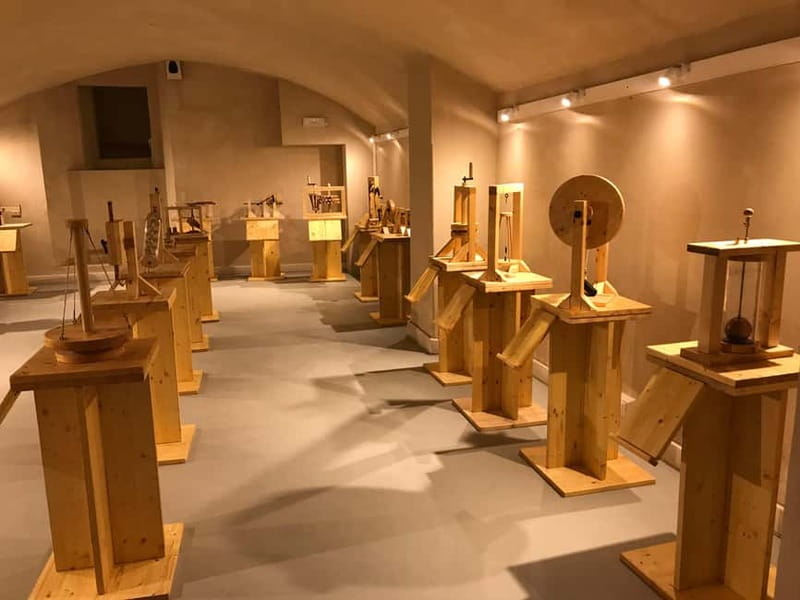
This place is built for a wide age range—3 to 99—and it shows in the exhibit mix. It’s ideal if you:
- Like science and technology but want it presented through physical models
- Enjoy hands-on learning more than reading long labels
- Travel with kids who need movement and activities
- Want something distinctly Florentine without being only about paintings and cathedrals
It may feel less satisfying if you:
- Want a traditional guided tour experience with narration (since the guided/personalized tour isn’t included)
- Prefer art museums only, because this is clearly science/tech-led, even with those beautiful fresco elements
- Have very limited time and want only a quick walk-through—there are enough interactive stations to slow you down in a good way, or a frustrating way
Logistics you’ll actually want to know
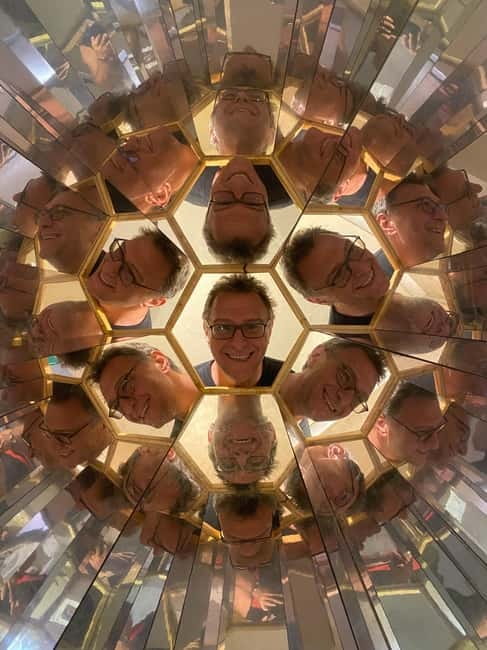
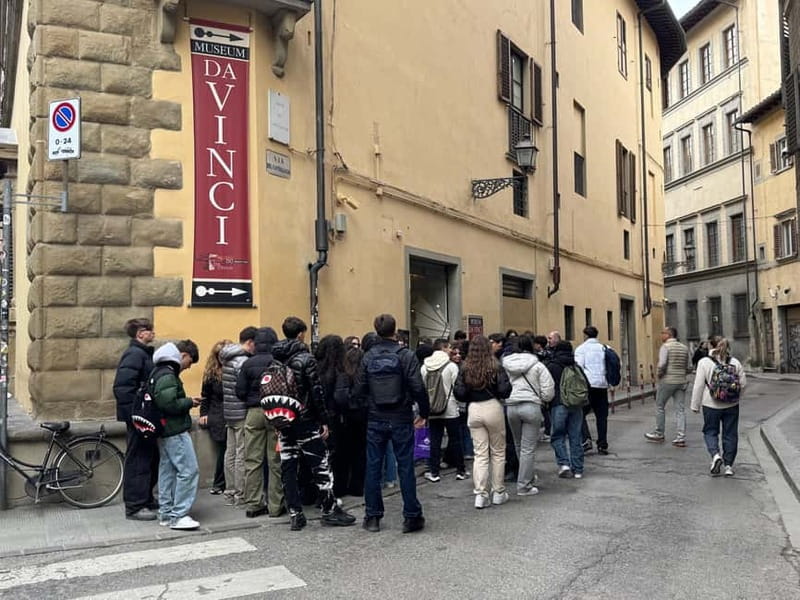
The meeting point is simply admission to the Da Vinci Museum. You’ll also need to show your reservation at the ticket office before visiting.
Language support is built in through a host/greeter in English, French, Spanish, and Italian. Some content may appear in its original language, so don’t worry if not every sign is translated—most of the interactive model experience works without perfect reading.
Wheelchair accessibility is listed, so it’s a reasonable option if you need that kind of access.
Should you book the Leonardo da Vinci Museum in Florence?
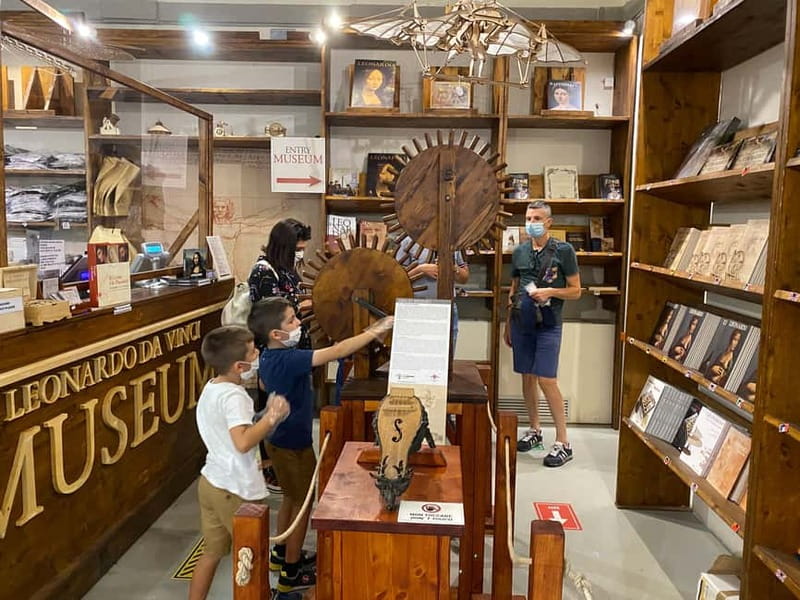
I’d book it if you want a science-and-inventions stop that’s hands-on, family-friendly, and worth your time without needing a long itinerary.
Choose it especially if:
- You like interactive exhibits and can spend real time using the models
- You want one museum day that works for mixed ages
- You’re curious about Leonardo beyond paintings—how his ideas turn into machines, anatomy observation, and engineering thinking
Skip it (or plan carefully) if you:
- Don’t enjoy interactive stations
- Need luggage storage—since checkroom isn’t included
- Want a narrated guided experience rather than self-guided wandering
If your ideal day in Florence includes gears, flight ideas, and a surprising mix of art and science under one roof, this museum is a strong pick.
FAQ
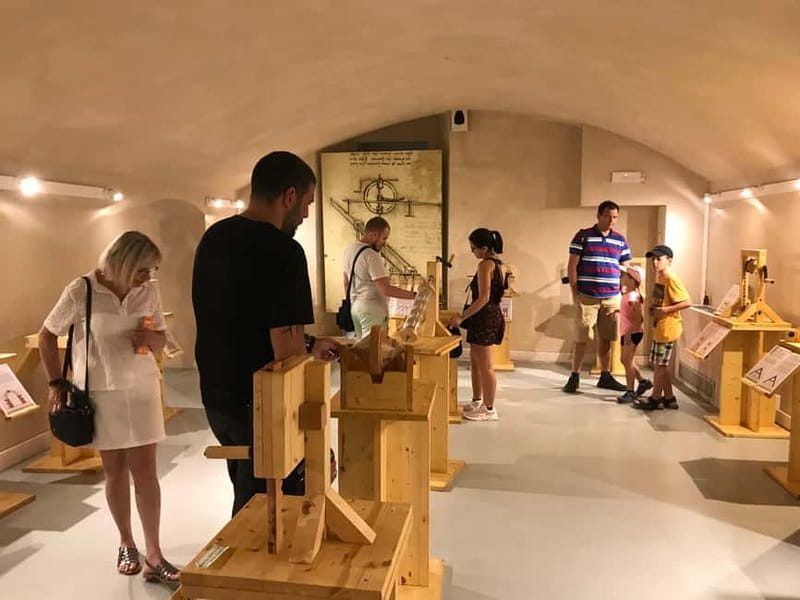
How long is the Florence Leonardo da Vinci Museum visit?
This experience is valid for 1 day, so you can explore within that time window based on the museum’s starting times available for your booking.
What does the ticket cost?
The price is $11 per person.
Is a guided or personalized tour included in the ticket price?
No. The guided and personalized tour is excluded from the ticket cost.
What’s included with admission besides the exhibits?
Admission includes restrooms, Wi-Fi, fifty interactive models for the public, interactive and creative workshops, an interactive music room, and a documentary on Leonardo da Vinci’s life.
Is there luggage storage or a checkroom included?
No. Luggage storage services (checkroom) are excluded from the ticket.
Do I need to show my reservation before entering?
Yes. Before visiting, you must show your reservation at the ticket office.
Is the museum wheelchair accessible, and are there language supports?
Yes, it’s listed as wheelchair accessible. There is a host/greeter in English, French, Spanish, and Italian.
More Florence Galleries
- Florence: Skip-The-Line Uffizi Gallery Timed Entry Ticket
★ 4.5 · 27,832 reviews - Florence: Leonardo Interactive Museum Entry Ticket
★ 4.5 · 12,957 reviews - Florence Accademia Gallery Tour with Entrance Ticket Included
★ 4.5 · 6,148 reviews - Uffizi Gallery: Renaissance Masterpieces Guided Tour
★ 4.6 · 6,070 reviews - Uffizi Gallery Small Group Tour with Guide
★ 4.5 · 4,923 reviews
More Florence Tours We Have Reviewed
- Florence: Skip-The-Line Uffizi Gallery Timed Entry Ticket
★ 4.5 · 27,832 reviews - Tuscany Day Trip from Florence: Siena, San Gimignano, Pisa and Lunch at a Winery
★ 5.0 · 21,634 reviews - Florence: Timed Entry to Michelangelo’s David + Audio App
★ 4.6 · 19,496 reviews - Florence: Leonardo Interactive Museum Entry Ticket
★ 4.5 · 12,957 reviews - Florence: Michelangelo’s David Skip-the-Line Entry Ticket
★ 4.5 · 12,764 reviews
More Leonardo, More Machines
- Florence: Leonardo Interactive Museum Entry Ticket
★ 4.5 · 12,957 reviews - Leonardo Da Vinci Museum Entrance Ticket
★ 4.5 · 1,458 reviews - Leonardo Interactive Museum® Entrance Ticket
★ 4.5 · 583 reviews - Renaissance Florence & the rivalry of Michelangelo and Leonardo
★ 5.0 · 40 reviews - Florence – Express Uffizi Gallery and Leonardo da Vinci Museum
★ 5.0 · 32 reviews
Fresh from our Florence review desk
- Small-Group Pasta Cooking Class and Market Tour in Florence★ 5.0 · 3 reviews
- Palatina Gallery and Pitti Guided Tour in Florence★ 5.0 · 3 reviews
- Tuscan Evening Tour: Fiat 500, 8:30 to 10 PM★ 5.0 · 3 reviews
- Journey into Art: Florence’s Accademia★ 4.5 · 3 reviews
- Paint and Drink Florentine Hills★ 5.0 · 3 reviews
- Truffle hunting and lunch experience, with Vinci and winery.★ 4.5 · 3 reviews
Leonardo da Vinci Museum Tickets, compared.
 ★ 4.5Leonardo Interactive Museum Entry TicketFrom $512,957 reviews
 ★ 4.5Leonardo Da Vinci Museum Entrance TicketFrom $121,458 reviews
 ★ 4.5Leonardo Interactive Museum® Entrance TicketFrom $11583 reviews
 ★ 5.0Renaissance Florence & the rivalry of Michelangelo and LeonardoFrom $3140 reviews
 ★ 5.0Florence – Express Uffizi Gallery and Leonardo da Vinci MuseumFrom $14432 reviews
 ★ 5.0Kid-Friendly Uffizi Museum Tour in Florence with Botticelli & Leonardo WorksFrom $27521 reviews
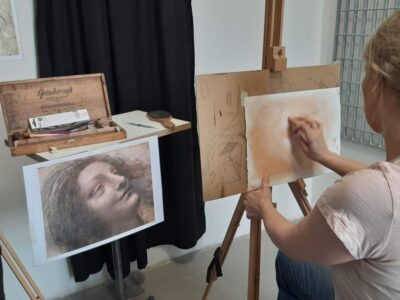 ★ 5.0Leonardo DrawingsFrom $18215 reviews
 ★ 5.0Leonardo da Vinci Guided Walking Tour with MuseumFrom $20615 reviews
Browse the lists this tour appears in