
Reviewed · MEDICI & RENAISSANCE TOURS
Renaissance Florence & the rivalry of Michelangelo and Leonardo
Florence gets a new lens when art turns into rivalry.
This tour looks at the Renaissance through the competitive push between Michelangelo and Leonardo—and it’s a refreshing change from the usual checklist. I really like the way the stories connect art to politics and everyday power, and I also like the practical finish at Basilica di Santo Spirito, where you get to see Michelangelo’s early masterpiece, Il Crocifisso Ligneo (the wooden crucifix). One possible drawback: much of the sightseeing is exterior-focused, and you’ll need to budget extra if you want admission for Palazzo Vecchio and Duomo since those tickets aren’t included.
If you’re the type who enjoys walking, noticing details, and learning how to “read” a city, this works well. With a small group limit of 16, it stays conversational, and the guide-led storytelling keeps the pace from turning into just another photo stop.
In This Review
- Key things I’d mark on your mental map
- Michelangelo and Leonardo: the rivalry that changes what you see
- Starting at Piazza della Signoria: the power square with sculptures
- Piazza della Signoria highlights you’ll actually notice
- Palazzo Vecchio exterior stop: when size tells the story
- Duomo area from the outside: Brunelleschi and Giotto cues
- San Lorenzo: Medici power, Michelangelo design, and a food-morning kind of energy
- A useful way to think about this stop
- Piazza Santa Trinita and Ponte Vecchio: the calm reset between big ideas
- Piazza Santa Trinita (about 10 minutes)
- Ponte Vecchio (about 10 minutes)
- Santo Spirito and Il Crocifisso Ligneo: the Michelangelo moment you’ll remember
- Why Il Crocifisso Ligneo matters
- The best kind of ending
- Price, value, and who this tour fits best
- Who it suits
- Timing tip
- What to do before and after (so the day feels bigger)
- Should you book it?
- FAQ
- How long is the Renaissance Florence tour?
- Where does the tour start and end?
- What’s included in the tour price?
- What admission tickets are not included?
- What will I see during the Duomo stop?
- Is there a limit on group size?
- Is the ticket mobile?
- Do I need good weather for this experience?
- Are service animals allowed?
Key things I’d mark on your mental map
- Michelangelo vs Leonardo, framed as a real creative rivalry, not just name-dropping
- Santo Spirito + Il Crocifisso Ligneo, tied to anatomy study and Michelangelo’s early development
- Piazza della Signoria as an open-air sculpture court where politics and art share the same stage
- Brunelleschi/Giotto landmarks from the outside, with engineering and design explained in plain language
- A tight 3-hour loop that ends by Santa Croce, so you don’t feel stranded afterward
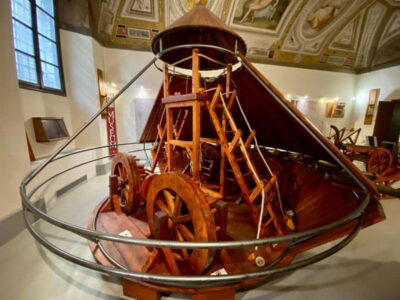
More Leonardo in Florence, if the machines drew you in
Michelangelo and Leonardo: the rivalry that changes what you see
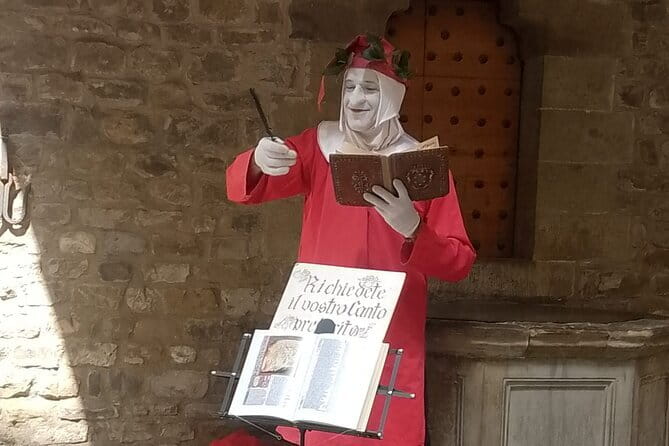
Most Florence tours treat Renaissance art like a museum wall—pretty, famous, and done. This one treats it like something alive: ambition with teeth. You’ll hear how the competitive spirit between Michelangelo and Leonardo fed major breakthroughs, and how their different personalities and working methods shaped what they made.
I like that the tour doesn’t only say they were geniuses. It connects them to the political and cultural pressure of Renaissance Florence, where patrons, power, and reputation were constantly at play. That framing matters, because Florence is full of buildings and artworks that were commissioned to communicate authority. When you understand that, you stop seeing the city as a backdrop and start seeing it as a message system.
The tour also keeps a steady “story-to-place” rhythm. Instead of only naming artworks, you’re guided to understand why certain locations mattered to artists and patrons. It’s the kind of approach that makes your next stroll through Florence feel smarter.
Starting at Piazza della Signoria: the power square with sculptures
You meet at Piazza della Signoria, right in the center of the action. This square has been a political hub since the Middle Ages, which is a big deal. It means you’re not just stepping into an attractive plaza—you’re stepping into the civic stage where Florence showed its strength.
From here, you get a quick orientation to how the Renaissance blends public life with display art. You also spend time near Palazzo Vecchio, at least from the outside. Its presence sets the tone: monumental, serious, and built to last. Even without museum entry, the sheer scale helps you understand why artists and thinkers couldn’t work in a vacuum.
Piazza della Signoria highlights you’ll actually notice
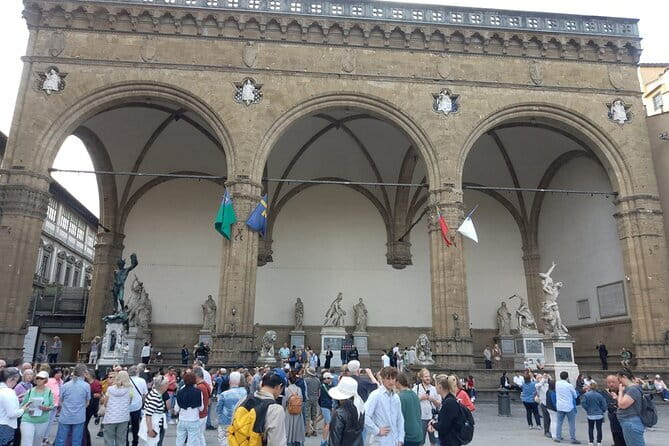
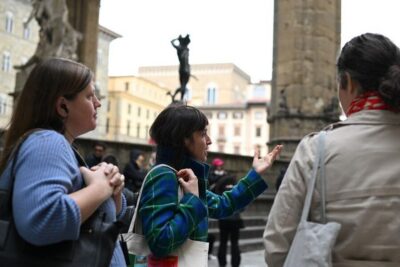
In the square, you’ll see it as an open-air museum. The tour points out major sculpture moments and the visual language Florentines used to send messages in public space. Among the items mentioned are:
- Cellini’s Perseus with the Head of Medusa
- Giambologna’s The Rape of the Sabine Women
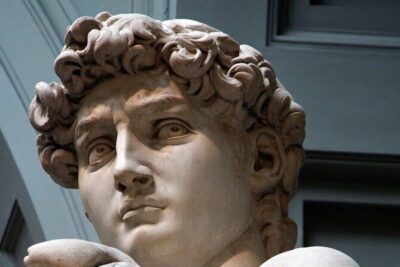
- A replica of Michelangelo’s David
There’s also Loggia dei Lanzi, an open-air sculpture gallery right beside the Palazzo. Even if you’re short on time, that area is a fast way to “train your eyes” for what Florence does with marble drama.
Practical note: the square can be busy, and you’ll get the best experience if you keep your attention up while you’re walking rather than constantly looking down at maps.
Palazzo Vecchio exterior stop: when size tells the story
The Palazzo Vecchio exterior stop is short—about 15 minutes—and admission isn’t included. That’s okay because this tour isn’t selling you a museum visit. It uses the building as a narrative anchor.
Think of it like this: when someone commissions art, they want you to feel the weight of the institution behind the artist. Palazzo Vecchio does that in stone. So even from outside, it gives context for why rivalry mattered. If your paycheck comes from powerful people, competition becomes more than personal—it becomes strategy.
If you know you want to go inside, consider adding the ticket on your own. Just don’t expect the tour price to cover it.
Duomo area from the outside: Brunelleschi and Giotto cues
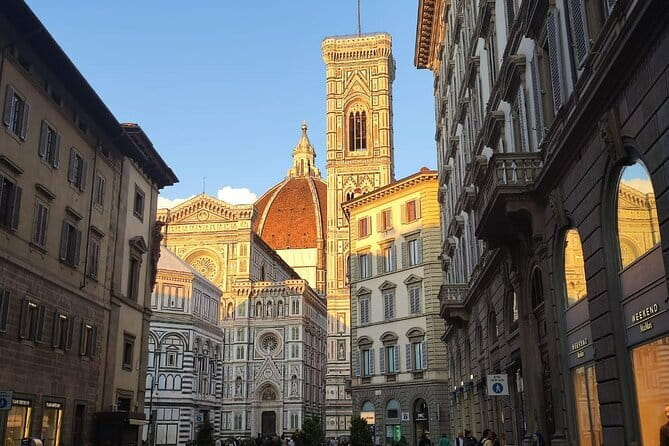
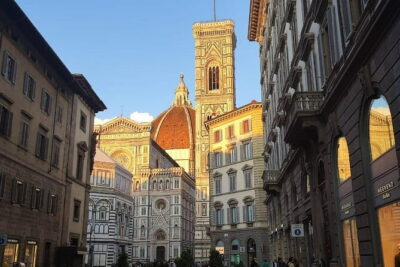
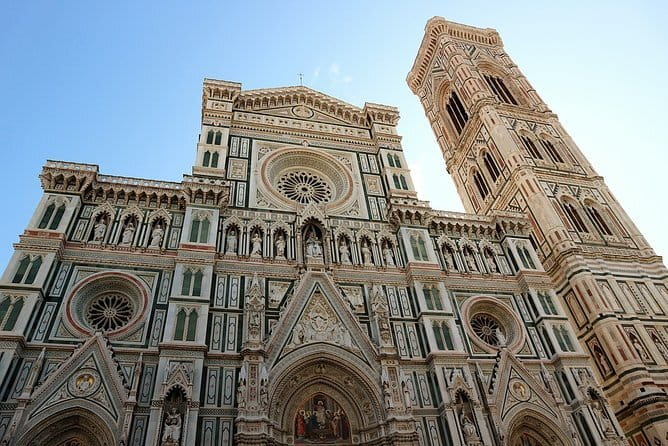
Next you head toward the Duomo complex (Santa Maria del Fiore). Here you’re touring the exteriors: the church façade zone, Giotto’s Bell Tower, and the Baptistery of St. John. Admission isn’t included for this stop, and the time is about 30 minutes.
This is the part where a lot of “art rivalry” tours would get lost in famous names. Instead, the tour focuses on understanding why these forms became Renaissance benchmarks. You’ll hear how Brunelleschi’s dome uses a double shell and a herringbone brick pattern to help stability. That’s the kind of engineering detail that makes you see the dome as more than a famous silhouette. It’s a feat of problem-solving.
You’ll also get context for the bell tower. Giotto designed it, though he only lived to see the lower levels. Andrea Pisano and Francesco Talenti completed it later. That little timeline detail helps you notice how Renaissance greatness often comes in phases, not in perfect single-author moments.
And yes, this area is crowded. Exteriors are exactly the right choice if you want to learn quickly without getting trapped in ticket lines.
Deeper into Medici Florence and its Renaissance
- The Best tour in Florence: Renaissance & Medici Tales – guided by a STORYTELLER
★ 5.0 · 12,316 reviews

San Lorenzo: Medici power, Michelangelo design, and a food-morning kind of energy

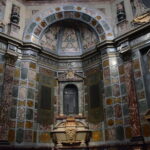
Then you move to San Lorenzo, around the Basilica di San Lorenzo area and the surrounding square. This stop runs about 30 minutes, and it’s listed as free for admission.
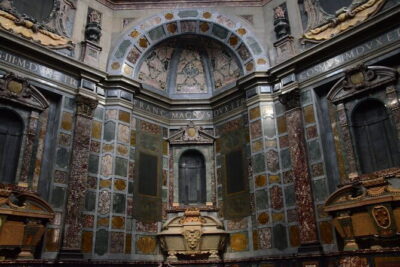
The guide’s approach here is contextual. You’ll hear why the Basilica mattered to the Medici family, including the role of the Medici Chapels as a mausoleum. You’ll also get pointed to major Michelangelo contributions connected to this area:
- the New Sacristy, designed by Michelangelo
- the Laurentian Library, including the famous staircase Michelangelo designed
The tour also includes time that connects the art story to real-life Florence through the neighborhood vibe, including mention of the San Lorenzo Market area.
A useful way to think about this stop
If Palazzo Vecchio and Piazza della Signoria are the civic theater, San Lorenzo is where you see what happens when power turns into legacy. Medici ambition helped shape what artists were able to attempt. So Michelangelo’s development—and the pressures around it—make more sense when you see the Medici setting.
Because the tour data doesn’t spell out extensive interior entry here, keep expectations realistic. This stop works best as orientation + key-spot learning rather than a full museum substitute.
Piazza Santa Trinita and Ponte Vecchio: the calm reset between big ideas
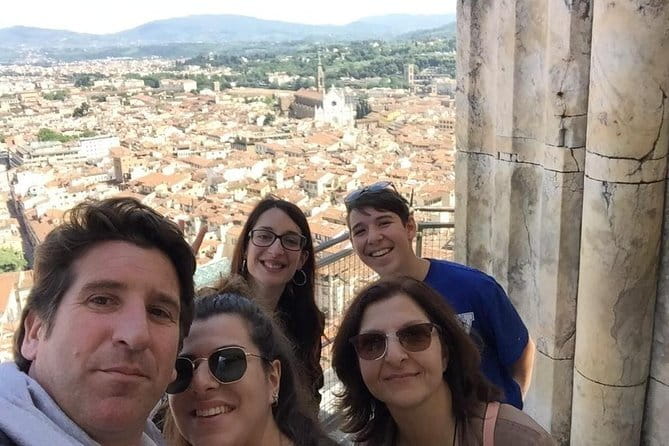
After the Duomo zone and San Lorenzo power, the tour slows into lighter, scenic Florence.
Piazza Santa Trinita (about 10 minutes)
You’ll reach Piazza Santa Trinita, a smaller square along Via de’ Tornabuoni, known for elegant buildings and luxury shops. This is short, but it’s a good breathing moment. It helps you reset your brain between heavyweight art and architecture stops.
Ponte Vecchio (about 10 minutes)
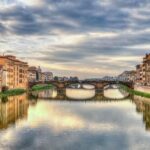
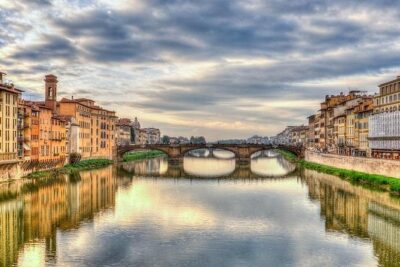
Then comes Ponte Vecchio, the classic bridge over the Arno. It’s a quick pass, but it’s still one of Florence’s best “feel the city” moments. A bridge isn’t just a postcard—it’s an everyday artery that shows how Florence works geographically and socially.
If you’re the kind of person who hates crowds, know that these spots can feel packed. The tour timing keeps it from turning into a long wait, and the guide’s storyline helps you move through faster.
Santo Spirito and Il Crocifisso Ligneo: the Michelangelo moment you’ll remember
The final stop is Basilica di Santo Spirito, and this is where the tour earns its special value. The time is about 30 minutes, and this part includes admission: you get the ticket for Michelangelo’s wooden crucifix.
Santo Spirito is designed by Brunelleschi, and the tour highlights it as a quieter Renaissance alternative to the most over-scheduled church stops. You get a peaceful shift into the Oltrarno district, with an atmosphere that feels more local than forced.
Why Il Crocifisso Ligneo matters
This crucifix is described as one of Michelangelo’s most incredible and surprisingly lesser-known works from his early years: Il Crocifisso Ligneo. The key story is the reason it exists.
You’ll hear that the crucifix was created to thank the Prior for allowing Michelangelo to study anatomy. That’s not just a trivia point—it’s a straight line to how Michelangelo became exceptional at understanding the human form. When you connect anatomy study to later sculpture power, Michelangelo stops being only a name and becomes an actual learning process.
At about age 17, Michelangelo produces an early masterpiece that shows how Renaissance art often began with study, observation, and support from the people in charge.
The best kind of ending
Ending here makes sense. You finish with a human-scale work tied to a personal turning point, not only with a big landmark. It also drops you near Santa Croce, so you can continue your day easily.
Price, value, and who this tour fits best
At $31.35 per person for a roughly 3-hour experience, this is priced like a solid “city-smart” tour rather than a high-end museum ticket package. The big value piece is that the tour includes:
- a professional English-speaking local guide
- an internal “Antonio’s code” resource: the best places for food, music, drinks, and museum stops
- the Michelangelo wood cross ticket for Santo Spirito
What’s not included: Palazzo Vecchio and Duomo (Santa Maria del Fiore) admissions.
So your real cost depends on whether you want to go inside those landmarks separately. If you’re happy with exteriors and guided context, the tour price feels strong. If you plan to add multiple entrances that day, budget a bit more.
Who it suits
This tour is a great match if you:
- like stories that connect art to patronage and power
- want Renaissance context beyond famous paintings
- enjoy a small group walk (max 16) with a guide who can keep the thread going
It may be less ideal if you only want major museum interiors, or if you strongly dislike walking between short stops.
Timing tip
Since tours like this can sell out, and the booking pattern shows it’s often reserved about 122 days in advance, I’d book early if your dates are fixed.
What to do before and after (so the day feels bigger)
Because the tour ends in front of Santa Croce, I’d plan something nearby right after. Your brain will still be full of Michelangelo/Leonardo connections, and Santa Croce is a natural place to keep the Renaissance energy going.
Before the tour, I’d do one simple thing: pick one Michelangelo artwork and one Leonardo artwork you already know. During the walk, you’ll start hearing comparisons and contrast the guide points out—so you’re not just collecting information.
And bring comfortable shoes. This is not an all-sitting kind of tour. The route is compact, but you’ll be moving through busy city spaces for about 3 hours.
Should you book it?
Yes, if you want Florence with a brain attached. The strongest reason to book is that you don’t just see landmarks—you see how rivalry shaped artistic growth, and you end with the included Santo Spirito visit to Michelangelo’s wooden crucifix. The Antonio guide style (funny, knowledgeable, and able to connect past to present) is exactly what keeps a tour like this from feeling like a script.
Skip it only if your priority is ticketed museum interiors all day, or if you already have a full schedule and don’t want to spend 3 hours outdoors and between famous squares.
If you’re doing Florence for the first time, this is an excellent way to get your bearings fast and understand why the Renaissance happened right here, right then, with two artists pushing each other forward.
FAQ
How long is the Renaissance Florence tour?
The tour runs about 3 hours.
Where does the tour start and end?
It starts at Piazza della Signoria and ends in front of Santa Croce.
What’s included in the tour price?
Included are a professional local tour guide (English), the Antonio’s code guidebook-style recommendations, and the Michelangelo wood cross ticket.
What admission tickets are not included?
Palazzo Vecchio admission and Duomo – Cattedrale di Santa Maria del Fiore admission are not included.
What will I see during the Duomo stop?
You’ll visit the exterior area of Santa Maria del Fiore, Giotto’s Bell Tower, and the Baptistery of St. John.
Is there a limit on group size?
Yes. The tour has a maximum of 16 travelers.
Is the ticket mobile?
Yes. The tour uses a mobile ticket.
Do I need good weather for this experience?
Yes. The experience requires good weather, and if it’s canceled due to poor weather you’ll be offered another date or a full refund.
Are service animals allowed?
Yes. Service animals are allowed.
More Florence Tours We Have Reviewed
- Florence: Skip-The-Line Uffizi Gallery Timed Entry Ticket
★ 4.5 · 27,832 reviews - Tuscany Day Trip from Florence: Siena, San Gimignano, Pisa and Lunch at a Winery
★ 5.0 · 21,634 reviews - Florence: Timed Entry to Michelangelo’s David + Audio App
★ 4.6 · 19,496 reviews - Florence: Leonardo Interactive Museum Entry Ticket
★ 4.5 · 12,957 reviews - Florence: Michelangelo’s David Skip-the-Line Entry Ticket
★ 4.5 · 12,764 reviews
The Medici Story Continues
- The Best tour in Florence: Renaissance & Medici Tales – guided by a STORYTELLER
★ 5.0 · 12,316 reviews - The Best Tour in Florence: Renaissance and Medici Tales
★ 5.0 · 10,810 reviews - Uffizi Gallery: Renaissance Masterpieces Guided Tour
★ 4.6 · 6,070 reviews - Florence: Renaissance and Medici Tales Guided Walking Tour
★ 4.8 · 1,549 reviews - Guided Medici Tour Florence: Discover Mysteries & History
★ 4.3 · 1,077 reviews
More Leonardo, More Machines
- Florence: Leonardo Interactive Museum Entry Ticket
★ 4.5 · 12,957 reviews - Leonardo Da Vinci Museum Entrance Ticket
★ 4.5 · 1,458 reviews - Leonardo Interactive Museum® Entrance Ticket
★ 4.5 · 583 reviews - Florence: Visit the Leonardo Da Vinci Museum
★ 4.3 · 225 reviews - Florence – Express Uffizi Gallery and Leonardo da Vinci Museum
★ 5.0 · 32 reviews
Fresh from our Florence review desk
- Small-Group Pasta Cooking Class and Market Tour in Florence★ 5.0 · 3 reviews
- Palatina Gallery and Pitti Guided Tour in Florence★ 5.0 · 3 reviews
- Tuscan Evening Tour: Fiat 500, 8:30 to 10 PM★ 5.0 · 3 reviews
- Journey into Art: Florence’s Accademia★ 4.5 · 3 reviews
- Paint and Drink Florentine Hills★ 5.0 · 3 reviews
- Truffle hunting and lunch experience, with Vinci and winery.★ 4.5 · 3 reviews
Medici & Renaissance Tours, compared.
 ★ 5.0The Best tour in Florence: Renaissance & Medici Tales – guided by a STORYTELLERFrom $312,316 reviews
 ★ 5.0The Best Tour in Florence: Renaissance and Medici TalesFrom $310,810 reviews
 ★ 4.6Uffizi Gallery: Renaissance Masterpieces Guided TourFrom $886,070 reviews
 ★ 4.8Renaissance and Medici Tales Guided Walking TourFrom $21,549 reviews
 ★ 4.3Guided Medici Tour Florence: Discover Mysteries & HistoryFrom $571,077 reviews
 ★ 4.0Accademia Gallery: Michelangelo’s David and High Renaissance ArtFrom $43872 reviews
 ★ 4.7Guided Tour of Medici Family Secrets and ChapelsFrom $93512 reviews
 ★ 5.0Florence Private Tour: Renaissance, Famous Families & Hidden GemsFrom $199233 reviews
Browse the lists this tour appears in