
Reviewed · LEONARDO DA VINCI MUSEUM TICKETS
Florence: Leonardo Drawings
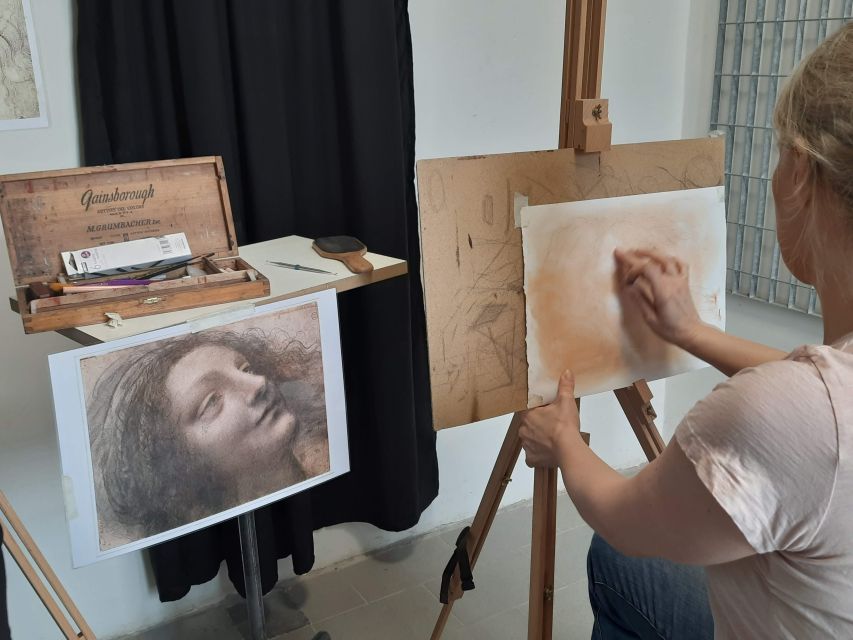
Leonardo on paper, not in a museum. In Florence, this short studio class at Geko Art Studio teaches you the sketching process behind Renaissance genius, right where you can try it with your own hands. You follow a guided workflow to reproduce one famous Leonardo study, using classic drawing materials.
I like two big things here. First, the hands-on focus: you work step by step with sanguine, sepia, and charcoal instead of watching from the sidelines. Second, you get context while you draw—historical and cultural info about the Renaissance and Leonardo, so the marks you make actually mean something.
One heads-up: the studio is a bit outside the tight center, and transport isn’t included, so plan for a walk or local transit to reach the glass door entrance at Geko Art Studio.
In This Review
- Key things that make this class worth your time
- Drawing Like Leonardo in Florence: What You’re Really Doing
- Your 3-Hour Lesson: From Materials to a Leonardo Sketch
- The materials part (where the technique clicks)
- The step-by-step workflow
- Historical and cultural context during your session
- Coffee break: small reset, included
- Studio Reality Check: Meeting Point and Practical Timing
- How you choose your time
- Location: walkable, but not exactly “right next to everything”
- What Private Group Really Means Here
- Price and Value: Is $182 Fair for 3 Hours?
- What you get for the money
- What you pay separately
- Who This Drawing Class Is Best For (and who may not love it)
- Best for you if…
- You might hesitate if…
- Tips to Get More Out of Your 3 Hours
- Should You Book Leonardo Drawings in Florence?
- FAQ
- How long is the Florence: Leonardo Drawings experience?
- What is the price per person?
- Where do I meet the instructor?
- What’s included in the class?
- Is prior drawing experience required?
- What drawing materials will we use?
- What languages are available for instruction?
- Is transportation to and from the studio included?
- Can I cancel for a refund?
Key things that make this class worth your time
- You draw, step by step: not a lecture, not a demo—your pencil does the work.
- Classic media, used correctly: sanguine/sepia tones plus charcoal techniques on paper.
- You reproduce a real Leonardo sketch: the goal is practical technique, not just an artistic souvenir.
- Private group format: you can move at your pace and ask questions while you work.
- Materials and coffee are included: easel, paper, tools, plus cookies, water, and juice to keep you going.
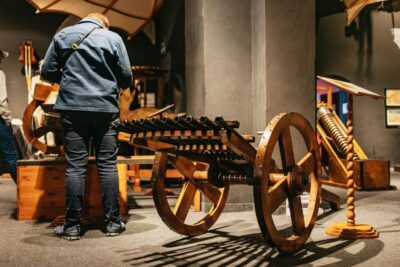
More Leonardo in Florence, if the machines drew you in
Drawing Like Leonardo in Florence: What You’re Really Doing
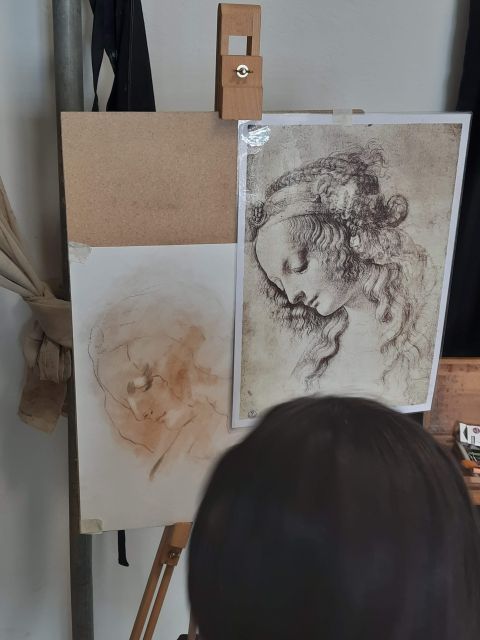
This experience is designed for one thing: getting you to understand how Leonardo thought with his hand. Yes, you’ll “make a drawing.” But the real value is that you practice the kind of problem-solving Renaissance artists used—how to build a form, control darks, and create texture with limited tools.
You start in a working studio setting, not a formal museum room. That difference matters. In a museum, you’re mostly observing. Here, you’re training your eye and your wrist. You learn how the materials behave—how sanguine can lay down structure, how sepia tones help you shape values, and how charcoal helps you push depth and contrast.
The class is also friendly for beginners. The instruction is step by step, and you don’t need previous drawing experience. That’s a big deal in Florence, where many “art experiences” assume you already know what you’re doing. You’ll still be challenged, but the challenge is guided.
Your 3-Hour Lesson: From Materials to a Leonardo Sketch
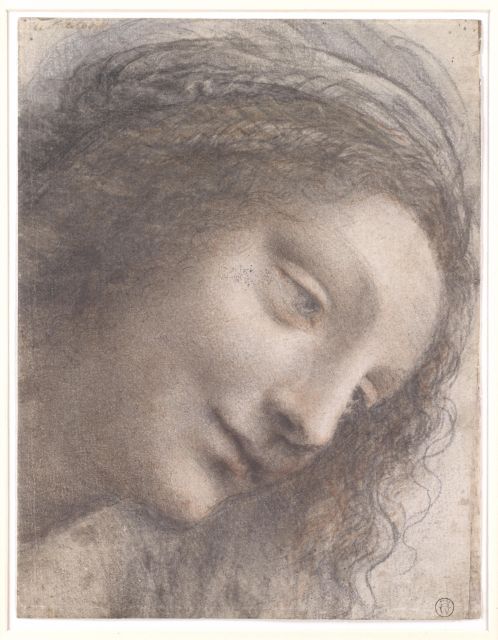
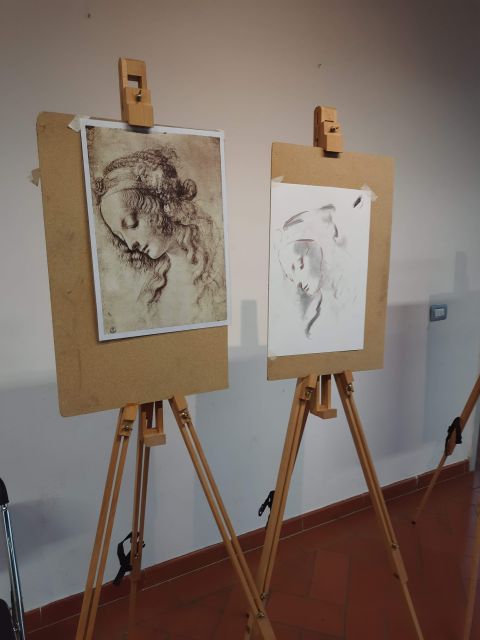
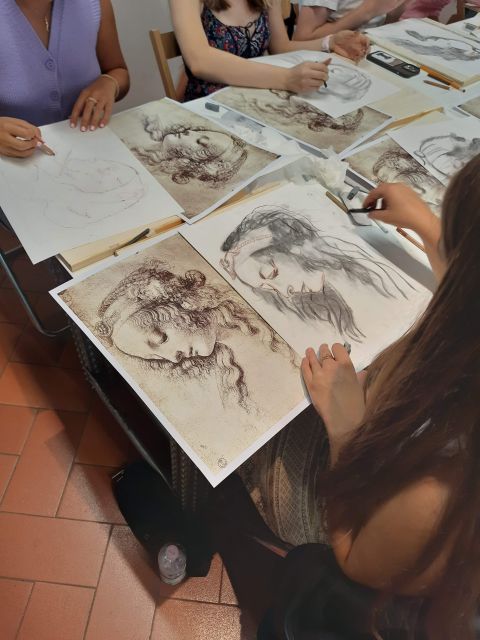
The structure is straightforward: three hours of guided drawing on paper, using traditional techniques. You’ll follow the process for reproducing one of Leonardo’s most famous sketches of the Tuscan genius, with teachers coaching each stage.
The materials part (where the technique clicks)
You’re provided with everything you need: an easel, paper supports, and the drawing tools, including sanguigne pencil, charcoal, and an eraser. That matters because you can focus on technique instead of hunting for supplies.
You’ll use these materials to reproduce the selected sketch, and the class specifically works through traditional steps with sanguine, sepia and charcoal. Even if you’ve never drawn with these before, the teachers explain how to use them so you get results rather than frustration.
The step-by-step workflow
You’ll work through the drawing process in stages—beginning with foundations and gradually building up the image with progressively intentional marks. The class highlights Leonardo’s approach to sketching: how he used line, tone, and shading to describe form.
The experience is not “copy it exactly and hope.” The guidance is meant to help you understand what to do next, based on what you’re seeing on your paper. If you’re a returning artist, you’ll likely appreciate that you’re correcting habits by working through a classic method. If you’re brand-new, you get a roadmap.
Historical and cultural context during your session
While you draw, teachers share historical and cultural information about the Renaissance and Leonardo da Vinci’s life. In practice, this turns the class from a skill workshop into something more memorable: you understand why the technique looks the way it does, and why Leonardo’s sketches were so influential.
The class aims to make you feel like you’re in Renaissance “work mode,” not just producing a flat imitation.
- The Best tour in Florence: Renaissance & Medici Tales – guided by a STORYTELLER
★ 5.0 · 12,316 reviews



Coffee break: small reset, included
Mid-session, you’ll have a coffee break with cookies, water, and juice. This is one of those included details that makes a short 3-hour experience feel comfortable. You can take a breather, stretch, and come back ready to finish the sketch.
Studio Reality Check: Meeting Point and Practical Timing
You meet at the glass door entrance of Geko Art Studio. That wording is helpful because studios can be easy to miss when you’re looking for a street number instead of a storefront-style door.
How you choose your time
After booking, as the date approaches, the office contacts you by WhatsApp or email to coordinate the schedule. You can normally choose time windows like 10:00–13:00, 14:00–17:00, and sometimes 17:30–20:30.
This flexibility is useful if you’re juggling museum times and dinner reservations. Just know the class times are agreed personally with the office, so don’t assume you’ll automatically get the exact slot you first imagined.
Location: walkable, but not exactly “right next to everything”
One practical note from the real-world experience of reaching the studio: it’s a bit outside the busiest center. That means you should budget walking time. Since transport to/from the atelier is not included, plan your route so you’re not rushing.
If you like to move on foot in Florence, it can be manageable. If you’re traveling with limited mobility or you simply hate last-minute directions, give yourself extra time and confirm the meeting spot on arrival.
What Private Group Really Means Here
This is a private group experience. That changes the tone. Instead of waiting your turn while the instructor works with someone else’s sketch, the guidance is more directly tied to what you’re doing in your drawing.
That’s especially valuable for charcoal and tonal work, where small technique differences can change your result quickly. In a beginner-friendly class, that kind of feedback can keep you from veering off track.
It’s also a good match if you want a calmer pace. Even with only a few people, a small studio setting can feel more welcoming and less performative. You’re learning, not presenting.
Price and Value: Is $182 Fair for 3 Hours?
At $182 per person for a 3-hour lesson, the price can look steep at first glance. But the value equation is clearer when you break down what’s included and what’s not.
What you get for the money
Included:
- Drawing materials (easel, paper support, pencil, sanguigne pencil, charcoal, eraser)
- Coffee break (cookies, water, juice)
- Guided instruction with historical and cultural context
- Private group setting
- An instructor who speaks English, Italian, or Spanish
When a class provides the tools and the materials, you’re saving time and money. It also means you’re learning with the right supplies for the method being taught, which is important for Renaissance-style sketching.
What you pay separately
Not included:
- Transport from/to the atelier
- Shipping cost (if you need anything shipped, which isn’t typical for a short class)
If you’re already planning a walking or transit route to the studio anyway, the “not included” portion is usually manageable. The biggest cost risk is if you plan to rely on taxi/ride-hailing because of timing or location—so consider that when budgeting.
Overall, this is the kind of class that earns its price if you want to come away with both a usable drawing and a real technique you can repeat later.
Who This Drawing Class Is Best For (and who may not love it)
Best for you if…
- You want a hands-on Florence activity that’s different from galleries and cathedral stops.
- You like practical instruction—learning by doing, with guidance as you go.
- You’re curious about Leonardo’s sketching methods and want to understand how the materials shape the final image.
- You’re a beginner who needs step-by-step structure, or an intermediate artist who wants to work through classic tools and methods.
You might hesitate if…
- You want something purely sightseeing-based with lots of wandering outdoors. This is a studio session, and the main action happens at your drawing table.
- You have limited tolerance for walking to a studio location outside the busiest area.
Tips to Get More Out of Your 3 Hours
You’ll get the best results if you treat the session like a skill-building workshop.
- Arrive a little early so you can settle in and get your bearings before the drawing begins.
- Don’t aim for perfection. The goal is learning how Leonardo-style sketching is built in layers.
- Pay attention to how the instructor explains material behavior. Charcoal and tonal pencils can feel different from what you may have used at school.
- Use the historical context as you draw. It makes the marks feel purposeful rather than random.
If you leave with one solid technique you can repeat—how to build contrast, or how to manage tones—you’ll feel like you got more than a one-time souvenir.
Should You Book Leonardo Drawings in Florence?
I think this is a smart booking if you want a memorable, creative activity that connects art history to actual technique. The class is structured for all skill levels, it’s hands-on from the start, and the materials are included—so you’re not guessing or improvising.
Skip it only if you’re looking for a mostly passive, view-from-a-seat experience. This is for people who enjoy working with pencil and paper and want the satisfaction of finishing something real.
If you’re in Florence for a short stay, this also works well because it’s only 3 hours. You can fit it between museums without wrecking your whole day.
FAQ
How long is the Florence: Leonardo Drawings experience?
It lasts 3 hours.
What is the price per person?
The price is $182 per person.
Where do I meet the instructor?
You meet at the glass door of Geko Art Studio.
What’s included in the class?
The experience includes materials for drawing (easel, paper, pencil, sanguigne pencil, charcoal, eraser) and a coffee break with cookies, water, and juice.
Is prior drawing experience required?
No. The class is suitable for all skill levels, and you do not need previous experience because teachers guide you step by step.
What drawing materials will we use?
You’ll draw on paper using sanguine, sepia, and charcoal, and you’ll be provided with the drawing tools to do so.
What languages are available for instruction?
The instructor offers English, Italian, and Spanish.
Is transportation to and from the studio included?
No, transport from/to the Atelier is not included.
Can I cancel for a refund?
Yes. You can cancel up to 24 hours in advance for a full refund.
More Florence Tours We Have Reviewed
- Florence: Skip-The-Line Uffizi Gallery Timed Entry Ticket
★ 4.5 · 27,832 reviews - Tuscany Day Trip from Florence: Siena, San Gimignano, Pisa and Lunch at a Winery
★ 5.0 · 21,634 reviews - Florence: Timed Entry to Michelangelo’s David + Audio App
★ 4.6 · 19,496 reviews - Florence: Leonardo Interactive Museum Entry Ticket
★ 4.5 · 12,957 reviews - Florence: Michelangelo’s David Skip-the-Line Entry Ticket
★ 4.5 · 12,764 reviews
More Leonardo, More Machines
- Florence: Leonardo Interactive Museum Entry Ticket
★ 4.5 · 12,957 reviews - Leonardo Da Vinci Museum Entrance Ticket
★ 4.5 · 1,458 reviews - Leonardo Interactive Museum® Entrance Ticket
★ 4.5 · 583 reviews - Florence: Visit the Leonardo Da Vinci Museum
★ 4.3 · 225 reviews - Renaissance Florence & the rivalry of Michelangelo and Leonardo
★ 5.0 · 40 reviews
Fresh from our Florence review desk
- Small-Group Pasta Cooking Class and Market Tour in Florence★ 5.0 · 3 reviews
- Palatina Gallery and Pitti Guided Tour in Florence★ 5.0 · 3 reviews
- Tuscan Evening Tour: Fiat 500, 8:30 to 10 PM★ 5.0 · 3 reviews
- Journey into Art: Florence’s Accademia★ 4.5 · 3 reviews
- Paint and Drink Florentine Hills★ 5.0 · 3 reviews
- Truffle hunting and lunch experience, with Vinci and winery.★ 4.5 · 3 reviews
Leonardo da Vinci Museum Tickets, compared.
 ★ 4.5Leonardo Interactive Museum Entry TicketFrom $512,957 reviews
 ★ 4.5Leonardo Da Vinci Museum Entrance TicketFrom $121,458 reviews
 ★ 4.5Leonardo Interactive Museum® Entrance TicketFrom $11583 reviews
 ★ 4.3Visit the Leonardo Da Vinci MuseumFrom $11225 reviews
 ★ 5.0Renaissance Florence & the rivalry of Michelangelo and LeonardoFrom $3140 reviews
 ★ 5.0Florence – Express Uffizi Gallery and Leonardo da Vinci MuseumFrom $14432 reviews
 ★ 5.0Kid-Friendly Uffizi Museum Tour in Florence with Botticelli & Leonardo WorksFrom $27521 reviews
 ★ 5.0Leonardo da Vinci Guided Walking Tour with MuseumFrom $20615 reviews
Browse the lists this tour appears in