
Florence gets magical at 5 pm. I love how this short walk stitches together major landmarks with the quieter stories between them, so you leave with a clearer feel for the city. The stop at the wine window is a fun, authentic payoff at the end.
I really like the pace: about 2 hours with around 15 minutes per stop, and a small group capped at 10 travelers, so you can actually ask questions. I also appreciate the practical format with a mobile ticket and an English-speaking guide.
One thing to plan for: this is mostly an exterior walk, and admission tickets are not included for most sites. If you want to go inside big-ticket places, you’ll likely need to add tickets on your own (or do it later).
In This Review
- Key things that make this tour worth your time
- A smart 5 pm plan: Renaissance sites without a full-day slog
- Piazza di San Lorenzo: start in the Medici’s old neighborhood
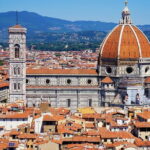
- Duomo area in a nutshell: dome symbol, Baptistery doors, and Giotto’s view
- Torre della Castagna and the Dante zone: medieval Florence, street level
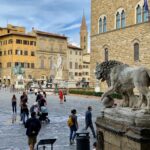
- Palazzo Vecchio and Piazza della Signoria: where power played out
- Ponte Vecchio: the bridge shops and the Medici secret passage
- Gallerie degli Uffizi (outside): Vasari, Medici, and why it started as offices
- Santa Croce square: Gothic façade from outside and famous tombs below
- Piazza San Firenze wine window: one glass, a real tradition
- Price and value: what $83.40 gets you (and what it doesn’t)
- Who should book this walking tour
- Should you book? My practical take
- FAQ
- How long is the Florence walking tour?
- What time does it start, and where do I meet?
- Is the tour offered in English?
- What is included in the price?
- Are admission tickets included for the cathedral and other sights?
- What if weather is bad?
Key things that make this tour worth your time
- Wine window pour included at Piazza San Firenze, with one glass of Tuscan wine
- Tight 2-hour route from San Lorenzo to Ponte Vecchio, with about 15 minutes per stop
- Small group size (max 10) for a smoother pace and easier conversation
- Renaissance + Dante + Medici in one sequence of streets and squares
- Outside-first sightseeing that focuses on context rather than long museum lines
- Free stops like Ponte Vecchio and Piazza Santa Croce, so you’re not paying for every photo angle
Deeper into Medici Florence and its Renaissance
A smart 5 pm plan: Renaissance sites without a full-day slog
Florence can eat your whole day fast—tickets, lines, and decision fatigue. This tour is built as a compact evening sweep, starting at 5:00 pm and running for about 2 hours, which makes it ideal if you want the highlights but still want time for dinner after.
You’ll start at Piazza di San Lorenzo (Piazza San Lorenzo, 7) and finish at Ponte Vecchio. Along the way, the route is practical: it moves from one iconic square to the next, then threads into medieval-feeling streets before returning to the big civic and artistic centers of Florence.
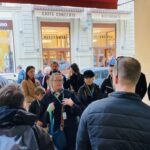
Also, the tour is offered in English, and it’s capped at 10 travelers. That small-group feel matters here, because you’re listening while walking—if the group is huge, you end up looking at backs instead of landmarks.
Piazza di San Lorenzo: start in the Medici’s old neighborhood
You meet in Piazza San Lorenzo, one of Florence’s older areas. This is a good opening because it frames the city’s power story right away: the Basilica of San Lorenzo connects to the Medici family, and its unfinished façade is the kind of detail you might miss if you’re just speed-walking.
The guide points out the church’s connection to Filippo Brunelleschi, a key figure in Renaissance architecture. That matters because Florence isn’t one style; it’s a turning point. Starting here helps you notice how Renaissance ideas grew out of earlier religious and political life.
Practical note: this stop is around 15 minutes, and admission isn’t included. So think of it as a “get the setting” moment, not a deep church visit.
Duomo area in a nutshell: dome symbol, Baptistery doors, and Giotto’s view
Next you move to the heart of the city: the Duomo (Cattedrale di Santa Maria del Fiore) area. Even if you never climb anything, you’re standing in the Florence most people picture—because the cathedral’s dome is basically the city’s visual signature.
You’ll also see the Baptistery of San Giovanni, including the bronze doors famously associated with Michelangelo’s idea of the Gate of Paradise. Even when you’re just viewing from the square, it helps to understand why these doors became a benchmark for Florentine artistic ambition.
Then there’s Giotto’s Bell Tower, richly decorated with colorful marble and known for one of the best panoramic views over the city. The key point for your planning: this walk gets you oriented to the main architecture, but you don’t automatically get entry or timed access. Admission tickets are not included, so if you’re hoping to go up, you’ll want to arrange that separately.
Torre della Castagna and the Dante zone: medieval Florence, street level
After the big Renaissance centers, the tour shifts into something more atmospheric: the area tied to Torre della Castagna and the medieval quarter. This is where you slow your pace mentally, because the narrow streets, stone towers, and tucked-away courtyards feel like a different century.
One of the best parts here is how the guide connects Florence to Dante Alighieri. You’ll hear about Dante’s life and especially the Florence he knew—plus you’ll walk through the neighborhood tradition links to his upbringing.
You’ll also see:
- Dante’s House (exterior)
- The Church of Santa Margherita, where tradition says he met Beatrice
- Medieval buildings, towers, and small piazzas that still survive as physical reminders of the 1200s
This stop is only about 15 minutes, so don’t treat it like a full Dante museum experience. Instead, use it as a mental bookmark: if you later read Dante or watch films inspired by his world, this walk gives you street-level context.
Palazzo Vecchio and Piazza della Signoria: where power played out
From medieval lanes, you pop back into Florence’s political spotlight at Piazza della Signoria, home to Palazzo Vecchio. This square has been Florence’s political heart for centuries, so it’s a natural place to understand the Medici story beyond churches and art.
At the center is Palazzo Vecchio, Florence’s historic town hall and once the residence of Cosimo I de’ Medici. The guide adds the human layer—power shifts, betrayals, and the way art and politics often shared the same stage.
You’ll also notice major sculptural landmarks:
- A replica of Michelangelo’s David (where the original once stood)
- The Loggia dei Lanzi, an open-air gallery of Renaissance masterpieces
The value here is interpretation. Seeing the buildings is great, but the real payoff is learning how the square worked as a public stage—where decisions weren’t abstract, they were performed in plain sight. Admission isn’t included, and your time here is short, so you’ll mainly take in the layout and the key pieces from the outside.
Stretch your legs on more Florence walking tours


Ponte Vecchio: the bridge shops and the Medici secret passage
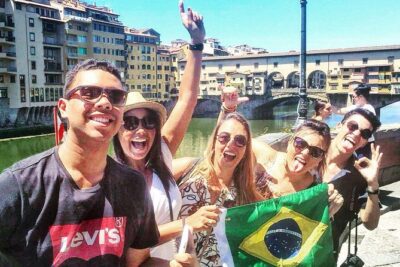
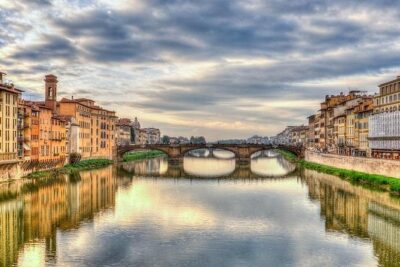
Then you reach Ponte Vecchio, Florence’s most iconic bridge. It’s called romantic for a reason, but what I like about it is how packed it is with history and craft.
This bridge dates to the 14th century, and it’s notable for surviving through major conflict—making it the only bridge in Florence to endure the destruction of World War II. You’ll also see the signature shopfronts: goldsmiths and jewelers have long lined both sides, turning the bridge into a living marketplace rather than a dead monument.
As you cross, the guide shares stories that make the area feel like a plot, not a postcard. You’ll also hear about the Vasari Corridor, an elevated passage built for the Medici so they could move between palaces without being seen. Even if you never go inside, it changes how you look at the city’s buildings and sightlines.
This stop is about 15 minutes, and it’s listed as free for the walking portion. So you get a big emotional hit without extra cost.
Gallerie degli Uffizi (outside): Vasari, Medici, and why it started as offices
Next comes the Gallerie degli Uffizi area. The best part: you don’t need museum tickets to get value. Even from outside and around the main approaches, you see how the Medici organized power—administration first, art later.
You’ll learn the building was commissioned by Cosimo I de’ Medici and designed by Giorgio Vasari in the 16th century. The building’s original purpose was more practical than people expect: it was intended to house city offices, and the name Uffizi basically means offices.
So your takeaway here is a shift in mindset. Florence wasn’t only painters and sculptors. It was paperwork, planning, and governance—then those systems later fed the rise of one of the world’s best-known art museums.
Your time is around 15 minutes and admission isn’t included, so treat it as a guided exterior and courtyard orientation. If you’re already museum-minded, you can use what you learn here to decide later whether you want the inside experience.
Santa Croce square: Gothic façade from outside and famous tombs below
You finish this main stretch at Piazza Santa Croce, where the atmosphere often feels more local than museum. In the middle stands the Basilica of Santa Croce, known as the “Temple of the Italian Glories” because it’s the burial place of major figures like Michelangelo, Galileo, and Machiavelli.
The tour focuses on seeing the Gothic façade from the outside while the guide explains why this church mattered to Florence’s identity. Even without entering, you get a strong sense of how the city honored thinkers and artists—because in Florence, ideas weren’t kept in libraries only. They were placed into public memory.
This stop is free in terms of admission needs on the tour, and the square itself is often lively. Expect street performers and a hint of everyday market energy as you look around and absorb the space. Your stop is short at about 15 minutes, so it works best as a “landmark and meaning” moment, not a long contemplative visit.
Piazza San Firenze wine window: one glass, a real tradition
Finally, you wrap with the most hands-on cultural moment: Piazza San Firenze and the wine window. This is included in the price, and you’ll enjoy a glass of authentic Tuscan wine served from one of Florence’s famous small historic openings in building walls.
The tradition is simple but charming: merchants could sell wine directly to passersby through these windows. Modern tourism often turns wine into a generic tasting. Here, it’s tied to the city’s street life and how commerce worked day-to-day.
This stop is about 15 minutes, and it’s the only clearly marked included item besides the tour itself. If you’re planning your evening, I’d think of it as your natural transition from sightseeing to relaxing.
Price and value: what $83.40 gets you (and what it doesn’t)
At $83.40 per person for about 2 hours, you’re paying for a guided route that strings together Florence’s biggest stories in the time most visitors can spare. You’re also getting one glass of Tuscan wine included, plus a small group format that makes listening easier.
What you’re not paying for is admission into major sites. Several stops explicitly note that tickets are not included. That doesn’t make the tour less useful—it changes the value. You’ll spend your time learning how to see: architecture, symbolism, and political context, instead of standing in ticket lines.
If you want full “inside access” (climbs, galleries, and long museum hours), you can still do that. Just don’t expect this walk to replace those larger-ticket experiences. It’s best viewed as your guided orientation that makes later visits richer.
Who should book this walking tour
This is a strong fit if you:
- Want Florence highlights without committing to a full museum day
- Prefer guided storytelling over solo wandering
- Like the mix of Renaissance design and older medieval streets connected to Dante
- Can appreciate short stops that focus on key meaning, not deep ticketed entry
It also tends to suit people traveling with mixed interests—architecture fans get Brunelleschi and Giotto, history fans get Medici and civic power, and everyone gets the tactile payoff of the wine window.
You might choose another option if you’re set on spending long hours inside major sights, because most of what you’ll experience here is exterior-focused and time-boxed to about 15 minutes per stop.
Should you book? My practical take
If your goal is to understand Florence fast—its Renaissance ideas, its power centers, and its Dante-linked streets—this tour is a smart use of an evening. The small group size and the included wine window glass give it that feel-good local finish without ballooning your schedule.
I’d book it if you’re planning to do a few bigger ticket attractions later or if you simply want a guided “map in your head.” If you already know you’ll want to enter multiple major sites during the same day, you may want to pair this with separate tickets so you don’t feel rushed.
FAQ
How long is the Florence walking tour?
It lasts about 2 hours.
What time does it start, and where do I meet?
It starts at 5:00 pm, and the meeting point is Piazza di San Lorenzo, 7, 50123 Firenze FI, Italy.
Is the tour offered in English?
Yes, it’s offered in English.
What is included in the price?
The price includes one glass of wine (soda/pop 1 glass of wine).
Are admission tickets included for the cathedral and other sights?
No. Admission tickets are not included for most stops. Ponte Vecchio is listed as free, and Santa Croce is also listed as free.
What if weather is bad?
The tour requires good weather. If it’s canceled due to poor weather, you’ll be offered a different date or a full refund.
More Florence Tours to Weigh Up
- The Best tour in Florence: Renaissance & Medici Tales – guided by a STORYTELLER
★ 5.0 · 12,316 reviews - The Best Tour in Florence: Renaissance and Medici Tales
★ 5.0 · 10,810 reviews - Florence: Chianti Wineries Tour with Wine Tasting
★ 4.5 · 10,071 reviews - Florence: Duomo Cathedral 60-Minute Guided Tour
★ 3.7 · 6,829 reviews - Florence: Hop-on Hop-off Bus Tour: 24, 48 or 72-Hour Ticket
★ 4.0 · 6,283 reviews
More Florence Tours We Have Reviewed
- Florence: Skip-The-Line Uffizi Gallery Timed Entry Ticket
★ 4.5 · 27,832 reviews - Tuscany Day Trip from Florence: Siena, San Gimignano, Pisa and Lunch at a Winery
★ 5.0 · 21,634 reviews - Florence: Timed Entry to Michelangelo’s David + Audio App
★ 4.6 · 19,496 reviews - Florence: Leonardo Interactive Museum Entry Ticket
★ 4.5 · 12,957 reviews - Florence: Michelangelo’s David Skip-the-Line Entry Ticket
★ 4.5 · 12,764 reviews
The Medici Story Continues
- The Best tour in Florence: Renaissance & Medici Tales – guided by a STORYTELLER
★ 5.0 · 12,316 reviews - The Best Tour in Florence: Renaissance and Medici Tales
★ 5.0 · 10,810 reviews - Uffizi Gallery: Renaissance Masterpieces Guided Tour
★ 4.6 · 6,070 reviews - Florence: Renaissance and Medici Tales Guided Walking Tour
★ 4.8 · 1,549 reviews - Guided Medici Tour Florence: Discover Mysteries & History
★ 4.3 · 1,077 reviews
Fresh from our Florence review desk
- Small-Group Pasta Cooking Class and Market Tour in Florence★ 5.0 · 3 reviews
- Palatina Gallery and Pitti Guided Tour in Florence★ 5.0 · 3 reviews
- Tuscan Evening Tour: Fiat 500, 8:30 to 10 PM★ 5.0 · 3 reviews
- Journey into Art: Florence’s Accademia★ 4.5 · 3 reviews
- Paint and Drink Florentine Hills★ 5.0 · 3 reviews
- Truffle hunting and lunch experience, with Vinci and winery.★ 4.5 · 3 reviews
Medici & Renaissance Tours, compared.
 ★ 5.0The Best tour in Florence: Renaissance & Medici Tales – guided by a STORYTELLERFrom $312,316 reviews
 ★ 5.0The Best Tour in Florence: Renaissance and Medici TalesFrom $310,810 reviews
 ★ 4.6Uffizi Gallery: Renaissance Masterpieces Guided TourFrom $886,070 reviews
 ★ 4.8Renaissance and Medici Tales Guided Walking TourFrom $21,549 reviews
 ★ 4.3Guided Medici Tour Florence: Discover Mysteries & HistoryFrom $571,077 reviews
 ★ 4.0Accademia Gallery: Michelangelo’s David and High Renaissance ArtFrom $43872 reviews
 ★ 4.7Guided Tour of Medici Family Secrets and ChapelsFrom $93512 reviews
 ★ 5.0Florence Private Tour: Renaissance, Famous Families & Hidden GemsFrom $199233 reviews
Browse the lists this tour appears in