
Reviewed · WALKING TOURS
Florence Walking Tour – Hidden Gems
Florence becomes readable on this walk. This two-hour route ties together major Renaissance sights with quick context, so you leave with a map in your head and not just photos. I especially like the eco-friendly pace: you’re on foot, not stuck idling in traffic.
I love the small-group size (max 20), which keeps the conversation real and questions possible. I also love the radio system, so your guide’s voice stays clear even when the crowd noise rises near the big-name landmarks.
One possible drawback: the stop rhythm is tight, with about 10 minutes per location. If you want extra time for photos or to linger, you’ll need to ask your guide early and be ready to come back later for deeper exploring.
In This Review
- Key highlights to expect
- Why this Florence walking route works (and who it’s for)
- The price: what you’re really paying for
- Where the tour starts (and how the route feels)
- Stop-by-stop: what you’ll see and why it matters
- Cappelle Medicee: Medici power in stone
- Mercato Centrale: Tuscan flavors and street-level reality
- Santa Maria del Fiore: the Duomo and Brunelleschi’s big idea
- Piazza della Repubblica: a historic square with café energy
- Piazza della Signoria: Florence’s outdoor “politics museum”
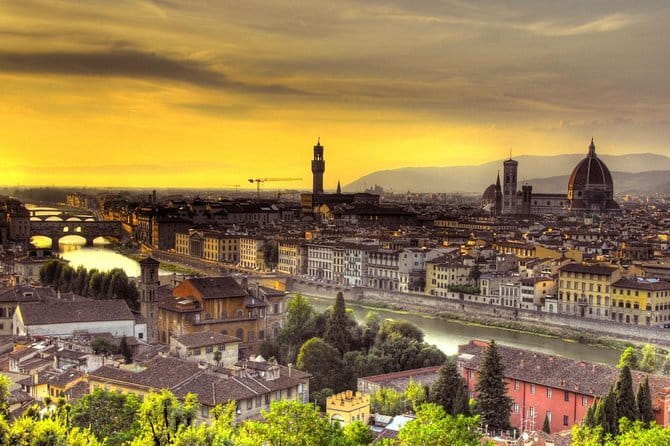
- Ponte Vecchio: the Arno view you’ll remember
- Oltrarno: artisan streets and a more local rhythm
- Palazzo Pitti: a grand Medici chapter
- Santo Spirito: a favorite local gathering spot
- Ponte Santa Trinita: refined bridge lines and river panoramas
- Via de’ Tornabuoni: fashion street meets historic palaces
- The included extras: Fiesole and the Roman Theatre
- Small-group comfort and guide quality (the real difference)
- A realistic timing note: 10 minutes per stop
- Tips to get more out of the walk
- Should you book this Florence walking tour?
- FAQ
- How long is the Florence walking tour?
- How many people are in the group?
- Is the tour offered in English?
- Where do we meet for the tour?
- What’s included with the tour price?
- Are food and drinks included?
- Do I need entrance tickets for everything?
- Is the tour suitable for people with limited mobility?
- What happens if the weather is bad?
- Can I cancel for a refund?
Key highlights to expect
- Small group, radio support: capped at 20 and you’ll hear the guide clearly.
- A fast Florence orientation: great for first-timers who want the big picture quickly.
- Medici-to-Duomo to-Arno flow: the route follows the city’s story in a sensible order.
- Classic bridge-and-square stops: Ponte Vecchio, Piazza della Signoria, and Duomo area views.
- Oltrarno with local energy: you’ll spend time in a neighborhood known for artisan life.
- Included admissions for two attractions: Fiesole and the Roman Theatre are part of the value.
Stretch your legs on more Florence walking tours
Why this Florence walking route works (and who it’s for)
Florence can feel like a greatest-hits playlist. This tour earns its keep by turning those famous spots into a coherent walk, with a guide who connects the dots instead of listing dates like a textbook. You get a structured loop that’s ideal when you have limited time but still want the city to make sense.
It’s also built for real life: the route is short (about two hours), the group stays small, and the radio system helps you keep up without craning your neck for every sentence. If you’re traveling solo, with a partner, or with mixed interests, this kind of pacing is usually a win. I’d especially like it for first-time Florence visitors, and for anyone who doesn’t want to spend their day zigzagging between landmarks.
The tour is also a good “day one” move. You’ll see the places you’ll likely want to return to, and you’ll learn what to prioritize so you don’t waste your best walking hours later.
The price: what you’re really paying for
At $66.37 per person for about two hours, the price might look like a lot until you break down what’s included. You’re paying for a certified guide, radio system, small-group attention, and the kind of navigation help that saves time and energy. You’re not just buying someone’s time—you’re buying a curated walking order and the ability to ask questions on the spot.
On top of that, admissions to Fiesole and the Roman Theatre are included. Even if you don’t think you’ll care about those details right now, that’s value you’d otherwise budget for. And if you’re the type who likes to get your money’s worth, this tour is built around doing a lot in a short, manageable chunk of time.
If you want to be strategic, book early. The average booking time is around 54 days in advance, which signals this one fills up in busy periods.
Where the tour starts (and how the route feels)
The meeting point is Piazza di Madonna degli Aldobrandini (50123 Firenze). The tour ends back at the same spot, which is convenient if you’re planning a restaurant reservation or a timed ticket later.
The flow is designed so you’re constantly moving between squares, streets, and key waterfront perspectives. Even though there are many well-known names, you’re not stuck doing one “overcrowded stop” after another for long stretches. The brief stop windows keep things lively, and the guide uses the short time to give context you can’t get from a quick street-level glance.
Also note: this is best with moderate physical fitness. It’s a walking tour, and while it’s not described as long-distance hiking, you should expect some steady walking and standing.
Stop-by-stop: what you’ll see and why it matters
Cappelle Medicee: Medici power in stone
You’ll start at Cappelle Medicee, the monumental mausoleum of the Medici family. This is a great opening stop because it sets up the big theme of Florence: art as politics. The site is strongly tied to Renaissance patronage, including works associated with Michelangelo.
Practical tip: since the stop is short (about 10 minutes), don’t try to read everything. Instead, use the time to identify what the building represents—Medici status, Renaissance ambition, and the way they used art to claim permanence.
- The Best tour in Florence: Renaissance & Medici Tales – guided by a STORYTELLER
★ 5.0 · 12,316 reviews


Mercato Centrale: Tuscan flavors and street-level reality
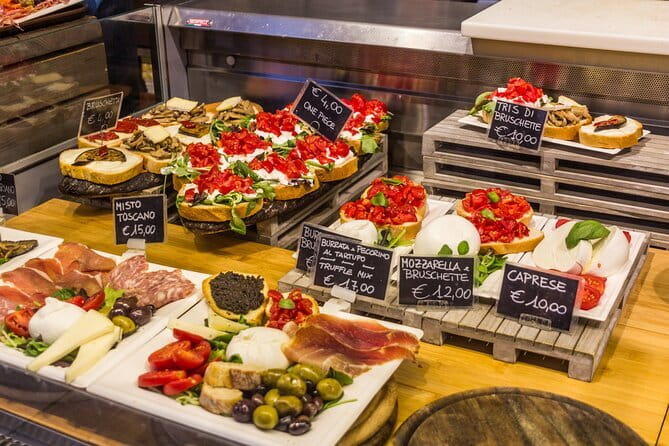
Next is Mercato Centrale, a historic market where colors, aromas, and food culture take over the street. Even if you don’t buy anything, it’s one of the fastest ways to feel what “Florentine food traditions” means in real life.
Practical tip: come hungry in spirit. If you’re planning dinner later, you can still use this stop to spot what you want to eat when you’re off the tour—cheese tastes, cured meats, or simple sweets.
Santa Maria del Fiore: the Duomo and Brunelleschi’s big idea
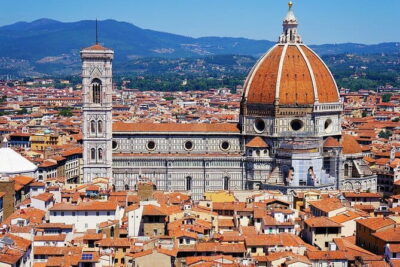
Then you reach the Cathedral area: Santa Maria del Fiore. This is where Florence announces itself—Brunelleschi’s Dome is basically the city’s calling card, and the cathedral complex anchors your mental map of the center.
Practical tip: if the light is right, the dome looks better from a small shift in position than from pure head-on framing. Use your guide’s cue points, then take a couple of quick angles so you don’t waste time chasing the perfect shot.
Piazza della Repubblica: a historic square with café energy
Piazza della Repubblica is elegant and open, ringed by grand architecture and classic café culture. This stop is useful because it shows how Roman Florence’s heartbeat echoes into today’s social life.
Practical tip: this is a good moment to pause and look around. The square helps you see how the Renaissance city connects to older layers without needing a lecture.
Piazza della Signoria: Florence’s outdoor “politics museum”
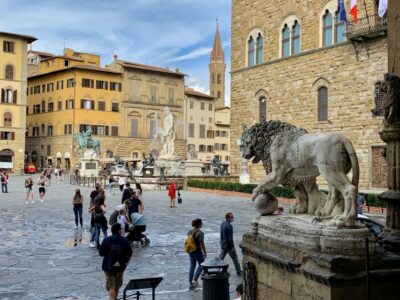
Piazza della Signoria is an open-air museum and a political center. It’s dominated by Palazzo Vecchio, with iconic statues that help explain why this city loved public art—art as signaling, art as storytelling, art as power.
Practical tip: don’t rush this. Even in 10 minutes, you can get a lot if you focus on two things: the building’s role and the statues’ presence as symbols. The guide’s context will make the stones feel less random.
Ponte Vecchio: the Arno view you’ll remember
Ponte Vecchio is Florence’s most famous bridge and a magnet for good reason: historic shops along the span and strong views over the Arno River. It’s the kind of location where even short stops deliver real payoff.
Practical tip: take your photos with the river in mind, not just the shops. The guide will help you position yourself so you get both the charm and the perspective.
Oltrarno: artisan streets and a more local rhythm
Oltrarno is where the tour turns from postcard Florence into neighborhood Florence. It’s known for artisan workshops, local traditions, and a lively street atmosphere that feels less like a stage and more like a daily place.
Practical tip: this is where you’ll likely start noticing details—workshop storefronts, craft cues, and everyday life. Keep your eyes open for what looks handmade, and ask your guide what’s worth seeking when you return on your own.
Palazzo Pitti: a grand Medici chapter
Palazzo Pitti is next, a major Renaissance palace that once belonged to the Medici and represents Florence’s ducal past. Even if you just see it from the outside, it signals how big the city’s ambitions were—and how power lived behind stone walls.
Practical tip: treat this as context for the Medici story you started earlier. If you connect Cappelle Medicee to Palazzo Pitti in your mind, Florence’s Renaissance arc clicks faster.
Santo Spirito: a favorite local gathering spot
Santo Spirito brings you to a lively square and basilica in the heart of Oltrarno. This stop is valuable because it slows things down emotionally. It’s less about monuments and more about how people actually use the space.
Practical tip: take 30 seconds to watch how the square works—people moving, pausing, and meeting. That’s often the difference between seeing Florence and understanding it.
Ponte Santa Trinita: refined bridge lines and river panoramas
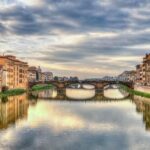
Then you cross Ponte Santa Trinita, known for its elegant Renaissance design and panoramic views over the river. This is a classic “look up, then look outward” stop.
Practical tip: if crowds are thick, step back from the most photo-packed spots. You’ll still get a good view, and you’ll feel less rushed.
Via de’ Tornabuoni: fashion street meets historic palaces
Finally, Via de’ Tornabuoni, Florence’s luxury fashion street. It’s lined with historic palaces and high-end Italian boutiques—so you get a contrast between the city’s Renaissance grandeur and modern style.
Practical tip: you don’t have to shop. Use this segment to understand the street’s role and to notice how the architecture supports commerce here.
The included extras: Fiesole and the Roman Theatre
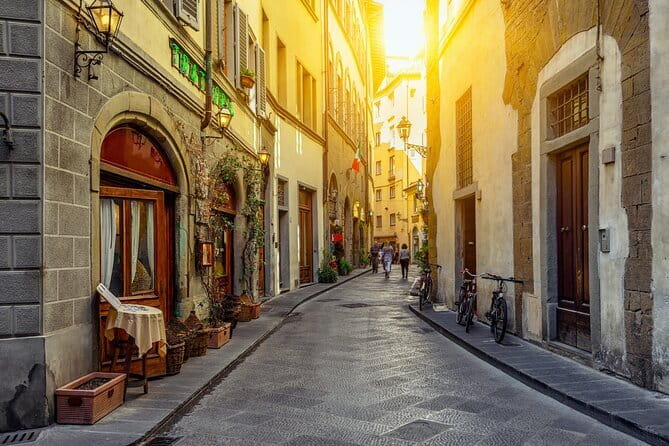
One of the biggest value signals in this tour is that admission to Fiesole and the Roman Theatre is included. Even if your day is mostly in central Florence, these additions broaden your sense of what the region offered—Rome-era culture in one direction and a hilltop perspective in another.
Because the exact stop timing isn’t laid out in the short landmark sequence, think of these as the bonus that lifts the tour beyond a simple city-walk. If you love architectural variety, or if you want a break from only walking through the same style of stone façades, these two included experiences are worth paying attention to.
Small-group comfort and guide quality (the real difference)
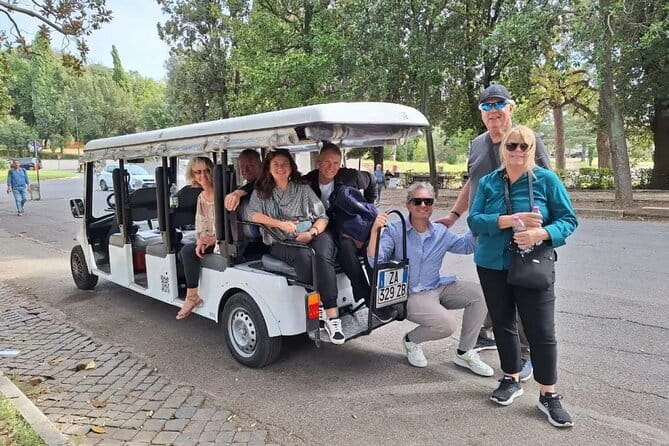
This tour keeps things tight with a maximum of 20 people, and the radio system helps you follow along without constantly turning your head. That’s not just convenience. It keeps your brain engaged. You can actually connect place to story.
Guide names you might encounter include Sebastian, Aldo, Olga, Luca, Vanessa, Ben, and others mentioned in guide feedback. The common thread is energy and the ability to answer questions while steering the group through Florence’s shifting pedestrian flow.
One thing to keep in mind: if English clarity is a concern for you, the radio system will help, but you may still want to ask questions in short phrases so the guide can respond directly.
A realistic timing note: 10 minutes per stop
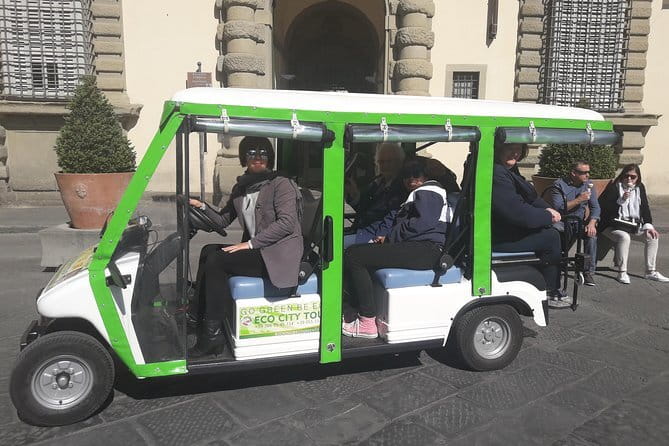
Each major stop is designed for a quick hit: enough time to see, enough time to learn, not enough time to linger. That’s great when you’re juggling limited time. It can be frustrating if you’re the type who likes to stand still for 20 minutes and slowly absorb every corner.
My advice: decide ahead of time what matters most to you. If it’s Ponte Vecchio views, spend your extra time there. If it’s the Duomo area, protect your minutes early. You can also ask for stops on request—so don’t be shy about telling your guide what you want to prioritize.
Tips to get more out of the walk
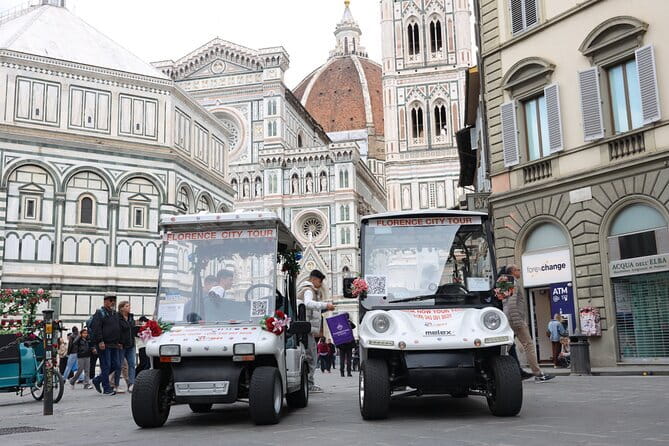
- Wear shoes that handle uneven stone and lots of standing.
- Bring water, since stops are short and you don’t have much built-in downtime.
- If you care about interiors, plan to return later. This tour is structured around the sights and context.
- Use the radio system to your advantage: stand where you can hear without straining.
- If shopping stops feel like a time trap to you, set the tone with your guide early that your priority is photos and streetscapes.
Should you book this Florence walking tour?
Book it if you want an efficient Florence orientation, especially on a first visit or when your schedule is tight. The small group size, radio system, and the inclusion of Fiesole and the Roman Theatre make it a strong value for the time you’ll spend.
Skip it (or pair it with your own planning) if you want long, slow museum-style time at each landmark. This isn’t that format. It’s a smart overview that helps you decide what to chase next.
If your goal is to get your bearings fast and leave with a clearer sense of Florence’s Renaissance story, this tour is the kind of ticket that pays you back immediately.
FAQ
How long is the Florence walking tour?
It runs for about 2 hours.
How many people are in the group?
The tour has a maximum of 20 travelers.
Is the tour offered in English?
Yes, it’s offered in English.
Where do we meet for the tour?
The start point is Piazza di Madonna degli Aldobrandini, 50123 Firenze FI, Italy, and the tour ends back at the meeting point.
What’s included with the tour price?
A certified guide, a radio system to hear clearly, personalized tips, and admissions to Fiesole and the Roman Theatre are included. The guide also provides tour customization and can include stops on request.
Are food and drinks included?
No. Food and drinks are not included.
Do I need entrance tickets for everything?
Entrance tickets aren’t generally included, but admission to Fiesole and the Roman Theatre is included. For anything else, you may need to purchase entrance tickets separately, with help from the team.
Is the tour suitable for people with limited mobility?
It’s not recommended for visitors with reduced mobility. It does require moderate physical fitness.
What happens if the weather is bad?
This experience requires good weather. If it’s canceled due to poor weather, you’ll be offered a different date or a full refund.
Can I cancel for a refund?
Yes. Free cancellation is available if you cancel up to 24 hours in advance for a full refund.
More Florence Walks
- Florence: Highlights Walking Tour with Expert Guide
★ 4.6 · 4,662 reviews - Uffizi & Accademia Timed Entry: Small Group Duomo Walking Tour
★ 4.5 · 3,630 reviews - Florence: Duomo Complex with Tickets & City Walk Guided Tour
★ 4.7 · 2,057 reviews - Florence: Guided Walking Tour
★ 4.6 · 1,602 reviews - Florence: Renaissance and Medici Tales Guided Walking Tour
★ 4.8 · 1,549 reviews
More Florence Tours to Weigh Up
- The Best tour in Florence: Renaissance & Medici Tales – guided by a STORYTELLER
★ 5.0 · 12,316 reviews - The Best Tour in Florence: Renaissance and Medici Tales
★ 5.0 · 10,810 reviews - Florence: Chianti Wineries Tour with Wine Tasting
★ 4.5 · 10,071 reviews - Florence: Duomo Cathedral 60-Minute Guided Tour
★ 3.7 · 6,829 reviews - Florence: Hop-on Hop-off Bus Tour: 24, 48 or 72-Hour Ticket
★ 4.0 · 6,283 reviews
More Florence Tours We Have Reviewed
- Florence: Skip-The-Line Uffizi Gallery Timed Entry Ticket
★ 4.5 · 27,832 reviews - Tuscany Day Trip from Florence: Siena, San Gimignano, Pisa and Lunch at a Winery
★ 5.0 · 21,634 reviews - Florence: Timed Entry to Michelangelo’s David + Audio App
★ 4.6 · 19,496 reviews - Florence: Leonardo Interactive Museum Entry Ticket
★ 4.5 · 12,957 reviews - Florence: Michelangelo’s David Skip-the-Line Entry Ticket
★ 4.5 · 12,764 reviews
Fresh from our Florence review desk
- Small-Group Pasta Cooking Class and Market Tour in Florence★ 5.0 · 3 reviews
- Palatina Gallery and Pitti Guided Tour in Florence★ 5.0 · 3 reviews
- Tuscan Evening Tour: Fiat 500, 8:30 to 10 PM★ 5.0 · 3 reviews
- Journey into Art: Florence’s Accademia★ 4.5 · 3 reviews
- Paint and Drink Florentine Hills★ 5.0 · 3 reviews
- Truffle hunting and lunch experience, with Vinci and winery.★ 4.5 · 3 reviews
Walking Tours, compared.
 ★ 4.6Highlights Walking Tour with Expert GuideFrom $274,662 reviews
 ★ 4.5Uffizi & Accademia Timed Entry: Small Group Duomo Walking TourFrom $503,630 reviews
 ★ 4.7Duomo Complex with Tickets & City Walk Guided TourFrom $932,057 reviews
 ★ 4.6Guided Walking TourFrom $271,602 reviews
 ★ 4.8Renaissance and Medici Tales Guided Walking TourFrom $21,549 reviews
 ★ 4.7Uffizi & Accademia Small Group Walking TourFrom $1481,380 reviews
 ★ 5.0Skip-the-Line Florence Highlights and David Walking TourFrom $1171,127 reviews
 ★ 4.6Dark Mysteries and Legends Guided Walking TourFrom $21,081 reviews
Browse the lists this tour appears in