
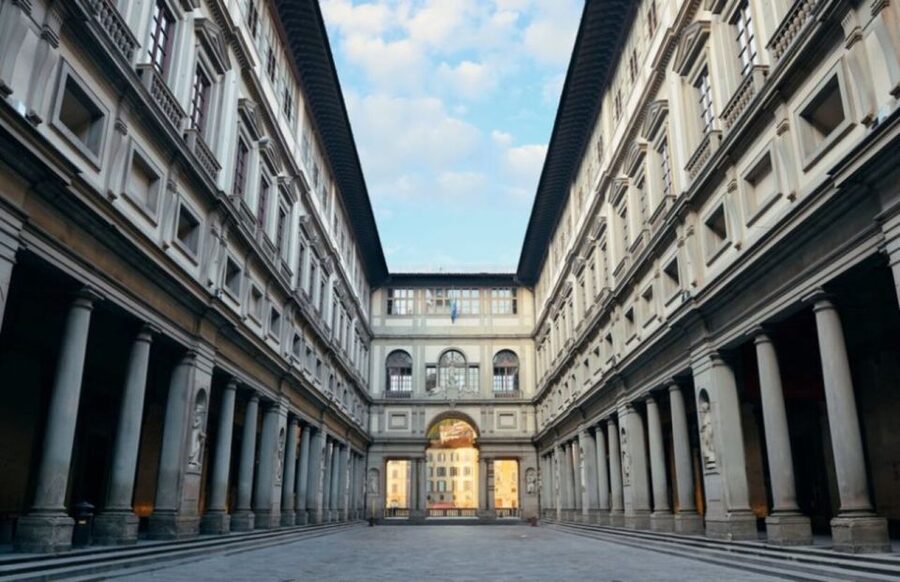
Reviewed · WALKING TOURS
Florence: Walking Tour of Dante’s Florence with a Guide
Dante’s Florence is a walking time machine. This tour turns the streets around Duomo Square into a guided story of poet Dante Alighieri and the medieval city he called Fiorenza, with a clear link to the Divine Comedy as you move stop to stop. I especially like the way the route connects famous landmarks with the places Dante likely knew, and how the guide frames medieval Florence as a living, street-level world rather than just a list of sights. One thing to consider: it is primarily walking and on-the-street interpretation, so if you’re hunting for lots of heavy museum time, you may want to pair it with a separate indoor visit later.
You start in the historical core and move through the kind of narrow streets, towers, and small churches that defined Florence long before the big Renaissance buildings we recognize today. The pacing is built for understanding, not speed, and the ending lands at a major public monument to Dante in Piazza Santa Croce.
At $34 for about two hours, you’re paying mainly for a live guide plus a structured literary route. You’ll also get an audio guide in English, Italian, and Spanish, and earphones only come into play for larger groups. If you’re sensitive to crowd noise, plan on reading the room and staying close to your guide during busier segments.
In This Review
- Key highlights to look for
- Why this Dante walking tour feels more meaningful on foot
- Meeting at Loggia del Bigallo and starting at Duomo Square
- Walking the Dante district: Fiorenza before Giotto and Brunelleschi
- Finding Dante’s beginnings and Beatrice in the streetscape
- Dante Studies Center and Ponte Vecchio: Guelphs, Ghibellines, and a river crossing
- Piazza della Signoria and Palazzo Vecchio: Dante’s funerary mask
- Piazza Santa Croce: ending with Dante in marble
- How the guide ties it all together with steps of the Divine Comedy
- Price and value: what you get for $34 in 2 hours
- Language and audio: how to hear the story clearly
- Who this Dante walking tour suits best
- Should you book this Dante walking tour?
- FAQ
- How long is the tour?
- How much does it cost?
- Where does the tour start?
- Where does the tour end?
- What languages are offered?
- Is there an audio guide?
- Are earphones provided?
- Is the tour wheelchair accessible?
- Is the tour focused on Dante’s life and the Divine Comedy?
- Can I cancel and get a refund?
Key highlights to look for
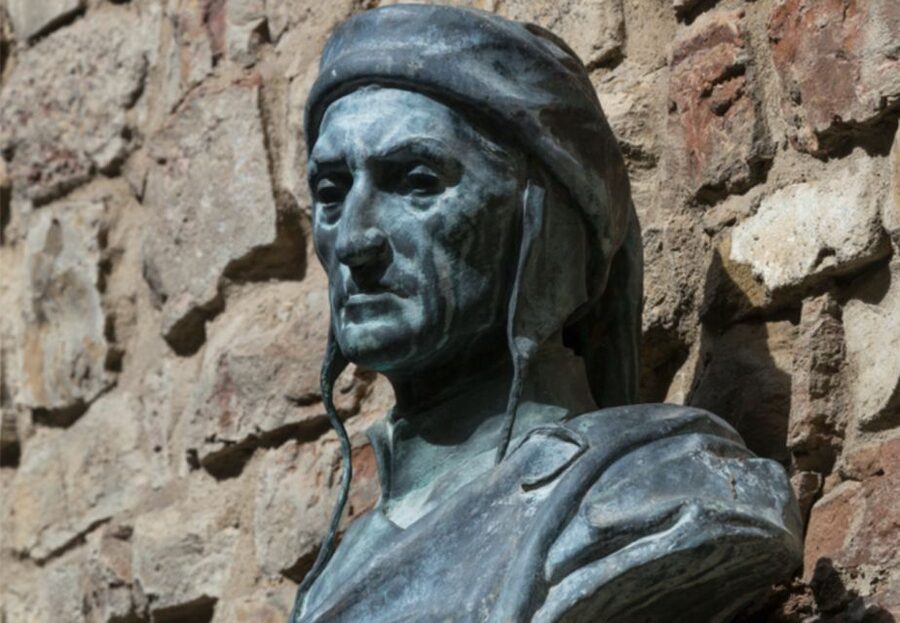
- Duomo Square as the “Dante district” starting point, where the city’s medieval entry vibe sets the tone
- A walk through Dante’s Florence-as-it-was, including the narrow-street world Fiorenza described
- Dante Studies Center and Ponte Vecchio, tied into the Guelphs vs. Ghibellines legend
- Piazza della Signoria and Palazzo Vecchio, with Dante’s funerary mask referenced inside
- Piazza Santa Croce’s marble Dante statue, holding the Divine Comedy
Stretch your legs on more Florence walking tours
Why this Dante walking tour feels more meaningful on foot
I like tours that make you slow down and look up, because that’s where Florence gives you clues. This one is built for that. Instead of treating Dante like a name on a plaque, you’re guided through the city’s medieval layout—stone and wooden houses, towers, small churches, and narrow streets—so the poet’s life stops feel grounded in place.
The best part is the way the guide links scenes from Dante’s world with the themes behind the Divine Comedy. You’re not just hearing facts; you’re connecting the emotional logic of the work to the geography that shaped Dante’s era.
Also, you cover a nice sweep of the city’s center. You begin near Florence’s religious heart, pass through the river and civic zones, and finish at a major monument. That arc matters. It helps you build a mental map of medieval Florence that stays with you long after the walk ends.
Meeting at Loggia del Bigallo and starting at Duomo Square
The tour begins in front of the Loggia Bigallo Museum and ends back at the same meeting point. That “back to start” setup is practical in Florence. It means you’re not forced into a long, self-guided commute afterward just to get back to your hotel area.
From there, you head to Duomo Square—the starting point for what the guide calls Dante’s District. This square is not just scenic; it’s historically functional. In medieval times it served as an entrance point to the city, so it’s a smart place to begin if the goal is understanding how Florence worked.
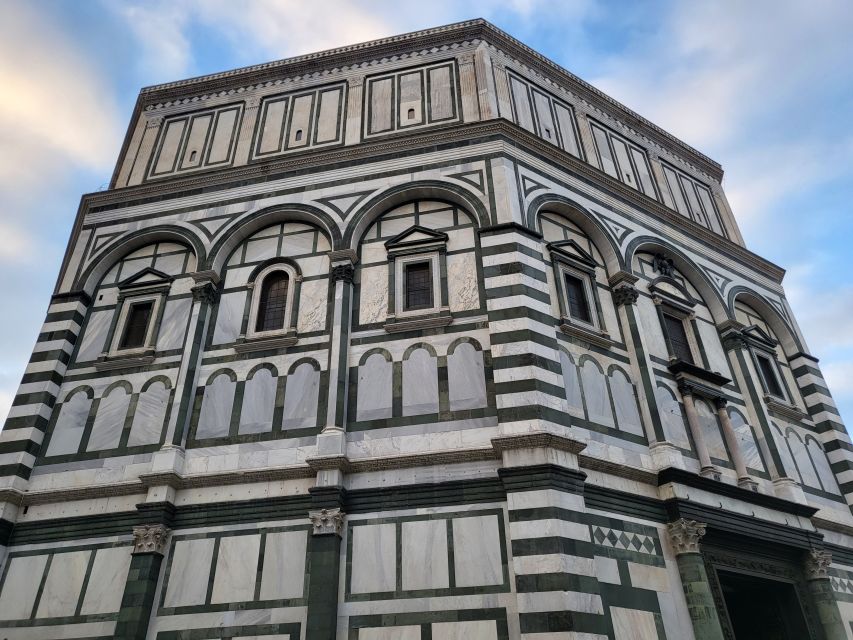
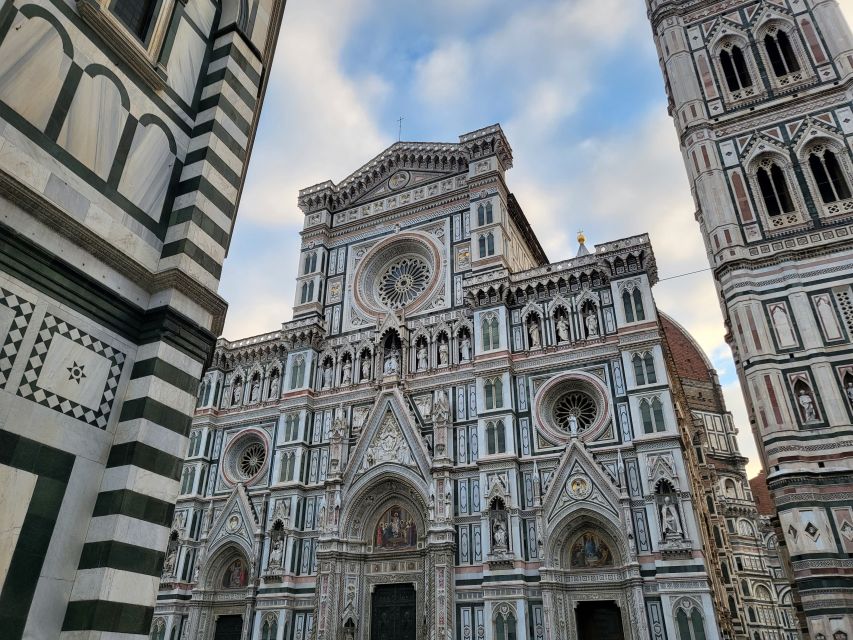
You also start with a strong visual anchor: the Baptistery of San Giovanni is right there. That matters because Dante’s Florence was deeply intertwined with civic and religious spaces, and Duomo Square is where that mix is easiest to grasp.
One practical note: because you’ll be walking and listening at street level, pay attention to how your guide frames what you’re seeing. You’ll get more out of the stops if you keep your eyes moving—especially upward toward buildings—rather than treating each spot like a quick photo stop.
Walking the Dante district: Fiorenza before Giotto and Brunelleschi
Here’s the clever approach: the tour describes Florence during Dante’s lifetime (from 1265, his birth, to 1302, his exile) as a city that looks different than what modern visitors expect. Some big Renaissance landmarks simply did not exist yet—so the guide paints a Florence that is older, tighter, and more vertical.
You’ll hear about how Dante referred to Florence as Fiorenza and how the city functioned as a network of narrow streets. The tour also emphasizes that you’d have seen a mix of stone-built houses and wooden houses, plus towers, small churches, and studios. In other words, the city feels less like an art postcard and more like a working medieval place.
A neat detail the guide uses to bring it to life: if you walk while looking upward, you can spot words of Dante carved on the walls of ancient Florentine towers. That turns the act of walking into a kind of reading exercise. It’s not just where Dante lived; it’s the idea of Florence literally carrying Dante’s name.
This is one of the best ways to understand a city like Florence: not by memorizing dates, but by learning the “shape” of daily life. When your guide describes towers, lanes, and church density, you start to visualize where someone like Dante would have moved and met people.
Finding Dante’s beginnings and Beatrice in the streetscape
One of the most human parts of this tour is how it treats Dante’s early life like a sequence of locations you can actually stand near. You’ll visit the place thought to be where Dante was born and the spot where he first saw Beatrice.
Even if you don’t know the story already, this kind of stop-by-stop approach works because it builds emotional context before you start hearing about the larger work. Beatrice in particular isn’t just a name in a biography. In Dante’s world, she’s part of the emotional engine behind the Divine Comedy, and that’s why placing the story inside a real street-level setting helps you understand why it mattered.
What I’d watch for here is the guide’s storytelling rhythm. If your guide is doing it well (and the overall experience suggests they do), you’ll start to feel the logic of the narrative: early life, formative sights, then later exile and the political tension that shapes Dante’s voice.
If you’re the type who likes literature but gets lost in abstract explanation, this stop structure is a big win. You’re pairing ideas with geography, which helps everything stick.
Dante Studies Center and Ponte Vecchio: Guelphs, Ghibellines, and a river crossing
Next comes the Dante Studies Center and then Ponte Vecchio. This section is valuable because it connects Dante’s personal story to the political forces running through Florence.
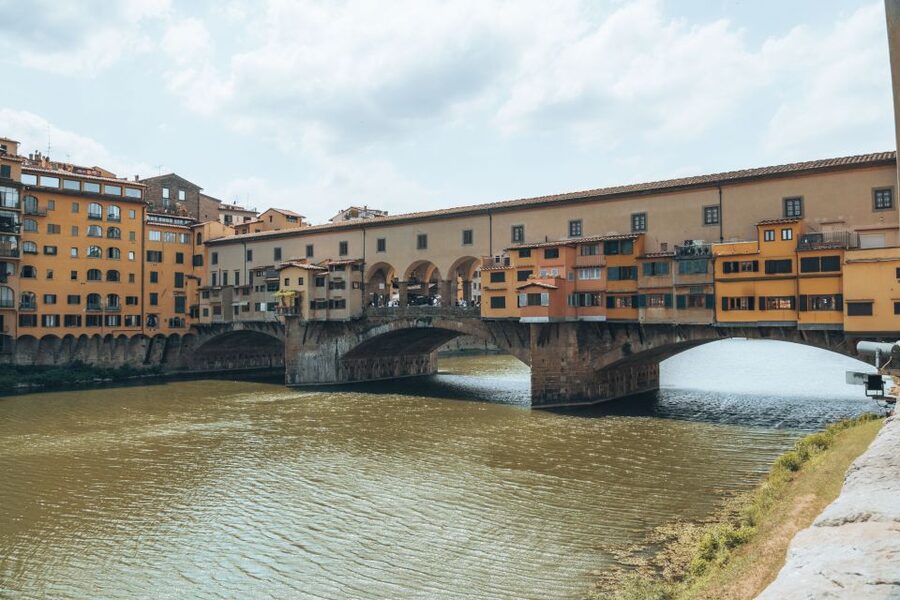
At Ponte Vecchio, you’re told the legend that ties the struggle between Guelphs and Ghibellines to the city’s division into two parts. Whether you take every legend literally or not, the function is clear: it helps you understand why Florence felt fractured during Dante’s lifetime.
Ponte Vecchio also offers a natural “pause.” You get the river view, the iconic bridge setting, and a shift in sound as you cross. It’s a good moment to reset your ears and look at the city like a map. You’ll likely notice how civic and commercial life clumps around the river zone, which makes the political tension feel more real.
If you’re photographing, consider timing. Bridges and viewpoints can get busy, and you may want to follow your guide’s timing rather than stepping off to hunt for the perfect shot alone.
With a local guide, more of Florence to explore
- The Best tour in Florence: Renaissance & Medici Tales – guided by a STORYTELLER
★ 5.0 · 12,316 reviews

Piazza della Signoria and Palazzo Vecchio: Dante’s funerary mask
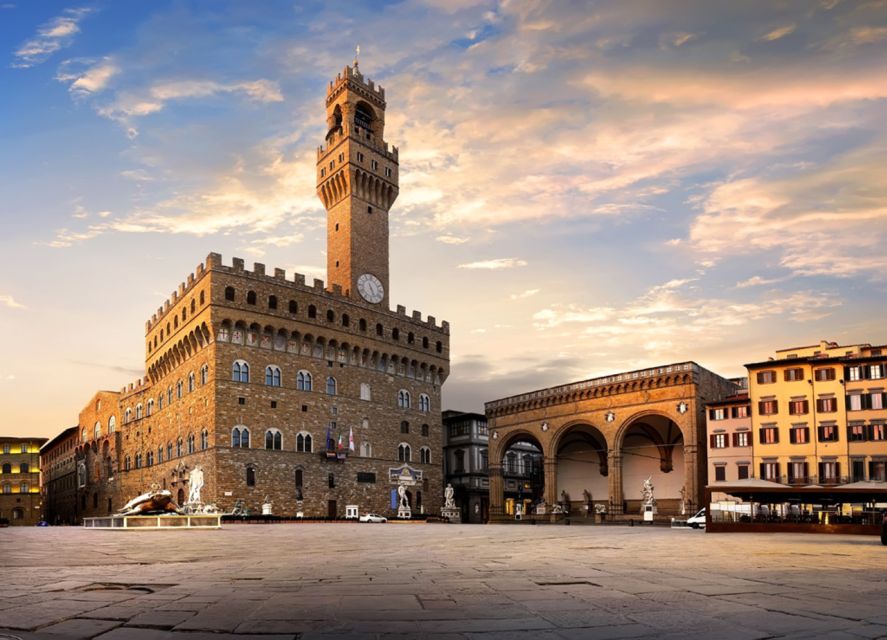
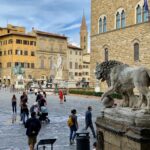
Then you reach the civic heart of medieval Florence: Piazza della Signoria and Palazzo Vecchio. This is one of the most important stops for understanding why Dante’s life wasn’t only literature. His story lives inside the politics and institutions of the city.
One detail that gives this stop extra weight: Dante’s funerary mask is kept inside Palazzo Vecchio. Even if you don’t spend long inside any rooms, learning where the mask is kept inside the building helps you connect the symbolism of Dante’s death and legacy to a real civic space.
This part of the tour also works for your timing. After the river and bridge zone, the square gives you a wider, open feel where you can hear the guide’s explanations more clearly and take in the bigger-picture architecture and layout.
If you’re planning other sightseeing that day, this is also a smart pivot point. From here, you can naturally extend your walk toward nearby squares and churches on your own—while still keeping Dante’s story in your head.
Piazza Santa Croce: ending with Dante in marble
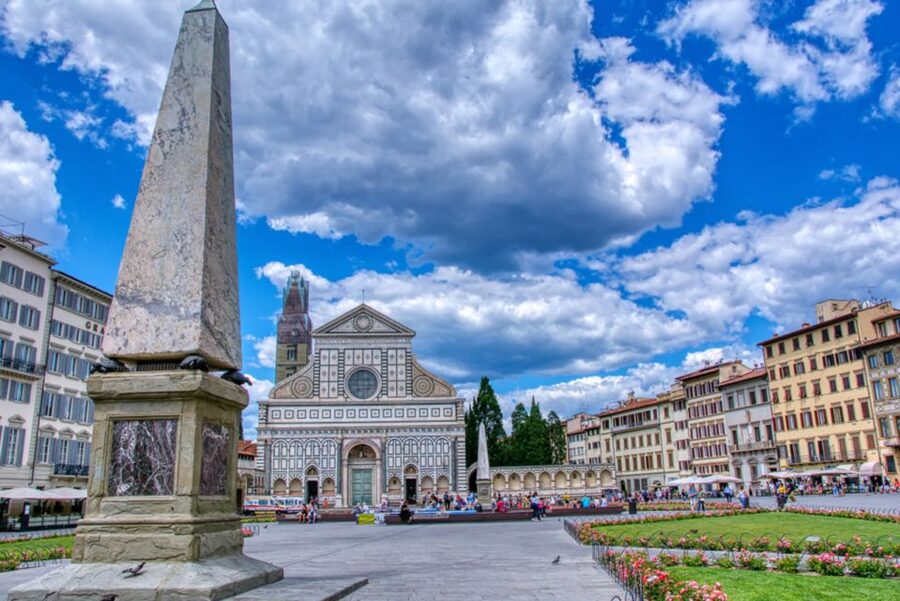
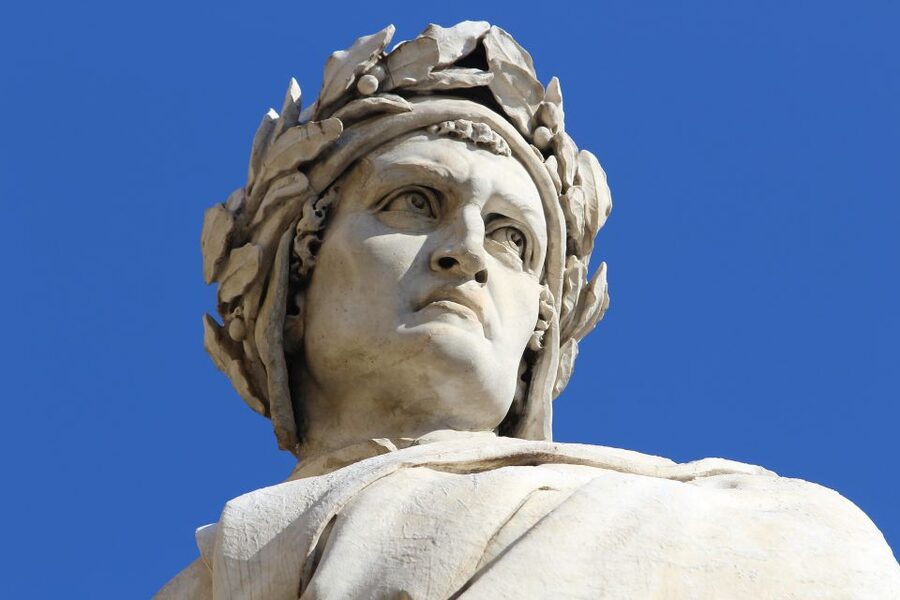
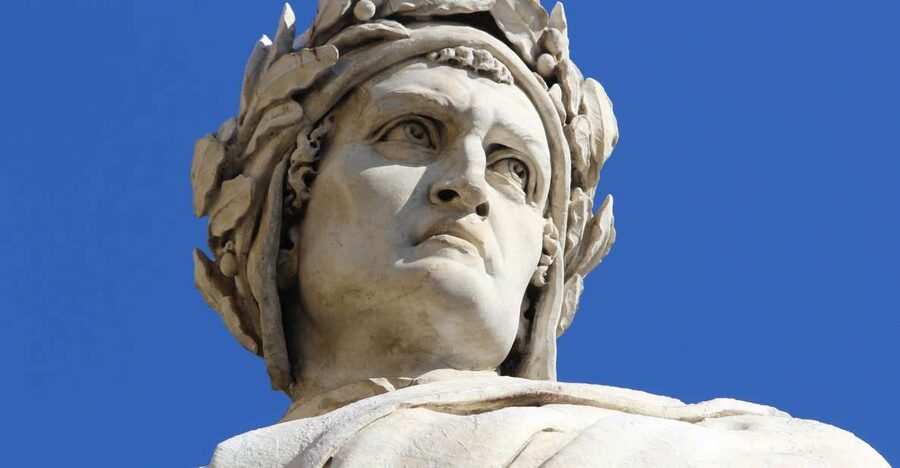
The tour finishes at Piazza Santa Croce, where you’ll see one of the most beautiful Dante statues in Florence. The guide points out the marble figure of Dante Alighieri holding the Divine Comedy in his right hand.
Ending here is fitting. Santa Croce is a place where Florence celebrates culture, memory, and legacy in a very visible way. When the tour ends with Dante literally holding his work, it feels like the guide is giving you a final takeaway: Dante’s story isn’t frozen in medieval dust. Florence keeps curating it into the present.
This is also where the tour’s main concept clicks for many people. The walk begins with the entry point of Dante’s district and the religious civic anchors, moves through early life and political tension, and ends with a public monument to Dante as a writer whose work still shapes how people understand morality and human choices.
Take five minutes here after the tour ends—just you, Dante, and the square. It’s the best way to make the two hours feel longer in a good way.
How the guide ties it all together with steps of the Divine Comedy
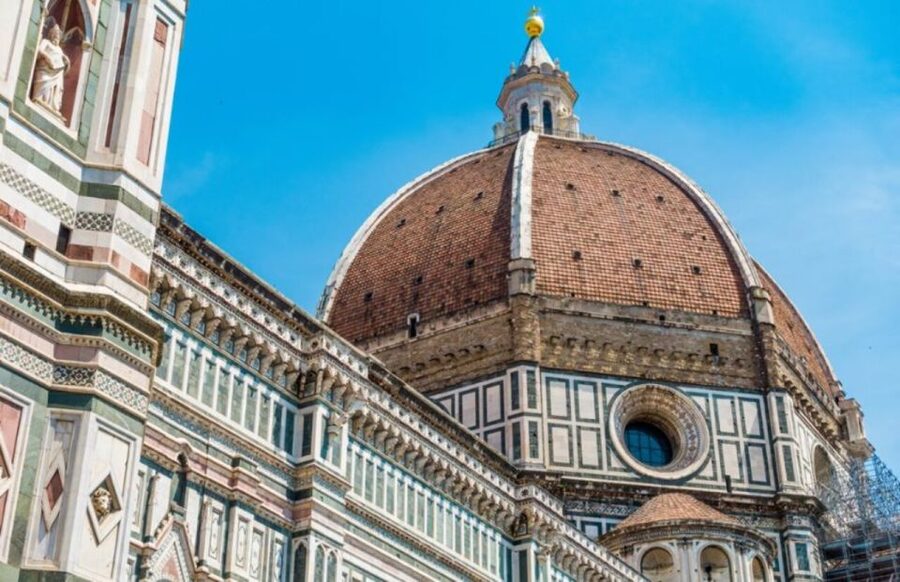
A big promise of the tour is that you’ll walk through the steps of the Divine Comedy, helping you understand the masterpiece better. I like this approach because it avoids the common problem of literature tours that drown you in plot summaries.
Instead, the route turns the city into a narrative tool. Florence becomes the stage where themes make sense: exile and loss, human conflict, moral choices, and the long shadow of belief in medieval life.
If you’ve read only part of the Divine Comedy, this kind of guided geographic framing can be a helpful bridge. If you haven’t read any of it yet, it can still work—because you’ll be hearing the ideas in the context of places rather than relying on prior knowledge.
Tip for getting the most out of this section: listen for how the guide connects a specific stop to a specific emotional or thematic moment. When that connection lands clearly, the whole experience feels like more than sightseeing.
Price and value: what you get for $34 in 2 hours
At $34 per person for about 2 hours, the price makes sense if you care about interpretation. You’re not paying for transport. You’re paying for a live guide (Italian or English) plus an included audio guide in English, Italian, and Spanish.
Earphones are also worth noting. You’ll get earphones only for groups over 15 participants. If you’re traveling at a time when you expect smaller groups, you might find it easier to hear the guide directly. If you’re in a larger group, the earphones can be the difference between enjoying the stories and just hearing background noise.
What’s not spelled out is what any optional “extras” might be. The tour lists “extra” as not included, which usually means you should keep a small buffer budget for anything not covered by the guide service. For planning, think of $34 as covering the core experience—then add a little margin for any optional add-ons you might choose.
Value-wise, this tour is best when you want a guided “Dante lens” on Florence. If you’re already fully fluent in the city’s medieval background and you just want to hop between big sights fast, you may feel it’s pricier than a self-guided stroll. But if you want to understand what you’re seeing, the guide-led structure justifies the cost quickly.
Language and audio: how to hear the story clearly
The live tour guide speaks Italian and English. That’s a practical plus because it lets you pick the language that matches your comfort level.
You also receive an audio guide with language options in English, Italian, and Spanish. That helps if you want to pace yourself—especially in busier areas where you might not catch every sentence.
One more comfort factor: the tour is wheelchair accessible. For a city like Florence, that detail matters, because many walking experiences become difficult quickly. Having wheelchair accessibility listed means you can plan more confidently if mobility is part of your equation.
Who this Dante walking tour suits best
This is a great fit if you:
- Want to understand Dante and medieval Florence together, not as two separate topics
- Like guided interpretation that connects literature to real places
- Enjoy walking through central Florence and reading the city with a story in mind
It’s probably less ideal if you:
- Want long museum time or deep interior stops
- Prefer a strict “see and leave” sightseeing plan with minimal explanation
If you’re a first-time Florence visitor, it can function like a strong orientation to the medieval center. If you’ve visited before, it’s a focused way to return with a different lens.
Should you book this Dante walking tour?
I’d book it if your goal is understanding how Dante’s life and the Divine Comedy connect to the streets around Florence’s core squares and landmarks. The route is short enough to fit into a busy day, but structured enough to feel meaningful.
I’d skip it or pair it differently if you mainly want indoor attractions or you already know the medieval context deeply and want to spend your time on specific museum collections.
If you’re somewhere in the middle—literature curious, Florence curious, and you like walking with a purpose—this tour is a smart use of time.
FAQ
How long is the tour?
The walking tour lasts about 2 hours.
How much does it cost?
The price is $34 per person.
Where does the tour start?
It starts in front of the Loggia Bigallo Museum.
Where does the tour end?
The activity ends back at the meeting point.
What languages are offered?
The live tour guide is available in Italian and English.
Is there an audio guide?
Yes. An audio guide is included, available in English, Italian, and Spanish.
Are earphones provided?
Earphones are provided only for groups with over 15 participants.
Is the tour wheelchair accessible?
Yes, wheelchair accessibility is listed for this activity.
Is the tour focused on Dante’s life and the Divine Comedy?
Yes. The tour focuses on Dante Alighieri, highlights key places connected to him, and includes walking through the steps of the Divine Comedy.
Can I cancel and get a refund?
You can cancel up to 24 hours in advance for a full refund.
More Florence Walks
- Florence: Highlights Walking Tour with Expert Guide
★ 4.6 · 4,662 reviews - Uffizi & Accademia Timed Entry: Small Group Duomo Walking Tour
★ 4.5 · 3,630 reviews - Florence: Duomo Complex with Tickets & City Walk Guided Tour
★ 4.7 · 2,057 reviews - Florence: Guided Walking Tour
★ 4.6 · 1,602 reviews - Florence: Renaissance and Medici Tales Guided Walking Tour
★ 4.8 · 1,549 reviews
More Florence Tours to Weigh Up
- The Best tour in Florence: Renaissance & Medici Tales – guided by a STORYTELLER
★ 5.0 · 12,316 reviews - The Best Tour in Florence: Renaissance and Medici Tales
★ 5.0 · 10,810 reviews - Florence: Chianti Wineries Tour with Wine Tasting
★ 4.5 · 10,071 reviews - Florence: Duomo Cathedral 60-Minute Guided Tour
★ 3.7 · 6,829 reviews - Florence: Hop-on Hop-off Bus Tour: 24, 48 or 72-Hour Ticket
★ 4.0 · 6,283 reviews
More Florence Tours We Have Reviewed
- Florence: Skip-The-Line Uffizi Gallery Timed Entry Ticket
★ 4.5 · 27,832 reviews - Tuscany Day Trip from Florence: Siena, San Gimignano, Pisa and Lunch at a Winery
★ 5.0 · 21,634 reviews - Florence: Timed Entry to Michelangelo’s David + Audio App
★ 4.6 · 19,496 reviews - Florence: Leonardo Interactive Museum Entry Ticket
★ 4.5 · 12,957 reviews - Florence: Michelangelo’s David Skip-the-Line Entry Ticket
★ 4.5 · 12,764 reviews
Fresh from our Florence review desk
- Small-Group Pasta Cooking Class and Market Tour in Florence★ 5.0 · 3 reviews
- Palatina Gallery and Pitti Guided Tour in Florence★ 5.0 · 3 reviews
- Tuscan Evening Tour: Fiat 500, 8:30 to 10 PM★ 5.0 · 3 reviews
- Journey into Art: Florence’s Accademia★ 4.5 · 3 reviews
- Paint and Drink Florentine Hills★ 5.0 · 3 reviews
- Truffle hunting and lunch experience, with Vinci and winery.★ 4.5 · 3 reviews
Walking Tours, compared.
 ★ 4.6Highlights Walking Tour with Expert GuideFrom $274,662 reviews
 ★ 4.5Uffizi & Accademia Timed Entry: Small Group Duomo Walking TourFrom $503,630 reviews
 ★ 4.7Duomo Complex with Tickets & City Walk Guided TourFrom $932,057 reviews
 ★ 4.6Guided Walking TourFrom $271,602 reviews
 ★ 4.8Renaissance and Medici Tales Guided Walking TourFrom $21,549 reviews
 ★ 4.7Uffizi & Accademia Small Group Walking TourFrom $1481,380 reviews
 ★ 5.0Skip-the-Line Florence Highlights and David Walking TourFrom $1171,127 reviews
 ★ 4.6Dark Mysteries and Legends Guided Walking TourFrom $21,081 reviews
Browse the lists this tour appears in