
Reviewed · WALKING TOURS
Florence Walking Tour with Audioguide on Your Smartphone
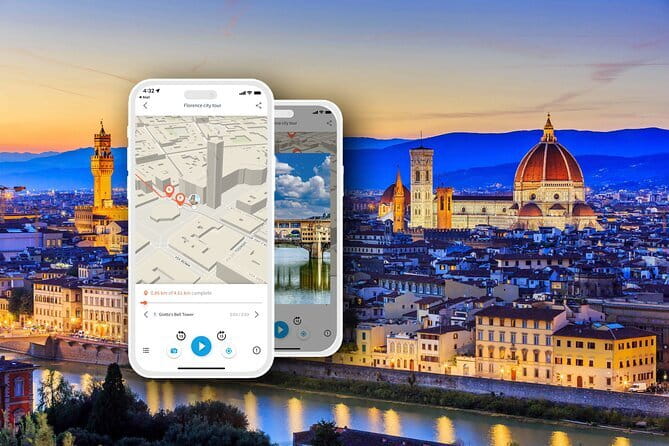
Duomo in your pocket, no guide needed. This Florence walking tour uses a professional historian’s audio on your smartphone, so you can pause, rewind, and walk your own pace through major sights.
It’s built for people who want big-name places without joining a loud group, and it keeps you pointed to each stop with illustrations and an offline GPS map.
I especially like two things: the 30 audio recordings are clearly structured by stop, and the narration turns each church and palace into a story you can actually follow. I also like the offline map with route points, because it helps you keep moving even when you’re off Wi‑Fi.
The main drawback is technical: if GPS direction on your phone acts up, you’ll lose time unless you’re comfortable using the app to jump between stops. One reviewer had directional trouble, but the audio itself can still be accessed by selecting stops manually.
Key things to know before you go
- Historian narration (30 recordings): each location comes with audio made to explain what you’re seeing.
- Offline GPS map: route guidance works without relying on constant data service.
- Illustrations for quick orientation: you can spot what the stop is talking about faster than guessing.
- Real-world pace: this is a self-guided walk (no human guide pacing the group).
- Bring headphones: you’ll need your own, since they’re not included.
- Some stops involve stairs: Giotto’s Bell Tower includes a 414-step climb.
In This Review
- First Stop: Santa Maria Novella and getting your bearings fast
- How the smartphone audio route actually works (and why it’s good value)
- The one thing to watch: GPS direction reliability
- Santa Maria Novella, San Lorenzo, and the Medici power triangle
- Basilica of Santa Maria Novella
- Basilica di San Lorenzo
- Palazzo Medici
- Duomo + Giotto’s Bell Tower: the Florence view sequence
- Cathedral of Santa Maria del Fiore
- Giotto’s Bell Tower (414 steps)
- Piazza della Repubblica and the palazzo stops: art settings, politics settings
- Piazza della Repubblica
- Palazzo Strozzi
- Palazzo di Parte Guelfa
- From Mercato Nuovo to Palazzo Vecchio and Loggia dei Lanzi
- Mercato Nuovo
- Palazzo Vecchio
- Loggia dei Lanzi
- Dante, Santa Croce, and the “ideas city” feeling
- Casa Museo di Dante
- Basilica di Santa Croce
- Museo Galileo, La Casa di Galileo, and why science belongs here
- Museo Galileo
- La Casa di Galileo Galilei
- Uffizi and the practical crowd question
- Ponte Vecchio, Vasari Corridor, and the Medici secret passage idea
- Villa Bardini and Forte Belvedere: viewpoints beyond the main postcard route
- Villa Bardini
- Forte di Belvedere (Forte Belvedere / San Giorgio Firenze)
- Price and value: what $7.14 buys you in Florence
- Who should book this audio walk (and who should think twice)
- Should you book this Florence audio tour?
- FAQ
- How long is the Florence walking tour with smartphone audio?
- What is the price per person?
- Is it offered in English?
- Do I need to bring headphones?
- Is this tour self-guided or do I meet a human guide?
- Do I need internet to use the map and audio?
- What’s included with the audio guide?
- Where is the meeting point?
- What about entrance tickets?
- Can I cancel and get a full refund?
First Stop: Santa Maria Novella and getting your bearings fast
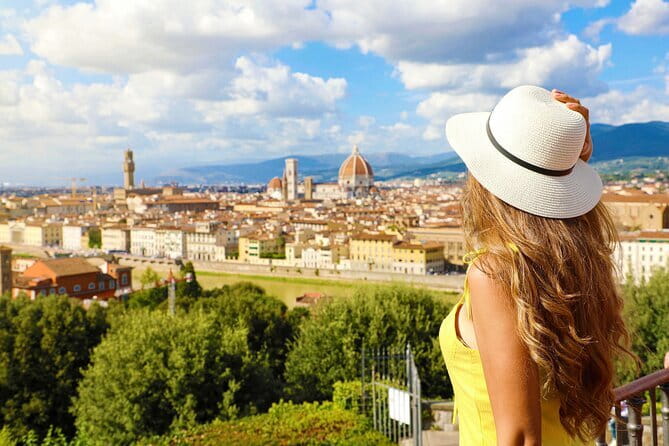
You start at Basilica of Santa Maria Novella, right at Piazza di Santa Maria Novella, 18. Since the tour is self-guided, the “guide” is your phone: you’ll download the app, activate your purchase, then follow the route on the app map.
This is a smart starting point because Santa Maria Novella sits near the heart of the walk. Even if you arrive a little early, you can use that time to get oriented on the street layout and avoid the usual first-day “wait, where do I go?” stress.
Practical tip: charge your phone fully before you start. Between audio playback, the offline map, and any quick checking of details, battery life can disappear faster than you think.
Stretch your legs on more Florence walking tours
How the smartphone audio route actually works (and why it’s good value)

The tour includes mobile tickets and works through an audio guide app available for iPhone and Android. You get 30 audio recordings by a professional historian, plus illustrations to help you match what you see with what the audio is describing.
At $7.14 per person, the value is mostly in storytelling and navigation. You’re not paying for a live guide, which keeps the price low. You’re paying for a structured route, curated audio, and tools that help you find the next stop without constant map-tapping.
Also, you get one year access in your chosen language. If you’re the type who likes to re-listen on the next day (or after you visit other museums), that extra access can be genuinely useful.
The one thing to watch: GPS direction reliability
One review mentioned the app’s directional component didn’t work well and caused delay. That’s a real-world risk in dense city centers with tall buildings and narrow streets.
What matters: even if GPS direction is off, the audio content doesn’t stop being available. The safer mindset is to treat the map as helpful guidance, not as the only way to use the tour.
Santa Maria Novella, San Lorenzo, and the Medici power triangle
This route spends real time on the church-and-politics combo that shaped Florence.
Basilica of Santa Maria Novella
At Santa Maria Novella, you’ll get a guided look at Gothic architecture from the 13th century. The stop highlights what makes the façade striking, points you toward the rose window, and then nudges you to look inside for key artworks and details tied to famous artists. If you like “what am I looking at?” moments, this is the kind of stop where audio helps you notice more than you’d catch on your own.
If you want a calmer rhythm, this is a good place to slow down. Churches have crowd pulses, but you’re often able to find a quieter corner to read the space.
Basilica di San Lorenzo
Next is San Lorenzo, tied closely to Florence’s Renaissance identity. The narration explains the church’s long timeline—founded in the 4th century, redesigned by Filippo Brunelleschi in the 15th century—and points you toward the look of the architecture: columns, proportions, and chapels.
A standout inside is the mention of Michelangelo’s work, especially the Medici Chapels, tied to the Medici family’s legacy.
At your own pace, more self-guided Florence

Palazzo Medici
Then you land at Palazzo Medici, the Medici residence that anchors the Renaissance story in brick-and-stone wealth. The route emphasizes the façade (with rusticated stonework and grand arches) and then moves indoors to frescoed rooms and lavish interiors. The audio also calls out the Chapel of the Magi as a must-not-miss detail.
This is a good trio of stops because you’re moving from sacred space (churches) to political culture (Medici palace) without feeling like you’re bouncing randomly around town.
Duomo + Giotto’s Bell Tower: the Florence view sequence
The route then hits the signature photo route.
Cathedral of Santa Maria del Fiore
At the Cathedral of Santa Maria del Fiore, the audio focuses on what makes the Duomo famous: the dome designed by Brunelleschi, completed in the 15th century, described as the largest brick dome in the world. You’ll also get guidance for the colorful marble façade and sculptures, plus what to look for inside (stained glass and major frescoes).
You’re also told it’s a must for the authentic Florence experience, which is true in practice—especially if this is your only “cathedral moment.”
Giotto’s Bell Tower (414 steps)
Then it’s up Giotto’s Bell Tower, described as 82 meters tall. The route calls out the climb—414 steps—plus the rewards: panoramic views over Florence and a view back at the Duomo. The audio also points toward Giotto’s reliefs and the bell tower’s decorated façade.
Who this fits: if you like city views and don’t mind stairs, this is a high-payoff stop. If you prefer fewer steps, you can still enjoy the area by spending time at street level and listening to the audio cues without climbing.
Piazza della Repubblica and the palazzo stops: art settings, politics settings
After the Duomo cluster, the route shifts into squares and elite architecture.
Piazza della Repubblica
At Piazza della Repubblica, the audio gives context for the space’s longer story—starting as a Roman forum, then becoming the modern café-and-shop square you see today. You’ll be encouraged to watch the Arch of Triumph and use the square for people-watching and breaks.
This stop is useful because it breaks up church-heavy time with a more open public space.
Palazzo Strozzi
Next is Palazzo Strozzi, a Renaissance palace built in the 15th century for the Strozzi family. The tour notes the palace’s harmonious façade and courtyard, and explains that it’s now a cultural center with rotating art exhibitions.
Even if an exhibit isn’t the focus of your visit that day, the building itself is part of the payoff. The audio helps you read the structure instead of just snapping photos.
Palazzo di Parte Guelfa
Then you’ll reach Palazzo di Parte Guelfa, tied to medieval faction politics. The tour highlights that it was built in the 13th century as the seat of the Guelf faction, and notes what you can see today: architectural features, a courtyard, and impressive frescoes.
This is a nice change from pure art appreciation. It reminds you Florence’s art and power were tightly linked.
From Mercato Nuovo to Palazzo Vecchio and Loggia dei Lanzi
This is where the route starts mixing atmosphere, governance, and sculpture.
Mercato Nuovo
At Mercato Nuovo, the audio frames it as a food market in the San Lorenzo district. You’ll be guided toward what to look for: fresh produce, local delicacies, cheeses, and gourmet specialties—plus the vibe of strolling stalls and chatting with vendors.
You don’t need to buy much to enjoy this. It’s a great “sensory stop” that makes your walk feel local instead of museum-only.
Palazzo Vecchio
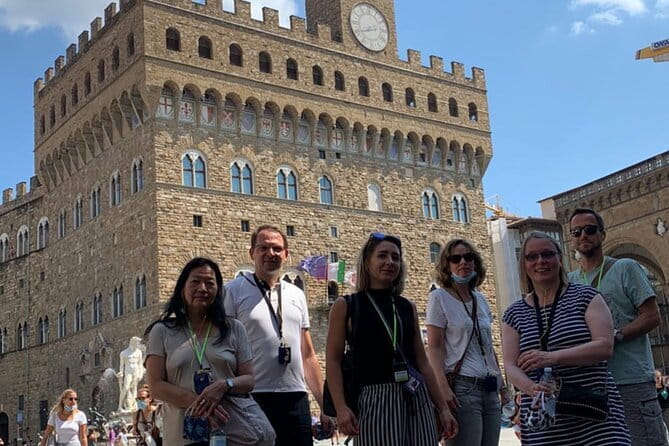
Then comes Palazzo Vecchio, the symbol of Florence’s political history. The tour points out its fortress-like feel, completed in the 14th century, and that it served as the seat of the Florentine government. The narration also calls out the Salone dei Cinquecento and the tower for panoramic views.
Loggia dei Lanzi
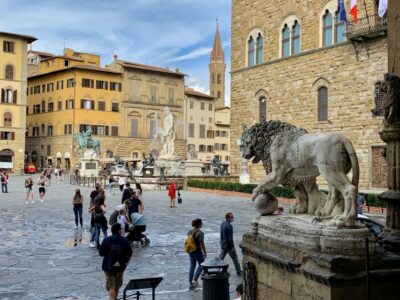
Right after, you’ll visit Loggia dei Lanzi, an open-air sculpture gallery in Piazza della Signoria. The audio focuses on the late 14th-century structure—arches and colonnade—and then names key sculptures you can spot, including Cellini’s Perseus and Giambologna’s Rape of the Sabine Women.
If you want sculpture without an indoor queue, this stop is perfect.
Dante, Santa Croce, and the “ideas city” feeling
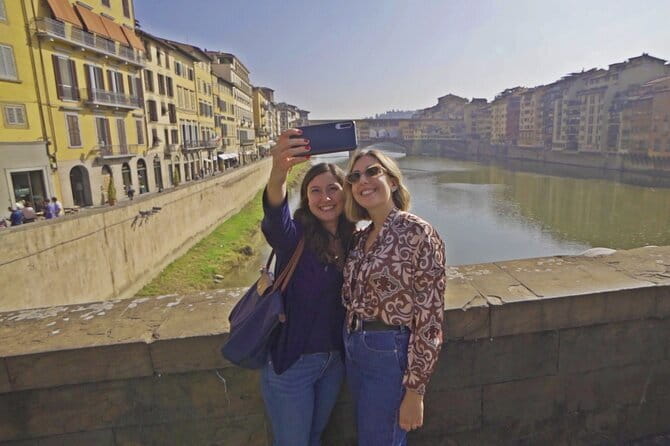
Florence isn’t only paint on walls. This part nudges you toward literature and big thinkers.
Casa Museo di Dante
At Casa Museo di Dante, the audio steers you into Dante Alighieri’s world. The focus is on the museum’s 13th-century context and exhibits like manuscripts, drawings, and related artifacts tied to his life and literary legacy.
If you like meeting authors through their physical traces, this stop can be surprisingly emotional even if you don’t read Italian fluently.
Basilica di Santa Croce
Then you’ll reach Santa Croce, described as the Temple of the Italian Glories. The narration emphasizes the famous burials, including Michelangelo, Galileo, and Machiavelli, and points out frescoes by artists such as Giotto.
The tour also mentions cloisters and chapels with exceptional artworks. This is a slower-feeling stop in most itineraries, and it works well after the sharper energy of palaces and public squares.
Museo Galileo, La Casa di Galileo, and why science belongs here
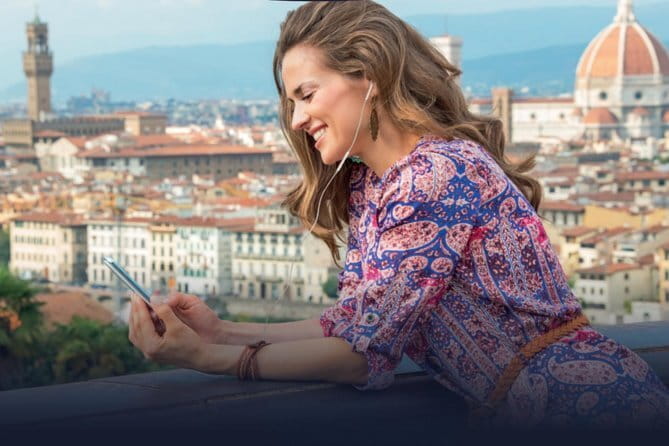
One of my favorite parts of this route concept is that it refuses the idea that Florence equals art only. The audio brings you to two science-focused stops.
Museo Galileo
At Museo Galileo, the audio frames the museum as a collection of scientific instruments and artifacts from the Renaissance to modern times. There are interactive exhibits, and the narration connects Galileo Galilei to astronomy and physics in an accessible way.
La Casa di Galileo Galilei
Then comes La Casa di Galileo Galilei, described as Galileo’s birthplace. The tour mentions personal artifacts and displays like the telescope and celestial maps.
If you’re the kind of traveler who likes to understand how discoveries get made, this pairing feels well planned. Two stops give you a fuller picture: public-era science through instruments, and the personal story through birthplace museum context.
Uffizi and the practical crowd question
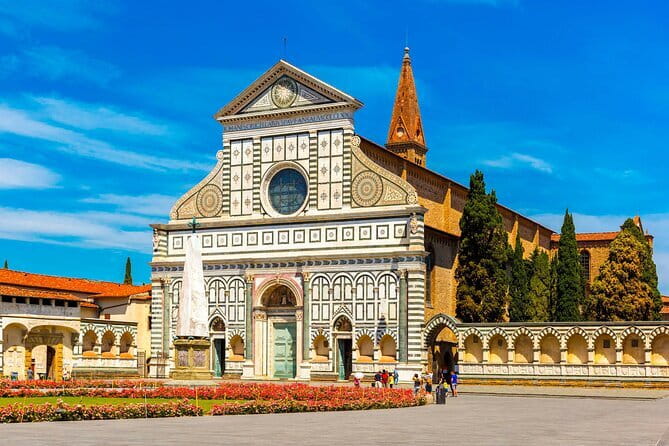
The route includes Uffizi Gallery, one of the world’s best-known museums, housed in a 16th-century building. The audio calls out major artists you’re likely to see across the collection, including Botticelli, Michelangelo, Leonardo da Vinci, and Caravaggio, and mentions iconic works like The Birth of Venus and Primavera.
Here’s the practical caution: entrance fee/tickets aren’t included in this audio tour. Also, Uffizi is famous for crowds, so your best move is to plan your timing and be realistic about how long you’ll want to spend inside after waiting.
If you’re using the audio route as your guide, treat Uffizi as a “choose-your-own-focus” museum. Pick a few must-see galleries you want to connect to the audio themes, rather than trying to do everything.
Ponte Vecchio, Vasari Corridor, and the Medici secret passage idea
Then the route crosses Ponte Vecchio, described as Florence’s oldest bridge and famous for goldsmith shops. The narration helps you notice the structure and the view across the Arno.
The audio also introduces the Vasari Corridor, an elevated passageway designed by Giorgio Vasari that connects Palazzo Vecchio to Palazzo Pitti so the Medici family could move discreetly.
This is a great stop for people who enjoy “how did they do that?” details. The bridge looks like a simple landmark until you connect it to power and movement behind the scenes.
Villa Bardini and Forte Belvedere: viewpoints beyond the main postcard route
The last stretch turns toward the hills.
Villa Bardini
At Villa Bardini, the tour describes it as a less central but memorable Florence stop. You’ll hear about gardens and a terrace overlooking the city, plus art exhibitions featuring both classical and contemporary works. It’s also dated to the 14th century.
This is a good place to reset your feet. Even if you just listen to the stop audio and take in the views, the hillside setting changes your perspective from the flat center.
Forte di Belvedere (Forte Belvedere / San Giorgio Firenze)
The route ends with Forte Belvedere, a hillside fortress built in the late 16th century under Francesco I de’ Medici. The audio explains it served as a defensive stronghold and royal residence, and it notes the spacious courtyard and architecture details.
It’s also described as hosting art exhibitions and cultural events. If you’re there when something is on, it adds a bonus layer. If not, the viewpoint and the building history still do the job.
Price and value: what $7.14 buys you in Florence
At $7.14 per person for about 2 hours 30 minutes, you’re paying for:
- a self-guided route through major landmarks
- 30 historian-recorded audio stops
- offline map + GPS navigation
- illustrations to identify where to look
What you’re not paying for is human guiding, transport, and entrance tickets. That’s where you need to plan your budget. Some parts of the route are marked as free admission time slots (like the cathedral area, Giotto’s Bell Tower, Ponte Vecchio, and Forte Belvedere), but not all museum or palace interiors are guaranteed free.
So the value equation is simple: if you can do the sights you care about without needing lots of extra-paid entry, you’ll feel like you got a deal. If you’re trying to cover multiple ticketed museums that day, you’ll spend more on entries, and the tour becomes more about narration and navigation than admission value.
Who should book this audio walk (and who should think twice)
This tour is a strong fit if you:
- like walking at your own pace
- want a historian’s voice rather than a generic street-level explanation
- prefer navigation support via offline GPS and route points
- plan to visit several “name” landmarks without hiring a live guide
You might think twice if you:
- don’t want to deal with app setup (download, activation, headphones)
- have limited mobility concerns, since the route includes 414 steps for Giotto’s Bell Tower
- expect GPS to be perfect in every street canyon
Also, note the group size limit is 20 travelers even though it’s self-guided. That usually just means you won’t be competing for a crowded start area.
Should you book this Florence audio tour?
I think it’s worth booking if you want structure without a live guide. You get step-by-step audio, stop visuals, and an offline map that helps you keep your momentum through Florence’s tight streets.
If you’re the kind of traveler who gets annoyed by tech friction, download the app early, test your headphones at home, and be ready to use stop selection if GPS direction gets weird. Once it’s running smoothly, this format can make major sights feel less like checkboxes and more like a connected story.
Book it when you want control. Skip it if you want a person to answer questions on the spot.
FAQ
How long is the Florence walking tour with smartphone audio?
It lasts about 2 hours 30 minutes (approx.).
What is the price per person?
The price is $7.14 per person.
Is it offered in English?
Yes, the tour is offered in English.
Do I need to bring headphones?
Yes. Smartphones and headphones are not included, so you’ll need your own headphones.
Is this tour self-guided or do I meet a human guide?
It’s self-guided. No guide will be at the meeting point.
Do I need internet to use the map and audio?
The tour provides an offline map with GPS navigation, and the audio guide is available anytime, date and time during checkout are approximate. You’ll still need the app downloaded.
What’s included with the audio guide?
You get 30 audio recordings narrated by a professional historian, an audio guide app for iPhone and Android, illustrations to identify landmarks, offline map navigation, and one year of access.
Where is the meeting point?
The start point is Basilica of Santa Maria Novella, Piazza di Santa Maria Novella, 18, 50123 Firenze FI, Italy.
What about entrance tickets?
Entrance fee/tickets are not included.
Can I cancel and get a full refund?
Yes. Free cancellation is available up to 24 hours in advance for a full refund.
More Florence Walks
- Florence: Highlights Walking Tour with Expert Guide
★ 4.6 · 4,662 reviews - Uffizi & Accademia Timed Entry: Small Group Duomo Walking Tour
★ 4.5 · 3,630 reviews - Florence: Duomo Complex with Tickets & City Walk Guided Tour
★ 4.7 · 2,057 reviews - Florence: Guided Walking Tour
★ 4.6 · 1,602 reviews - Florence: Renaissance and Medici Tales Guided Walking Tour
★ 4.8 · 1,549 reviews
More Florence Tours to Weigh Up
- The Best tour in Florence: Renaissance & Medici Tales – guided by a STORYTELLER
★ 5.0 · 12,316 reviews - The Best Tour in Florence: Renaissance and Medici Tales
★ 5.0 · 10,810 reviews - Florence: Chianti Wineries Tour with Wine Tasting
★ 4.5 · 10,071 reviews - Florence: Duomo Cathedral 60-Minute Guided Tour
★ 3.7 · 6,829 reviews - Florence: Hop-on Hop-off Bus Tour: 24, 48 or 72-Hour Ticket
★ 4.0 · 6,283 reviews
More Florence Tours We Have Reviewed
- Florence: Skip-The-Line Uffizi Gallery Timed Entry Ticket
★ 4.5 · 27,832 reviews - Tuscany Day Trip from Florence: Siena, San Gimignano, Pisa and Lunch at a Winery
★ 5.0 · 21,634 reviews - Florence: Timed Entry to Michelangelo’s David + Audio App
★ 4.6 · 19,496 reviews - Florence: Leonardo Interactive Museum Entry Ticket
★ 4.5 · 12,957 reviews - Florence: Michelangelo’s David Skip-the-Line Entry Ticket
★ 4.5 · 12,764 reviews
Fresh from our Florence review desk
- Small-Group Pasta Cooking Class and Market Tour in Florence★ 5.0 · 3 reviews
- Palatina Gallery and Pitti Guided Tour in Florence★ 5.0 · 3 reviews
- Tuscan Evening Tour: Fiat 500, 8:30 to 10 PM★ 5.0 · 3 reviews
- Journey into Art: Florence’s Accademia★ 4.5 · 3 reviews
- Paint and Drink Florentine Hills★ 5.0 · 3 reviews
- Truffle hunting and lunch experience, with Vinci and winery.★ 4.5 · 3 reviews
Walking Tours, compared.
 ★ 4.6Highlights Walking Tour with Expert GuideFrom $274,662 reviews
 ★ 4.5Uffizi & Accademia Timed Entry: Small Group Duomo Walking TourFrom $503,630 reviews
 ★ 4.7Duomo Complex with Tickets & City Walk Guided TourFrom $932,057 reviews
 ★ 4.6Guided Walking TourFrom $271,602 reviews
 ★ 4.8Renaissance and Medici Tales Guided Walking TourFrom $21,549 reviews
 ★ 4.7Uffizi & Accademia Small Group Walking TourFrom $1481,380 reviews
 ★ 5.0Skip-the-Line Florence Highlights and David Walking TourFrom $1171,127 reviews
 ★ 4.6Dark Mysteries and Legends Guided Walking TourFrom $21,081 reviews
Browse the lists this tour appears in