
Reviewed · MEDICI & RENAISSANCE TOURS
Medici Mile Walking Tour along the path of Medici Residences
Medici Florence moves fast when you have a map made of stories. This Medici Mile walk strings together the city’s biggest Renaissance power points, from Medici churches and palaces to Duomo views, Ponte Vecchio, and the exterior line of the Vasari Corridor. It’s a guided route designed to help you see the dynasty in place instead of reading about it later.
I especially like how the tour uses real locations—San Lorenzo, Palazzo Medici Riccardi, Piazza della Signoria, and Santa Felicita—to explain how the Medicis built legitimacy. I also like the option to add skip-the-line time at Boboli Gardens or Palazzo Pitti, so your day can go beyond photos and into actual collections.
One consideration: the “mile” includes lots of street crossings and open plazas, so if you want a slow, museum-style pace, you may feel the walking beats the stopping. Also, if you add Boboli or Pitti, expect your total time to stretch beyond the base walk.
In This Review
- Key things you’ll notice on the Medici Mile
- The Medici Mile: a city timeline you can walk
- Getting oriented fast: meeting at Via de’ Martelli and ending near Pitti
- Stop 1: Basilica di San Lorenzo and the Medici family’s religious center
- Stop 2: Cappelle Medicee—mausoleum energy in a small window
- Stop 3: Palazzo Medici Riccardi—where the story starts to show teeth
- Piazza San Giovanni: Duomo views and the lineup you can’t unsee
- Piazza della Signoria and Palazzo Vecchio: the political stage
- Santa Felicita and the Vasari Corridor exterior trail
- Ponte Vecchio: old bridge, instantly recognizable, easy to enjoy
- Boboli Gardens option: Porcelain Museum and Bardini Gardens included
- Palazzo Pitti option: skip-the-line museums and the Grand Dukes’ collection
- Why the guide makes or breaks this route (and what to do)
- Value and pacing: is $100 worth it?
- Who should book the Medici Mile walk
- Should you book the Medici Mile Walking Tour?
- FAQ
- How much does the Medici Mile Walking Tour cost?
- How long is the tour?
- What do I get with the ticket?
- Where does the tour start and end?
- Are Boboli Gardens and Palazzo Pitti guided during the visit?
- What language is the tour offered in?
- Is it a small group?
- Is free cancellation available?
Key things you’ll notice on the Medici Mile
- A clear Renaissance storyline tied directly to where the Medicis lived and ruled
- The Vasari Corridor exterior trace from street level near Santa Felicita
- Piazza-to-piazza sight planning around Duomo, Baptistery, Giotto’s tower, and Palazzo Vecchio
- A smart add-on choice with skip-the-line tickets for Boboli Gardens or Palazzo Pitti
- Small group size (max 20), which usually makes questions easier
- Guide quality can matter on a walking route through crowds
Deeper into Medici Florence and its Renaissance
The Medici Mile: a city timeline you can walk
Florence has a way of making everything feel close together. The trick is knowing what to connect. This tour is built for that. Instead of hopping randomly between famous monuments, you follow the Medici thread—where they started, where they showed off, where they managed politics, and how they moved through the city more quietly than ordinary people.
The Medici storyline is also a practical learning tool. Once you can picture the family’s “three residences” idea—what came first, what came next, and what came last—you’ll start spotting the bigger patterns on your own. You’ll look at a plaza and immediately ask, Who needed to impress whom? Or you’ll notice a corridor-related detail and understand why secrecy was part of power.
This is also why the walking route feels efficient. It lines up major sights in a sequence that makes sense, not just a list of highlights. If you like self-guided exploring after a tour, this kind of routing gives you a mental base map that sticks.
Getting oriented fast: meeting at Via de’ Martelli and ending near Pitti
Your start is Via de’ Martelli, 50 (near public transportation). You’ll meet with assistance at the meeting point, and you’ll have a mobile ticket. The tour ends at Palazzo Pitti (Piazza de’ Pitti, 1), which is handy because it positions you for whatever you want to do next—Boboli Gardens, Pitti museums, or just wandering toward the Arno.
Practical tip: wear comfortable walking shoes. Even if the guided visit is about 2 hours, the rhythm is real walking plus short pauses at each stop. Florence plazas look walkable on paper and feel different in crowds, especially around major landmarks.
Also, keep an eye on group cohesion. A walking tour is only as smooth as your ability to stay with the guide in tight streets. If you’re unsure where your guide is, raise your hand early and confirm direction rather than trying to “catch up” later.
Stop 1: Basilica di San Lorenzo and the Medici family’s religious center
You begin at Basilica di San Lorenzo, described as the Church of the Medici family. This stop matters because it grounds the Medicis in faith and public devotion, not just money and politics. In Renaissance Florence, that connection is a big deal. Being seen as protectors of religious life helped rulers present authority as something earned and almost moral.
The tour visit here is short—about 15 minutes—so think of it as orientation. You’re not doing a deep study. You’re absorbing the fact that for the Medicis, religious space wasn’t separate from governance. It was part of the same performance.
If you’re the kind of traveler who likes to understand why a building exists, this is a good first foothold. If you only care about the postcard views, you might find this start less dramatic than later stops. But it pays off when you reach the palaces.
Stop 2: Cappelle Medicee—mausoleum energy in a small window
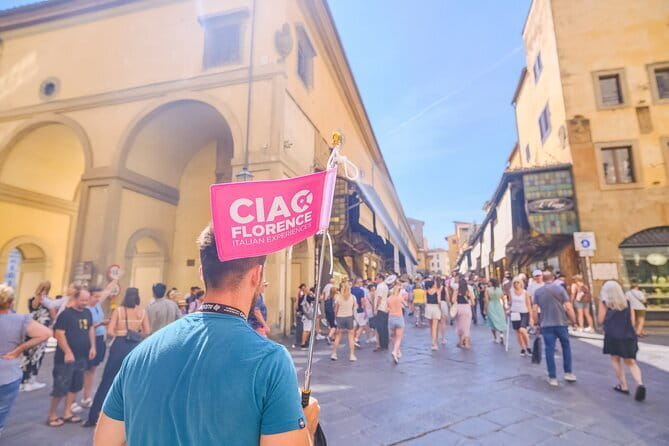
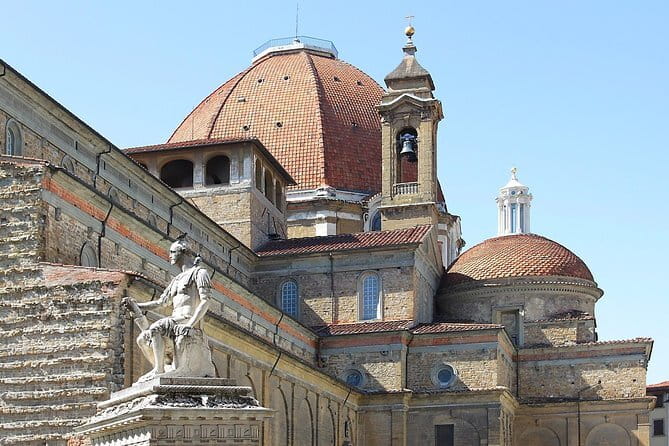
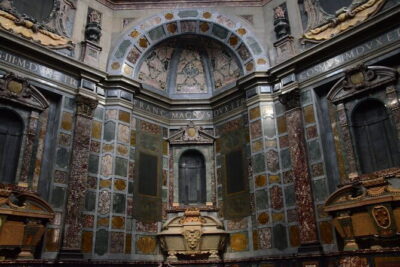
Next up is Cappelle Medicee, the Medici mausoleum. This is where power gets personal. A ruling family doesn’t just want control while alive—they want memory controlled too. Mausoleums are designed to make lineage visible and permanent.
The tour window is about 10 minutes, and it’s listed as free admission for this stop. Treat it like a “get the feeling” moment. You’re meant to understand how the Medicis used burial and patronage to shape public identity.
A quick caution: since the stop is brief, plan to do your deeper photos and reading afterward if you want more. The guided part is the map; your personal curiosity is the engine.
Stop 3: Palazzo Medici Riccardi—where the story starts to show teeth
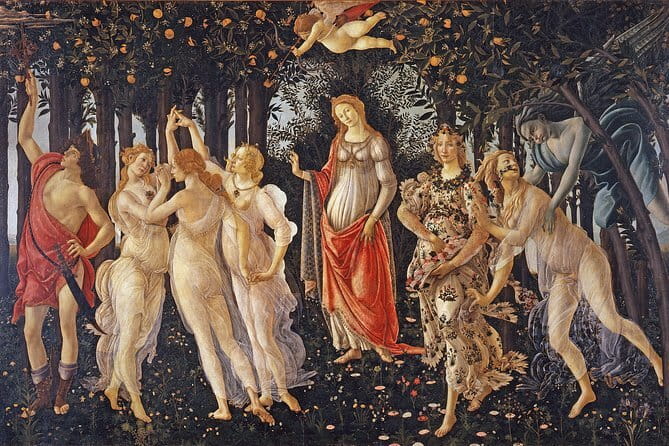
Palazzo Medici Riccardi is your next stop, and it’s specifically called the first Medici residence in the San Lorenzo district. This is one of the places where the Medici name stops being abstract and becomes a real architectural footprint.
In a story-driven tour like this, the key value of Palazzo Medici Riccardi isn’t just that it’s famous. It’s that it’s the beginning—the point where you can start comparing what comes later. When you eventually see Piazza della Signoria and Palazzo Vecchio, you’ll have a clearer sense of how the family escalated its visibility.
Time here is about 15 minutes. That’s enough to notice frontage and location, but not enough for a full architectural analysis. If you want the deeper look, you can revisit later on your own with better daylight and fewer schedule constraints.
Stretch your legs on more Florence walking tours



Piazza San Giovanni: Duomo views and the lineup you can’t unsee
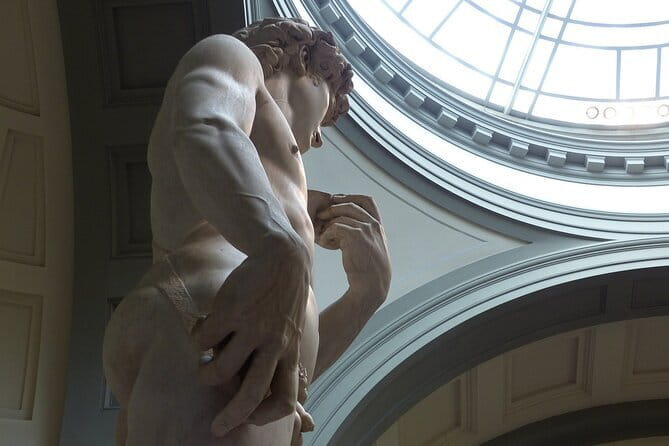
Then you step into Piazza San Giovanni, a square built around a major cathedral complex. You’ll get a chance to admire the Cathedral area with Brunelleschi’s Dome, plus the Giotto bell tower and the Baptistery.
This stop is about 15 minutes, and it’s one of those moments where the guide’s job is to connect the view to the politics you’re hearing. Florence’s great buildings didn’t sit quietly in the background. They were part of who had the right to lead—and who could pay for glory.
If you’re trying to photograph efficiently, arrive with an idea of what you want: dome-centered shots, bell-tower angles, or street-level perspective toward the Baptistery. Even if you can’t control the crowds, you can still control your framing.
This is also a “pause and orient” stop. Once you understand what you’re seeing here, later stops feel more legible rather than random.
Piazza della Signoria and Palazzo Vecchio: the political stage
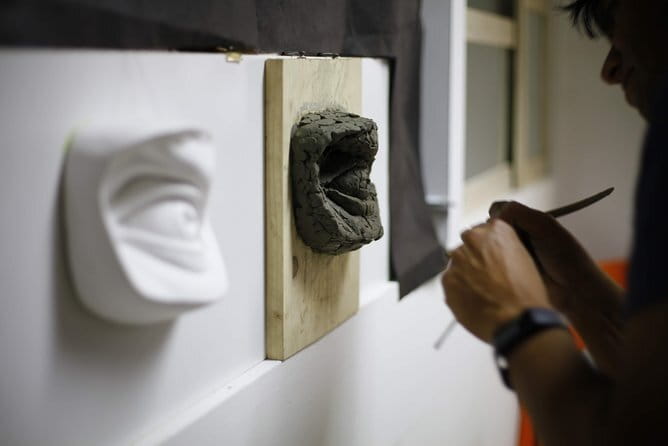
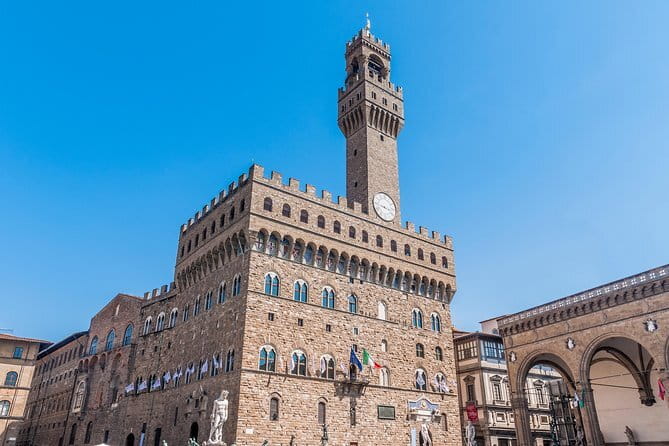
Your route then brings you to Piazza della Signoria, where you can see Palazzo Vecchio, described as the second Medici residence. Piazza della Signoria is the kind of place that feels like a theater even when nothing is happening. The Medicis weren’t just living near power—they were living on a stage where power was constantly performed.
The visit is about 15 minutes. Expect the guide to connect what you see to how the Medicis needed visibility, alliances, and control. You’ll also likely hear how the family’s status changed over time and how rival power struggles shaped their public image.
Here’s a practical takeaway: if you want to feel the flow of history in Florence, your best tool is comparison. After this plaza, you should be able to look back to Palazzo Medici Riccardi and forward to Pitti and say: okay, this is the “upgrade path” in residences and authority.
Santa Felicita and the Vasari Corridor exterior trail
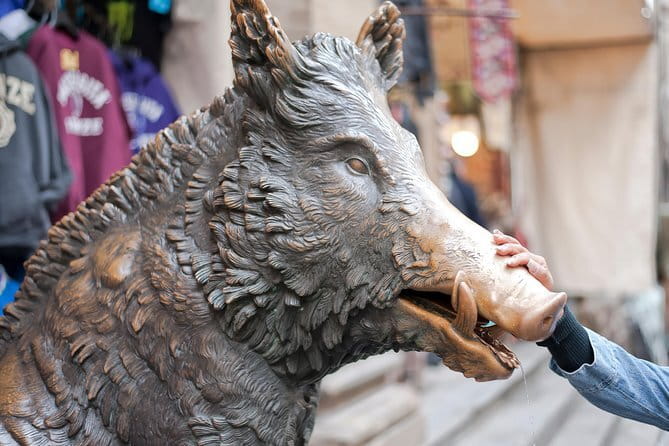
This is the “wow, that’s clever” stop: Santa Felicita. Above the church, you can see the Vasari Corridor exterior—described as a secret and comfortable passageway used by the Medici Grand Dukes of Tuscany to move between Palazzo Pitti and offices in Palazzo Vecchio without being seen by citizens.
The time here is about 10 minutes, but the value is outsized because it changes how you interpret the city. Once you understand that rulers could move privately above the streets, Florence stops being only a walk-and-look museum. It becomes a system built for observation and control.
Also, this is where the guide’s clarity matters most. You’re standing in a public area while trying to read a hidden-in-plain-sight detail. If the guide speaks clearly and keeps you oriented, you’ll leave with a mental image that makes the corridor feel real. If the guide is hard to hear or hard to spot, you might struggle to connect what you’re looking at to the story.
If you’re sensitive to sound issues, try to stand where you can see the guide’s face and gesture. Don’t let the crowd pull you to the wrong angle.
Ponte Vecchio: old bridge, instantly recognizable, easy to enjoy
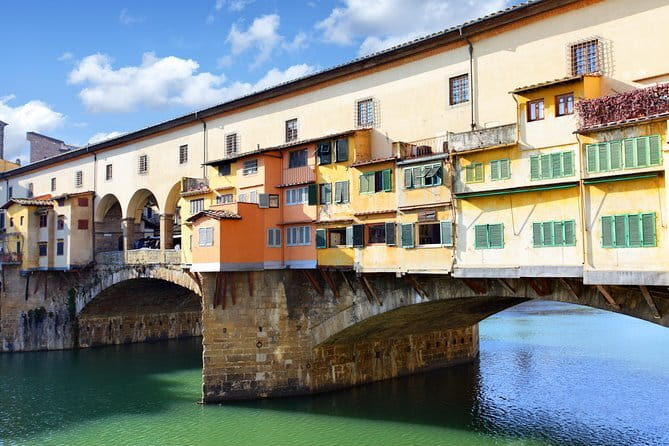
You finish this main walking stretch with Ponte Vecchio, described as the oldest bridge in Florence and also the most famous.
This stop is about 10 minutes. It’s not a “deep scholarship” moment. It’s the payoff: a landmark that gives your eyes a break and gives you something to reference later. Once you’ve crossed it, you’ll naturally start noticing river angles and the way buildings align above the Arno.
The best tours use Ponte Vecchio not just as a photo stop, but as a perspective stop. From here, the whole city feels more connected. You’ll also understand why the Medici route could feel strategic: moving between major centers while staying as hidden as possible.
Boboli Gardens option: Porcelain Museum and Bardini Gardens included
If you choose the Boboli Gardens upgrade, the tour adds about 1 hour at Giardino di Boboli. The gardens are described as a historical park, born as the grand-ducal garden of Palazzo Pitti.
The big practical value here is that your Boboli ticket is listed as skip-the-line and includes entrance at the Porcelain Museum and Bardini Gardens. That means you’re not just paying for plants and paths. You’re getting a broader visit that can keep you interested even if gardening isn’t your top hobby.
Because the guided visit in museums isn’t included, think of this part as self-guided time. Your guide sets the context on the Medici story; you walk through the rest at your pace. If you like wandering, that’s a win. If you only want the guide’s narration, you may wish the museum time came with commentary.
Time-wise, you’ll get more from Boboli if you move slowly enough to notice views and structure rather than trying to “finish” it like a checklist.
Palazzo Pitti option: skip-the-line museums and the Grand Dukes’ collection
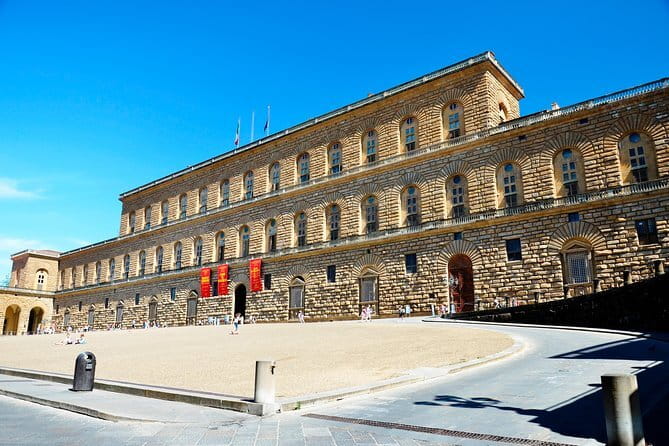
If you choose the Pitti Palace upgrade, you get a skip-the-line ticket and about 1 hour at Palazzo Pitti. This palace is described as the last Florentine residence of the Medicis.
Your included access (with the Pitti ticket) covers:
- Palatine Gallery
- Gallery of Modern Art
- Museum of Fashion and Costume
- Treasure of the Grand Dukes
That mix is why this ticket can feel like good value. You’re not locked into one type of museum. If the Renaissance arts aren’t enough, fashion and costume might pull you in. If paintings bore you after an hour, the way the palace collection shifts into other interests can reset your attention.
Again, note the key point: the guided visit inside Pitti is not included. So plan to act like the guide for yourself. Choose 2 or 3 rooms to prioritize rather than trying to see everything. One hour is a sprint in a palace.
Why the guide makes or breaks this route (and what to do)
A walking tour through Florence rewards clear communication. This one moves across crowds and open squares, and some stops rely on you spotting what the guide is describing—especially the Vasari Corridor exterior.
From the feedback that circulates around this kind of tour, you’ll usually have a standout guide experience. People praised guides such as Marta for story clarity and Lisa for deep knowledge and for answering questions even after the scheduled time. On the flip side, some groups reported issues like being hard to follow or missing promised ticket logistics for Boboli.
Your best move as a traveler is simple:
- If you’re unsure where the group is heading, ask early and re-center.
- If sound quality is an issue, step closer rather than guessing.
- If you added Boboli or Pitti tickets, double-check your booking selection before you start so you’re not relying on memory at the museum entrances.
Also bring patience for weather. It’s outdoors much of the way, and Florence drizzle can make pavements slippery and crowds more chaotic.
Value and pacing: is $100 worth it?
At $100, you’re paying for a guided walk (about 2 hours approx.), plus assistance at the meeting point and a professional local guide. You’re also paying for routing intelligence: someone else does the sequencing so you don’t waste half a day figuring out what connects to what.
The value gets better if you add the skip-the-line options. The ticket upgrades matter because Florence can mean long waits at big sites. Here, skip-the-line entrance is explicitly part of the selected options for Pitti Palace or Boboli Gardens.
A good reality check: even with tickets included, your experience won’t be a full-day escorted museum tour. The palace and gardens time is self-guided. You’ll need a bit of independent momentum—pick a few must-sees and let the rest be bonus.
If you want one affordable, story-focused way to get your Florence bearings fast, this is a strong fit. If you already have a deep interest in Medici art and you love reading quietly, you might wonder if you need the guide at all. In that case, you can still do the route on your own—but you’d be paying in time spent sorting connections.
Who should book the Medici Mile walk
This tour fits best if:
- You want a coherent story across multiple neighborhoods, not a disconnected monument checklist.
- You’re curious about how power works in real places—Medici churches, palaces, and political squares.
- You like walking and you can handle short stops with crowds.
It also works nicely if you’re traveling with someone who wants both drama and practicality. The walk gives you the Renaissance big moments, but the end at Palazzo Pitti puts you in position for a flexible follow-up.
If you’re someone who hates crowds and needs lots of silent time, you might find the plazas tiring. But if you plan your day around the early part of your schedule, you’ll likely enjoy it more.
Should you book the Medici Mile Walking Tour?
If you want a guided route that turns Medici names into visible geography, I’d book it. The combination of San Lorenzo, Palazzo Medici Riccardi, Piazza della Signoria, the Santa Felicita Vasari Corridor exterior view, and Ponte Vecchio gives you a strong storyline in a tight format. Then, if you add Boboli Gardens or Palazzo Pitti, you can extend the day with skip-the-line access to major collections.
The only “pause” I’d have is about pacing and communication. This is a walking tour, not a slow paced museum visit, and the Vasari Corridor stop depends on you being able to track the guide in a crowd. If you value quiet and deep interior commentary, consider whether you want to spend that time elsewhere after the walk.
If your goal is to get the Medici map in your head quickly, this tour delivers.
FAQ
How much does the Medici Mile Walking Tour cost?
The price listed is $100.
How long is the tour?
The duration is approximately 2 hours.
What do I get with the ticket?
You’ll receive assistance at the meeting point and a 2-hour guided visit with a local professional guide, plus a mobile ticket. If you select upgrades, you’ll also get skip-the-line entrance tickets for Pitti Palace and/or Boboli Gardens.
Where does the tour start and end?
It starts at Via de’ Martelli, 50, 50122 Firenze FI, Italy and ends at Palazzo Pitti, Piazza de’ Pitti, 1, 50125 Firenze FI, Italy.
Are Boboli Gardens and Palazzo Pitti guided during the visit?
No. The guided visit in Pitti Palace or Boboli Gardens is not included. You do get the entrance ticket if you select the upgrade, but the museum/gardens time is self-guided.
What language is the tour offered in?
From April to October, the guided visit is monolingual. From November 1st, 2024 to March 31st, 2025, Spanish is confirmed with a minimum of 4 participants.
Is it a small group?
Yes. The tour has a maximum of 20 travelers.
Is free cancellation available?
Yes. You can cancel for a full refund up to 24 hours in advance of the experience start time.
More Florence Tours to Weigh Up
- The Best tour in Florence: Renaissance & Medici Tales – guided by a STORYTELLER
★ 5.0 · 12,316 reviews - The Best Tour in Florence: Renaissance and Medici Tales
★ 5.0 · 10,810 reviews - Florence: Chianti Wineries Tour with Wine Tasting
★ 4.5 · 10,071 reviews - Florence: Duomo Cathedral 60-Minute Guided Tour
★ 3.7 · 6,829 reviews - Florence: Hop-on Hop-off Bus Tour: 24, 48 or 72-Hour Ticket
★ 4.0 · 6,283 reviews
More Florence Tours We Have Reviewed
- Florence: Skip-The-Line Uffizi Gallery Timed Entry Ticket
★ 4.5 · 27,832 reviews - Tuscany Day Trip from Florence: Siena, San Gimignano, Pisa and Lunch at a Winery
★ 5.0 · 21,634 reviews - Florence: Timed Entry to Michelangelo’s David + Audio App
★ 4.6 · 19,496 reviews - Florence: Leonardo Interactive Museum Entry Ticket
★ 4.5 · 12,957 reviews - Florence: Michelangelo’s David Skip-the-Line Entry Ticket
★ 4.5 · 12,764 reviews
The Medici Story Continues
- The Best tour in Florence: Renaissance & Medici Tales – guided by a STORYTELLER
★ 5.0 · 12,316 reviews - The Best Tour in Florence: Renaissance and Medici Tales
★ 5.0 · 10,810 reviews - Uffizi Gallery: Renaissance Masterpieces Guided Tour
★ 4.6 · 6,070 reviews - Florence: Renaissance and Medici Tales Guided Walking Tour
★ 4.8 · 1,549 reviews - Guided Medici Tour Florence: Discover Mysteries & History
★ 4.3 · 1,077 reviews
Fresh from our Florence review desk
- Small-Group Pasta Cooking Class and Market Tour in Florence★ 5.0 · 3 reviews
- Palatina Gallery and Pitti Guided Tour in Florence★ 5.0 · 3 reviews
- Tuscan Evening Tour: Fiat 500, 8:30 to 10 PM★ 5.0 · 3 reviews
- Journey into Art: Florence’s Accademia★ 4.5 · 3 reviews
- Paint and Drink Florentine Hills★ 5.0 · 3 reviews
- Truffle hunting and lunch experience, with Vinci and winery.★ 4.5 · 3 reviews
Medici & Renaissance Tours, compared.
 ★ 5.0The Best tour in Florence: Renaissance & Medici Tales – guided by a STORYTELLERFrom $312,316 reviews
 ★ 5.0The Best Tour in Florence: Renaissance and Medici TalesFrom $310,810 reviews
 ★ 4.6Uffizi Gallery: Renaissance Masterpieces Guided TourFrom $886,070 reviews
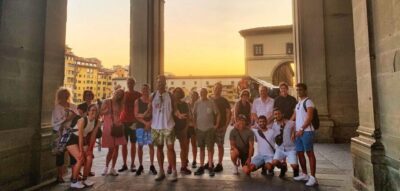 ★ 4.8Renaissance and Medici Tales Guided Walking TourFrom $21,549 reviews
 ★ 4.3Guided Medici Tour Florence: Discover Mysteries & HistoryFrom $571,077 reviews
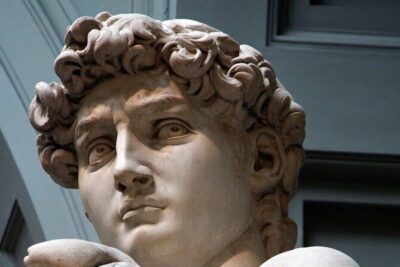 ★ 4.0Accademia Gallery: Michelangelo’s David and High Renaissance ArtFrom $43872 reviews
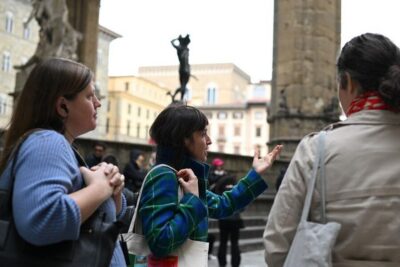 ★ 4.7Guided Tour of Medici Family Secrets and ChapelsFrom $93512 reviews
 ★ 5.0Florence Private Tour: Renaissance, Famous Families & Hidden GemsFrom $199233 reviews
Browse the lists this tour appears in