
Reviewed · MEDICI & RENAISSANCE TOURS
Medici Walking Tour -Small Group
Medici Florence makes sense in 90 minutes. You’ll walk through the core places that shaped the Medici story, with live commentary and an art-focused guide keeping the details readable as you move from palaces to churches.
I especially like two things: the small group cap of 15, which keeps questions in play, and the Medici-centric route that ties architecture and sculpture to the family’s rise, power, and legacy.
One consideration: English quality can vary by guide, even with the provided audio setup. If you’re sensitive to accents or fast delivery, come with realistic expectations and ask to clarify if you miss something.
In This Review
- Key things you’ll notice on this Medici walk
- Why this Medici walk is a smart Florence time investment
- Meeting spot, ending at Oltrarno, and the walk rhythm
- Palazzo Medici Riccardi: Michelozzo’s courtyard and the Medici home base
- Basilica di San Lorenzo: the family’s burial ground and civic influence
- Cappelle Medicee: restoration context and Michelangelo’s Medici sculpture
- Santa Maria del Fiore’s dome: Brunelleschi and the Medici link
- Piazza della Signoria: statues, civic power, and Medici-coded messages
- The covered corridor story and what it teaches about Medici control
- Palazzo Pitti: the Medici purchase that shifted the center of gravity
- Price and value: does $34.81 make sense for your Florence day?
- Who should book this Medici walking tour (and who should skip it)
- Should you book the Medici Walking Tour – Small Group?
- FAQ
- How long is the Medici walking tour?
- Is the tour in English?
- Is admission included for the sites on the route?
- How big is the group?
- Where do I meet, and where does it end?
- What’s included in the price?
Key things you’ll notice on this Medici walk
- A time-saving 90-minute loop built to get you oriented fast in central Florence
- A capped group of 15 for a more conversational pace than big coach tours
- Audio systems included, helpful for hearing street-level explanations clearly
- Stops are Medici-connected, from palazzi and tombs to the statue-filled Piazza della Signoria
- Most entrances aren’t included, so you’ll enjoy sights from the outside and choose add-ons later if you want to go in
Deeper into Medici Florence and its Renaissance
Why this Medici walk is a smart Florence time investment
Florence has a way of feeling like a museum without walls. This tour tackles that problem by linking the city’s “greatest hits” to one storyline: the Medici family. In about an hour and a half, you get a guided path that shows you how power looked in stone—courtyards, chapels, domes, civic squares, and grand residences.
For me, the value is in the connecting tissue. A lot of Florence walking tours show monuments; fewer help you understand why those specific places matter together. Here, you get explanations that connect patrons (the Medici), architects (like Michelozzo, Brunelleschi, Michelangelo), and artists (including Donatello and Giambologna) so you can later recognize what you’re seeing on your own.
The pace is also a practical fit. You don’t have to dedicate half a day to “big museums” just to understand the Medici footprint. If you’re doing Florence in a busy itinerary, this helps you get your bearings fast and makes the rest of your time more meaningful.
Meeting spot, ending at Oltrarno, and the walk rhythm
You start at Florence Tours on Via Camillo Cavour 21R (50129). The walk ends down in Oltrarno, around 50125, near Palazzo Pitti. That matters because it naturally nudges you in a direction that’s different from the usual “start in the center and go back” pattern.
The route is designed for walking—so think comfortable shoes and an easy attitude. The tour also uses audio equipment, which helps for street noise and distance, especially if the group spreads out at photo stops.
Small-group size (up to 15) changes the feel. You’re not just following a line. You’re more likely to hear your guide’s emphasis clearly and catch the “why” behind the visuals. I like that you can treat the tour like a guided orientation first, then use your remaining time to choose what to revisit in depth.
Palazzo Medici Riccardi: Michelozzo’s courtyard and the Medici home base
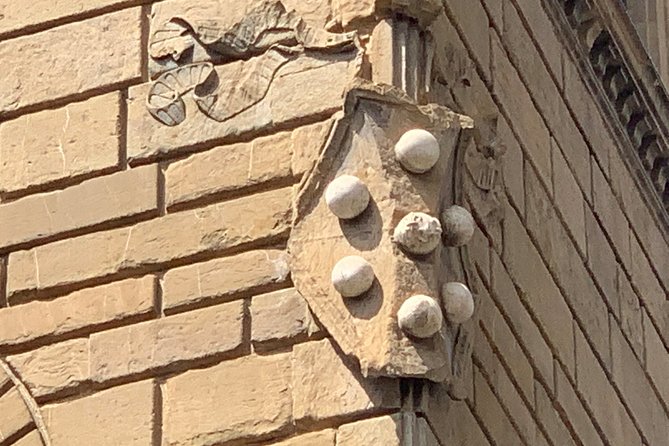
Your first major stop is Palazzo Medici Riccardi, the town mansion built for Cosimo il Vecchio after 1444 by Michelozzo (on today’s Via Cavour). Even if you don’t go inside, the exterior and courtyard are the kind of spaces that make you understand the Medici weren’t just wealthy—they were serious about shaping civic identity.
What I like here is how the tour focuses on survival details. The main courtyard still includes classical relief in the tondi (the circular decorative elements). That’s a reminder that Renaissance patrons didn’t just commission art—they also aimed for continuity, prestige, and a visible “brand” of power.
Your guide also points toward the chapel on the first floor and the frescoes Cosimo commissioned from Benozzo Gozzoli. Those references are gold because they give you names and creative connections right at the start. Admission isn’t included here, so you may see more from the outside than you’d expect from a full indoor visit—but the payoff is context you can carry to later stops.
Practical note: If you later decide you want to step inside, you’ll know exactly what to look for once you’ve heard the story first.
Basilica di San Lorenzo: the family’s burial ground and civic influence
Next comes Basilica di San Lorenzo, closely tied to the Medici because they financed Brunelleschi’s rebuild in 1425. You’re stepping into a church where politics and patronage were part of the design.
This stop is powerful because it’s not just about one building—it’s about a physical timeline. The basilica became the burial place for principal Medici family members from Cosimo il Vecchio through Cosimo III. That means you’re looking at a site that functioned like dynastic memory: successive generations anchored their identity in a shared sacred space.
Expect the tour to highlight how the Medici used funding to shape major public religious architecture. If you’re interested in “who funded what” and why it mattered, this is a strong moment.
Admission isn’t included, so again, you may not get the full chapel-level view you’d get with a dedicated ticket. Still, the location and the Medici connection do a lot of storytelling work for the overall arc.
Cappelle Medicee: restoration context and Michelangelo’s Medici sculpture
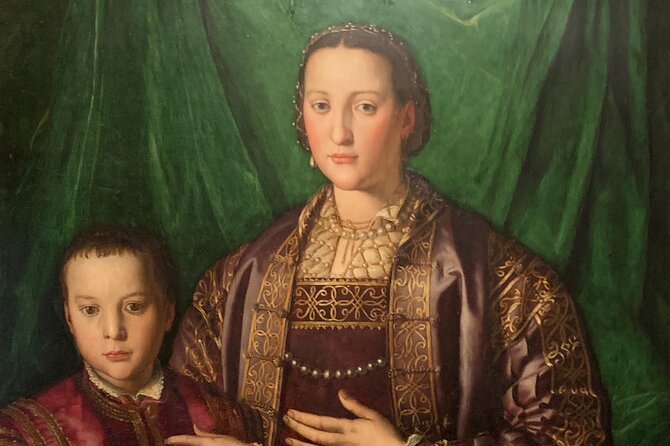
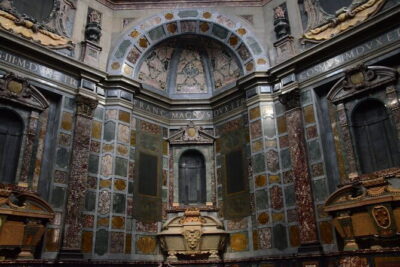
Cappelle Medicee is where you get closer to the Medici legacy as something lived and decorated, not just displayed. The Cappella dei Principi is described as the opulent mausoleum of the Medici grand dukes, and the tour emphasizes that it’s been under restoration since 1999. That detail matters: it frames what you’re seeing as something that’s been cared for over time, not frozen in an imaginary “perfect past.”
Ferdinando I’s plan for decoration is also specific. He intended to use plasters of costly jasper. That’s an example of how luxury wasn’t just a marketing idea—it was part of how authority looked in stone, surfaces, and color.
The tour also points out the back passage that connects the Cappella dei Principi to the New sacristy. The New sacristy was built to balance Brunelleschi’s old Sacristy by Michelangelo. Inside, you’ll hear about Medici tombs decorated with statues carved by Michelangelo.
Admission isn’t included here, so your experience will depend on what’s accessible during the tour format that day. But even from what’s outside or partially visible, you can walk away with the key names and design logic. That makes later visits much more satisfying because you’re not starting from zero.
Stretch your legs on more Florence walking tours
Santa Maria del Fiore’s dome: Brunelleschi and the Medici link
You’ll also pass by the Dome of Santa Maria del Fiore, tied to Filippo Brunelleschi. The tour frames Brunelleschi as an architect who worked for the Medici family, linking big engineering achievement to big patronage.
This is a useful stop even if your main interest is people and politics. The dome is a reminder that Medici influence wasn’t only about painting and sculpture. It was also about architecture on a scale that changed how Florence felt when you looked up.
Also, it helps you see how Florence’s “vertical identity” connects to the family’s civic role. The Medici were at home in public symbolism—whether that symbolism showed up in civic squares (Piazza della Signoria) or in religious architecture towering over the city.
Piazza della Signoria: statues, civic power, and Medici-coded messages
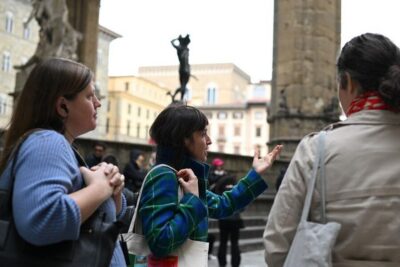
Piazza della Signoria is where Florence becomes loud in stone. You’ll spend around 25 minutes here, and it’s a highlight because it packs major landmarks into one square: Palazzo Vecchio with its crenellated tower, the Loggia della Signoria, and surrounding civic buildings like the Uffizi Gallery and the Palazzo Uguccioni.
The facade of Palazzo Uguccioni is attributed to Raphael, even though Raphael died about thirty years before its construction. That’s the kind of fact that makes you appreciate Florence’s long construction timelines—and how style and attribution can overlap across generations.
Here’s where the tour’s art-spotting helps a lot: the square is ringed with statues that are Medici-relevant or at least politically charged.
Key examples your guide points out:
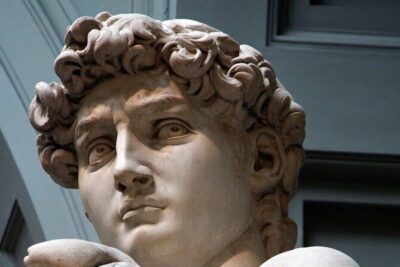
- A copy of Michelangelo’s David (the original is in the Galleria dell’Accademia nearby)
- The Equestrian Monument of Cosimo I, sculpted by Giambologna
- The Fountain of Neptune by Bartolomeo Ammannati
- Il Marzocco (the lion) with a copy of the Florentine lily, linked to Donatello’s original
- Works like Judith and Holofernes, Hercules and Cacus, and scenes in the Loggia dei Lanzi such as the Rape of the Sabine Women and Perseus with the Head of Medusa
Even if you already know some names, the storytelling can change how you look at the crowd of figures. You start asking different questions: Who commissioned this? What message is this sending? How does public space reflect who’s in control?
Admission is free for the square, so it’s also a nice way to balance your day when you’re trying to keep costs under control.
The covered corridor story and what it teaches about Medici control
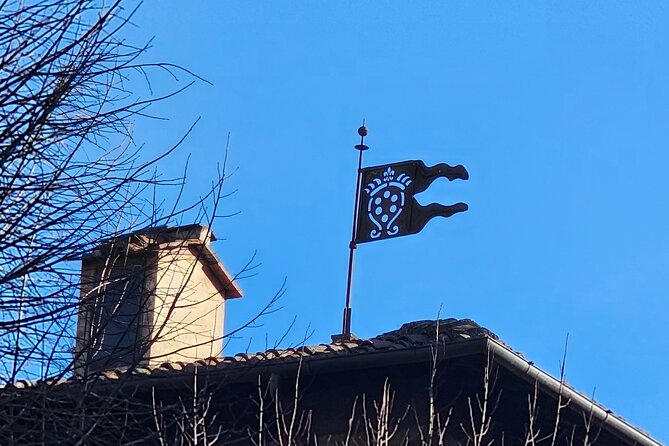
One of the most memorable parts of this style of Medici tour is the discussion of how the family moved through power. The guide often brings up the covered corridor Cosimo built between Palazzo Vecchio and Palazzo Pitti—something that still can be used today.
Even if you don’t walk the corridor itself, it gives you a mental map. It’s a reminder that Medici authority wasn’t only about “being seen.” It was also about controlling routes, access, and who could move where—literally and socially.
I like this kind of detail because it helps the rest of Florence click into place. When you later see the city’s streets and bridges, you understand that elite movement and visibility were designed, not accidental.
Palazzo Pitti: the Medici purchase that shifted the center of gravity
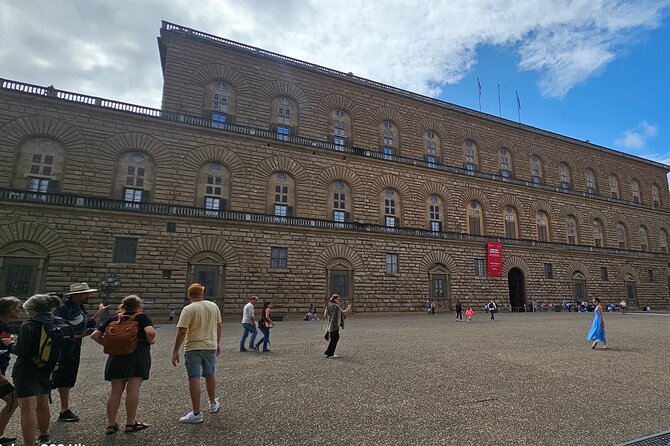
Your final stretch leads to Palazzo Pitti. The Medici bought the palace in 1549, turning it into the chief residence of the ruling families of the Grand Duchy of Tuscany. That’s a big deal, because it marks a shift: power expanded beyond earlier Medici spaces into a larger, more elaborate residence that acted like a treasure house.
The tour explains how it grew as later generations amassed paintings, plates, jewelry, and other luxurious possessions. In other words, Palazzo Pitti isn’t just a home. It’s a collection machine for status—art and luxury gathered under one roof.
Admission isn’t included here, so you may end with more of an exterior experience than an inside “palace day.” Still, the stop works as a satisfying endpoint because you’ve been building toward it: Medici power travels from palazzo to church to civic square, then lands in a residence meant to impress.
If you want a follow-up, this is a great place to decide whether to come back for an indoor visit later with a ticket plan.
Price and value: does $34.81 make sense for your Florence day?
At $34.81 per person for roughly 1 hour 30 minutes, this falls into the “small investment, big orientation” category. You’re paying for live art guidance, live commentary, and audio systems—plus a guided walking route through key Medici-linked spaces.
Here’s the value math that matters: because many stops do not include entrance tickets, the tour is best seen as a guided interpretation, not a full paid-inside museum pass. You’ll still come away with a better understanding of what you’re seeing, which usually makes any later ticketed visits feel more rewarding.
So if you want:
- a fast Medici storyline,
- clear names (architects, sculptors, patrons),
- and an easy way to connect the dots across Florence,
…this price can feel fair. If you want guaranteed interior access to every major site, you’ll likely need additional tickets separately.
Who should book this Medici walking tour (and who should skip it)
This tour is a great fit if you’re an art-and-history person who likes structure. You’ll enjoy it most if you want a guided framework for Florence’s Renaissance power story, not just random “pretty buildings.”
It’s also a good choice for first-timers. The route hits major visuals quickly: Medici homes, Medici burial sites, the dome connection, and the statue-packed civic heart of Florence. You’ll leave with a mental map that helps you plan the rest of your day.
I’d be more careful if:
- you’re relying on strong English delivery and accents make it hard for you to follow quickly (audio devices help, but they don’t fix everything),
- or you expect lots of deep museum time inside ticketed spaces.
Should you book the Medici Walking Tour – Small Group?
If you want an efficient, Medici-focused way to understand Florence in a short window, I’d say yes—especially at this price point. The small-group cap and live commentary make it easier to learn while you walk, and the stops are chosen to connect people, buildings, and sculpture into one readable story.
Book it if you plan to use the tour as your launchpad: you’ll then know what to revisit, what to photograph, and which names to look up later. Skip it if your top priority is full interior access everywhere or if you know you struggle with fast spoken English on day tours.
Either way, going in with realistic expectations about tickets (many aren’t included) will help you get more out of the experience.
FAQ
How long is the Medici walking tour?
It lasts about 1 hour 30 minutes.
Is the tour in English?
Yes, the tour is offered in English.
Is admission included for the sites on the route?
No. Entrance tickets are not included for multiple stops, while Piazza della Signoria is free.
How big is the group?
The tour is capped at 15 people for a more personalized experience.
Where do I meet, and where does it end?
You meet at Florence Tours on Via Camillo Cavour 21R, and the tour ends in Oltrarno near Palazzo Pitti.
What’s included in the price?
The tour includes an art guide, live commentary, audio systems, and a walking route along Medici residences. Tips, entrance tickets, and hotel pickup are not included.
More Florence Tours to Weigh Up
- The Best tour in Florence: Renaissance & Medici Tales – guided by a STORYTELLER
★ 5.0 · 12,316 reviews - The Best Tour in Florence: Renaissance and Medici Tales
★ 5.0 · 10,810 reviews - Florence: Chianti Wineries Tour with Wine Tasting
★ 4.5 · 10,071 reviews - Florence: Duomo Cathedral 60-Minute Guided Tour
★ 3.7 · 6,829 reviews - Florence: Hop-on Hop-off Bus Tour: 24, 48 or 72-Hour Ticket
★ 4.0 · 6,283 reviews
More Florence Tours We Have Reviewed
- Florence: Skip-The-Line Uffizi Gallery Timed Entry Ticket
★ 4.5 · 27,832 reviews - Tuscany Day Trip from Florence: Siena, San Gimignano, Pisa and Lunch at a Winery
★ 5.0 · 21,634 reviews - Florence: Timed Entry to Michelangelo’s David + Audio App
★ 4.6 · 19,496 reviews - Florence: Leonardo Interactive Museum Entry Ticket
★ 4.5 · 12,957 reviews - Florence: Michelangelo’s David Skip-the-Line Entry Ticket
★ 4.5 · 12,764 reviews
The Medici Story Continues
- The Best tour in Florence: Renaissance & Medici Tales – guided by a STORYTELLER
★ 5.0 · 12,316 reviews - The Best Tour in Florence: Renaissance and Medici Tales
★ 5.0 · 10,810 reviews - Uffizi Gallery: Renaissance Masterpieces Guided Tour
★ 4.6 · 6,070 reviews - Florence: Renaissance and Medici Tales Guided Walking Tour
★ 4.8 · 1,549 reviews - Guided Medici Tour Florence: Discover Mysteries & History
★ 4.3 · 1,077 reviews
Fresh from our Florence review desk
- Small-Group Pasta Cooking Class and Market Tour in Florence★ 5.0 · 3 reviews
- Palatina Gallery and Pitti Guided Tour in Florence★ 5.0 · 3 reviews
- Tuscan Evening Tour: Fiat 500, 8:30 to 10 PM★ 5.0 · 3 reviews
- Journey into Art: Florence’s Accademia★ 4.5 · 3 reviews
- Paint and Drink Florentine Hills★ 5.0 · 3 reviews
- Truffle hunting and lunch experience, with Vinci and winery.★ 4.5 · 3 reviews
Medici & Renaissance Tours, compared.
 ★ 5.0The Best tour in Florence: Renaissance & Medici Tales – guided by a STORYTELLERFrom $312,316 reviews
 ★ 5.0The Best Tour in Florence: Renaissance and Medici TalesFrom $310,810 reviews
 ★ 4.6Uffizi Gallery: Renaissance Masterpieces Guided TourFrom $886,070 reviews
 ★ 4.8Renaissance and Medici Tales Guided Walking TourFrom $21,549 reviews
 ★ 4.3Guided Medici Tour Florence: Discover Mysteries & HistoryFrom $571,077 reviews
 ★ 4.0Accademia Gallery: Michelangelo’s David and High Renaissance ArtFrom $43872 reviews
 ★ 4.7Guided Tour of Medici Family Secrets and ChapelsFrom $93512 reviews
 ★ 5.0Florence Private Tour: Renaissance, Famous Families & Hidden GemsFrom $199233 reviews
Browse the lists this tour appears in