
Reviewed · HORSES
Medieval Carriage Ride with Horses and Local Tour Guide
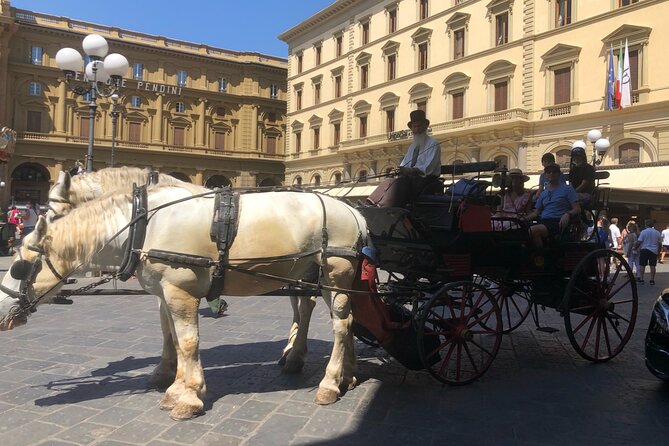
A carriage ride through Florence sounds simple, then it clicks. In about an hour, you glide past the city’s biggest landmarks while a local guide puts street-level context to the scenes—squares, bridges, churches, and famous museums—without turning your day into a line-wait contest. It’s a private experience for your group, offered in English, with a mobile ticket that makes day-of planning easy.
I love the pacing. This route is built for getting your bearings fast: you’re not only seeing places like Piazza della Signoria and Ponte Vecchio, you’re also getting short explanations as you go. I also really like the human touch from the guides, including Stefano and Giacoma, who focus on what you’re actually looking at, including the small details you’d miss if you were just walking through.
One consideration: this is a weather-dependent ride, so you’ll want a backup plan mentally if conditions aren’t great. Also, some of the landmark areas on the route are listed with admissions not included, so if you want to go inside places like the Uffizi or Dante’s house, you’ll need to plan that separately.
In This Review
- Key highlights you can’t miss
- Why a medieval carriage ride works so well in Florence
- The 1-hour loop: how the route keeps you moving
- Starting at Piazza della Repubblica: the city’s showpiece intro
- Dante’s neighborhood, without the full ticket headache
- Piazza San Firenze: Bargello-area details in miniature form
- Piazza della Signoria and Palazzo Vecchio: where Florence flexes
- Ponte Vecchio: your bridge with a story attached
- The Uffizi edge: a museum reference point you’ll remember
- Palazzo Spini Feroni: Ferragamo surroundings with context
- Via de’ Tornabuoni and Santa Maria Novella’s ancient pharmacy
- Piazza San Giovanni: a lineup of monuments in one glance
- The Duomo approach: closing with Florence’s biggest magnet
- Price and value: what $54.44 gets you (and what it doesn’t)
- Guides matter: how Stefano and Giacoma change the feel
- Practical tips so your ride stays comfortable
- Who this carriage ride is perfect for
- Should you book this medieval Florence carriage ride?
- FAQ
- How long is the medieval carriage ride in Florence?
- What is the price per person?
- Where do we meet for the tour?
- Is the tour in English?
- Does the tour include entry to museums like the Uffizi or Dante’s house?
- Is this a private tour?
- What if the weather is poor?
Key highlights you can’t miss
- One-hour, no-rush overview: a tight loop around the core sights, ideal if you only have a short window.
- Short stops, smart context: quick explanations at places like Piazza della Repubblica and Ponte Vecchio so names make sense.
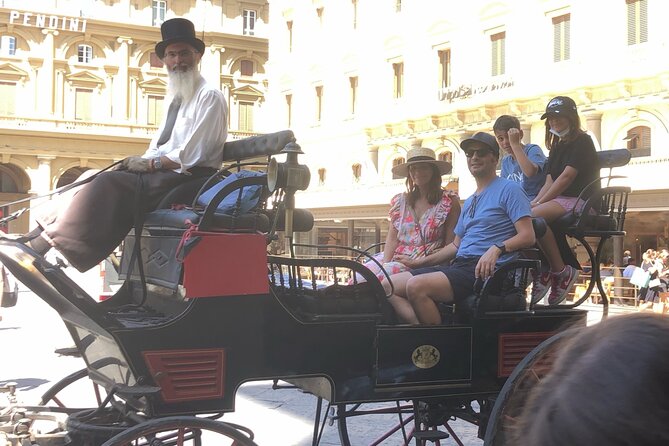
- Private for your group: you ride together without mixing with strangers.
- Guides like Stefano and Giacoma: the storytelling stays grounded in what you’re seeing right now.
- Pass-by route through Florence’s power centers: Bargello-area stops, Palazzo Vecchio surroundings, and the Duomo approach.
- Many included-exterior views, selective museum entry: the route passes famous sites; you’re not automatically buying museum tickets.
With a local guide, more of Florence to explore
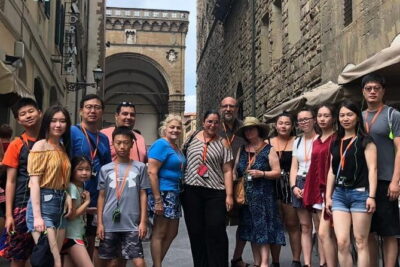
Why a medieval carriage ride works so well in Florence
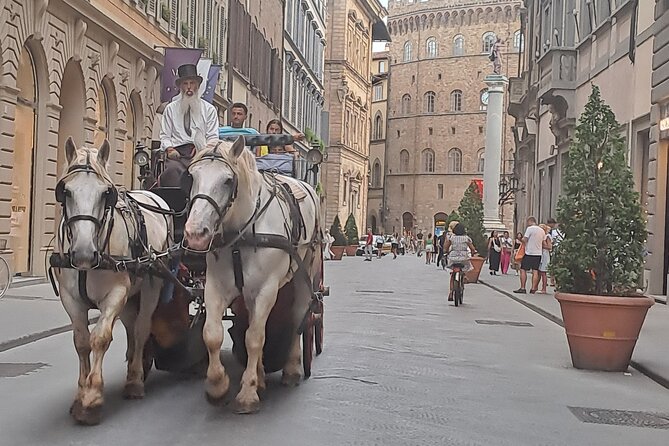
Florence can be intense. Every block seems to shout its own importance—art, politics, religion, the whole Renaissance loudspeaker. This ride solves that problem by giving you motion plus narration. The horses set a slower rhythm, and the guide uses that quiet time to translate what you’re looking at into a story you can remember.
I like that it’s not trying to do everything. In one hour, you get a workable mental map: where the Duomo area sits, how Ponte Vecchio fits the layout, and why major squares matter. If you’re the type who wants places to connect in your head (rather than just collect photos), you’ll feel that payoff quickly.
And because it’s a private experience, the tone stays comfortable. You’re not stuck listening to a crowd scramble for space every time the guide points out a building.
The 1-hour loop: how the route keeps you moving
The ride is about one hour, and it returns you to the starting point. You begin at Rinascente Firenze, Piazza della Repubblica 4, 50123 Firenze FI, Italy, and the tour ends back there.
What that means for you in real life: you’re not committing to half a day of logistics. It’s a great “first-day” activity, or a reset on a day when you’ve already visited museums and want the streets to feel easier again.
Timing detail that matters: the stops are short, roughly 5 minutes each. You won’t be wandering for long. Instead, the guide gives you the essentials as you pass key points—so you can keep the momentum without feeling like you missed your chance to learn.
Starting at Piazza della Repubblica: the city’s showpiece intro
Your first stop is Piazza della Repubblica. This is one of those Florence squares that immediately tells you you’re in the center of things—public life, movement, meeting points, and the kind of architecture that frames a city’s identity.
You’ll get a historical explanation as you pass next to the piazza. This is a smart opener because it starts you with context rather than throwing you into the middle of names and dates. If you’re the kind of person who needs to know why a place matters before you zoom in on the details, this is where you’ll feel the benefit.
Dante’s neighborhood, without the full ticket headache
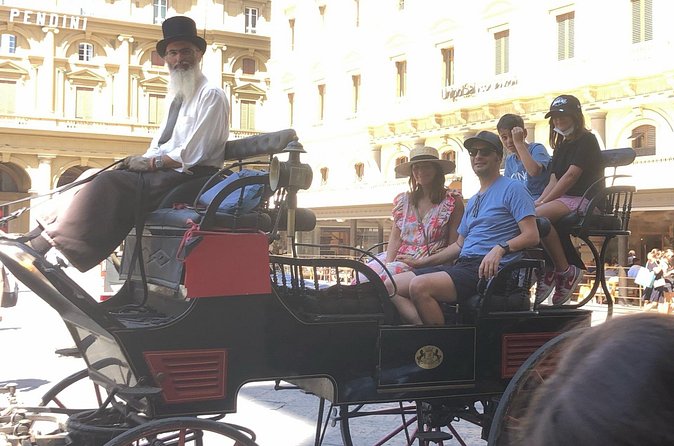
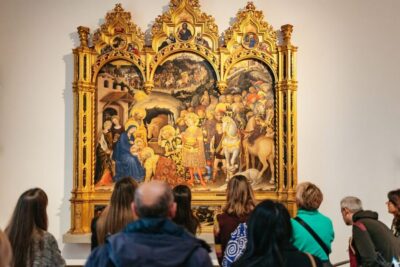
Next, you pass by Museo Casa di Dante, close to Dante’s house. This is a quick stop with explanation, and it’s marked with admission not included.
In plain terms: you’re getting the reference point, not the museum entry. That’s still useful. Dante’s connection is one of those Florence threads that helps everything feel more grounded in specific people, not just famous buildings. If you later decide you want to go inside, you can schedule it when you have more time.
Tip for value: if museum tickets are your thing, use this carriage ride to decide whether you want to come back for deeper study. If museums aren’t your thing, you still get the street-level meaning without spending extra.
Piazza San Firenze: Bargello-area details in miniature form
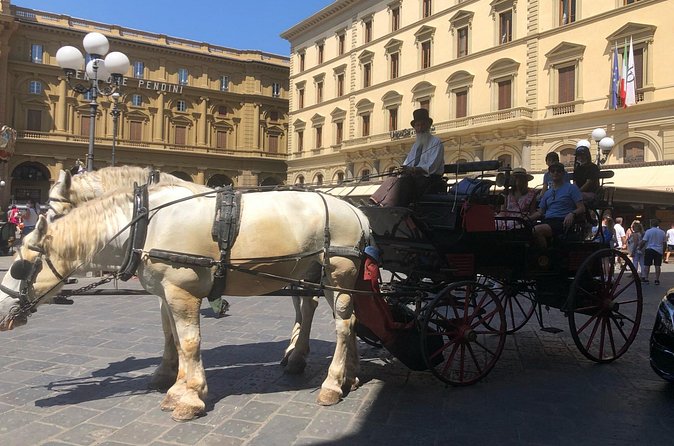
From there you cross Piazza San Firenze, with a historical explanation that touches major landmarks around the Bargello Museum, Palazzo Gondi, and the complex of San Filippo Neri.
This is one of those stops where the guide’s job is essential. Those names can blur together when you’re walking on your own. From the carriage route, you get a quick sense of what each place represents—power, patronage, art, and religious life—without turning your ride into a museum day.
A small drawback potential: because the stops are brief and you’re not going inside, you won’t leave with the same depth you’d get from a full museum visit. But as a way to orient yourself before you choose what to explore later, this works.
Prefer something else? A few more Florence tours to weigh up
Piazza della Signoria and Palazzo Vecchio: where Florence flexes
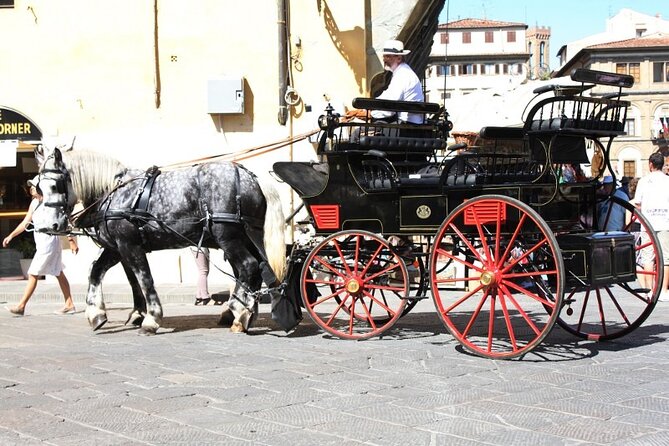
You then cross Piazza della Signoria, picking up a historical explanation tied to Palazzo Vecchio.
This area is Florence’s political and cultural center for many centuries. When you hear a little bit of context here, it changes how you see the square. You start noticing the relationships: how power buildings sit beside art-adjacent spaces, and why the square layout matters.
Even if you’ve seen photos, this stop helps you understand the layout. Florence is famous for individual monuments, but the magic often comes from how they relate to each other—this piazza is where that becomes obvious.
Ponte Vecchio: your bridge with a story attached
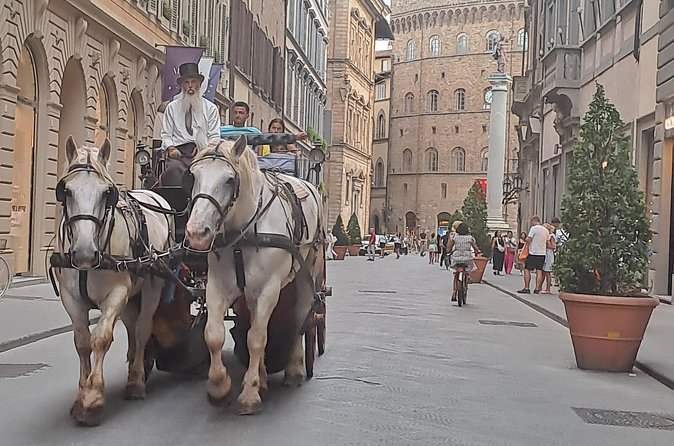
Next is a pass next to Ponte Vecchio, with explanation as you go by.
Ponte Vecchio is more than a postcard. It’s a signature Florence moment because it’s both a practical crossing and a highly symbolic one. With the guide talking as you move, you’re not just staring at the bridge—you’re getting a reason it earned its fame and why it keeps drawing attention.
If you like architecture and city planning, this is a stop that rewards paying attention. And because the ride keeps you from fighting the crowd flow, you can actually take it in without the usual scramble.
The Uffizi edge: a museum reference point you’ll remember
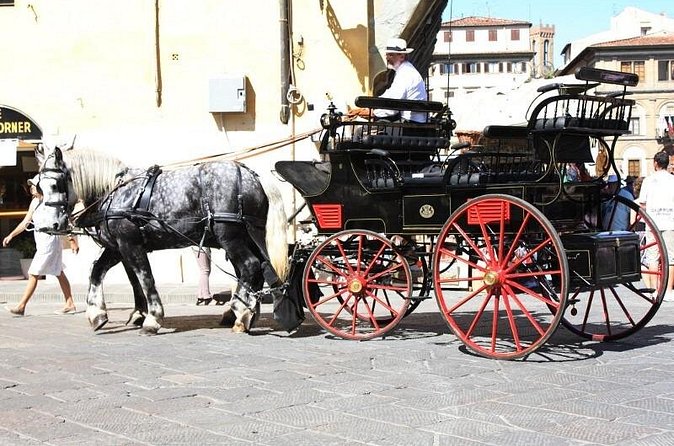
You’ll pass by the Gallerie Degli Uffizi area with a historical explanation. Entry is marked as not included.
Here’s the practical value: this carriage stop helps you understand where the Uffizi sits in the city’s core. Later, when you stand in front of the building or plan a museum day, you’ll feel like you already have the map in your head.
If you’ve got Uffizi on your list, treat this stop as a staging moment. You’ll know which way you’re headed, and you can choose a museum time that fits your energy.
Palazzo Spini Feroni: Ferragamo surroundings with context
The route also passes next to Palazzo Spini Feroni, with explanation tied to what’s often associated with the Ferragamo museum area. Admission is marked as not included.
Even if fashion museums aren’t your top priority, this stop still helps. It’s another “anchor building” moment: Florence isn’t only one era or one art category. You’re seeing how famous structures stay relevant by hosting new uses over time.
Via de’ Tornabuoni and Santa Maria Novella’s ancient pharmacy
Crossing Via de’ Tornabuoni, you’ll get historical explanation connected to the Ancient Pharmacy of Santa Maria Novella.
This is a quieter kind of Florence stop, and that’s why it’s good. Not every highlight is a big square or a major museum facade. Commerce, health, and everyday services shaped the city as much as politics and art did.
If you like the idea that Florence was built by people who needed practical things—like medicine and trade—this segment is a nice shift in mood.
Piazza San Giovanni: a lineup of monuments in one glance
Next is Piazza San Giovanni, with an explanation of the monuments in the area.
This stop is useful because it points you toward what to notice next—especially if you’re heading toward the Duomo zone and want the components to make sense as you approach. Piazza San Giovanni is one of those places where Florence’s religious architecture feels like a whole system rather than separate buildings.
The Duomo approach: closing with Florence’s biggest magnet
Finally, you have a passage next to the Florence Cathedral (Duomo), again with a short explanation.
This is a strong ending choice. The Duomo area is so visually dominant that it can feel like overload if you see it with zero context. By finishing here after learning the names and roles of earlier landmarks, you’ll likely appreciate the Duomo more as part of the city’s structure, not just a standalone sight.
Also, ending near where you started means it’s easier to continue your day. You’re back at the meeting point, not stuck halfway across town.
Price and value: what $54.44 gets you (and what it doesn’t)
At $54.44 per person for about one hour, you’re paying for three things: a private carriage experience, a local guide, and a curated loop of top sights.
Is it expensive? Florence attractions can add up fast, especially if you’re buying multiple tickets. Here, you’re not paying for several museum entries on top. Many stops are marked as free admission for the area, while a few major attractions are noted as not included. So you’re mostly paying for the ride plus the storytelling, with the option to add museum tickets if you want to go deeper later.
For me, this is good value when:
- you want an orientation loop early in the trip
- you’d rather spend money on an experience than on lots of museum tickets
- you want to see the core sights without getting stuck in slow-moving pedestrian chaos
If you already know Florence well and plan to do heavy museum days, you might skip this and spend that money elsewhere. But for most first-timers, or anyone who wants a calmer way to connect landmarks, the price feels fair.
Guides matter: how Stefano and Giacoma change the feel
One thing that comes through clearly is that the guides, including Stefano and Giacoma, focus on what you’re seeing right then and there. That’s the difference between a ride that’s just scenic and a ride that actually helps you understand the city.
Their style (from what you experience on the route) leans practical: short context at each stop, names that stick, and explanations tied to specific buildings and squares. You’ll likely find yourself looking at Florence differently afterward—like the streets have captions.
And since it’s private for your group, you can keep the attention on your timing and interests without competing for space.
Practical tips so your ride stays comfortable
Because the route is short and focused, your main success factor is comfort. Wear shoes you can stand in if you need to step on and off briefly, and keep your phone charged so you can compare how the names match what you see.
Bring a light layer if the weather feels changeable. The experience depends on good weather, so if it’s not cooperating, it may be offered on a different date or you’ll get a full refund.
If you plan to do museum entries later, treat this carriage ride as your scouting trip. You’ll already understand where key stops sit, and that saves time deciding what to prioritize.
Who this carriage ride is perfect for
This works especially well if:
- you want a short, high-impact Florence experience without a long walking day
- you’re traveling with mixed ages or energy levels
- you like guided context but don’t want to sit in a classroom for hours
- you’re short on time and want major Florence landmarks connected in your head
It’s also a good pick if you want something different from the usual museum routine. Florence has plenty of art on every corner; this gives you atmosphere plus context with a medieval twist.
Should you book this medieval Florence carriage ride?
I’d book it if you want your Florence trip to start with clarity. For an hour and a single per-person price, you get a guided loop through the city’s core sights—Piazza della Repubblica, Piazza della Signoria, Ponte Vecchio, the approach to the Duomo—plus quick explanations that make the names feel meaningful fast.
I’d hesitate only if you’re hoping for lots of museum entry time on the ride itself. Since some major attractions are marked as admission not included, you’ll likely want to add separate tickets if you want to go inside.
If your goal is to understand Florence while you see Florence, this is a strong use of time.
FAQ
How long is the medieval carriage ride in Florence?
It runs for about 1 hour (approx.) and ends back at the meeting point.
What is the price per person?
The price is $54.44 per person.
Where do we meet for the tour?
You meet at Rinascente Firenze, Piazza della Repubblica 4, 50123 Firenze FI, Italy.
Is the tour in English?
Yes, it’s offered in English.
Does the tour include entry to museums like the Uffizi or Dante’s house?
The route includes passes by major sites, but admission is not included for some places like Museo Casa di Dante, Gallerie Degli Uffizi, and Palazzo Spini Feroni.
Is this a private tour?
Yes. It’s private, so only your group participates.
What if the weather is poor?
This experience requires good weather. If it’s canceled due to poor weather, you’ll be offered a different date or a full refund.
More Guided Florence
- The Best tour in Florence: Renaissance & Medici Tales – guided by a STORYTELLER
★ 5.0 · 12,316 reviews - Florence: Duomo Cathedral 60-Minute Guided Tour
★ 3.7 · 6,829 reviews - Uffizi Gallery: Renaissance Masterpieces Guided Tour
★ 4.6 · 6,070 reviews - Uffizi Gallery Small Group Tour with Guide
★ 4.5 · 4,923 reviews - Florence: Highlights Walking Tour with Expert Guide
★ 4.6 · 4,662 reviews
More Florence Tours to Weigh Up
- The Best tour in Florence: Renaissance & Medici Tales – guided by a STORYTELLER
★ 5.0 · 12,316 reviews - The Best Tour in Florence: Renaissance and Medici Tales
★ 5.0 · 10,810 reviews - Florence: Chianti Wineries Tour with Wine Tasting
★ 4.5 · 10,071 reviews - Florence: Duomo Cathedral 60-Minute Guided Tour
★ 3.7 · 6,829 reviews - Florence: Hop-on Hop-off Bus Tour: 24, 48 or 72-Hour Ticket
★ 4.0 · 6,283 reviews
More Florence Tours We Have Reviewed
- Florence: Skip-The-Line Uffizi Gallery Timed Entry Ticket
★ 4.5 · 27,832 reviews - Tuscany Day Trip from Florence: Siena, San Gimignano, Pisa and Lunch at a Winery
★ 5.0 · 21,634 reviews - Florence: Timed Entry to Michelangelo’s David + Audio App
★ 4.6 · 19,496 reviews - Florence: Leonardo Interactive Museum Entry Ticket
★ 4.5 · 12,957 reviews - Florence: Michelangelo’s David Skip-the-Line Entry Ticket
★ 4.5 · 12,764 reviews
Fresh from our Florence review desk
- Small-Group Pasta Cooking Class and Market Tour in Florence★ 5.0 · 3 reviews
- Palatina Gallery and Pitti Guided Tour in Florence★ 5.0 · 3 reviews
- Tuscan Evening Tour: Fiat 500, 8:30 to 10 PM★ 5.0 · 3 reviews
- Journey into Art: Florence’s Accademia★ 4.5 · 3 reviews
- Paint and Drink Florentine Hills★ 5.0 · 3 reviews
- Truffle hunting and lunch experience, with Vinci and winery.★ 4.5 · 3 reviews
Horses, compared.
 ★ 5.0Horseback Ride in S.Gimignano with Tuscan Lunch Chianti TastingFrom $229453 reviews
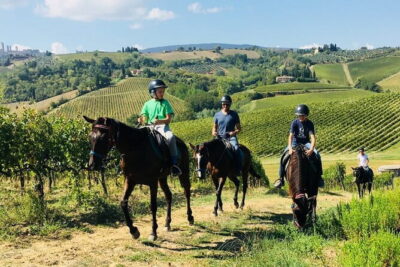 ★ 5.0Horseback Riding with Wine Tour from FlorenceFrom $22960 reviews
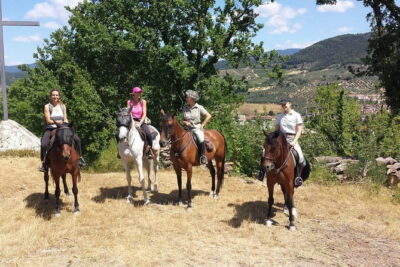 ★ 5.0Horseback riding & Wine Tasting and snack Lunch at noble EstateFrom $35653 reviews
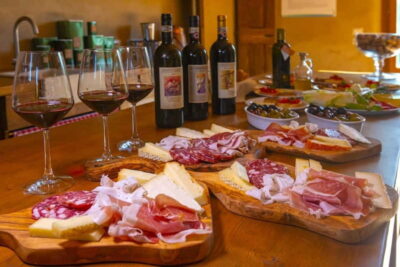 ★ 4.9From Florence: Horse Ride and Wine Tour at Estate with LunchFrom $37742 reviews
 ★ 5.0Horse ride, Olive Oil and local foods tasting in a Tuscan farmFrom $35519 reviews
 ★ 4.8Private Horseback Ride with Wine AperitivoFrom $32817 reviews
 ★ 5.0Horseback Riding in the VineyardsFrom $9616 reviews
 ★ 5.0Private Horseback Ride with Tuscan Lunch or DinnerFrom $31716 reviews
Browse the lists this tour appears in