

Reviewed · MEDICI & RENAISSANCE TOURS
Sex, Drugs & the Renaissance in Florence
Florence turns a little R-rated. This is an adult-only walk that links famous landmarks to the Renaissance city’s scandalous underside, with a tight group size and headsets so you don’t miss the stories.
What I like most is how the tour uses the obvious sights in a new way. You’ll see the Bargello and the Duomo area, but the focus stays on the human drama hiding behind the stone, from class codes to crime and punishment.
One caution: the tone is explicitly adult, and the marketing may not match what some people expect once you’re on the ground. If sexual content (or simply crude talk) isn’t your thing, you should skip this one even if you love Renaissance art.
In This Review
- Key Takeaways Before You Go
- Adult-Only Renaissance Gossip, Right in the City’s Main Sights
- Price and Logistics: Is This $484.01 Worth It?
- Where You Start and How the Walk Feels in Real Life
- Piazza della Repubblica: Florence’s Power Center in One Small Stop
- The Bargello (Bargello Museum): Jail Walls With an Art Museum Smile
- Duomo Cathedral and the Bell Tower: The Famous Façade, Reframed
- Baptistery of San Giovanni: Symbol First, Scandal Second
- Palazzo Medici Riccardi: Where Wealth Meets Control
- Palazzo Davanzati Area: The Street-Level View of Old Florence
- Via Cavour: The Odd Streets That Act Like Clues
- What the Sex, Drugs, and Courtesan Stories Change About Florence
- Who Enjoys This Tour Most (and Who Might Feel Mismatch)
- Small Group Size and Headsets: The Practical Reasons This Feels Personal
- The Most Praised Parts: Storytelling That Makes the Sights Stick
- Should You Book This Sex, Drugs & the Renaissance in Florence Tour?
- FAQ
- FAQ
- How long is the tour?
- What is the group size limit?
- Is this tour for adults only?
- Where does the tour start?
- What stops are included?
- Are entrance tickets included?
- What’s included besides the guide?
- Is the ticket mobile?
- Will I get confirmation after booking?
- Can I cancel and get a refund?
Key Takeaways Before You Go
- 18+ subject matter means this is not a gentle history stroll.
- Small-group size (maximum 14) helps the guide keep the pace conversational instead of lecture-style.
- Headsets make it easier to hear the guide in busy piazzas.
- Landmarks + side streets: you get the Duomo complex, Baptistery, Medici palace, and the Bargello jail story.
- Free admission stops (where listed) help the value feel more like a real tour than a ticket bundle.
Deeper into Medici Florence and its Renaissance
Adult-Only Renaissance Gossip, Right in the City’s Main Sights
This tour treats Florence like a living crime scene—old rumors, power plays, and street-level behavior tied directly to places you already recognize. It’s built around the idea that the Renaissance wasn’t only masterpieces; it was also exploitation, medicine myths, and people using status like a weapon.
I like the bluntness of the approach. Instead of asking you to admire from far away, your guide points you toward what different neighborhoods, buildings, and street quirks were used for. Florence becomes less postcard and more puzzle.
You should also know what you’re signing up for: the minimum age is 18, and the content is meant for adults. One big theme is the city’s economy leaning on the lives of courtesans—plus talk about drugs and strange “healing” concoctions that people believed in.
Price and Logistics: Is This $484.01 Worth It?

At $484.01 per person for roughly 2 hours 15 minutes, the price is on the steep side for a walking tour. So here’s what justifies it in practical terms.
You’re paying for a small group (max 14), a local guide who tells stories rather than recites dates, and headsets so the narration doesn’t get swallowed by crowd noise. A welcome drink is included too, which sounds small until you’ve been walking uphill and you want one extra moment to reset.
There’s also a value angle hidden in plain sight: many of the listed stops have free admission ticket status. That doesn’t mean you’ll enter every room for free for the entire time, but it does mean you’re not stacking extra entry fees onto your budget.
Still, the biggest “value question” isn’t cost—it’s fit. If you want art facts with light scandal, you might be fine. If you want an R-rated history focus, you’ll probably feel like this tour was built specifically for you.
Where You Start and How the Walk Feels in Real Life
You begin in Florence’s historic center near Piazza Davanzati, and the official meeting point is listed at Via Roma, 1r. That’s useful because it gives you a concrete place to navigate to, but the tour’s “start vibe” stays rooted in the old lanes where the stories land best.
Comfort matters here. The tour recommends comfortable shoes, and you’ll be moving between key piazzas and tighter streets for short stretches. With a duration around 2:15, it’s not a marathon, but it is a proper walk.
One smart detail: you’ll get headsets. That turns the tour from guesswork to conversation, especially in places like Piazza della Repubblica where sound bounces and people cluster.
Piazza della Repubblica: Florence’s Power Center in One Small Stop

Your first major stop is Piazza della Repubblica, a classic Florence square where politics and people-watching mingle. The short time here works because your guide can set the tone fast: who mattered, how the city operated, and why reputations rose and fell so quickly.
A piazza is also a good reality check. You see the polished face of the city, then you walk away from it into the side streets where the talk gets darker. This contrast is part of the method.
If you hate short stops, you might find the pace quick early on. But for most people, it’s the right rhythm: you’re not stuck waiting while the guide gets comfortable. You’re moving while the story is still hot.
The Bargello (Bargello Museum): Jail Walls With an Art Museum Smile
Next comes the Museo Nazionale del Bargello, the Bargello area your guide uses to explain Florence’s shift from punishment to preservation. The key detail is the building’s darker past: it was once a jail. Even if you’ve never seen the inside before, the idea changes how you look at stone.
This is one of the stops I think works best for visitors who care about meaning, not just architecture. When you understand the building’s original purpose, Renaissance art displays feel less like a museum stroll and more like the afterlife of real people’s suffering.
Drawback to know: the stop is listed as short, so you won’t get a museum deep-dive. You’re visiting for context and story cues, not for hours of gallery time. If you want to linger with Caravaggio-level focus, you’ll need a separate museum visit later.
- The Best tour in Florence: Renaissance & Medici Tales – guided by a STORYTELLER
★ 5.0 · 12,316 reviews





Duomo Cathedral and the Bell Tower: The Famous Façade, Reframed
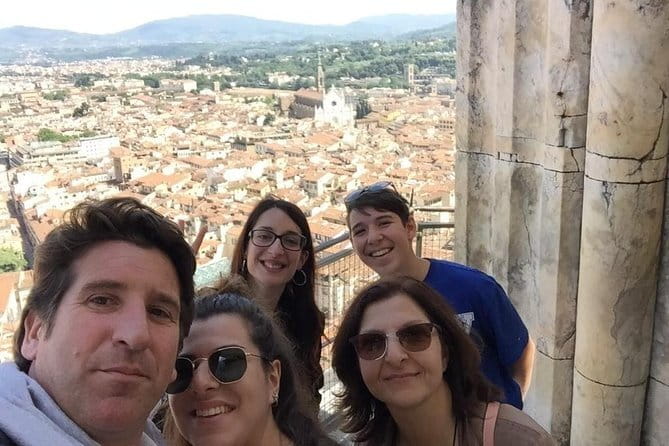
You’ll then move into the Duomo complex: Cattedrale di Santa Maria del Fiore and the bell tower. This is usually the “I came to Florence” moment for most visitors. Here, the magic trick is that your guide ties that grandeur to the human machinery around it—status, fear, and influence.
Even if you’ve seen photos of the Duomo, hearing the stories in this setting makes the place feel like a stage rather than a monument. You notice how visibility and proximity can translate into power.
This stop is also one of the easiest to enjoy but one of the easiest to rush if you’re not paying attention. The tour gives you time, but crowds and camera habits can chew it up. Go with a plan: look up first, then listen.
Baptistery of San Giovanni: Symbol First, Scandal Second
After the cathedral, you’ll stand at the Battistero di San Giovanni, the Baptistery tied to Florence’s identity. Your guide uses it to connect the sacred with the practical life around it—what people believed, how communities judged behavior, and how reputations spread.
This is where the tour’s theme really clicks: Renaissance Florence was religious on the surface and transactional underneath. You get to see both without your guide turning it into a lecture.
Because the stop is short, don’t expect a full explanation of art history or architecture terms. Expect story, location cues, and a sense that Florence always had two narratives running at once.
Palazzo Medici Riccardi: Where Wealth Meets Control
The walk continues to Palazzo Medici Riccardi, home to the ruling Medici family. This stop is important because it shifts you from street-level gossip to elite influence. The Renaissance gets scandalous not only because of desire, but because the powerful could make trouble disappear—or become policy.
Your guide also connects palace life to the broader city culture. You start to see the Medici not only as patrons of art, but as managers of a complicated social world.
If you’re hoping for a strict “look, read, learn” palace tour, you might feel slightly under-filled. This is a storytelling tour, so the emphasis is on why the building mattered in people’s lives.
Palazzo Davanzati Area: The Street-Level View of Old Florence
You also visit Museo di Palazzo Davanzati, which fits the tour’s theme perfectly. A palace museum setting can sometimes feel removed from everyday life, but here the guide uses it to explain how ordinary people lived alongside the elite—and how those differences showed up in the city’s corners.
One reason I like this stop: it supports the tour’s obsession with details like addresses and street-name logic. You’re not just told that class existed; you’re shown how it could be read in the built environment.
Even with short time, you should leave noticing that Florence’s “random” streets and odd naming patterns often have a reason. That makes your self-guided exploring afterward more rewarding.
Via Cavour: The Odd Streets That Act Like Clues
The final listed stop is Via Cavour, a street where Florence’s beauty can trick you into forgetting it’s also a map of old behavior. Your guide uses this stretch to explain why certain locations mattered and why some addresses once acted like social markers.
This is also the kind of stop where stories can point to places beyond the big monuments. In one of the strongest guide-driven impressions, people described guides showing markers tied to Da Vinci’s atelier and Michelangelo’s upbringing. You won’t get that value if you’re only half-listening.
Practical tip: if you want those extra location cues to mean something, keep your phone away for the most important moments. Listen first, then take photos after you understand what you’re looking at.
What the Sex, Drugs, and Courtesan Stories Change About Florence
The title is not subtle, and the themes are central. One theme is the way Florence treated sexual commerce as part of the city’s backbone, not an offstage rumor. Your guide explains how different parts of the city carried different expectations—and how certain addresses could signal lower-class versus upper-class courtesan life.
You’ll also hear about people believing in strange concoctions with healing properties. That’s a useful angle for history fans because it shows how Renaissance medicine mixed knowledge, superstition, and desperation. It’s less about modern approval and more about understanding what people thought kept them alive.
Then there’s the dark detail that really sticks: a well where people once dumped the deceased, a place locals still prefer to avoid. Whether you love morbid facts or hate them, this kind of story turns Florence’s survival into something human instead of purely architectural.
Finally, your guide will connect street-name oddities to meaning. It’s the kind of payoff that makes you look at a street sign twice later. Florence stops being a set of views and becomes a system of clues.
Who Enjoys This Tour Most (and Who Might Feel Mismatch)
This is best for adults who want Renaissance history with teeth—people who enjoy human mess, not only polished art stories. If you’re visiting for the first time, it’s also a smart early or mid-trip tour because it teaches you how to read the city after the fact.
It also suits couples, solo adults, and groups who can handle adult humor and R-rated storytelling. One review described guides as excellent storytellers who made Florence’s people feel real, not distant.
If you want a gentle family-style history walk, skip it. Multiple notes mention that the real focus can be more sexual than the written pitch suggests, and the content can feel inappropriate for some audiences. The tour is 18+ for a reason.
Small Group Size and Headsets: The Practical Reasons This Feels Personal
With a maximum of 14 people, you don’t just blend into the crowd. The guide can adjust pacing, stop to explain street details, and keep the group together without dragging everyone like a conga line.
Headsets help even more than you’d think. Florence is loud in the classic places, and sound can scramble between stone buildings and open squares. You can still hear the guide clearly when you’re looking around.
This is also why reviews often praise guides by name. When a guide can actually connect in a small group, you remember the voice—not just the places.
The Most Praised Parts: Storytelling That Makes the Sights Stick
The strongest positive feedback centers on storytelling skill and a route that goes beyond typical highlights. People specifically praised guides for keeping the tour entertaining, even when it’s tiring, and for helping them see Florence differently.
Two types of praise show up repeatedly:
- Guides with energy who make Renaissance figures feel human and specific
- The off-the-beaten-track route that brings in side streets, street names, and location markers beyond the obvious photo spots
Even among mixed or critical notes, the interest in the subject matter comes through. That tells me the core value is this: you’re not buying a list of landmarks. You’re buying a way of looking at Florence.
Should You Book This Sex, Drugs & the Renaissance in Florence Tour?
Book it if you’re an adult who likes Renaissance history with real consequences—power, sex, drugs, punishment, and street-level social logic—and you don’t mind an R-rated tone. You’ll probably leave with stories you can explain later, plus street-name clues and location markers that make self-guided wandering more fun.
Skip it if you want a quiet art-only tour, if you’re uncomfortable with sexual content, or if you prefer straightforward museum-style facts without the scandal framing. The subject matter is the product here, not an occasional seasoning.
FAQ
FAQ
How long is the tour?
The tour is about 2 hours 15 minutes.
What is the group size limit?
The maximum group size is listed as 14 travelers.
Is this tour for adults only?
Yes. The minimum age is 18.
Where does the tour start?
The start point is near Piazza Davanzati in Florence’s historic center, and the official meeting point is listed at Via Roma, 1r, 50123 Firenze FI, Italy.
What stops are included?
The listed stops are Piazza della Repubblica, Museo Nazionale del Bargello, Duomo (Cattedrale di Santa Maria del Fiore) and the bell tower, Battistero di San Giovanni, Palazzo Medici Riccardi, Museo di Palazzo Davanzati, and Via Cavour Firenze.
Are entrance tickets included?
For the listed stops, admission tickets are shown as free.
What’s included besides the guide?
A local guide, headsets, and a welcome drink are included.
Is the ticket mobile?
Yes, the experience includes a mobile ticket.
Will I get confirmation after booking?
You’ll receive confirmation at the time of booking.
Can I cancel and get a refund?
This experience is non-refundable and cannot be changed for any reason.
If you’d like, tell me when you’re visiting Florence and what else you plan to see that day (Duomo climb, Bargello museum time, Uffizi, etc.). I’ll help you slot this walk into a smart schedule.
More Florence Tours We Have Reviewed
- Florence: Skip-The-Line Uffizi Gallery Timed Entry Ticket
★ 4.5 · 27,832 reviews - Tuscany Day Trip from Florence: Siena, San Gimignano, Pisa and Lunch at a Winery
★ 5.0 · 21,634 reviews - Florence: Timed Entry to Michelangelo’s David + Audio App
★ 4.6 · 19,496 reviews - Florence: Leonardo Interactive Museum Entry Ticket
★ 4.5 · 12,957 reviews - Florence: Michelangelo’s David Skip-the-Line Entry Ticket
★ 4.5 · 12,764 reviews
The Medici Story Continues
- The Best tour in Florence: Renaissance & Medici Tales – guided by a STORYTELLER
★ 5.0 · 12,316 reviews - The Best Tour in Florence: Renaissance and Medici Tales
★ 5.0 · 10,810 reviews - Uffizi Gallery: Renaissance Masterpieces Guided Tour
★ 4.6 · 6,070 reviews - Florence: Renaissance and Medici Tales Guided Walking Tour
★ 4.8 · 1,549 reviews - Guided Medici Tour Florence: Discover Mysteries & History
★ 4.3 · 1,077 reviews
Fresh from our Florence review desk
- Small-Group Pasta Cooking Class and Market Tour in Florence★ 5.0 · 3 reviews
- Palatina Gallery and Pitti Guided Tour in Florence★ 5.0 · 3 reviews
- Tuscan Evening Tour: Fiat 500, 8:30 to 10 PM★ 5.0 · 3 reviews
- Journey into Art: Florence’s Accademia★ 4.5 · 3 reviews
- Paint and Drink Florentine Hills★ 5.0 · 3 reviews
- Truffle hunting and lunch experience, with Vinci and winery.★ 4.5 · 3 reviews
Medici & Renaissance Tours, compared.
 ★ 5.0The Best tour in Florence: Renaissance & Medici Tales – guided by a STORYTELLERFrom $312,316 reviews
 ★ 5.0The Best Tour in Florence: Renaissance and Medici TalesFrom $310,810 reviews
 ★ 4.6Uffizi Gallery: Renaissance Masterpieces Guided TourFrom $886,070 reviews
 ★ 4.8Renaissance and Medici Tales Guided Walking TourFrom $21,549 reviews
 ★ 4.3Guided Medici Tour Florence: Discover Mysteries & HistoryFrom $571,077 reviews
 ★ 4.0Accademia Gallery: Michelangelo’s David and High Renaissance ArtFrom $43872 reviews
 ★ 4.7Guided Tour of Medici Family Secrets and ChapelsFrom $93512 reviews
 ★ 5.0Florence Private Tour: Renaissance, Famous Families & Hidden GemsFrom $199233 reviews
Browse the lists this tour appears in